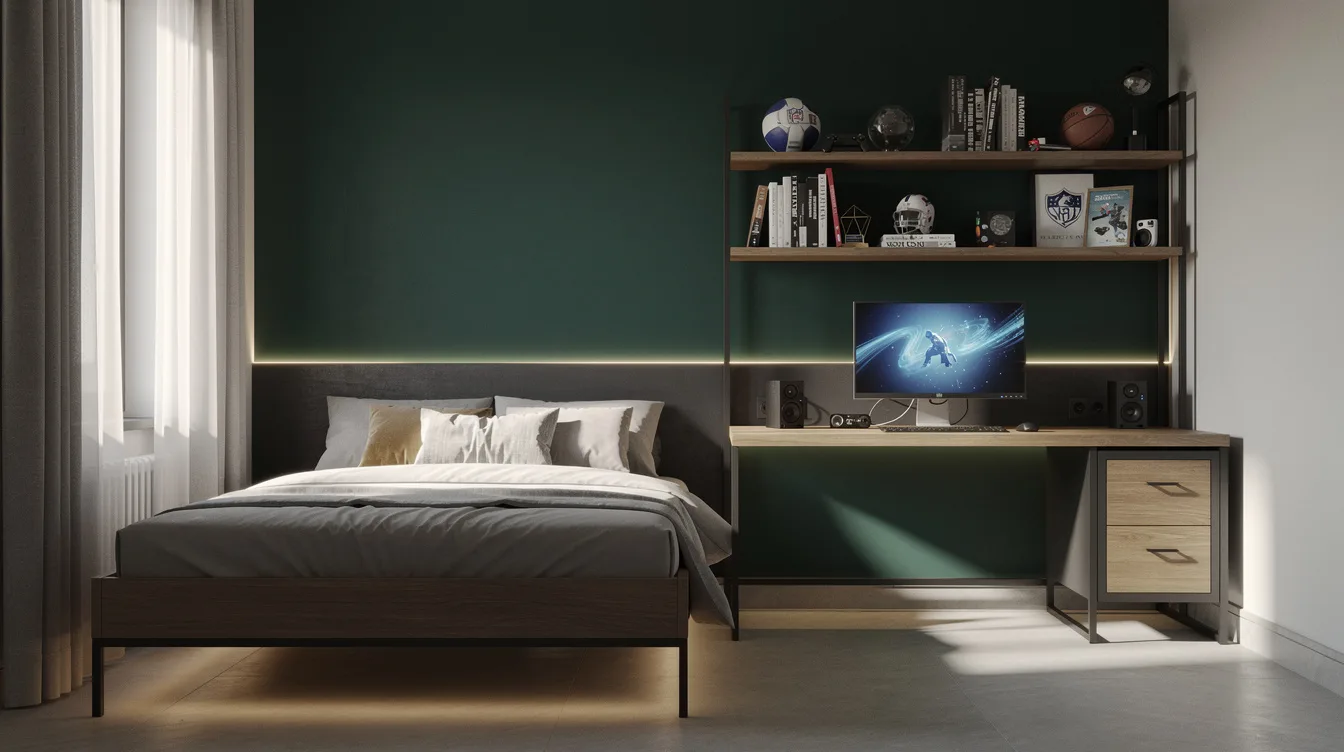
I’ve seen a lot of teen boy bedrooms get stuck in a weird middle zone: the mattress is fine, the desk is tiny, and there are three different blues fighting on the walls. The room feels too old for toy decor and too unfinished for a real teenager who studies, games, scrolls, and crashes in the same space.
The fix usually isn’t more stuff. It’s picking one direction, sizing the basics correctly, and spending the money where a teen actually notices it every day.
Start With a Layout That Fits Real Teen Gear
The rooms that work best usually sit around 100 to 130 square feet, roughly a 10 by 10 or 10 by 12 footprint, and that size gets crowded fast when a teen wants a bed, a desk, and space to move.
I’d use a twin or full bed on the longest wall, then keep the main desk wall clear for homework, gaming, or music gear.
A desk in the 47 to 63 inch range, with 24 to 30 inches of depth, is the sweet spot. Anything smaller looks tidy for a week, then turns into a charger-and-headset pile.
Paint One Dark Accent Wall for a Gaming Mood
If he wants the room to feel cooler in five minutes, paint one wall in charcoal, navy, or deep green and leave the other walls warm white or pale gray.
I like this move because it gives a gaming setup some edge without making the whole room feel like a cave. It also makes screens, shelves, and LED glow read cleaner at night.
You can pull the paint from Home Depot or Lowe’s for a typical average of $30 to $60 per gallon, and one gallon is often enough for a single bedroom accent wall.
Build a Desk Wall That Can Actually Work
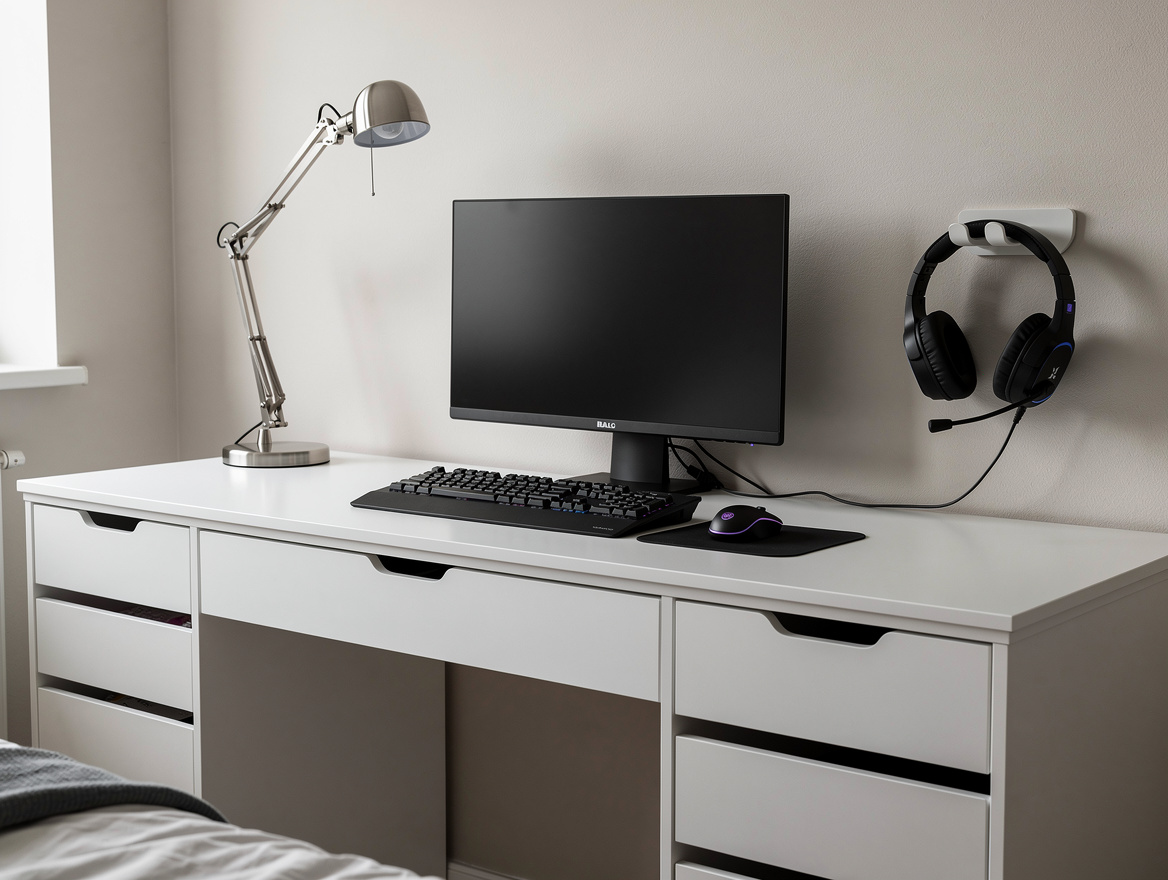
A teen room falls apart when the desk is an afterthought, so I’d make it the anchor. The easiest proven setup is an IKEA LAGKAPTEN/ALEX combo, usually around $200 to $260 depending on size and drawer units.
If the room has more space, a BEKANT desk in the 63 inch range gives better elbow room for a monitor, keyboard, and schoolwork. That extra width matters more than a fancy chair in my opinion.
For seating, a MARKUS chair from IKEA or a mid-range gaming chair from Amazon usually lands between $180 and $450. I’d skip the ultra-bulky racing style unless he games for hours every day, because many of them look dated fast.
Add a cable tray and Velcro ties under the desktop for another $15 to $40. Messy cords can make an expensive setup look cheap in one afternoon.
Use Sports Decor Like Display Pieces, Not Kid Stuff
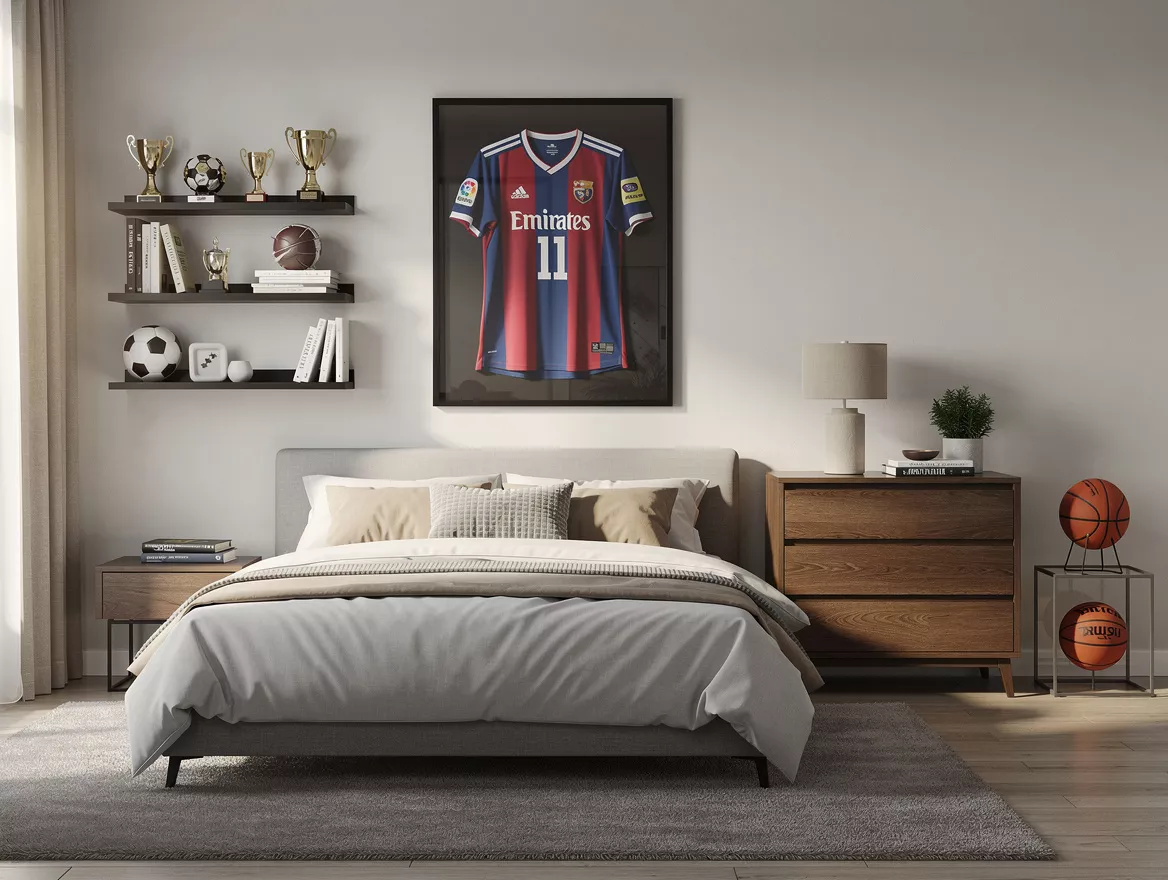
A sports room works when the theme stays controlled. One framed jersey, two black frames with stadium prints, and a basketball wall rack do more than a full wall of logos.
I’d keep the base palette calm, white, light gray, or soft taupe, then bring in one team-related color through bedding, a chair cushion, or art. That feels older and won’t be embarrassing two years from now.
You can find clean black frames at Target or Walmart, usually around $15 to $35 each, and simple floating shelves at Ace Hardware or Amazon from about $20. A room like this should nod to sports, not scream from every wall.
Choose Storage That Can Take Daily Abuse
Teen bedrooms need closed storage because open shelves turn into visual noise almost instantly. A PAX wardrobe from IKEA, in a typical 47 to 59 inch width and about 24 inch depth, usually starts around $350 and climbs with doors and interior fittings.
If the budget is tighter, a simple dresser from Walmart or Wayfair plus under-bed bins is still a solid move. I’d rather see fewer pieces that shut completely than five trendy organizers that always look half-full.
Use fabric bins for cables, controllers, gym gear, and random chargers, and keep one shelf fully empty on purpose. Every teen room needs a landing zone for the stuff that never makes it back to a drawer.
Finish With Lighting, Texture, and One Adult Detail
Lighting is where a basic room starts to feel intentional. A Govee LED strip behind the desk or headboard usually runs about $30 to $80, and it looks best when it stays hidden instead of outlining every edge in the room.
Then add one soft layer that cuts the hard lines: a 5×7 rug, washed cotton bedding, or blackout curtains from Target or Costco. A typical average spend here is $40 to $150 per piece, and the room will feel better every single day, not just in photos.
The last thing I’d add is one grown-up material, maybe a metal desk lamp, a wood nightstand, or a leather-look hamper. That single detail keeps the room from feeling like a starter box with LED lights.
For budget, most realistic setups land around $700 to $1,100 with a simple bed, desk, storage, and lights. Once you move into better seating, a larger monitor, smarter lighting, and branded storage, $2,500 to $3,000-plus is completely normal.
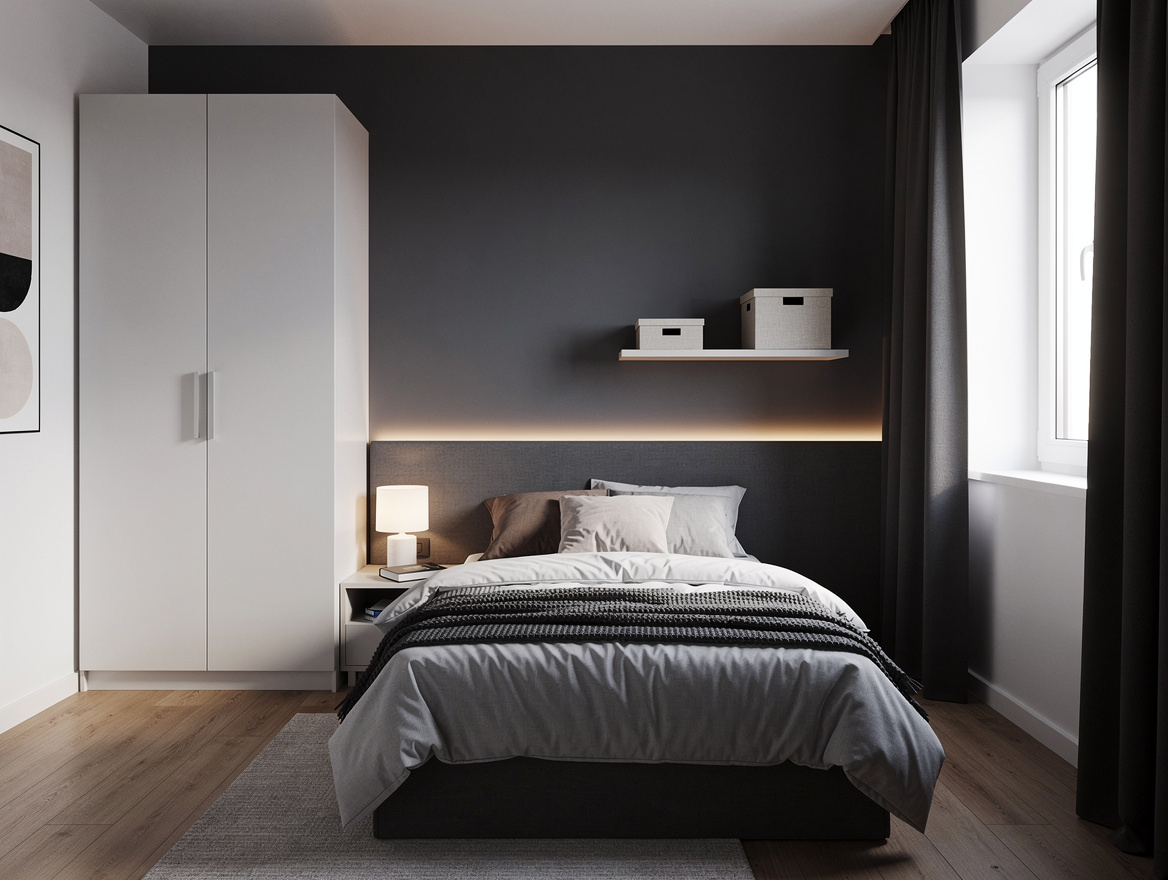
Start with the desk wall and the bed size before you shop for lights or posters. When those two pieces are right, the rest of the room gets cheaper, easier, and a lot cooler to finish.
Mia Carter writes about small-space living and budget home makeovers. She has restyled three rentals and tests most ideas in her own 45 sqm flat.