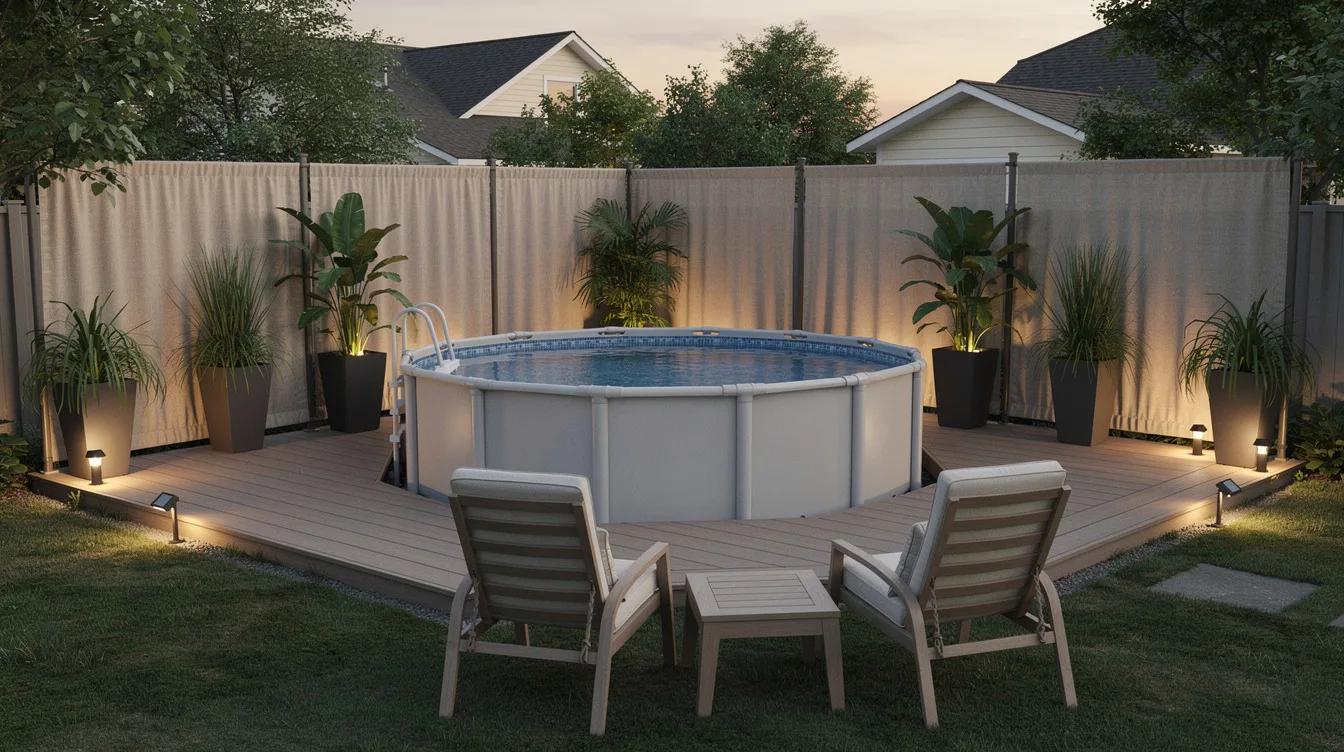
I always know an above-ground pool setup is off when the first thing I notice is the ladder, not the water. The grass is damp, the chairs are too far away, and someone has draped towels over a fence because there is nowhere else to put them.
The good news is you do not need permits or permanent construction to fix that feeling. A few renter-friendly layers around the pool can turn it into a calm summer hangout that actually invites people to stay outside.
Start With a Freestanding Deck Pad
The fastest visual fix is a small IKEA RUNNEN deck tile pad lined up with the pool ladder. It gives you a dry landing spot, room for one lounger, and that quiet spa cue most above-ground setups miss.
A typical platform is about 10 by 10 feet, or roughly 3 by 3 meters, which is enough for two chairs and a side table. For a renter, I would keep it fully freestanding on pavers or adjustable feet, because that is easier to remove and usually avoids the permit headache tied to permanent structures.
If you want the cheaper route, modular tiles often land around a typical $350 to $700 for that size. A simple framed platform with pressure-treated lumber can climb to an average $700 to $1,700 once you add boards, base pads, and one short rail.
Replace the Wobbly Ladder With Stable Steps
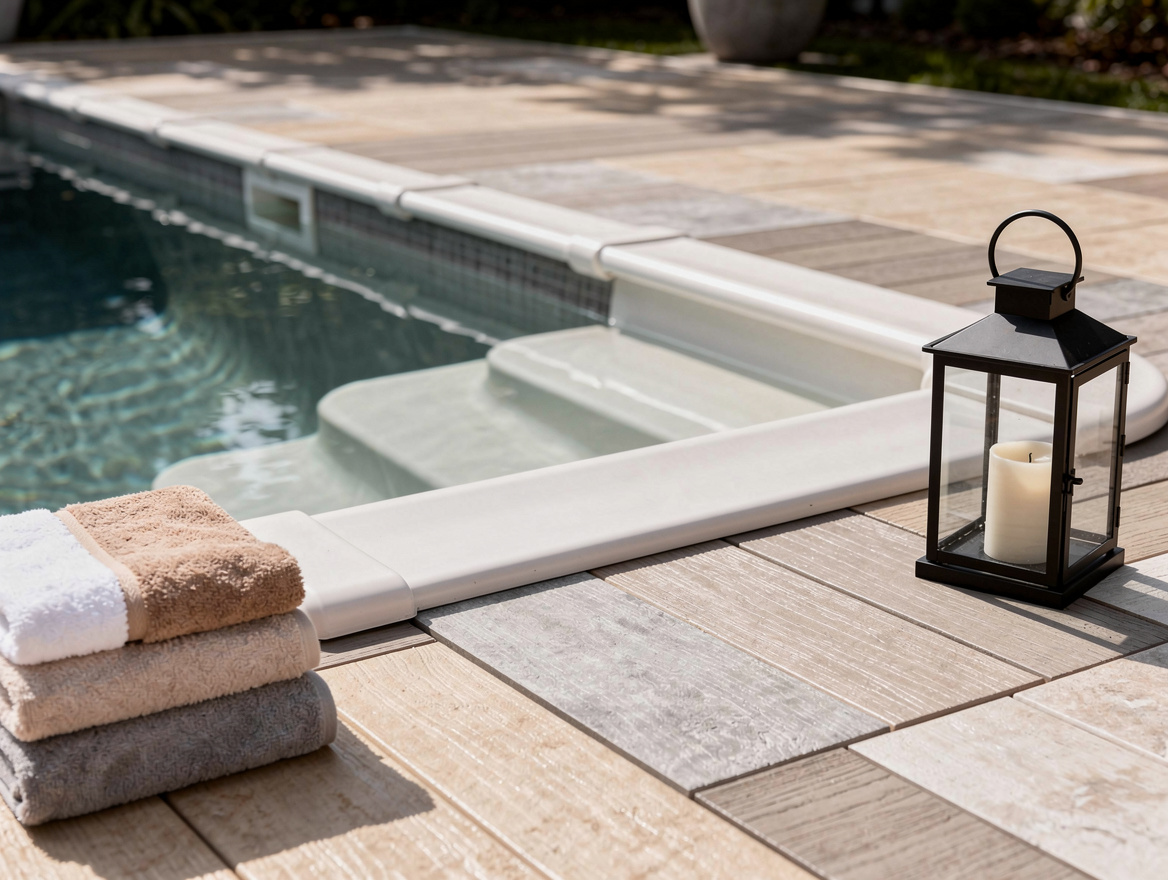
A thin metal ladder makes the whole pool feel temporary, even when the water is clean. A wider Amazon resin pool step setup with a handrail changes the mood immediately because entry feels safer and slower.
Most above-ground step systems are made for 48 to 54 inch pool walls, and a typical width runs about 36 to 48 inches. That extra footprint matters when guests are carrying towels, drinks, or a nervous kid is trying to get in without slipping.
This is one upgrade I would not cheap out on. Typical prices sit around $280 to $600 at Amazon, Walmart, or Lowe’s, and the calmer look is worth every bit more than another floating toy.
Build Privacy With Moveable Screens and Tall Planters
If your pool backs up to a neighbor’s grill or a parking lot view, the fix is not a fence project. A row of Wayfair freestanding privacy screens and oversized planters gives you coverage without turning the yard into a construction site.
Panels around 6 to 6.5 feet high and 3 to 4 feet wide work best because they block sightlines while still feeling light. I like a partial curve instead of boxing the whole area in, since a full ring can look cramped fast.
For a 12 to 18 foot privacy run, a typical budget is about $180 to $450 depending on the material and how many panels you need. Add four to six tall resin planters from Target or Home Depot, and the space starts reading more like an outdoor room than an exposed pool edge.
Soften the Pool Perimeter Underfoot
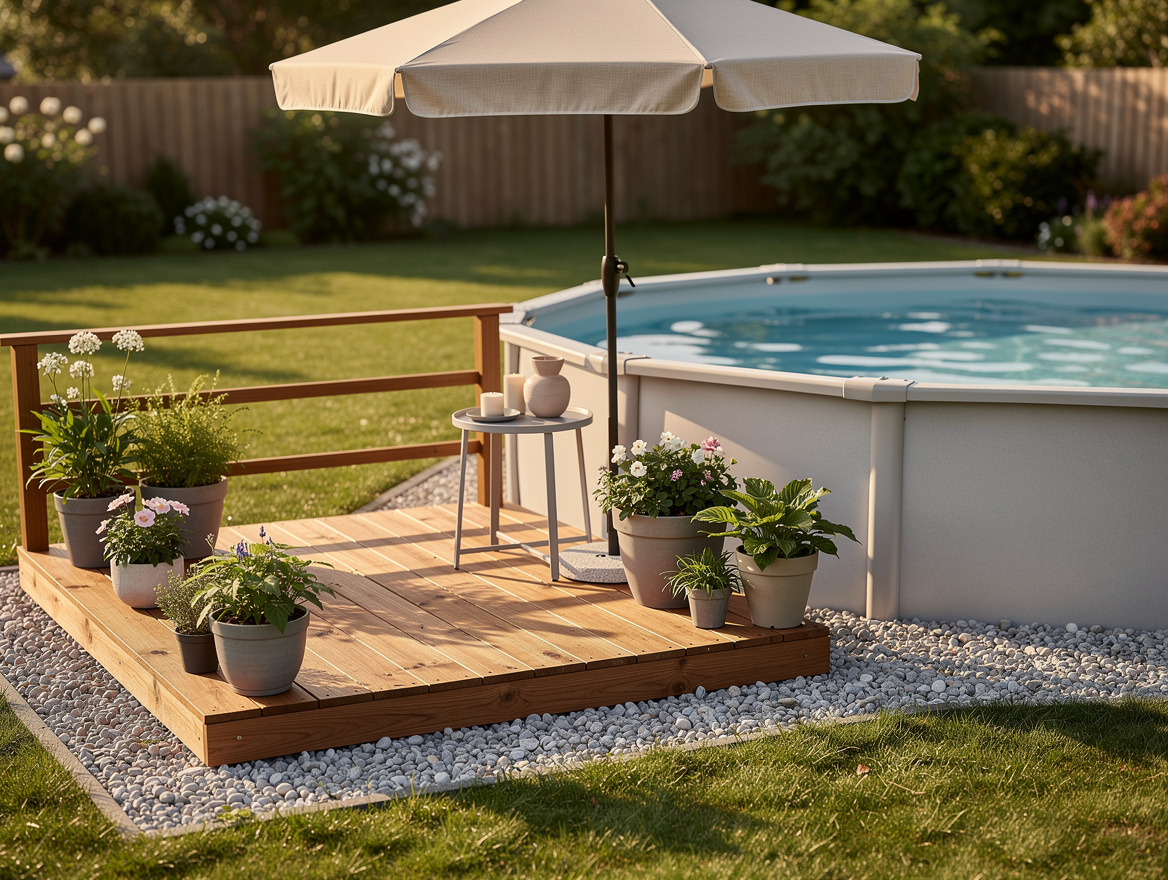
Nothing kills the calm faster than patchy grass, hot dirt, or a muddy ring around the base. A shallow border of pea gravel, mulch, or stepping stones makes the pool feel intentional and cuts down on the mess that ends up in the water.
A typical landscaping belt is about 20 to 40 inches deep around one side or one half of the pool, not necessarily the entire circle. That is enough room for stepping stones, a few planters, and one clean walking path from the door to the ladder.
For a border around 3 by 30 feet, average material costs often fall between $120 and $300 from Home Depot or Ace Hardware. Gravel is the easiest to level and remove later, and I think it looks sharper than bark once summer foot traffic starts grinding everything down.
Add Shade That Feels Soft, Not Bulky
Most above-ground pool areas look harsh at noon because there is nowhere to hide from the glare. A Target offset umbrella or a freestanding shade sail over the seating side fixes that faster than any decor accessory.
An 8 to 10 foot umbrella is usually enough for two loungers and a small table, while a triangular shade sail can cover a compact lounge zone without touching the pool itself. Keep the shade over the deck pad or seating area, not directly over the water, so the setup still feels open.
Typical pricing is pretty manageable: around $80 to $250 for an umbrella with base, or about $40 to $120 for a basic sail plus removable mounting hardware. I lean umbrella for renters because it is easier to move when wind picks up, and it does not ask you to improvise a bunch of anchor points.
Use Warm Lighting and Low-Key Sound After Sunset
This is where the setup stops feeling like a daytime-only pool. A few strands of solar string lights, two lanterns, and one small Bluetooth speaker can make the whole yard feel quieter, even if the neighborhood is not.
Warm bulbs look better than bright white around water, full stop. I would run lights along the deck edge, place one lantern near the steps, and keep the speaker tucked behind a planter so the sound feels ambient instead of like someone brought a tailgate playlist.
You do not need much money here. Typical costs are about $20 to $60 for solar string lights, $25 to $70 for lanterns, and roughly $40 to $130 for a compact outdoor speaker from Amazon, Costco, or Walmart.
Finish With Storage and a Tight Color Palette
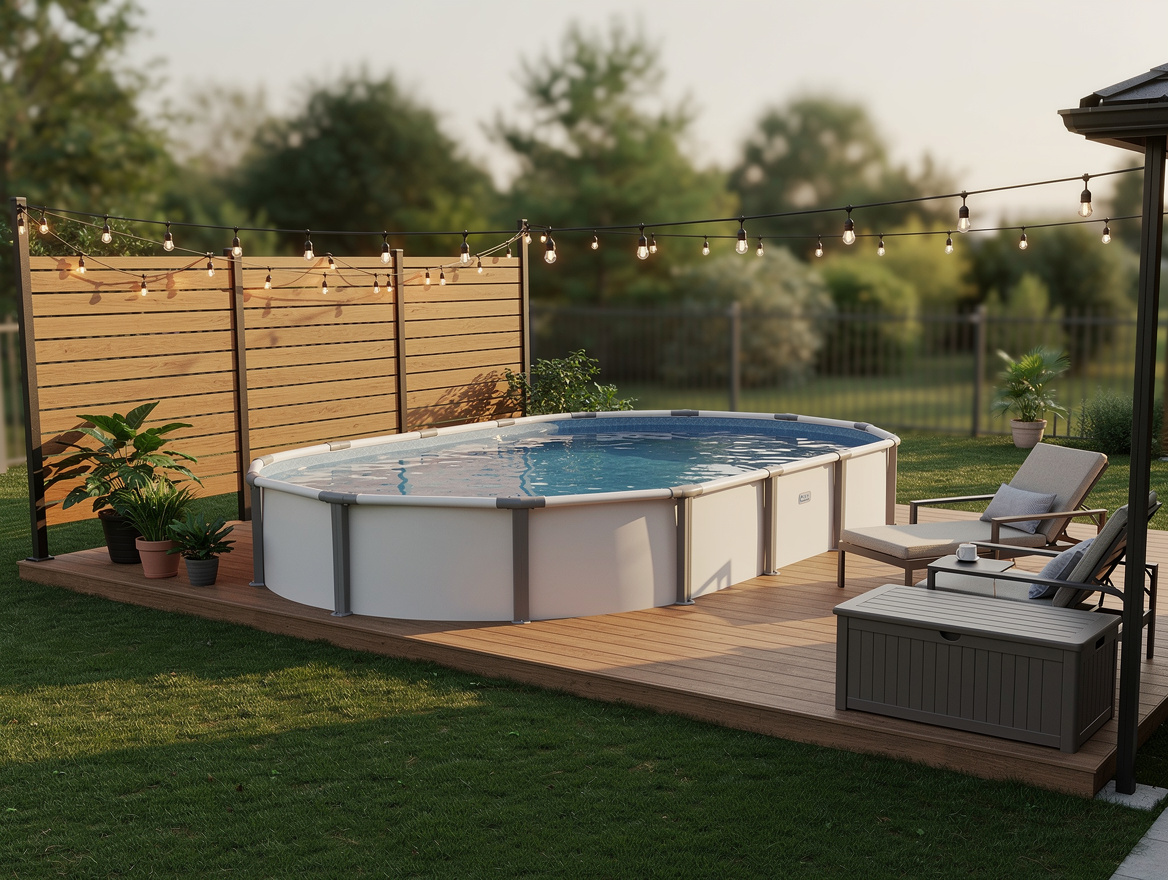
The last step is editing the clutter people usually ignore until guests come over. A Keter resin deck box or a simple storage bench hides pool chemicals, extra towels, floats, and the random hose attachments that make the area look busy.
Go with one restrained palette: sand, white, sage, charcoal, or weathered wood tones. I would skip loud tropical prints unless you are ready to commit hard, because calm spaces fall apart when every cushion is competing with the water.
A typical 80 to 120 gallon deck box runs about $90 to $220, and it earns its footprint. Add two matching lounge cushions and one outdoor tray, and the whole setup starts looking finished instead of borrowed.
Begin with the surface under your feet, then fix the entry, then add privacy. Once those three pieces are right, even a basic pool starts feeling like the place everyone wants to linger after dinner.
Mia Carter writes about small-space living and budget home makeovers. She has restyled three rentals and tests most ideas in her own 45 sqm flat.