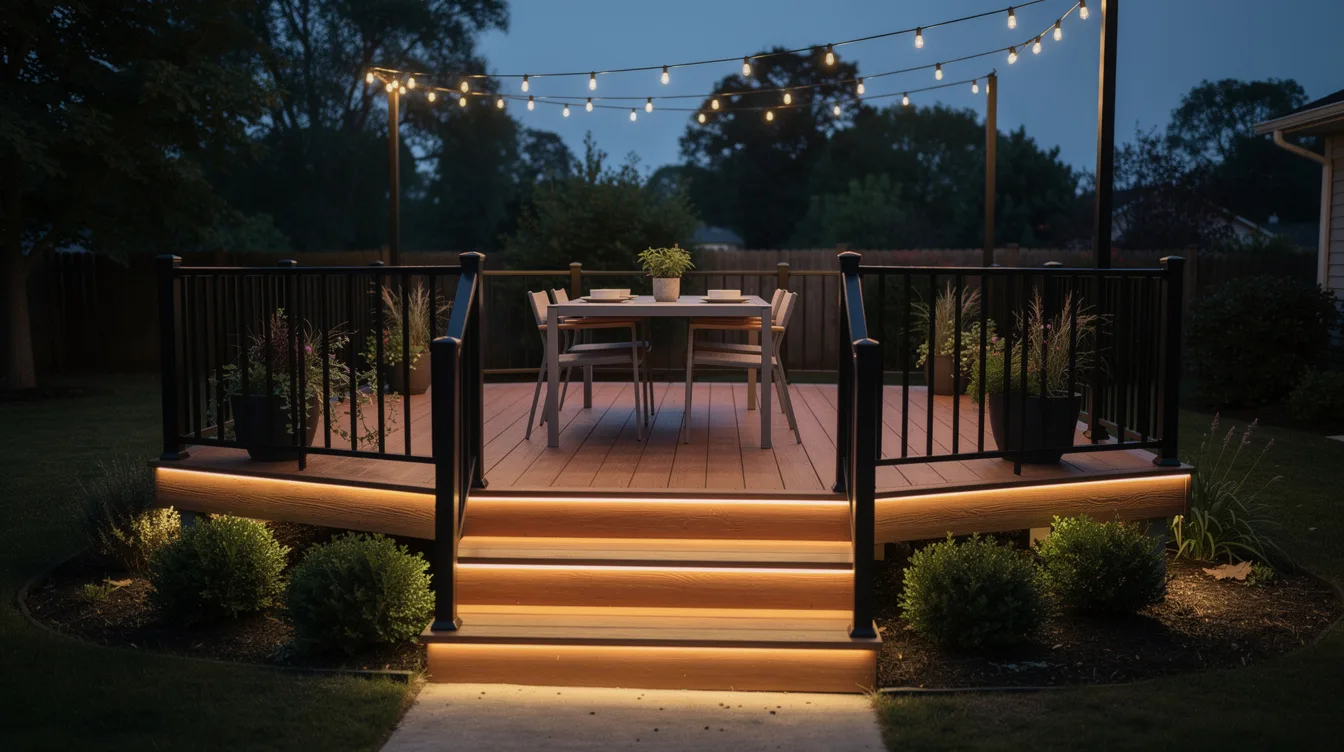
Last summer I was at a friend’s place where the grill was glowing, the playlist was solid, and the deck steps were still weirdly invisible. Everyone kept slowing down with a drink in one hand and looking for the edge with their toe.
That is the small-yard lighting problem in one picture: you need enough light to move safely, but you do not want the whole deck blasted like a patio bar. The good news is that a cozy deck and stair setup can still come in under $100 if you layer the pieces in the right order.
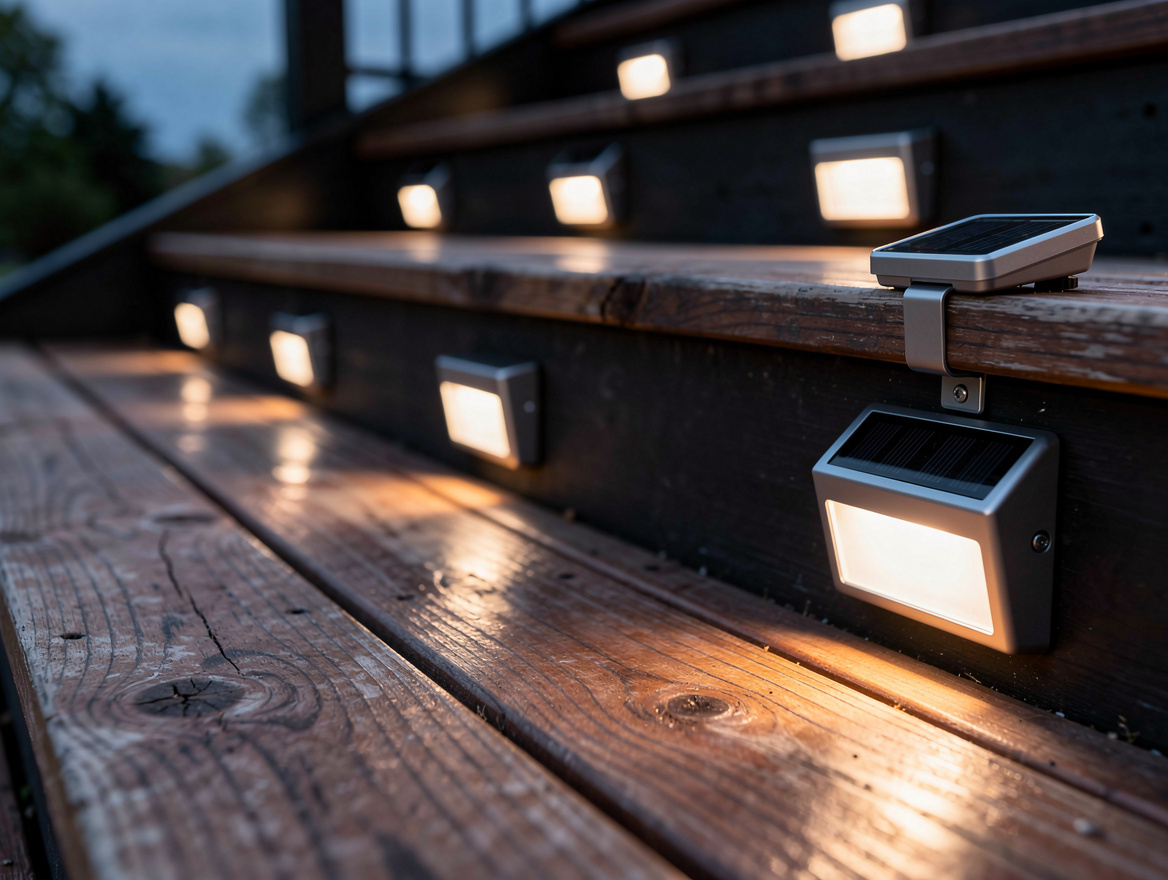
Start With Warm Solar Stair Lights on Every Riser
I hate when a small deck looks bright at the table but the steps disappear by 9 p.m. A simple run of Hampton Bay solar LED stair lights fixes that first, and it does it without wiring.
The typical 2026 price is about $22 to $33 for a 4-pack, which is why this is the best first buy for a 3 or 4-step run. These lights are usually around 10 lumens each, roughly 4 to 5 inches wide and 2 to 3 inches high, and that small size looks tidy instead of bulky.
One light per riser is enough for a small yard party where people are carrying plates and drinks. I would not skip every other step, because that always looks cheaper than it saves.
For renters or anyone who does not want to drill into decking boards, riser-face mounting is the easy win. Warm white is the only finish I would choose here, because cool white makes a deck feel closer to a parking lot than a party.
Frame the Perimeter With Low Solar Wall Lights
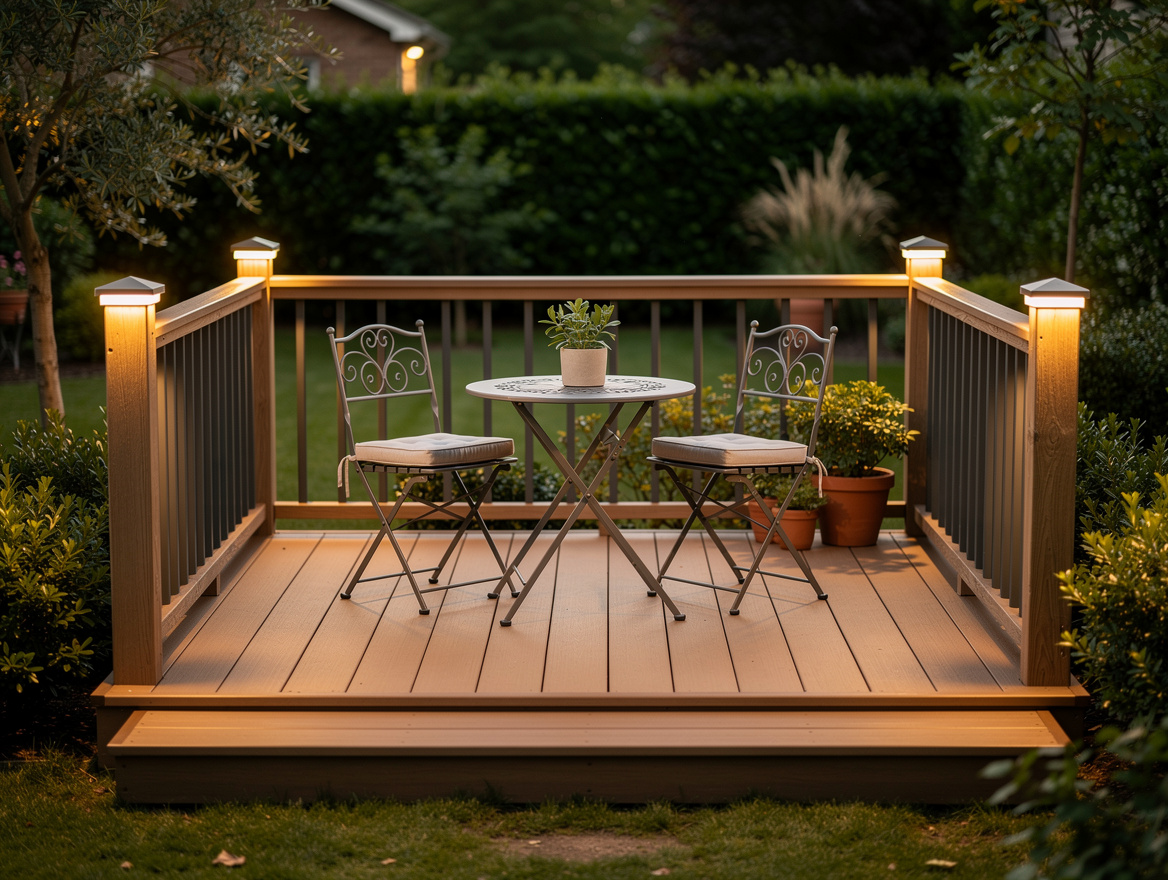
Once the steps are visible, the deck edge needs a second layer so the whole platform reads clearly from the yard. Classy Caps solar deck and wall lights do that better than taller path lights in a tight space.
Typical pricing lands around $21 to $26 per light, so you have to be selective. Four lights spaced about 1.2 to 1.5 meters apart on rail posts or deck corners usually cover a 3 by 4 meter deck without wasting money.
I like the black or stainless steel housings most, because they disappear during the day and let the glow do the work at night. White housings can look a little too visible on darker rails.
Pair one Hampton Bay 4-pack on the stairs with four Classy Caps fixtures around the perimeter, and you are usually in that $70 to $80 range if you catch a sale. For a no-wire setup, that is a very solid small-yard scene.
Use Recessed Step Dots When You Want a Cleaner Look
If you want the lighting to almost vanish in daylight, recessed fixtures are the sharper move. Dekor recessed LED stair lights give you that neat dot of warm light without adding anything bulky to the face of the stairs.
Typical 2026 pricing starts around $18 to $24 per fixture for the nicer powder-coated aluminum versions, though some recessed deck lights from deck-lighting retailers can dip to about $6.99 to $21.99 depending on style. A 3-step run with one centered dot per riser is enough for a crisp modern look.
These little fixtures are usually around 1 inch in diameter, which is why they read clean even on narrow steps. I would center them carefully, because crooked recessed lights look worse than simple surface-mounted ones.
This route costs more up front than basic solar, and it takes more planning, but the finish is better. If your deck already has a modern railing or a smooth fascia board, recessed lighting is the one that looks intentional.
Add One Fascia Strip for the Floating Effect
A lot of small decks still feel flat after the stairs are lit, and that is where one under-edge strip earns its keep. Odyssey LED strip lights mounted under the front fascia create that soft floating line people notice as soon as the sun drops.
A typical strip runs about $31.99, and widths are usually in the 1 to 2 centimeter range with lengths around 1 to 2 meters. That is enough for a short 2 to 3 meter front edge on a compact entertaining deck.
I would use this only on the most visible side, not all the way around. On a small yard deck, too much underglow starts to feel fussy, while one clean line feels finished.
Three Dekor stair dots plus one Odyssey strip usually lands around $90 to $100 total. It is the priciest setup here, but it gives the most polished look for the money.
Layer in String Lights for the Cozy Part of the Budget
Safety lighting and party lighting are not the same thing. For the cozy part, I would always save room for one strand of Amazon warm-white outdoor string lights over the seating zone.
Typical outdoor string lights cost about $15 to $30 for a 10 to 20 meter run, with bulbs spaced roughly every 30 to 60 centimeters. That is enough to cross a small deck once, zigzag above a bistro table, or run along a fence line behind the chairs.
This is where the vibe changes fast. A few recessed pucks or stair lights make the deck usable, but string lights make people stay for another drink.
If you want the best-value combo, a budget recessed kit like SMY Lighting dimmable LED deck lights plus one string-light run is hard to beat. Those multi-light kits usually sit somewhere in the $50 to $100 band, so with a lower-count kit and a modest string set, the total often lands around $60 to $80.
Spend the First $100 on Spacing, Not More Fixtures
The easiest mistake is buying too many lights and scattering them everywhere. Small yards look better when the light has a clear job: steps for safety, deck edge for shape, overhead for mood.
For solar scenes, I would put money into one Hampton Bay stair pack and four Classy Caps perimeter lights before I added decorative extras. For low-voltage scenes, I would rather buy three good Dekor dots and one Odyssey strip than six random cheap fixtures.
A typical 3 by 4 meter deck does not need restaurant-level brightness. It needs visible steps, a readable edge, and one warm layer above eye level so faces look good and the yard feels relaxed.
If your budget is very tight, start with the stairs and one string-light run. Then add perimeter lights later, because a safe step matters more than one more glow point on the rail.
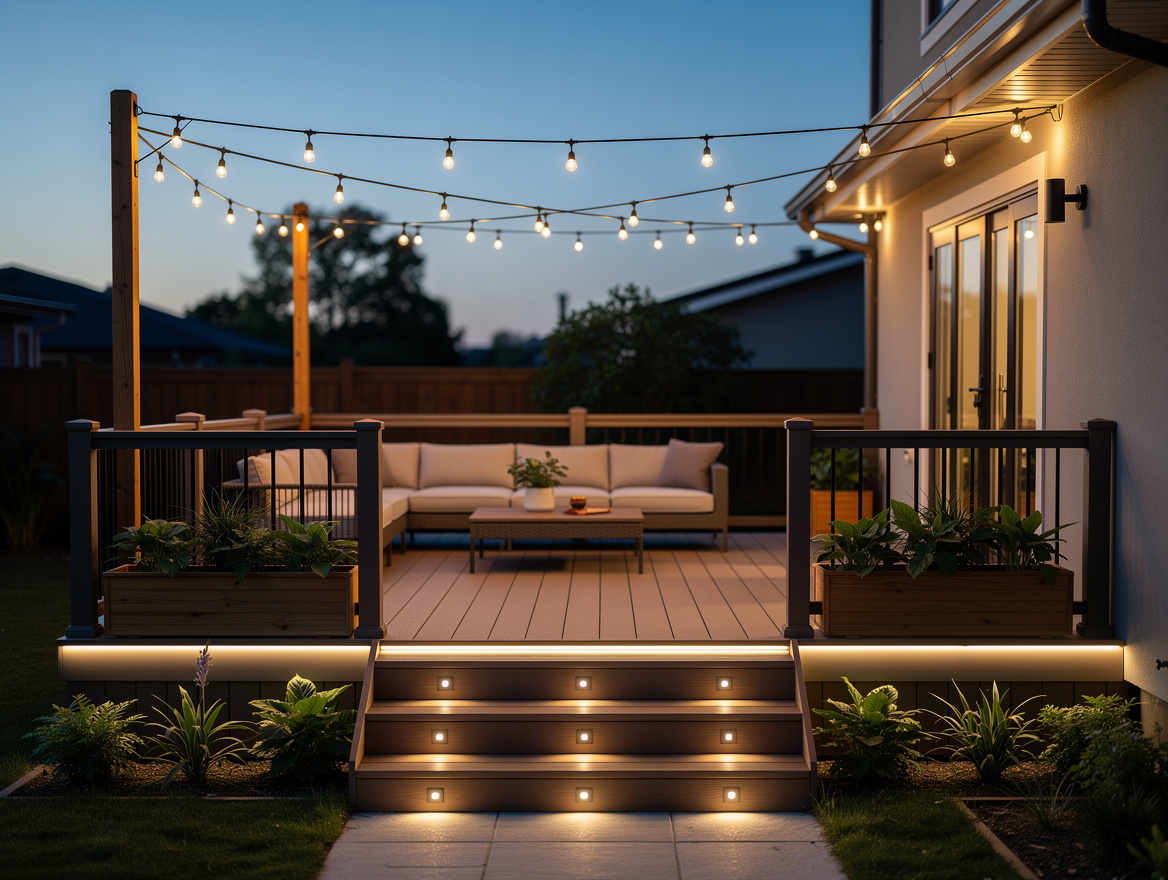
Buy for the stairs first, then the perimeter, then the mood layer overhead. If you only have about $75 today, do one Hampton Bay stair pack and one warm string-light run, and your next backyard dinner will already feel easier to host.
Mia Carter writes about small-space living and budget home makeovers. She has restyled three rentals and tests most ideas in her own 45 sqm flat.