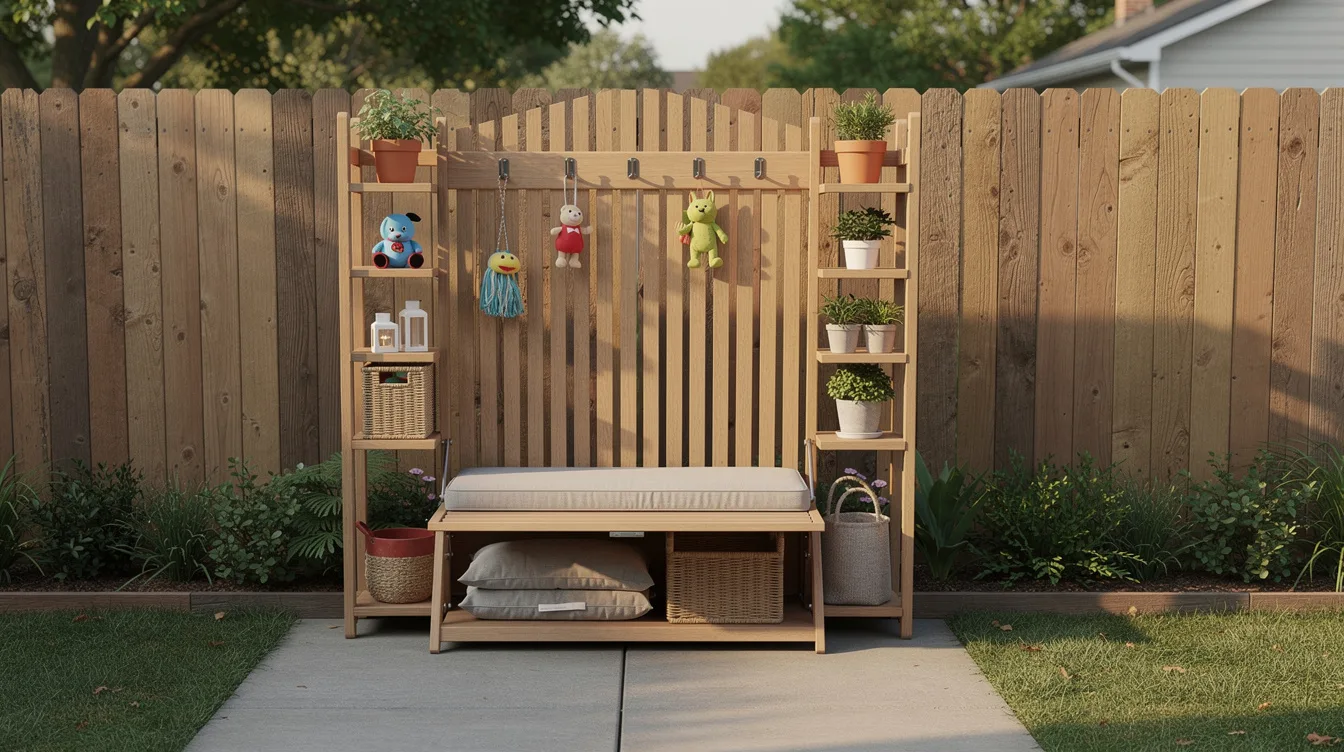
I know exactly how this mess starts: two patio cushions get stacked by the back door, then the toy bucket tips over, then the whole yard feels smaller every time you step outside. In a tiny yard, the problem usually isn’t how much stuff you own, it’s that everything is spread across the floor.
A vertical storage bench fixes that fast. You keep a compact seat at the bottom, then use the wall or fence line above it for shelves, hooks, or a slim cabinet, which is a much better use of space than adding another wide deck box.
Start With a Footprint That Won’t Crowd the Yard
The bench size matters more than the style. In a tiny yard, I’d keep the main seat around 48 to 55 inches wide and 18 to 24 inches deep, because that still gives you real storage without blocking the walkway.
A typical compact outdoor bench lands in the 90 to 140 cm width range, with seat height around 16 to 18.5 inches. That’s the sweet spot if you want two people to sit there and still have room for toys or four to six outdoor cushions inside.
If you add a cabinet or tall back panel, keep the full setup under about 79 inches wide total. I like that limit because anything bigger starts to feel like patio furniture spilled into a side yard.
Choose the Weekend Build That Matches Your Skills
You’ve got two realistic routes here, and one of them is faster than most people expect. Build a simple bench box with a vertical back frame, or buy a ready-made storage bench from Home Depot or Walmart and pair it with a narrow outdoor cabinet behind it.
The DIY route gives you the cleanest fit if your fence line is awkward. The hybrid route is better if you want this done in one weekend without spending half of Saturday learning how to cut perfect angles.
A typical resin storage bench from Lowe’s or Amazon usually runs about $130 to $180 for roughly 70 gallons of storage. A slim outdoor cabinet or vertical deck box often adds another $120 to $220, which is still reasonable if you’d rather assemble than fully build.
Build a Bench Base That Holds the Bulky Stuff
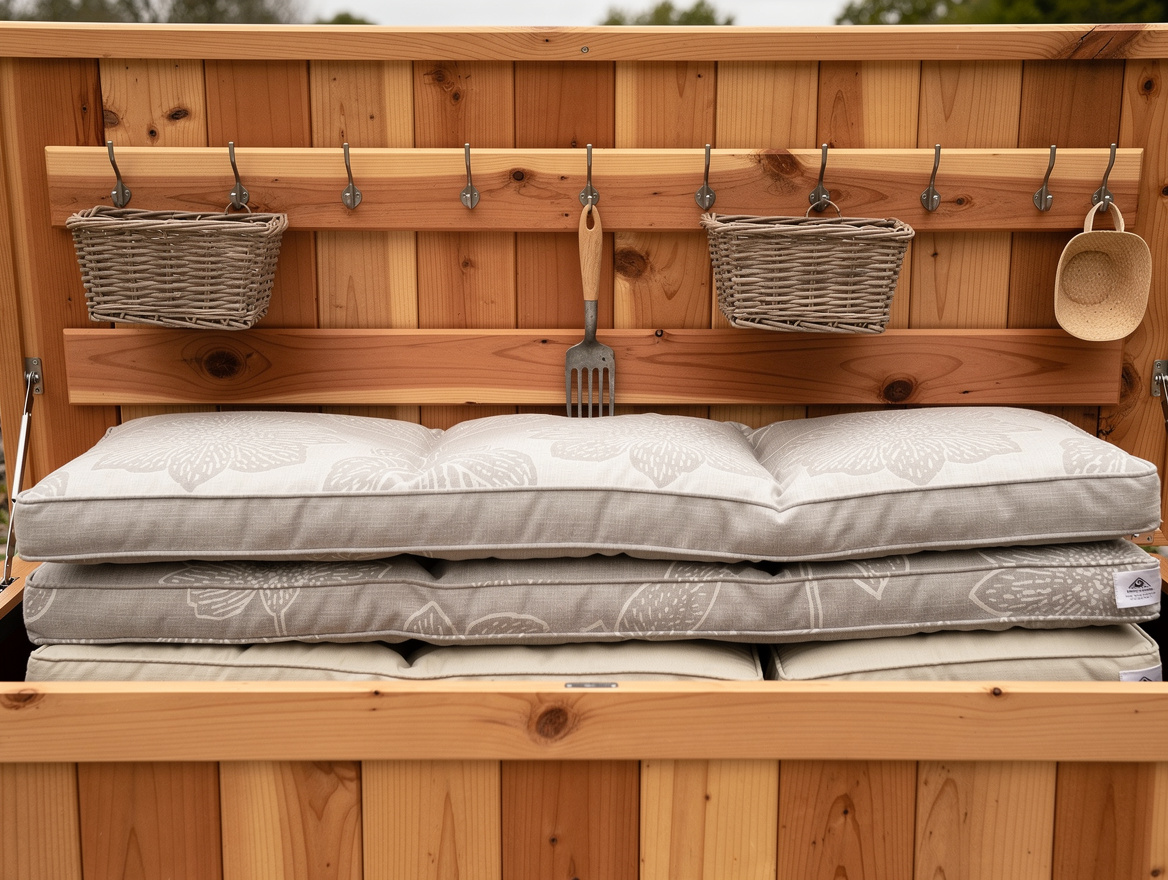
If you’re building from scratch, make the base a plain rectangle with a hinged lid. Exterior plywood or pressure-treated lumber works, and a 4-by-8 sheet of exterior plywood at Home Depot is typically around $45 to $70, depending on thickness and grade.
I’d aim for a seat height close to 18 inches and a depth around 19 inches. That feels comfortable, and it still leaves enough interior volume for cushions, toy bins, and the random outdoor stuff that never seems to have a home.
Use stainless or coated deck screws, not the cheapest interior screws from the garage leftovers. Outdoor benches fail at the fasteners first, and I think that’s the most annoying way to lose a weekend project.
Add a piano hinge or two heavy strap hinges to the top so the lid opens cleanly. Soft-close support is worth it if kids are around, because a dropping lid on a toy bench is a bad idea.
Add a Tall Back Panel to Use Height, Not Floor Space
The whole point of a vertical storage bench is the back panel. Build it 60 to 71 inches high, keep it shallow, and bolt it to the bench or anchor it to a wall so it doesn’t rack when the yard gets windy.
I like a slatted cedar or treated-pine frame here because it looks lighter than a solid wall. Cedar boards at Lowe’s are often in the $9 to $14 range for common narrow sizes, and they weather better than bargain softwood if you don’t want constant upkeep.
This is where hooks, narrow shelves, wire baskets, or a pegboard-style panel earn their keep. Small toys, bubble wands, garden gloves, dog leashes, even rolled pool towels, all of that belongs up high instead of eating the seat storage.
Keep shelf depth modest, around 5 to 8 inches. Deep shelves look useful in the store, but in a small yard they turn into head-bumping clutter ledges.
Pick Materials That Can Handle Rain and Rough Use
If you want the warmer look, go with acacia, cedar, or treated pine and seal it well. Wood is easier to customize, easier to repaint, and easier to repair after a season of rough use.
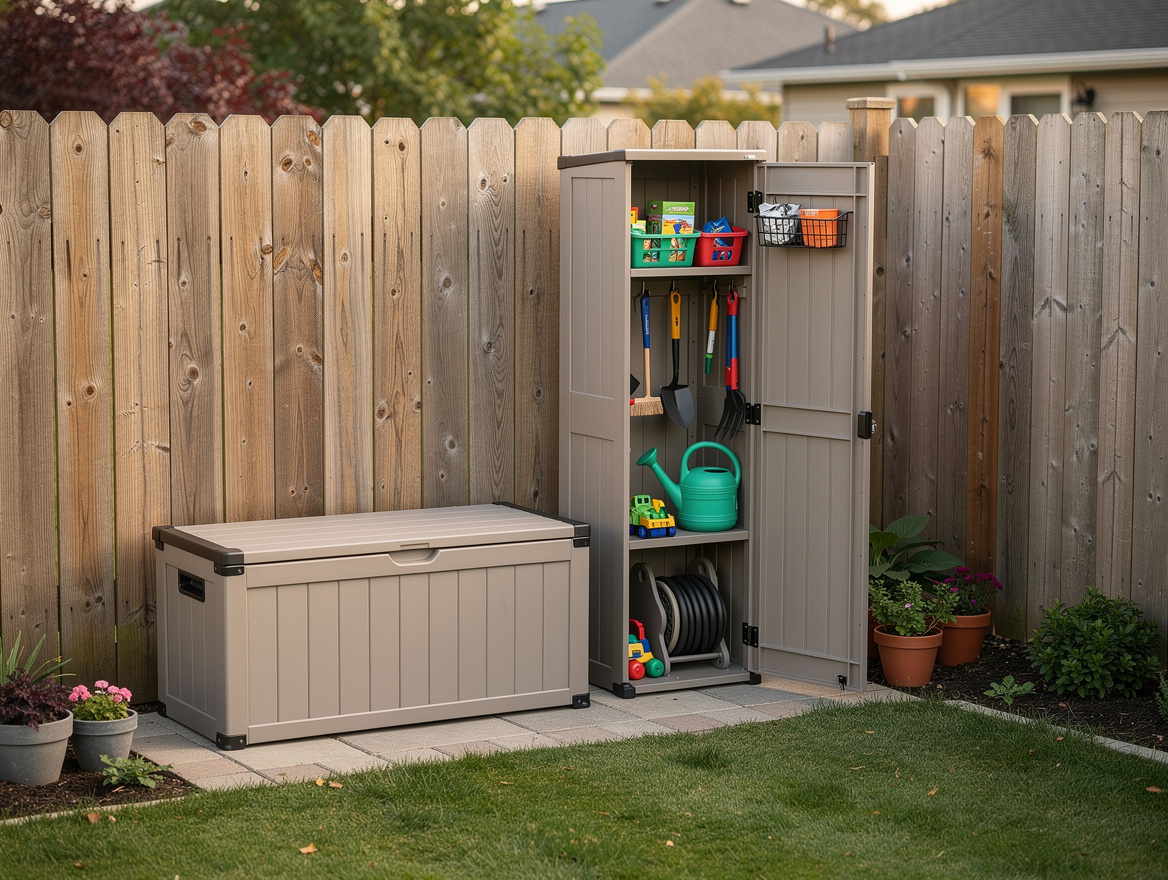
If you want low maintenance, resin wins. A typical 50- to 120-gallon resin storage bench from Target, Walmart, or Amazon is usually enough for outdoor cushions plus toy overflow, and it shrugs off weather better than most budget wood pieces.
I’m pretty opinionated on this one: for a family yard, resin makes more sense unless you already enjoy annual maintenance. The prettier material is not always the smarter one when sunscreen, mud, and wet towels are involved.
For the vertical section, though, I still prefer wood or powder-coated metal over plastic panels. The back needs to feel rigid, and cheap plastic uprights can look tired fast.
Finish the Setup With Hooks, Bins, and a Smarter Layout
The bench only works if the storage is sorted by size. Big cushions go inside the seat box, while grab-and-go items live on the back panel in labeled bins or baskets.
I’d add three or four Ace Hardware utility hooks for light gear, then a pair of narrow shelves for sunscreen, chalk, and bug spray. A chunky toy basket. One outdoor lantern.
Maybe a slim planter if the yard needs softness.
If you’re doing the hybrid version, set the bench in front and place a 24- to 31-inch-wide cabinet just behind or beside it. That layout uses the same wall zone and still keeps the total depth near 20 inches for the bench and about 16 to 22 inches for the upright piece.
Match the finish so it reads like one built-in zone, not two leftover items pushed together. IKEA and Wayfair are both useful if you need baskets, slim shelving inserts, or weather-friendly accessories that make the setup feel intentional.
Don’t overdecorate it. This project looks best when the structure does the work and the accessories stay tight and practical.
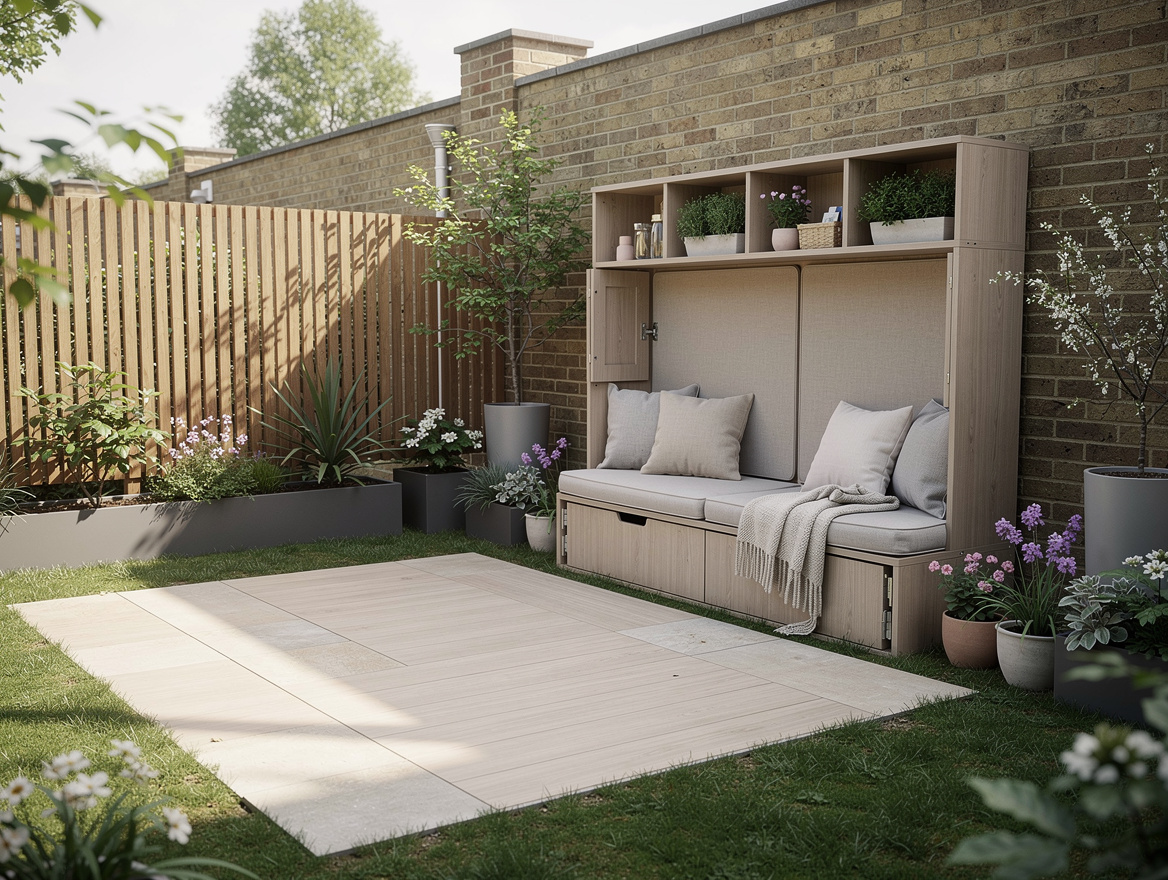
Start with the bench width and back height before you buy a single board or bin. Once those two numbers are right, the rest of the build gets simpler, cheaper, and a lot less likely to swallow your whole yard.
Mia Carter writes about small-space living and budget home makeovers. She has restyled three rentals and tests most ideas in her own 45 sqm flat.