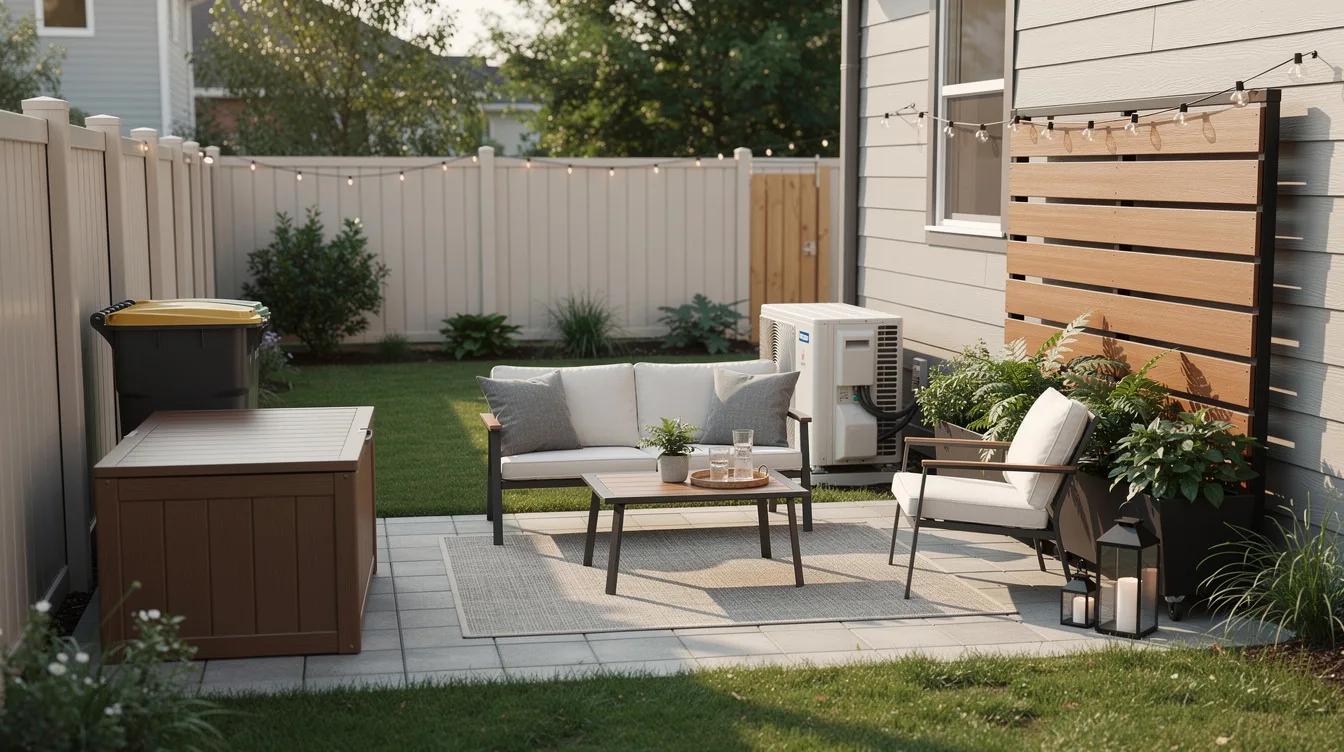
By the time friends come over, my patio usually looks fine at eye level, then you notice the recycling bin by the grill, the portable AC hose snaking past a chair, and one orange extension cord cutting straight through the whole setup.
I rent, so I’m not drilling into siding or attaching anything permanent. The good news is you can cover the ugly parts with pieces that sit on the ground, stick on cleanly, or wedge into place.
Park bins inside a deck box
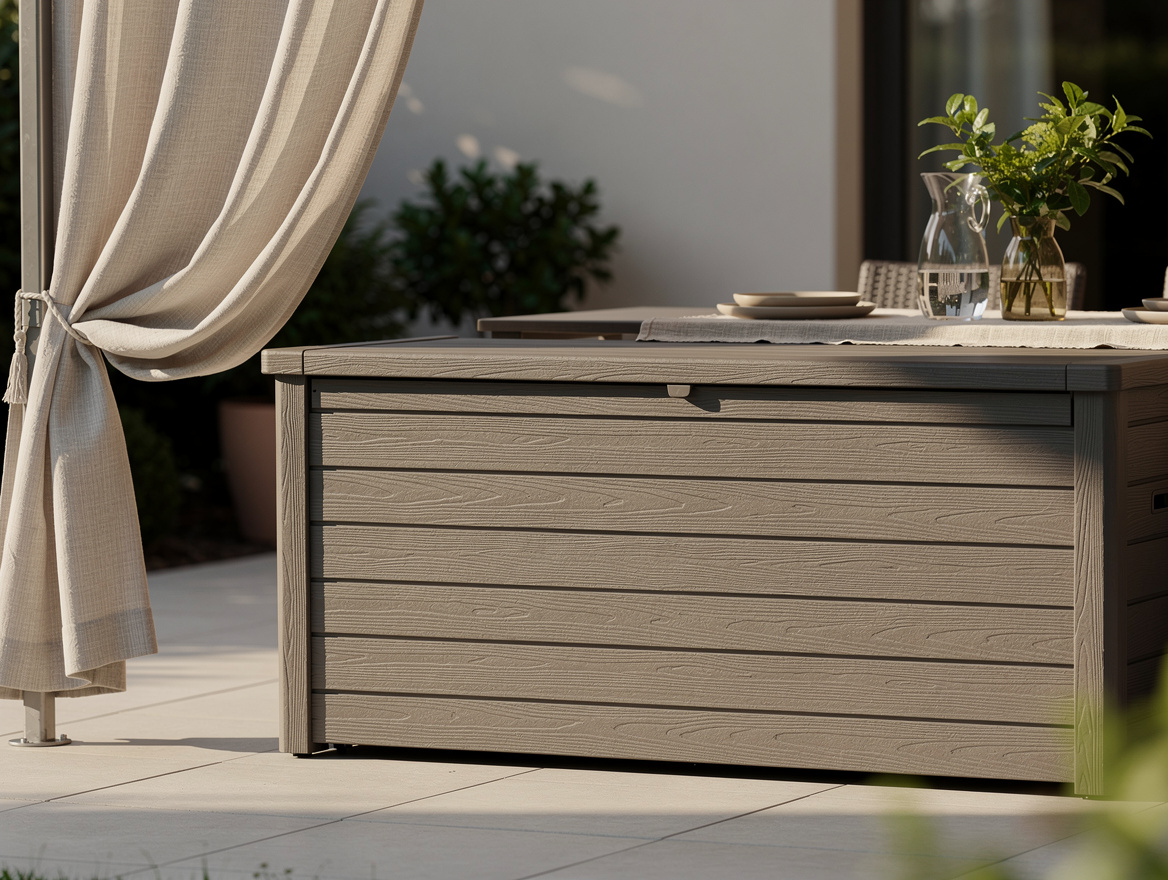
A large Keter resin deck box is the easiest fix if your trash and recycling cans are what ruin the view first. A typical large box around 150 to 160 cm wide, 70 cm deep, and 65 cm high can hide two small bins or hold party supplies when the cans are elsewhere.
On Amazon, big weather-resistant resin boxes usually land around $180 to $260, which is fair because they move with you and don’t need anchors. I prefer a wood-look resin finish over cheap glossy plastic, it reads cleaner beside outdoor dining furniture.
For a tighter corner, a smaller Walmart storage box in the 110 to 130 liter range usually costs about $35 to $60. It’s ideal for bottle returns, extra liners, citronella candles, and all the random hosting clutter that tends to pile up near the door.
Block the view with a folding screen
A freestanding IKEA screen or a simple slatted panel gives you the fastest visual cleanup when you can’t fit a full storage box. Typical outdoor-friendly screens run about 55 to 70 inches tall and 48 to 64 inches wide, enough to hide bins without making the area feel boxed in.
On Wayfair, wood-look, metal, or woven resin folding screens usually range from $80 to $180. I’d skip anything too thin or floppy, a screen only works when it looks intentional and stays put in a little wind.
If you want extra stability, place two heavy Target planters in front of the screen instead of trying to fasten it down. That trick looks more finished and gives the whole setup a reason to exist beyond just hiding trash.
Use a tension curtain to fake a clean wall
A no-drill tension rod with an outdoor polyester curtain is surprisingly effective when bins sit in an awkward open gap. It creates a soft visual barrier, and it’s easier on the eyes than staring at black lids and recycling logos during dinner.
At Target or Amazon, a heavy-duty tension rod usually costs about $25 to $50, and a single outdoor curtain panel often adds another $30 to $70. Typical panels are 84 to 96 inches long and about 50 to 54 inches wide, so you can cover a narrow side yard or the back edge of a balcony.
I like this option most for rentals with ugly railings or utility corners because it hides more than one problem at once. Just keep the fabric neutral, a stripe can start to feel like a beach cabana when all you wanted was less visual noise.
Screen an outdoor AC unit without choking airflow
An exterior AC condenser is one thing you should hide carefully, not aggressively. Leave a typical gap of 8 to 12 inches around the unit so air can move, otherwise the cover looks nice and the system runs worse.
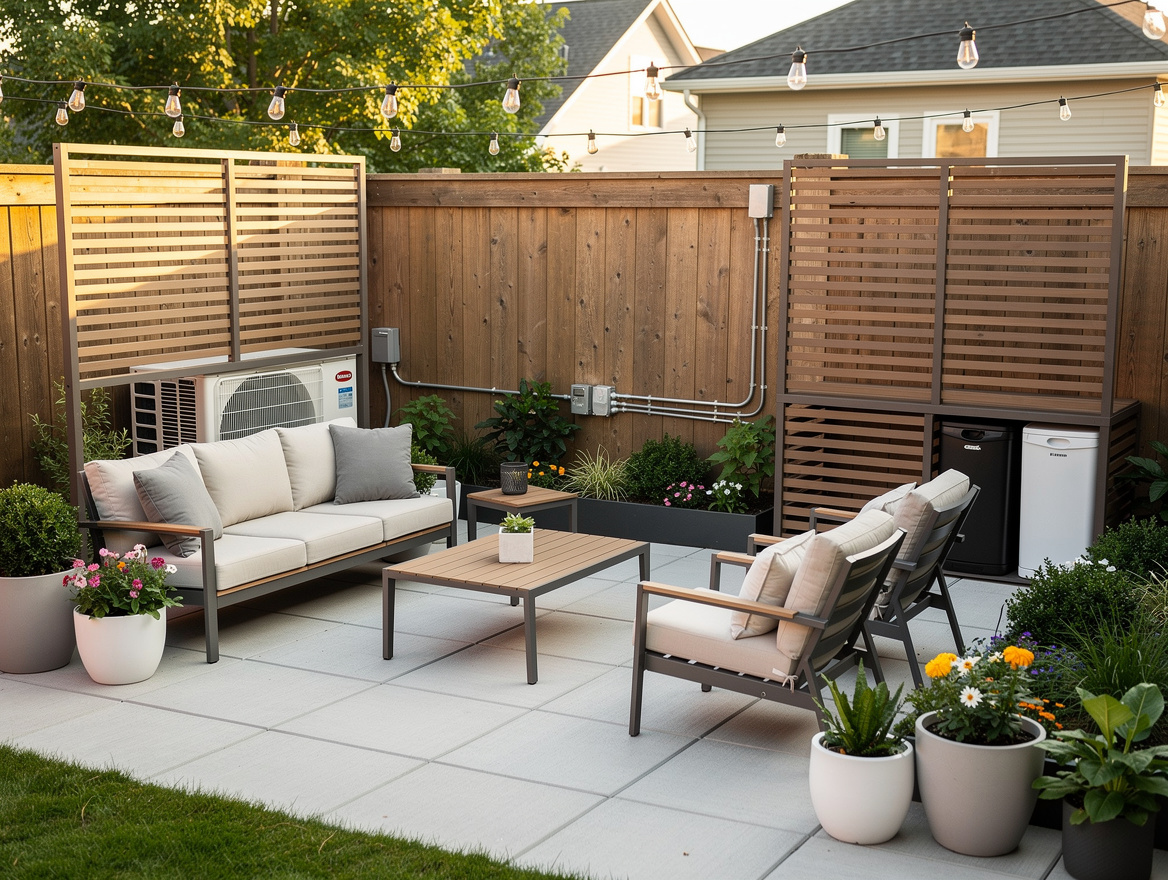
A vented Outsunny-style resin bench from Amazon or a slatted storage piece from Home Depot usually falls around $150 to $250. Common sizes hover near 47 to 60 inches long, 20 to 24 inches deep, and 24 to 32 inches high, which works in front of many ground-level units without swallowing the whole patio.
A slatted wood or metal privacy panel also works if it stands on its own or is weighted with planters. This looks better than boxing the unit in, and it keeps the area from reading like the back side of a building.
Camouflage a window or portable AC the smart way
Window AC units usually look temporary because the side panels and gaps look temporary. On Home Depot and Amazon, no-drill foam insulation kits and brace-style supports typically run about $20 to $50, and they make the install feel far less improvised.
For the visible surround, I like lightweight PVC trim panels or thin painted hardboard cut to blend with the wall color. If the piece wedges into the track or uses outdoor-rated double-sided tape, you get a much cleaner line without changing the window permanently.
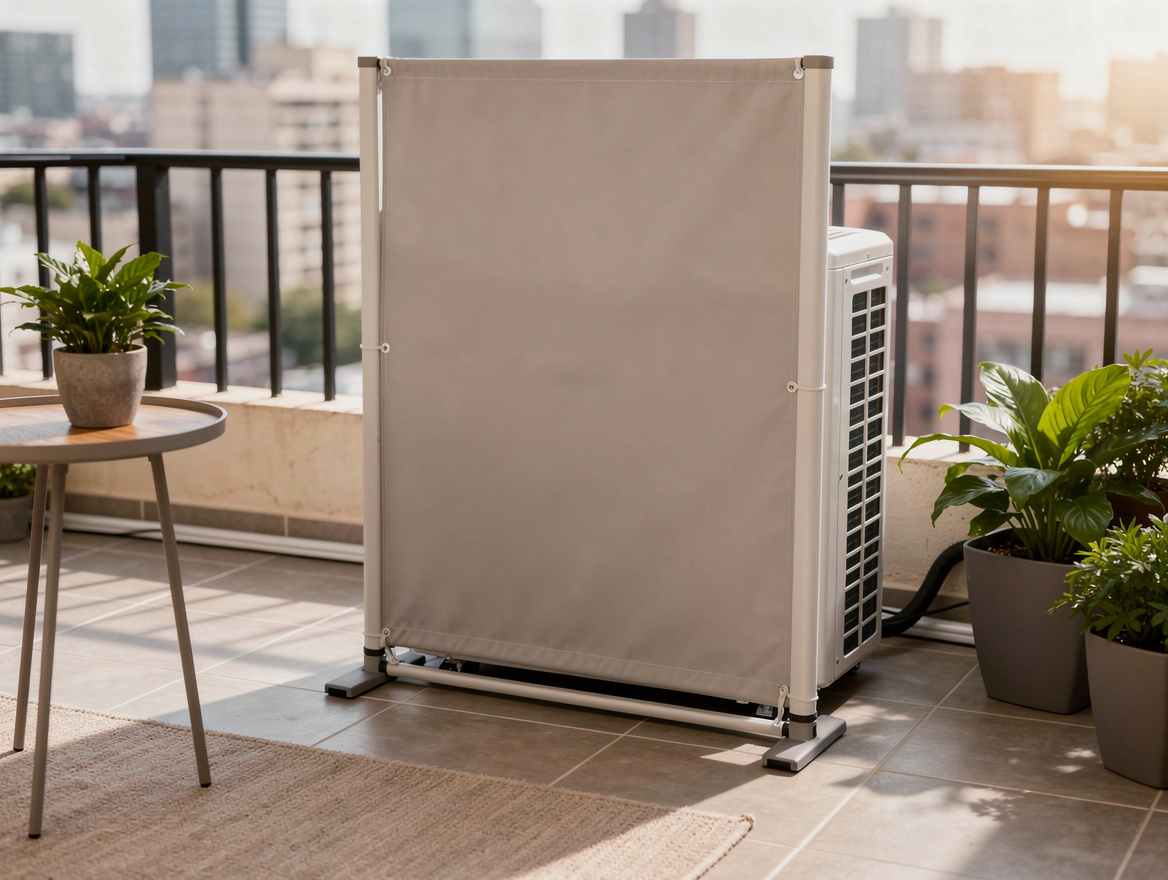
Portable AC units are easier to disguise if you stop trying to hide the whole machine. A low Wayfair console or open-back bench, usually around $90 to $150 and roughly 36 to 48 inches wide, can hide the base while leaving room for airflow and hose access.
A small panel of rattan, bamboo, or outdoor fabric in front of the lower half is often enough. The hose is what people notice first, so break that sightline and the unit instantly fades into the room.
Tame cords with adhesive covers and real cable boxes
Cords are the detail that makes an otherwise nice setup feel unfinished. Peel-and-stick PVC cord covers from Amazon or Ace Hardware usually cost about $10 to $20 for a 10 to 16 foot kit, and they’re renter-safe when applied to clean, dry surfaces.
Run them along baseboards, the underside of an outdoor bar cart, or the edge of a door frame instead of straight across the floor. Beige, white, or paintable covers disappear better than black unless your trim is dark.
For power strips, use a ventilated cord box from Target or Walmart, usually around $15 to $30. One box. One extension cord path.
Much less chaos.
If you need an outdoor line for string lights or a speaker, a low-profile rubber cable protector is worth it. The average version costs around $20 to $40, and it looks far more deliberate than a loose cord taped to the ground.
Start with the thing guests see from their seat first, usually the bins or the cords, then handle the AC after that. One deck box or one good screen does more for a summer setup than five tiny organizers scattered everywhere.
Mia Carter writes about small-space living and budget home makeovers. She has restyled three rentals and tests most ideas in her own 45 sqm flat.