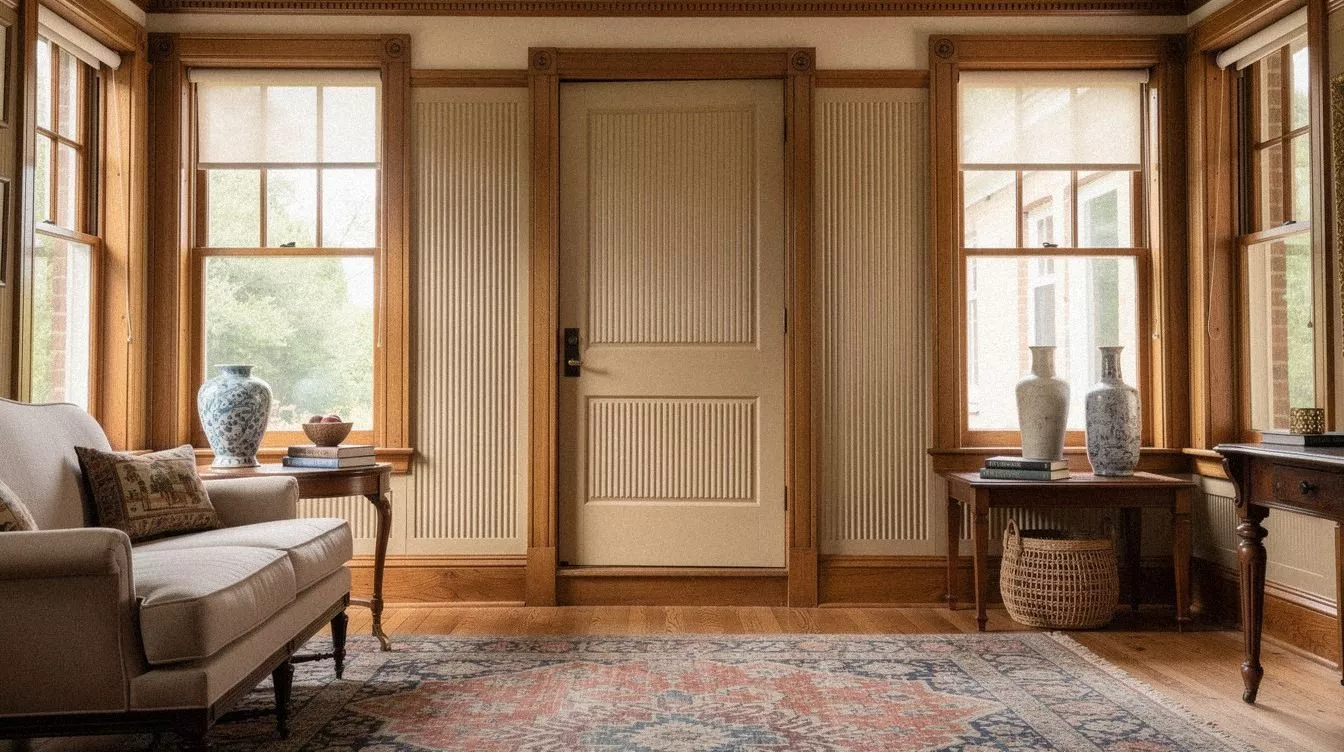
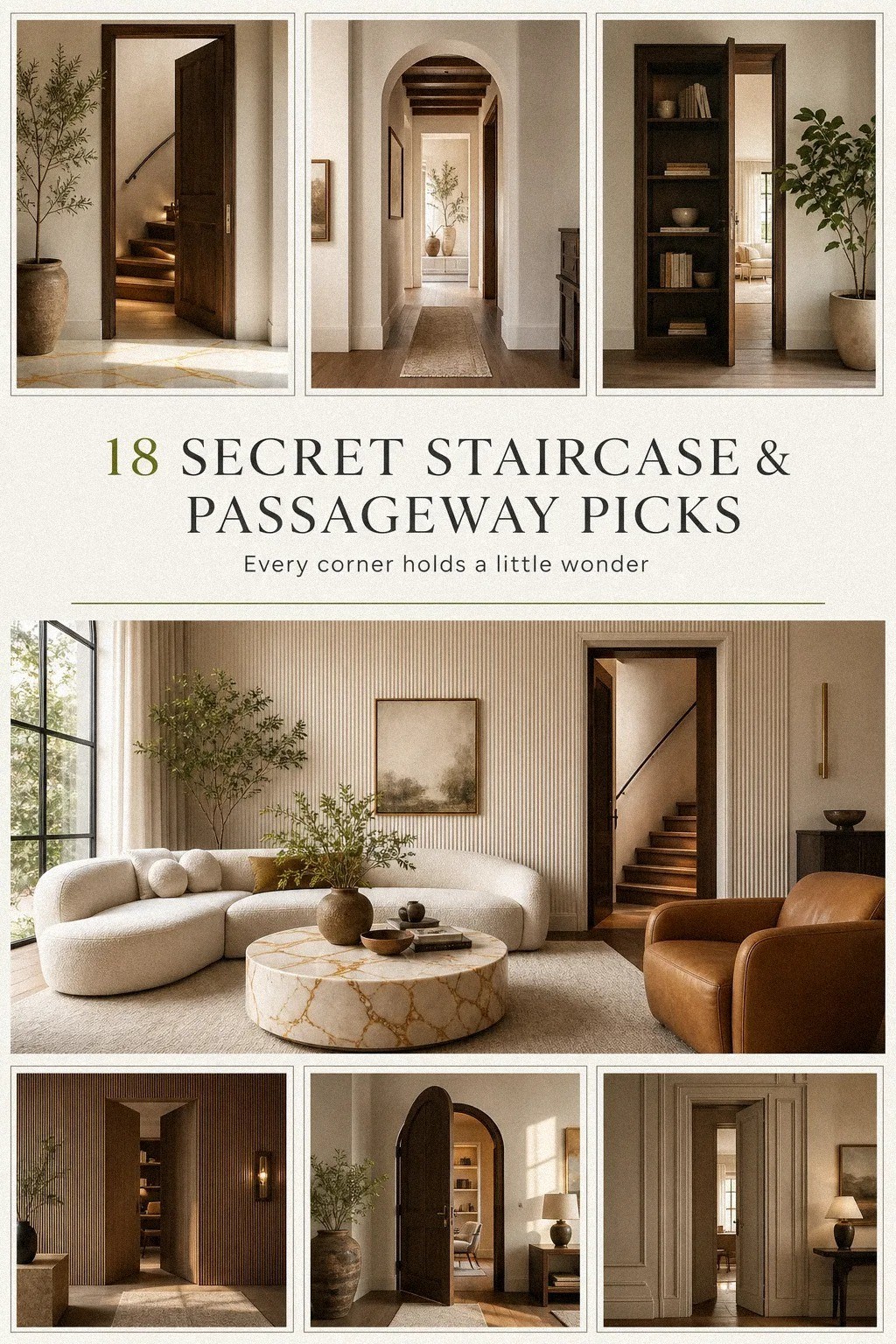
Hidden stair and passageway ideas for old-house charm work best when the concealment reads like real architecture, not a novelty add-on, and the warm, timeless result is what every quiet old house is reaching for. I learned that the hard way after styling a panel door so cleverly that it looked brand new, which was exactly the problem. Old houses forgive drama. They do not forgive fake history.
- Frame a stair door with reeded wall panels
- Disguise the passage behind library ladder shelves
- Wrap the staircase opening in moody grasscloth
- Install a push-latch mirror beside the mantel
- Blend the riser door into painted wainscoting
- Curve an arched bookcase around the entrance
- Hide the stairwell behind sliding art panels
- Panel the living room wall floor to ceiling
- Tuck a reading passage behind built-in cabinets
- Light the detail threshold with brass sconces
- Mask the seam with stacked picture molding
- Paint the hidden staircase in charcoal lacquer
- Add faux cabinet fronts over the doorway
- Conceal the latch inside a sculptural wall hook
- Dress the passage with velvet drapery panels
- Expose a narrow reveal with warm LED strips
- Why do most hidden doors still look “added on later”?
- What does the “two-seam rule” actually fix?
1Frame a stair door with reeded wall panels
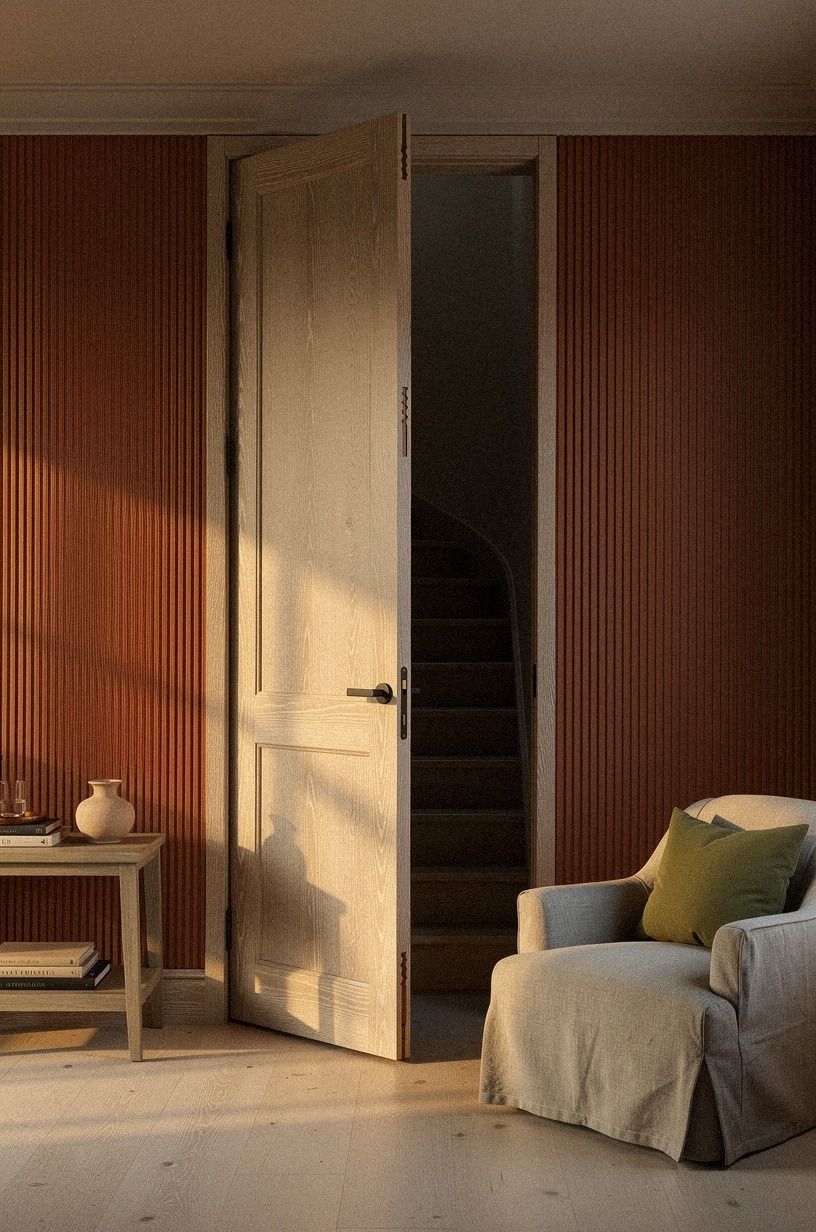
Start with the wall, not the door. If you want your stair entry to disappear into a balanced living room, reeded panels in a cerused white oak finish do the heavy lifting because the grooves pull your eye sideways instead of toward the seam. I like a centered composition here, especially when your sofa wall already has symmetry and you want the opening to feel inherited rather than recently added.
Keep the palette grounded in terracotta, olive, and stone so your panel detail doesn’t feel too crisp. You could pair a soft rug in an 8×10 size with a low oak table around 16 to 18 inches high, then let the panel field rise quietly behind it.
I have done this with Benjamin Moore Revere Pewter HC-172 on the adjacent trim, and the warmth keeps the wood from reading beachy. If your house leans formal, skip narrow slats.
Wider reeds feel older, calmer, and much more believable.
Typical cost by tier (US averages):
2Disguise the passage behind library ladder shelves
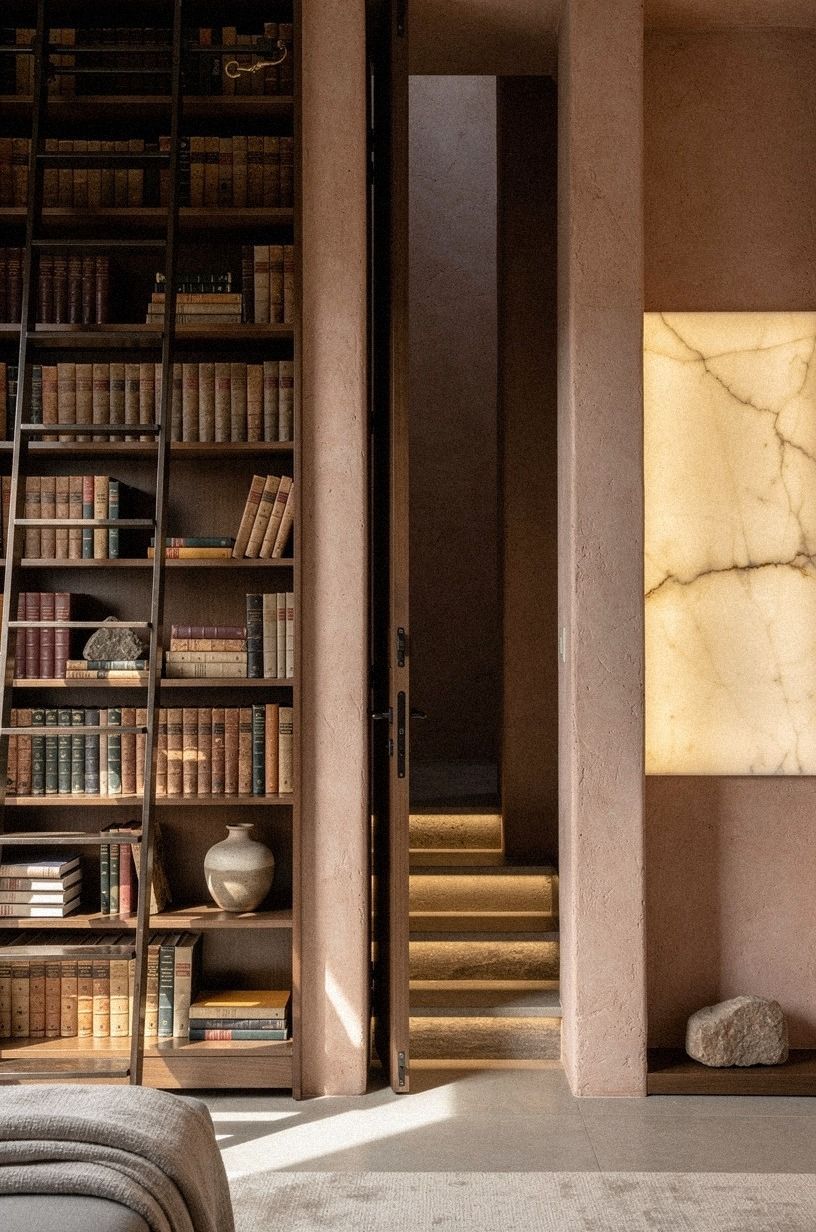
Build your concealment around function you already want. A rolling library ladder does the heavy lifting here because the eye reads “library” long before it reads “door.” Pair the shelves with reclaimed heart pine rails and a slim antique brass pull at hip height, and the opening behind becomes the second story of the composition, not the main event.
The mood turns warm and welcoming the moment the spines outnumber the trim, which is exactly the cozy, intimate register you’re after. I’ve watched this fail when the shelves feel staged.
The fix is simple: vary the books in height and weight, then let one or two spines face sideways on purpose. For the bar-tucked version of the same idea, see our hidden living room bar ideas.
The whole room reads collected, not costumed.
3Wrap the staircase opening in moody grasscloth
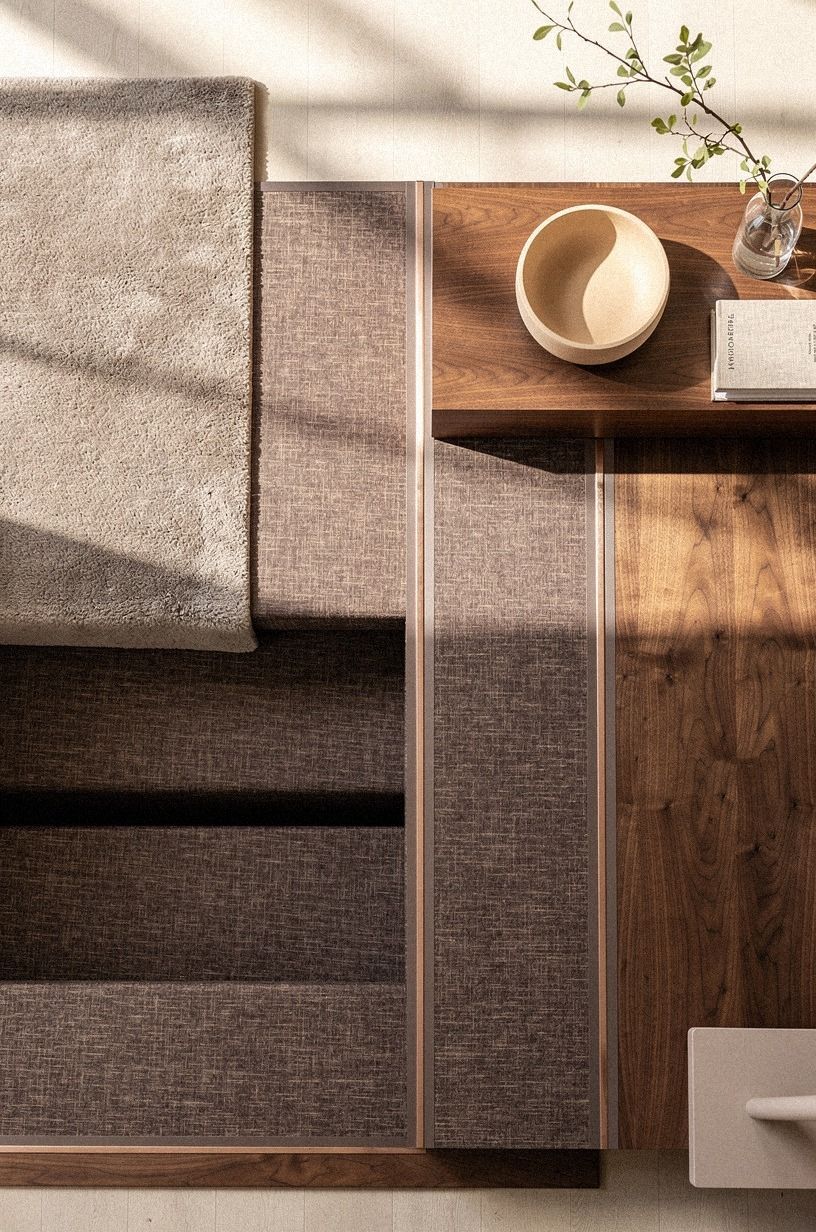
Texture can hide a lot, and grasscloth is one of the smartest, most earthy ways to soften an awkward stair cutout into something airy and inviting. When you wrap the opening in a plum-gray wallcovering, the seam gets visually busier and less readable from across the room. That matters if your living room is open plan and you don’t want the stair entry breaking the whole sightline.
Go richer than you think you should. A gray-purple grasscloth beside book-matched walnut veneer and a touch of rose-gold metal catches light in a way flat paint never can.
But keep the trim profile restrained, because too many fussy edges make the opening more obvious. I made that mistake once, and every guest looked straight at the joinery instead of the room.
If your sofa is deep, around 35 to 40 inches, this darker surround also keeps the wall from floating away behind it.
4Install a push-latch mirror beside the mantel
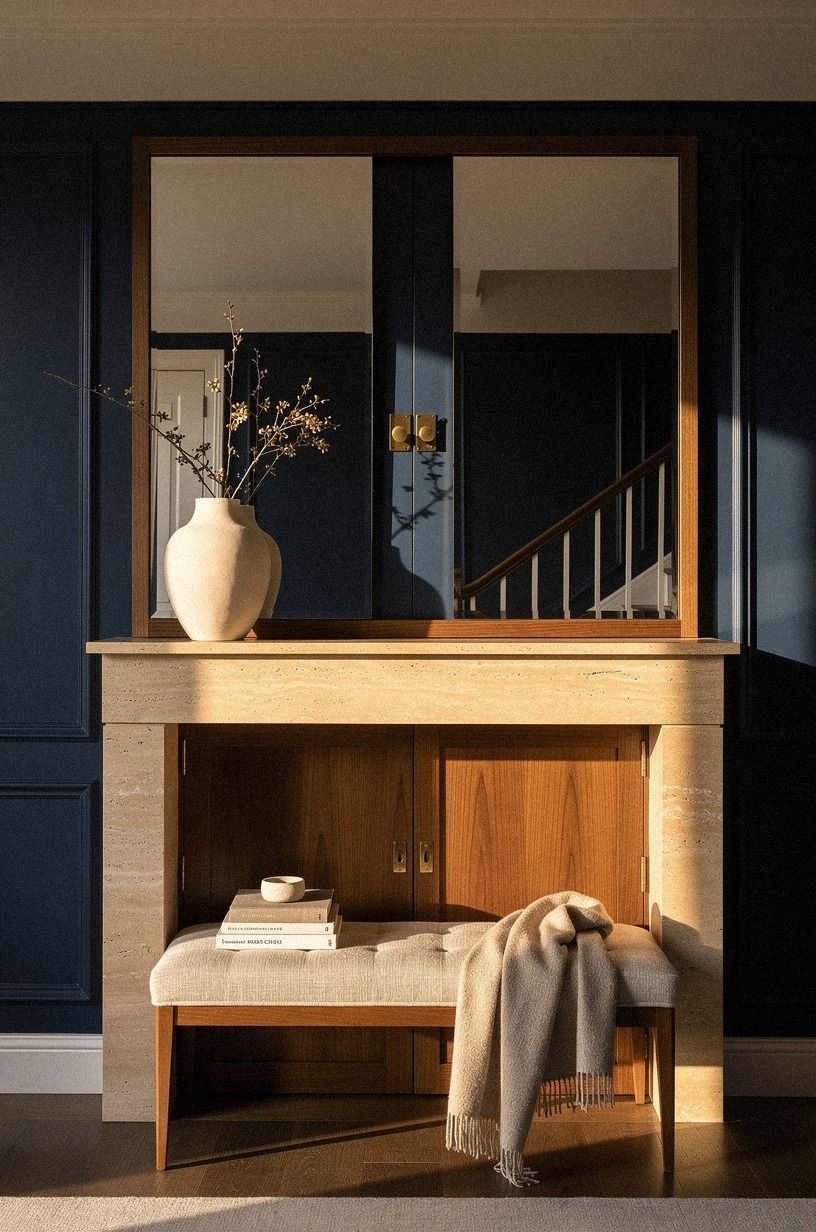
A mirror panel works when it behaves like millwork first and mirror second. Align it to the same width as the mantel, run a quartered white oak cap along the top so the seam reads as a single composition, and mount a touch-latch on the strike side where nobody’s hand naturally falls.
You’ll get reflection in the room and a working door on the same plane, and that’s the quiet kind of magic old houses were built for. If you love the idea but want a bar instead of a stair, our hidden bar behind a mirror door covers the mirror-as-millwork logic from a different angle.
5Blend the riser door into painted wainscoting
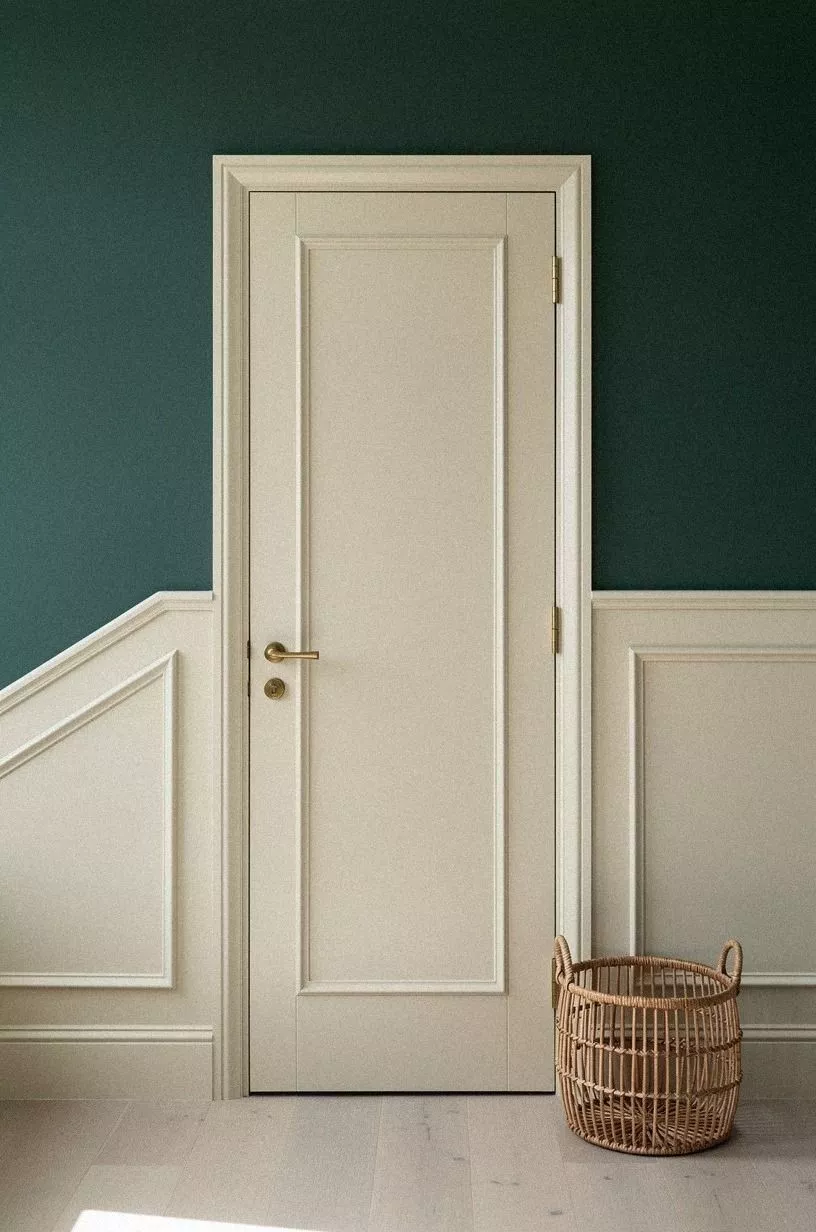
Treat the lower stair access like part of the wall base, not like a separate object, and the room reads refined and welcoming instead of staged.
6Curve an arched bookcase around the entrance
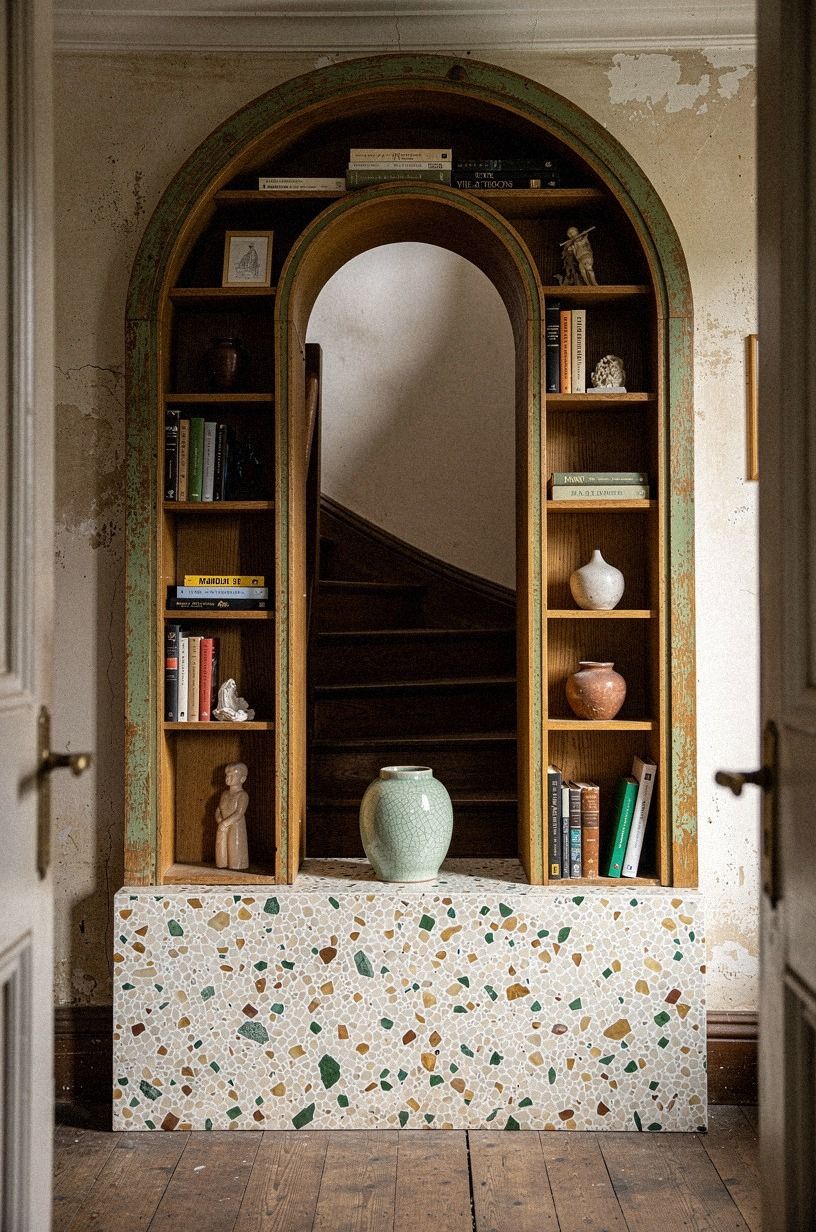
Lean into generosity here. An arched bookcase makes the opening feel intentional because the curve shifts the conversation from concealment to architecture, and the resulting nook turns soft, dramatic, and timeless in the same breath.
You see shelves first, then the passage tucked inside them, which is a much nicer reveal than a flat wall with a random slit cut into it. Forest green, rust, and natural oak give you that library warmth older houses wear so well.
I love this with oversized-chip terracotta pottery, but only a few pieces. Too much styling and you start to lose the arch itself.
Use 3/4-inch solid white oak shelves if you can, because thin stock ruins the gravity. And if your room is small, keep the coffee table about two-thirds the sofa length so the curve still has room to breathe.
Article Sven in tan leather plays especially well with this look because the warmth feels collected instead of theme-y. For the built-in version of the same curving logic, our built-in in-wall bar cabinetry breaks down the joinery and the panel rhythm separately.
7Hide the stairwell behind sliding art panels
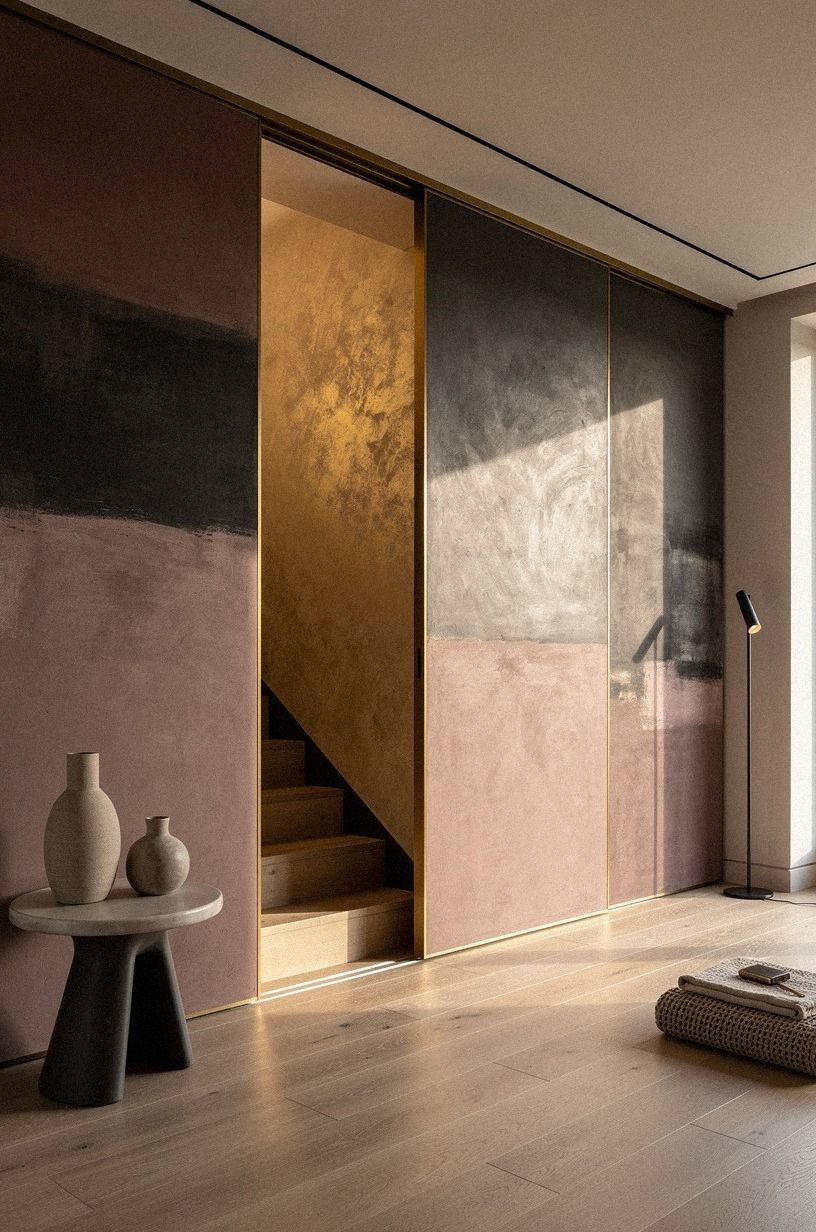
When you do not have enough depth for a swinging door, let the wall move laterally. Sliding art panels are practical and sophisticated, yes, but they also give you a reason to make the passage part of the room’s airy, dramatic composition. One shifted charcoal panel against dusty rose plaster and brass reads moody and intentional, almost like a gallery wall that happens to open.
The key is scale. You need panels large enough to feel architectural, not like framed art hung over a problem.
I prefer hand-applied Venetian plaster behind them because the movement in the finish keeps the whole wall alive even when the panel is closed. But do not overdecorate the art itself.
Abstract shapes, smoky tones, a little texture. If you’re choosing between obvious rails and a cleaner recessed track, pick the cleaner track every single time. The magic is in the restraint.
8Panel the living room wall floor to ceiling
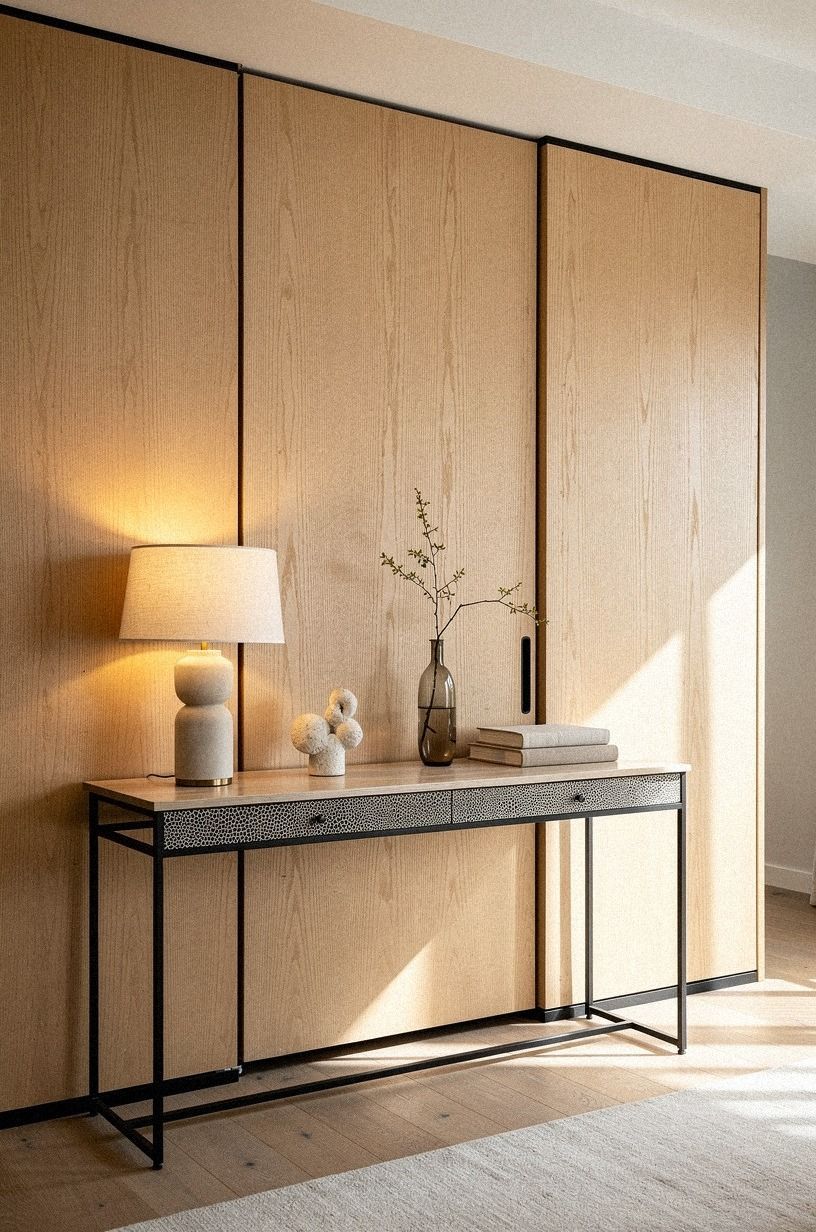
Sometimes the best move is the simplest one. Run shaker-style MDF panels in a deep Farrow & Ball Inchyra Blue No.289 from baseboard to crown, let the rails hit the door frame in one continuous line, and watch the entrance disappear into the room’s rhythm.
You’re not hiding anything complicated; you’re just refusing to let the wall announce itself. It’s the same approach an old dining room uses when the wainscoting travels uninterrupted around a corner, and it earns you a doorway that doesn’t show off.
For the dining-room side of the same idea, our hidden bar cabinetry for the dining room shows how continuous paneling does most of the disguising.
9Tuck a reading passage behind built-in cabinets
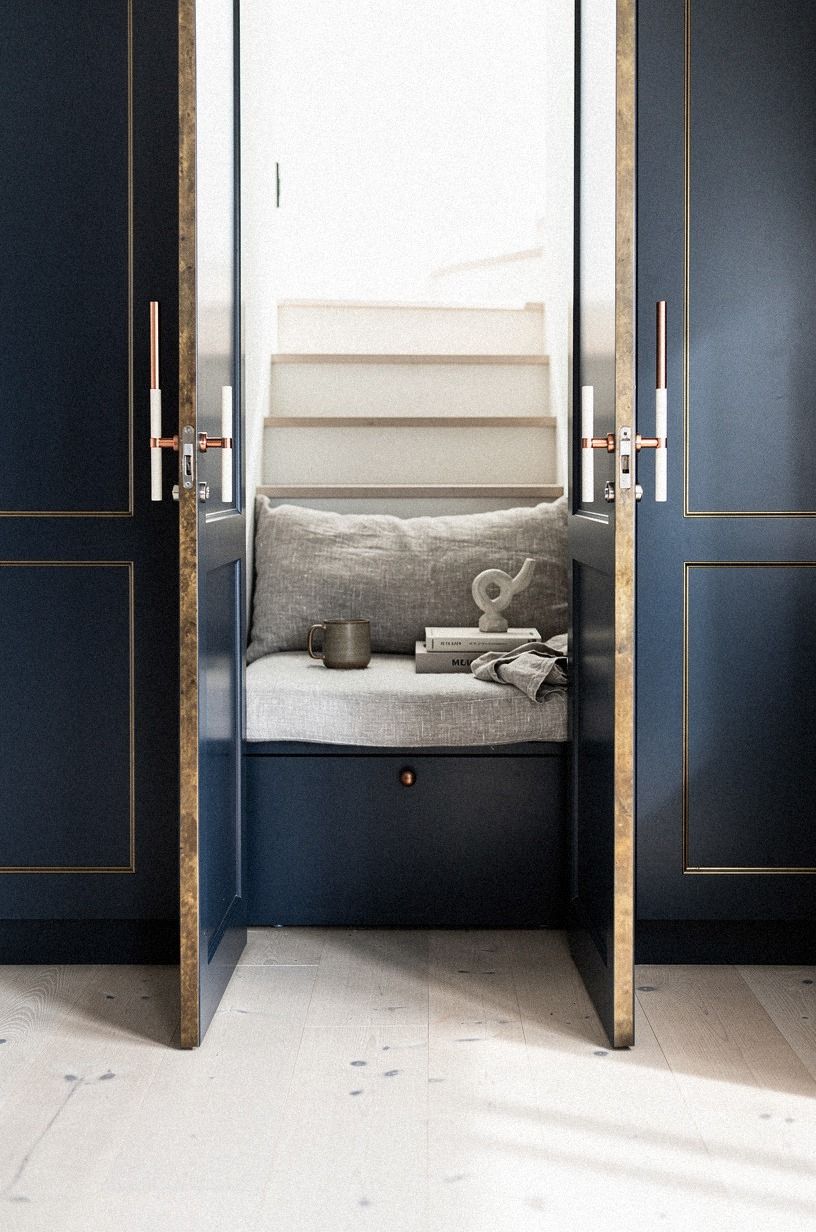
Built-ins are useful cover because cabinet doors already imply hidden storage.
10Light the detail threshold with brass sconces
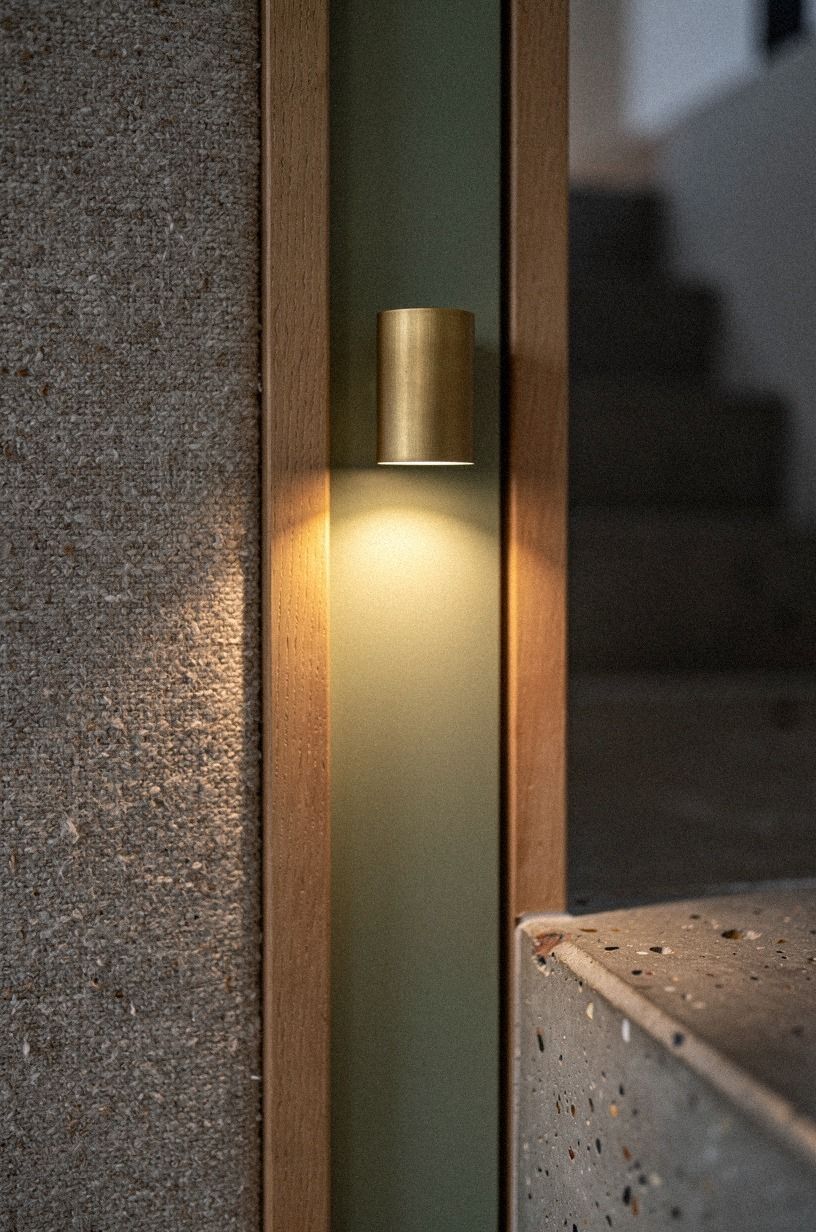
Threshold lighting is one of those details nobody notices until it’s wrong. A single aged brass sconce washing warm cream light over a sage-painted edge gives the concealed opening a reason to exist after dark, and that soft skim is often all you need to make the join disappear. Blue bulbs kill this effect fast, so do not even bother with them.
I aim for a lamp temperature that feels amber, not white, and I keep the fixture close enough to the jamb that the glow feathers across the edge instead of blasting the whole wall. The result feels welcoming and refined rather than theatrical. But don’t use matching ceiling cans overhead if you can help it.
Layered light wins. Always.
If you need a second source, a table lamp near the stair approach does more for atmosphere than another recessed light ever will. For the full layered-lighting playbook, our speakeasy lighting guide covers sconce placement and bulb temps at a deeper level.
11Mask the seam with stacked picture molding
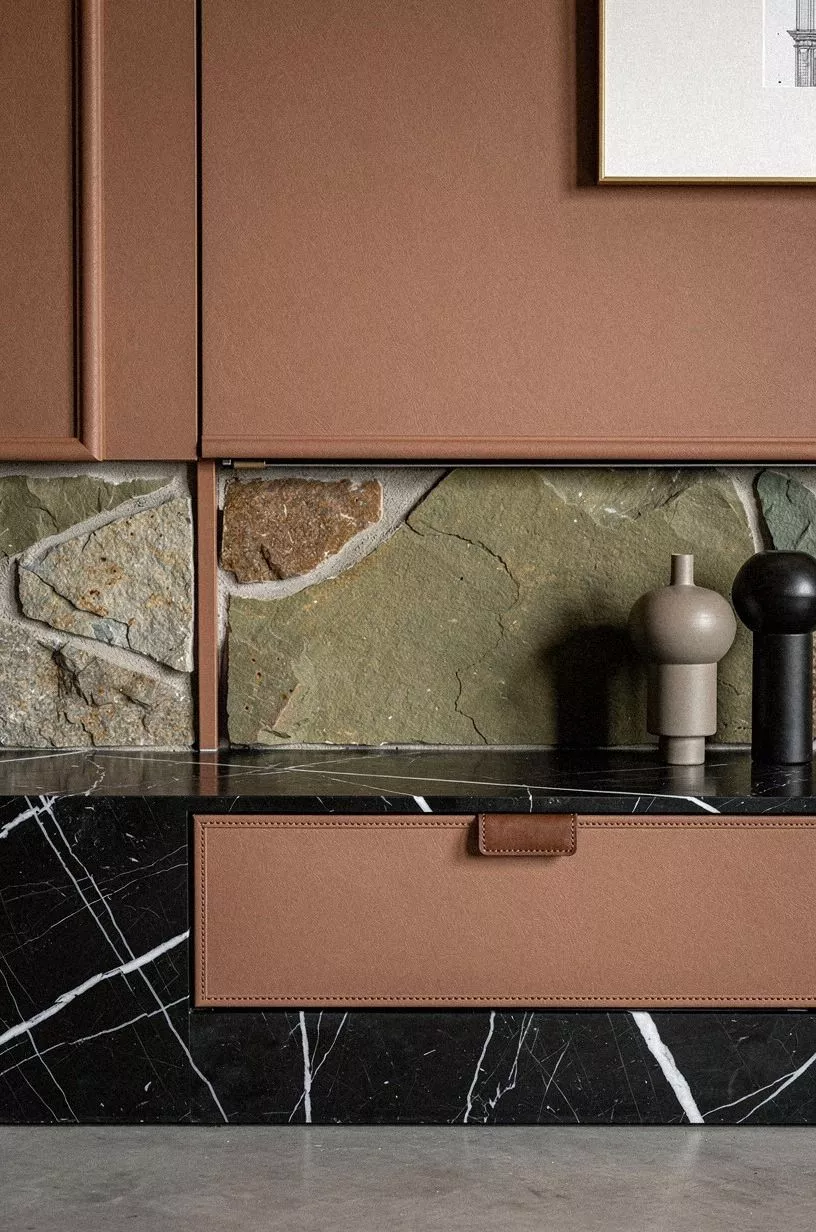
Use molding as camouflage, not decoration. Stacked frames over a concealed opening work because the seam becomes one more vertical and horizontal rhythm in a field of repeats, which is exactly what you want when your goal is to make the wall feel established, harmonious, and quietly elegant. Terracotta, stone, and olive bring enough warmth that the geometry doesn’t get stiff.
I especially like this when a Nero Marquina marble side table or lamp base sits nearby, because the black note sharpens the wall without making it severe. Keep the molding slightly proud, but not theatrical.
And let the boxes vary a little in height so the eye travels instead of measuring. If you’re tempted to center every frame perfectly, do not.
Old houses usually look better when the math is good but not precious.
12Paint the hidden staircase in charcoal lacquer
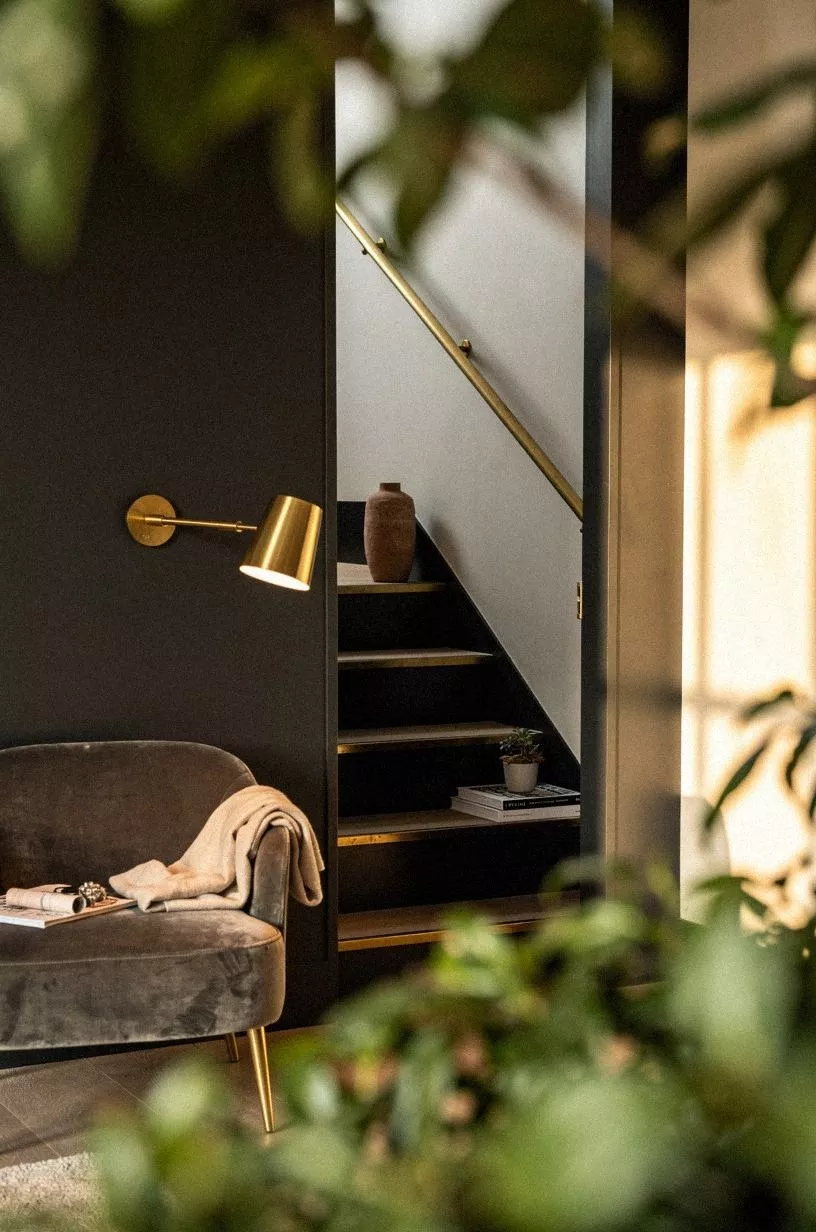
Gloss can be your friend if you use it where the opening recedes instead of where the wall announces itself. A Benjamin Moore Black Forest Green 2060-10 lacquer on the stair faces behind a slim pocket door reads as a moody sliver rather than an opening, and the sheen catches just enough lamplight to feel deliberate.
It’s the same move old butler’s pantries use to disappear service doors, and you’ll get the same hush. For the speakeasy cousin of the same moody lacquer, our hidden speakeasy lighting guide walks through the bulb temps and the sheen together.
13Add faux cabinet fronts over the doorway
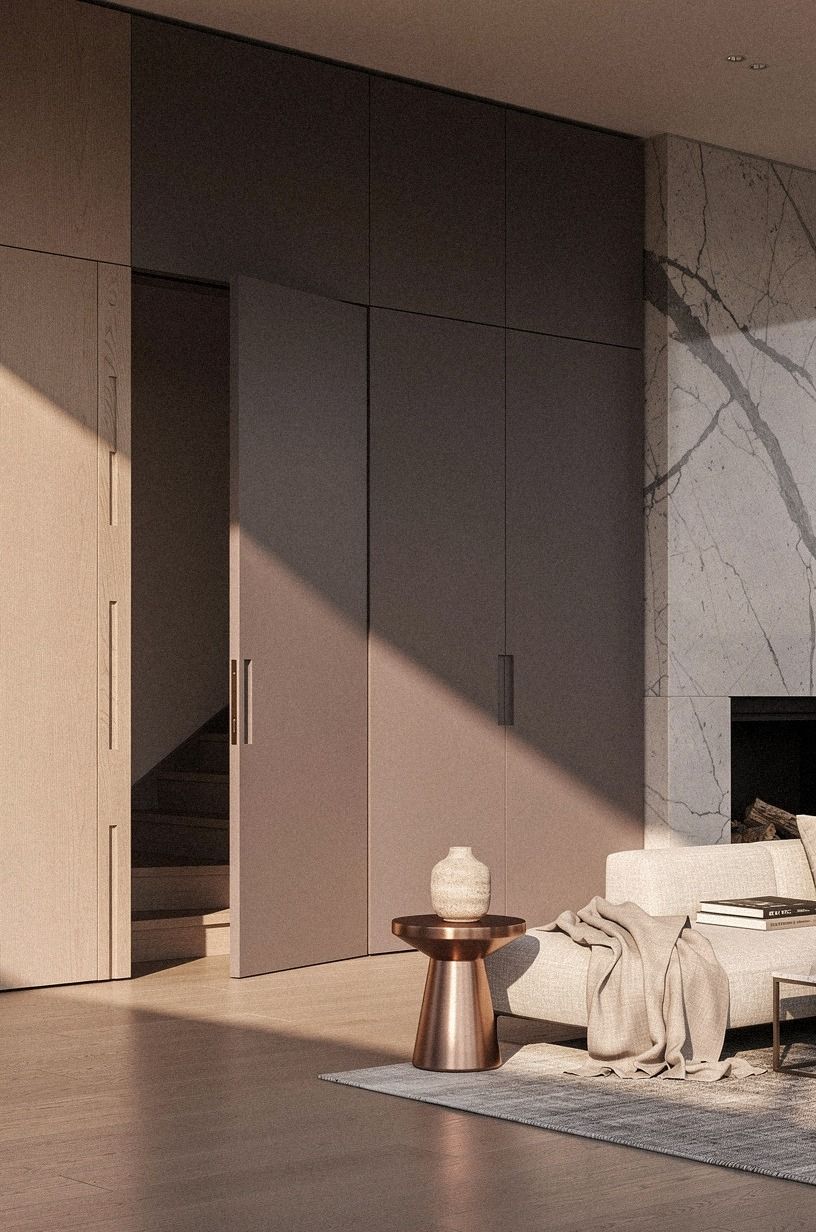
If the wall already wants storage, give it storage language. Faux cabinet fronts laid over the doorway can make a stair entry disappear in a diagonal living room view because your brain reads repeated doors before it reads depth, and the wall reads calm and sophisticated in the process. That’s especially persuasive in plum gray with rose-gold notes and a pale stone counterpoint nearby.
Use simple fronts with believable reveals, then let a Carrara marble top or shelf somewhere in the composition echo the refinement without turning the wall into a kitchen imitation. I prefer longer, calmer rectangles over tiny shaker boxes here.
They feel more like house architecture and less like furniture cosplay. And if you’re renting, removable overlay trim and paint-safe adhesive strips can give you part of this look without committing to a full custom build.
For a deeper take on removable concealment, our turn a closet into a hidden bar shows the reversible-overlay logic from start to finish.
14Conceal the latch inside a sculptural wall hook
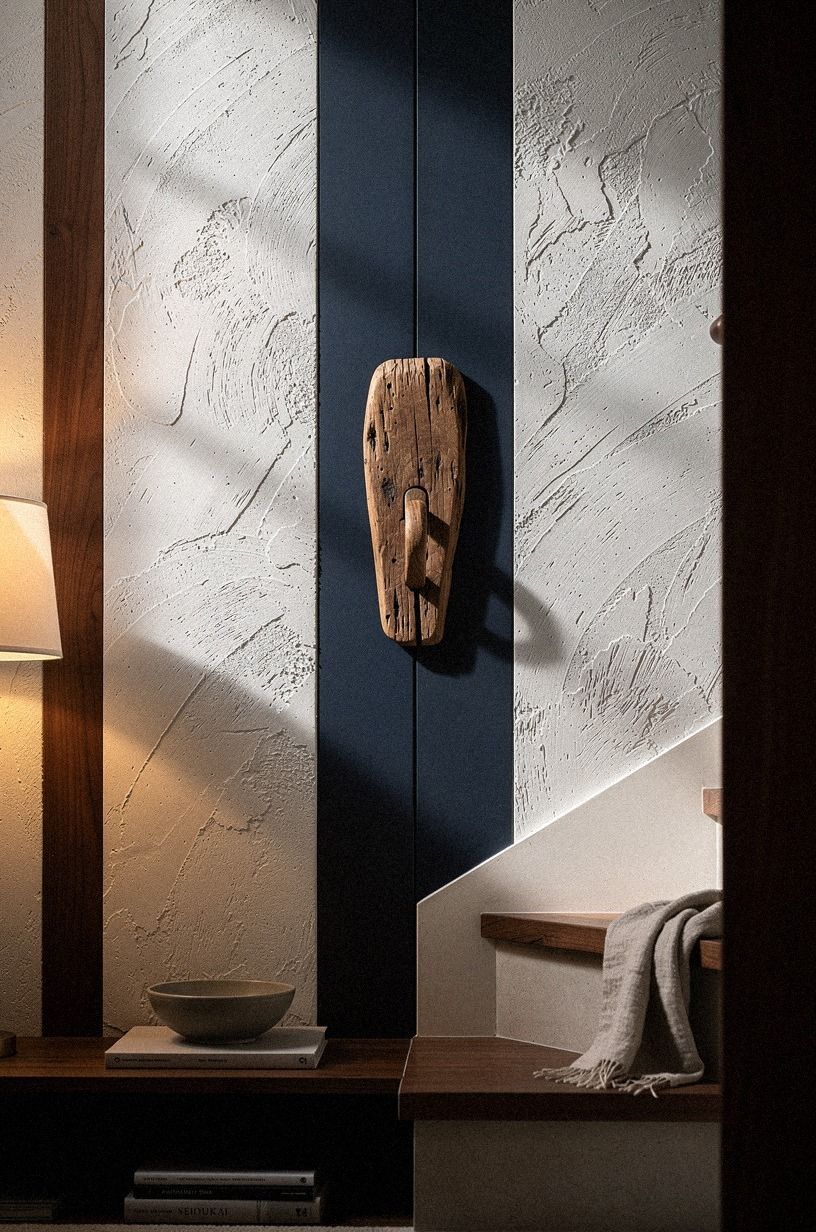
Hardware should solve the problem while looking like it belongs in the room.
15Dress the passage with velvet drapery panels
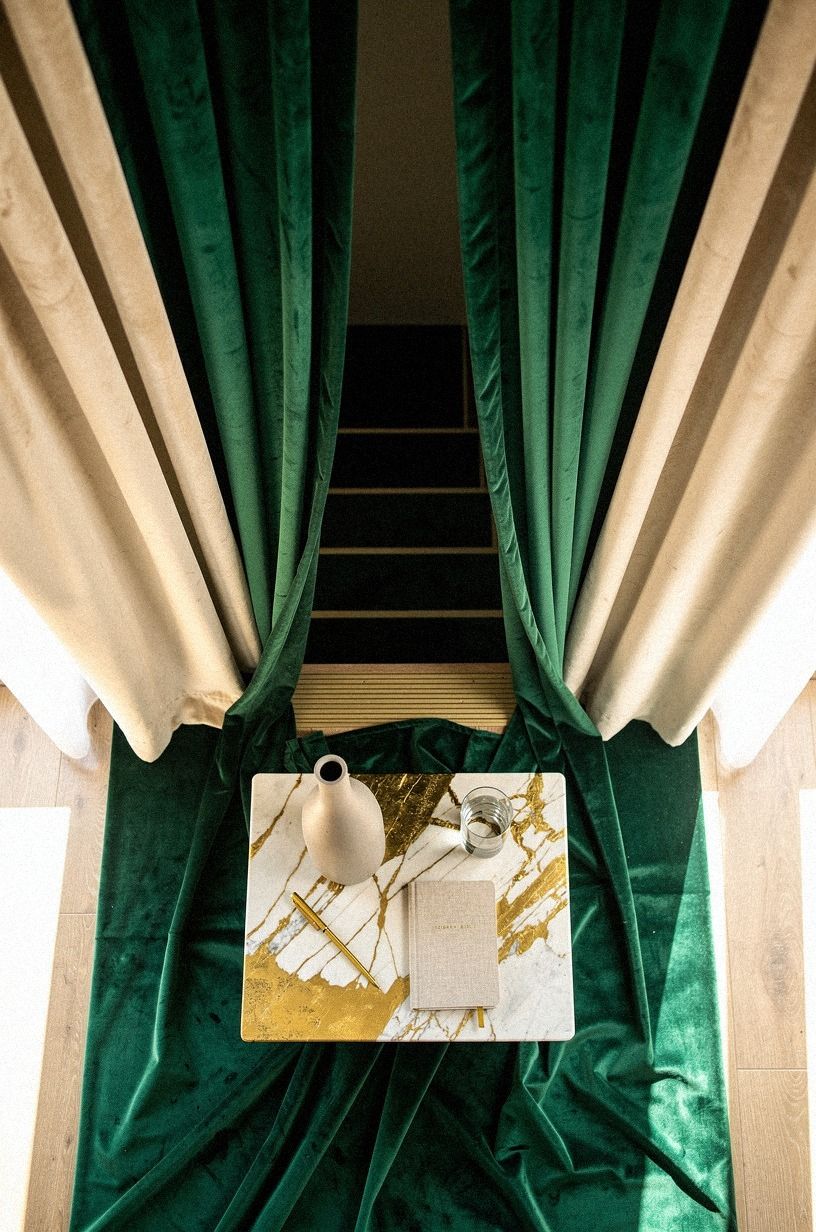
Fabric is the softest concealment move of the bunch, and sometimes softness is exactly what a stair opening needs to feel intimate and welcoming. Velvet panels pulled back around the threshold create depth even when the opening itself is modest, which is why this approach works so well in a living room that already has layered seating and a little visual romance. Emerald, gold, and cream are hard to beat here.
Go heavier than basic curtain weight if you can. 18 oz cotton velvet hangs with enough body to feel architectural, and warm brass rings keep the treatment from looking improvised. You should mount the rod high and wide so the opening clears fully when the panels are open.
And if the room needs grounding, a wool rug in 9×12 under the front legs of the seating group will make the drapery feel like part of a complete plan, not a lone flourish. For the brass-and-velvet mood turned all the way up, our speakeasy curtain and drapery ideas show you how far the same fabrics can travel.
16Expose a narrow reveal with warm LED strips
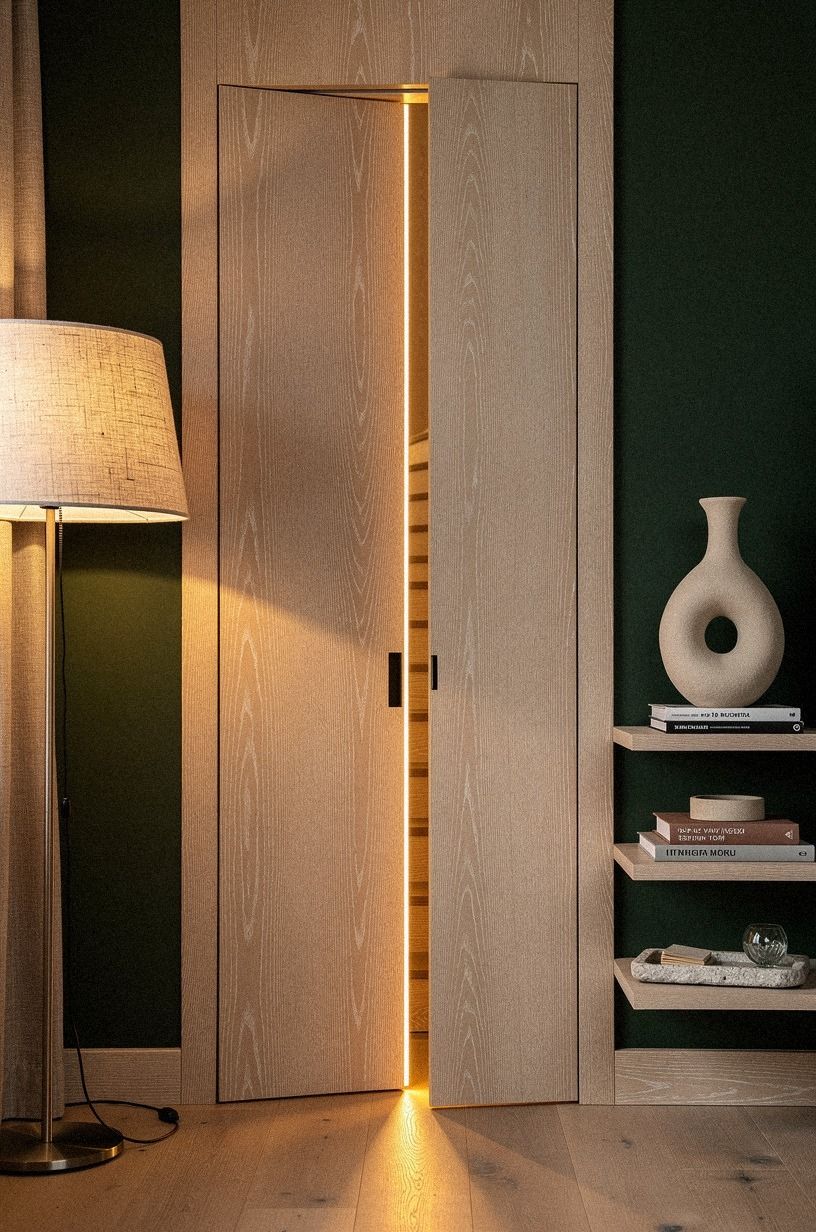
Sometimes you don’t want full invisibility. A thin line of warm LED light can outline the passage edge just enough to make it feel intentional after dusk, especially when the room is already built on forest green, rust, and natural oak, and the resulting reveal turns quietly dramatic and modern. That tiny reveal tells you the opening is there without forcing it into the middle of the room’s daylight personality.
Use the light in the recess, not on the face. That’s the whole point.
I like it tucked against cerused white oak with a diffuser so you get glow instead of dots, and I keep the rest of the trim quiet. But avoid icy LEDs.
They flatten old materials fast. If your TV sits in this room too, keep it about 1.5 to 2.5 times the screen diagonal from the sofa so the lit seam still reads as architecture, not accidental ambient clutter.
17Why do most hidden doors still look “added on later”?
Here’s the uncomfortable truth: a hidden stair reads as old-house original only when the wall around it earns the conversation first, and that means warm, sophisticated decisions stacked before the millwork. I’ve watched three different clients build beautiful millwork that still looked like 2024 glued onto 1924, and the door wasn’t the problem.
The wainscoting was wrong, the trim profile was wrong, the room temperature was wrong. The door just got the blame because it’s where the eye lands.
The fix is rarely more door. It’s more room.
You upgrade the floor before you upgrade the joinery. You settle the window casings before you cut the rebate.
You pick the Farrow & Ball Studio Green on a north wall before you choose the latch, because color does more disguising than hardware ever will. A room with real weight forgives an imperfect seam.
A thin room punishes a perfect one.
Money follows the same logic. People assume the custom door is the splurge and the styling is filler.
I’ve spent $4,200 on a passage that looked cheap and $900 on one that looked inherited. The difference wasn’t craftsmanship, it was whether I let the aged brass sconces and the linen panels arrive before the trim was painted.
Build the room first. Hide the door second. The sequence is the whole lesson.
18What does the “two-seam rule” actually fix?
If you’ve never heard the two-seam rule, here it is in one line: the eye should find two intentional lines on the wall before it finds the door. Maybe that’s the rhythm of reeded oak plus the shadow line around a mirror panel.
Maybe it’s picture molding plus the edge of a built-in cabinet. Either way, the wall earns its keep before the passage earns its reveal.
This is also where I see the most expensive mistakes. People obsess over the hidden door and forget the wall needs other jobs to do. A flat plaster field with one concealed seam looks like a flat plaster field with one concealed seam.
Add a panel rhythm, a shadow gap, a molding cadence, and suddenly the same seam looks like it was always there. The room isn’t hiding the door.
The room is doing something else entirely, and the door happens to be in it.
So before you spec the latch, take a photo of the wall and trace two other lines onto it, and the room starts to feel grounded, harmonious, and quietly luxurious. If you can name two design moves that predate the door, you’re safe.
If you can’t, the door is doing too much work. Back up, layer the room, and come back to the millwork when the wall has somewhere else for the eye to land.
The rule is dumb-simple, and it’s saved me from three bad installs this year.
The Two-Seam Rule for Making It Feel Original
Here’s my honest take: the best hidden stair details don’t work because they’re hidden, they work because the room feels warm, intimate, and timeless around them. They work because they obey the room around them.
I used to think the goal was total invisibility, and that mindset gave me some of my worst results. The door vanished, sure, but the wall felt overworked.
You’d look at it and sense that something was trying too hard, which is the opposite of old-house ease.
Now I use what I call the Two-Seam Rule. If you can notice two intentional lines before you notice the opening itself, you’re in good shape, and the room feels sophisticated and grounded. Maybe that’s the rhythm of reeded oak plus the shadow line around a mirror panel.
Maybe it’s picture molding plus the edge of a built-in cabinet. The point is that your eye should have another job to do first.
A room needs hierarchy. Without it, even expensive millwork can feel theatrical.
This is also where money gets misread. People assume the clever door is the splurge and the styling is the easy part, when in reality the soft, layered styling is what carries the room toward refined and welcoming.
Usually it’s the opposite. A passage can disappear into very ordinary carpentry if the room has weight in the right places: a proper rug under the seating, a lamp that throws amber light instead of flat white, drapery with actual body, a wall color with some complexity to it.
That’s why I’d rather see you buy one excellent pair of linen panels for $120 to $400, then wait on the custom latch, than rush the construction and leave the room thin around it.
And yes, paint matters more than people want it to. Sherwin-Williams Evergreen Fog SW 9130 is forgiving in mixed light, while Farrow & Ball Hague Blue No.30 gives you depth when you want the opening to fall back.
I would not choose color in isolation, though. I would choose it after you know what the wood is doing, what the metal is doing, and how the room looks at 4 pm in winter (especially in January).
Old-house charm is not nostalgia. It’s editing. And the hidden stair only feels timeless when the wall, the light, and the materials all sound like they’re speaking in the same voice!
The Questions Worth Answering First
What is the best Detail Staircase & Passageway Ideas for Old-House Charm for a small living room?
The best option is a paneled wall or built-in cabinet approach because you keep floor space clear while still getting the hidden entry effect. If you need furniture that stays visually light, IKEA KALLAX birch-effect trimmed into a wall system can help you fake custom storage without crowding your walkway. For a tighter floor plan, our hidden mini bar ideas for small spaces show how dead space becomes the entry.
Where can I buy Detail Staircase & Passageway Ideas for Old-House Charm pieces on a budget?
Start with Target Threshold, IKEA, and Wayfair for basics like sconces, panels, mirrors, and cabinet hardware. Then check Facebook Marketplace for old doors, ladders, and vintage hooks.
Used wood usually looks better here anyway, and your budget goes much further that way! If you’d rather skip the carpentry altogether, our built-in cabinetry that conceals round up pre-made hidden door kits by price.
How much does a Detail Staircase & Passageway Ideas for Old-House Charm makeover cost?
A light refresh usually lands around $300 to $1,200, while a more complete living room update with better seating and layered lighting can run $2,500 to $8,000. Paint, rearranging books, and editing styling are the free wins.
Custom millwork is what pushes projects into the expensive tier. If you’re budgeting around the carpentry, our hidden bar ideas for the bedroom break down the hardware and trim costs line by line.
Can I create a Detail Staircase & Passageway Ideas for Old-House Charm on a budget?
Yes, and you really can make it convincing with low-cost surface changes first. Painted molding.
Removable reeded film on a mirror panel. Thrifted brass sconces.
A $120 to $400 pair of linen drapes can hide more awkwardness than people expect, especially when you hang them high. For renters, our turn a closet into a hidden bar walks through the reversible layers that survive a security deposit.
Is a Detail Staircase & Passageway Ideas for Old-House Charm worth it in a small space?
Yes, because small rooms benefit from dual-purpose walls more than large ones do. If your passage doubles as storage, shelving, or drapery, you gain function without adding bulk.
Keep the rug to 8×10 or 9×12 with front legs on it so the layout still feels settled rather than chopped up. It is worth it! For the dedicated storage side of the same idea, our small hidden bar ideas for apartments layout a 5×7 footprint you can actually live with.
Is Detail Staircase & Passageway Ideas for Old-House Charm a good idea for a rental?
Yes, if you focus on reversible layers instead of carpentry. Peel-and-stick molding.
Tension-rod velvet panels. Removable hooks hiding touch latches.
Plug-in sconces. You won’t get the full built-in effect, but you can absolutely get the mood, and that’s what most people notice first.
For the full reversible playbook, our turn a closet into a hidden bar covers adhesive trim, tension rods, and freestanding panels room by room.
Where I’d Start If I Had to Pick One
If I had to pick one, I’d start with the reeded wall panels. They hide the seam while giving the whole room architecture, which means every other piece you buy afterward has a stronger, warmer, more elegant backdrop.
Paint that wall second, light it third, then let the door wait until the room has somewhere else for your eye to land. You’ll thank me when the sconces go up and the opening disappears into the panel rhythm on its own.
If you want to see how the same panels carry an entire mood, our speakeasy seating and furniture guide walks through the panel-first sequence from primer to styling.