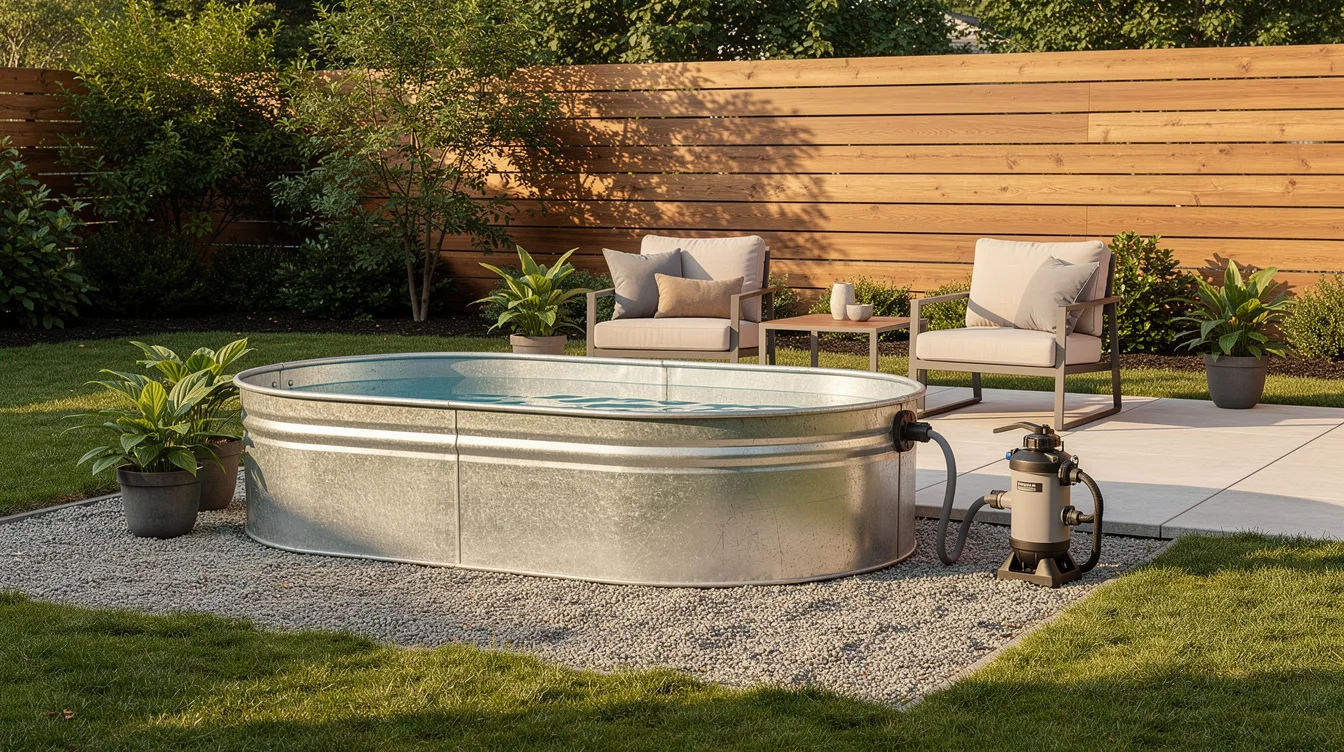
By noon, my patio was already hot enough to fry bare feet, and the inflatable kiddie pool I tried last year had one slow leak and a weird sagging side. I wanted cold water, a clean look, and something that didn’t turn the yard into a full construction zone.
A simple stock tank pool solved that fast. If you keep it small, freestanding, and lightly built, this kind of project can often stay in the no-permit lane in many areas, but you still need to check your local rules before you fill it.
Pick a Tank Size You Can Actually Live With
The sweet spot for a one-day build is usually an 8-foot round tank about 2 feet tall. That size typically holds around 580 to 700 gallons, which is enough for four adults to lounge without making your yard feel swallowed whole.
If your space is tighter, a 6-foot tank with the same 24-inch height is easier to level and fill, and it still works for two to four people. I’d skip anything bigger if your goal is one Saturday, because the moment the footprint gets ambitious, everything gets slower and more annoying.
Hunt for a Used Shell Before You Buy New
The whole point of the upcycled version is starting with an existing galvanized tank or heavy-duty poly tank instead of a fancy purpose-built pool kit. Facebook Marketplace, local farm listings, and neighborhood resale groups are usually better than buying blind and paying freight on a giant metal circle.
A typical 2026 price for a 6-foot tank runs about $150 to $700, and an 8-foot version often lands between $350 and $1,200. Freight is the budget killer, so I’d rather buy a used shell with a few honest scratches than waste money on shipping for a shiny one.
Build a Flat Base Without Pouring Concrete
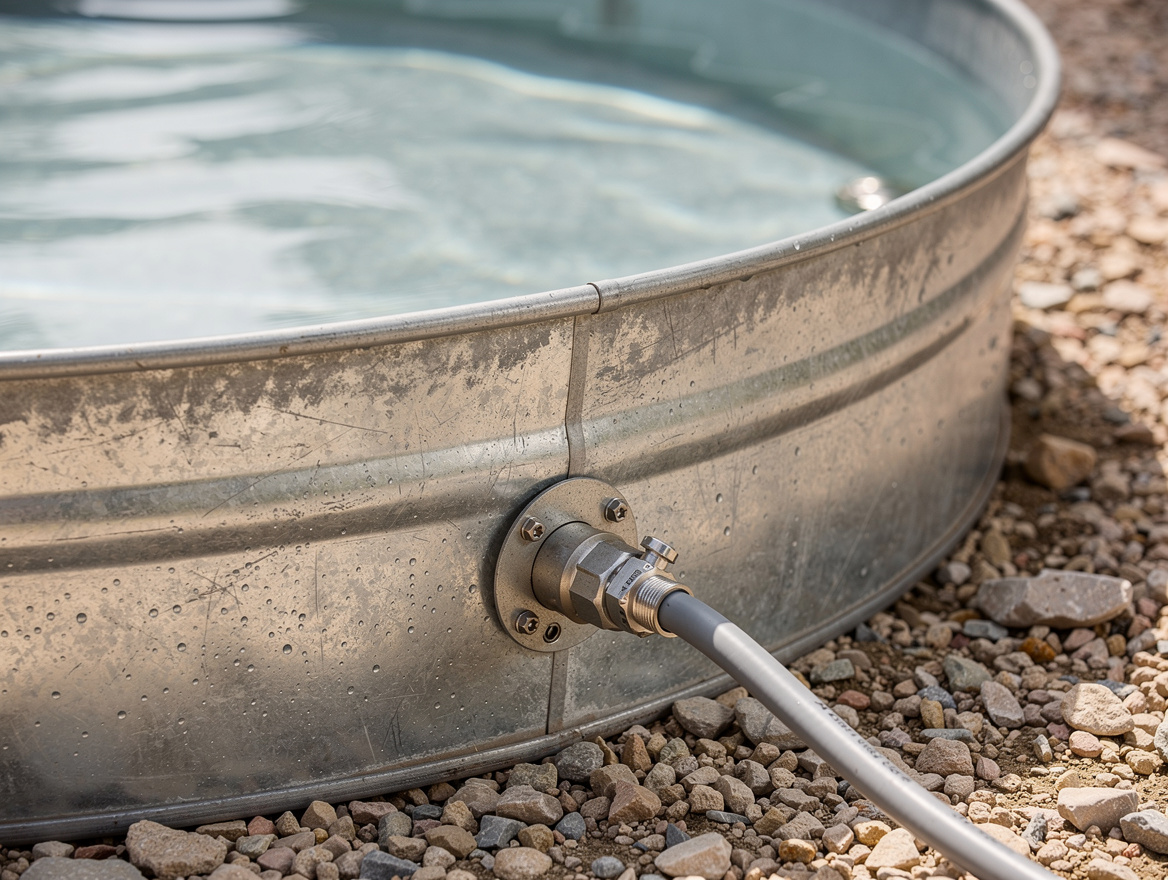
This is the part people rush, and it’s the part that decides whether the pool looks crisp or crooked. A layer of compacted gravel or sand over soil, plus a ground mat or pavers where needed, is usually enough for a temporary-style setup.
For an 8-foot tank, plan on a level circle closer to 10 feet wide so you have room to work and edge it neatly. A simple base typically costs about $50 to $200, and I think that’s money better spent than decorative extras on day one.
Keep the Plumbing Small and Simple
A basic pump and filter kit is what makes this feel like a real plunge pool instead of a livestock tub with ambition. In the budget range, most DIY setups use a small above-ground pool pump with either a cartridge or sand filter, and typical 2026 pricing sits around $100 to $400.
You’ll also need bulkhead fittings, hoses, clamps, and a shutoff valve, usually another $50 to $150 all in. I prefer simple exposed plumbing over trying to hide everything, because hidden DIY plumbing tends to turn one tiny leak into a half-day detective story.
Drill Clean Ports and Place the Equipment Wisely
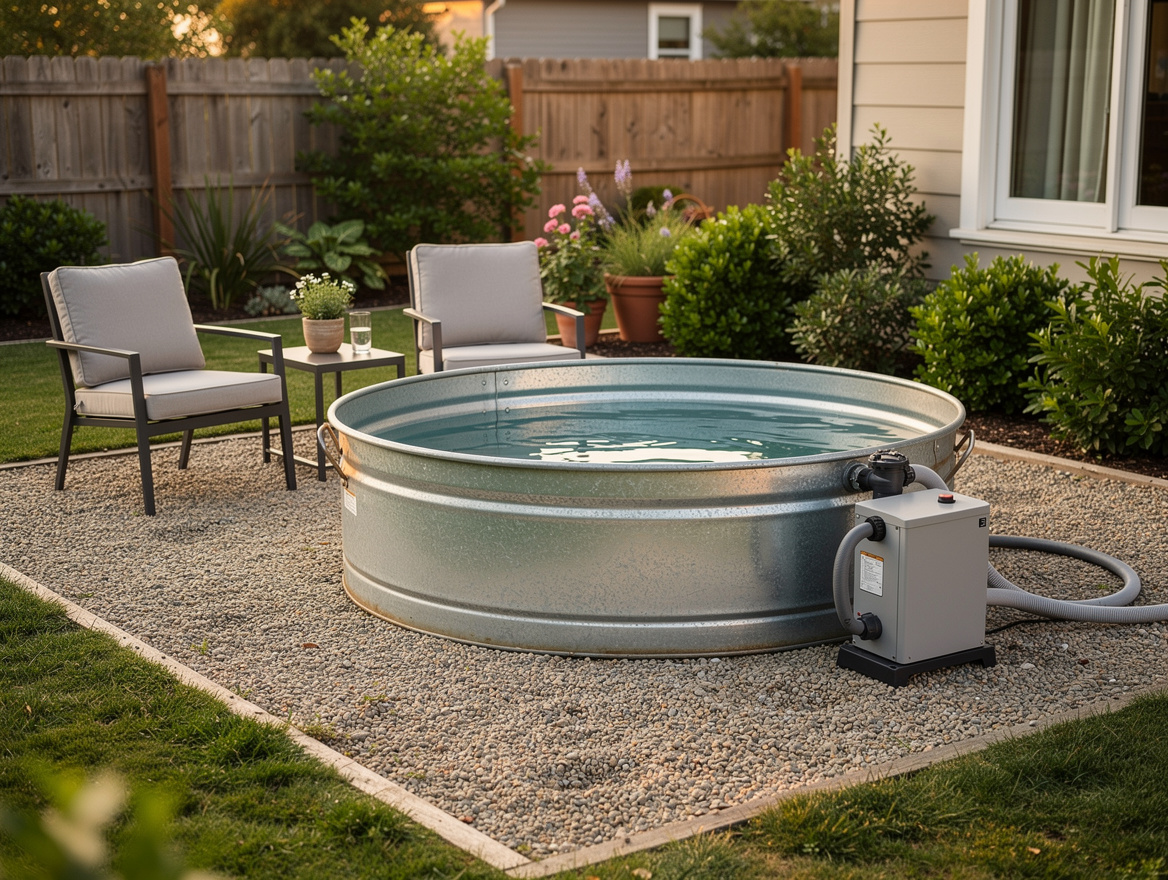
Set the filter unit close to the tank, on a stable paver or pad, and keep the hose path short. Short runs look tidier, lose less pressure, and give you fewer places for kinks and drips to start.
When you drill for inlet and outlet ports, measure twice and commit once, because a sloppy hole in steel is hard to forgive. I like the fittings low enough to circulate well but high enough that I’m not fighting every bit of splash and sediment near the bottom.
Fill It Fast, Then Treat It Like a Real Pool
Once the shell is level and the plumbing is tight, add water and start with a test kit, not guesswork. Basic first-year chemical costs, including chlorine tabs, a floater, and strips, usually run about $50 to $150, which is cheap compared with draining and restarting a cloudy tank.
A cover, a skimmer, and a small vacuum are optional, but they make daily use much easier. Expect another $80 to $250 for those extras, and I’d buy the cover first because leaves and bugs get old on day two.
Style the Edge So It Reads as Decor, Not Farm Gear
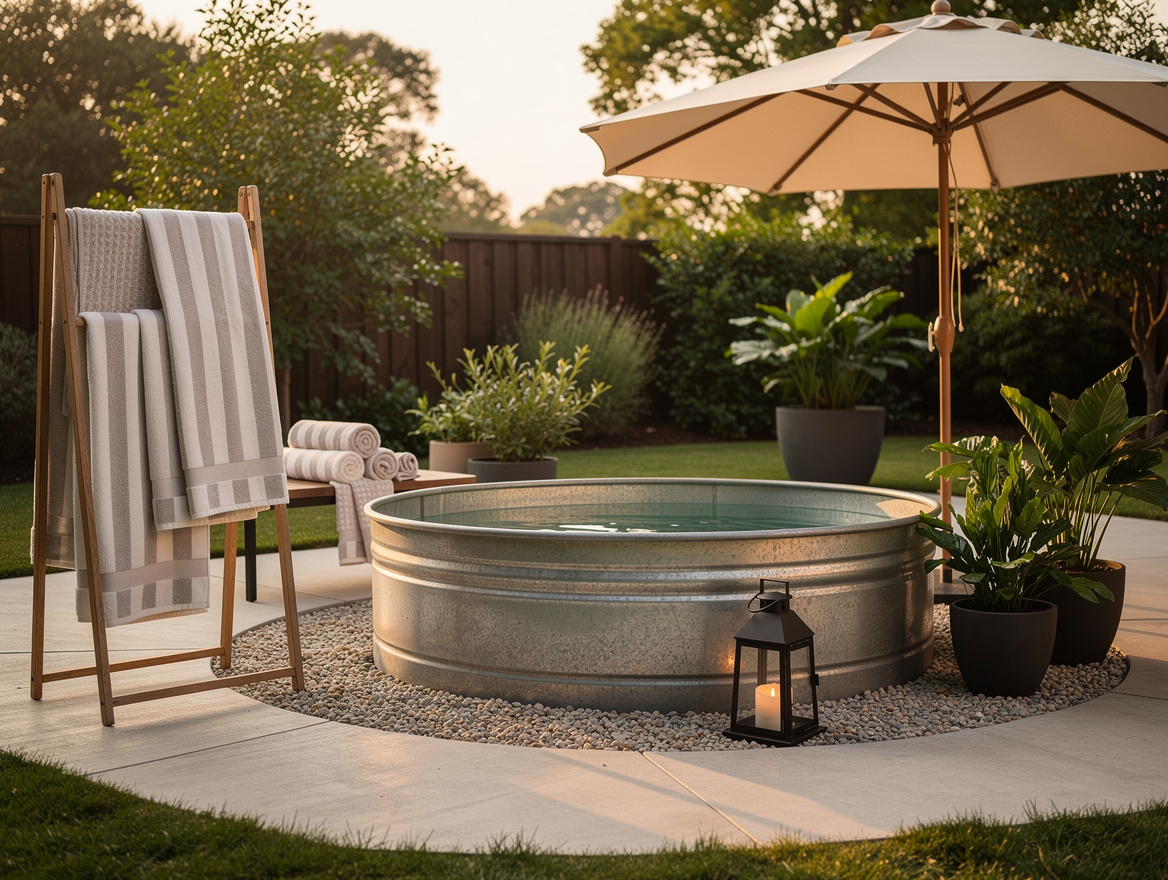
This is where the project moves from practical to magazine-worthy. A ring of pea gravel, two outdoor chairs from Target or Wayfair, and one sturdy side table instantly make the tank feel intentional instead of improvised.
I’d keep the decor restrained. A striped towel, a neutral umbrella, a weatherproof lantern from IKEA, done. Once you pile on signs, fake turf, and too many accessories, the whole thing starts looking like a themed rental instead of a backyard retreat.
Most neat, durable builds land around $600 to $1,500 in 2026 if you use a secondhand tank, a small pump, and a simple base. Start with the flattest part of your yard first, because the fastest stock tank pool is the one that doesn’t need to be re-leveled at 5 p.m.
Mia Carter writes about small-space living and budget home makeovers. She has restyled three rentals and tests most ideas in her own 45 sqm flat.