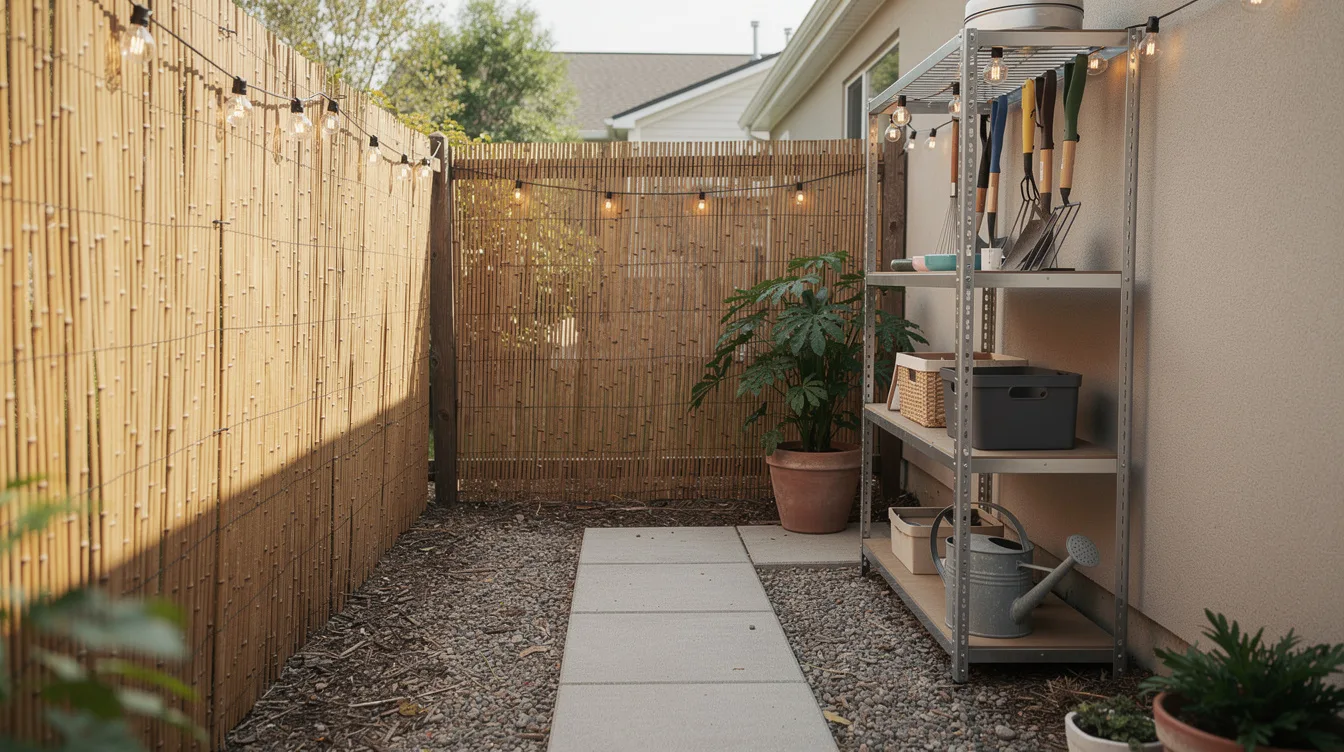
My side yard used to be the place where half-empty potting soil bags, a broom, and two cracked planters went to wait for a decision I never made.
The bigger problem was the shape. At roughly 4 feet wide, it felt too narrow for a real seating area and too exposed to leave anything attractive out in the open.
I stopped trying to make it a tiny patio and treated it like a slim utility zone with better manners. That shift is what got me to a mini resort look for under about $80.
Measure the passage before buying anything bulky
The average side yard makeover I kept seeing landed in the same range, about 3 to 5 feet wide and 10 to 20 feet long. Mine was just under 4 feet wide, which meant every extra inch of depth mattered.
I ruled out deep cabinets fast. A shelf around 10 to 12 inches deep leaves enough room to walk without turning the whole area into a bottleneck.
That was the first useful reality check. If you can still carry a laundry basket through the path, your storage plan is probably disciplined enough.
Build one slim utility wall instead of scattering pieces
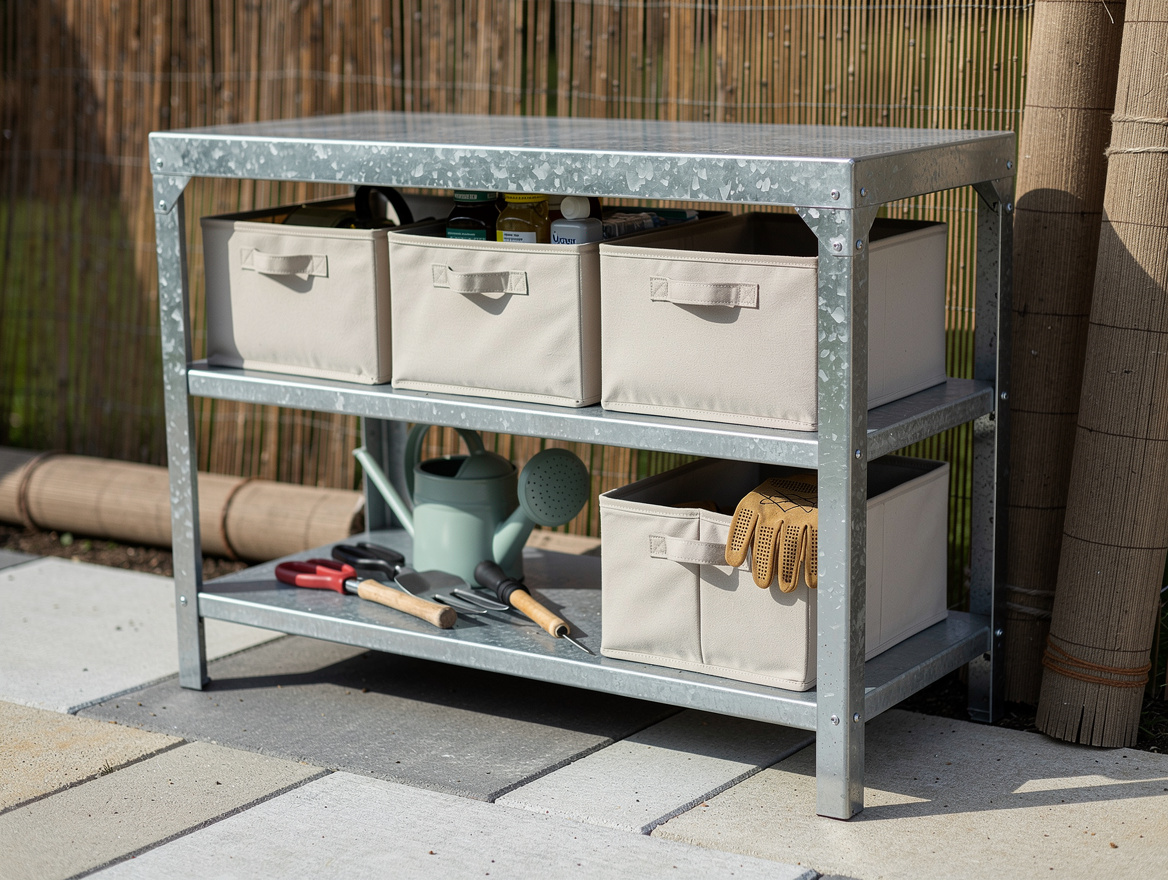
The piece that made the layout click was the IKEA HYLLIS shelving unit. It measures 23 5/8 by 10 5/8 by 55 1/8 inches, and its typical price is around $20 to $25.
I like it here because the galvanized finish already looks practical, not precious. In a side yard, that reads cleaner than faux-luxury wicker trying too hard.
If IKEA is not nearby, a basic narrow metal shelf from Amazon in the 24 to 32 inch wide range also works. Typical budget versions run about $30 to $40, and I would still keep the depth close to 12 inches.
I put all the awkward stuff on one run, spray bottles, gloves, hand tools, citronella refills. One wall for storage, one wall left visually quiet. That balance is what keeps it from looking like overflow space.
Create a sweepable strip underfoot
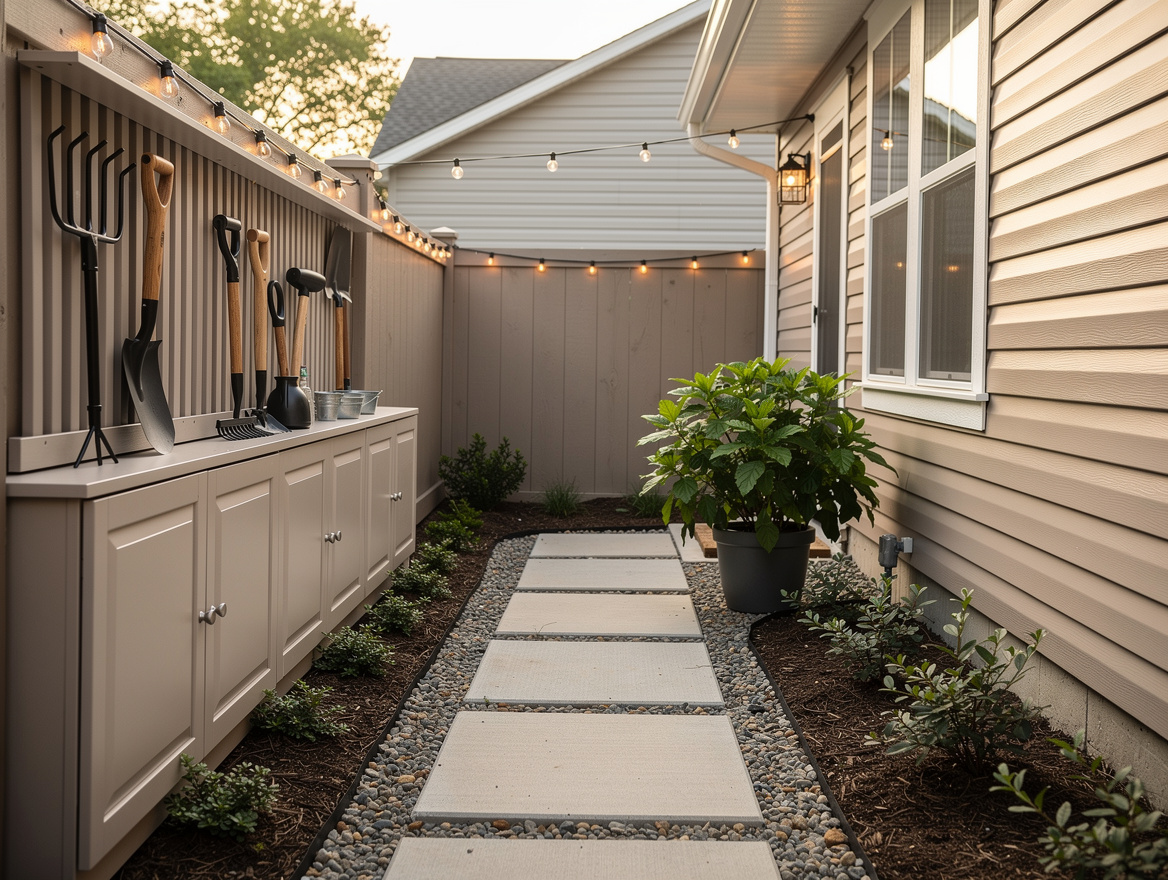
The floor changed the mood more than any decorative item. I used a run of concrete pavers only where I needed them, under the shelf and along the main walking line.
A typical 12 by 12 inch basic paver at Home Depot or Lowe’s is usually a low-cost buy, and eight to ten of them is often enough for a 2 to 3 foot deep strip. That puts the floor portion in the rough $20 to $30 range, depending on color and thickness.
I did not pave the whole side yard. That would have eaten the budget and made the space feel harsher.
A partial paved strip is smarter. It gives you a dry place to stand, keeps dirt off stored items, and instantly looks more intentional.
Hide the clutter with texture, not with a giant cabinet
The best cheap visual fix was a bamboo reed fence roll attached to the back and one side of the shelf with zip ties. A typical 3 by 10 foot roll from Amazon usually lands around $15 to $25.
That one move softened the metal and blocked the view of random bottles. I would do this again before buying any decorative planter.
I also added two simple fabric bins from IKEA on the middle shelves for small loose items. Bins in that category are usually about $2 to $5 each, and they stop the shelf from looking busy.
This is where the resort feeling starts. Not because bamboo is fancy, but because your eye reads texture first and clutter second.
Use a low box only if it earns its footprint
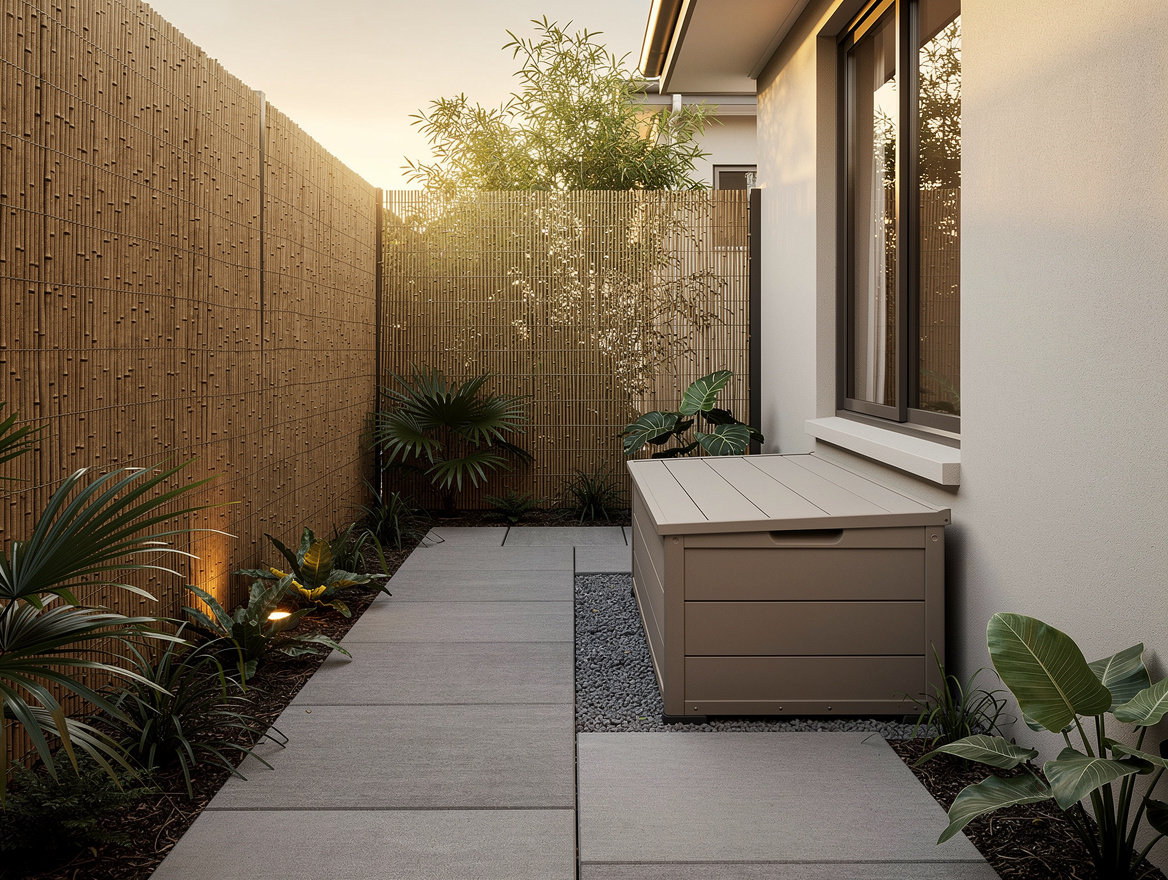
I tested the idea of adding a compact resin deck box for cushions and hose parts, but only after checking the walkway. In a narrow yard, a box has to sit tight to the wall and stay low enough that it does not feel like a barricade.
Budget models sold through Walmart or Amazon are often around 270 to 320 liters, with typical dimensions close to 47 to 49 inches wide, 22 to 24 inches deep, and about 24 inches high. Entry-level versions can show up around $40 to $60.
I would only choose this route if your biggest eyesore is bulky stuff. A deck box is useful, but a tall narrow shelf gives you more storage per square foot and usually keeps the path feeling more open.
My opinion is blunt here: in a side yard under 4 feet wide, vertical storage usually wins. The deck box is a second move, not the first one.
Add one soft layer and stop there
Once the storage was handled, I gave the space one softer note. A solar string light from Target or Walmart can often be found in the $10 to $15 range, and one strand is enough.
I skipped multiple decorative accents. Too many little items would have dragged the yard right back toward clutter.
What worked better was one plant, one light source, and the warm tan of the bamboo against gray metal. A narrow space needs restraint more than personality.
If you want a seat, a folded outdoor cushion on top of a low box is enough. I would not add chairs unless the yard is closer to 5 feet wide.
Keep the budget tight by spending in the right order
My rough cost breakdown looked like this: IKEA HYLLIS at about $25, pavers around $25, bamboo screening about $20, and two bins plus zip ties for roughly $8 to $10. That kept the main setup very close to the $80 mark.
The reason it worked is simple. I spent first on function, then on concealment, then on one atmospheric detail.
If I had started with lights, planters, and cute accessories, the side yard would still be annoying. Storage is what made it feel calm.
The look people call resort-like is usually just clean floor, hidden visual noise, and a few materials that do not fight each other. In a skinny side yard, that formula is more convincing than any themed decor.
Start with the shelf depth and the walking path, then buy pavers before you buy anything decorative. If the ground feels solid and the clutter disappears behind one textured screen, the rest comes together fast.
My total stayed low because I refused to fill every corner. In a narrow side yard, a little empty space is part of the upgrade.
Mia Carter writes about small-space living and budget home makeovers. She has restyled three rentals and tests most ideas in her own 45 sqm flat.