
The short answer: the best hidden entrances disappear into millwork, fabric, or light, not gadgets. I learned that the hard way after sketching one that screamed movie set the second you walked in. You don’t need drama on the door itself. You need the wall around it to feel settled, useful, and a little inevitable. And if you’re already rebuilding the layout around it, the small-space thinking in studio apartment layout moves does double duty here, especially when you’re working with an awkward attic guest room footprint.
- Camouflage a bookcase door inside built-ins
- Conceal the entrance with fluted paneling
- Disguise the seam behind picture-frame molding
- Farrow & Ball Hague Blue beside the fireplace, mirror panel tucked in
- Grasscloth over flat paint for wrapping the hidden door
- Mount oversized art on a pivot panel
- Hide the latch inside a brass sconce
- Benjamin Moore Revere Pewter over pure white on wainscoted walls
- Why a swivel door beats a pocket door behind display shelves
- Paint the reveal a moody lacquer color
- Library lights versus a single sconce for symmetry around the secret opening
- Belgian flax linen over millwork for masking the doorway
1Camouflage a bookcase door inside built-ins
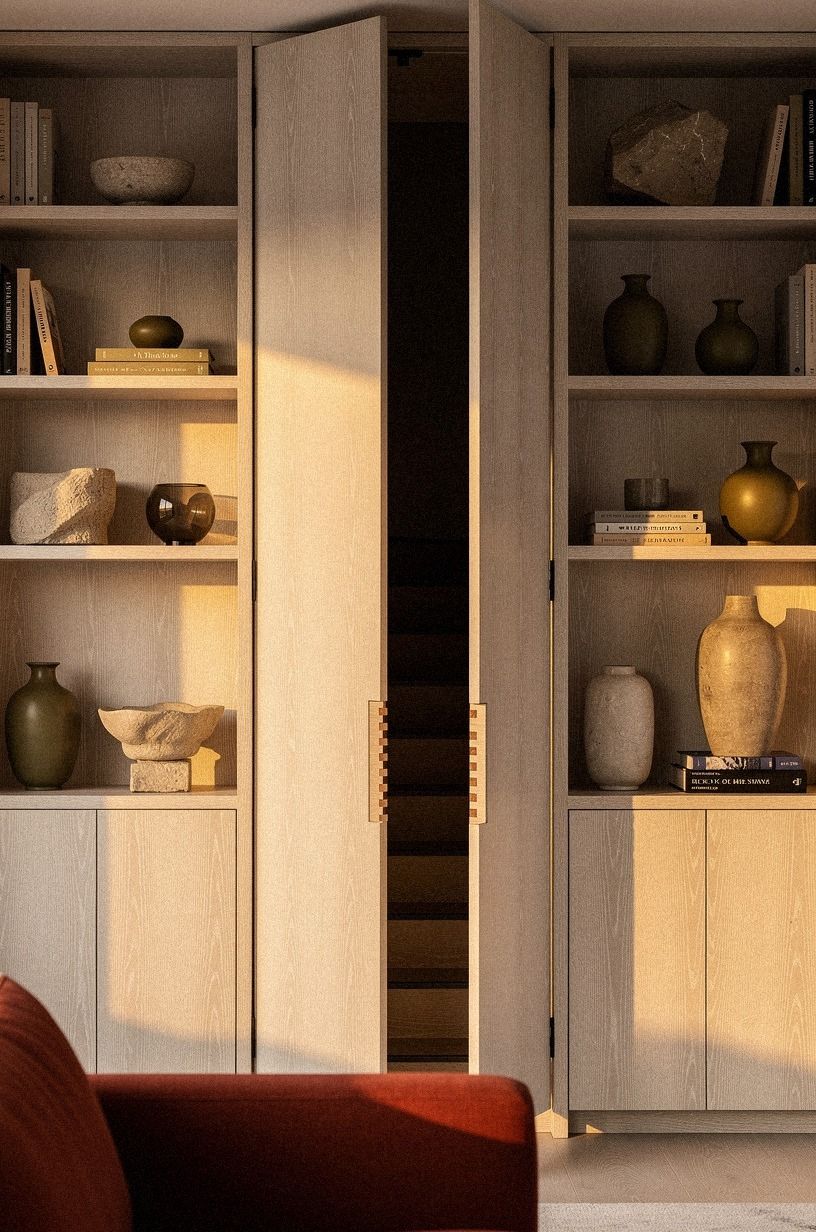
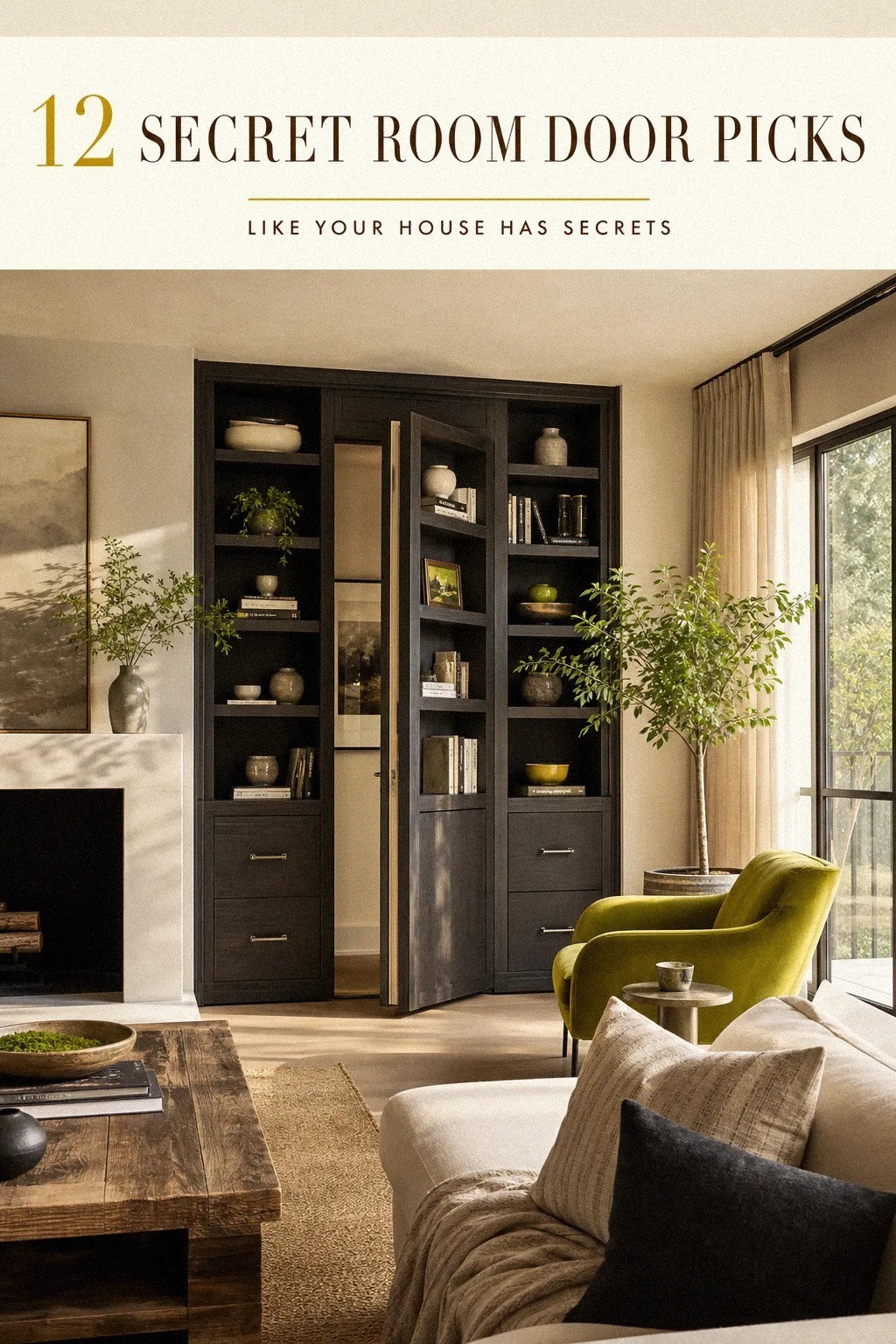
Start with storage, not mystery. If you are planning a concealed passage in a living room, a wall of cerused white oak built-ins gives your eye a reason to accept the opening before you even notice it.
I like the hidden panel centered inside one bookcase bay, with the fixed shelves on either side carrying the visual weight. That keeps the door from reading as a skinny oddball strip.
You also want the shelf rhythm to continue across the moving panel. Same spacing.
Same face frames. Same stain depth.
If you’re already trying to make a small footprint feel calmer, the same built-in logic that helps in small-space layout moves works here too, because repetition makes the room feel intentional. A cerused oak finish on the door face reads warmer than whitewashed pine, especially when the surrounding wall is Farrow & Ball Shaded White.
The part I’d never skip is hardware planning. A concealed panel disappears faster when the books stay light and the styling stays edited: stacked hardcovers, one bowl, one box, no clutter avalanche.
And if you want a cheat sheet for proportion, use the door bay for display only and load the heavier storage into a nearby IKEA KALLAX birch-effect wall unit. Soft-close European hinges in matte black will carry the weight and stay quiet for years.
Your hinges will thank you.
2Conceal the entrance with fluted paneling
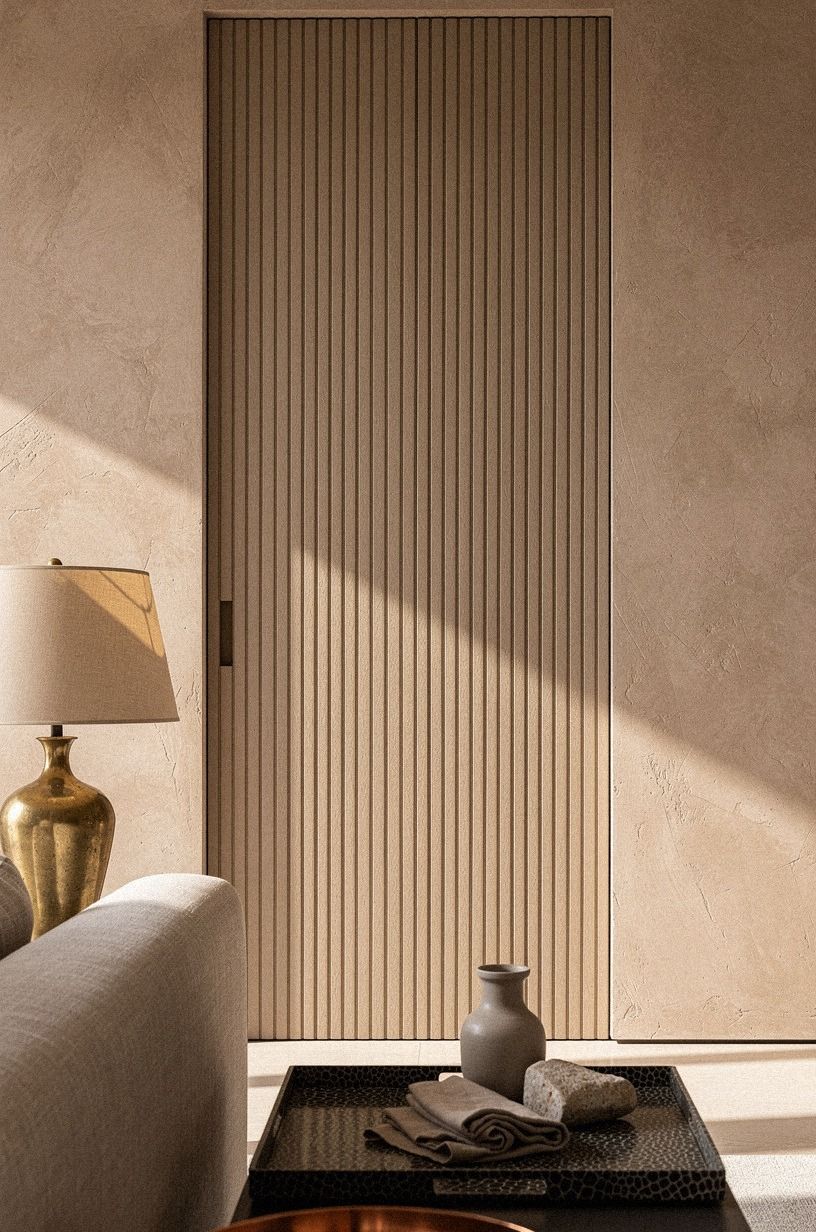
Fluting works because the vertical rhythm breaks up the seam for you before your eye can find it.
3Disguise the seam behind picture-frame molding
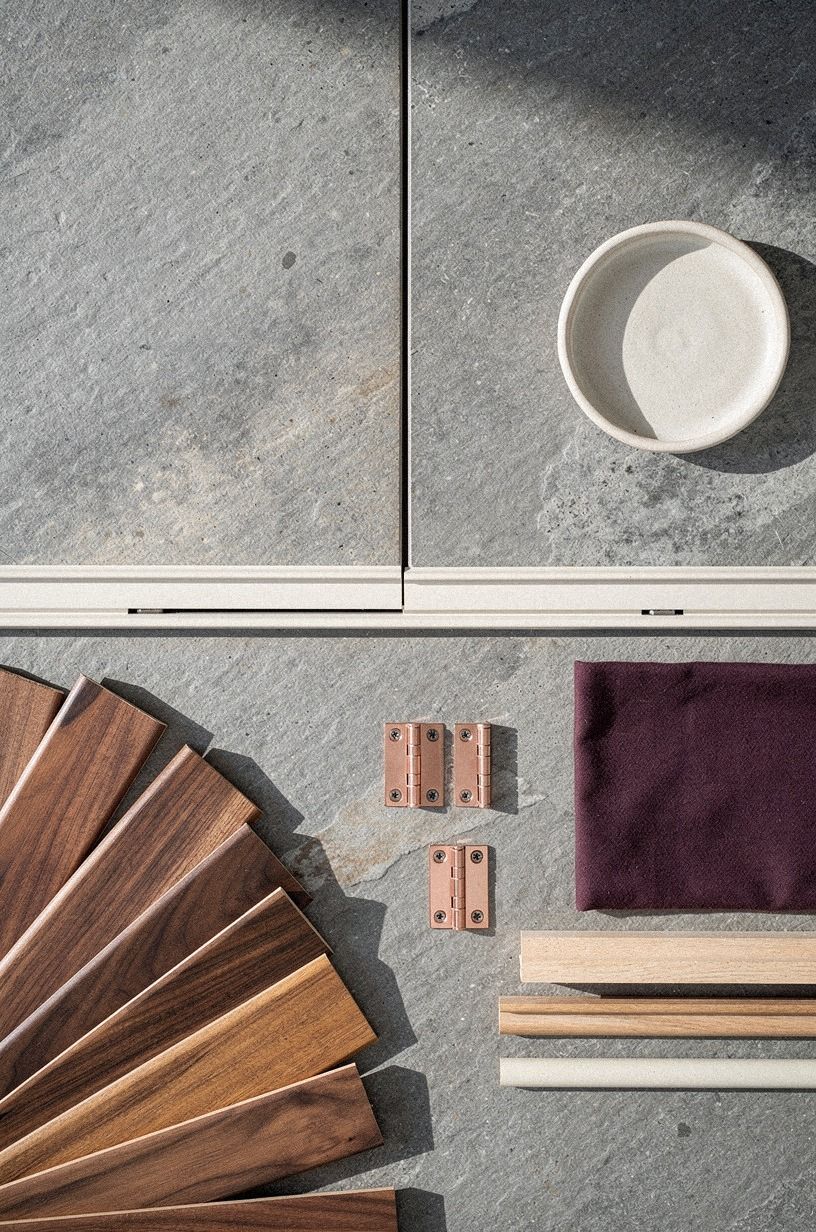
This is the move for you if your living room already leans tailored. Picture-frame molding gives the wall a grid, and grids are forgiving. Once the seam lines up with the vertical stiles, the door edge stops reading like a problem and starts reading like part of the composition.
I like this best with book-matched walnut trim, especially when you carry the grain direction from the fixed wall onto the door face. That is the detail most people miss.
They match the paint color, then ignore the wood story, and the opening pops the second sunlight hits the wall. A satin oil finish on the walnut reads richer than polyurethane gloss, which can flash under raking light and betray the seam.
You don’t need every rectangle to be identical, either. A slightly taller panel over the door can make the whole run feel custom, the same way careful wall shaping helps in awkward attic rooms with odd angles.
And yes, measure twice before you commit the trim layout. One crooked top rail, and you will see it every day.
Poplar trim is the practical pick for paint-grade runs, while solid walnut belongs on the focal wall.
4Farrow & Ball Hague Blue beside the fireplace, mirror panel tucked in
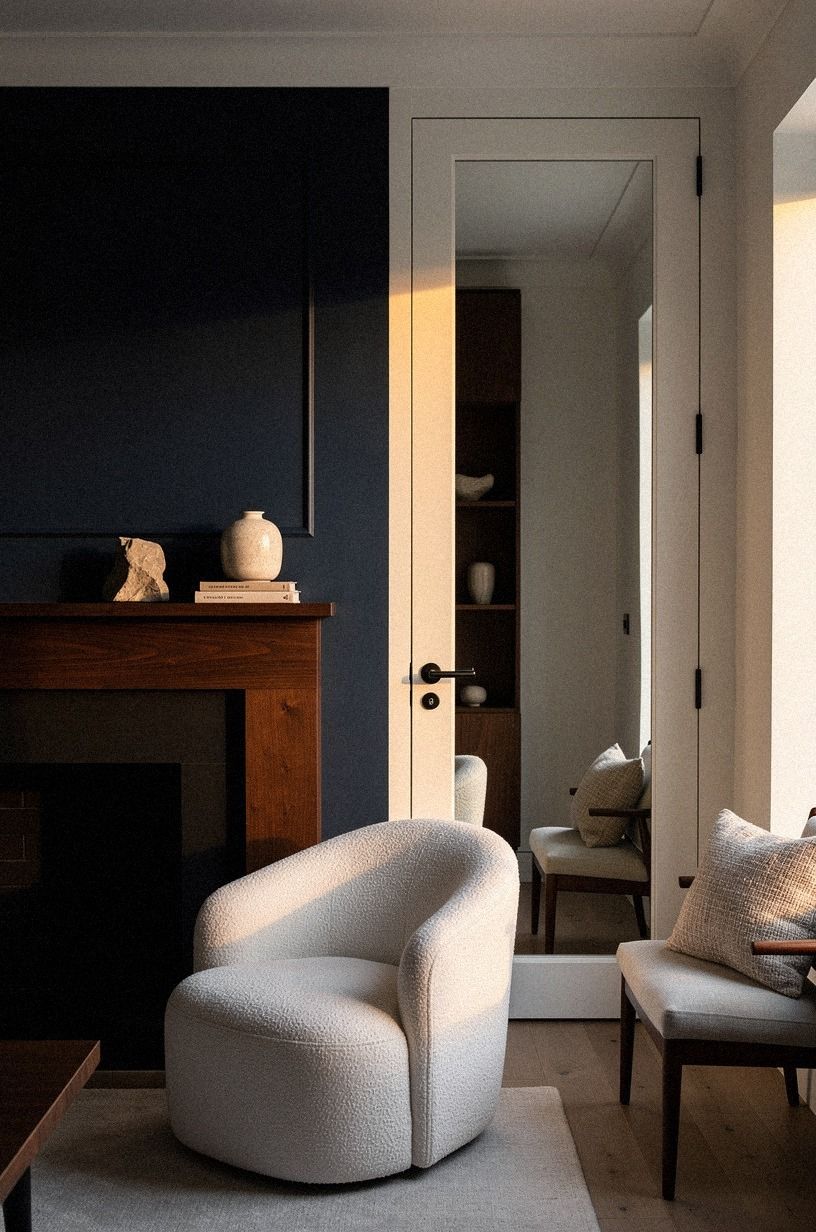
A mirror door works when it behaves like millwork first and mirror second. Next to a fireplace, that means you want the frame thickness, base alignment, and top line to match the rest of the wall, especially if the room already mixes navy, white, and walnut. If the reflective panel floats at a random height, you are done.
I prefer a calmer mirror finish here, not an overly beveled one. Why?
Because the fireplace is already the room’s visual pulse. A fussy mirror starts competing with flame, artwork, and mantel styling, and your wall turns noisy fast. In a deep blue scheme, Farrow & Ball Hague Blue No. 30 on the adjacent built-ins gives the mirror enough contrast to disappear into the composition instead of shouting for attention.
And think about what the mirror reflects. A good concealed opening should bounce back your rug, lamp glow, or a walnut coffee table, not a TV tangle.
Use the same placement discipline you would use for lighting that softens a room after dark, and the panel will feel twice as believable. Add one unlacquered brass wall sconce to the side, a honed travertine ledge below, and the whole wall feels curated instead of gimmicky.
5Grasscloth over flat paint for wrapping the hidden door
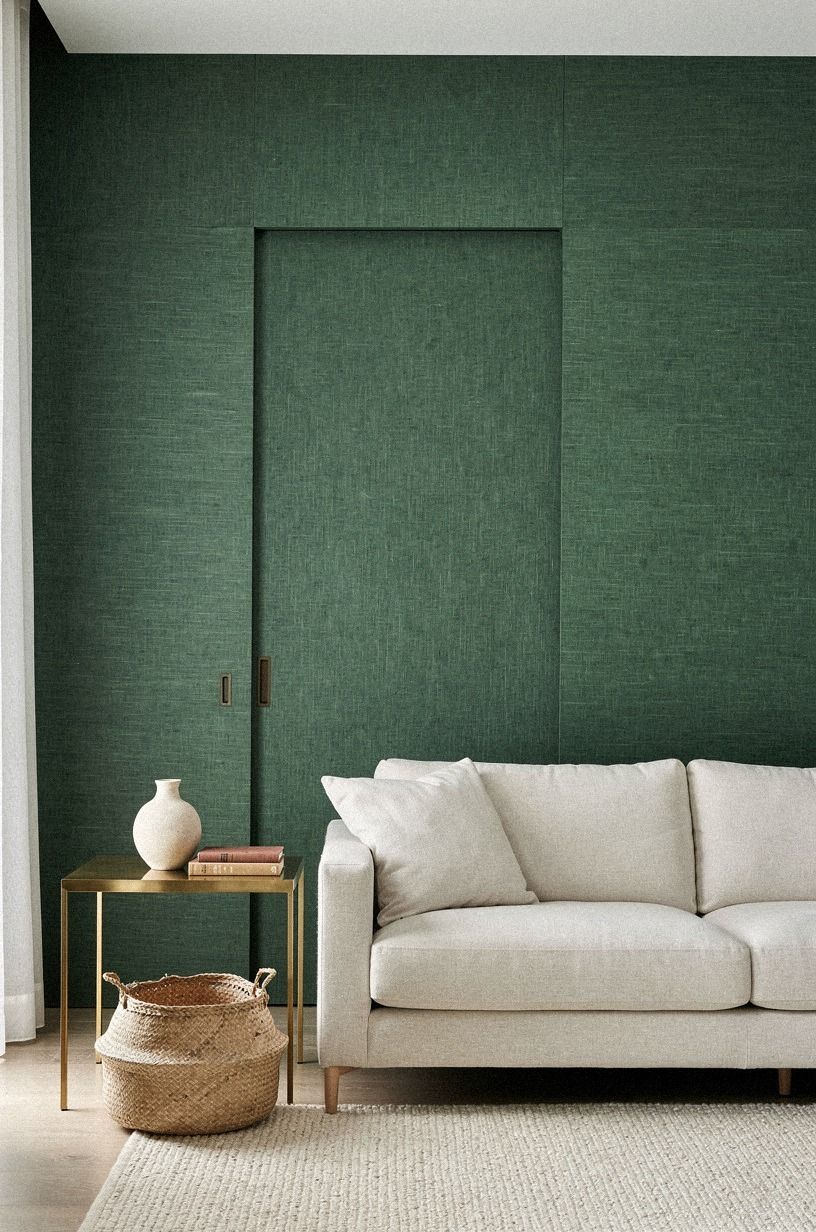
Grasscloth is one of the smartest materials for this job because the woven surface already has tiny irregularities. Your eye expects variation, so the seam does not read as a flaw. In an emerald living room wall, that texture gives you depth without depending on heavy molding or dark shadow lines.
The best version I have seen used emerald grasscloth across the full wall, not just the door panel, with the trim color pulled back to a quiet neutral. That is the part people resist because it feels like more commitment.
But a single wrapped panel inside a plain painted wall usually looks apologetic. Go all in or skip it. Natural seagrass is the budget alternative; it reads slightly warmer and more casual than emerald grasscloth.
If you want the space to stay relaxed, ground the texture with soft pieces nearby: a linen sofa, a warm lamp, maybe the kind of drape softness covered in this lived-in textile guide. I’d also keep the hardware touch tiny and dark.
Let the wall speak. You don’t need more than that.
It looks richer that way!
6Mount oversized art on a pivot panel
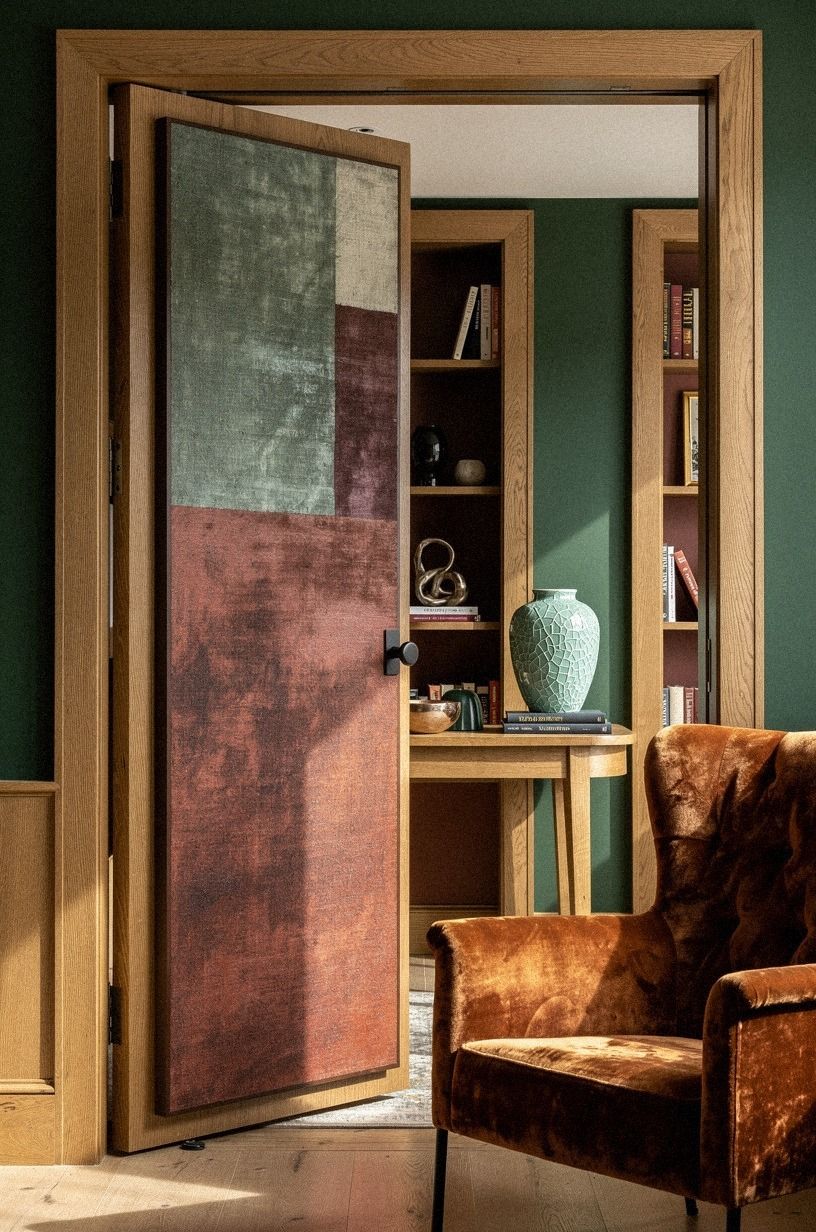
Big art buys you instant distraction. When the concealed opening is a pivot panel instead of a standard swing door, one oversized canvas makes the whole wall read as a gallery moment first. That’s why this move lands so well in a room with forest green, rust, and natural oak, where the art can echo every tone already in the space.
The panel needs enough visual mass to justify its movement, though. I like a broad abstract over a skinny frame because the art should feel anchored, not perched. A narrow piece makes people study the edges, and that’s the exact behavior you’re trying to prevent.
If you are worried about balance, pull a stable sofa shape across from it. A West Elm Harmony sofa with a 35-40 in depth gives you the kind of grounded silhouette that lets one moving wall panel feel calm instead of gimmicky.
Small move. Big payoff.
Bouclé upholstery on the sofa reads softer than top-grain leather for rooms where you want the panel to feel like art first.
And don’t overload the piece with glass or ornate embellishment. Pivot panels read better when the artwork has matte surface texture and a little quiet. If your room needs more visual warmth, steal the rust and green logic from compact kid rooms that still feel layered, then scale it up.
7Hide the latch inside a brass sconce
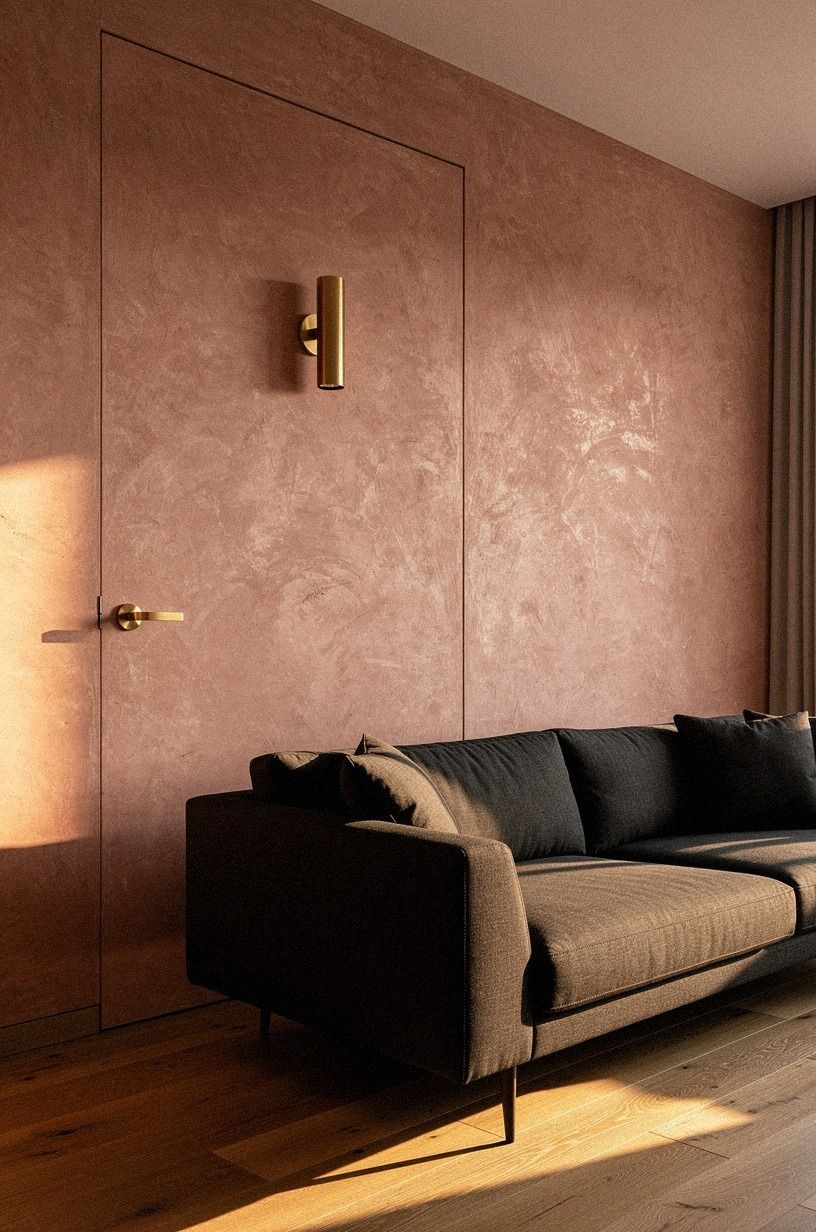
This one sounds fussy until you see it done well. On a Venetian plaster wall in dusty rose, a sconce already gives you a reason to reach toward that part of the room, which makes it a natural home for the release point.
You are not adding a gimmick. You’re giving the hand a believable destination.
I like a warm, aged finish here, especially unlacquered brass that will mellow over time instead of staying bright and new. A crisp polished finish can look too jewelry-box against plaster.
That’s pretty in a powder room. In a living room, it can feel overdressed.
Venetian plaster walls are the perfect partner for aged brass, since both materials evolve with use.
You also want the wall around the fitting to stay simple. Charcoal upholstery, one low table, one stone accent, and done.
If the panel is already carrying a soft color wash, too many accessories near the latch create the very visual chatter you are trying to avoid. And yes, test the reach from a standing position before final install.
If it feels awkward once, it’ll feel awkward forever. Cheap fix, no regrets!
8Benjamin Moore Revere Pewter over pure white on wainscoted walls
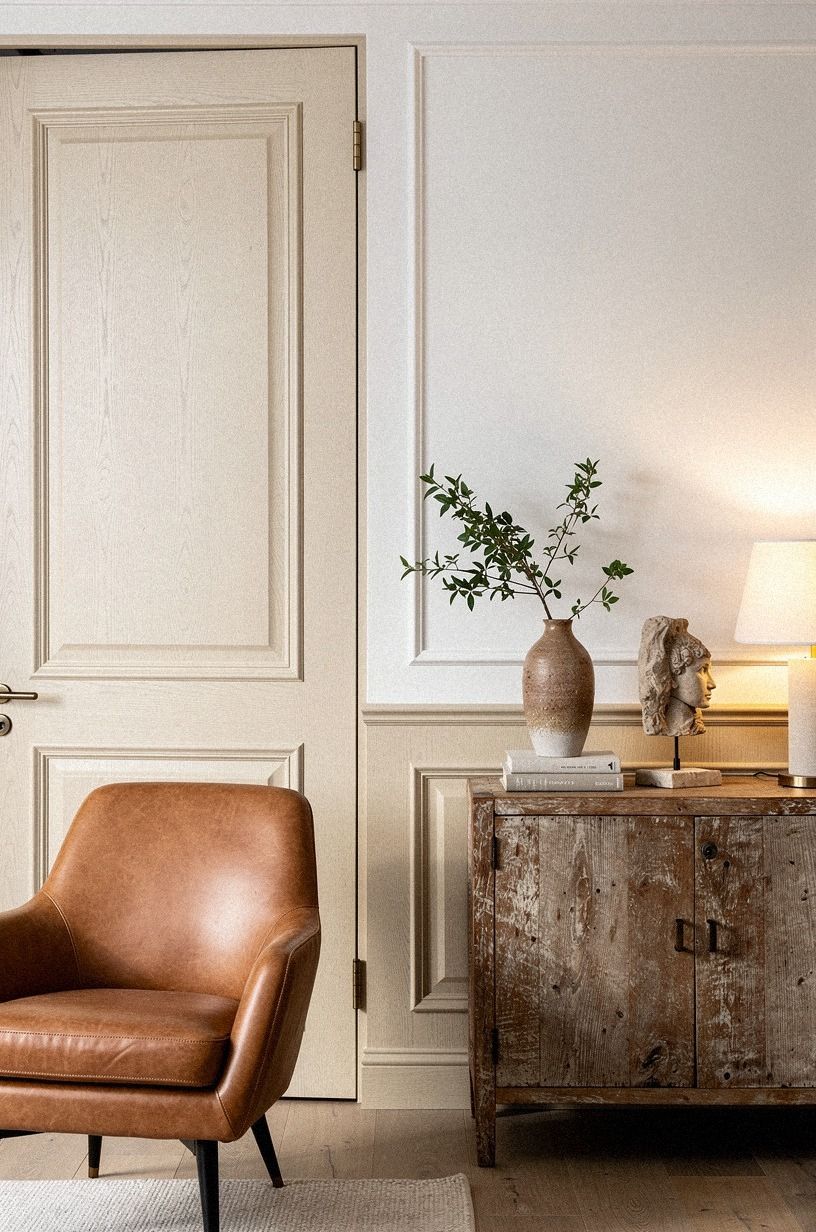
Wainscoting is forgiving in the best way. The rails and stiles set up a pattern, and if your concealed opening respects that pattern, the passage just folds into the room. In a warm white living room with a camel chair and black marble accents, this approach feels old-house and steady, not theatrical.
I’d paint the whole run in Benjamin Moore Revere Pewter HC-172 if the room needs softness, or shift warmer if your flooring already has amber oak notes. The key is making the door panel match the adjacent sections at every join.
One misaligned mid-rail will pull your eye straight to the opening. Benjamin Moore White Dove OC-17 on the upper wall keeps the lower wainscot reading as the warm anchor of the room.
If you are planning the wall as part of a broader refresh, here are the spending bands I keep in mind for the room around it:
That table is not the cost of the door alone. It’s the cost context that tells you whether built paneling makes sense right now.
If you’re still building the room basics, a studio apartment planning mindset helps more than one flashy carpentry move. Pair the wainscot height with Belgian flax linen panels above it for warmth, and the wall starts to feel old-money on a budget.
9Why a swivel door beats a pocket door behind display shelves
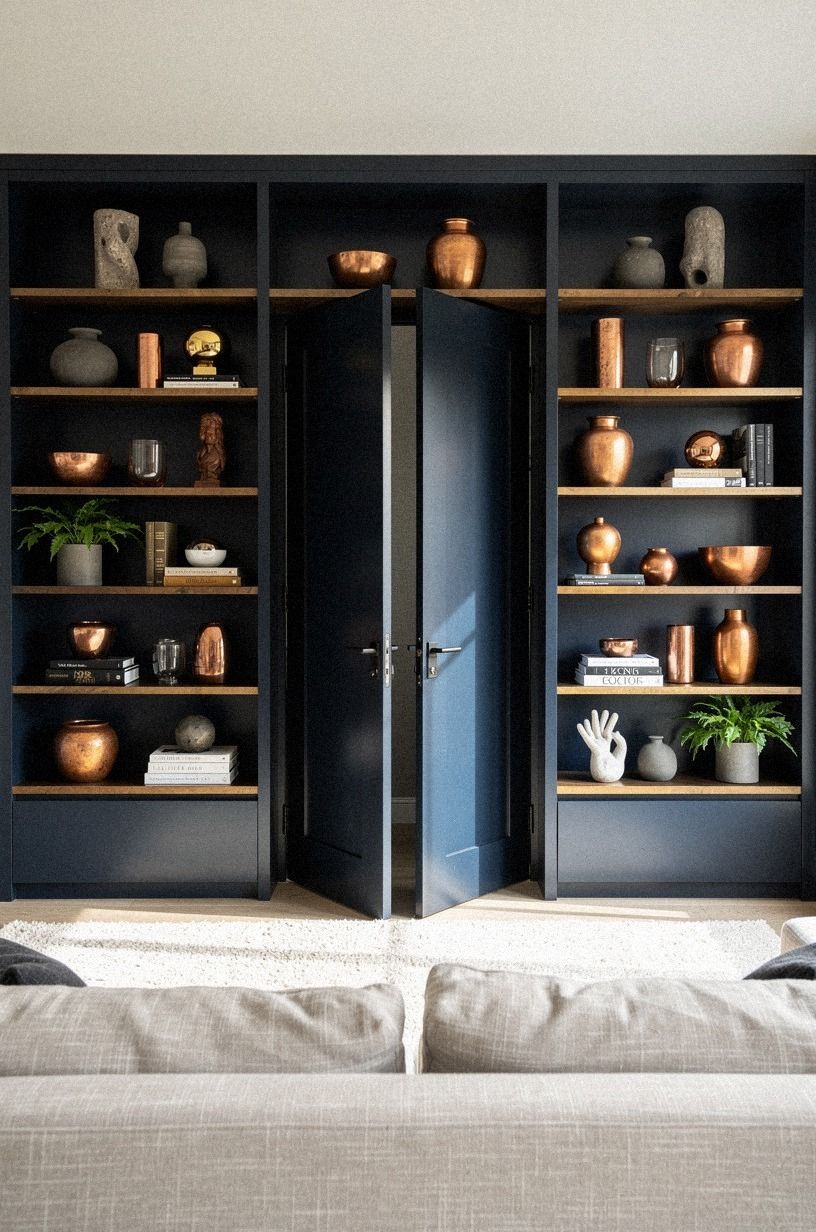
A swivel door behind open shelving works when the display feels symmetrical from across the room and lightly offbeat up close. That’s why it looks so convincing in a midnight blue shelving wall, especially when you are seeing it from low across an ivory rug. The shelf composition holds your attention first.
I wouldn’t cram those shelves full. Give yourself repeating shapes instead: books, boxes, one ceramic piece, one brass object, then air.
If every cubby is packed, the moving section gets heavy and the whole arrangement looks like it has something to hide. Which, of course, it does.
But you don’t want the room admitting that.
For the shelf body, IKEA HEMNES can be a useful starting point if you are faking the look with applied trim and paint, while a custom cabinet shop can tighten the gaps if you want the premium version. Either way, keep the rug generous beneath it.
An 8×10 or 9×12 under the seating zone helps the whole wall feel anchored rather than top-heavy. Hand-knotted wool rugs read warmer than flat-weave cotton here, especially underfoot on cool mornings.
And if you are styling around kids or everyday clutter, borrow restraint from small-room storage ideas that keep the floor open. The less fuss you place on the moving shelf, the more convincing the wall becomes. A pinch of restraint goes a long way here.
10Paint the reveal a moody lacquer color
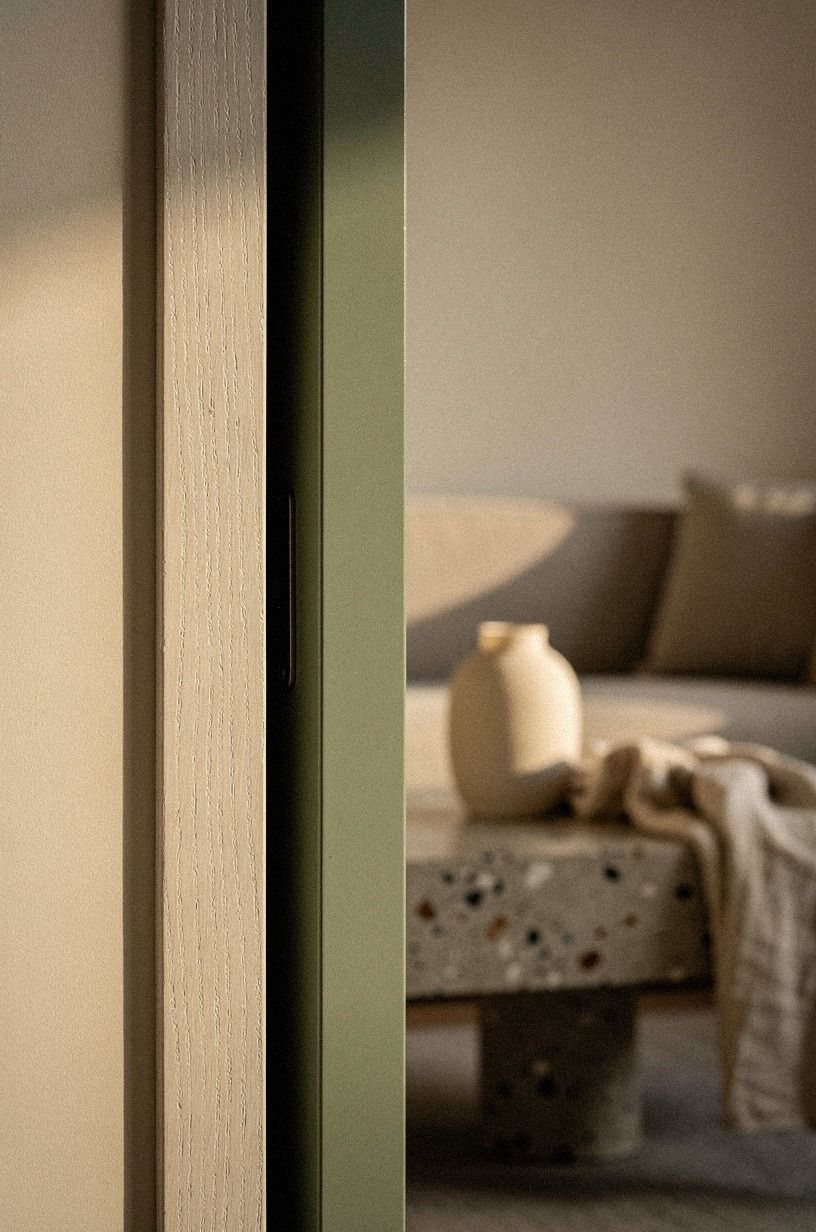
Sometimes the smartest move is not hiding the reveal completely. It’s controlling it. A thin painted edge in a moody lacquer can make the opening feel intentional the second it cracks open, especially when that line meets cerused oak trim and a warm cream wall.
I like Sherwin-Williams Evergreen Fog SW 9130 for this more than a near-black green if the room does not get blazing sunlight, because the softened sage still reads rich without turning the gap into a black stripe. A harsher dark edge can look like a mistake from the sofa.
Use the shine selectively. Keep the face of the wall quieter, then let the reveal catch the light when the door opens.
That’s the contrast that makes this feel designed instead of accidental. But don’t lacquer every surrounding surface just because you can. One glossy line is elegant.
An entire shiny wall is a commitment you may regret by week two. Restraint wins! High-gloss lacquer reads sharper than satin enamel for that single reveal line.
11Library lights versus a single sconce for symmetry around the secret opening
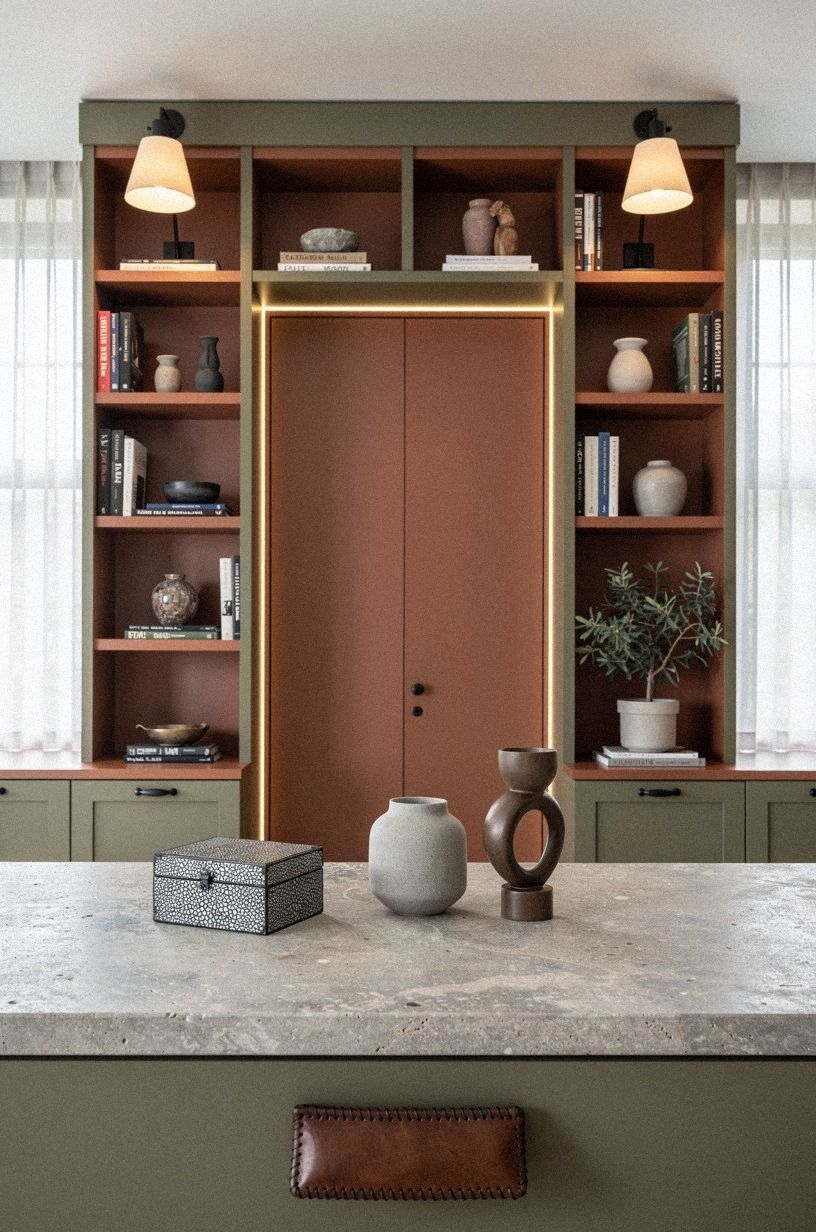
Library lights give you two gifts at once: symmetry and intention.
12Belgian flax linen over millwork for masking the doorway
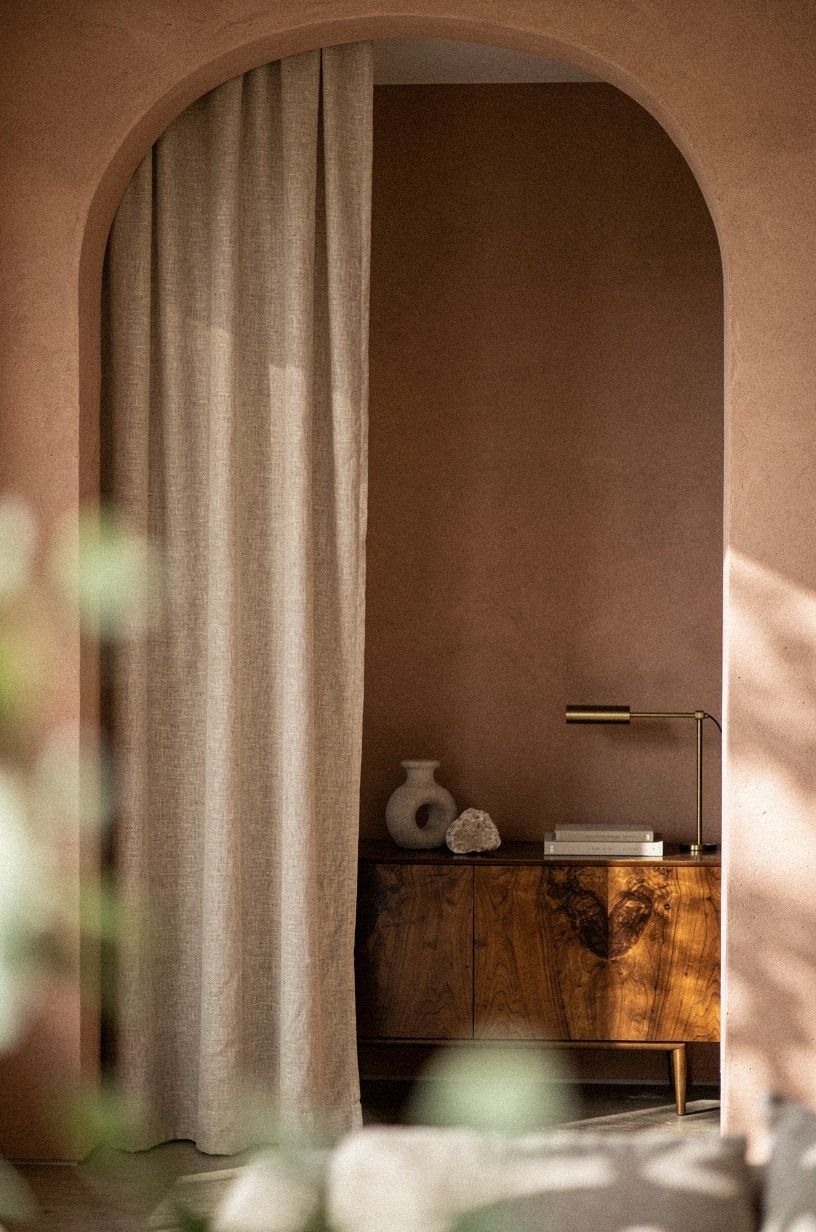
Curtains are the softest answer, and sometimes the soft answer wins. If your living room already leans clay, linen, and aged brass, a full-height drape panel can hide a doorway without asking the architecture to pretend it’s something else. That’s useful in rentals, older homes, or rooms where millwork would feel forced.
I like Belgian flax linen here because it hangs with enough body to read tailored while still moving beautifully when you brush past it. Sheer panels won’t do the job.
They show the opening line the second daylight hits from behind. Linen-lined blackout is the quiet upgrade if you also want sound dampening for media rooms.
You don’t need elaborate hardware, either. A simple rod mounted high and wide lets the stack-back clear the opening when you need to walk through.
Linen drapes often land around $120-$400 a pair, which is a lot gentler than custom carpentry, and the softness pairs well with lessons from attic guest rooms that use fabric to calm hard angles. Wrought-iron rods hold heavier Belgian linen without sagging, while thin brass rods suit lighter sheers.
And here’s the bonus: curtains change the sound of a room. They take the edge off echo, they soften the wall, and they make the passage feel a little more private the second you close them. Worth it!
Why do some concealed doors feel expensive while others feel like props?
I’ve gone back and forth on this more than once, because the line between charming and corny is thinner than people admit. The expensive-looking versions are not the ones with the wildest reveal.
They’re the ones where the room would still look good if the door never opened at all. That’s the test I use now.
If the wall needs the gimmick to feel interesting, I know I’m solving the wrong problem.
The other thing I’ve learned is that concealment works best when it follows a language your room already speaks. If your space is full of painted millwork, a panel door inside wainscoting feels natural.
If your room is soft and fabric-heavy, linen drapes make more sense. If you have already invested in shelving, a bookcase or display wall can carry the illusion without strain.
But when people mix languages, say glossy fluting in a traditional room or a mirror panel in an otherwise earthy scheme, the opening starts performing instead of belonging.
Cost matters too, just not in the way people assume. Spending more on a custom panel won’t save a bad concept, while a modest curtain solution can look deeply considered if the rod height, hem, and fabric weight are right.
I’d rather see you put money into the parts your eye touches every day: better paint, cleaner carpentry, warmer lighting, heavier drapery, tighter shelf styling. Farrow & Ball Estate Eggshell on the millwork, Benjamin Moore Aura on the surrounding wall, and Belgian flax linen on any drapery or panels.
Those decisions keep paying you back.
And here’s my blunt opinion: the best concealed entrance is usually the one that makes your living room better while closed. Not more clever.
Better. If the wall gains storage, softness, symmetry, or richer texture, you are building something that earns its place even when nobody knows what’s behind it. That’s the version I’d defend.
If you’re starting from scratch on the layout around it, the room-by-room thinking in studio apartment layout moves is a solid reference point before you commit.
What People Always Want to Know
What is the best hidden entrance idea for a small living room?
For a small living room, the best pick is usually a bookcase panel or full-height curtain because both add usable function while they hide the opening. If you’re short on inches, keep the furniture scaled like an Article Sven profile and let the wall do the disguising.
Where can I buy pieces for this look on a budget?
Start with IKEA, Target Threshold, and Wayfair for shelves, curtains, sconces, and trim-ready basics. Then check Facebook Marketplace for solid wood cases or mirrors you can repaint.
I still browse small-space storage examples before buying, because layout mistakes cost more than furniture. For paint, Benjamin Moore samples run cheap and stop you from committing to the wrong color on a wall this focal.
How much does this kind of makeover cost?
A cosmetic version usually lands around $300-$1,200, while a room-wide refresh with better seating, rug, and layered lighting can run $2,500-$8,000. If you add custom millwork or a fireplace wall, the budget climbs fast. Free move: restyle what you already own before ordering anything.
For the storage math behind the bookcase option, the layout logic in studio apartment planning moves keeps you from over-buying furniture you don’t actually need.
Can I create this look on a budget?
Yes, and you can get surprisingly far with paint, fabric, and restraint. Try a curtain panel, repaint a shelf wall, swap visible hardware for something quieter, and edit the styling.
Three cheap wins. One cleaner illusion.
A gallon of Benjamin Moore Revere Pewter HC-172 runs around $70 and can carry the whole wall. The same dollar amount on a single accessory won’t move the needle the way a paint change does.
Is a hidden entrance worth it in a small space?
Yes, especially when the wall gains storage or softness instead of just novelty. Small rooms reward double-duty moves. Use the opening on a storage wall, keep the rug at 8×10 or 9×12 under the seating zone, and let the passage disappear inside the larger composition.
Is a hidden entrance a good idea for a rental?
Yes, if you stay with reversible layers. Think curtains, removable picture ledges, peel-and-stick molding, and furniture placement that obscures the opening line without permanent carpentry. The same renter mindset in attic rooms with odd architecture works here too.
What finish pairs best with a concealed door in a moody room?
For moody rooms, Farrow & Ball Studio Green on the fixed millwork plus Sherwin-Williams Evergreen Fog SW 9130 on the moving panel lets the reveal read as a designed shift instead of a mistake. Always sample at night under your actual lamps.
Where I’d Start First
If I had to pick one, I’d start with the bookcase door. Storage hides more sins than any other option, and the wall still earns its square footage while closed. Pin that direction for later and study small-space layout moves before you build.