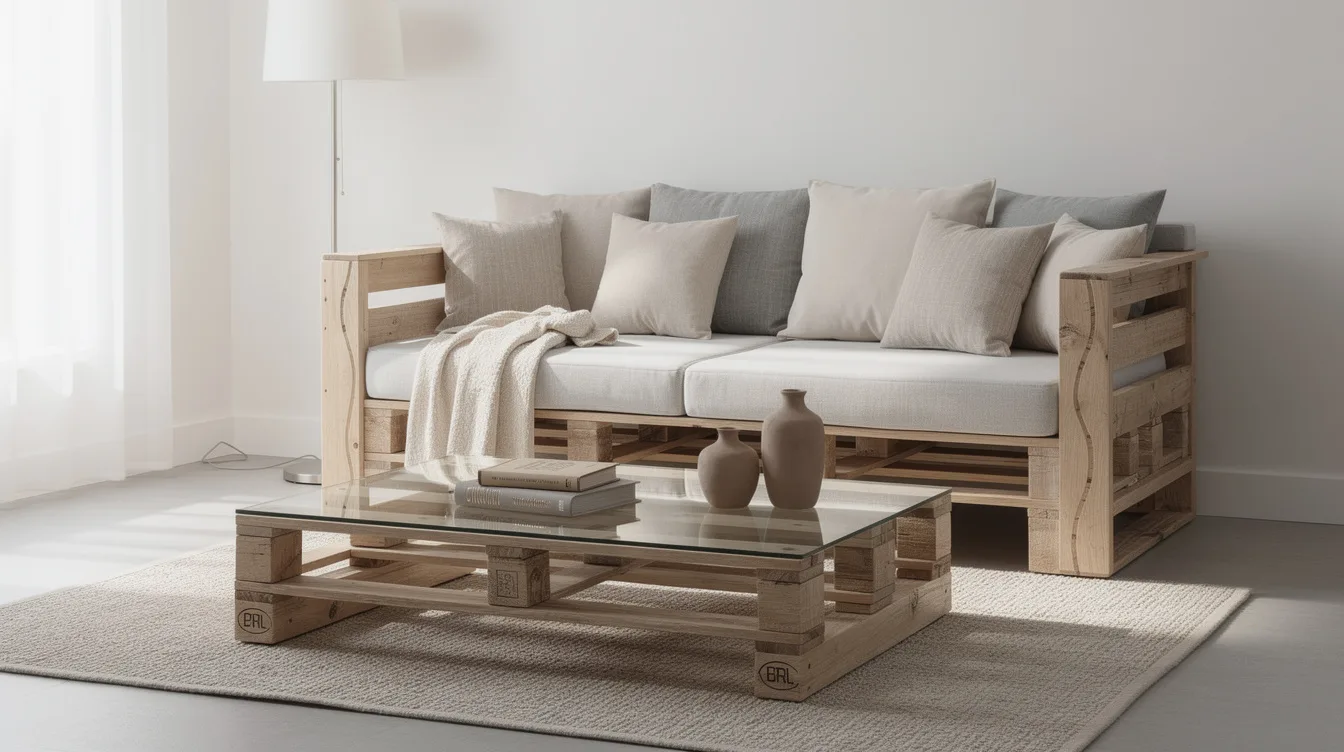
I once saw a pallet coffee table in a small design shop and didn’t clock it as pallet wood until I got close enough to notice the grain under a matte finish. That was the whole lesson: the cheap look usually comes from rough edges, bad proportions, and shiny hardware, not the pallet itself.
If you mill the boards, tighten the gaps, and spend money where your eye lands first, pallets can read like raw timber furniture instead of weekend scrap. The goal is simple: cleaner lines, heavier materials, and fewer obvious DIY moves.
Build a Low Daybed With Real Depth
A modular sofa is still the strongest pallet idea because the proportions already make sense. A standard 48 x 40 inch heat-treated pallet gives you a low, loungey base that feels closer to a boutique hotel seat than a patio leftover.
For a three-seat setup, stack two levels high and aim for a finished seat height of about 16 to 18 inches once cushions are on. Deep cushions in linen-look upholstery fabric from Target or Amazon matter more than decorative extras, and custom foam is typically the biggest line item.
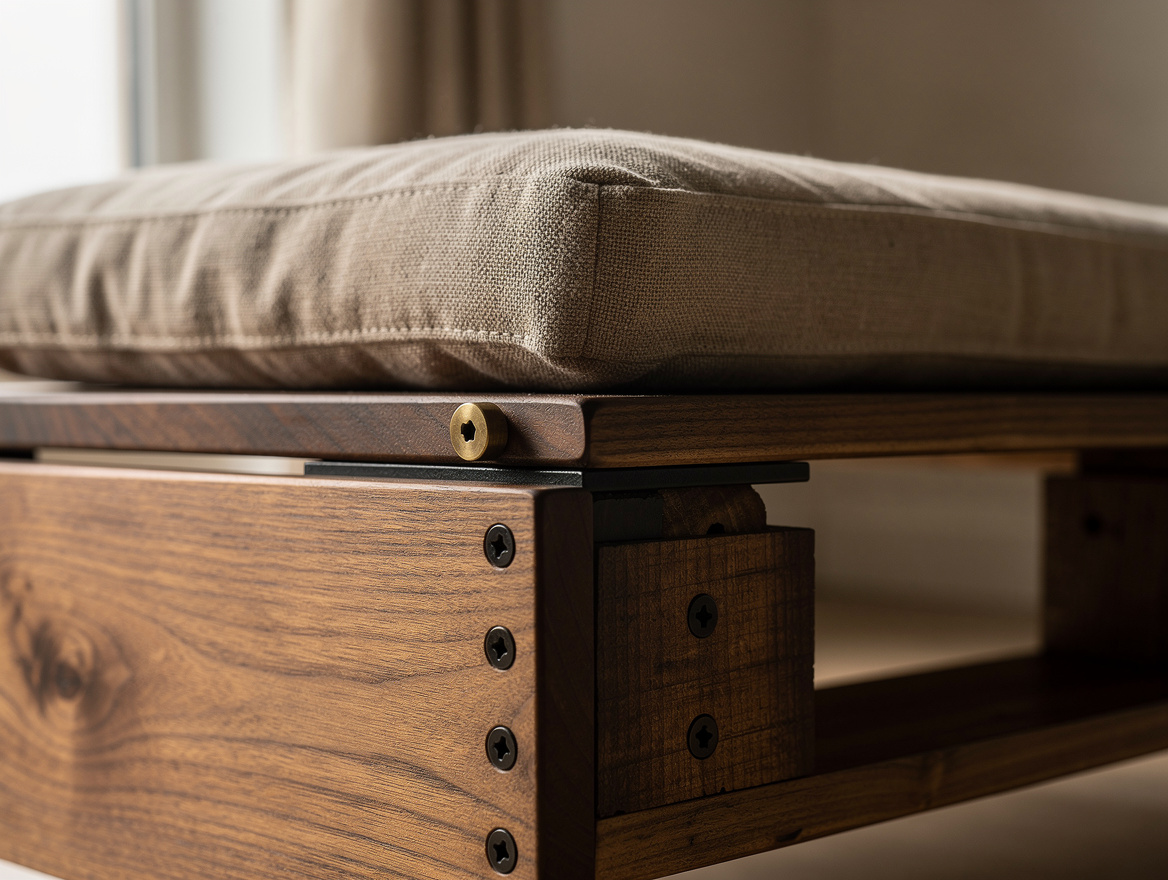
I’d wrap the visible faces in planed oak veneer boards or hardwood slats from Home Depot, then hide the steel brackets underneath so the base looks cleaner. Materials for a polished version usually land around $250 to $500, while resale pricing for a boutique-style finished piece can reasonably push into the $800 to $1,400 range depending on fabric and finish.
Skin a Coffee Table and Top It With Glass
This is the easiest piece to make look expensive because the silhouette can stay very simple. Start with one rebuilt pallet core, close up the gaps with tighter slats, and keep the height around 12 to 16 inches so it feels intentional.
The upgrade is the top: an 8 to 10 mm tempered glass top or a stone offcut changes the whole read of the piece. A local glass shop usually charges the most here, so a typical DIY budget is about $150 to $350, but that extra spend is exactly what stops the table from looking homemade.
I’d skip chunky casters unless the room is very industrial. Slim black legs from Amazon or recessed hardware from Ace Hardware look sharper, especially with a soft black stain or warm matte clear coat.
Mount a Vertical Wall Unit Like Millwork
Wall-mounted pallet storage goes wrong when it keeps the original pallet spacing and roughness. Cut it down, plane it smooth, and rebuild it as a narrower vertical shelf unit with tighter shelves and concealed hanging hardware.
A piece around 16 to 24 inches wide works well for a wine-and-glass rack or slim bookshelf without reading bulky. Add a stained solid wood face frame, use hidden anchors from Lowe’s, and it starts to feel more like small-batch millwork than upcycling.
This is one of the cheaper boutique-looking builds, typically around $80 to $180 in materials depending on finish and hardware. I like this one in a dining nook or apartment kitchen because it gives you height without eating floor space.
Shape an Entry Bench With Upholstered Panels
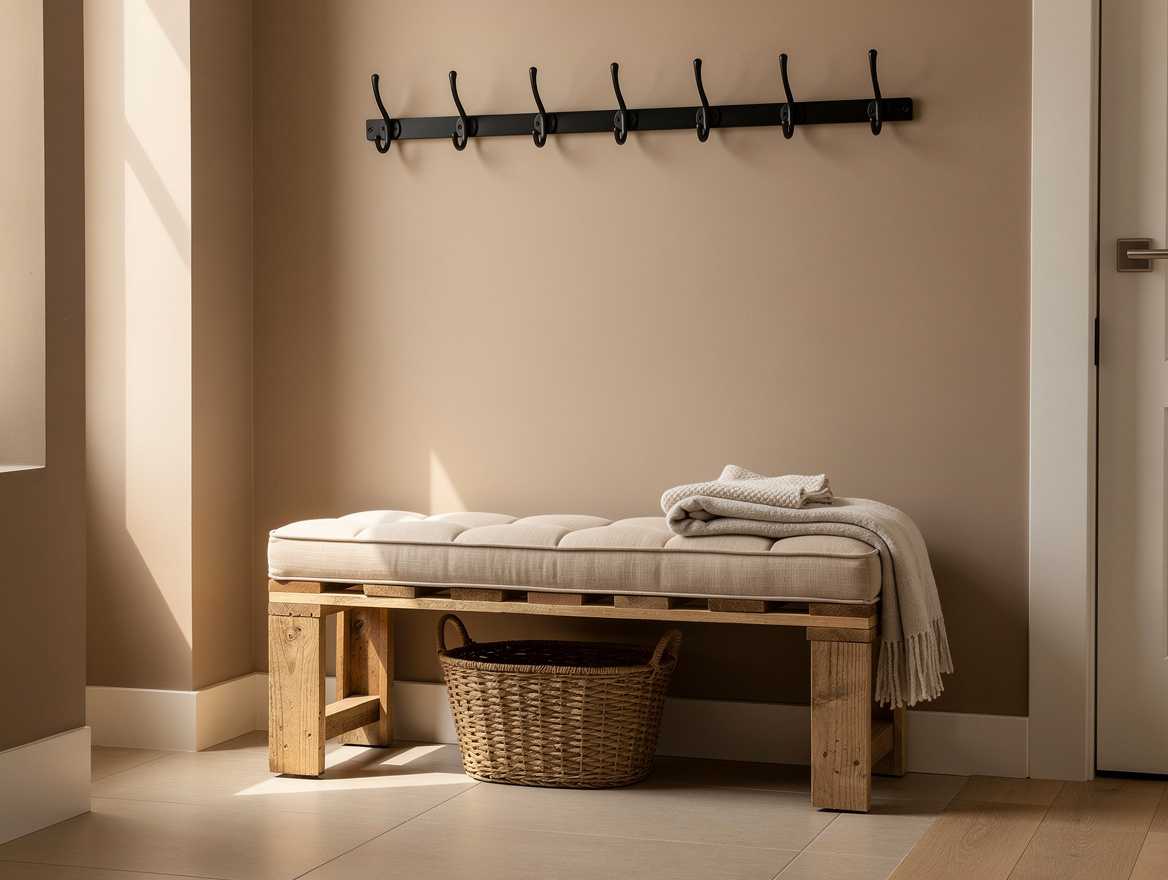
An entry bench works because pallets naturally create a sturdy, low base. The mistake is leaving the slats visible on every surface, so I’d close the top fully and add an upholstered bench cushion in camel, olive, or off-white canvas.
Keep the bench about 16 to 18 inches high and roughly 14 to 18 inches deep, which is the comfortable range for actually putting shoes on. A row of black iron hooks from Home Depot above it instantly gives the setup a store-display feel, especially if the wood is finished in a dry matte walnut tone.
This is also a smart place to spend a little more on fabric. A tailored cushion with piping from Target or Walmart can make a $120 to $220 build look far more expensive than a loosely draped throw ever will.
Turn Pallets Into a Built-In Style Banquette
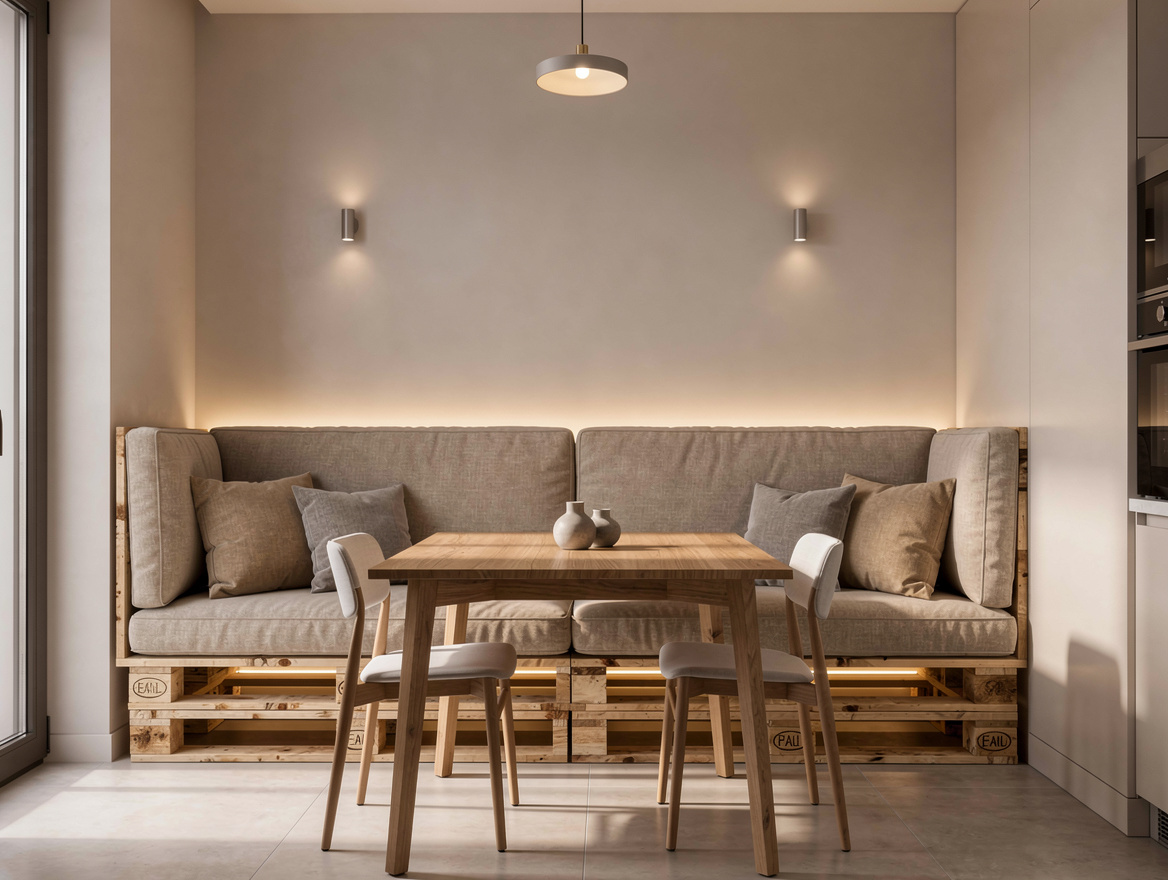
If you want the biggest visual payoff, use pallets for a dining banquette rather than loose seating. A corner base made from stacked pallet platforms looks substantial, and once you add a continuous seat cushion it reads more custom than casual.
The average comfortable depth is about 18 to 22 inches, and the back wants a slight recline instead of a straight vertical board. I’d cover the seat in performance fabric from Amazon or Costco, then paint the base in a muted clay, mushroom, or charcoal that feels closer to furniture than workshop lumber.
This is where clean carpentry matters most. The second the seams are uneven or the seat heights jump, the whole effect drops, but a tidy build can rival banquettes that cost well over $1,000 at retail.
Finish a Bar Cart With Better Hardware
A small rolling cart is the most overlooked pallet project, and it has real boutique potential because the footprint stays compact. Rebuild the wood into two clean shelves, add a raised lip, and keep the overall size around 30 to 36 inches high so it feels like furniture, not garage storage.
The hardware does the heavy lifting here. Good locking casters from Lowe’s or Ace Hardware, plus a slim metal handle, make a bigger difference than fancy styling objects piled on top.
Typical material cost is about $90 to $180, which is solid value for a piece that can work in a dining room, covered patio, or even a bathroom with towels and glass jars. I’d finish this one in a dark espresso stain or a pale limewash effect, nothing glossy, because shine is what usually gives pallet furniture away.
Start with the coffee table or entry bench, not the sectional. You’ll learn fast whether your finish, sanding, and hardware choices feel store-bought enough before you commit to a larger build.
Mia Carter writes about small-space living and budget home makeovers. She has restyled three rentals and tests most ideas in her own 45 sqm flat.