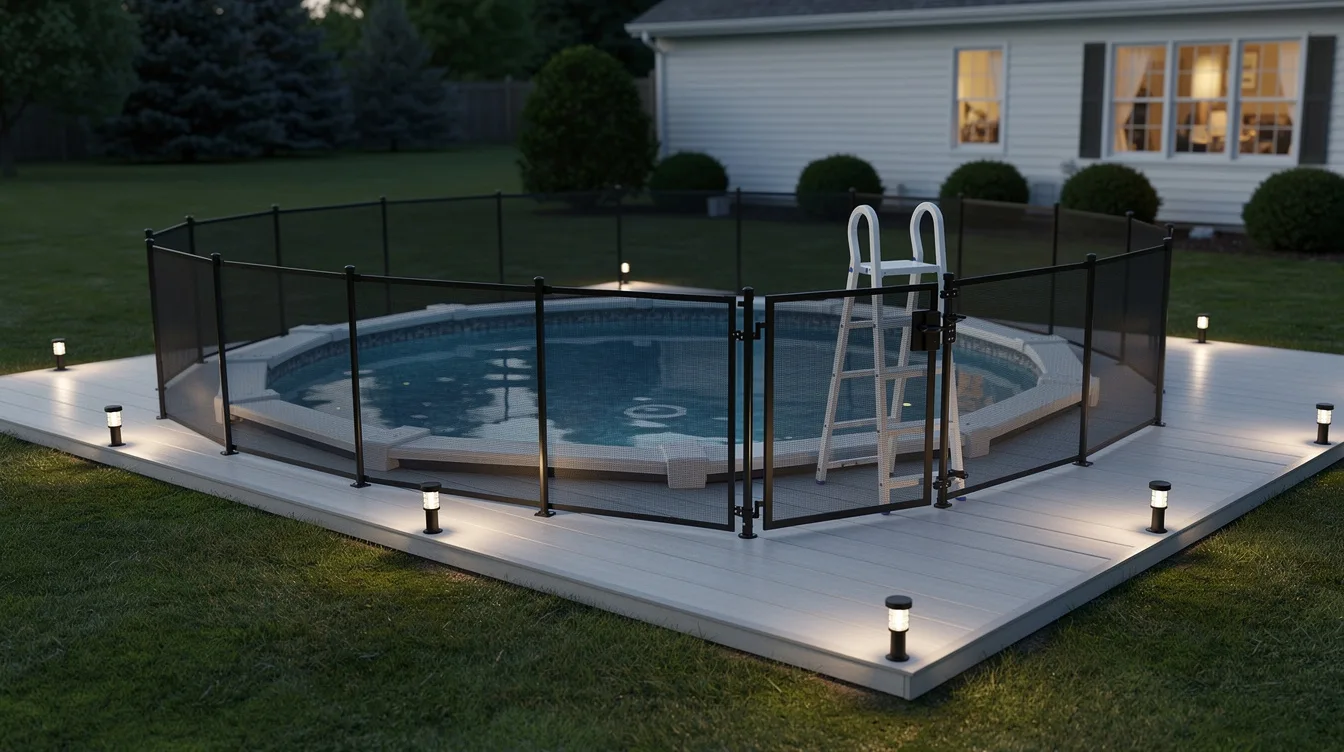
Last summer, I kept glancing at my above-ground pool from the kitchen window because the ladder was still down and the gate by the deck never clicked shut the same way twice. The water looked calm, but the setup did not feel calm at all.
So I stopped thinking about accessories and started thinking like a parent who needed fewer weak spots. The upgrades families are making now are mostly practical ones: barriers, safer entry points, alarms, covers, and better footing around the pool.
Start with a real barrier, not wishful thinking
The first thing I admitted was simple: my above-ground pool wall looked tall enough from the patio, but it still felt too easy for a kid to reach when the ladder was down.
I started pricing a proper mesh safety fence, and the typical range I kept seeing was about $1,800 to $3,000 for 50 to 100 linear feet. That sounds like a lot until you compare it with the peace of mind of a true perimeter.
At Home Depot, I focused on powder-coated aluminum posts and UV-resistant mesh because cheap plastic parts age badly in full sun. For families with lower pool walls or wide-open yards, this is the upgrade that changes the whole setup.
Add a gate that closes on its own every time
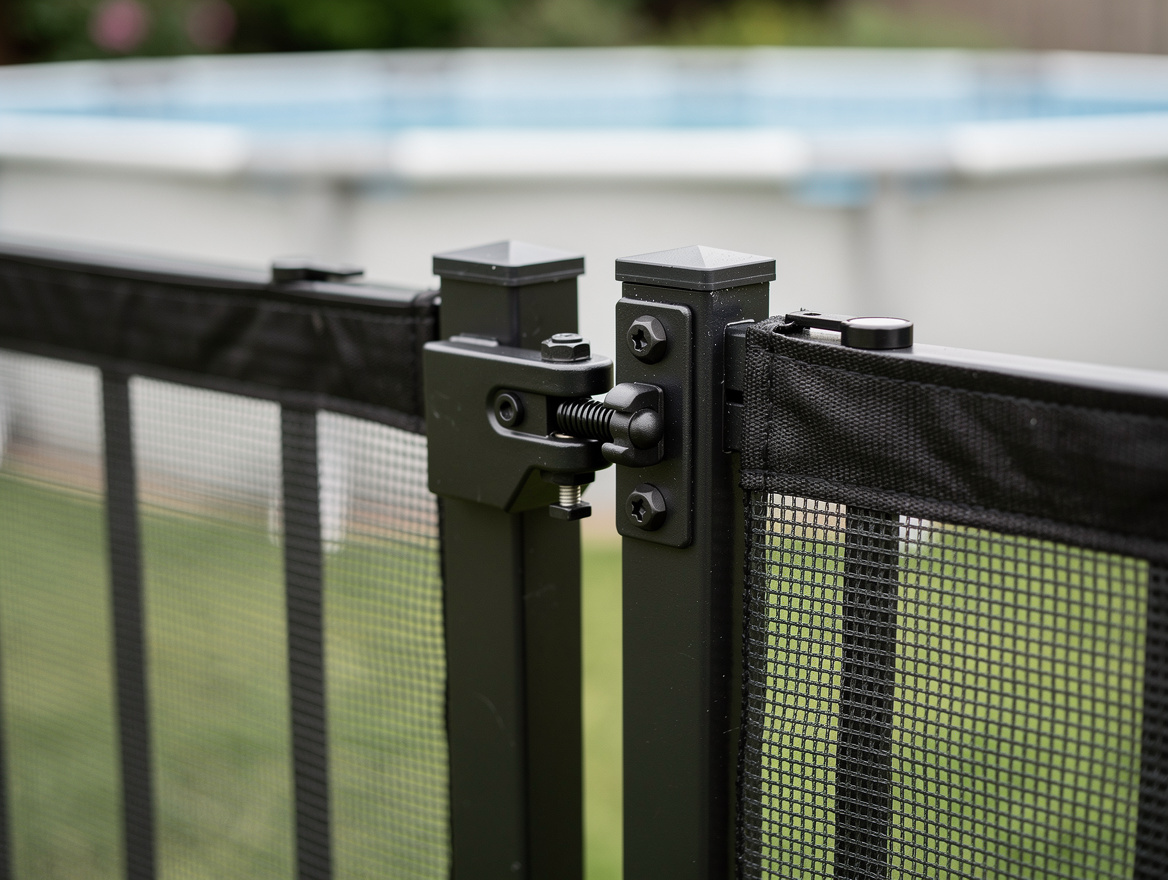
A fence without a dependable self-closing gate is where people fool themselves. If it can stay open after someone carries in towels and snacks, it is not solving the real problem.
The typical add-on for a safer gate or deck access point runs around $300 to $800, which was one of the more reasonable parts of my budget. I wanted the latch mounted high on the pool side because that placement makes more sense than any low, easy-to-reach handle.
At Lowe’s, I skipped decorative gate hardware and looked for latch kits built for outdoor code use. This is one area where plain and sturdy beats stylish every single time.
Replace the ladder kids can climb too easily
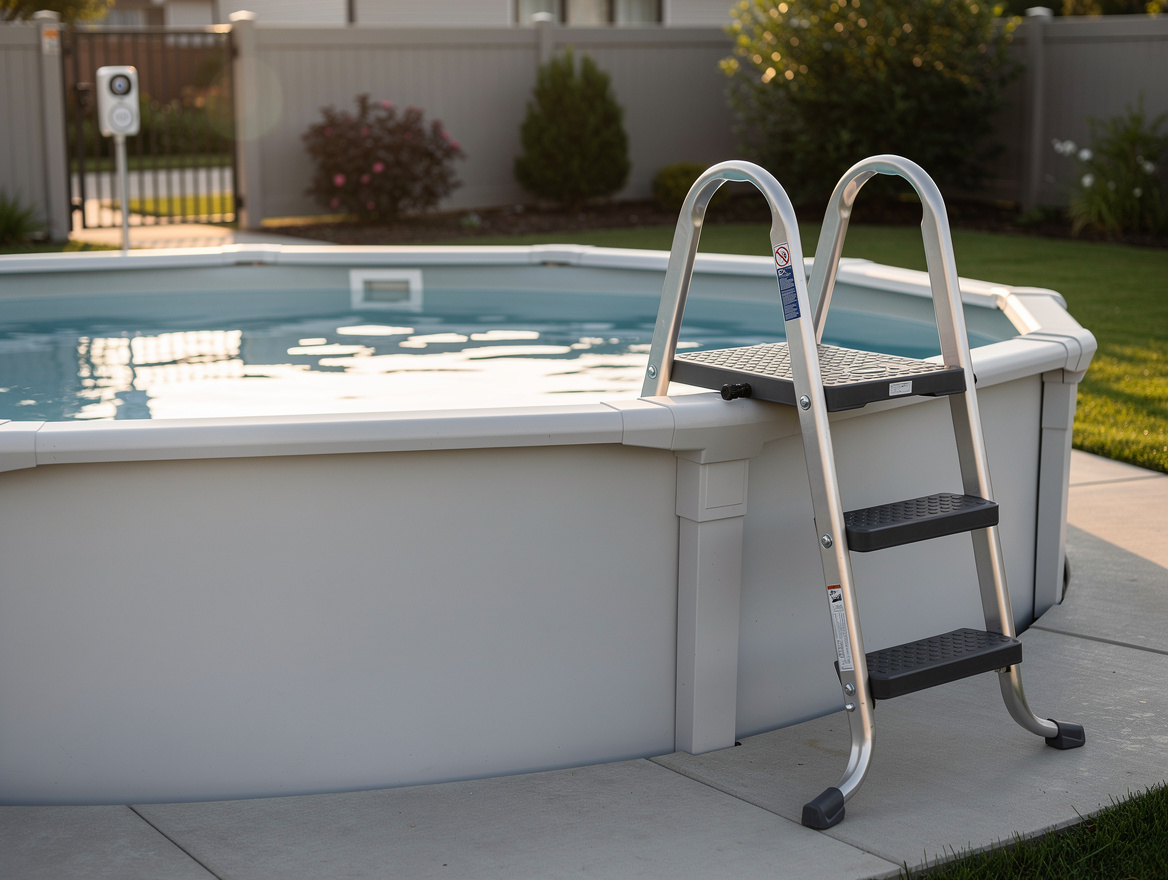
My old A-frame ladder was the weakest part of the whole pool. It was stable for adults, but it also gave kids a very obvious route straight into the water.
Lockable or lift-up ladder designs usually fall around $250 to $600 for pools with walls roughly 48 to 54 inches high. That is a practical average for families who want a faster fix before the hottest part of summer hits.
On Amazon, I narrowed it down to resin or resin-steel models with non-skid treads and full-width handrails. If the outer steps can be removed or locked, the pool feels far less exposed when nobody is swimming.
Build a small entry deck only if you can gate it
I almost talked myself into a cute pool deck before I thought through the access problem. A platform looks cleaner than a ladder, but it also creates a standing invitation unless the entry can be blocked.
For modular step-and-deck kits sized for 12- to 24-foot above-ground pools, the typical spend lands around $700 to $1,500. That range made sense to me only when I treated the deck as a safety project first and a comfort project second.
At Ace Hardware, I compared non-slip step surfaces and gate-ready posts instead of browsing stain colors. If a mini deck cannot support a self-closing gate, I would leave it out and keep the simpler ladder upgrade.
Layer in alarms for the moments adults get distracted
I do not trust any single device, but I do like a second line of warning. A good pool alarm helps during those ordinary moments when someone runs inside for sunscreen and assumes the yard is still under control.
Surface-wave or subsurface alarms typically cost about $150 to $350 per pool, while gate or door alarms usually run $30 to $80 each. That made alarms one of the easiest safety add-ons to justify in a broader project that can average anywhere from $300 to $3,000.
From Walmart, I looked for loud 85 dB-plus alerts, battery backup, and weather-resistant housings. I like smart features, but I care more about hearing the alarm instantly than checking a slick app later.
Clean up the deck edge so slips are less likely
Once I fixed access, I noticed the area around the pool steps was still doing me no favors. Wet concrete, scattered toys, and one dim corner near the hose bib made the whole approach feel sloppy.
I used non-slip mats and textured deck coating from Costco and kept the walking path deliberately plain. This is not the place for trendy outdoor rugs that stay damp and start curling at the edges.
I also added low-glare LED pathway lights so the pool edge reads clearly at dusk without turning the yard into a stadium. Better lighting is not just cosmetic, it helps everyone see where the steps end and where the water begins.
Use a cover that actually gets secured after every swim
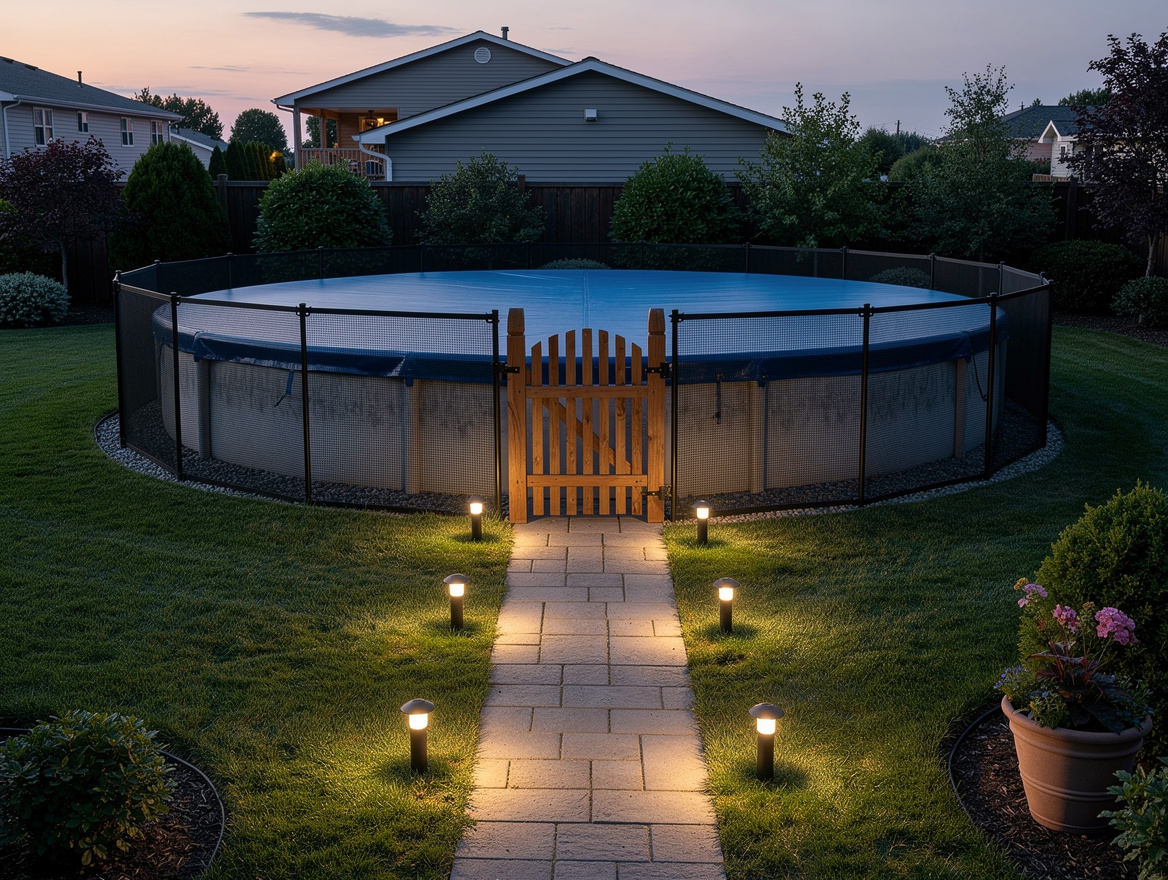
I used to treat the pool cover like a chore for windy days, which was a mistake. A sturdier cover works best when it becomes part of the normal routine, especially on weekdays when the pool sits unused for long stretches.
At Target, I passed on the flimsy options and looked for heavier material with reliable tie-down points. I would rather wrestle with a cover for one extra minute than deal with a loose one that shifts and leaves gaps.
The smartest setup I found was boring in the best way: cover on, ladder secured, gate latched, alarm armed. That stack of simple habits is what made the yard feel family-ready, not one flashy purchase.
If you are deciding where to start, spend the first dollars on access control: a real barrier, a self-closing gate, or a ladder that locks. Lights and deck touches can wait a week, but easy entry should not.
Mia Carter writes about small-space living and budget home makeovers. She has restyled three rentals and tests most ideas in her own 45 sqm flat.