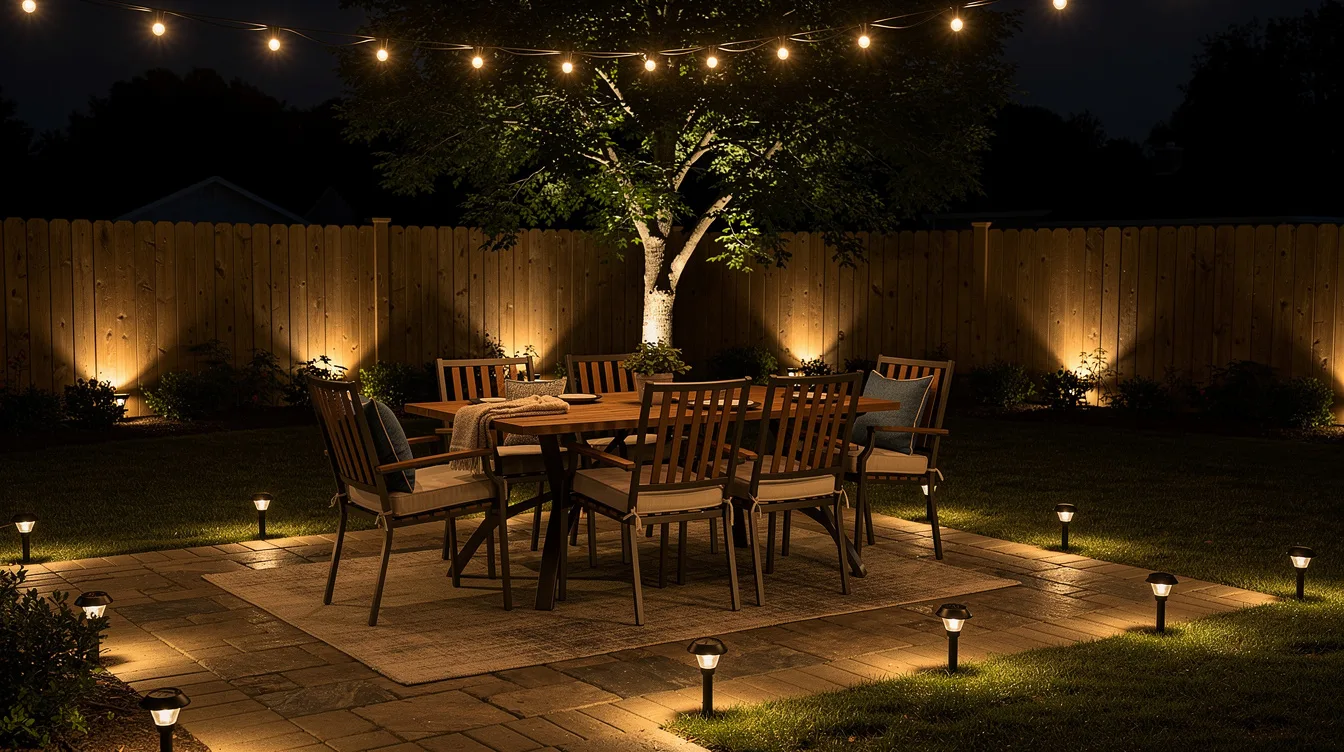
The night I finally fixed my backyard, I was staring at a patio table that looked inviting at 6 p.m. And weirdly flat by 9. The chairs were there, the planters were there, even the grill had a nice spot, but once the sun dropped, the whole yard turned into a dim patch with one porch bulb doing all the work.
I didn’t need a full landscape plan. I needed a few types of solar lights used in the right places, and the difference showed up in one evening.
Hang a warm canopy over the table
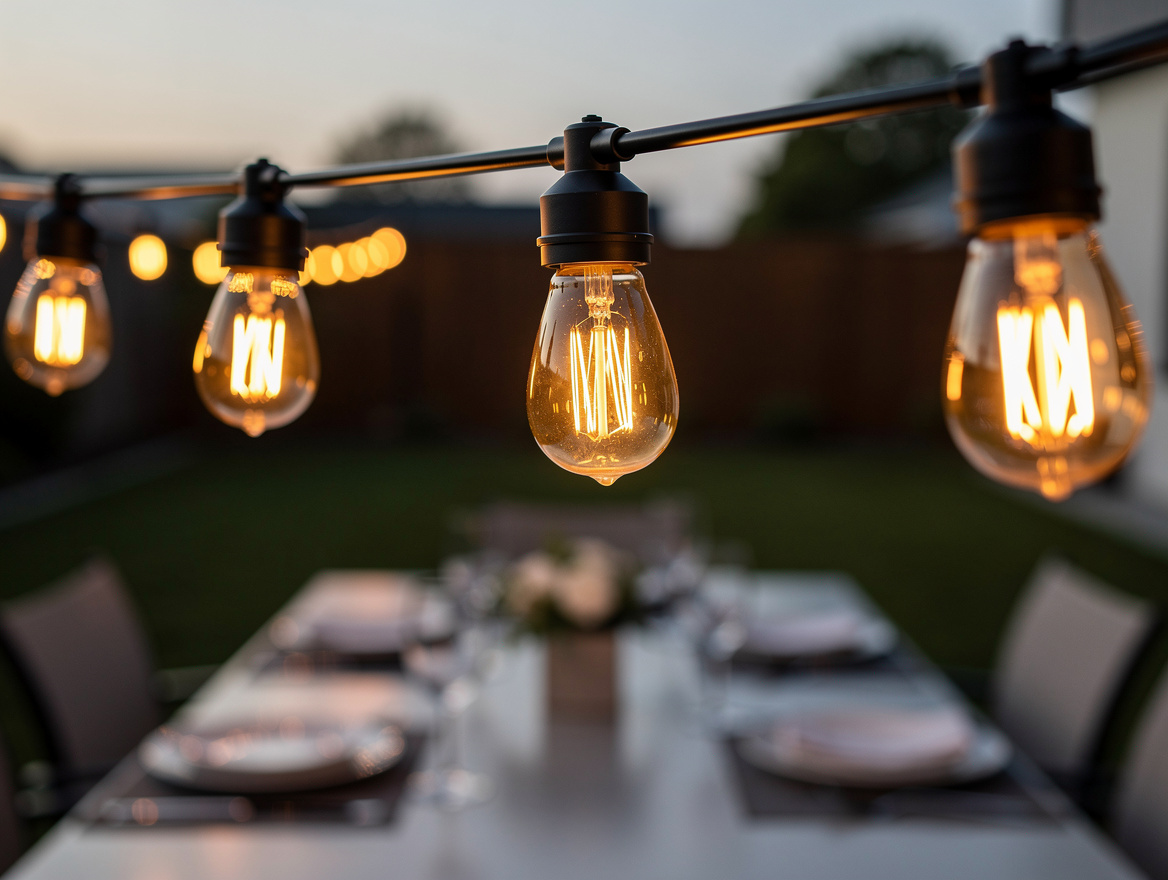
The first thing I changed was the ceiling effect above my outdoor table, because a dark void overhead made the whole yard feel unfinished after sunset. A strand of Brightech Ambiance Pro Solar String Lights gave me that instant bistro look without running an extension cord across the lawn.
Typical price is about $35 to $60 on Amazon, depending on length, and that range feels fair for rubber cable and shatter-resistant plastic Edison-style bulbs. The common sets run roughly 48 to 96 feet, which is enough to cross a patio or stretch from fence to tree without looking skimpy.
I got the best result by using two lines instead of one lonely strand. Hung around 8 to 10 feet high, the light felt like a real outdoor room, and warm white looked far better than anything cool or icy.
Draw the walkway instead of flooding it
I used to think brighter was better, but path lighting works when it guides your feet and leaves some shadow in the planting beds. A cheap set of Soplex Solar Garden Lights did more for the yard than one oversized spotlight ever did.
A typical 12-pack lands around $25 to $40 on Amazon, and the usual build is stainless steel with a plastic diffuser. Most of these stand about 14 to 16 inches tall, which is enough to read as a line at night without poking up awkwardly during the day.
I spaced mine about 5 to 6 feet apart and stopped before the effect turned into a runway. That distance keeps the path clear while still letting the yard feel like a backyard, not a hotel entrance.
Outline hard edges with flat ground discs
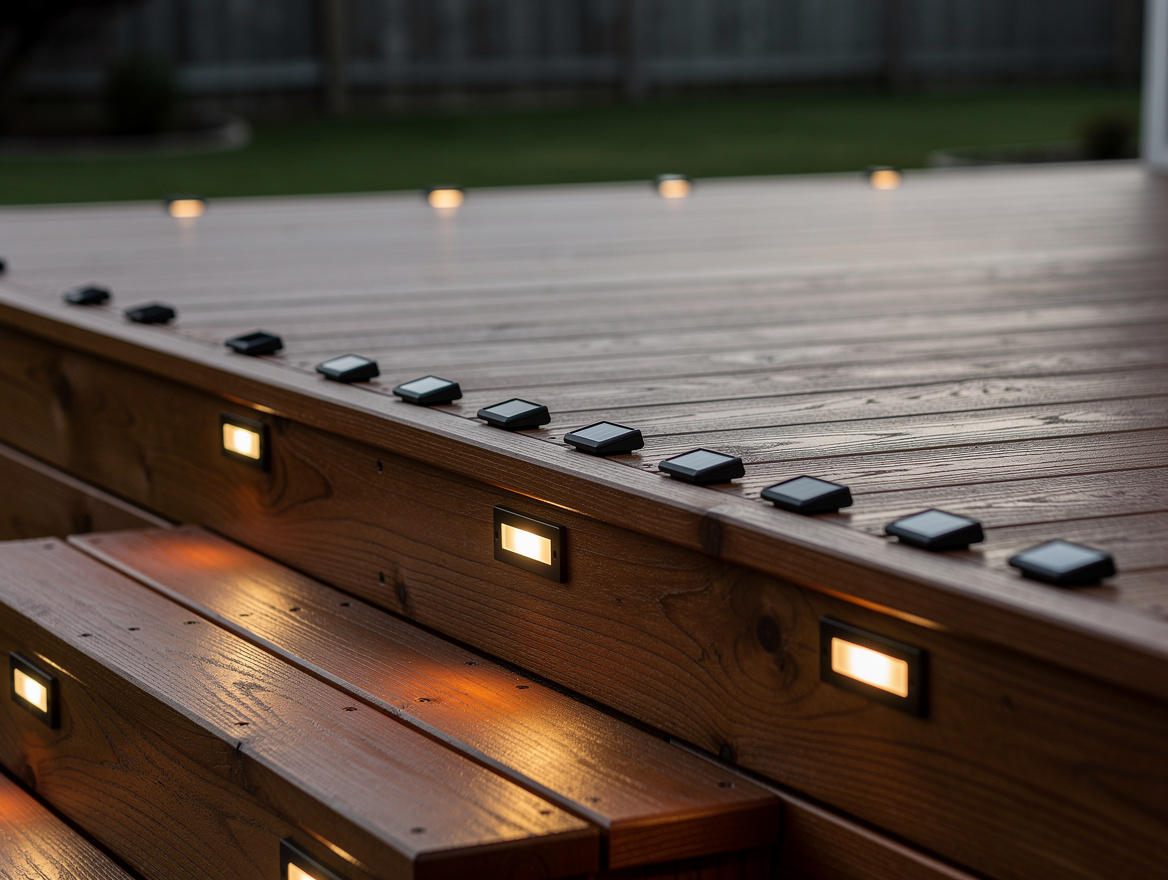
The biggest visual upgrade came from tracing the deck edge and one gravel border with low discs instead of more stake lights. Walmart Solar Ground Lights sit flush, so they make clean shapes at night and almost disappear in daylight.
The common 12-pack is about $32 at Walmart, with roughly 35 lumens per light, about 8 hours of runtime, and IP65 weather resistance. The discs are usually around 4 to 5 inches across, which is just enough to read as a dotted line once the yard goes dark.
I like these best around a tree ring, along pavers, or beside a deck where a taller fixture would feel busy. They are not dramatic on their own, but they make the whole layout look more intentional, and that is what reads expensive.
Wash the fence with small wall lights
My fence used to vanish at night, which made the yard feel smaller than it is. Adding a row of Lianglome Solar Fence Lights turned that flat boundary into a soft backdrop instead of a black wall.
These usually run about $20 to $35 for packs of 6 to 8 on Amazon, with simple ABS housings and integrated panels. I mounted them low enough to cast a downward glow on the boards, because uplight on a fence can get harsh fast.
This is where I stopped trying to be symmetrical. I only lit the side I actually see from my chair, and that decision made the yard feel edited rather than overdone.
Make steps safer with low deck lights
Stairs are where I think solar lighting earns its keep, because one missed edge at night is enough to ruin the mood. The flat profile on SHONE Solar Deck Lights worked better for me than bulkier lantern-style fixtures.
Typical packs are around $28 on Amazon, though the count can vary, and the specs are solid for the price: ABS housing, up to 48 LEDs per unit, about 8 to 12 hours of battery life, and IP67 protection. I used them on step risers and the deck perimeter, where they gave a crisp line without glare in my eyes.
I would not put these everywhere. They look best when they quietly mark level changes and edges, then let the string lights and fence wash do the decorative work.
Aim a few spots at one tree and one wall
I learned the hard way that spotlights are the category most likely to make a backyard look cheap if you overdo them. One or two solar spotlights aimed at a tree trunk or a textured exterior wall were enough to add depth behind the seating area.
At Home Depot and Lowe’s, typical solar spot or small floodlight sets often sit in the roughly $30 to $60 range, usually with black ABS or metal heads and ground stakes. I looked for warm light and adjustable heads first, because brightness alone is a bad shopping filter for this type of fixture.
I skipped lighting every shrub and picked a single small tree with a decent branching shape. That one vertical beam gave the yard a background layer, which made everything in front of it feel more finished.
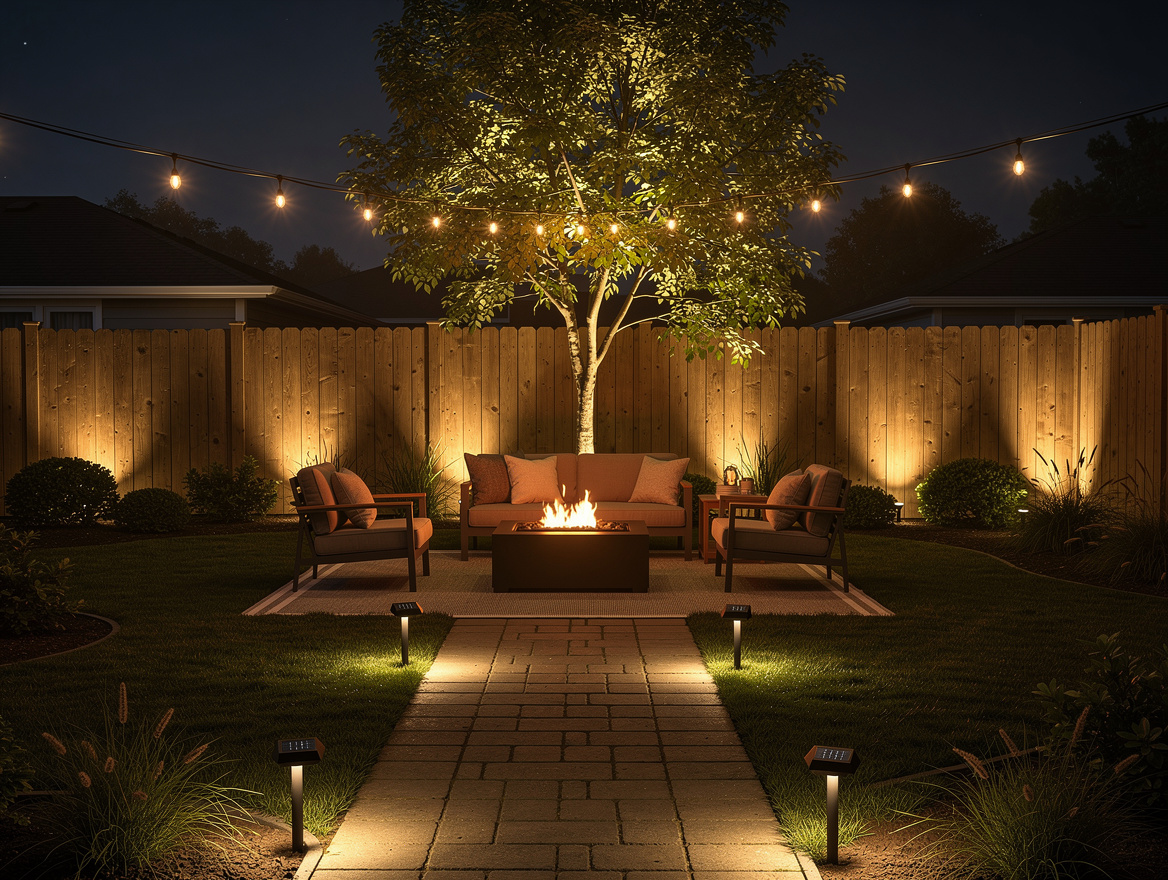
If you want the fastest win, start overhead with string lights, then add path lights where people actually walk. After that, spend your last dollars on one fence wash or one spotlight, because layering beats buying the brightest thing on the shelf.
Mia Carter writes about small-space living and budget home makeovers. She has restyled three rentals and tests most ideas in her own 45 sqm flat.