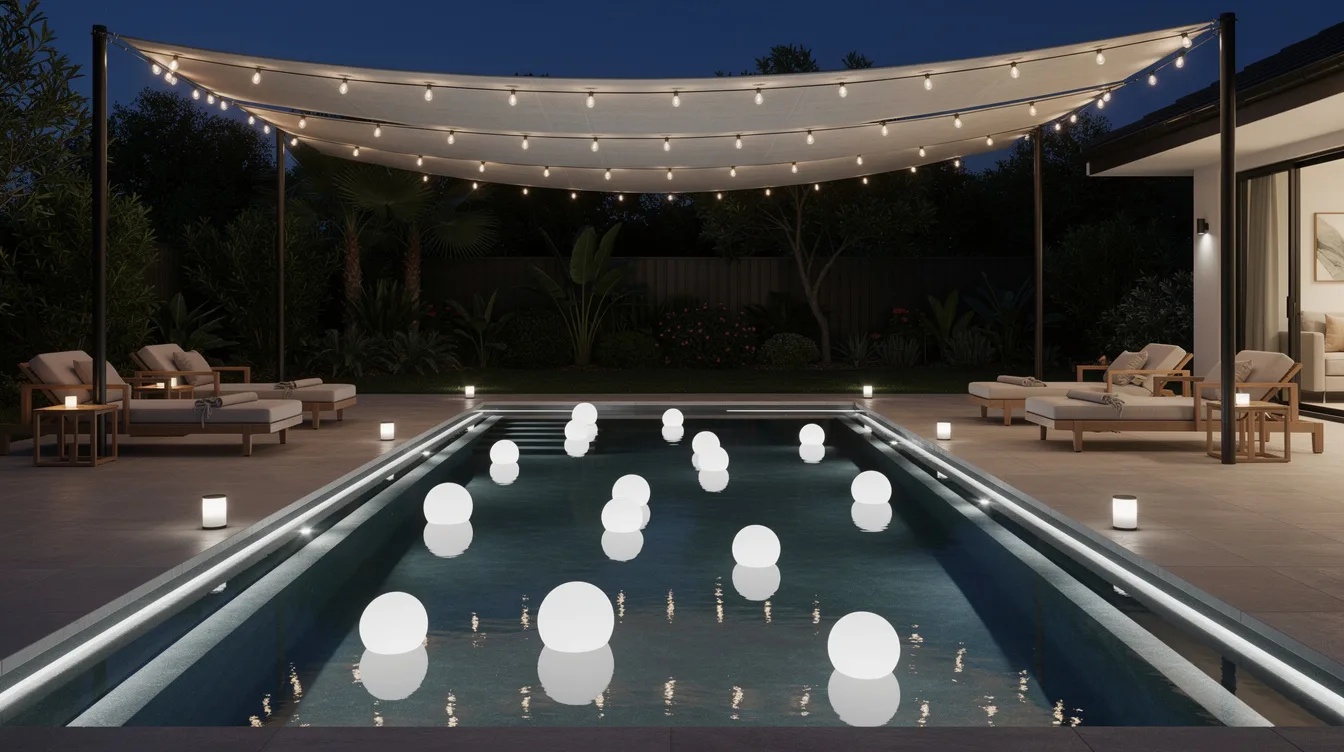
The first time I tried to light a pool at night, the water vanished into a black rectangle while the deck looked weirdly overlit. The chairs were bright, the coping was glaring, and the actual pool felt dead.
That’s why I like solar lighting when it’s layered correctly. You can get a soft, modern look with floating lights, a string canopy, and a few safety lights, without hardwiring half the backyard.
Layer the pool first, then the deck
At night, the water should read as the brightest part of the yard. I’d start with floating solar lights on the surface, then add a softer ring of light around the pool instead of blasting everything at the same level.
That order matters because it keeps the pool from looking flat. A warm perimeter at about 2700K to 3000K feels better than a harsh white wash, especially if you want photos to look cozy instead of cold.
For an average backyard pool, a simple three-layer setup works best: water glow, overhead string lights, and a few edge lights for footing. It’s the cleanest way to get mood and safety without making the space look overdesigned.
Hang a solar string canopy low enough to feel intimate
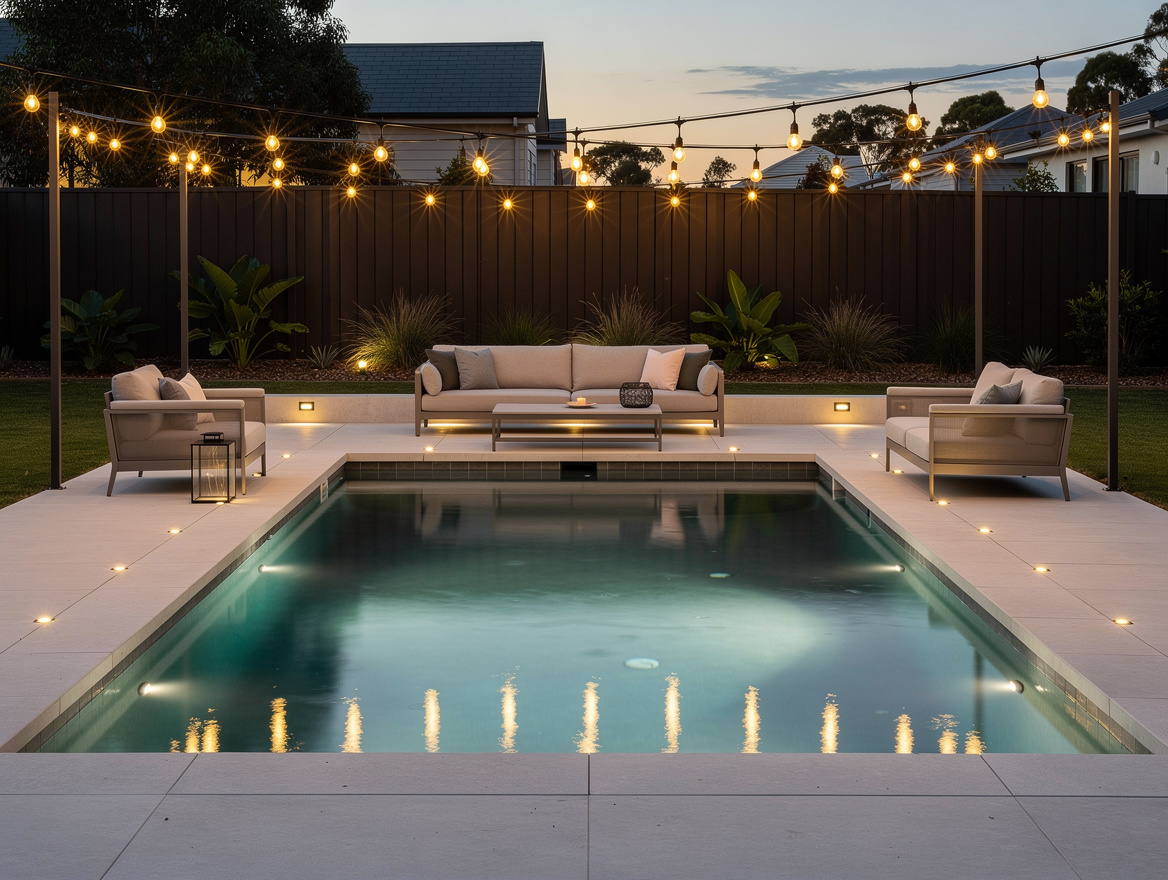
A solar canopy works when it sits low enough to shape the space, usually around 10 to 13 feet above the deck. Higher than that, and the light starts to disappear into the night.
I like using solar Edison string lights from Lowe’s, Target, or Amazon in 33- to 66-foot lengths. Typical outdoor sets in that range run about $25 to $60, depending on bulb count, panel quality, and weather sealing.
Two runs over a small pool can be enough. Three runs across a wider deck gives you that soft ceiling effect people actually notice from inside the house.
Check for an IP65-rated string and a weather-sealed solar panel box. A replaceable 18650 battery is worth paying for because it usually means the set will last longer than the cheapest all-in-one versions.
Float large glowing spheres for the main visual hit
If you want the water to look styled instead of merely lit, use solar floating globes. The larger sizes, around 10 to 16 inches across, create a cleaner effect than tiny novelty lights.
Wayfair and Amazon often carry polyethylene globe lights in that size range. A typical price is about $20 to $40 per globe, while larger multi-packs can reach roughly $100 to $120.
For a residential pool around 7 by 3 meters or 8 by 4 meters, four to eight globes usually looks right. More than that, and the pool starts to look busy, which kills the calm mood fast.
I’d choose matte white shells over clear plastic every time. UV-resistant polyethylene gives a softer, more editorial glow and usually looks better before the lights even turn on.
Use flat floating discs when you want color without clutter
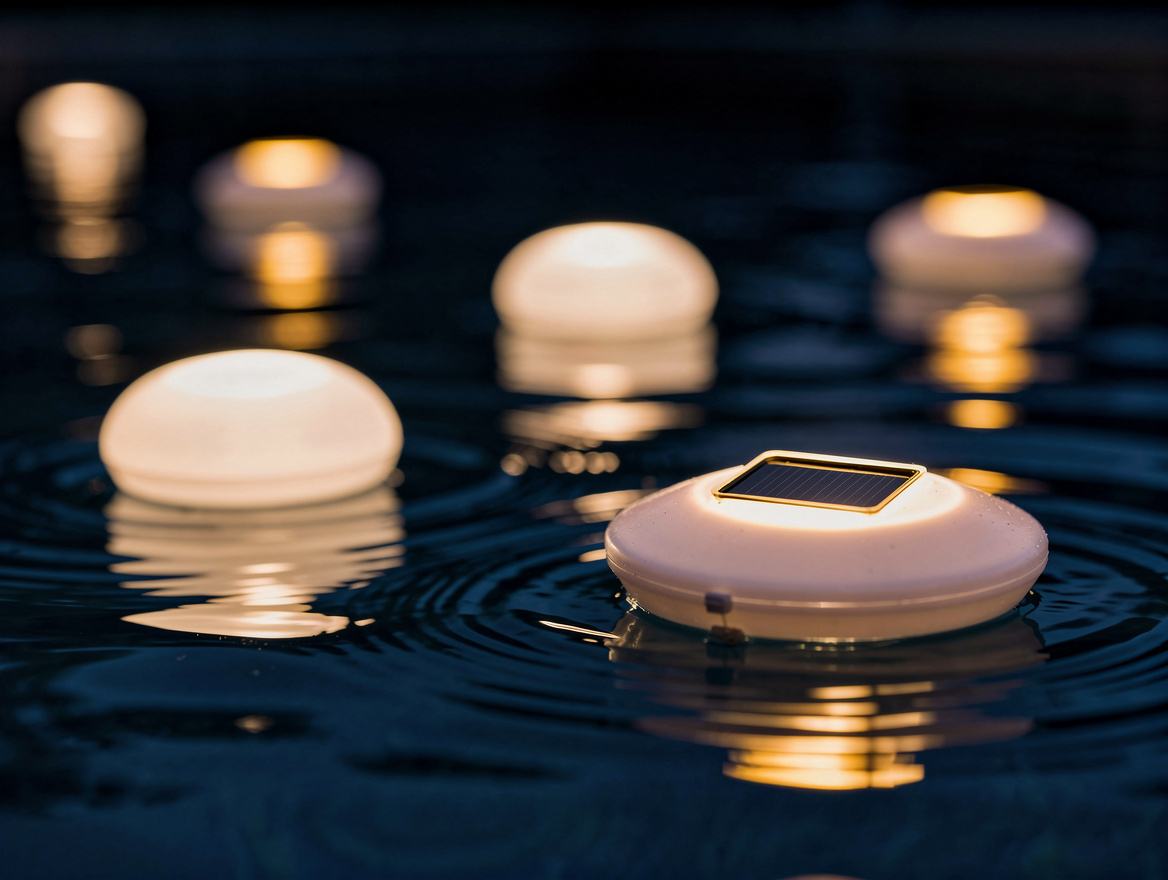
Flat discs are the easy answer if you want floating light but don’t love the oversized ball look. They sit lower on the water, so the pool stays sleek and modern.
Retail listings at Lowe’s show compact solar floating pool lights around 8.9 inches wide and just under 2 inches tall. Smaller RGB versions sold online are often about 6.4 inches wide, and they’re usually marketed in multipacks.
Typical prices land in the $20 to $50 range for a small set, depending on brightness and mode options. If the listing promises 18 color modes, that’s fun, but I’d still keep the default effect slow and subtle.
Fast flashing colors read cheap around a pool. A slow color change or a soft blue-white mix looks far more grown-up, especially next to warm string lights.
Mark the pool edge with solar path lights that stay quiet
The deck needs guidance, not a runway. A few low solar path lights near steps, corners, and the transition to seating areas is enough for safety.
Home Depot, Ace Hardware, and Costco usually stock black metal or plastic path lights in warm white packs. Average pricing is about $20 to $45 for a basic set, with taller or heavier designs costing more.
I prefer slimmer fixtures instead of lantern-style stakes around a pool. They disappear during the day and keep the eye on the water at night, which is exactly where the attention should go.
Spacing matters more than quantity. Put lights where someone changes direction or steps down, not every few feet just because the box came with eight.
Anchor the whole setup with warm materials and matte finishes
Solar lighting looks best when the surrounding decor doesn’t fight it. A few grounded materials, like teak furniture, pale concrete, black metal, or white outdoor cushions, make the glow feel intentional.
IKEA, Target, and Walmart all sell outdoor basics that work with this look without pushing the budget too hard. A simple outdoor lantern, a neutral throw, and two large planters will do more for the scene than adding another light source.
Avoid mixing cool white bulbs, shiny chrome accents, and loud pool floats with your solar setup. Warm light needs matte surfaces and restrained color if you want that relaxed nighttime look people save to their mood boards.
As for runtime, most solar pool lights average about 6 to 8 hours after a full sunny day. That’s usually enough for dinner, a swim, and a late sit outside, but don’t expect perfect performance after cloudy weather.
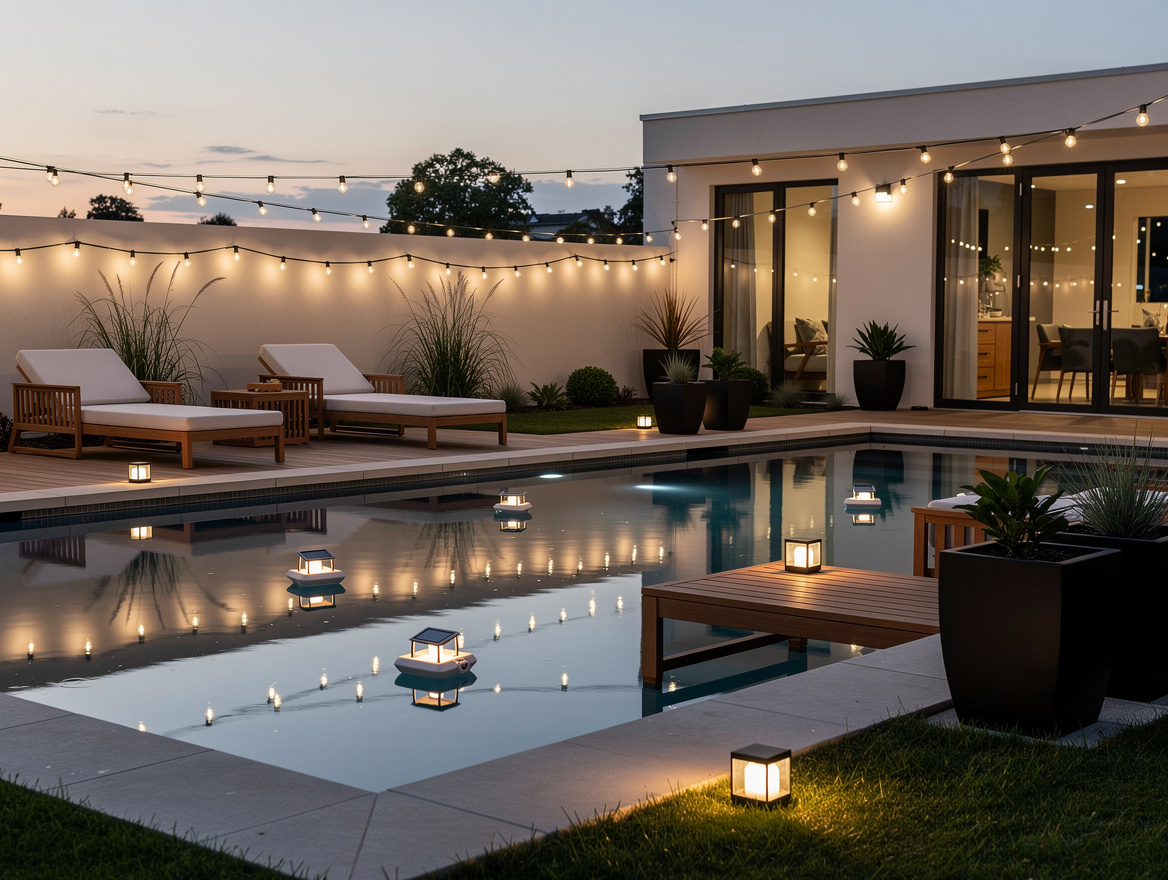
Start with the water, not the walkway. Add one floating layer first, then hang a warm string canopy, and only after that fill the dark spots around the deck.
That order keeps the budget in check and gives you a pool that still looks calm at 10 p.m., not like a patio store display.
Mia Carter writes about small-space living and budget home makeovers. She has restyled three rentals and tests most ideas in her own 45 sqm flat.