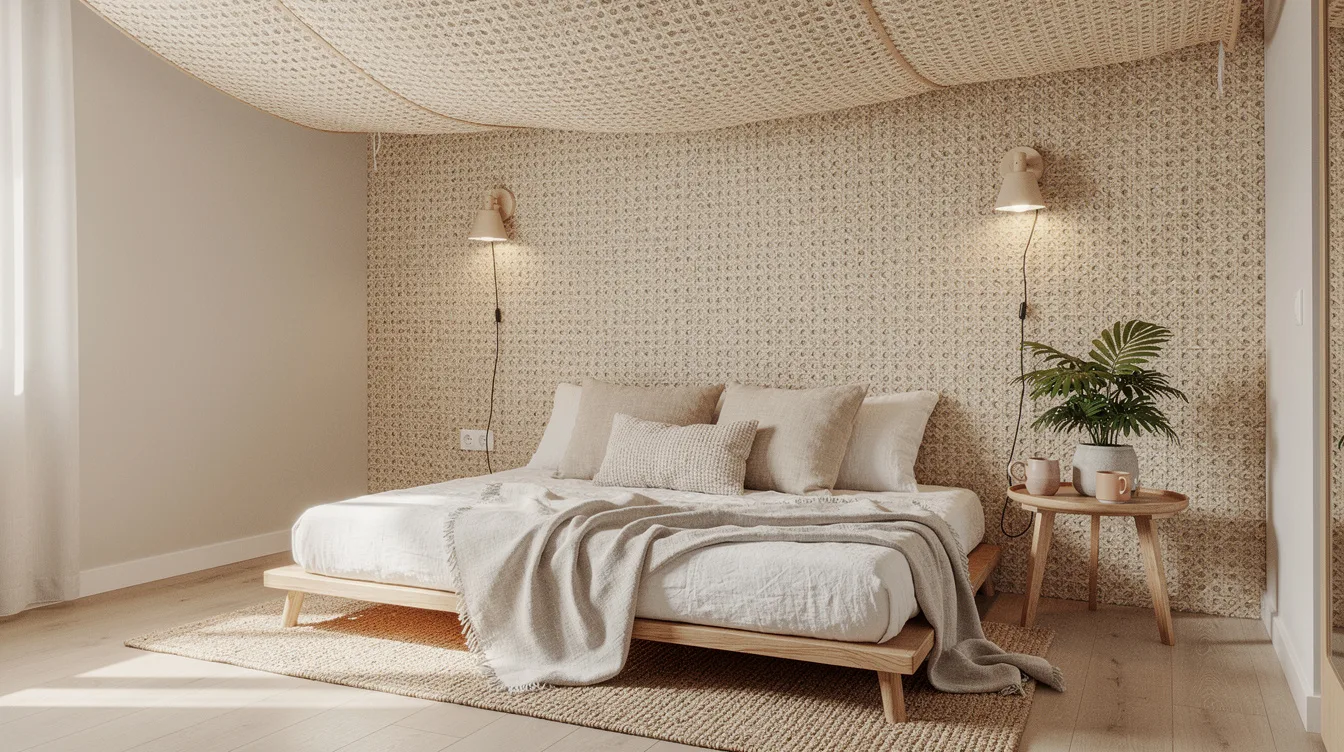
The fastest way to ruin a nap corner is making it look like leftover bedroom furniture. I wanted that shaded, slow, almost overwater-cabana feeling, but I rent, I cannot hardwire anything, and the only open spot in my place was a 1.5-meter corner near a window.
That limitation actually helps. A renter-friendly resort nook works best when it stays low, soft, and a little restrained, with peel-and-stick surfaces, plug-in lighting, and a mattress or daybed that feels intentional from the start.
Claim a Low, Lounge-Worthy Footprint
The sweet spot is a 140×200 cm mattress, about 55×79 inches, inside a corner that is roughly 1.4 to 1.6 meters wide. That size feels indulgent instead of makeshift, and it still works in a spare bedroom, office, or wide hallway end.
If your room is tight, a 120×200 cm mattress still gives you a proper stretch-out zone without eating the whole wall. I would keep 60 to 90 cm, about 24 to 35 inches, of open walkway in front, because a nap nook stops feeling calm the second your knees clip the edge every time you pass it.
Keep the Base Simple and Close to the Floor
The easiest renter move is a IKEA MALFORS foam mattress on a low slatted base. A basic single usually lands around €100 to €150, while a 140×200 cm mid-range foam mattress typically runs about €250 to €500, which is still far cheaper than trying to fake a custom built-in with millwork.
I like a low profile because it reads cabana, not guest bed. A IKEA LURÖY slatted base or a generic low platform from Amazon keeps the seat height around 40 to 45 cm once the mattress is on top, and that is a comfortable height for reading, scrolling, or falling asleep for 20 minutes that turn into 90.
If you want a more tailored bench look, line up IKEA KALLAX units and top them with cut foam. Three 77x39x42 cm units create a long base with real storage, but I only recommend that route if you need baskets underneath, because the mattress-on-slats version looks softer and less blocky.
Wrap the Corner With Peel-and-Stick Texture
The resort part does not come from palm-tree decor. It comes from a quiet shell of peel-and-stick wallpaper in a warm sand, cane, or rattan print behind the bed area, which gives the nook its own zone without asking permission from your landlord.
I would cover the back wall first, then run the same finish 60 to 80 cm, about 24 to 31 inches, onto the ceiling. That fifth-wall move is the one detail that makes a plain corner feel shaded and intentional, like a small cabana instead of a mattress parked against drywall.
For U.S. shopping, Home Depot peel-and-stick wallpaper and Amazon options are the simplest places to start. Typical cost for enough material to cover a compact nook is usually in the low hundreds, and it does more visual heavy lifting than most decor add-ons people buy after the fact.
Layer Sand-Toned Fabrics Instead of Beach Props
The floor needs a dry, woven texture first. A IKEA LOHALS jute rug in a large size, often around 160×230 cm, roughly 63×91 inches, usually sits around €90 to €140 and instantly gives the nook that boardwalk-meets-linen feeling.
Then soften the landing zone with a smaller cotton rug or wool-blend layer where your feet hit. I would skip anything too shaggy, because resort style should feel breezy and a little crisp, not like a winter den.
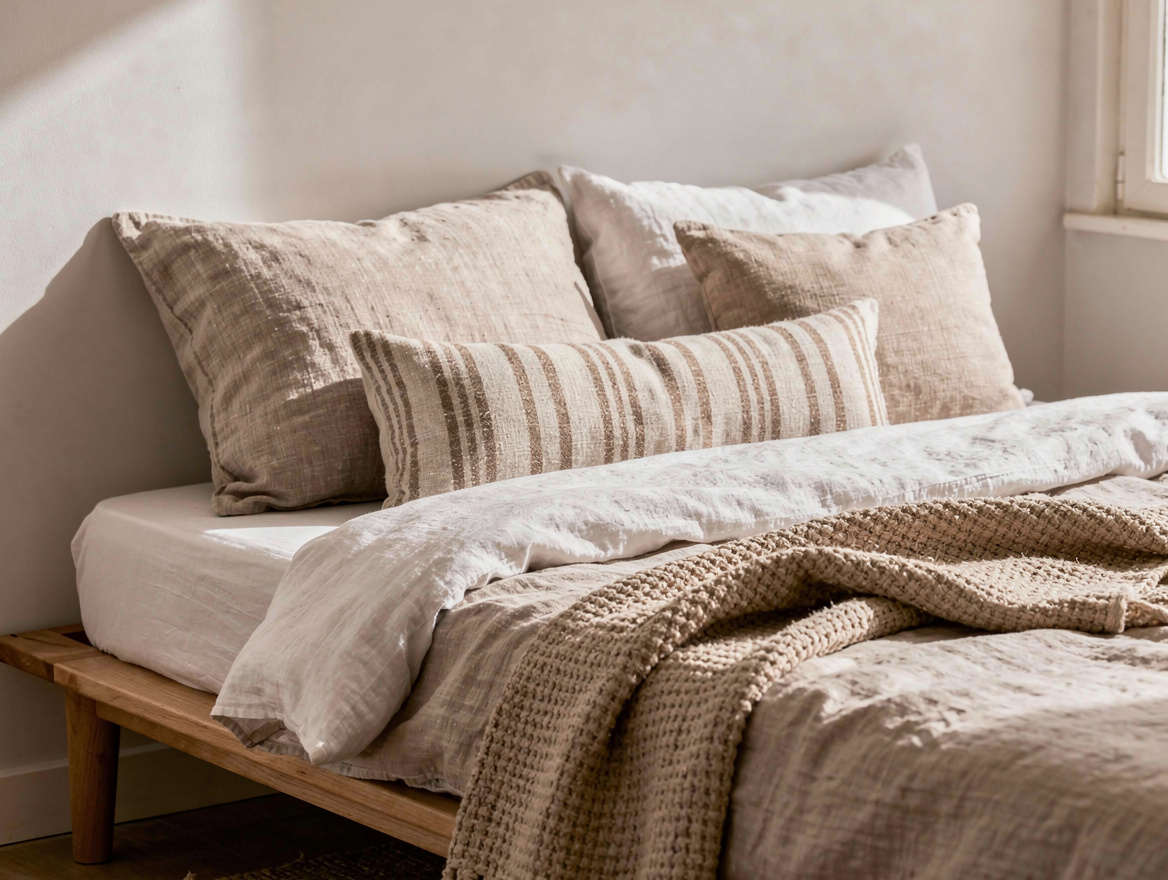
On the mattress, stick with linen-look pillow covers, off-white sheets, and one or two oversized back cushions that sit about 60 to 70 cm high. A chunky throw. One striped bolster.
Maybe a faded tan lumbar pillow from Target or Wayfair, but not seven little accents fighting for attention.
The color palette matters more than the pattern. Warm beige, coconut white, driftwood brown, those shades are what sell the mood, while bright blue tropical prints usually push the room into vacation-rental territory in a bad way.
Use Plug-In Lighting to Create Cabana Glow
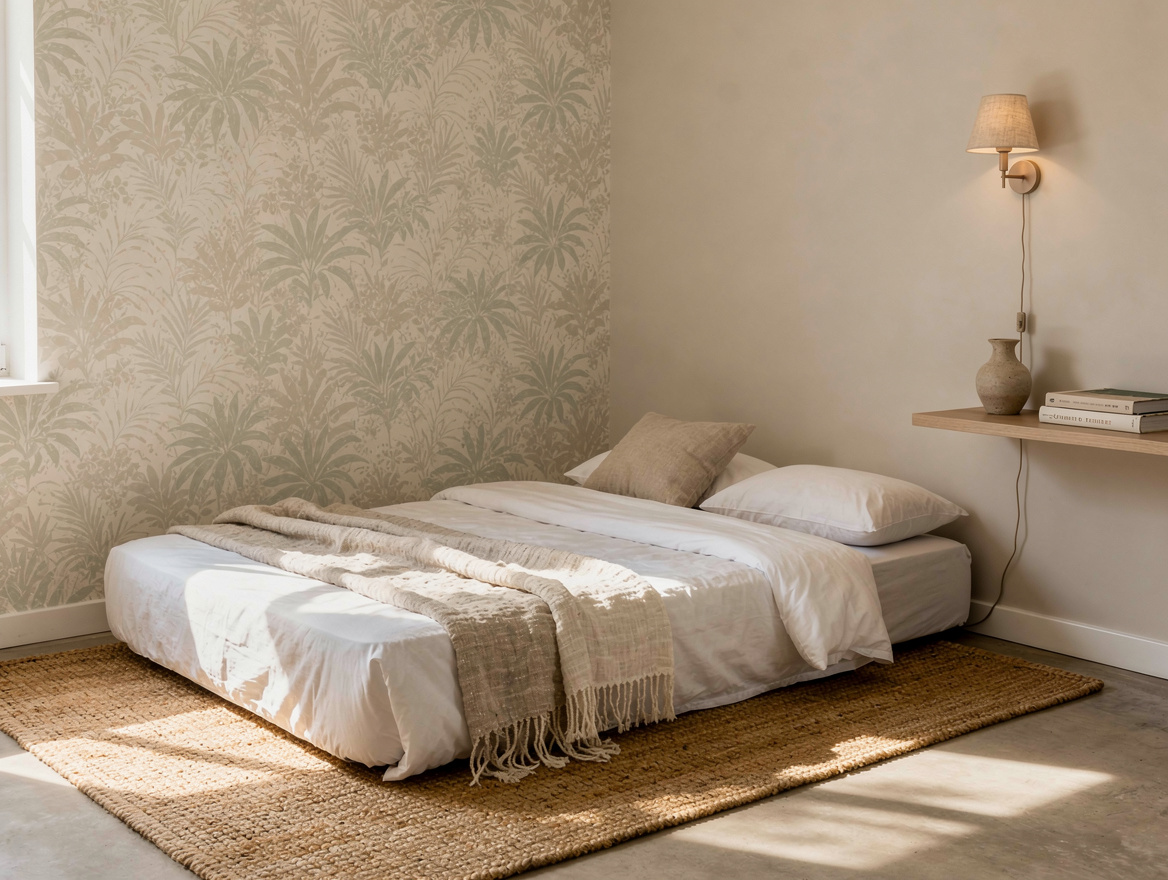
Hardwired sconces are great, but renters do not need them. A pair of plug-in wall sconces from Target, Amazon, or Wayfair gives you the same low evening glow without opening a wall, and that is exactly the kind of upgrade that makes the nook feel expensive after dark.
I prefer warm bulbs at 2700K and shaded fixtures in rattan, fabric, or matte white. One plug-in sconce on the side wall and one small IKEA lantern or portable lamp on a ledge is enough, because too many light sources make a small nook feel staged.
Do not use overhead light as the main source once the nook is done. A low mattress, soft wall wrap, and flat top lighting will flatten the whole effect, while side lighting brings back the shadow and depth that make resort rooms feel calm.
Hide Everyday Clutter Before You Add Anything Tropical
This is the part people skip, and it is why the look falls apart fast. The nap nook needs one contained spot for the boring stuff, a lidded basket, a slim side table, or KALLAX storage below, so chargers, remotes, and laundry do not end up in the frame.
A narrow side ledge along the short wall is enough for a book, water, and glasses. You do not need a full nightstand, and I would argue a bulky one actively hurts the resort feel because it breaks the long, low line that makes the nook look relaxed.
Budget-wise, this whole setup is genuinely doable at roughly €300 to €900 depending on your mattress, rug, and lighting choices. That range feels honest to me, because the cheap version still works, while the pricier version mostly buys better comfort and nicer fabric, not a different concept.
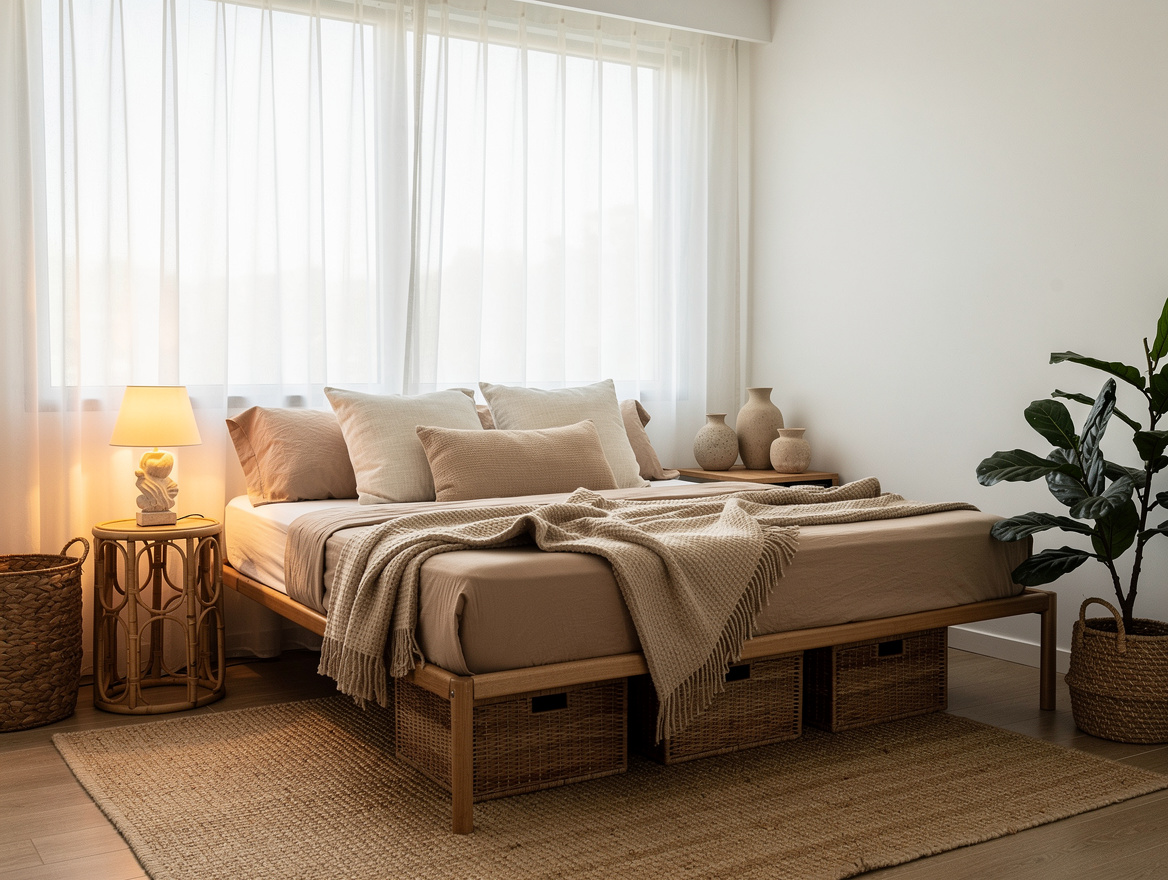
Start with the low base and the wall treatment, then judge the room again before you buy extra decor. If those two pieces are right, even a modest setup can feel closer to a boutique cabana than a spare bed shoved into a corner.
Mia Carter writes about small-space living and budget home makeovers. She has restyled three rentals and tests most ideas in her own 45 sqm flat.