My landlord’s lease had one line about “no exterior modifications” and another about “tenant responsible for all permit costs.” I stared at my south-facing patio for six months, sweating through coffee outside, before I accepted that drilling was never happening. The concrete slab was cracked, the siding was vinyl I didn’t own, and the fence belonged to the neighbor.
I needed shade that weighed itself down, clamped to nothing, and looked like I meant it. Five solutions later, my patio gets used four nights a week instead of zero. Here’s exactly what I bought, what I spent, and what I’d skip if I started over.
I Started With a Shade Sail and Two Planter Boxes
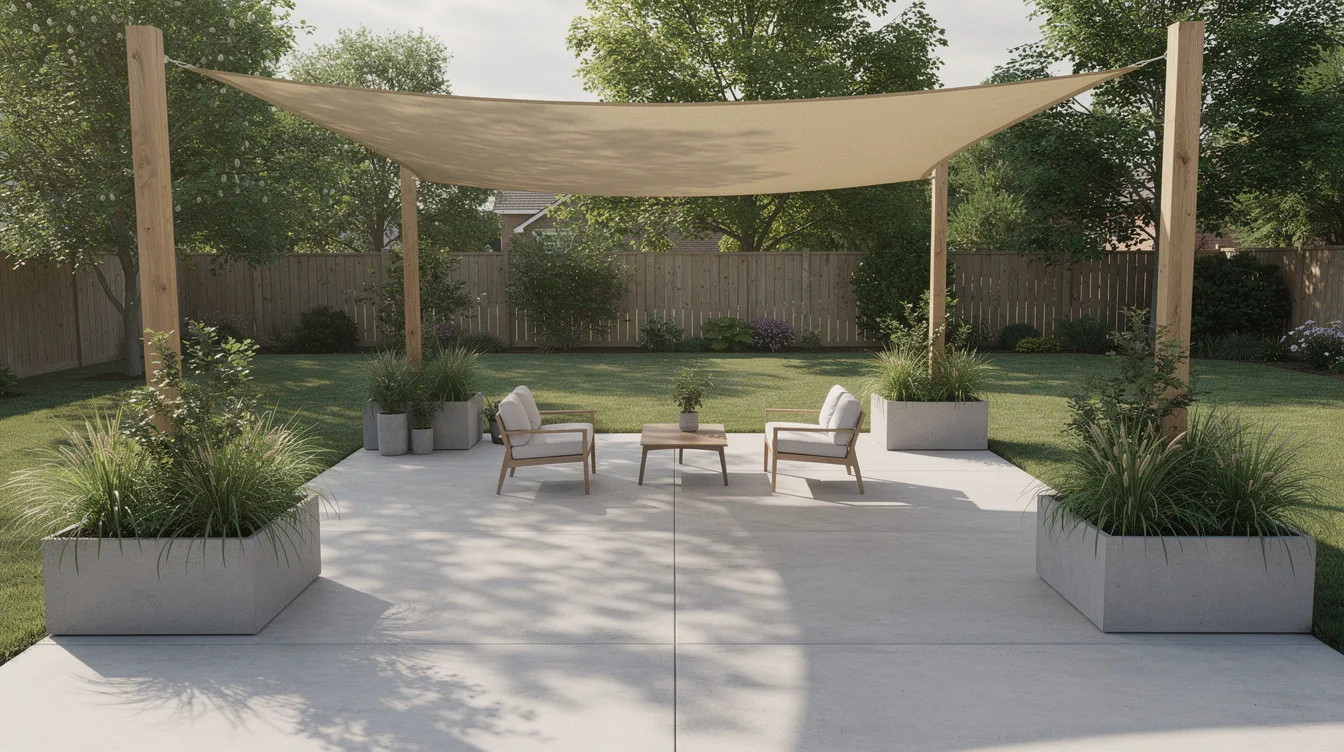
I measured my 14-by-12-foot concrete slab and realized I had exactly one fence post I could use. Everything else had to stand on its own. I bought a Coolaroo Ready-to-Hang 12×16 ft HDPE shade sail in sandstone for $58 at Home Depot and two 20-inch square resin planters from Lowe’s.
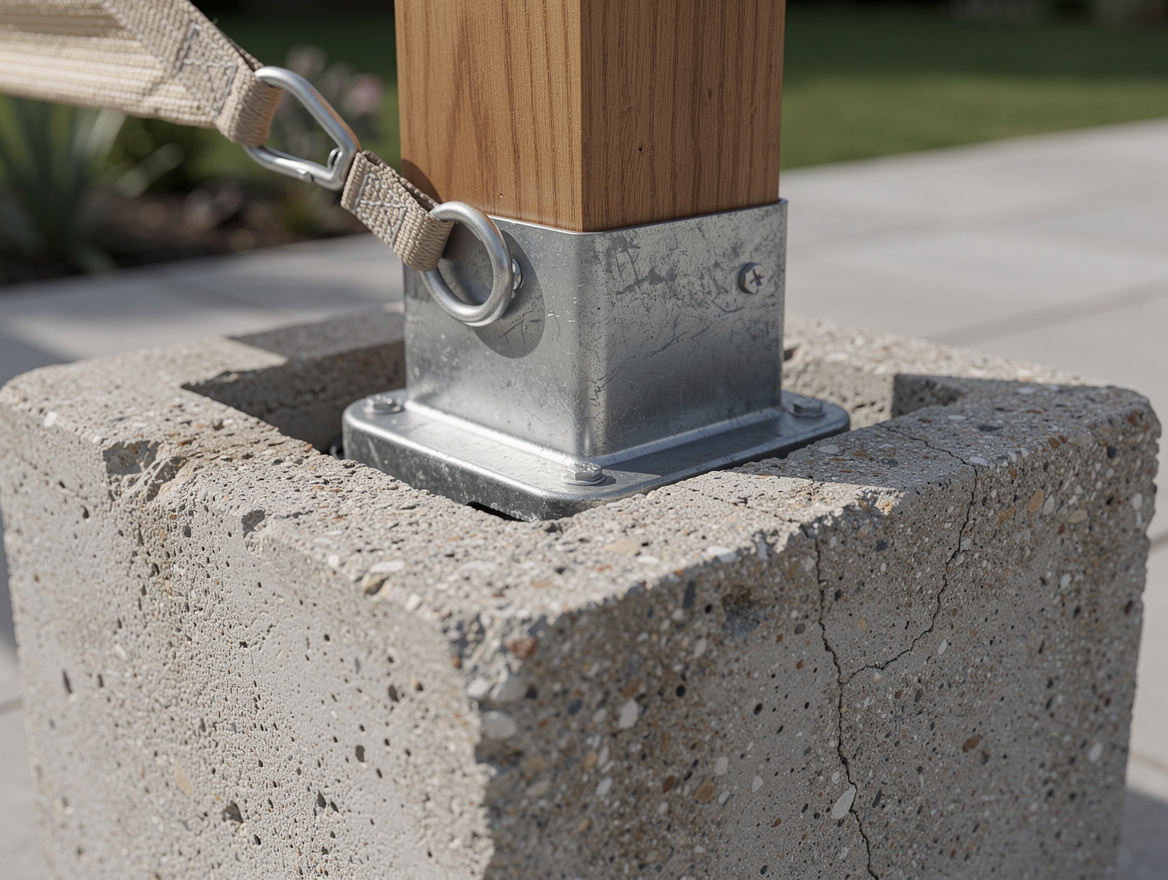
I filled the planters with 180 pounds of concrete mix each, dropped in steel sleeves from Ace Hardware, and threaded 8-foot pressure-treated posts. The sail tensioned between the fence post, one planter post, and a tree. Total cost: under $140.
It blocked maybe 92% of UV and looked intentional, not desperate.
I Added a Cantilever Umbrella for Movable Shade
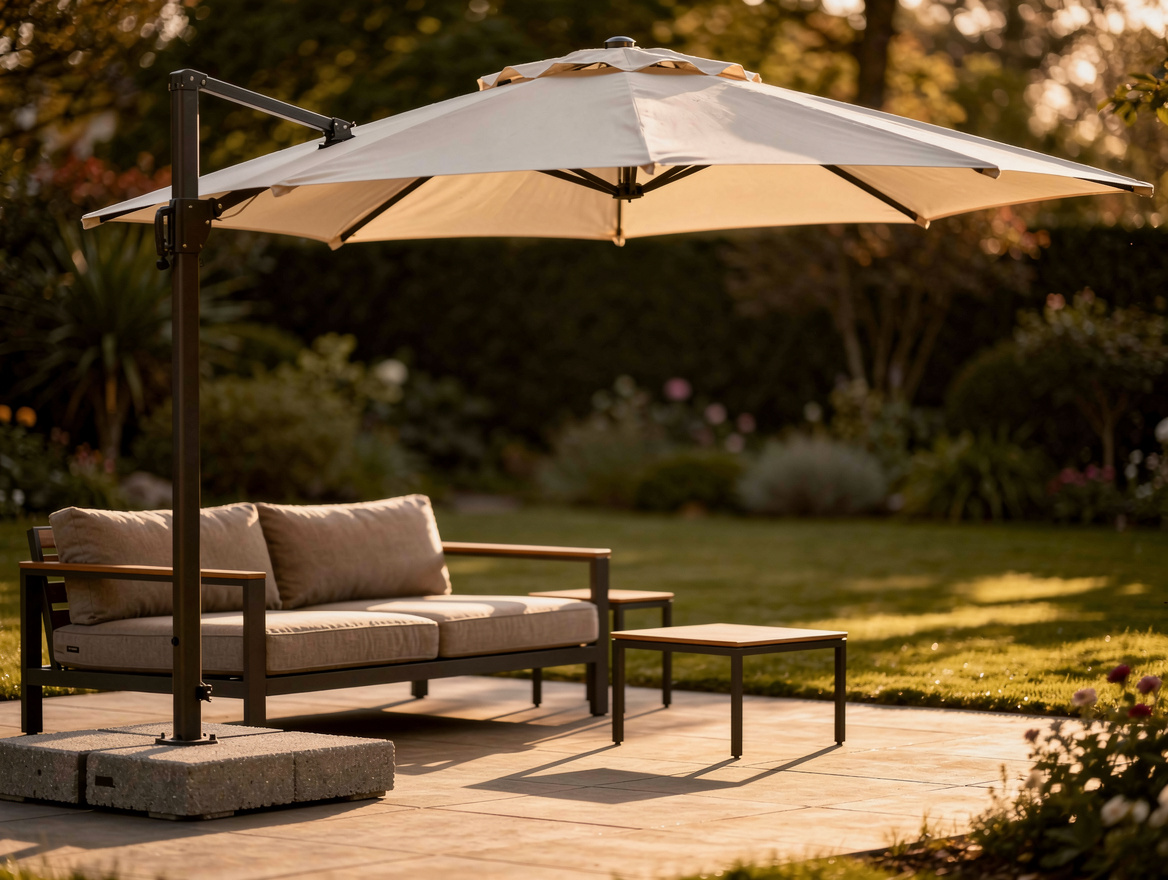
The sail was fixed. I needed something I could drag to the grill or the reading chair. After three returns, I landed on a Purple Leaf 10-ft square cantilever umbrella from Amazon for $289 with a cross-base included.
I stacked four 50-pound concrete pavers from Home Depot on the base, no bolting.
The 360-degree swivel mattered more than I expected. At 3 p.m. the sun hits the east side of my patio; at 6 p.m.
it’s west. I just rotate the canopy. Typical cantilever umbrellas run $150, $400 depending on whether you get aluminum or powder-coated steel frames.
The cheaper ones rust. I learned that the hard way with a $120 Outsunny that lasted one season.
I Tried a Pop-Up Canopy for Crowded Weekends
For my nephew’s birthday, I borrowed a neighbor’s ABCCANOPY 10×10 ft pop-up and immediately bought my own. Walmart carries them for $89, $140 depending on sidewall options. Setup takes four minutes with two people, one if you’re stubborn.
The trick is weight bags. I use four Velcro sandbags from Target, $15 each, filled with playground sand. Without them, a 15-mph gust folds the thing like a napkin.
I don’t leave it up overnight. Pop-ups are temporary by definition, so zero permit risk, but they look temporary too. I only deploy for events.
I Built a Freestanding Curtain Wall for Privacy and Dappled Light
My patio faces a parking lot. I wanted shade and a visual barrier without drilling into my building’s siding. I bought two Target Room Essentials 72-inch tension rods for $14 each and realized they wouldn’t span the 10-foot gap.
Wrong tool.
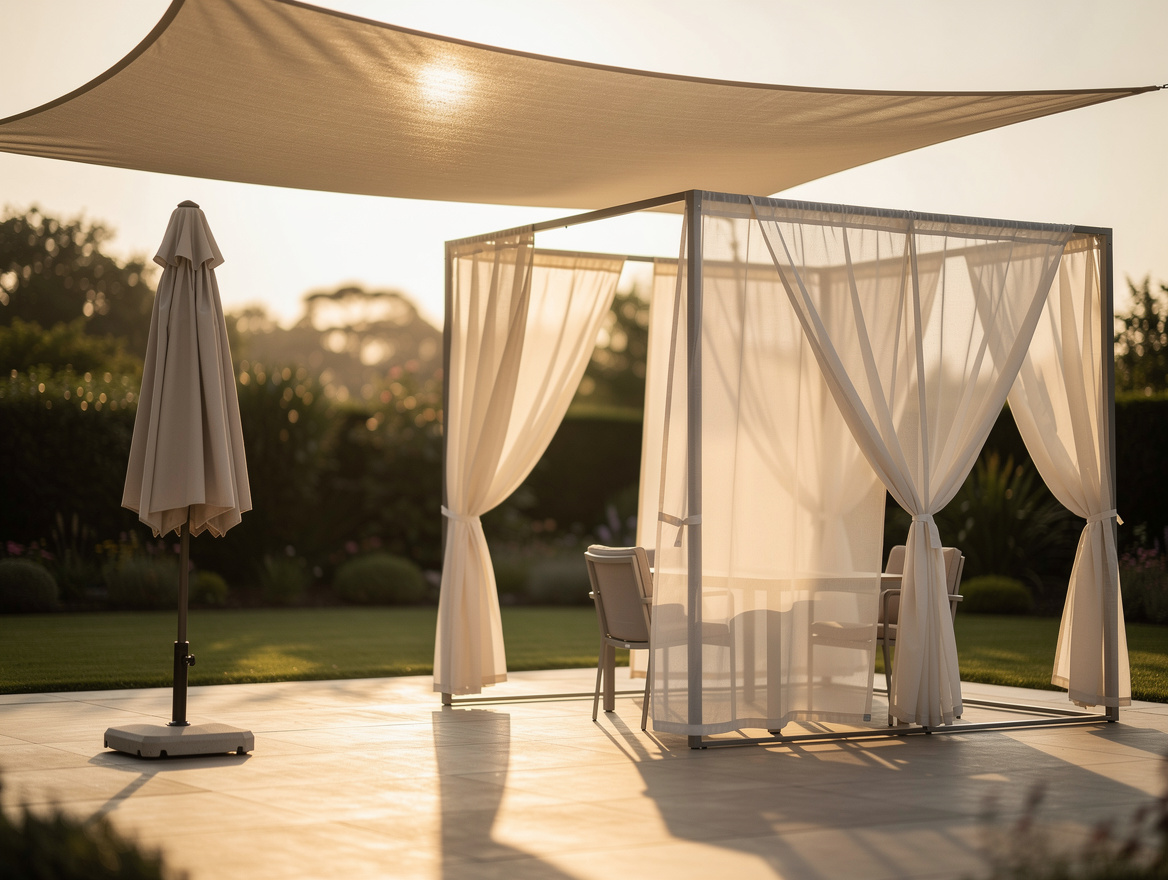
What worked: a freestanding outdoor curtain frame from Wayfair, $199, with weighted feet. I hung four IKEA LILL sheer panels at $5 each. The frame is powder-coated steel, 8 feet tall, and I bolted the feet to two more concrete-filled planters.
The curtains filter light rather than block it, but that’s the point. They move. They breathe.
It feels like a room without walls.
I Considered a Gazebo and Checked My Lease Instead
A Costco Sojag 10×12 ft gazebo with weighted leg anchors runs around $600, $900 and looks permanent. My lease says nothing about gazebos but explicitly bans “structures attached to the building.” I emailed my landlord. She replied: “If it blows away in a storm, it’s furniture.
If it stays, it’s a structure.”
I passed. The weighted-leg versions exist, Sojag and some Amazon brands sell them with hollow legs you fill with sand, but at 400+ pounds assembled, they’re not truly portable. For rentals, the permit question is murky.
I stuck with my sail, umbrella, and curtain frame. Total weight of my setup: under 500 pounds, but in pieces any one person can move.
I Learned the Wind Rules the Hard Way
Last August, a 40-mph gust ripped my first shade sail because I left it up during a storm watch. The D-rings held; the fabric tore at the seam. Replacement cost: $58 and a Sunday afternoon.
Now I check wind forecasts like a sailor.
My rule: sail comes down at 25 mph sustained, umbrella closes at 20 mph, pop-up never stays up unattended. The cantilever has a vented canopy that helps, but I’m not testing it. The planters stay year-round.
Everything else is seasonal. Typical replacement cycle for HDPE sails in full sun: 3, 4 years. The cantilever canopy: 2, 3 years if you leave it up.
I store mine in a $12 IKEA BROR bag.
If you’re renting or permit-shy, start with one 12-foot shade sail and two weighted planters. That’s under $120 and covers the most ground for the least money. Add the cantilever later if you need flexibility.
The gazebo can wait until you own the dirt underneath it.
Mia Carter writes about small-space living and budget home makeovers. She has restyled three rentals and tests most ideas in her own 45 sqm flat.