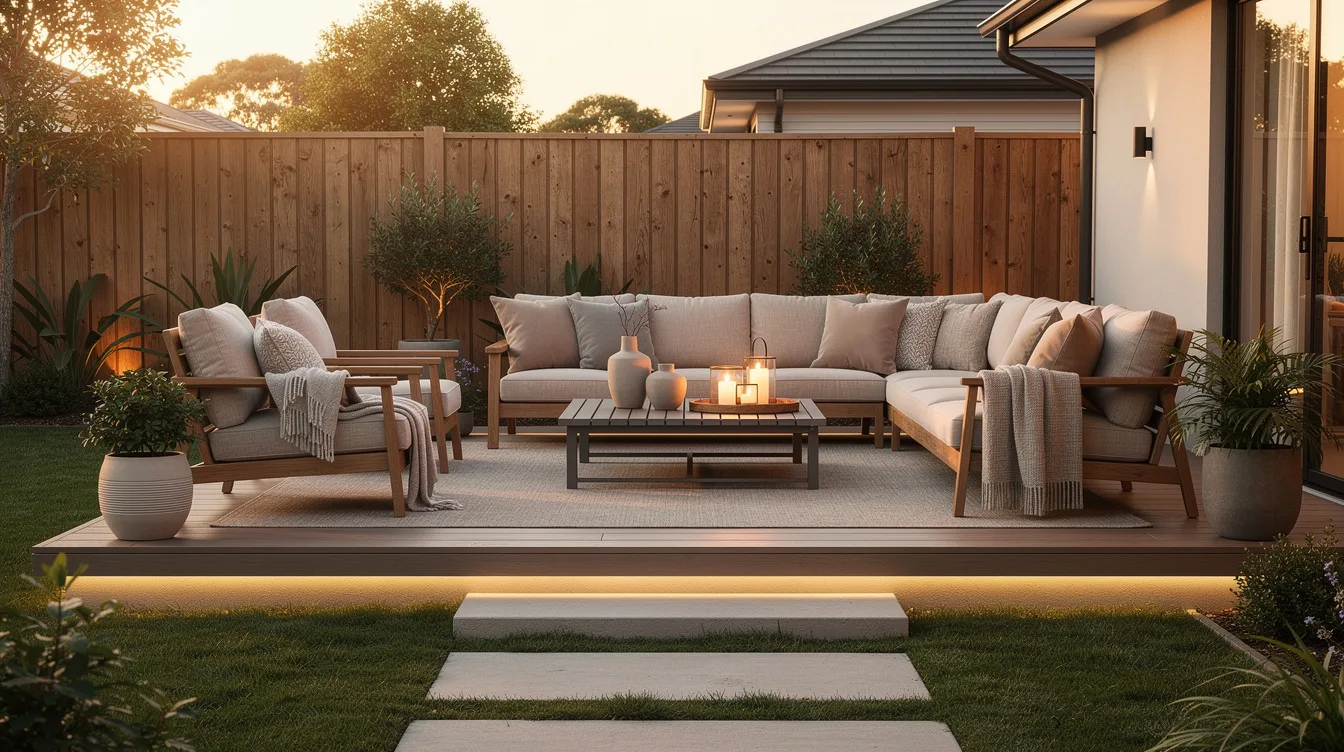
My backyard used to look like a storage unit exploded. Good grill, decent chairs, a rug I’d convinced myself was ‘fine.’ Designers would have called it a textbook case of expensive pieces adding up to cheap overall. The mistakes weren’t about budget.
They were about layout, scale, and finish choices that signal ‘temporary’ to anyone with a trained eye.
In 2026, the family backyard is under more scrutiny than ever. It’s not just a patio. It’s the dining room, living room, and playroom from May through September.
Cheap reads fast when you’re living in it daily.
Here are the six mistakes designers flag most, with real dimensions, actual brands, and what to buy instead.
Treat the Yard Like a Parking Lot, Not a Room
My old backyard was a graveyard of good intentions. Grill shoved against the siding, trampoline marooned in a corner, Adirondack chairs scattered like they’d fallen from a truck. Designers call this the “parking lot problem”, no zones, no edges, no logic.
The eye reads temporary, which reads cheap.
Home Depot and Lowe’s both sell 10 ft x 10 ft outdoor rugs starting around $89. That’s your instant zone edge. Pair one with a 12 ft x 15 ft gravel or paver pad for the lounge, and you’ve got a “room” without a single plant.
Keep hardscape simple. One primary material, one secondary. Three or more ground types and the yard starts looking like a hardware store clearance section.
Buy Furniture That Shrinks in the Space
A 5 ft loveseat on a 20 ft patio doesn’t look cozy. It looks like you couldn’t afford the rest. Designers flag this scale mismatch as the fastest way to kill perceived value.
The fix is dimensional discipline. A family sofa should run 7, 8 ft wide. Allow 3 ft circulation behind if it floats.
Chairs need 2.5, 3 ft width with 2, 2.5 ft between them. Coffee table at 60, 75% of sofa width, placed 16, 18 inches from the seat edge. These aren’t fussy numbers.
They’re what makes a setup look intentional versus accidental.
IKEA‘s ÄPPLARÖ 3-seat section hits about 7 ft and runs $399, $549 for the frame. Wayfair carries aluminum-frame sets with similar proportions in the $800, $1,400 range. Both beat a $200 set that looks like doll furniture on your slab.
Pick the Wrong Rug and Kill the Whole Zone
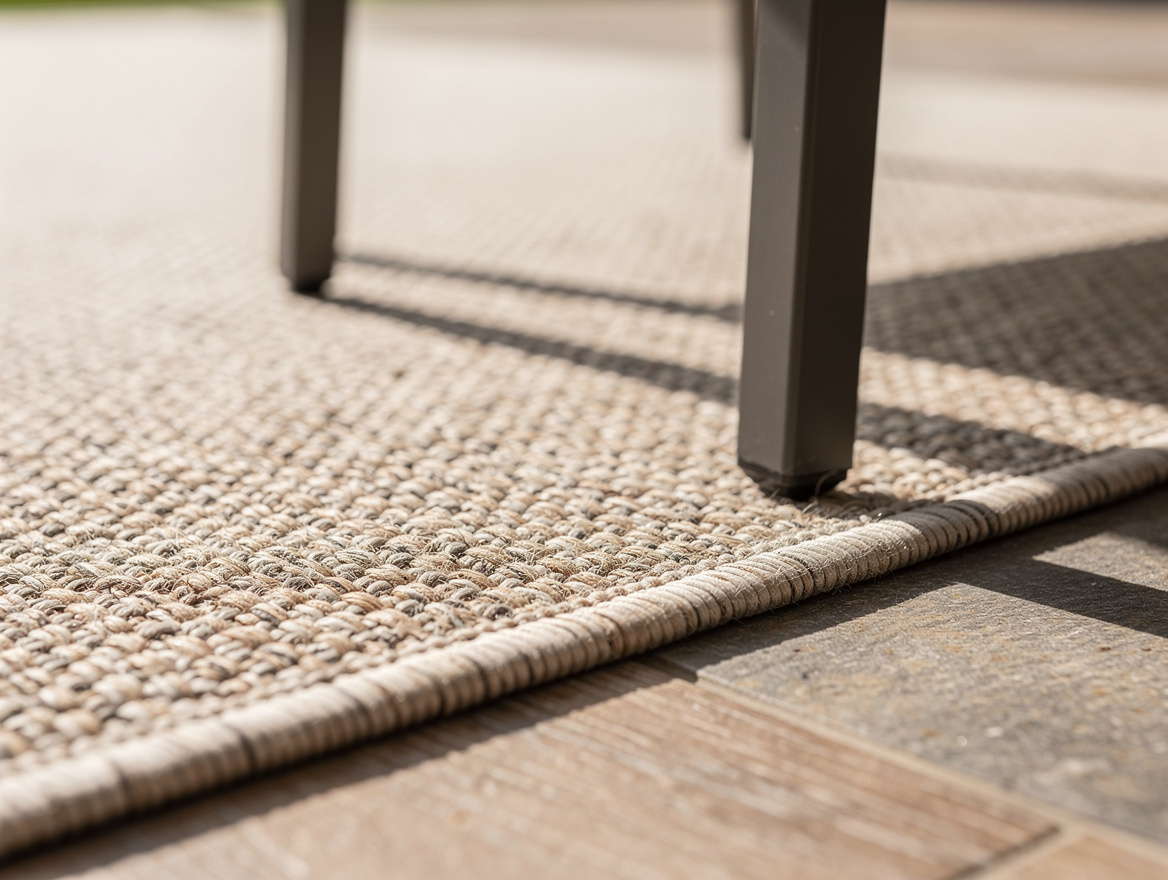
Designers repeat this like a mantra: rug size is where cheap happens. A 4 ft x 6 ft mat under a full lounge set makes everything look like scattered, mismatched pieces from a garage sale. The minimum that works is 8 ft x 10 ft for a standard sofa-plus-chairs arrangement.
9 ft x 12 ft is better.
Material matters too. Rubber-backed indoor rugs curl and mildew. Polypropylene with a jute-style weave reads textured and holds up.
Target‘s Threshold outdoor rug line runs $120, $220 for 8 x 10 sizes. Amazon Basics polypropylene weaves start around $75, though the backing quality varies.
One rug, right size, right fiber. It’s the cheapest upgrade that doesn’t look cheap.
Fall for Trend Gimmicks That Date Fast
Stamped concrete in fake cobblestone. Astro turf that shines plastic-green at noon. Oversized outdoor kitchens with more square footage than your actual indoor one.
These are 2026’s designer-flagged red flags.
The problem isn’t the feature. It’s the scale and finish. A 12 ft x 16 ft stamped concrete pad with aggressive patterning looks like a motel driveway.
Same dimensions in poured concrete with a broom finish and one warm accent paver border reads clean and lasting.
Ace Hardware carries Quikrete countertop mix at about $25 per 80 lb bag; a typical 12 x 16 pad needs 40, 50 bags plus rebar. That’s roughly $1,200, $1,500 in material versus $4,000, $6,000 for stamped concrete installed. The simpler finish wins on looks and wallet.
Turf has its place. A 6 ft x 8 ft putting green or dog run, fine. A 20 ft x 30 ft “lawn” that never needs mowing?
Designers say it reads as the homeowner giving up, not getting clever.
Light It Flat Instead of Layered
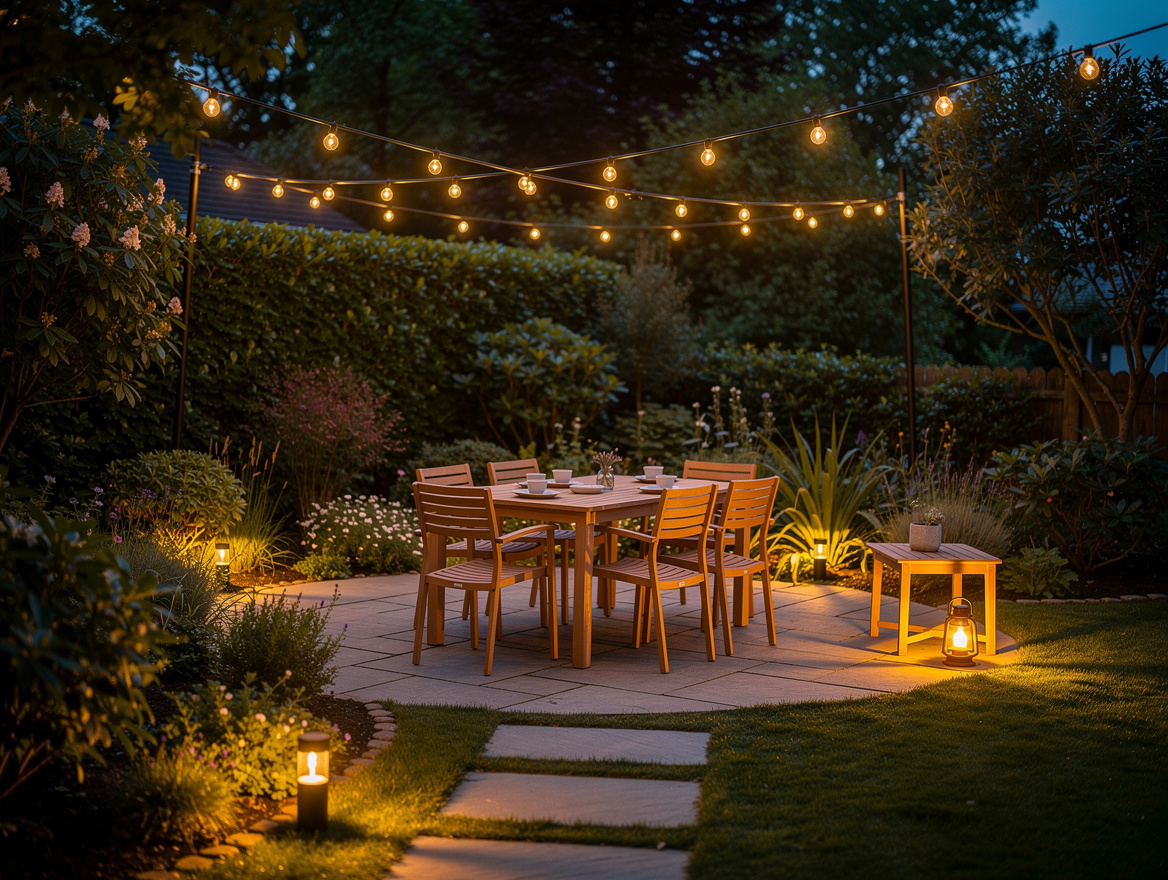
One overhead string or a single flood on the house wall. That’s flat lighting, and it makes every gathering feel like a parking lot security check. Designers want three layers: ambient, task, accent.
Ambient: overhead string lights or a pergola-mounted fixture. Task: table-level for dining, path-level for walking. Accent: uplight a tree, backlight a planter, drop a lantern on a side table.
The mix is what makes 8 pm feel like an event, not a utility.
IKEA‘s SOLVINDEN solar string is $24.99 for 12 ft. Home Depot‘s Hampton Bay low-voltage path kits run $89, $149 for 6-light sets. A $39 IKEA SINNERLIG bamboo lantern with a battery candle inside gives you that third layer for less than a takeout dinner.
Typical small-yard lighting budget that actually works: $200, $400 total, split across all three layers. One $400 statement fixture on the house reads showy and leaves everything else in shadow.
Ignore the Shade Structure Entirely
No shade, no stay. Families retreat indoors by 11 am in July, and the zone sits empty. Designers say an unshaded patio looks unfinished, like a stage set missing its roof.
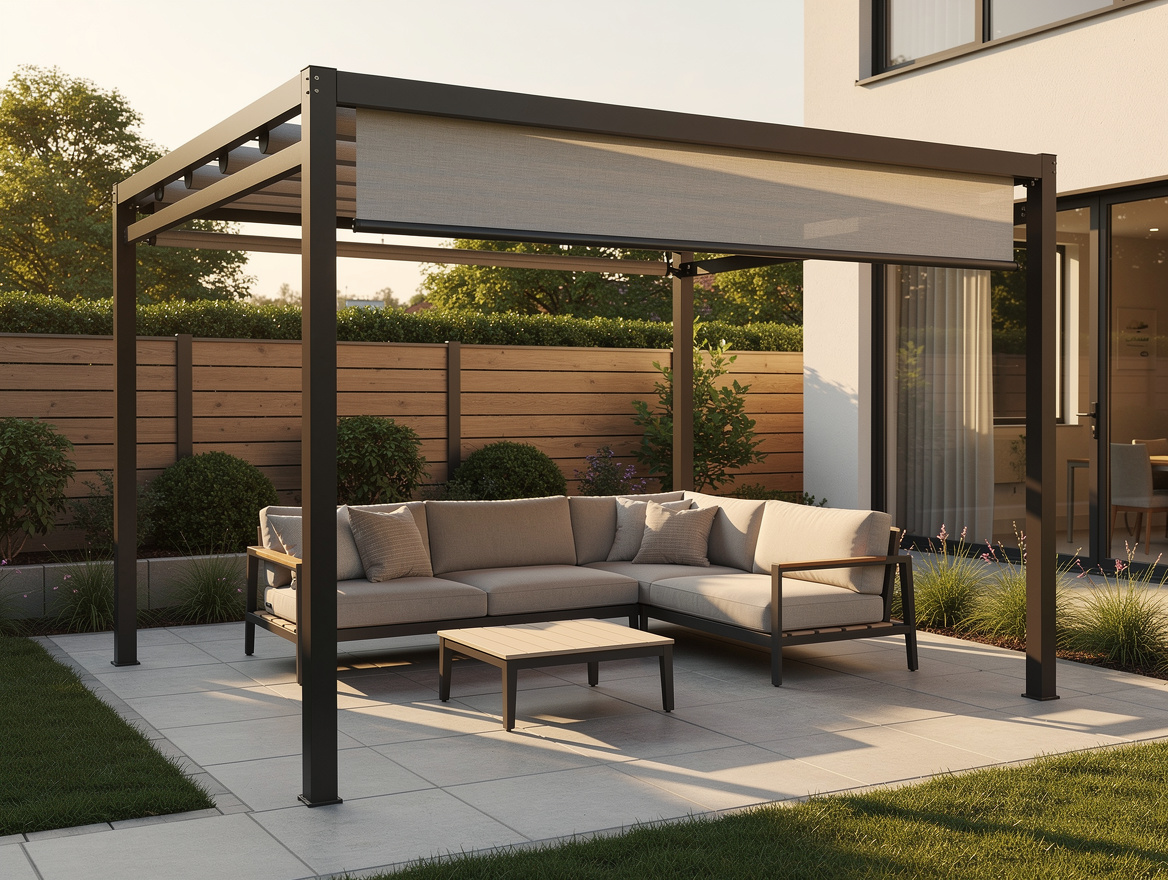
A 10 ft x 10 ft steel pergola with a retractable canopy runs $400, $700 at Lowe’s or Wayfair. A 12 ft cantilever umbrella with a weighted base is $180, $320 at Walmart or Target. Both define the zone vertically and make the space usable 3, 4 more hours daily.
Dimension check: the shade should cover at least 80% of the seating zone. A 6 ft umbrella over an 8 ft sofa looks like a beach toy. Go proportional or skip it.
If I had to pick one place to start, I’d fix the layout first. One 10 ft x 10 ft rug from Home Depot, one defined zone, and suddenly everything else looks like it belongs there. The rest is just details.
Mia Carter writes about small-space living and budget home makeovers. She has restyled three rentals and tests most ideas in her own 45 sqm flat.