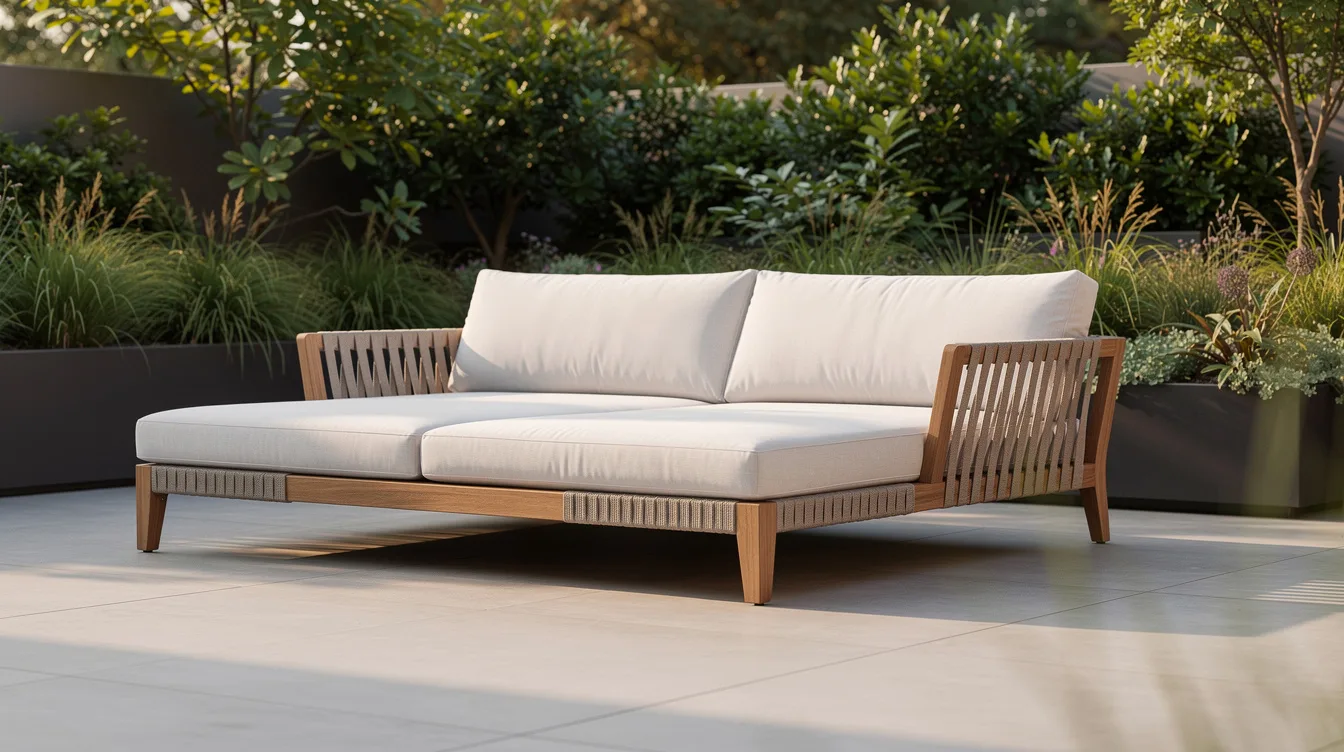
My last outdoor daybed was a graveyard of good intentions. Oversized, too low, cushions that held water like a kiddie pool. I spent $1,800 and used it maybe six times before it became a $1,800 shelf for wet towels.
Designers in 2026 are done with this. They’re moving away from faux-luxury materials, climate-blind specs, and furniture that dominates instead of serving. Here’s what’s actually getting cut from professional specs, and what to buy instead.
Stop Buying Oversized ‘Island’ Daybeds That Eat Your Patio
My neighbor’s round clamshell daybed looked like a resort on Instagram. In real life, it turned her 12-foot terrace into an obstacle course. You couldn’t walk around it without shimmying.
2026 trend reports from Wayfair and outdoor design sources explicitly warn against this. Designers now keep 18, 24 inches clear on each side of any piece. That’s your circulation minimum, not a suggestion.
The fix: slim modular daybeds you can reconfigure. A typical 2026 spec runs 78, 84 inches long, 32, 36 inches deep. You get the lounge vibe without blocking your door.
Ditch the Ultra-Low, Ultra-Deep Seat You Can’t Escape
Those 14-inch seat heights looked dramatic in photos. They’re a nightmare for anyone over 30 to stand up from. Designers are moving seat heights back to 17, 19 inches, closer to indoor sofas.
Depth matters too. A 42-inch deep “mattress” forces you to lounge flat. The 2026 sweet spot is 32, 36 inches with a backrest angle you can actually sit upright against.
You want a daybed, not a floor bed.
I tried a Target threshold piece at this height last season. Game difference for reading with coffee versus just napping.
Cheap PVC Wicker Is the Fastest Way to Trash Your Money
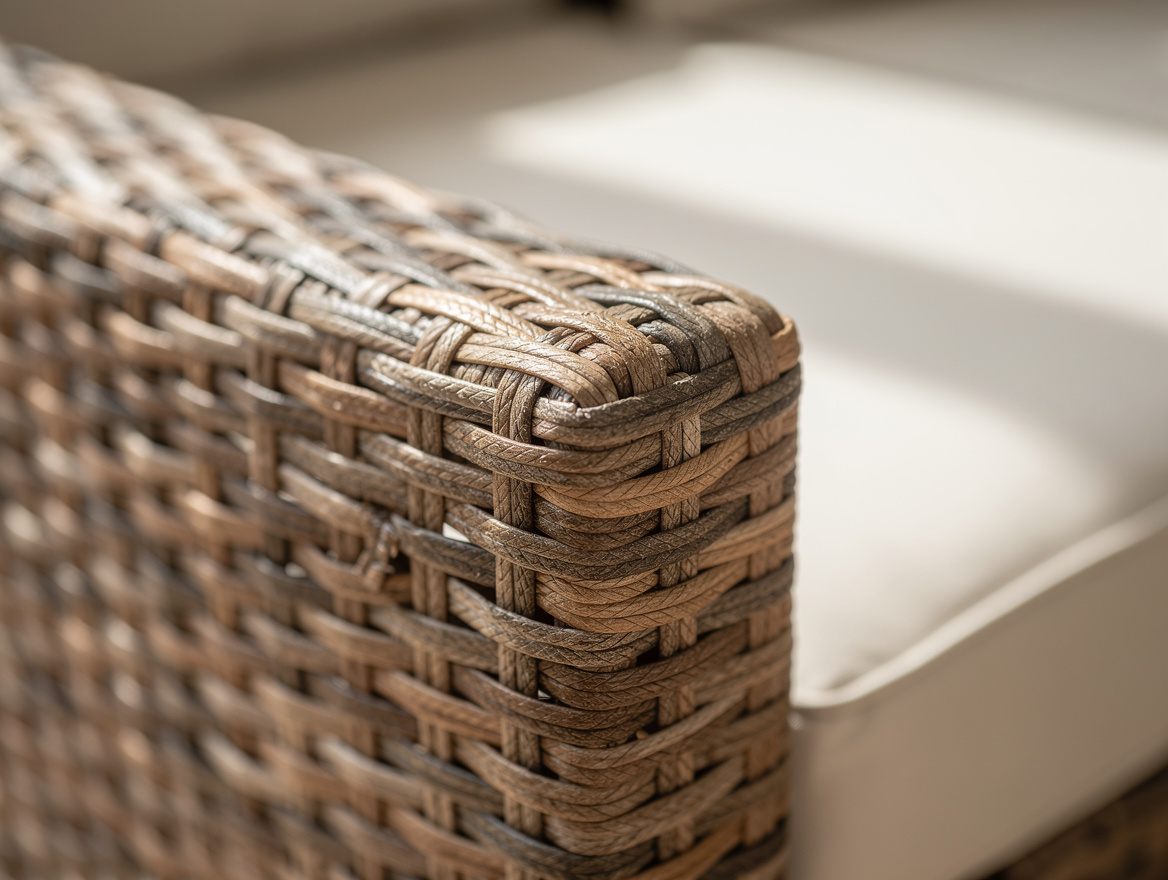
If the listing doesn’t say HDPE, assume it’s junk. Non-HDPE resin wicker gets brittle, fades to that sad gray-pink, and unravels within two seasons. I’ve seen it happen on a $799 set from a big-box store that shall remain nameless.
Designers now spec HDPE wicker or polyolefin rope from brands like Home Depot’s Hampton Bay HDPE lines or Lowe’s Allen + Roth performance collections. These are engineered for UV and moisture, not just shaped like they are.
Real talk: a quality HDPE daybed frame typically starts around $1,200, $1,800 for a standard two-piece modular. The cheap stuff at $400, $600? You’ll replace it twice.
Stop Matching Everything Like a Catalog Page
The matching couch-daybed-chair set in identical wicker is officially dated. Designers call it “catalog generic” and it’s the 2026 equivalent of matching bedroom suites from 2005.
The current move is material mixing. Think teak-frame daybed, powder-coated aluminum side table, rope-texture lounge chairs in a different weave. It reads collected, not purchased-in-one-click.
IKEA’s 2026 outdoor direction leans this way too. Their ÄPPLARÖ teak series pairs with metal and rope pieces deliberately. Even budget lines are breaking up the monotony.
Under-Specced Cushions Will Mold on You
Thin polyester cushions that hold water like sponges? Designers are calling this out hard in 2026 trend coverage. They’re mold risks and comfort failures.
The spec now is reticulated quick-dry foam with Sunbrella or olefin covers. Reticulated foam has that open-cell structure where water runs straight through instead of pooling. You leave cushions out, it rains, they dry in hours not days.
A replacement cushion set in this grade runs roughly $200, $400 depending on size. Worth it versus the $80 polyester set that becomes a science experiment by August.
Tape Out Your Footprint Before You Click ‘Buy’
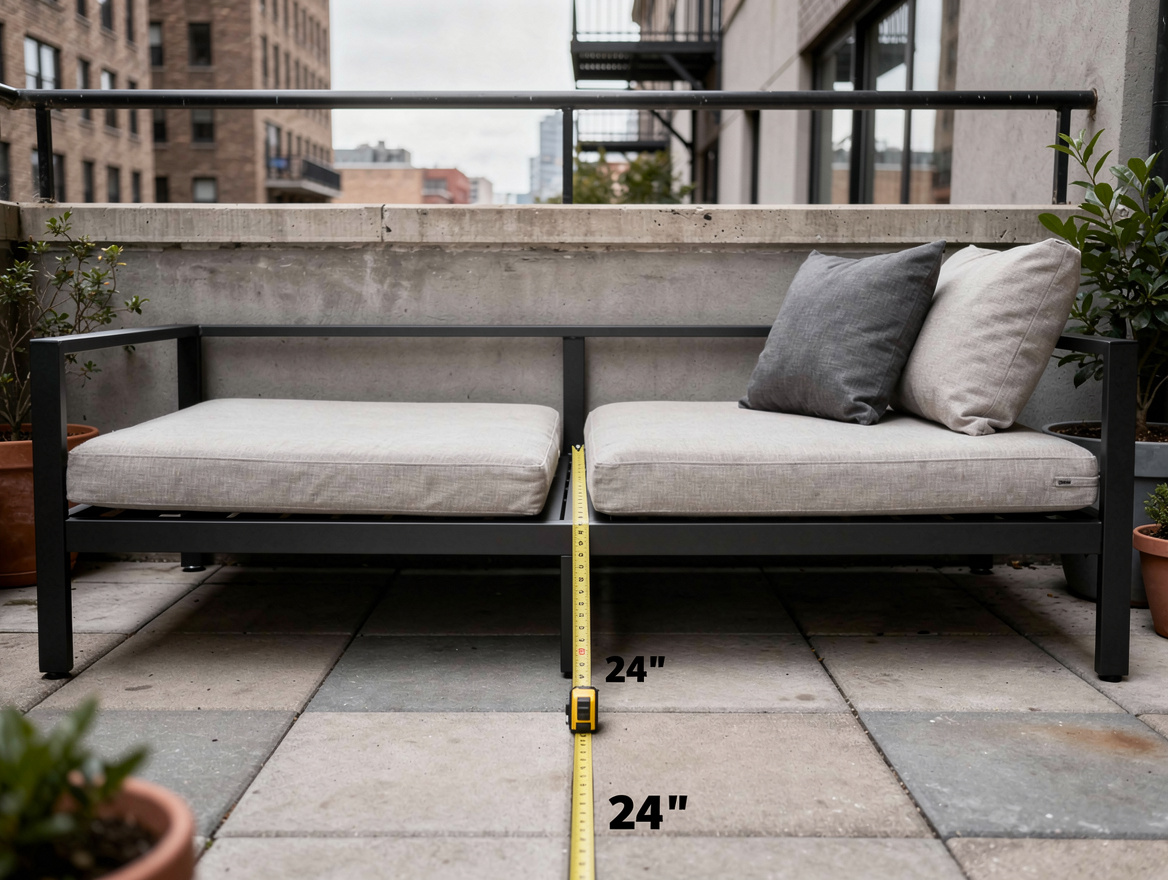
Designers don’t skip this, and neither should you. Tape out the daybed’s exact dimensions on your patio before ordering. Include swing clearance for hanging styles and backrest angles.
I learned this after a $1,400 Wayfair order arrived and the daybed blocked my grill by six inches. Six inches. The return cost me $280 in freight.
Most outdoor daybeds run 75, 85 inches long. Add 24 inches walkway on each side. If your space is under 12 feet wide, you need a compact or modular piece, not a statement island.
Measure first, regret never.
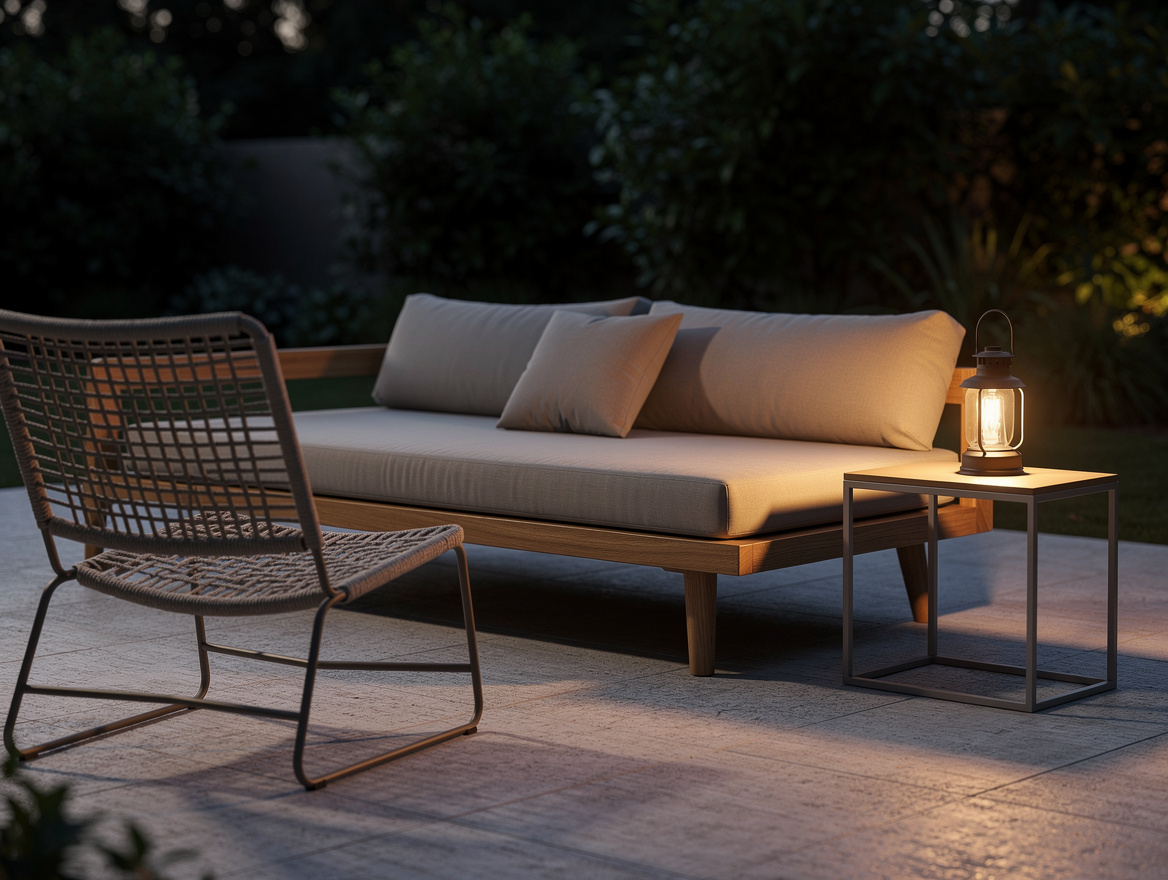
If I had to pick one place to start, I’d tape out my space and buy the right size with HDPE wicker and quick-dry cushions. Everything else is decoration. The frame and foam are where cheap becomes expensive.
Mia Carter writes about small-space living and budget home makeovers. She has restyled three rentals and tests most ideas in her own 45 sqm flat.