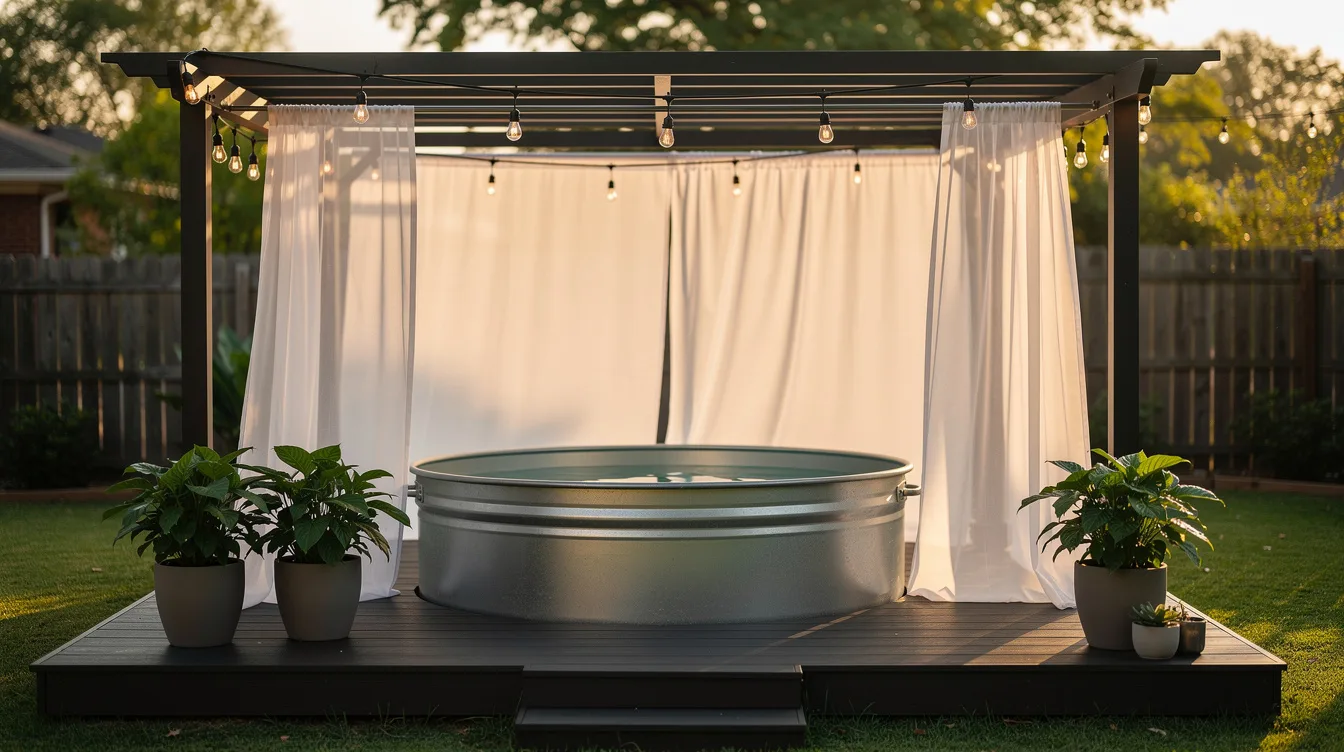
My first backyard pool was a $79 Intex from Walmart. It looked like a blue trash can filled with regret. Five years later, I’ve had a stock tank pool that strangers assumed was a $15,000 plunge pool.
The difference wasn’t the water container. It was the frame around it.
Here’s the reality: a typical small inground pool runs $35,000, $120,000 installed. But the “resort” feeling comes from decking, lighting, repetition, and controlled clutter. I’ve done this twice now, both times under $2,000 in upgrades.
These are the moves that actually register as luxury to people standing at the edge with a drink.
Start with a Stock Tank and Fake the Infinity Edge
My first resort-looking pool was a Behlen 8-foot galvanized stock tank from Tractor Supply, $650. I built a 2-foot wide pressure-treated pine deck from Home Depot around it, $180 in materials. The trick: I raised the deck 2 inches above the tank rim so the water line reads as “designed” rather than “farm equipment.”
Average stock tank pool setup runs $800, $1,400 total with pump and filter. Typical above-ground steel-frame kits from Walmart or Amazon run $400, $1,500 for 10, 16 foot sizes. The surrounding deck is what sells the illusion.
Wrap the Base with Faux Stone Panels
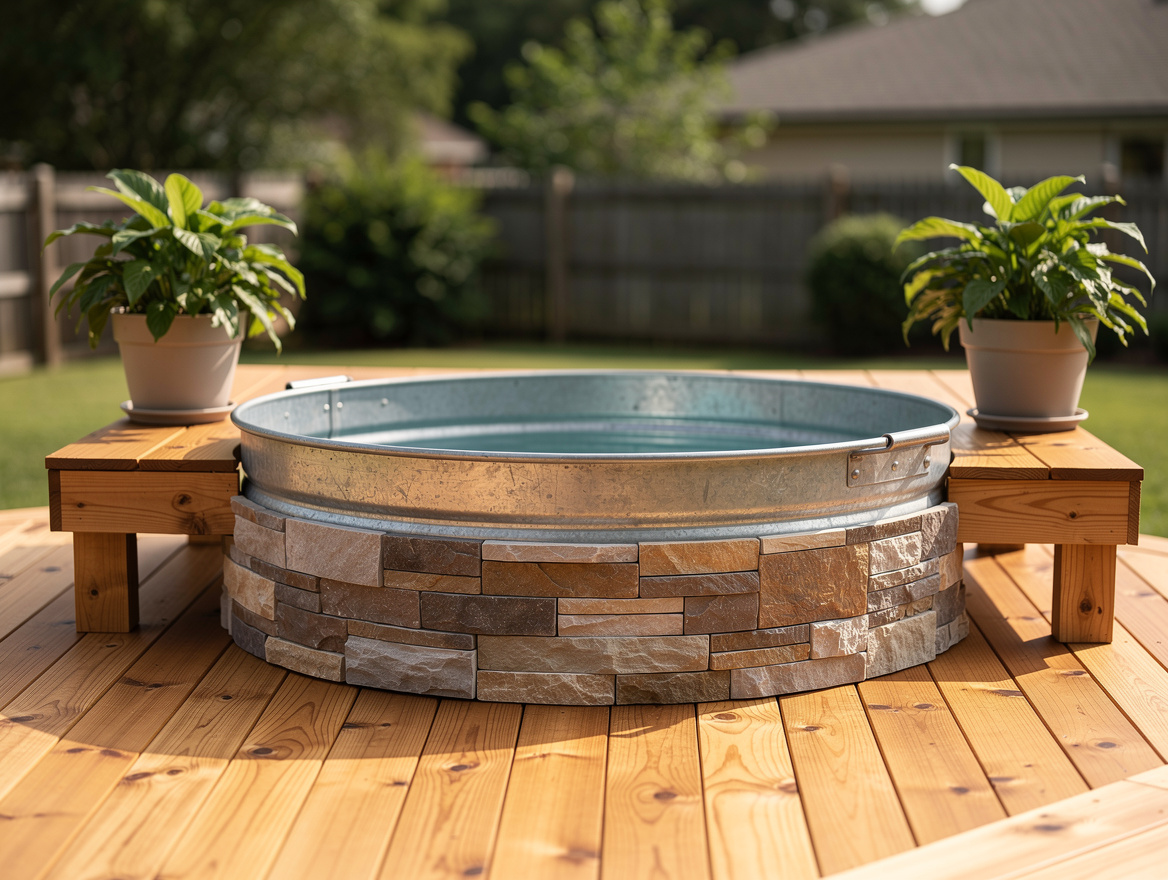
Exposed pool walls kill the vibe. I used Airstone faux stone panels from Lowe’s, $50 per box covering 8 square feet. Two boxes hid my tank’s metal skirt.
For composite decking, Trex Enhance from Home Depot runs roughly $3, $5 per linear foot for the fascia boards, cleaner than wood, zero maintenance.
Total base wrap for a small pool: $150, $400 depending on material. The goal is making the pool read as “built-in” from eye level, even when it’s clearly not.
Add a Single Waterline Tile Band
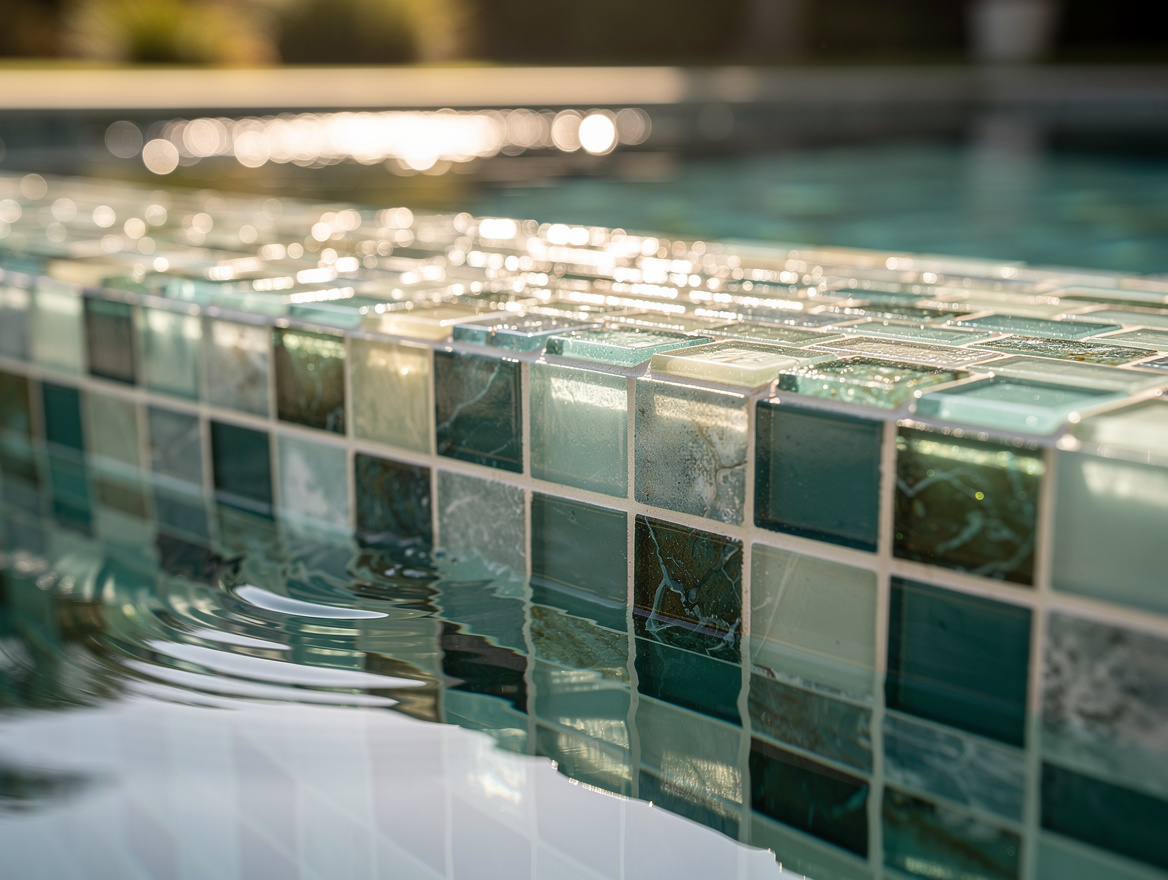
Full pool tiling is budget suicide. I bought one box of MSI glass mosaic tile from Wayfair, $45, and glued a 6-inch band at the waterline with waterproof epoxy. That’s it.
The shimmer does 90% of the luxury work.
Typical waterline-only tile cost: $100, $300 for small pools versus $2,500, $4,000 for full interior tiling. One concentrated hit of reflectivity beats scattered cheapness.
Install Solar String Lights and One Submersible LED
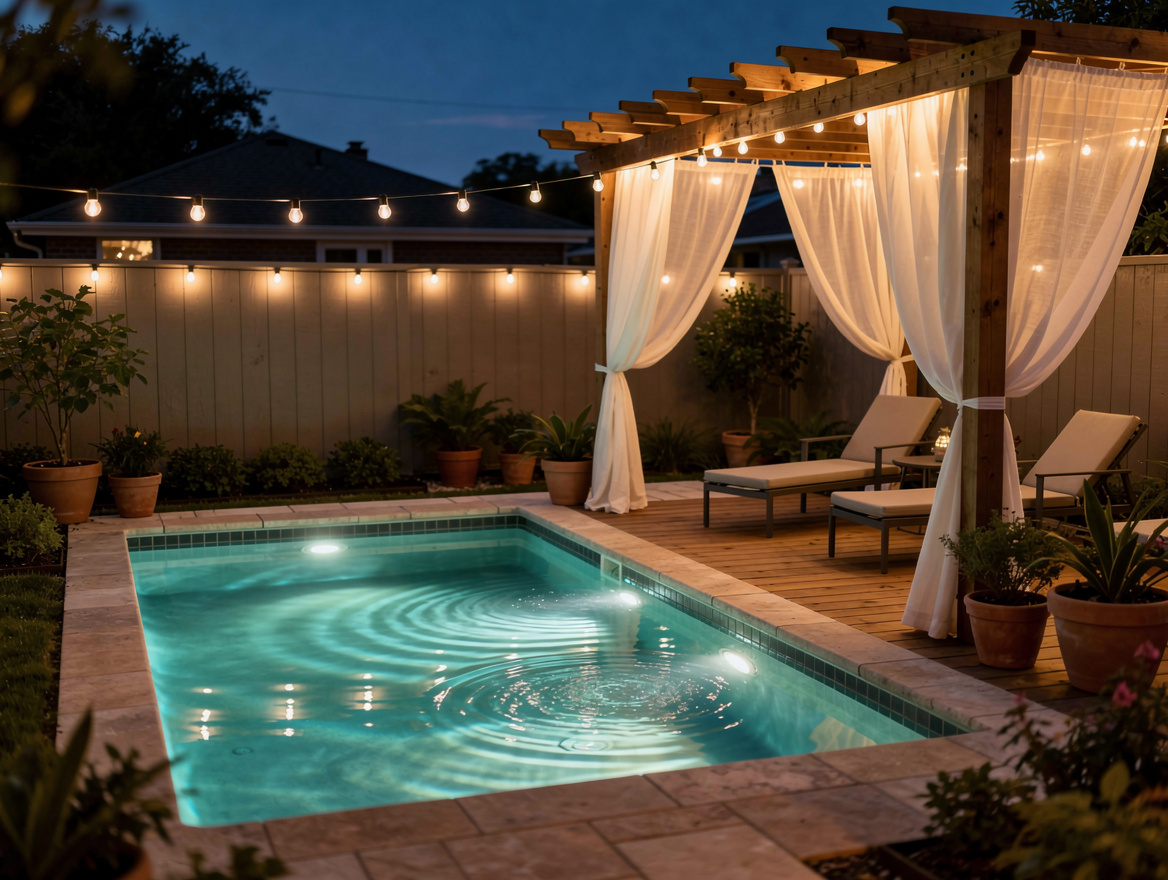
Lighting is the cheapest resort hack. I hung two strands of Brightech Ambience Pro solar lights, $39 each from Amazon, between fence posts. Inside the tank, one LOFTEK submersible LED puck, $25, magnet-stuck to the wall.
Night transformation: total.
Solar string lights typically run $30, $80 for 25, 48 foot strands. Submersible LED pucks from Amazon or Walmart run $15, $40. Skip hardwired pool lights at $200, $600 plus electrician costs unless you’re committed long-term.
Frame with Three Strategic Plants in Identical Pots
Resort landscaping is repetitive and controlled. I bought three Home Depot 16-inch fiberglass planters, $32 each, and dropped in Costco bird of paradise plants, $25 each. Identical pots, identical plants, triangular placement around the pool.
Instant hotel courtyard.
Total plant framing: $150, $250. The repetition signals “designed” more than variety ever could. I tried mixed pots first.
Looked like a yard sale.
Build a PVC Pergola for $200 and Drape It Cheap
My biggest visual upgrade was a 10×10-foot metal pergola from Wayfair, $189 on sale. Not wood, not permanent, but the shadow pattern on the deck reads “cabana.” I hung IKEA LILL sheer curtains, $5 per pair, on tension rods. They shred in a year, but $10 annual replacement is cheaper than custom outdoor drapes.
Typical entry pergolas: $150, $400 from Wayfair, Amazon, or Target. The structure creates a “room” around the pool, which is what actual resorts do, define the space, then fill it.
Skip the Waterfall, Add a $40 Fountain Instead
Real rock waterfalls cost thousands and need pumps I don’t want to maintain. I use a floating solar fountain from Amazon, $18, or a submersible pump with a stacked-stone topper from Lowe’s, $40. The sound of moving water matters more than the visual scale.
Guests hear it before they see the pool.
Small fountain options: $15, $60 at Walmart, Amazon, or Home Depot. Place it where the deck meets the pool edge so the water returns naturally. One moving water element beats a dry, expensive hardscape every time.
If I had to pick one place to start, I’d build the deck first and wrap the pool base before adding a single light or plant. The container is invisible once it’s framed properly. Everything else is just mood lighting.
Mia Carter writes about small-space living and budget home makeovers. She has restyled three rentals and tests most ideas in her own 45 sqm flat.