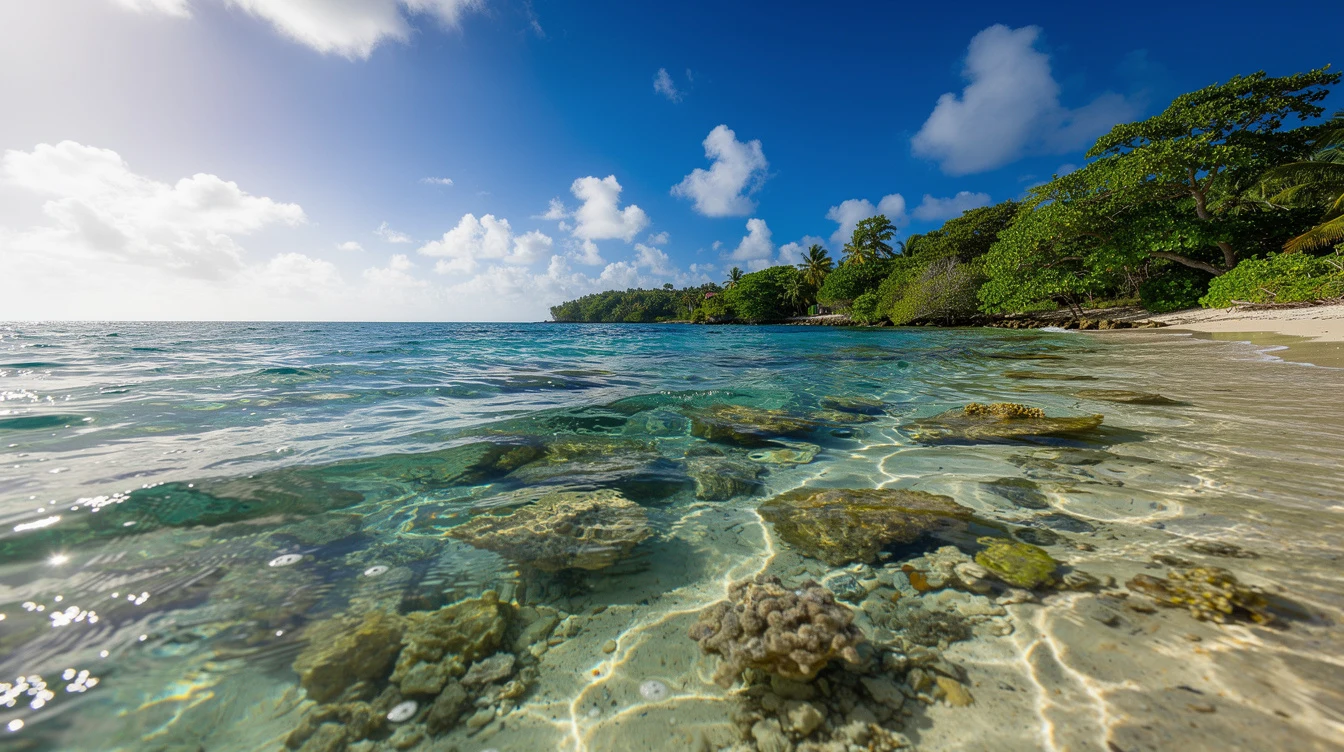
The whale sharks come back in spring, and the Garifuna still know where to find them. That’s the whole story of Utila, an island off Honduras’s north coast where 80-plus dive sites sit at the southern edge of the Mesoamerican Barrier Reef. It’s not polished.
It’s not large. But it’s one of the cheapest places on earth to get your Open Water certification, and that changes who shows up, and how long they stay.
- ✓80-plus dive sites
- ✓cheapest places on earth to get your Open Water certification
- ✓no big resorts, no cruise ship docks
- ✓whale sharks pass through in March-April and September to December
The island is 11 miles long and almost entirely flat, except where it isn’t
Most of Utila sits at sea level, mangrove coast and low scrub, the kind of terrain that makes you think there’s nothing to climb. But Pumpkin Hill rises 243 feet at the eastern end, a volcanic bump with basaltic rock that caps the island’s only real elevation. From there you can see the whole layout: the main settlement along the water, the cays scattered offshore, the reef line changing the water color from turquoise to deep blue.
The island measures roughly 4 miles across at its widest point. And that smallness is the point. There are no big resorts, no cruise ship docks, no proper road network.
People get around on scooters, golf carts, and tuk-tuks. The main strip in East Harbour runs along the waterfront with dive shops, hostels, and bars that serve as social headquarters for visitors who came for a week and stayed for a month.
243 feetPumpkin Hill rises|the island’s only real elevation
The Garifuna arrived in 1797, and their descendants still shape the island’s east end
On April 12, 1797, 2,248 Garifuna were deported to Honduras and the Bay Islands by the British. The intent was to remove them from the French-British conflict over Martinique and Saint Lucia. Some made their way to Utila from Cayo Chachahuate, a nearby cay that remains a Garifuna stronghold.
The 2013 census counted 3,947 people in the municipality, with about 2 percent identifying as Black or Afro-Honduran, a category that includes Garifuna heritage. The actual cultural presence is larger than that number suggests, concentrated in specific neighborhoods and fishing practices.
You’ll hear English and Caribbean English as often as Spanish. The Garifuna maintain their own language and identity, and fishermen still launch boats the same mornings the dive shops launch theirs. That coexistence is utilitarian, not romantic.
Two economies sharing one harbor.
The diving is cheap because the competition is fierce
More than 80 dive sites ring the island. The sites range from shallow coral gardens to wall dives and wreck sites, including the remains of British pirate vessels from the 17th century. Henry Morgan based himself at Port Royal on Roatán, about 30 kilometers from Utila, and divers still search for cargo from his 1671 Panama raid.
The real draw is the price. Open Water and Advanced certifications cost less here than almost anywhere else, which creates a specific crowd: backpackers, long-stay travelers, people who want to dive daily for weeks without spending resort money. The social life revolves around dive-shop bars and hostel common areas.
2,248 Garifuna were deportedApril 12, 1797|actual cultural presence is larger than that number suggests
It’s lively, but not loud in the way of party islands. More like a shared obsession with cheap air tanks and good visibility.
Can you actually see whale sharks?
Yes, but seasonally. The whale sharks pass through in March-April and again from September to December. These are filter-feeders, the largest fish in the sea, and they come to the same channels and drop-offs the local dive masters have marked for decades.
The Garifuna fishermen knew the patterns before the dive shops opened.
There’s no guarantee on any given day. The water is warm year-round, but the sharks follow plankton blooms, and those shift with currents and weather. Some divers see three in a morning.
Some spend two weeks and get surface ripples only. The operators are honest about this, more or less, because repeat business depends on it.
How do you get there without flying private?
The standard route is bus to La Ceiba on the Honduran mainland, then ferry across. Small planes also run from San Pedro Sula to Utila’s airstrip, though schedules change with demand and weather. The ferry is cheaper and more reliable, but it’s a real boat ride, not a shuttle.
Bring water and something for your stomach if the Caribbean chop is up.
Regular boats connect Utila and Roatán, the larger Bay Island with bigger beaches and more conventional tourism. Roatán has the cruise ships and the all-inclusives. Utila has the dive tables.
The contrast is deliberate on both sides.
What else is there if you don’t dive?
Not a lot, honestly. Small beaches like Chepes and Bando offer sand and shade, but no long Caribbean stretches. Snorkeling works from shore in spots.
Boat trips run to nearby cays, including Water Cay, Pigeon Cay, and Sandy Cay, all part of the Ramsar-protected wetland site designated in 2013. There’s an iguana research center and a marine station if you want to look at conservation work rather than participate in it.
The island’s cuisine runs to coconut milk bread, conch soup, and fried whole fish. Sopa de Caracol is the local signature, a coconut-based conch soup that tastes better than it photographs. It’s available in the handful of restaurants that aren’t attached to dive shops, though options narrow on Sundays.
Why Utila works, and why it doesn’t
The island is flat, hot, and short on conventional beauty. The beaches are narrow, the infrastructure is basic, and the medical facilities are limited. What it offers is cheap access to a major reef system, a whale shark season that rivals anywhere in the Caribbean, and a social scene built around shared obsession rather than packaged entertainment.
The Garifuna fishermen launch at dawn. The dive boats launch at 8. By mid-morning the harbor is busy with both, and the sound of compressors and outboards carries across the water.
That overlap is the island’s real character. Not paradise. Just a working harbor where two centuries of history share the same moorings, and the whale sharks still come through on schedule.