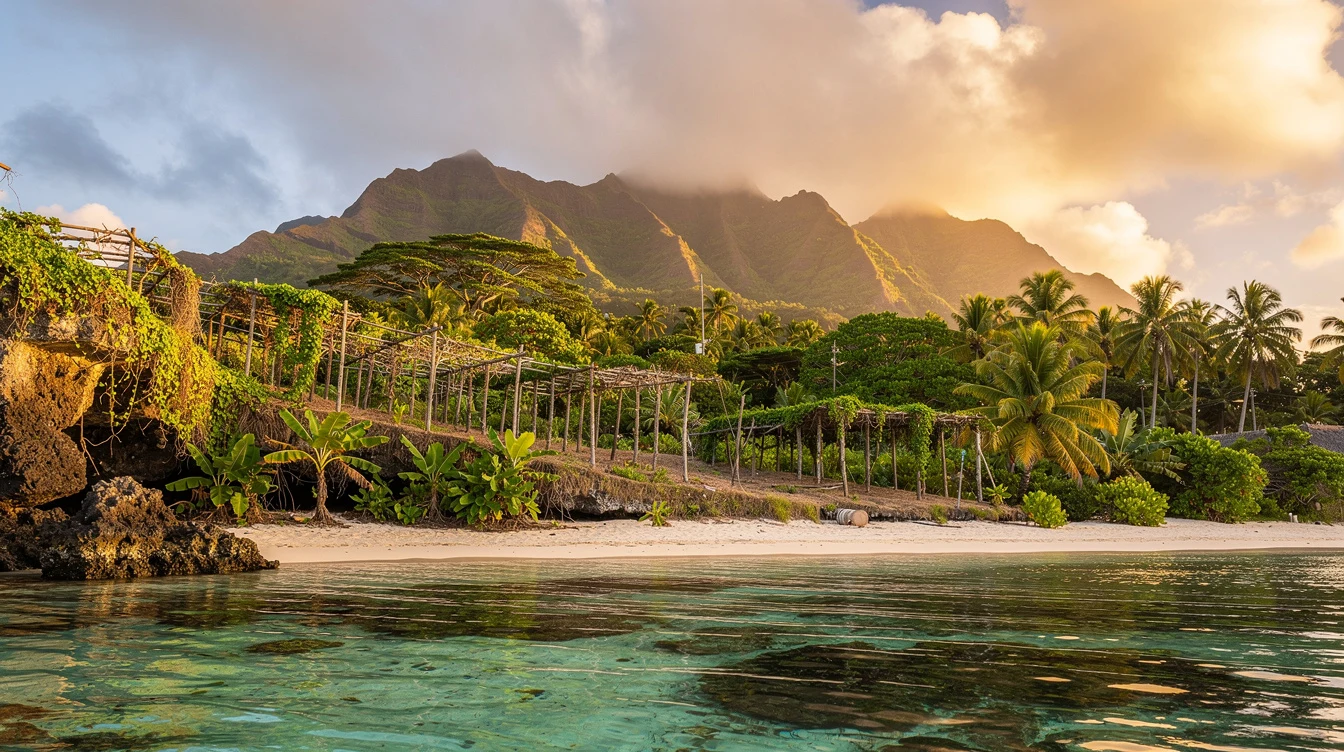
Tahaa is a 90 km² island in French Polynesia’s Leeward Islands. It shares a coral reef with Raiatea to the south. And the smell of vanilla hits you before you step off the boat.
The island that perfumes the air with 80% of French Polynesia’s vanilla
The island produces about 80% of all Polynesian vanilla. The aroma hangs so thick in the air that Tahaa is simply called “Vanilla Island.” You will notice it in the humid mornings, and again when the afternoon heat lifts the scent from the curing racks.
The variety here is Vanilla tahitensis, a hybrid of planifolia and pompona. The pods grow on vines that wind through coconut groves and small family plots. The smell is not sweet in the way of extract. It is darker, more resinous, and it clings to your clothes for hours.
How to get there, and why you need a boat
There is no airport on Tahaa. The only way in is by boat from Raiatea, which sits inside the same coral reef. The crossing is short, and on clear days you can see Bora Bora rising in the near distance. That proximity to the famous neighbor is part of Tahaa’s quiet appeal.
The ferry runs to the main settlement of Patio in the north, where the commune’s administrative center sits. From there, roads thread along the coast and climb toward the interior. But many visitors stay on the northern motu, the thin reef islets where overwater bungalows stand on wooden walkways above the lagoon.
Can you visit without staying at a resort?
Yes, but it takes more planning. The island has only 5,296 residents, and tourism infrastructure outside the resort motu is limited. Local guides run vanilla plantation tours from Patio and Haamene. There are small guesthouses, and the family-run operations tend to book up in the cooler months.
When to go: May to October, or the wet season trade-off
The austral winter from May to October brings drier days and temperatures that settle into the 70s and low 80s. This is when the Hawaiki Nui Va’a outrigger canoe race passes through, and when the October festival revives the old rock-fishing tradition called tautai-taora.
November to April is hotter, wetter, and quieter. The vanilla harvest and curing continue year-round, so the smell does not change. But the afternoon squalls can cancel boat crossings, and some small operators close for the season.
What else grows and lives here
The island is mostly coconut forest, and copra production still matters to the local economy. In the bays, oyster beds produce black pearls of exceptional quality. The waters hold barracuda, gray sharks, Napoleon wrasses, and enough coral to keep snorkelers busy for days.
Mount Ohiri rises to 1,940 feet at the island’s center. The climb is steep, and there is little shade on the upper slopes. Most visitors do not bother. The real elevation that matters here is sea level, where the reef protects the lagoon and the vanilla vines grow in the humid stillness.
The trade-offs of visiting a working island
Tahaa is not a polished destination. The churches, Saint Clement in Patio and Saint Peter Celestine in Poutoru, date from the colonial era. The “Spanish clan” in the southwest traces back to a Chilean shipwreck in 1863. These details matter more than any curated experience.
There is one main road, and it does not circle the whole island. Restaurants are few, and some close without warning. The resorts on the northern motu are self-contained by necessity. That said, the isolation is the point. You are on an island that smells of vanilla because people here still grow it, not because someone piped the scent into the lobby.
By the time the last boat back to Raiatea pulls away, the air goes still. The smell of curing pods lingers in the dark, and that is when Tahaa feels most like itself.