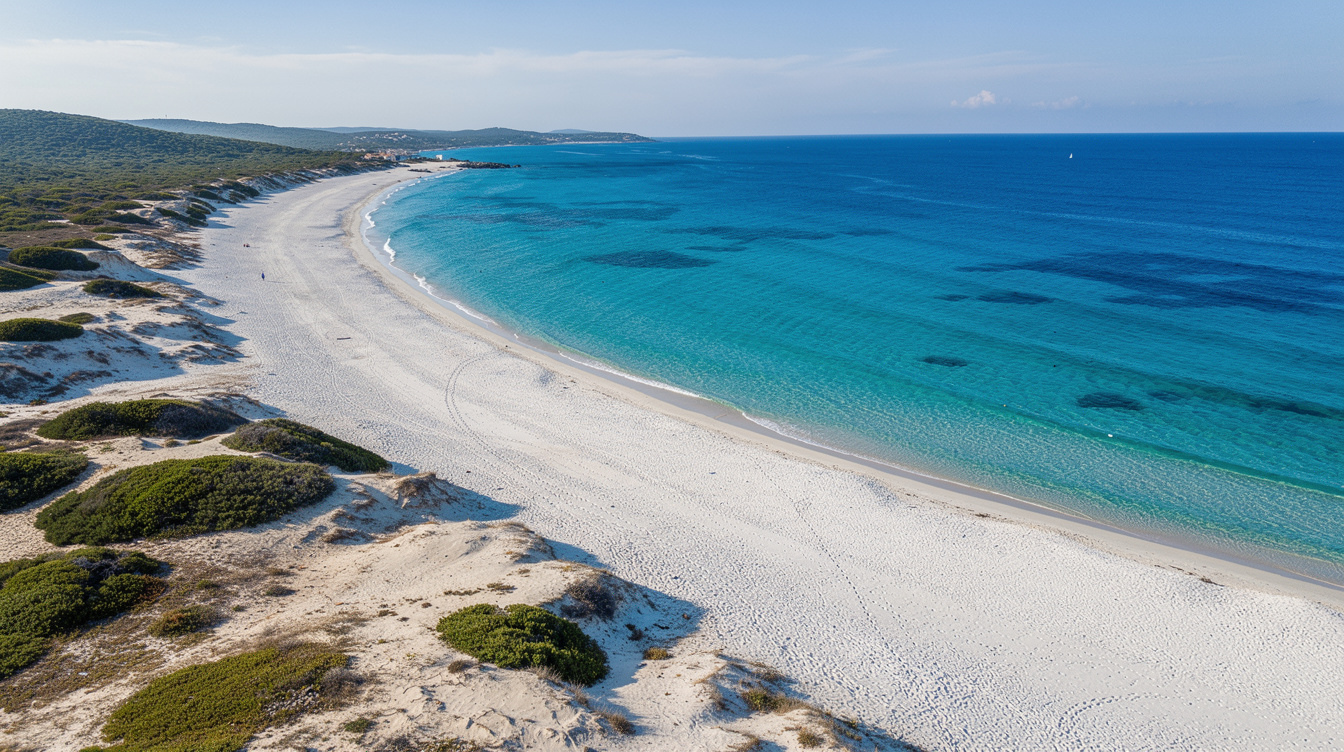
Majorca gets more than 13 million visitors a year. It’s Spain’s most-visited island, and its northeast coast runs wall-to-wall with resort towers and lounge chairs stacked to the waterline. Then there’s Es Trenc, on the southern tip, where you step onto two miles of genuinely white sand and there isn’t a hotel in sight.
That’s not an accident of geography. It’s a law.
What the Área Natural de Especial Interés did to this coastline
The ANEI designation, anchored in Balearic regional conservation legislation from the 1990s, wrapped Es Trenc and the adjacent Salines de Llevant saltpans into a protected natural area. New construction within the perimeter is legally prohibited. And because the road network serving the beach is also capped, the law doesn’t just control what gets built. It controls how many vehicles can reach the sand.
The saltpans directly behind the beach create a natural buffer that makes development geographically awkward. The ANEI designation made it legally impossible. Both forces working together produced the beach that exists today. The same logic held on Aruba’s widest beach, where a building ban reshaped the entire shoreline.
Flamingos feed in the Salines de Llevant from roughly March through October, visible from the eastern end of the beach. You smell the salt before you see them.
Getting here without a car is the detail most visitors skip
From late June through early September, a seasonal shuttle connects the town of Campos, about 5 miles north, to the main Es Trenc access points. The official parking areas fill before 10am on peak July and August days, which makes the shuttle the only reliable afternoon option. The round-trip fare runs roughly $4-5, and frequency is every 30-40 minutes during peak hours.
From Palma, bus line 502 reaches Campos in around 40 minutes for approximately $4. Add the shuttle and your total travel time from the city sits around one hour. But if you’re arriving outside peak season, a taxi from Campos to the beach is straightforward and cheap enough to split.
Corsica’s Saleccia runs a similar access calculus: deliberate inconvenience as conservation tool. Es Trenc’s shuttle is that tool in a bus schedule.
The beach doesn’t perform equally all day
Es Trenc’s sand is primarily bioclastic, composed of fine shell and coral fragments rather than quartz. That’s why it reads whiter than most Mediterranean beaches and stays noticeably cooler underfoot in the morning. The seabed stays shallow and sandy for a long way out, which produces the water’s four-shade color gradient: pale turquoise close in, deepening to cobalt past chest depth.
The southwestern sea breeze arrives most afternoons in July and August, and by early afternoon the surface has enough texture to matter for swimming. Morning visits deliver the flat, glassy water you see in every photograph. Locals know this. It’s why the parking lot is already half-full by 9am. Mediterranean national park beaches all run this way: arrive early or accept the crowd.
A nudist section occupies the eastern stretch of the beach, near the saltpans. It’s been established long enough that it’s simply part of the geography here. Lively, but never loud.
What this beach costs you, and what it doesn’t
There’s no entry fee. No reservation system. Parking at the main access points runs around $6-8 per day. The nearest food and drink are in Ses Covetes, the small settlement at the western end, where a handful of seasonal spots operate. And in the central protected section, there are no sunbed rentals and no permanent beach bars by regulation.
Bring water. The trade-off is real: no infrastructure means you carry everything in. But the beach you get in exchange is exactly why the law was written. European beaches with strong Instagram reputations often disappoint on arrival. Es Trenc is the exception: the photograph undersells it.
Your questions about Playa Es Trenc answered
How do you get to Es Trenc from Palma without a car?
Take bus 502 from Palma to Campos, roughly 40 minutes for about $4. From Campos, catch the seasonal shuttle to the beach between late June and early September. Total door-to-sand time from central Palma runs close to one hour.
What months are best for Es Trenc?
June and September are the answer most locals give. Water temperature peaks around 79-81°F in August, and June sits closer to 68-72°F, which is cool but swimmable. The crowds in those shoulder months are a fraction of July and August, and the parking lots don’t fill before breakfast.
Does Es Trenc cost money to access?
Beach access is free. Parking fees apply at the main lots, around $6-8 per day. The shuttle from Campos costs roughly $4-5 round trip. No admission ticket, no advance booking required.
By 6pm in August, the parking lot is emptying and the beach is quiet again. The white sand holds the day’s heat longer than you’d expect, and the water is still that color, the pale turquoise close in, the cobalt further out. The law that made all of this possible is still on the books.