
The first thing you notice in the best boho coastal bedroom is what’s missing. No matching sets. No mood board precision. Just texture, light, and things that feel found rather than bought.
These thirteen attic rooms do that well. Each one leans into the pitched ceiling, the dormer light, the awkward sloped walls. And somehow that’s exactly what makes them work.
The Attic Bedroom That Feels Like a Salt-Air Escape


This one pulls you in immediately. The whole room breathes.
It works because the hand-hewn whitewashed timber planks overhead catch morning light at an angle that flat ceilings simply can’t. That raking effect gives the room texture without a single extra purchase. The clay ochre accent wall behind the bed keeps the warmth grounded while the plaster flanking walls stay quiet.
Steal this move: Pair a warm-toned accent wall with whitewashed wood overhead. The contrast does all the work for you.
Moss Green Was the Right Call Here
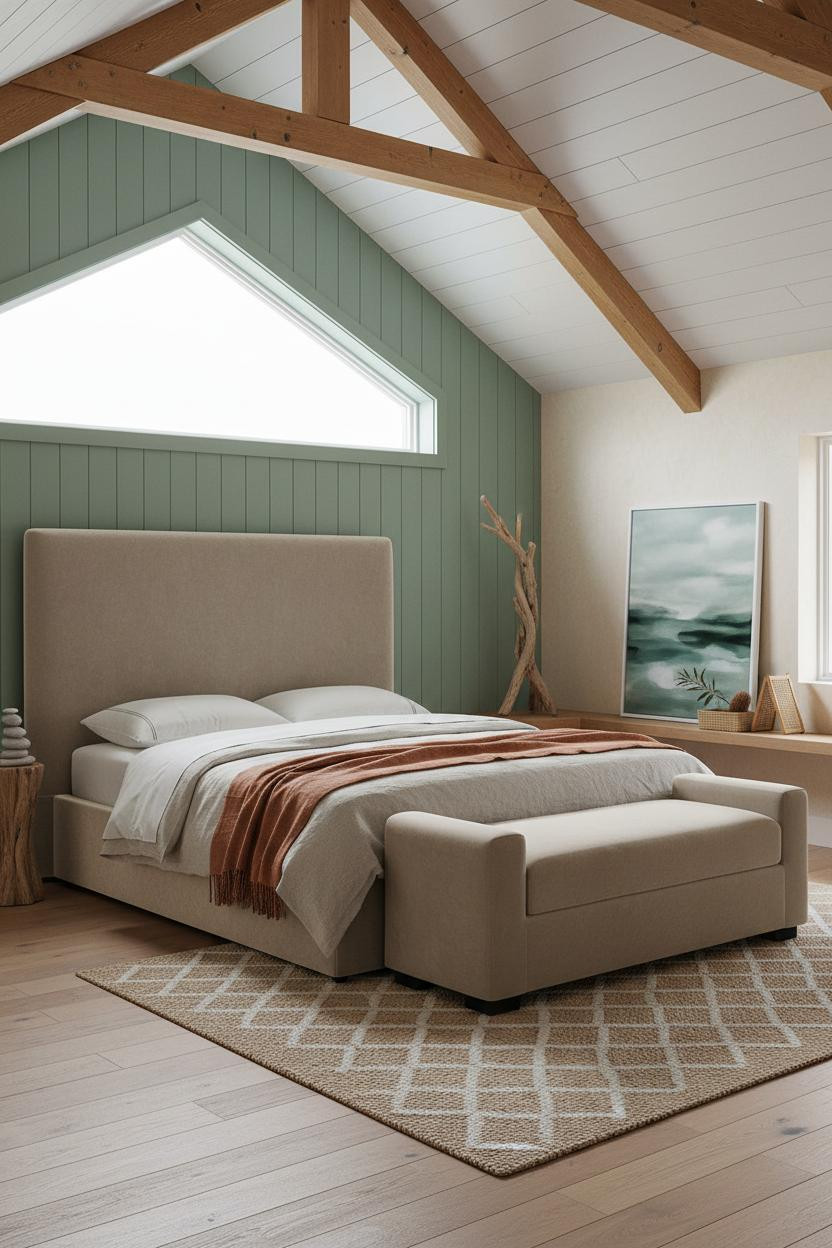

I wasn’t sure about moss green in an attic. Now I am.
Why the palette works: The vertical board-and-batten planks in soft moss green create a visual anchor that draws the eye up and holds the sloped ceiling in check, while the whitewashed shiplap overhead bounces morning light back down. The combination reads collected, not coordinated.
Worth copying: Let the ceiling do the texture work and keep the accent wall a single, confident color. One flat green against that much grain is plenty.
Honey Wainscoting That Wraps the Whole Room
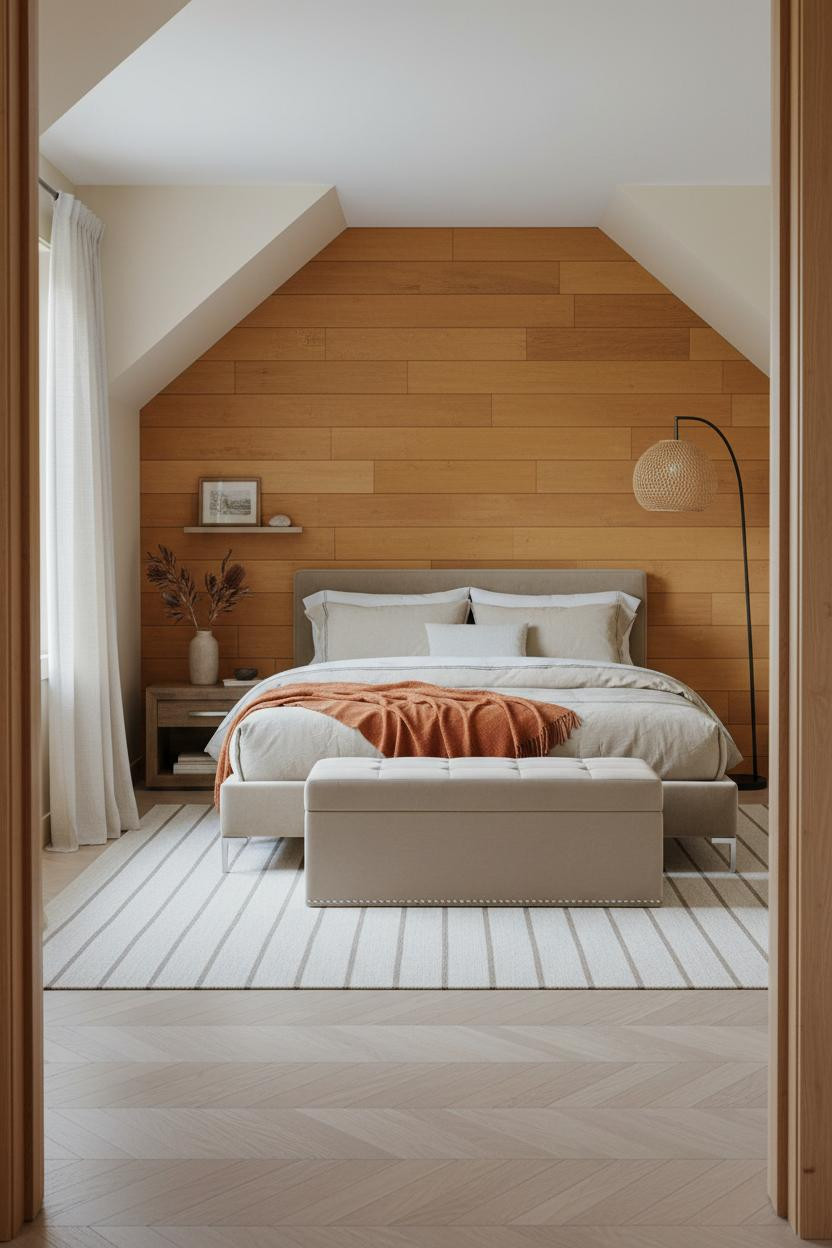

Barefoot warmth. That’s what this room delivers.
The wide-plank honey-ochre wainscoting runs full height and reads warmer than any painted surface because the visible wood grain catches overcast light differently at every angle. The low attic pitch makes the whole room feel like a cocoon.
The smarter choice: Go full-height with the wainscoting, not half-height. The low ceiling already compresses the room. Stopping the paneling mid-wall would only make it feel smaller.
Avoid this mistake: Don’t skip the floor-length curtains. They add vertical scale that the sloped ceiling borrows from.
Stone Walls That Actually Belong in a Bedroom
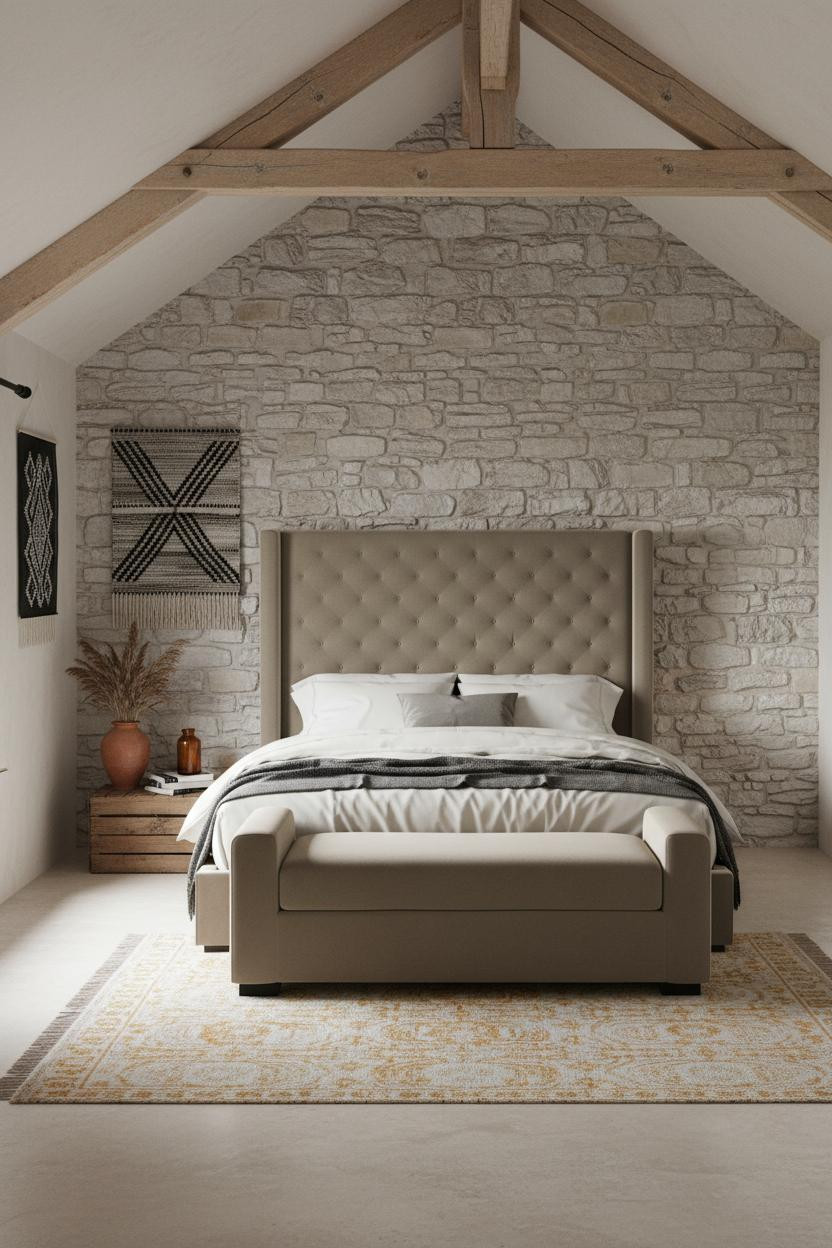

This one is divisive. But the people who commit to it are never sorry.
Why it holds together: Pale limestone fieldstone behind the bed is rough enough to read as organic material rather than renovation project, and side-raking daylight catches every mortar line in a way that keeps the room feeling alive rather than heavy. The soft ivory bedding pulls the temperature back down.
Layer a charcoal cashmere throw loosely at the foot. The easy win is in the contrast between rough stone and impossibly soft textile.
An Arched Plaster Niche Nobody Expects in an Attic
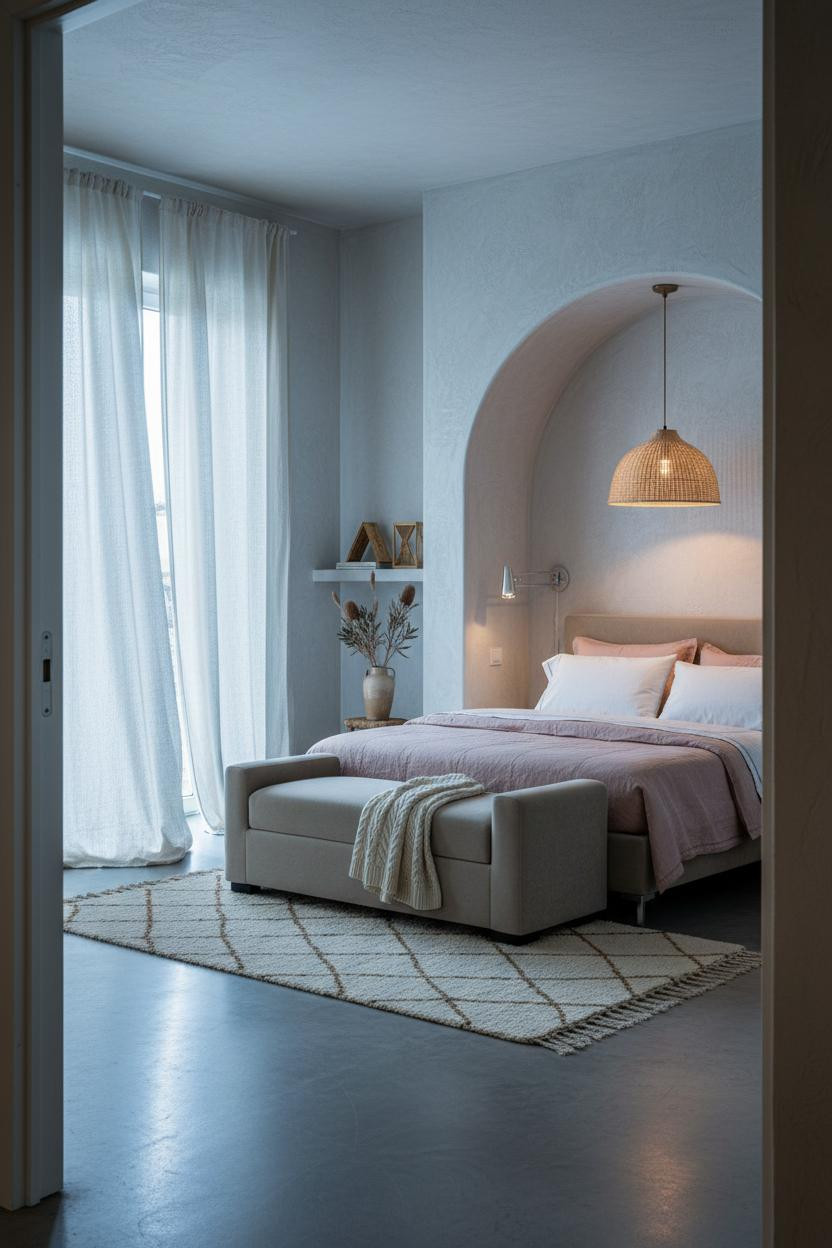
I keep coming back to this one. It shouldn’t feel as calm as it does.
What gives it presence: The curved raw plaster niche frames the entire bed zone from floor to ceiling, and because the trowel marks are visible, the arch reads handmade rather than builder-grade. One side catches cool window light while the recess holds warm amber shadow. The room feels like it was carved out of something, not built up.
Pro move: Use a sculptural rattan pendant inside a plaster niche. The woven shadow it casts against curved plaster is genuinely hard to replicate any other way.
Raw Shiplap Ceiling With Dusty Rose Walls
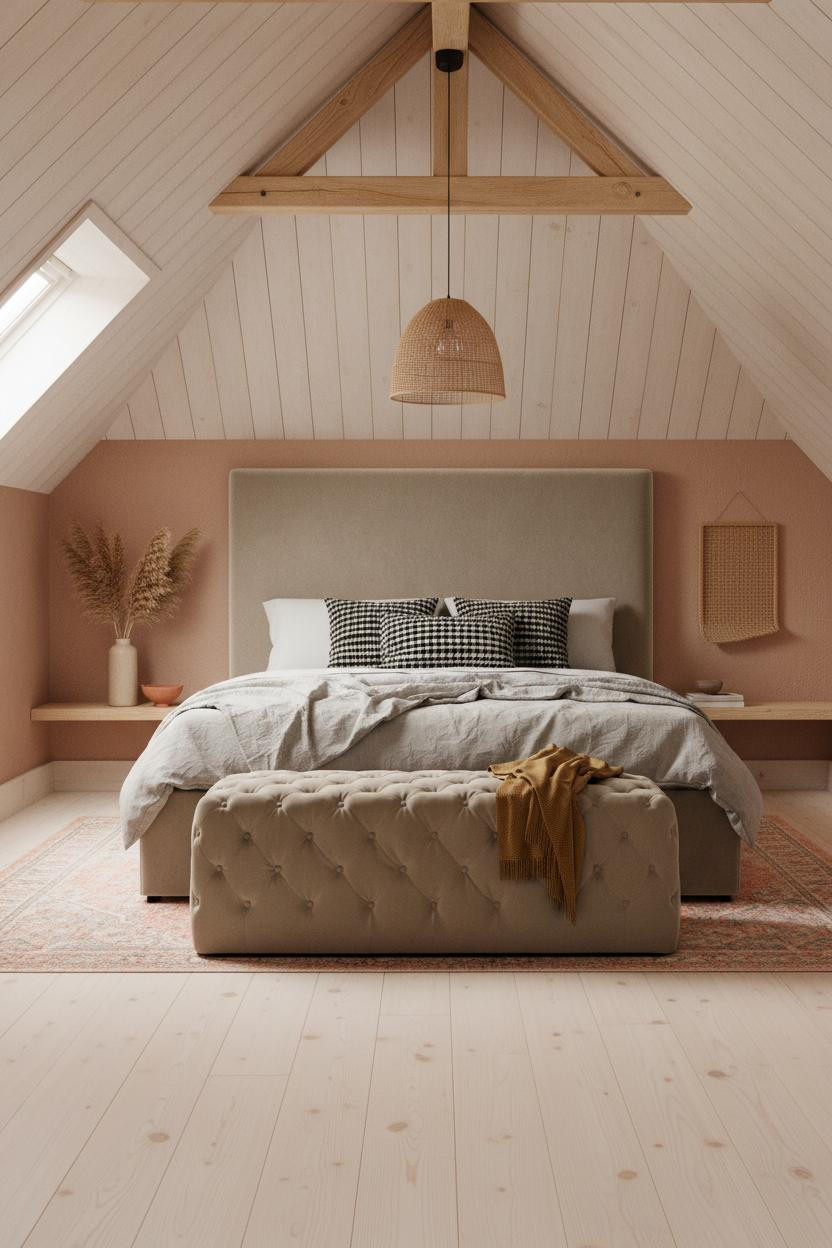
Honestly, dusty rose gets dismissed too fast in coastal rooms.
What makes this one different: The unpainted honey-grain collar tie beams against chalky white shiplap planks create a graphic overhead that earns the soft blush walls below. The room feels luminous and calm, while still feeling like it has bones.
Fold a mustard wool blanket across the ottoman at the foot. Try this: One warm accent color in textile form reads as intentional without tipping the whole palette into pattern overload.
Whitewashed Lath and That Particular Greek Island Stillness
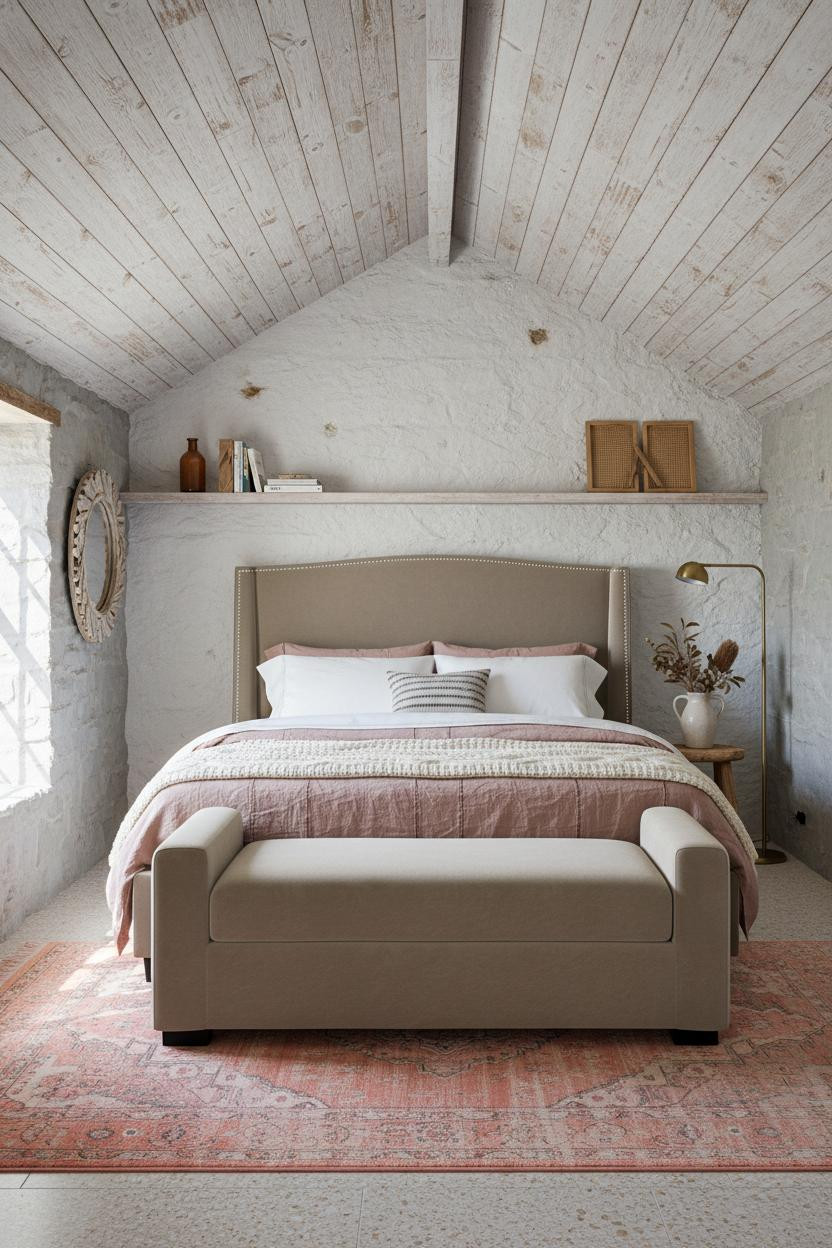
The room feels suspended between tides. Nothing anchors it to any particular decade.
Why it feels intentional: Whitewashed lath planks showing natural knots and pale grain at full ceiling pitch make the overhead surface the loudest design decision in the room, in a way that feels organic rather than forced. Muted stone-grey flanking walls keep the eye moving upward without competition.
Lean a driftwood-frame mirror against the gable wall rather than hanging it. The detail to keep: Leaning art and mirrors signals a room that’s still being lived in, not staged.
Faded Denim Blue in a Bright Attic Space
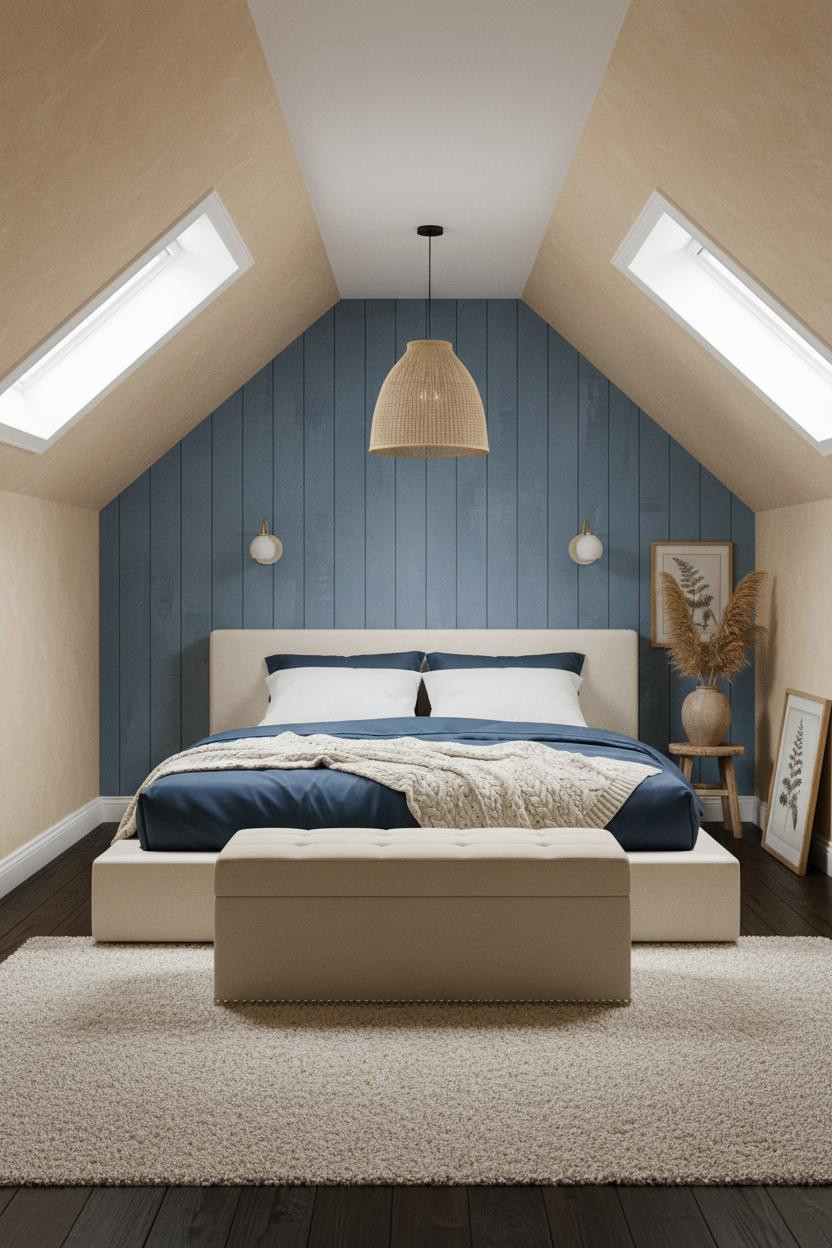
Fair warning. This palette is harder to pull off than it looks.
But in a bright, north-lit attic it lands. The faded denim board-and-batten wall gets its character from how overcast light reads across each plank slightly differently, where brushwork thins at the edges. Against warm sand plaster on the flanking walls, it avoids feeling nautical and stays coastal-boho instead.
Where to start: Pair this color with a chunky cream wool rug underfoot. The soft texture pulls the cool blue wall into the same warm family as the floor, in a way that feels collected rather than matched.
Olive Plaster and Whitewashed Shiplap Is a Better Combination Than It Sounds
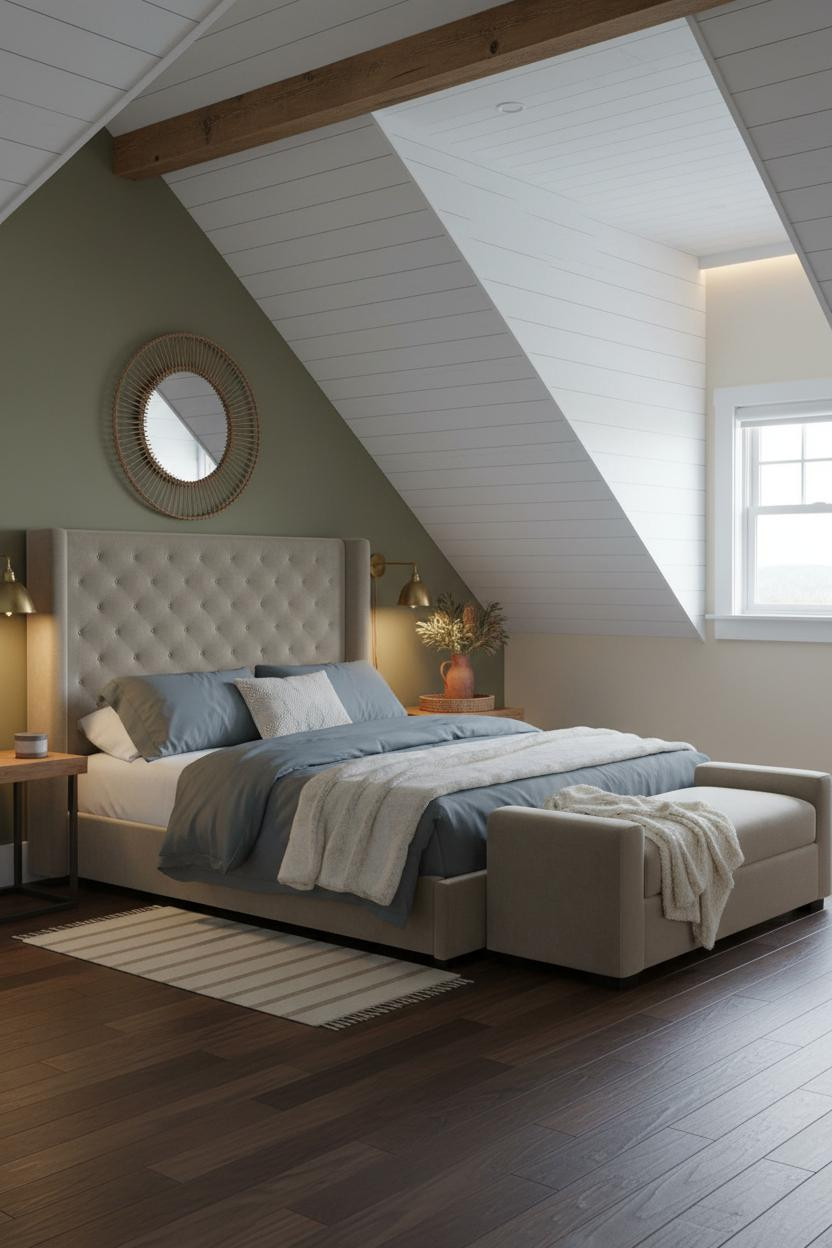
It works because neither surface is competing for attention.
The real strength: Whitewashed horizontal shiplap at the ceiling pitch keeps the overhead surface light and reflective, so the olive plaster accent wall behind the bed can hold its ground without making the room feel low or dense. The exposed timber collar ties tie both tones together at the ridge.
One smart swap: Replace any wall-mounted overhead light with paired bedside sconces at a low position. The amber warmth they cast across linen folds at night is genuinely the easiest upgrade in a beachy boho bedroom.
Neutral and Quiet, But Not Boring
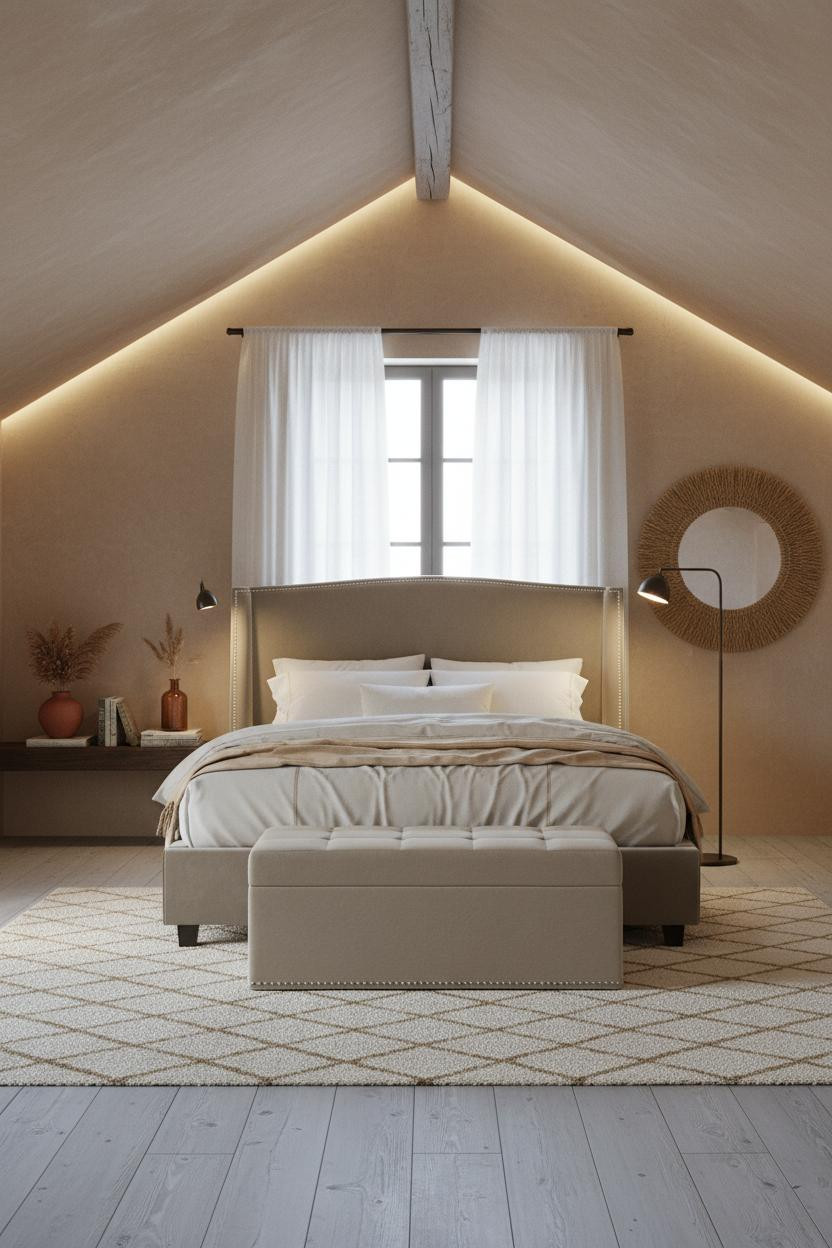
A neutral coastal bedroom only works when the textures carry the whole load. This one gets that right.
What changes the room: The oversized woven seagrass mirror mounted above the bench acts as the room’s single statement piece, so the warm mushroom plaster walls and cream percale bedding can stay soft and undemanding. It’s a small editorial decision that makes the rest of the room feel deliberate.
The finishing layer: Stack weathered books and a single amber glass bottle on a floating shelf. Nothing too precious. Just enough provenance to keep it interesting.
Bleached Driftwood Shiplap With a Dusty Blue Accent
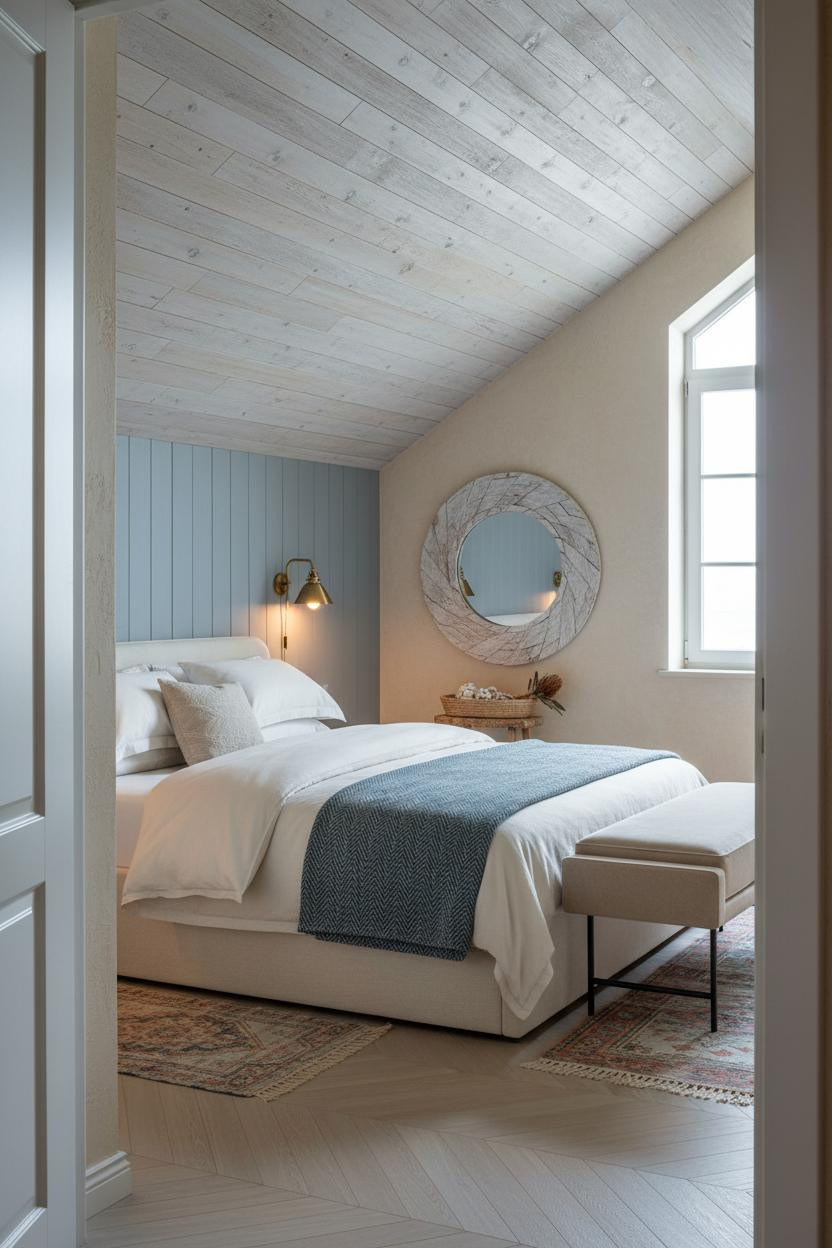

I almost scrolled past this. Glad I didn’t.
Why it lands: The bleached grey-silver driftwood shiplap overhead is raw enough in tone that it pulls the dusty blue-grey board-and-batten accent wall behind the bed into the same coastal palette without the two surfaces feeling matched. Warm ivory plaster on the flanking walls keeps it from tipping cold. And the paired brass sconces at low position do serious heavy lifting at night, throwing amber warmth against all that pale grey material.
What to borrow: A round driftwood-framed mirror above the foot bench. It echoes the ceiling material and gives the room a second focal point from the doorway.
Golden Hour Light and a Terracotta Shiplap Wall
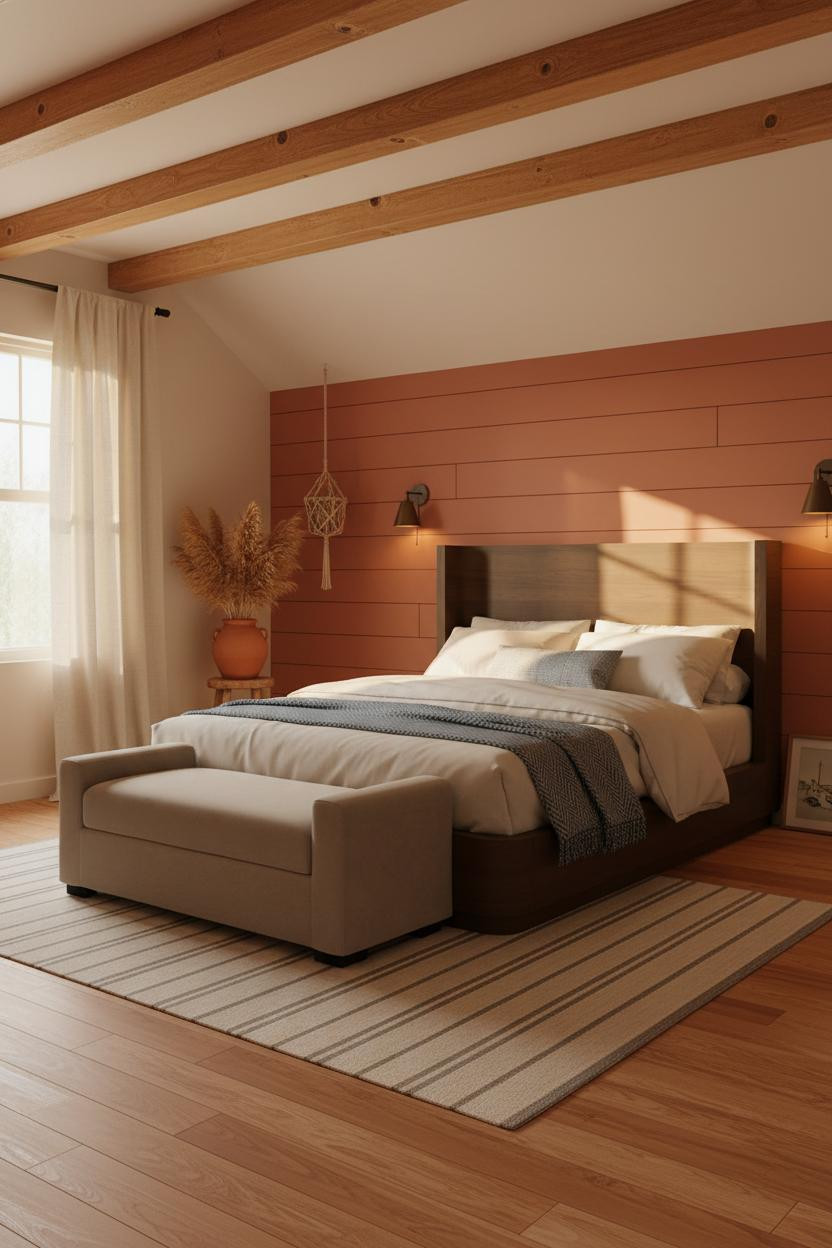

Late afternoon light does something specific to terracotta. It goes from warm to almost glowing.
Why the materials matter: Terracotta shiplap behind the bed absorbs golden hour light differently than flat paint would because the plank edges create thin shadow lines that shift as the sun drops. The exposed honey-toned wood beams overhead amplify that saturation rather than fighting it.
Hang a macramé basket on the wall and let tall dried pampas grass lean in a terracotta pot beside the bed. The practical move: Warm-toned rooms like this age well because the materials keep getting better, not dated.
Sage Green Shiplap and Whitewashed Beams Done Right
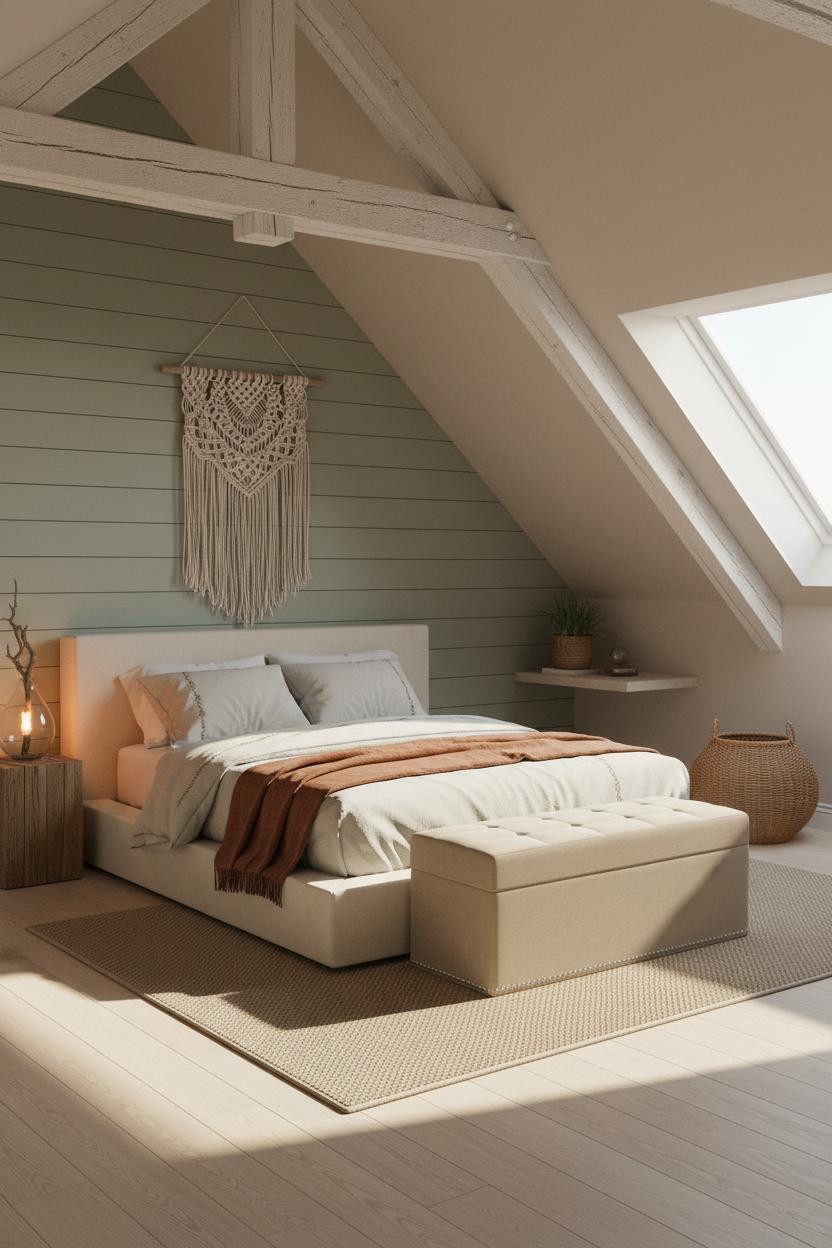
This is the version I’d actually do in my own attic. Honest.
Why it feels balanced: The whitewashed diagonal beams overhead catch morning light in a way that makes the sloped ceiling feel architectural rather than limiting, and the sage green shiplap behind the bed ties the room to the outdoors without painting the whole thing green. Sand walls on either side hold the palette steady.
A macramé wall hanging with fringe as the statement piece above the bed keeps the boho thread going while still feeling like something someone actually chose. The key piece: Layer a natural jute area rug over bleached oak floors. The coarse texture underfoot makes the whole room feel lived in from day one.

Our #1 Pick
Saatva Classic Mattress
America’s best-selling online luxury innerspring. 365-night trial, lifetime warranty, free white glove delivery.
Shop Saatva Classic
The Foundation Of Every Beautiful Bedroom
Every room in this list gets the visual layer right. But a bedroom that actually feels good to sleep in starts lower down, with what’s under the bedding.
The Saatva Classic is the mattress I’d put under every one of these styled beds. The dual-coil support system holds up across years the way good furniture does, and the Euro pillow top has that just-right give without losing structure over time. The breathable organic cotton cover means you’re not waking up warm in an attic room that already traps heat in summer.
Walls get repainted. Linen gets swapped out. The mattress is the thing that stays.

The rooms people save are the ones where nothing looks accidental. But the rooms people actually want to sleep in? Those get the bed right too. Start there and the rest figures itself out.