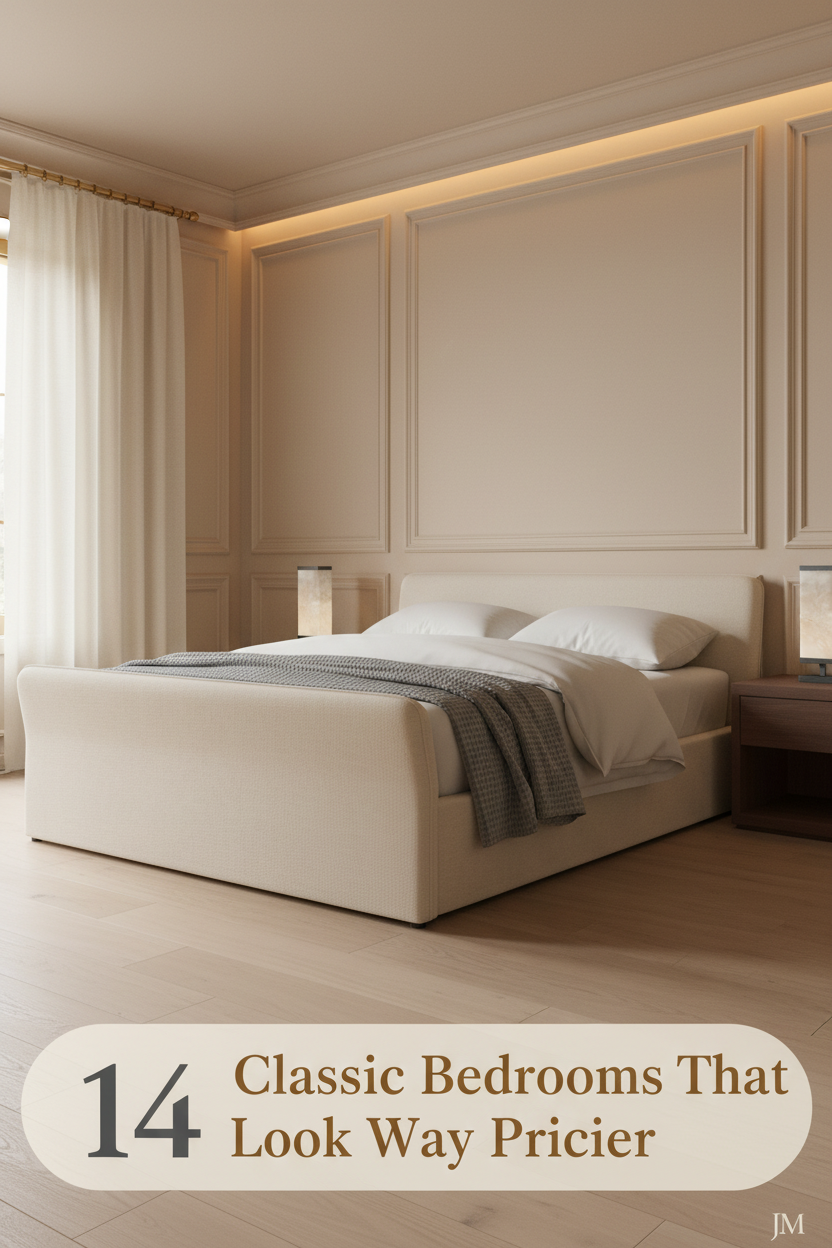
The first thing you notice in the best classic bedroom designs isn’t the furniture. It’s the feeling that nothing was rushed.
These 14 rooms lean into that. Quiet palette, considered architecture, materials that actually age well. Here’s what makes each one worth saving.
A Stone Wall That Changes The Whole Room
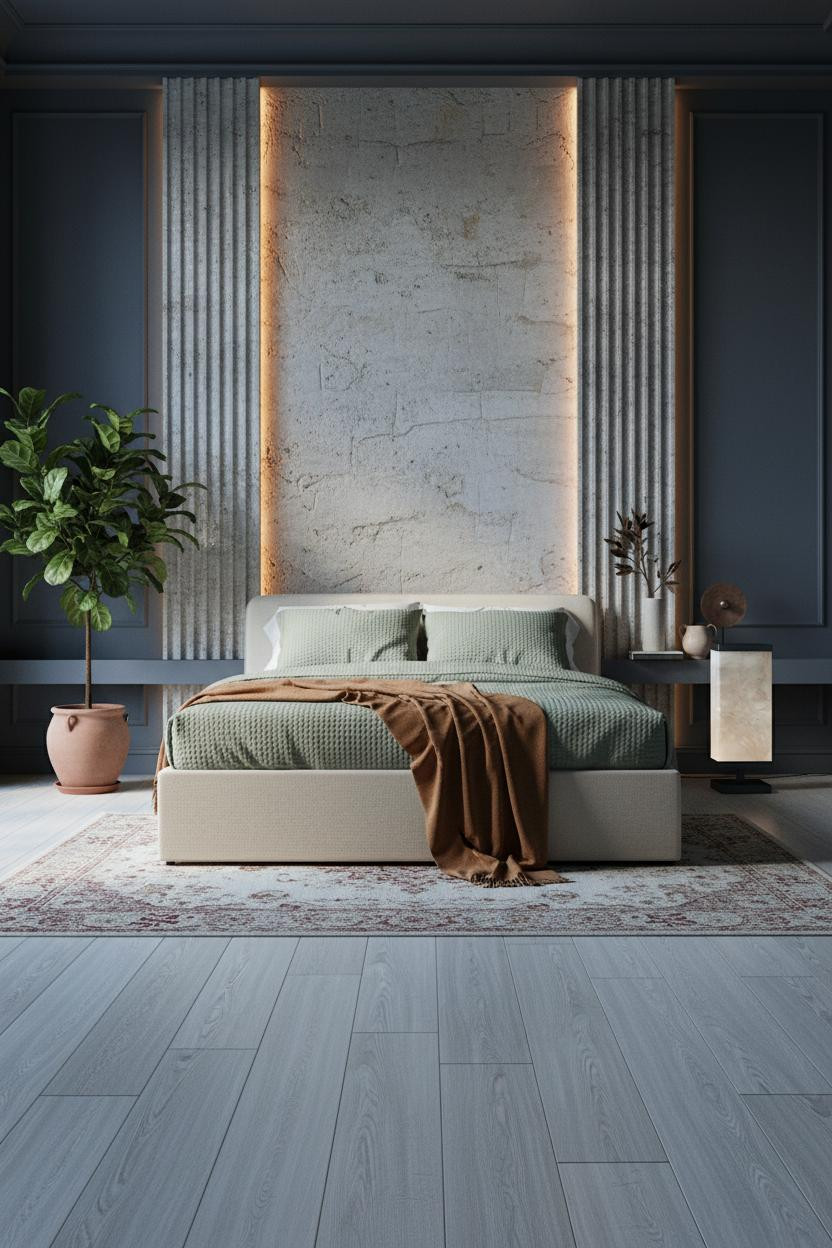

I keep coming back to this one. It shouldn’t feel calm with that much going on architecturally, but it does.
Why it holds together: The rough-hewn limestone pilaster wall creates contrast against smooth plaster returns, and the deep indigo keeps the room from feeling like a lobby.
Steal this move: Pair a textural stone feature with a dark wall color and let the bedding stay simple. Sage waffle-weave does it here.
Herringbone Wood Paneling Done Properly
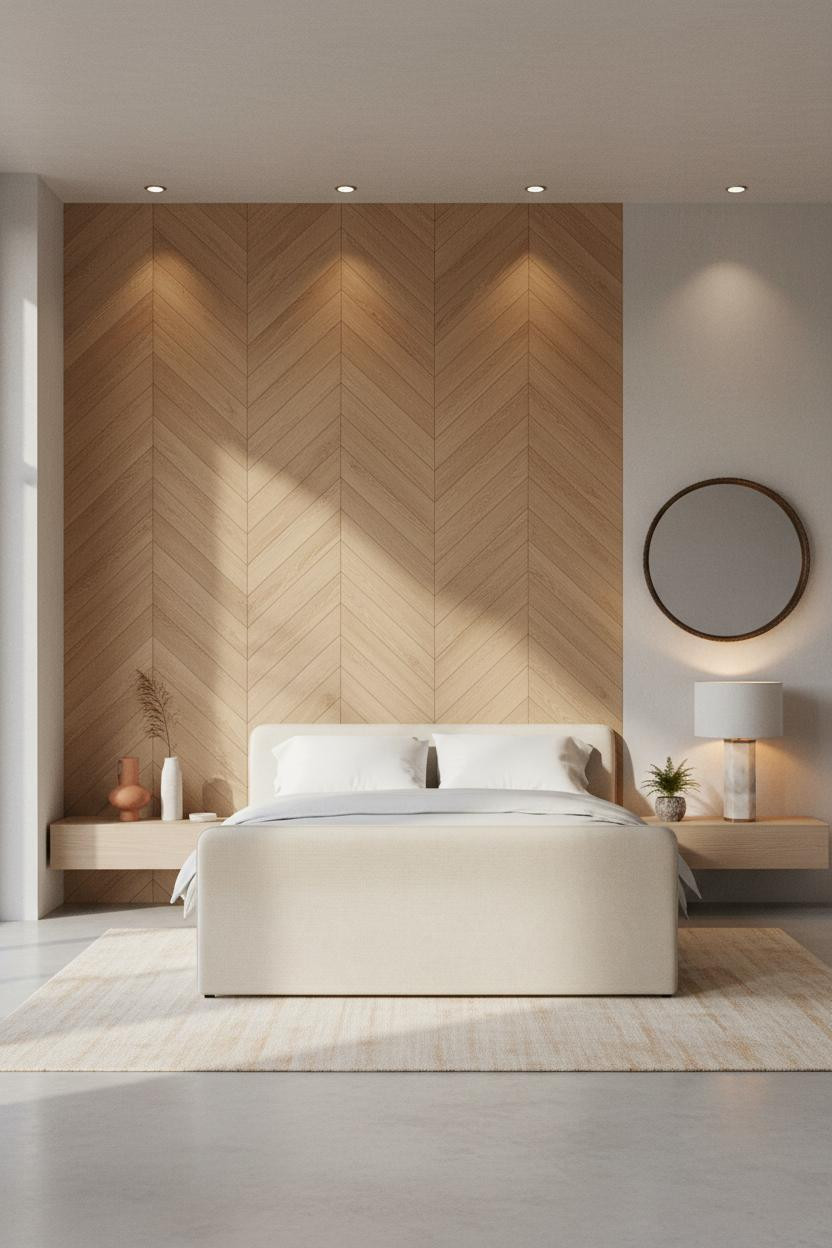

Bold choice. Full-height herringbone on every wall would be too much. But as a headboard feature? It’s exactly right.
The reason this feels expensive rather than busy is the honey-toned chevron oak running floor to ceiling with pale stone grey flanking it on either side. The contrast is immediate, even in a thumbnail.
What to borrow: The antiqued bronze mirror above the shelf pulls the warm wood tones forward without adding more color to the room.
Mediterranean Beams That Actually Work Indoors
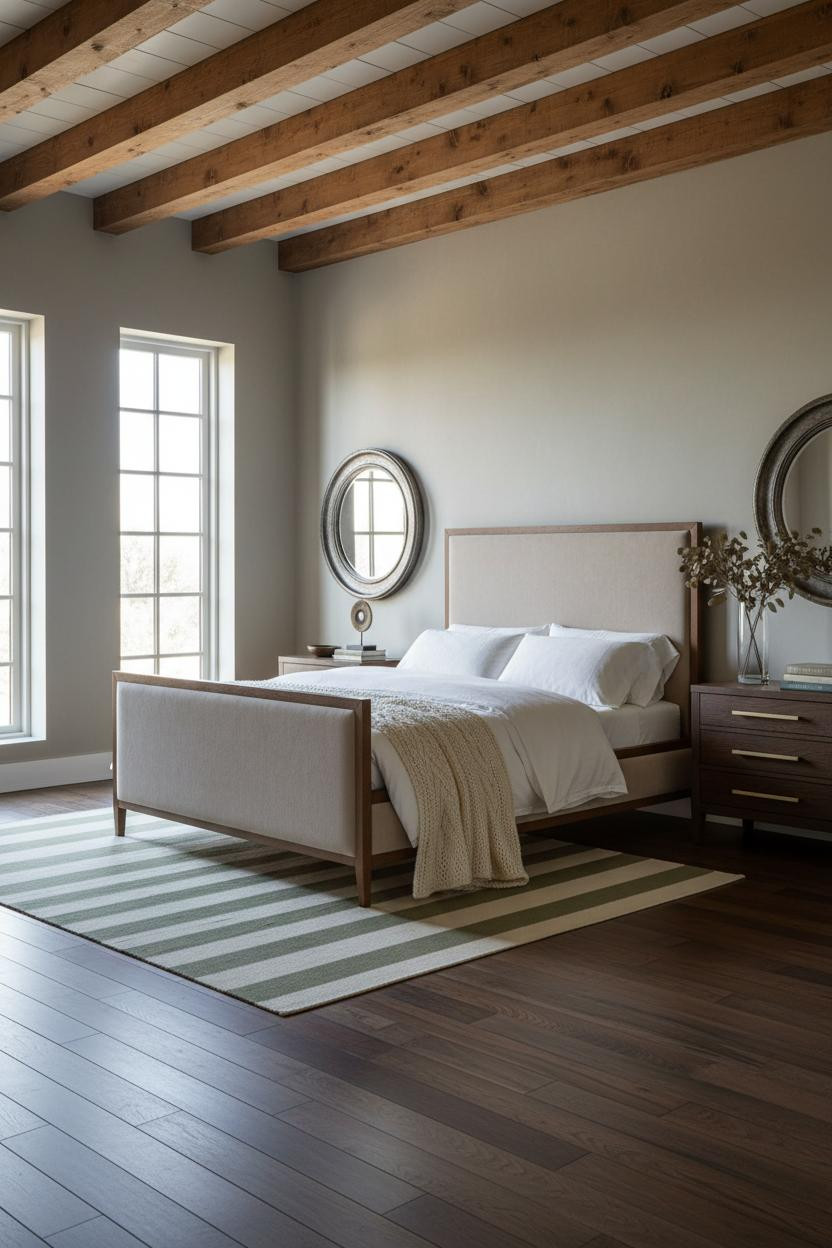


Exposed ceiling beams can easily tip into ski chalet territory. This one avoids it entirely.
Why it feels proportional: The hand-plastered timber beams cast horizontal shadow lines down warm greige walls, creating classical rhythm at ceiling height while the dark walnut floor grounds everything below.
The easy win: Keep bedding in ivory cotton percale. The room has enough texture happening overhead.
Why Swedish Manor Style Is Having A Moment
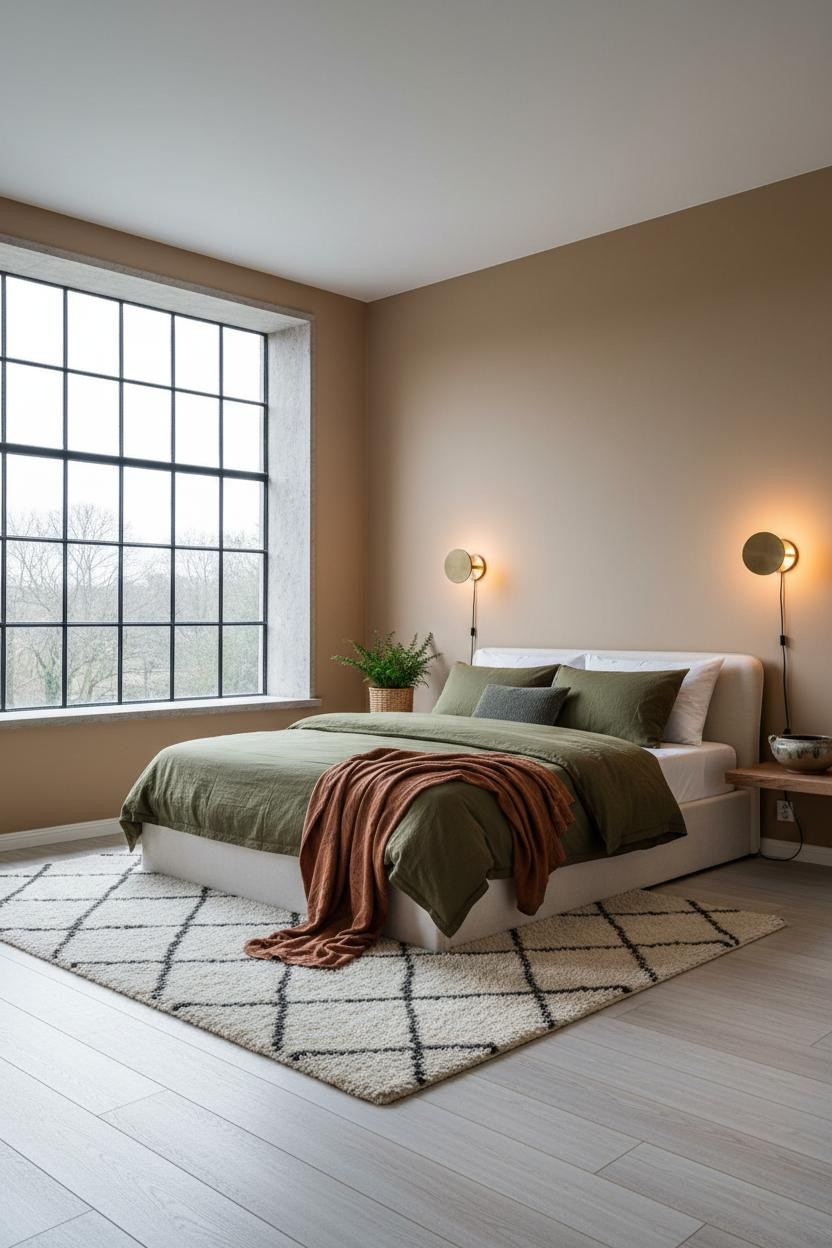
The Crittall-style steel mullion window wall is the whole room. Everything else exists to support it.
What makes this one different: Warm camel matte plaster walls absorb the cool overcast light in a way that feels neither cold nor precious. The Moroccan diamond-pattern rug in ivory and sand keeps the floor from disappearing under pale tones.
Use olive waffle-weave bedding and a rust linen throw here. One organic color note is all it needs.
The Wainscoting Detail Most Bedrooms Miss
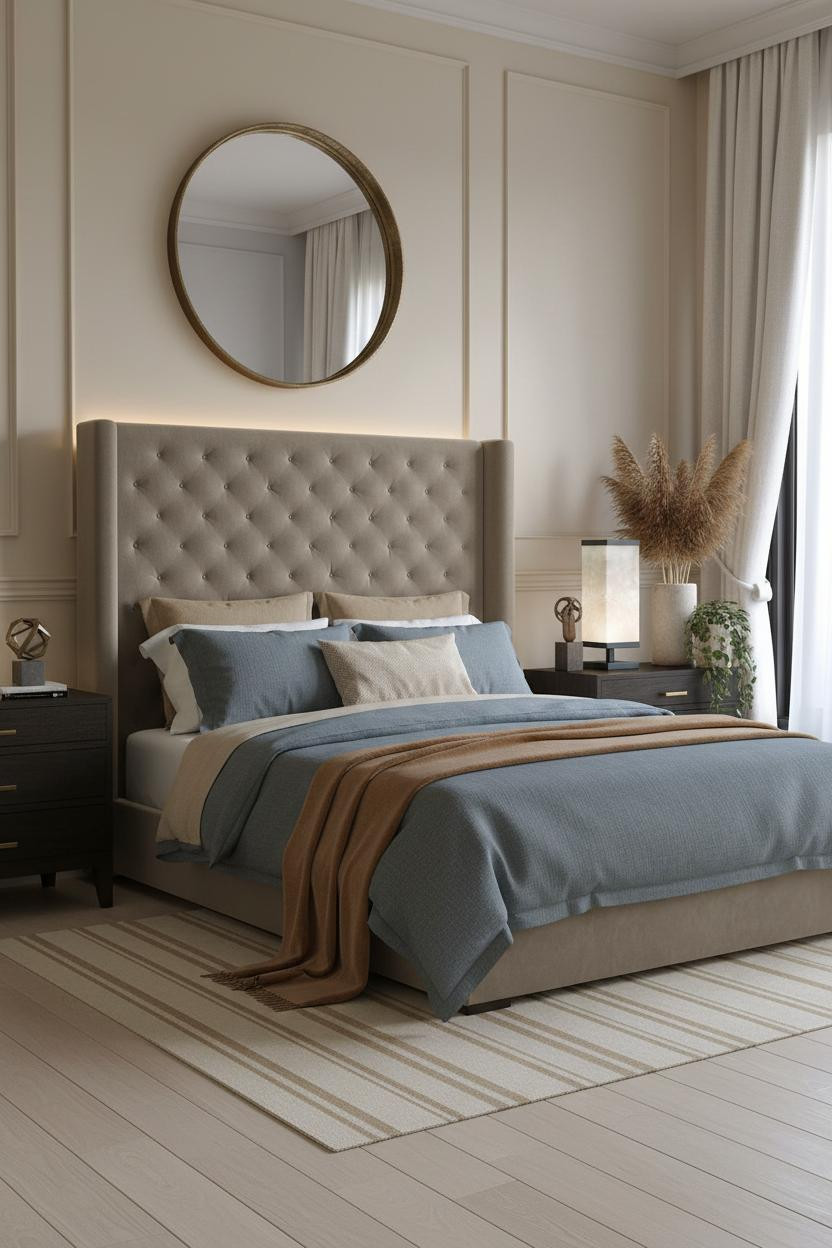

Half-height wainscoting with a wide decorative frieze rail and shallow carved pilaster relief flanking the bed zone. It’s a lot of architecture, but it’s measured and quiet.
Avoid this mistake: Don’t put an oversized mirror above standard chair-rail height wainscoting. The antiqued brass round mirror works here because the cap rail sits higher than usual, giving it room to breathe.
Slate blue waffle-weave linen on the bed keeps the room from feeling too Roman. The cool tone balances the warm ivory walls above.
Moss Green Walls And Why They Land In A Classic Bedroom
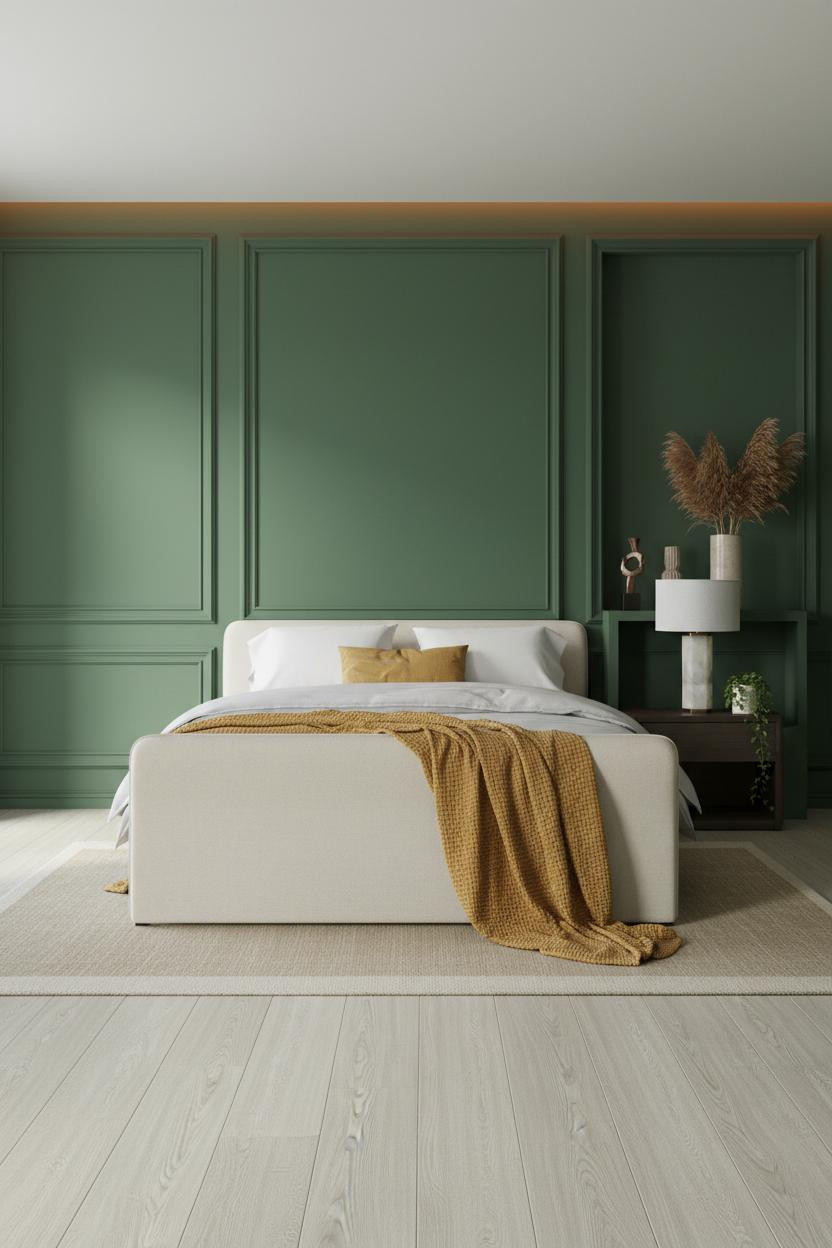
Honestly, moss green is the color I’d pick if I were doing a neoclassical bedroom from scratch.
Floor-to-ceiling raised-panel molding in smooth matte plaster pulls each panel edge into relief under overcast midday light, which means the room reads with architectural weight even when it’s quiet. The pale birch floor keeps the whole thing from getting too serious.
Pro move: Layer stone-washed grey linen with a mustard wool blanket at the foot. Warm meets cool, and the room feels collected rather than decorated.
When A Blue-Grey Wall Makes Everything Look More Expensive
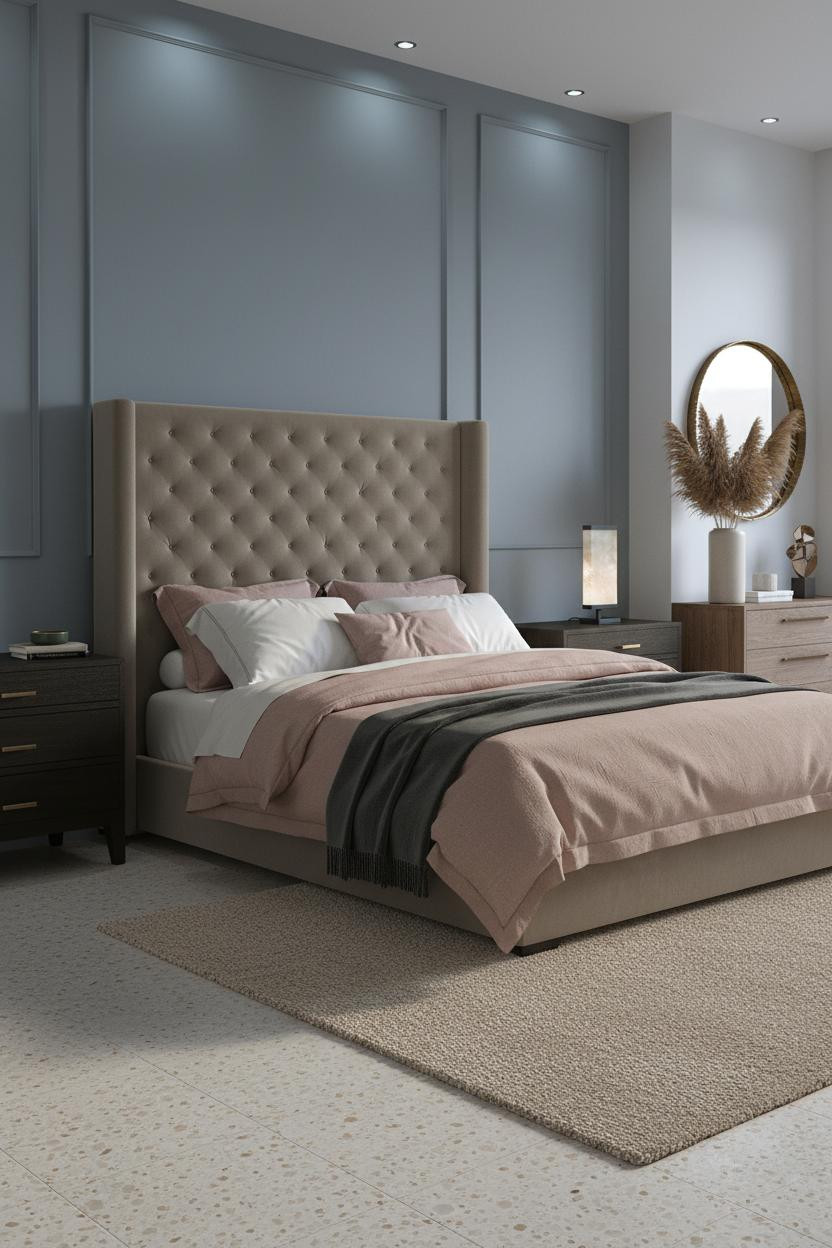
I almost scrolled past this. Glad I didn’t.
The board-and-batten wall in muted blue-grey gives the room its backbone. Each vertical panel casts a whisper of shadow downward, and that’s enough. Combined with a polished pale terrazzo floor, the room feels Milanese without trying too hard. But don’t get me wrong: this only works because the bedding stays soft. Dusty pink linen here, nothing sharper.
The Coffered Ceiling That Earns Its Weight
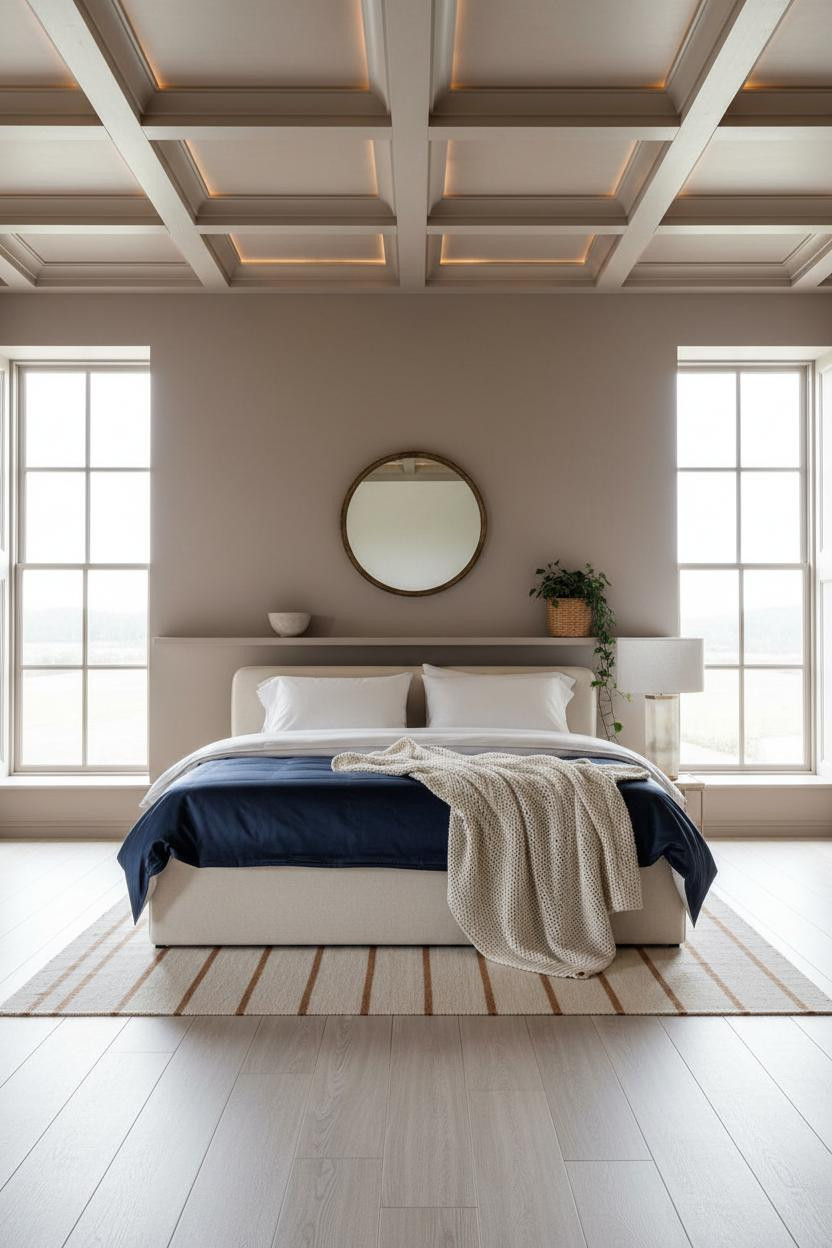
A coffered ceiling with brass-inlaid plaster trim spanning the full room width pulls the eye upward immediately. That’s the whole point, and it works.
Why it feels intentional: Soft taupe walls and bleached wide-plank oak flooring keep the weight of the ceiling from making the room feel like a museum. The scale is classical, but the materials read warmly.
The part to get right: Navy sateen bedding with a cable-knit cream throw. The contrast in texture matters as much as the color here.
A Gallery Wall That Doesn’t Feel Cluttered
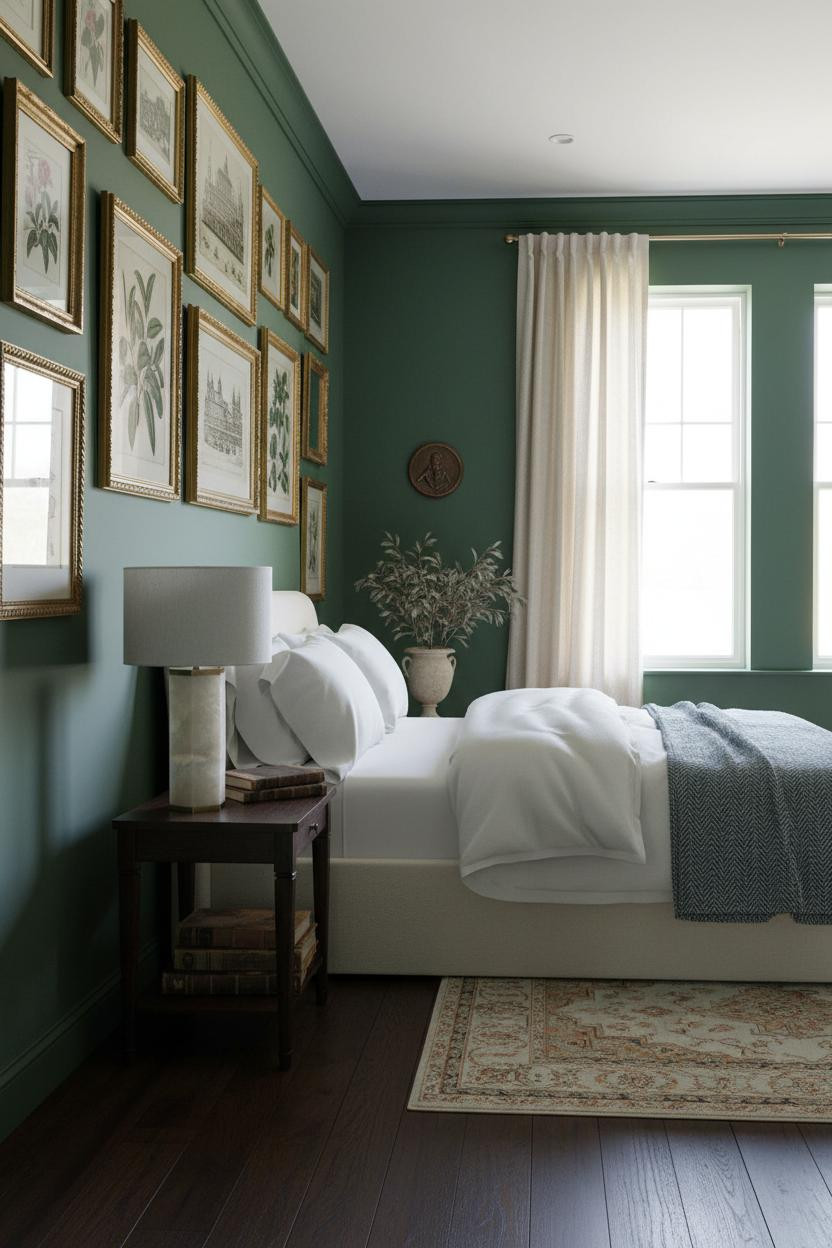
Fair warning. Floor-to-ceiling gallery walls are divisive, and this one is not subtle.
What makes it work: Closely hung gilt-framed botanical prints and architectural engravings on forest green matte plaster walls create dense visual texture that somehow reads as calm rather than chaotic. The dark stained narrow-plank floor and the faded Persian runner beneath the bed zone anchor it.
Cream percale bedding with a steel blue herringbone throw loosely folded at the foot. The look only works if the linens stay restrained.
What A Parisian Bedroom Gets Right About Proportion
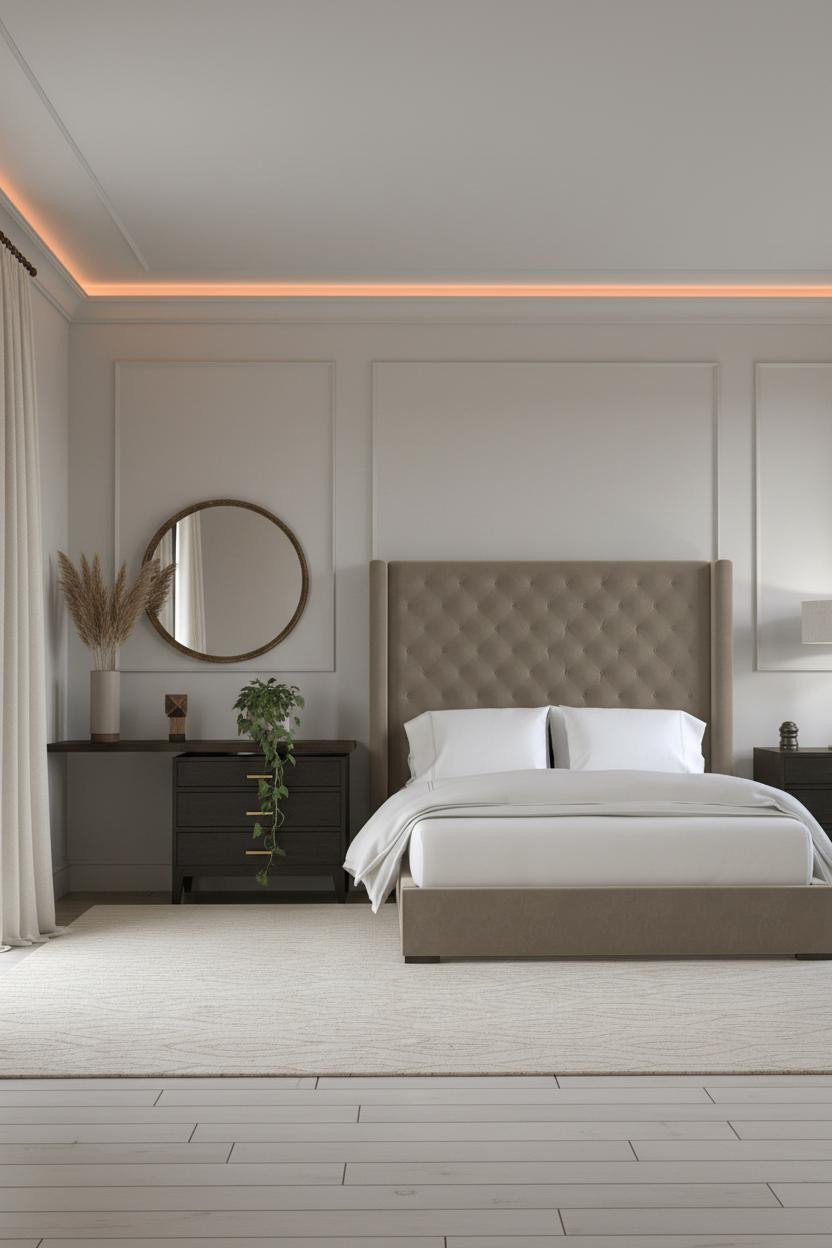
The defining move here is a recessed ceiling cove with brass-trimmed crown molding running the full room perimeter. It casts a warm amber rim along the upper wall, and that single horizontal detail makes the whole room feel considered.
Design logic: Warm champagne plaster walls absorb the cool north window light in a way that keeps the room from feeling cold, while the brass rim above adds just enough glow. Nothing too precious.
One smart swap: Slate grey waffle-weave bedding with a rust linen throw keeps the soft palette from going flat.
I’d Choose Dove Grey Paneling Over Paint Every Time
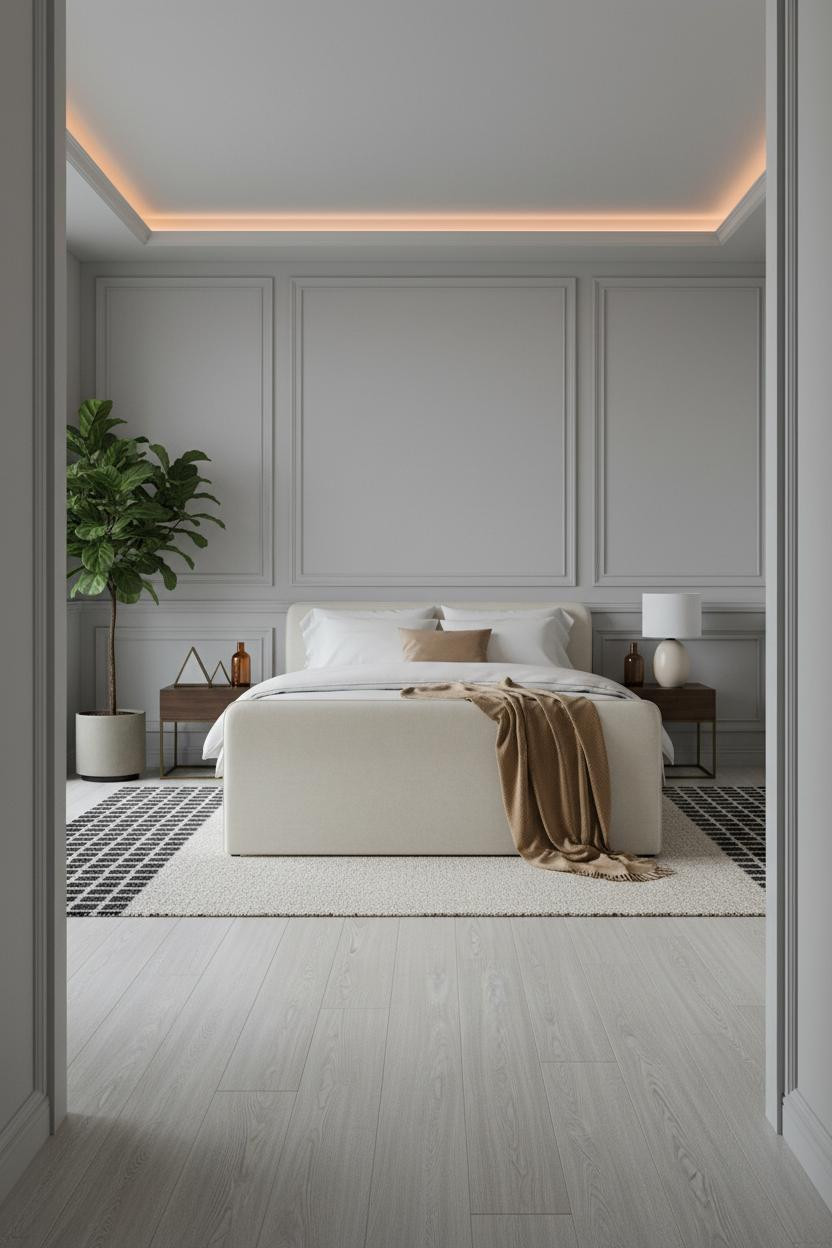

This is the kind of room that makes you want to slow down when you walk in.
What gives it presence: Deep rectangular coffers in pale dove grey edged with fine plaster shadow lines read as architectural texture rather than decoration. It’s a small distinction, but it’s the whole reason this doesn’t look like a hotel renovation.
The camel cashmere throw at the foot and a large potted fiddle-leaf fig in the corner are enough. Skip anything else.
The Japandi Bedroom That Proves Less Is More
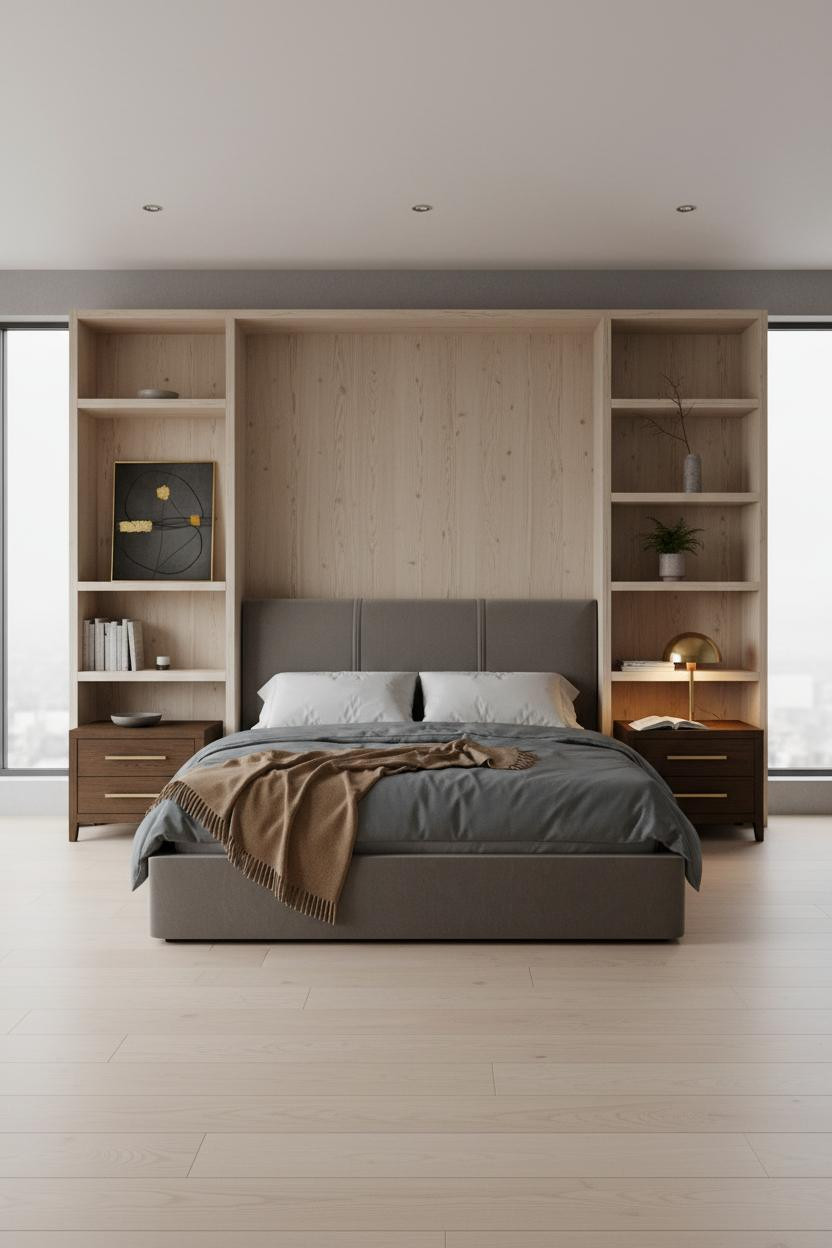

Nothing fancy. That’s the point.
What changes the room: A full-width built-in bookshelf wall in pale birch with recessed niches at varying depths creates quiet horizontal rhythm without any of the visual noise a painted feature wall would bring. One shelf is deliberately half-empty. That restraint is the design decision. And the room feels better for it.
A Dusty Rose Plaster Alcove That Pulls The Room Together
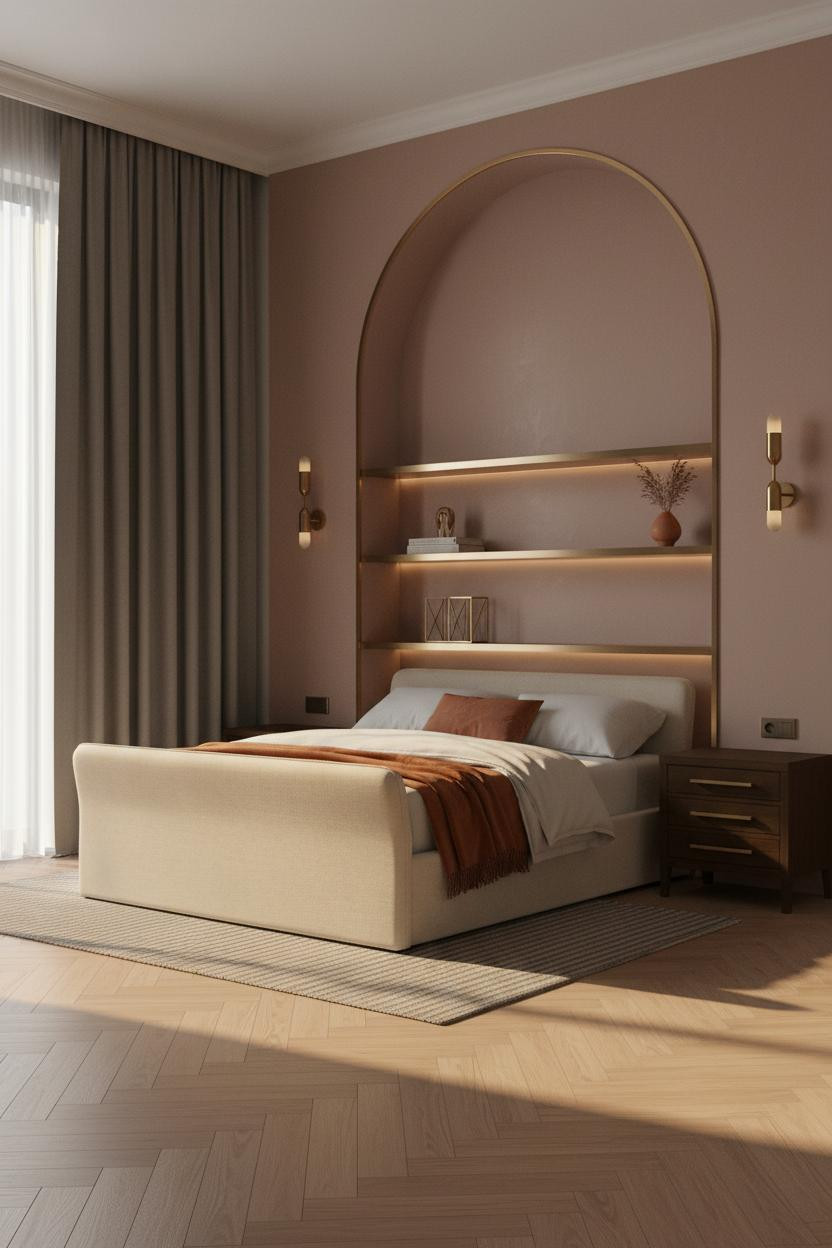
I’d argue the arched plaster alcove is the most personal detail you can add to a classic master bedroom. It frames the bed zone without boxing it in.
Where the warmth comes from: Golden afternoon light raking across dusty rose plaster walls makes the recessed brass-trimmed shelving inside the arch glow. The herringbone parquet oak floor below adds grain and movement that flat tile never could.
The finishing layer: Deep stone velvet curtains framing the window and a burnt orange mohair throw at the foot. Warm, grounded, not overdone.
Sash Windows With Ivory Linen Curtains: A Classic For Good Reason
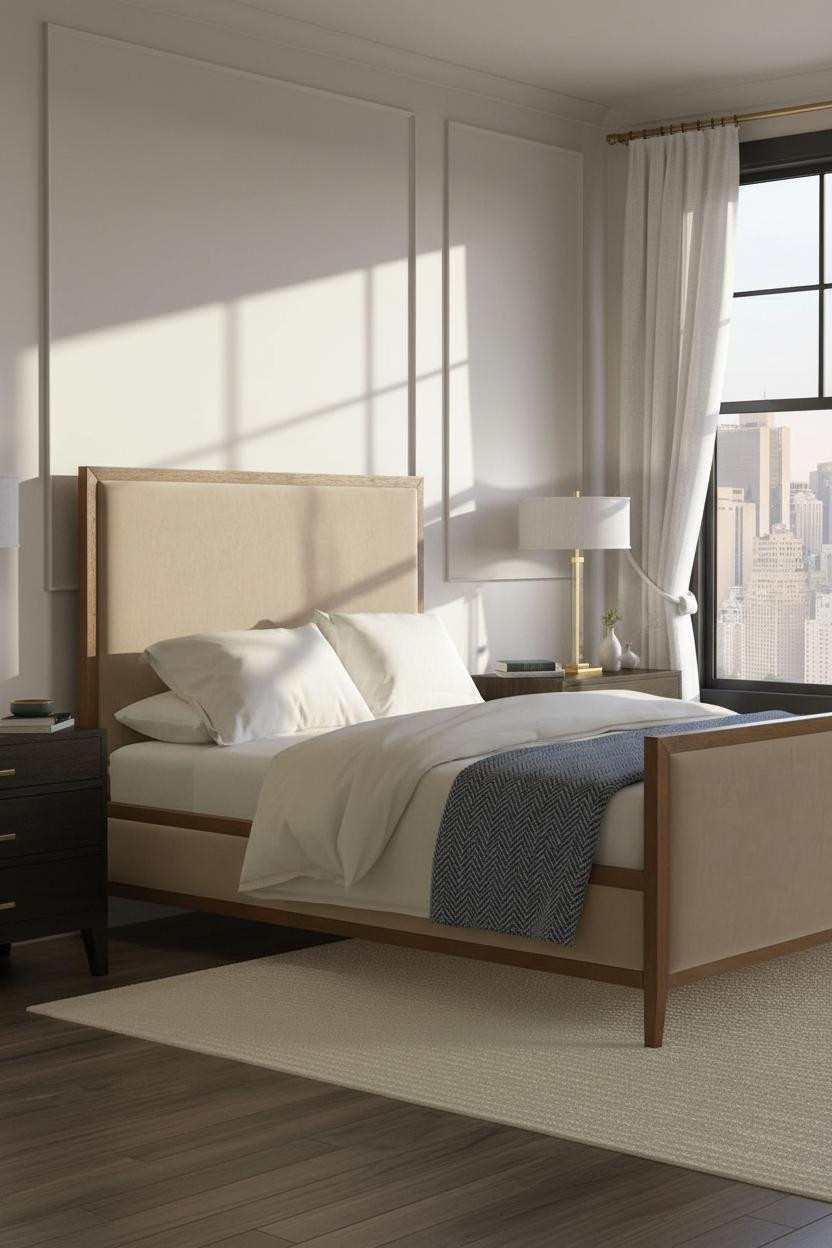
Floor-to-ceiling sash windows with deep wooden sills and traditional muntins anchor the entire composition. The divided panes cast soft ladder shadows across warm greige plaster walls, and that shadow pattern alone gives the room its personality.
The smarter choice: Hang ivory linen curtains from a simple brass rod rather than elaborate hardware. In a room with this much architectural detail, the curtains should frame, not compete.
Cream percale bedding and a steel blue herringbone throw. Clean, lived-in, and quietly assured.

Our #1 Pick
Saatva Classic Mattress
America’s best-selling online luxury innerspring. 365-night trial, lifetime warranty, free white glove delivery.
Shop Saatva Classic
The Foundation Of Every Beautiful Bedroom
Walls get repainted. Linen gets swapped out. The mattress stays. And in a bedroom this considered, it should be worth staying.
The Saatva Classic holds up because of how it’s built: dual-coil support that doesn’t transfer movement, an organic cotton cover that doesn’t trap heat, and a Euro pillow top that feels genuinely soft without losing structure over time. It’s the kind of mattress you stop noticing, which is exactly the point.

The rooms people save are the ones where nothing looks accidental. Start with the bed. The rest figures itself out.