
The first thing people say about a small attic bedroom is that the slanted walls are a problem. I’d argue they’re the whole point.
Done right, angled ceilings make a room feel sheltered in a way flat walls never do. These 13 rooms prove it.
The Slanted Ceiling That Feels Like a Feature, Not a Flaw
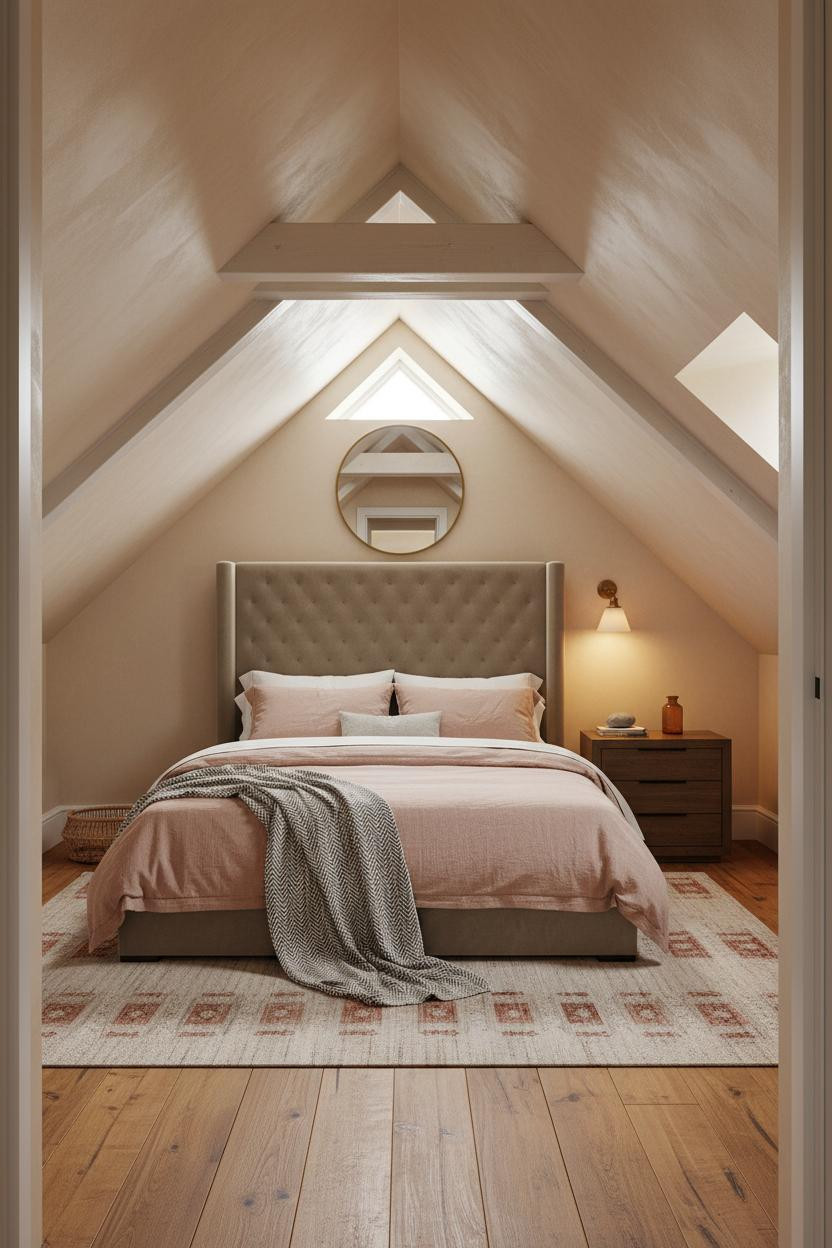

This is the kind of room that makes you want to stay in bed until noon. And honestly, I think the raw sand plaster ceiling is why.
Why it feels sheltered: Rough chalky plaster on the collar ties catches light differently than paint, giving the converging angles texture and weight instead of just geometry.
Steal this move: Anchor the bed zone with a kilim runner in muted rust and cream. It warms up the floor without fighting the plaster overhead.
White Shiplap on Sloped Walls Actually Works
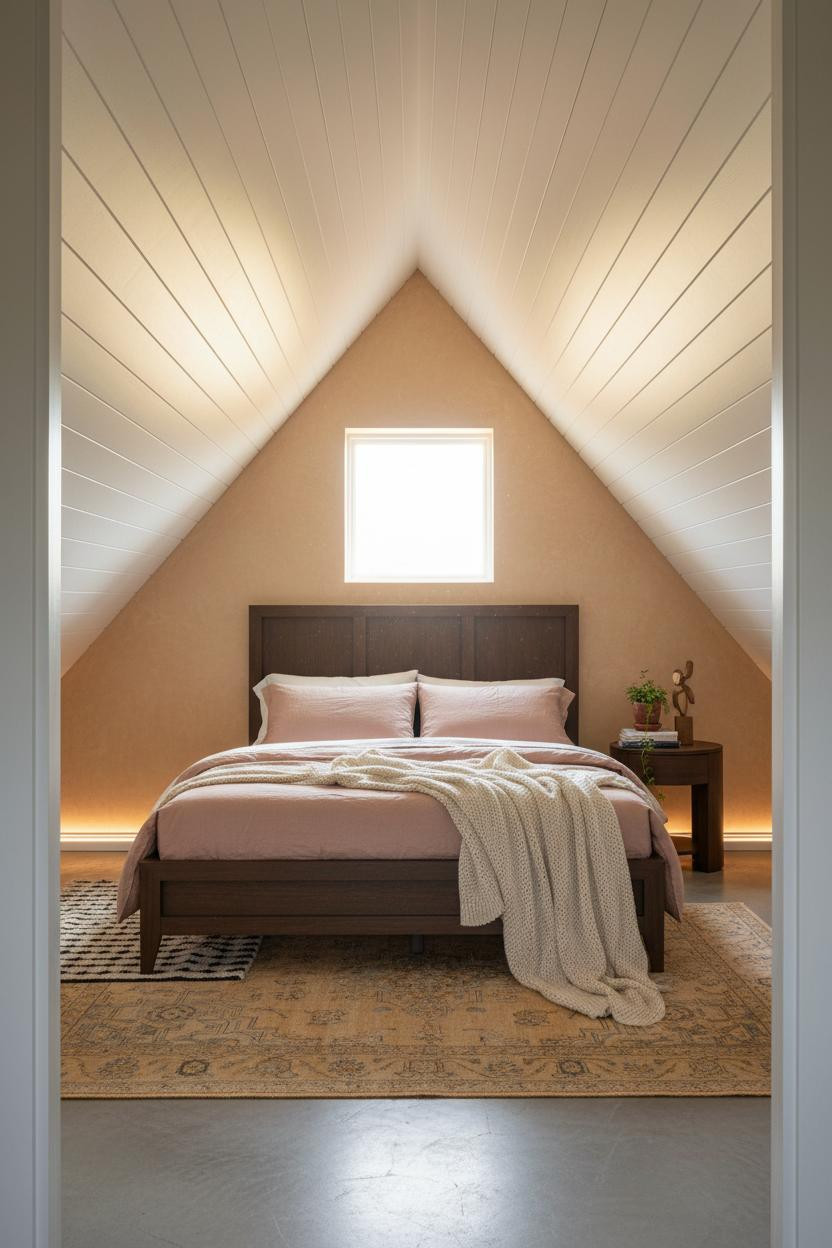
Fair warning. Shiplap on a sloped ceiling is divisive. But when it runs peak to eave in painted white, it pulls the eye upward in a way that actually reduces how cramped the room feels.
The horizontal shadow lines between each board do the work, creating rhythm that makes the converging angle feel intentional. Painted white shiplap is one of the few surfaces that gets more useful as the ceiling gets steeper.
Avoid this mistake: Don’t stop the shiplap at the break line. Carry it all the way from floor to ridge or it looks unfinished.
Board-and-Batten on an Angled Wall, Done Quietly
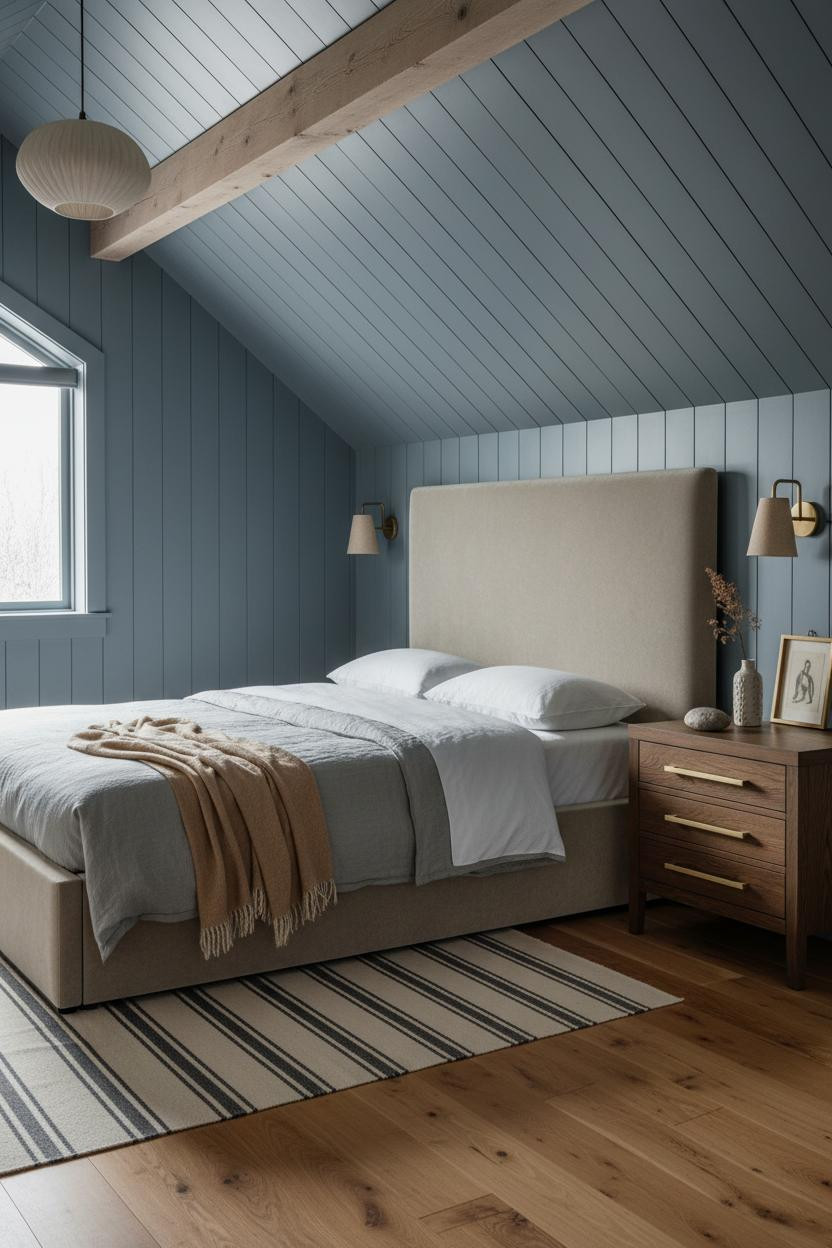


I keep coming back to this one. The muted blue-grey board-and-batten is a quieter choice than shiplap, and somehow it reads as more considered.
What gives it presence: Vertical battens on an angled wall create upward momentum, and the pale timber ridge beam running the full ceiling length ties the whole thing together without needing art or accessories to fill the gaps.
Pro move: Pair the batten color with stone-washed linen bedding in the same cool family. The room feels cohesive rather than decorated.
Raw Plaster Collar Ties That Make Low Ceilings Look Architectural
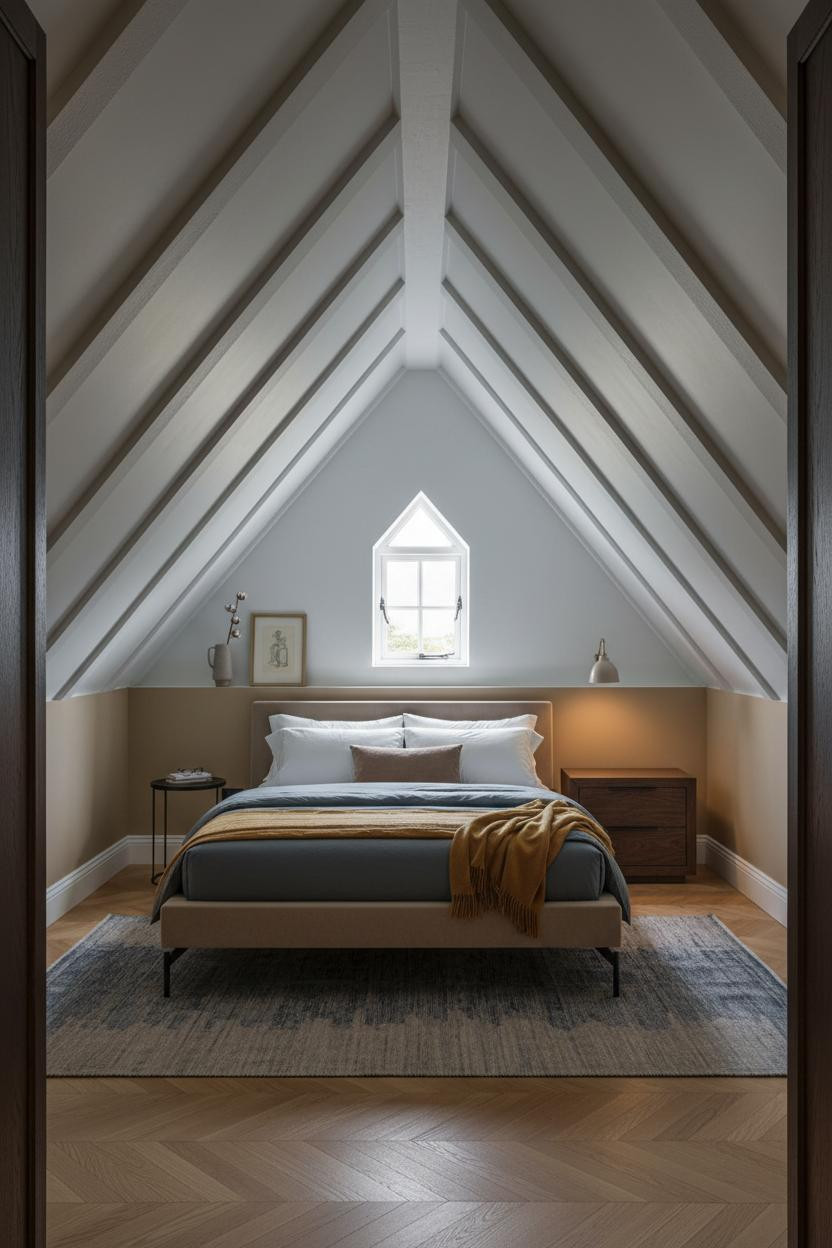

Most people paint collar ties white and forget them. Leaving them in unpainted plaster is a better call.
The chalky matte surface catches grey window light and throws crisp shadow lines down the slope, making the whole ceiling read as intentional architecture. It’s a small move, but it changes the whole character of the room.
In a small bedroom with a low ceiling, the smarter choice is to make the structural elements the design rather than trying to hide them. The easy win: pair camel plaster walls below with pale oyster on the upper planes to lift perceived height without painting everything white.
Why Going Lower With Furniture Solves the Slanted Wall Problem
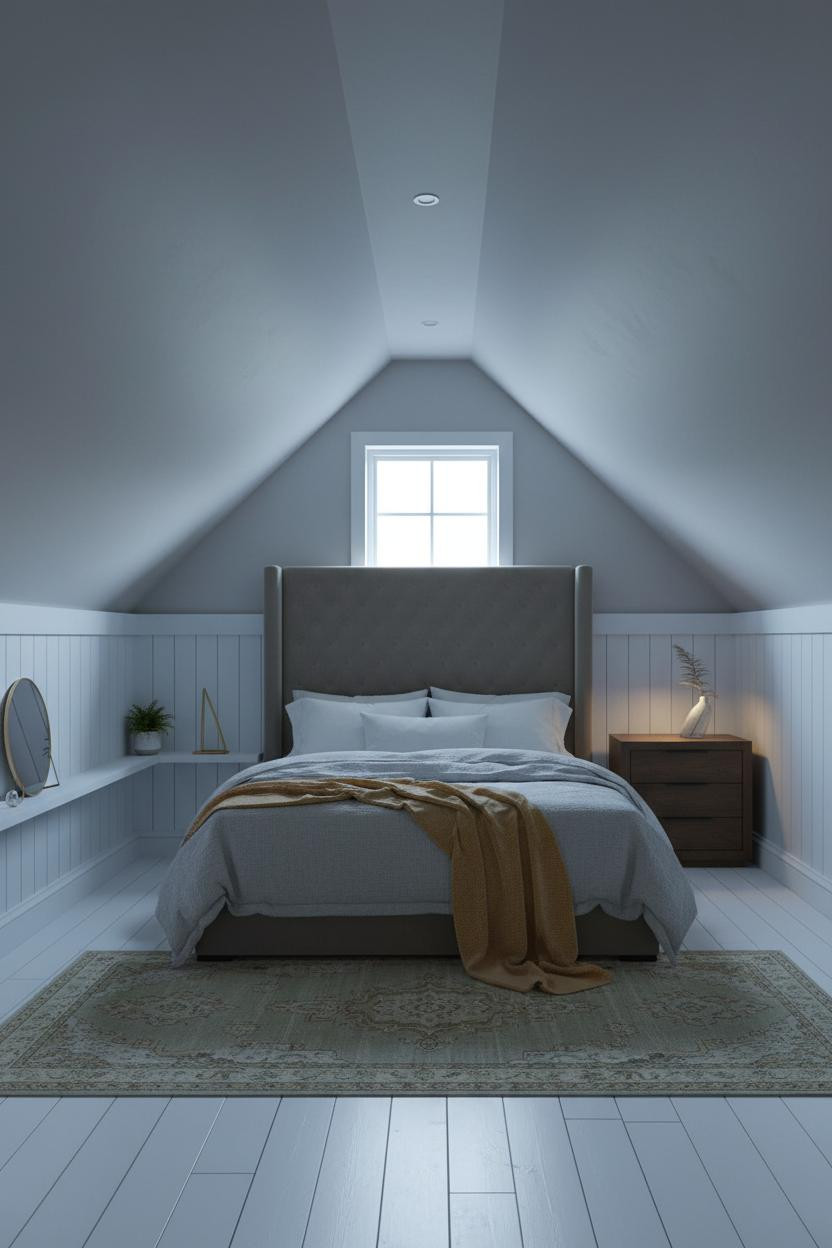
Nothing fancy. That’s the point.
In a low attic bedroom, the smarter choice is always going lower with the furniture profile, not squeezing in smaller pieces. A low-profile bed frame keeps the visual weight below where the ceiling starts to drop, which helps balance the whole room.
What to copy first: The white board-and-batten lower walls keep the base of the room clean and bright, so the darker mushroom plaster on the upper slopes reads as intentional contrast rather than just shadow.
Limewash Timber Rafters Are Doing All the Work Here
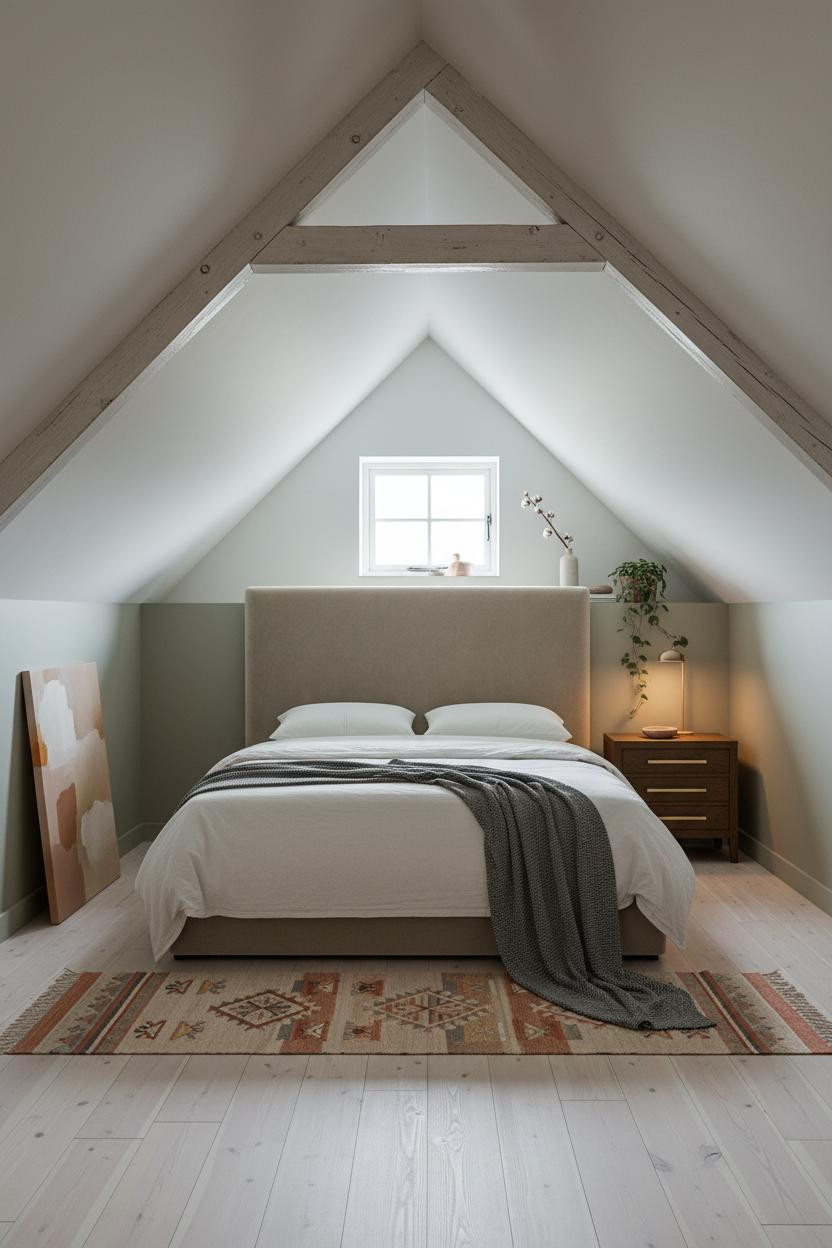
I almost scrolled past this one. Glad I didn’t.
The room feels calm and cocoon-like, and the reason is the limewash-white timber rafters. Limewashing exposed beams keeps the grain visible while softening the color, so the structural ceiling reads as warm rather than raw.
Worth copying: Lean an oversized canvas in ochre and clay against the lower knee wall. It grounds the bed zone without needing a proper hanging, which matters when you’re working around awkward angles.
Dark Walnut Collar Ties Against Pale Plaster
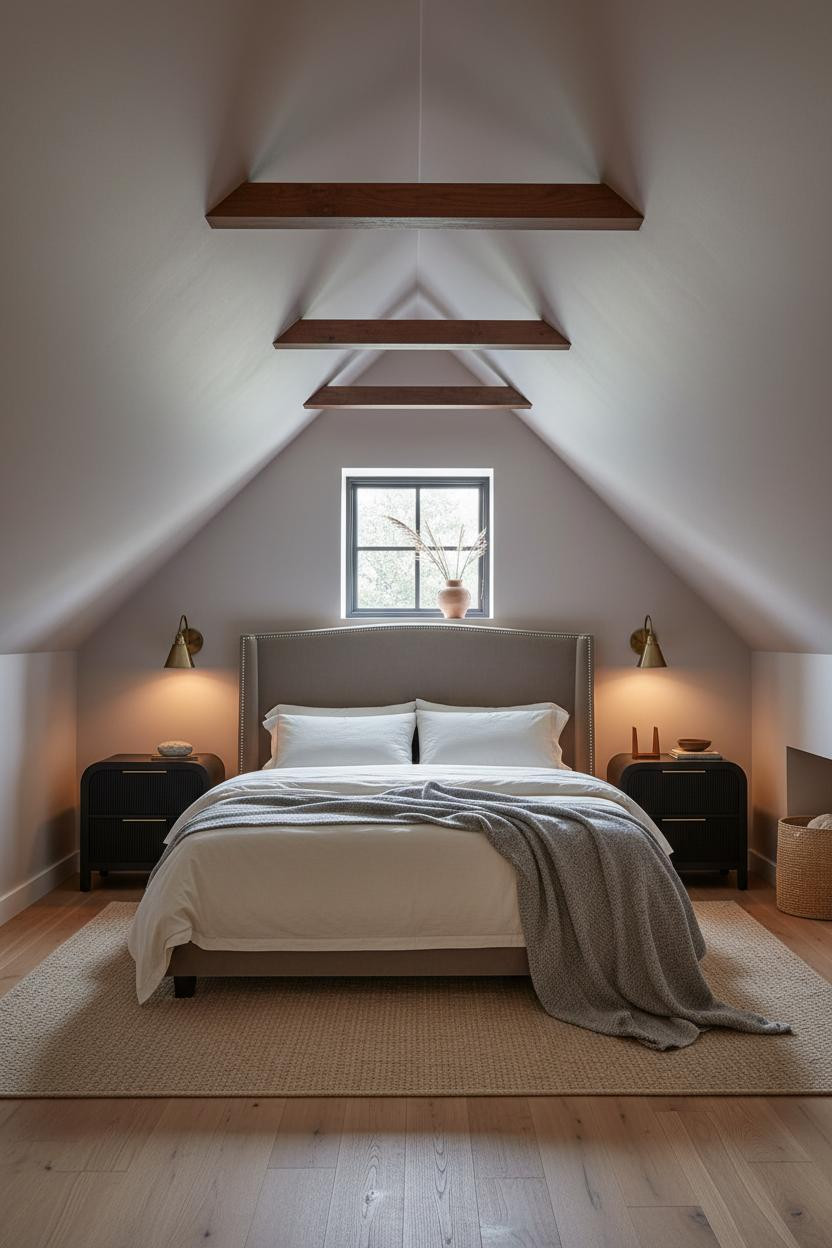


This one is divisive. Dark collar ties in a low attic bedroom sounds like a bad idea on paper.
But the contrast is exactly what makes the geometry legible. Dark walnut collar ties spanning the full width throw sharp rhythmic shadows against pale plaster, so the angled ceiling reads as shelter rather than compression. The room feels deliberately small, not just small.
The detail to keep: A flat-weave jute runner anchoring the bed keeps the floor light enough to balance the drama overhead. Don’t swap it for a patterned rug here.
How Pale Limewash Rafters Change a Sloped Roof Bedroom
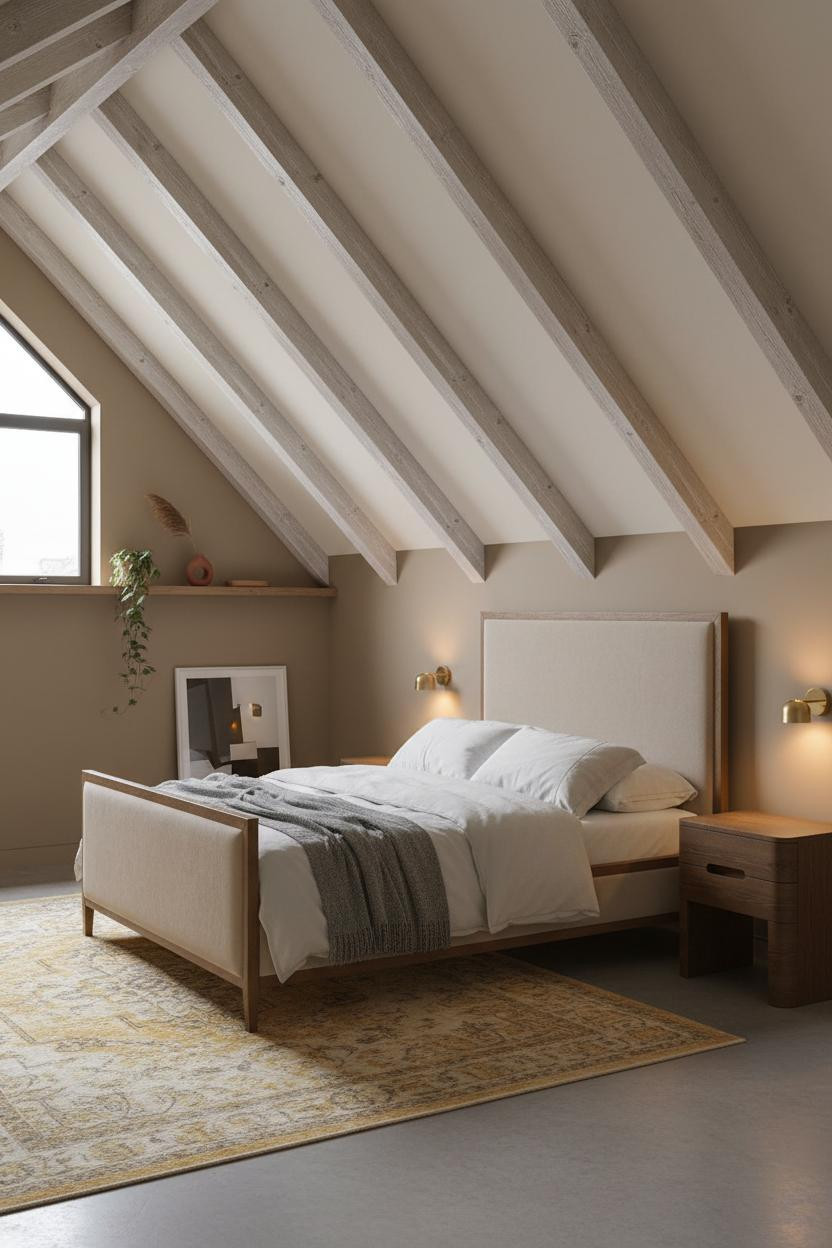


The reason this reads as warm instead of washed-out is the rafter treatment. Silvered limewash preserves the grain while pulling the color toward cream, so the diagonal stripes of shadow become texture rather than structure.
Why it holds together: Warm taupe plaster on the lower walls transitions to cream on the upper slopes, which means the rafters sit within a tonal gradient instead of interrupting it.
And that graphic art print leaning against the lower wall does more than any hung piece could here. One bold lean, zero nail holes in the angled plaster.
This Coastal Attic Room Gets the Scale Right
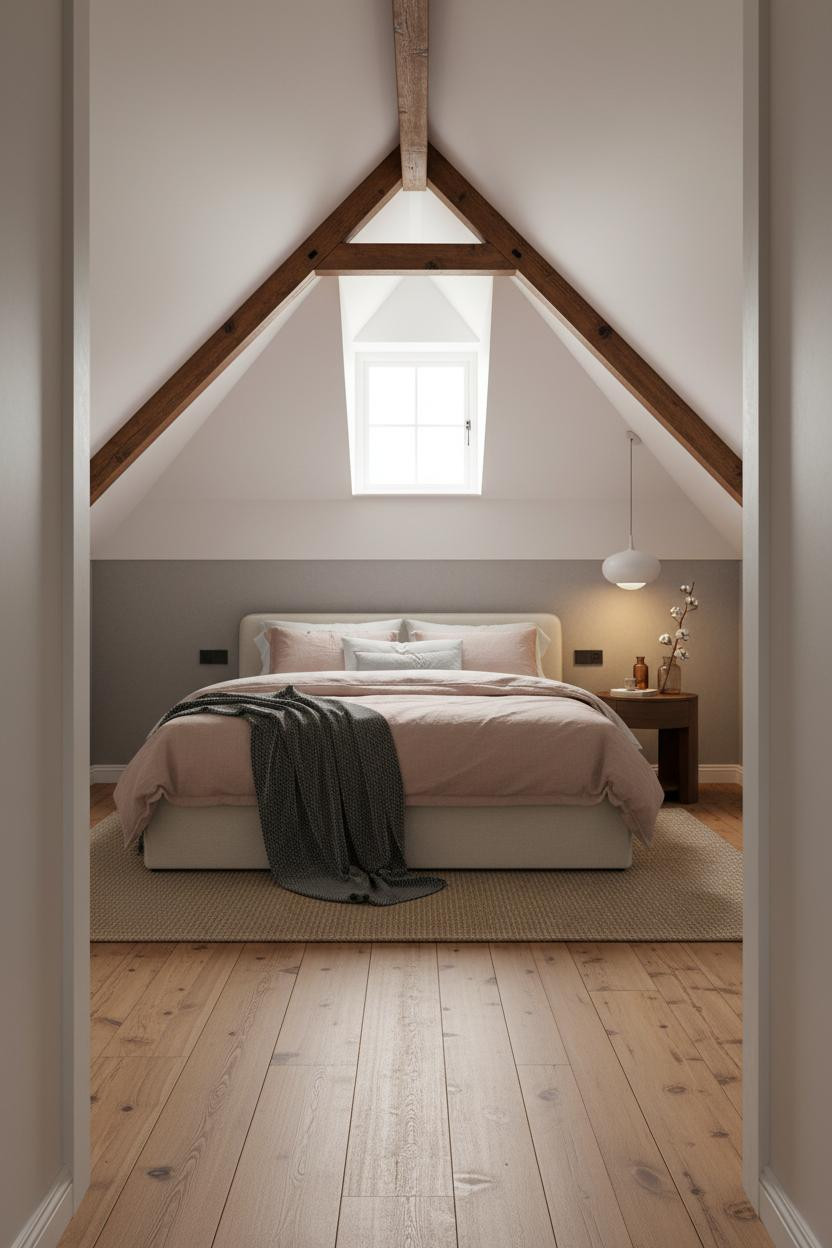

Having a sculptural pendant at the apex changes how you actually move through a low attic bedroom. It draws the eye up deliberately, so the compressed eave corners stop feeling like the problem.
Design logic: Dark-stained collar ties against stone-grey plaster keep the palette grounded, while the warm amber reclaimed floor pulls the whole thing back from going cold. Enough contrast to feel alive, while still feeling restful.
What to borrow: Dusty pink linen bedding in this kind of room. It softens the structural weight of the timber overhead without looking precious about it.
The Scandi Approach to a Tiny Attic Bedroom
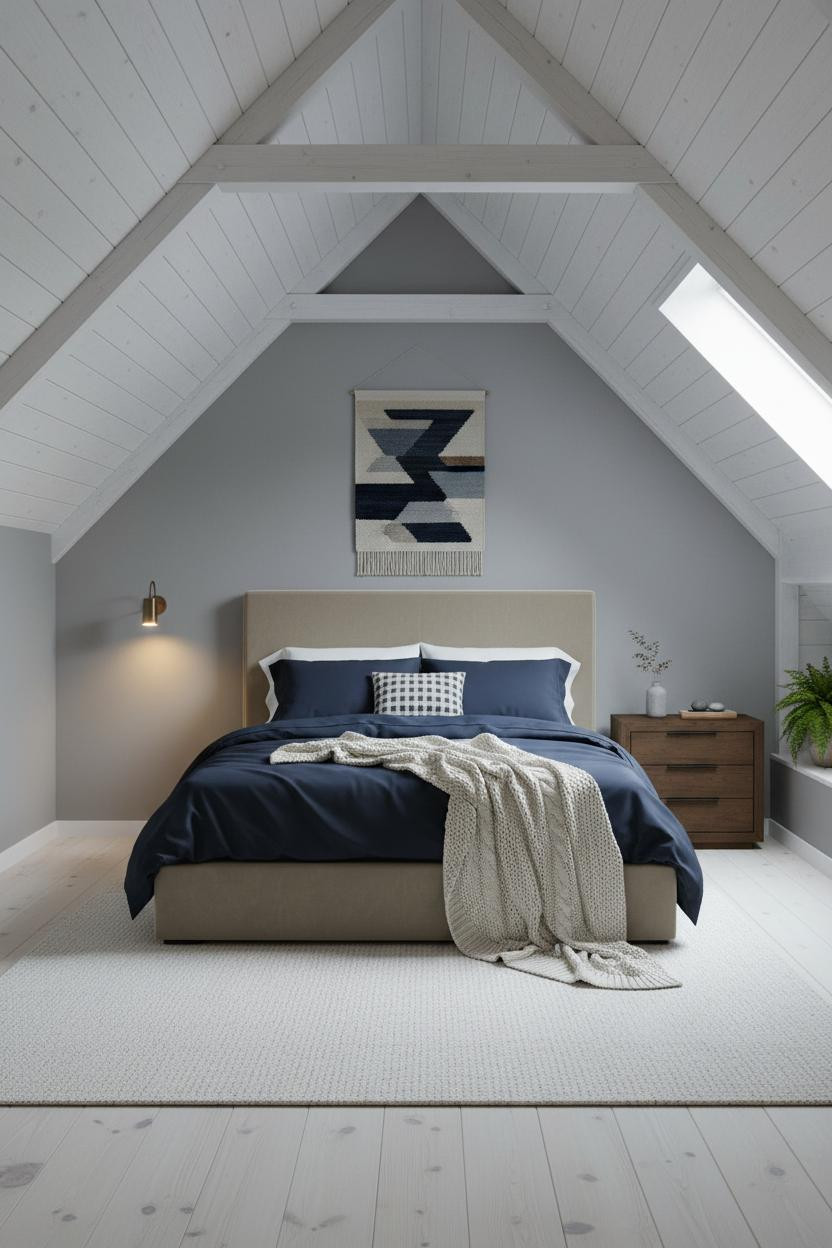

The Scandi approach to a small attic bedroom with low ceilings is honestly the most forgiving. Whitewashed collar ties, pale birch floors, dove grey plaster. Nothing competes.
What carries the look: The whitewashed timber collar ties catch diffuse northern light and cast only gentle shadows, so the converging geometry feels protective without feeling heavy.
The finishing layer: A woven wall hanging above the bed replaces art and fills the awkward triangular space between the headboard and the ridge without requiring you to figure out how to hang anything straight on a slope.
Honey Timber Purlins That Turn Structure Into Decor
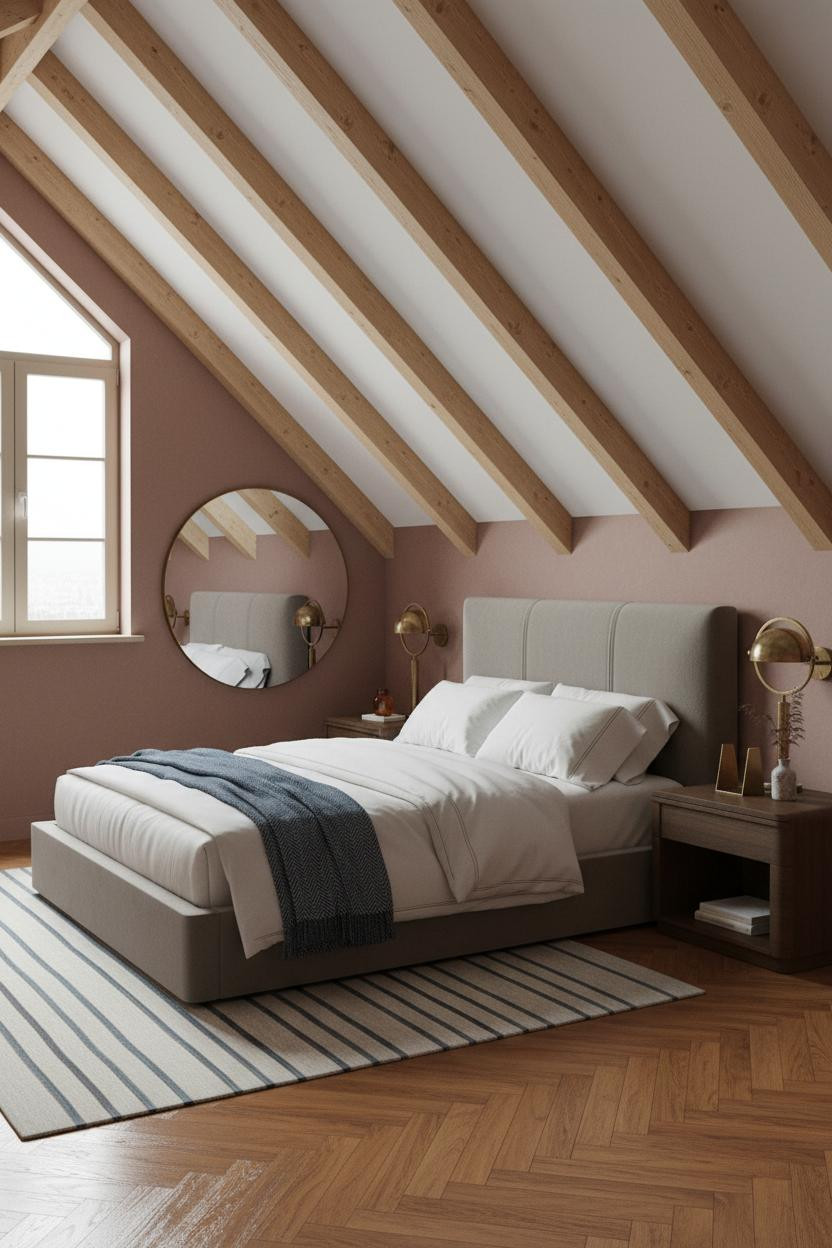


It shouldn’t work. Honey-toned purlins running perpendicular across the full slope sounds like a lot. But the grid they form maps the angled ceiling in a way that makes it feel like a wooden vault rather than a tight box.
Why it looks custom: The raw grain and mortise joints in exposed honey timber catch raking light differently at every hour, so the room feels alive without a single lamp adjustment.
Don’t ruin it with: Heavy curtains or oversized art on the lower walls. The ceiling is already doing the work. Keep everything else simple.
Sage Green on Sloped Attic Walls Is a Better Idea Than You Think
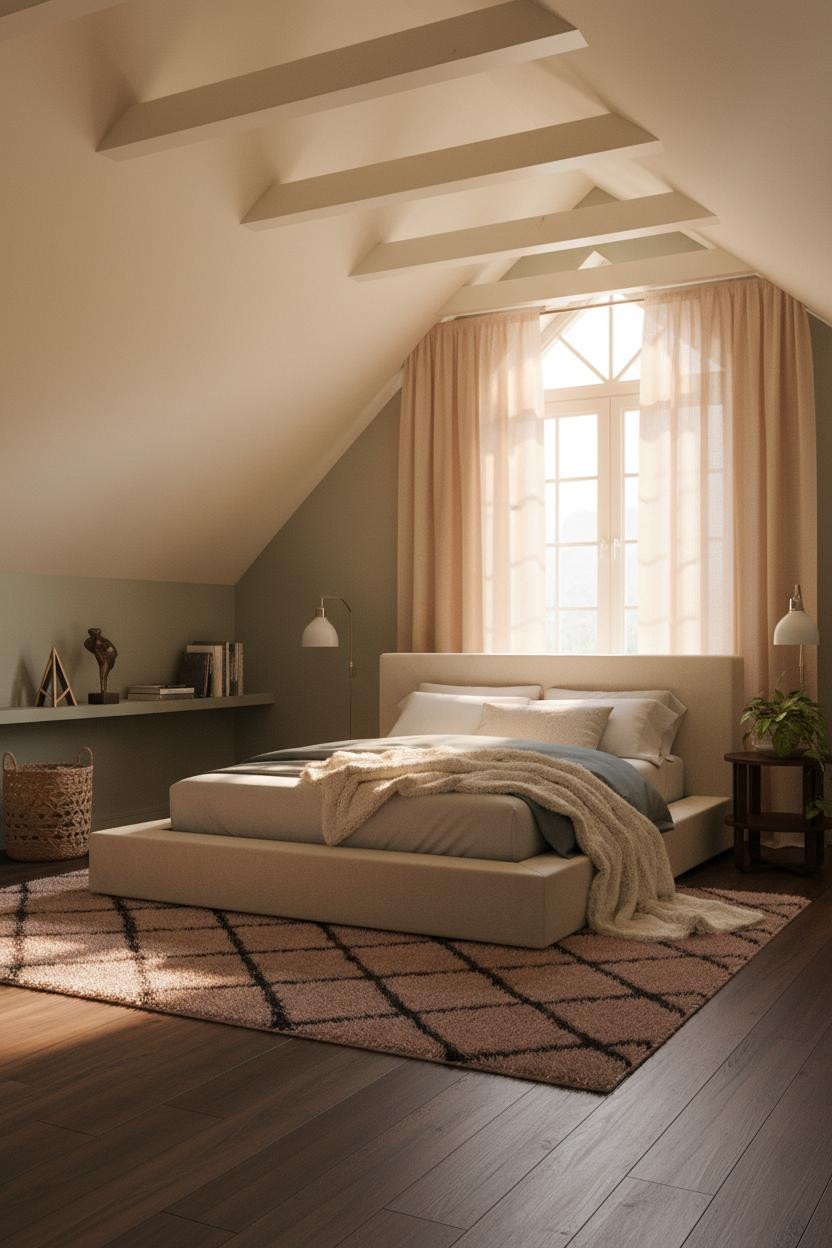


Most people reach for white when the ceiling is low. I’d try matte sage green on the lower walls first.
The color absorbs late afternoon amber light and turns it warm rather than sharp, which is exactly what a compressed attic room needs at the end of the day. Transitioning to cream on the upper slopes keeps the contrast gentle rather than jarring.
Ideal if you have dark walnut floors: the sage and walnut combination reads as collected rather than matched, in a way that feels like it took no effort at all (it takes some effort).
The Japandi Attic Bedroom That Gets Negative Space Right
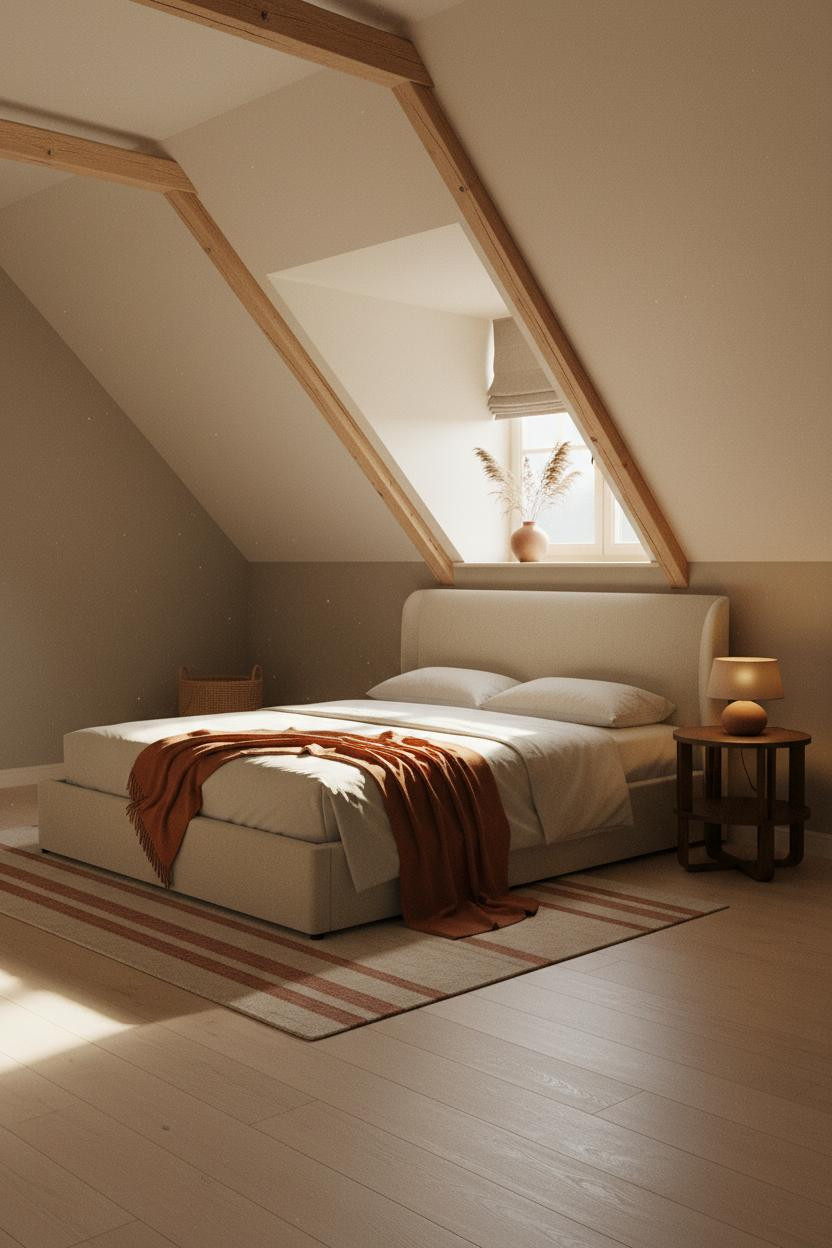

Bold choice. Almost nothing on the walls. No art, no mirrors, no shelves crowding the slope.
But that restraint is what makes the exposed wooden beams land properly. In Japandi terms, the structure is the decor. Every beam becomes more visible when you clear the noise around it, and a low-ceiling bedroom with that kind of clarity reads as intentional from across the room.
One smart swap: A linen Roman shade pulled half-up at the dormer. It frames the window without blocking the morning light that makes the patina grain glow.

Our #1 Pick
Saatva Classic Mattress
America’s best-selling online luxury innerspring. 365-night trial, lifetime warranty, free white glove delivery.
Shop Saatva Classic
The Foundation Of Every Beautiful Bedroom
Walls get repainted. Rafters get limewashed. The mattress stays. And in a compact attic room where the whole point is how the space feels to sleep in, it matters more than most people think.
The Saatva Classic is what I’d put under all of it. Dual-coil support that holds without going rigid, a breathable organic cotton cover, and a Euro pillow top that still feels right years in. Not just on the first night.

The rooms worth saving are the ones where the geometry works for you, not against you. Start with the bed. The rest figures itself out.