
Think your attic is too awkward for a real master suite? The best attic bedroom ideas master designers keep using prove that slanted walls aren’t a problem to solve. They’re the whole point.
Low ceilings create shelter. Sloped walls create intimacy. You just have to know how to work with the geometry instead of fighting it.
Dark Rafters That Make a Low Ceiling Feel Intentional
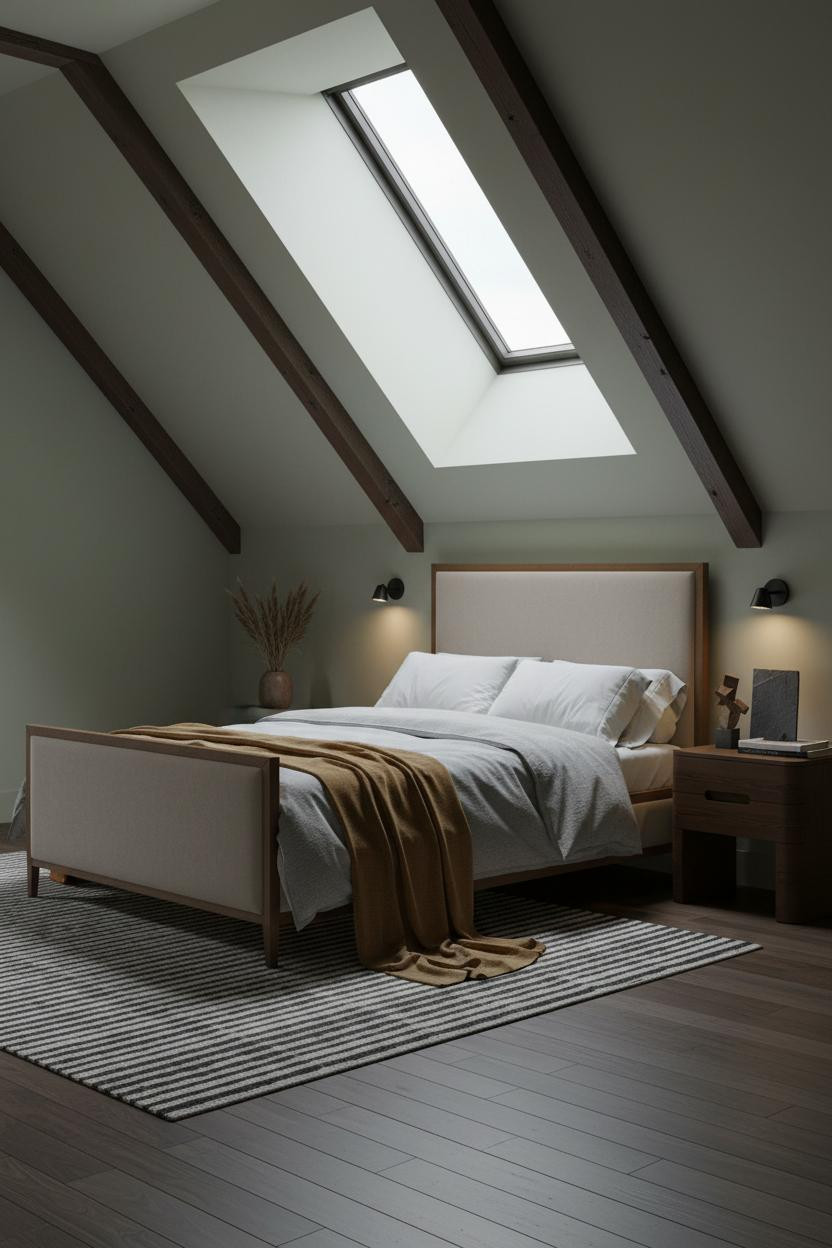

I keep coming back to this one. The compression feels designed, not accidental.
Why it holds together: Dark-stained timber rafters running diagonally down the pitch give the sloped ceiling a structural rhythm, so the low clearance reads as character rather than a limitation.
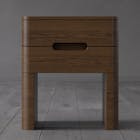
Steal this move: Pair moss-green matte plaster walls with walnut-toned flooring and keep the nightstand low. The eave zone becomes useful instead of dead space.
Whitewashed Shiplap That Opens Up a Tight Coastal Attic
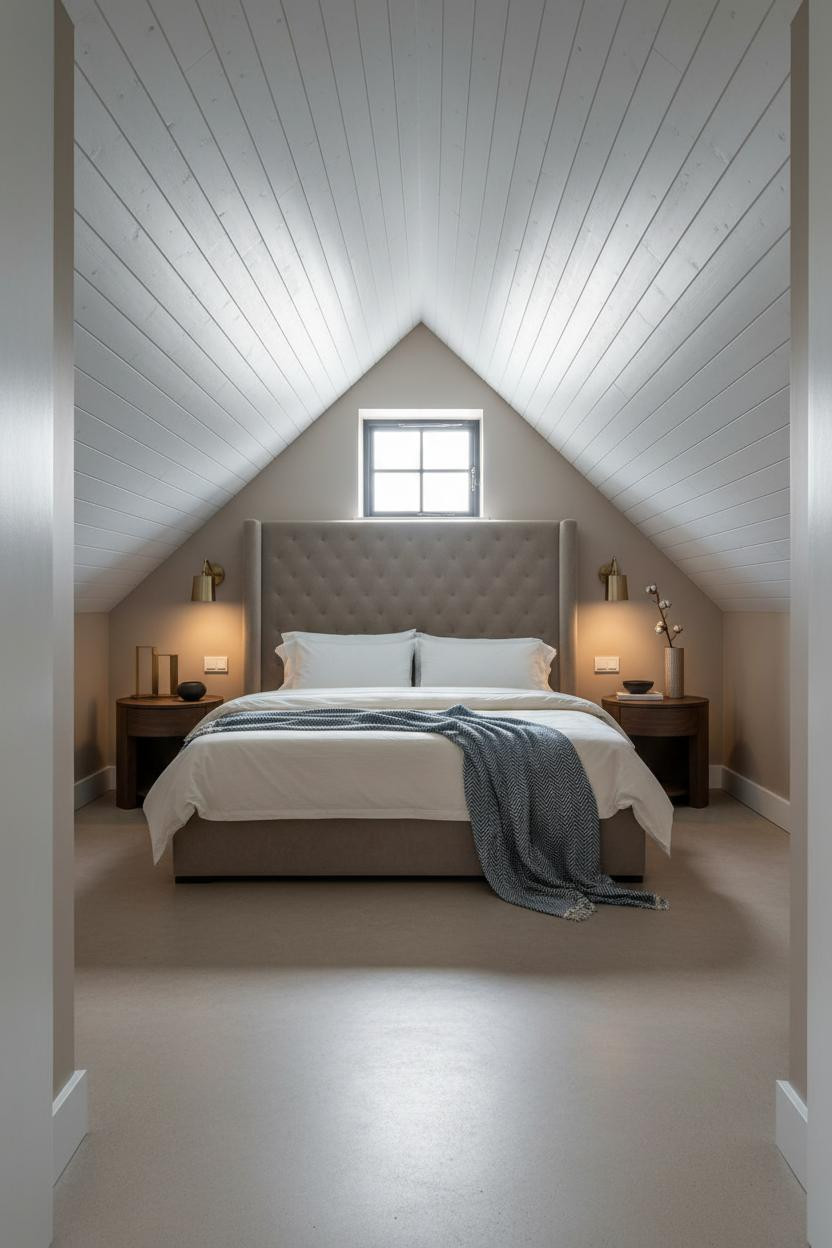

Deceptively simple. This is the move people underestimate.
Running whitewashed shiplap perpendicular to the roofline across the entire sloped ceiling plane makes the pitch feel deliberate. The shallow shadow ridge between each board traces the geometry without darkening the room.
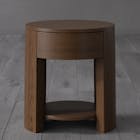
The practical move: Keep walls warm taupe and floors in polished concrete so the pale ceiling reads even lighter. Dormer sconces at a low position do the rest.
Board-and-Batten That Turns a Sloped Ceiling Into a Feature Wall
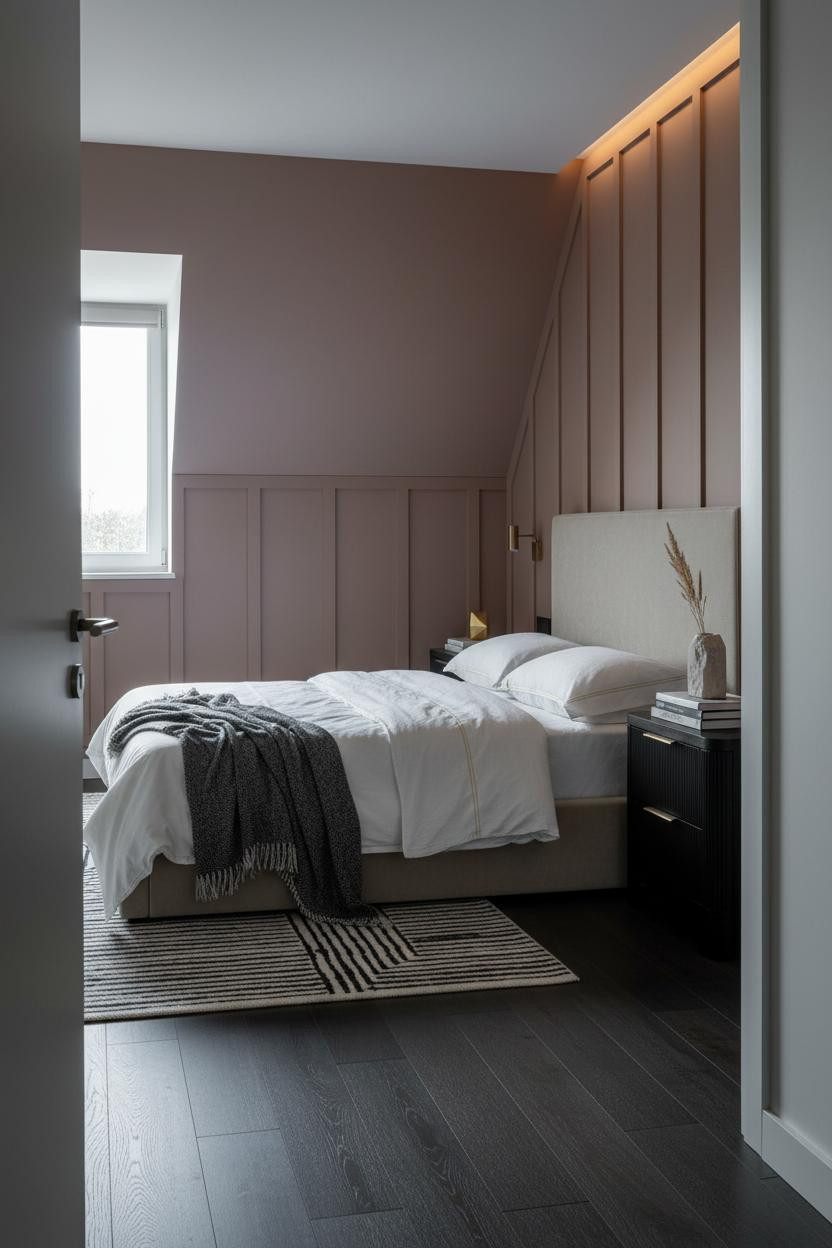


This is one of those ideas that sounds fussy but lands extremely well in a low attic.
Why it looks custom: A board-and-batten treatment that runs from the floor straight up and into the angled ceiling makes the transition seamless, so the slope stops looking like something to apologize for.
In a small attic room, the smarter choice is continuing the batten to the ridge rather than stopping at the wall-ceiling junction. Clay-rose flanking walls keep it from feeling too graphic.
Sage Plaster That Follows the Roof Pitch Like It Was Always There
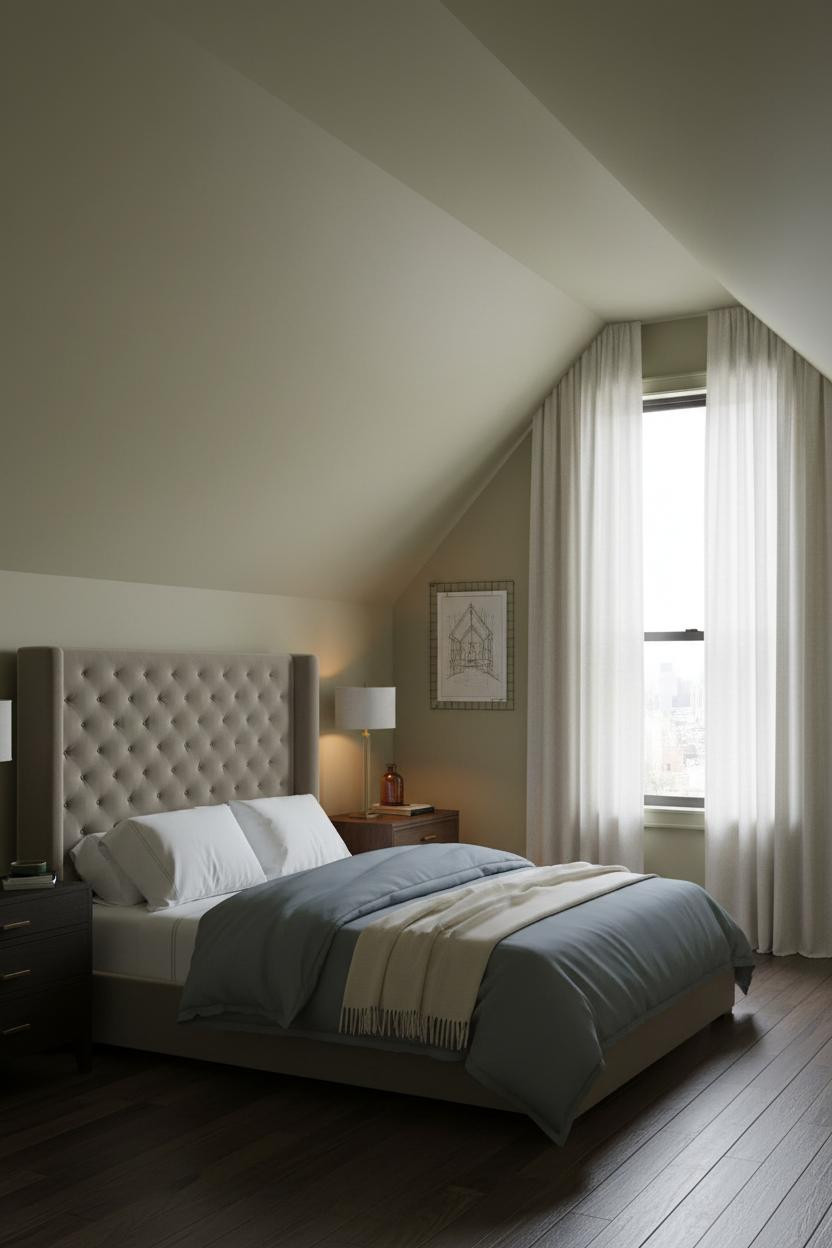

The room feels calm and cohesive in a way that takes a second to understand.
What gives it presence: Matte sage plaster following every plane of the roof (walls and ceiling as one continuous surface) makes the angular compression feel architectural rather than cramped.
What to copy first: Let the color do the heavy lifting. Ivory linen dormer curtains and a slate-toned duvet give the sage something to breathe against, while still feeling grounded.
Charcoal Walls With Exposed Rafters That Feel Like a Nordic Retreat
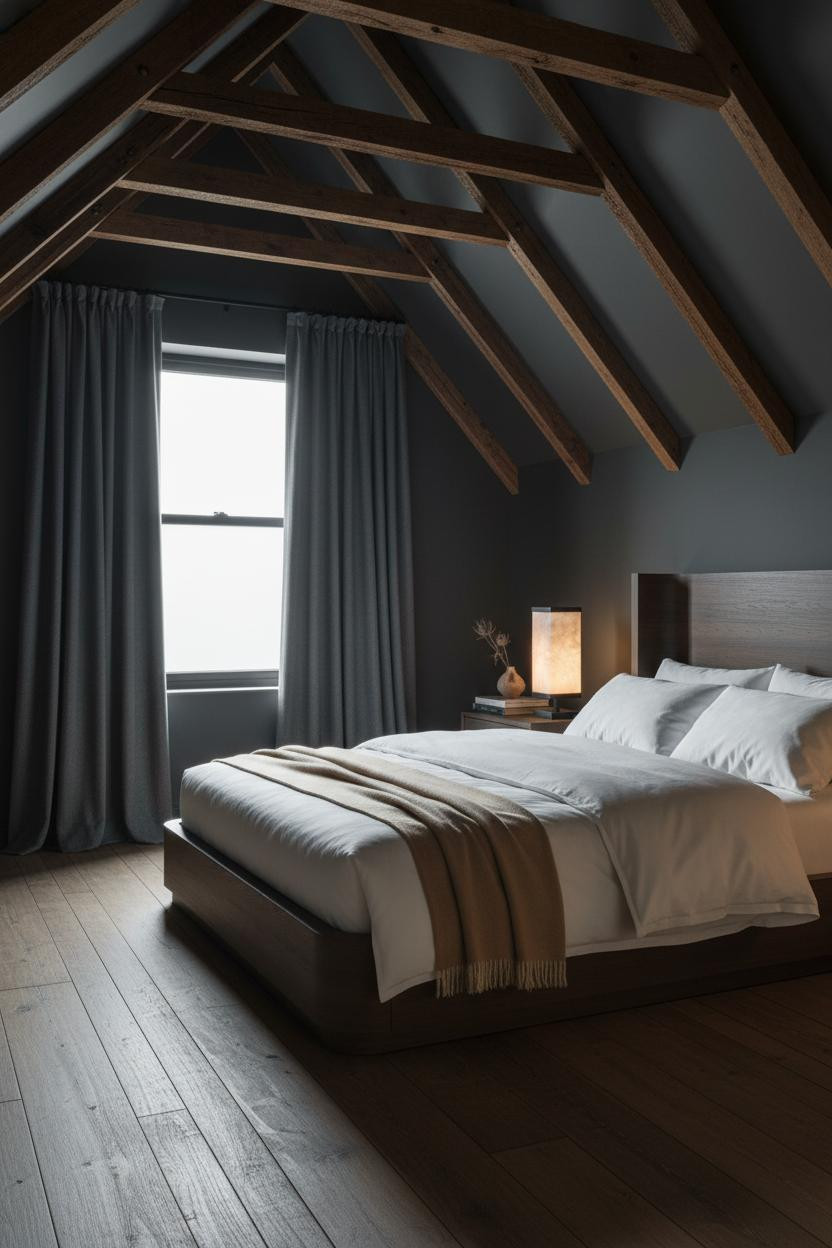


Fair warning. This palette is not for everyone. But the ones who commit to it never go back.
And honestly, it shouldn’t work at this ceiling height. But charcoal matte plaster paired with raw, unwhitewashed timber rafters creates shelter rather than weight, because the rafter shadows give the low pitch a bold rhythm to follow.
The easy win: A single bedside lamp pooling amber warmth near the nightstand is enough. Deep slate curtains pooling on reclaimed wood flooring finish the mood without fussing over it.
Low-Pitched V-Ceiling That Makes Minimalism Feel Expensive
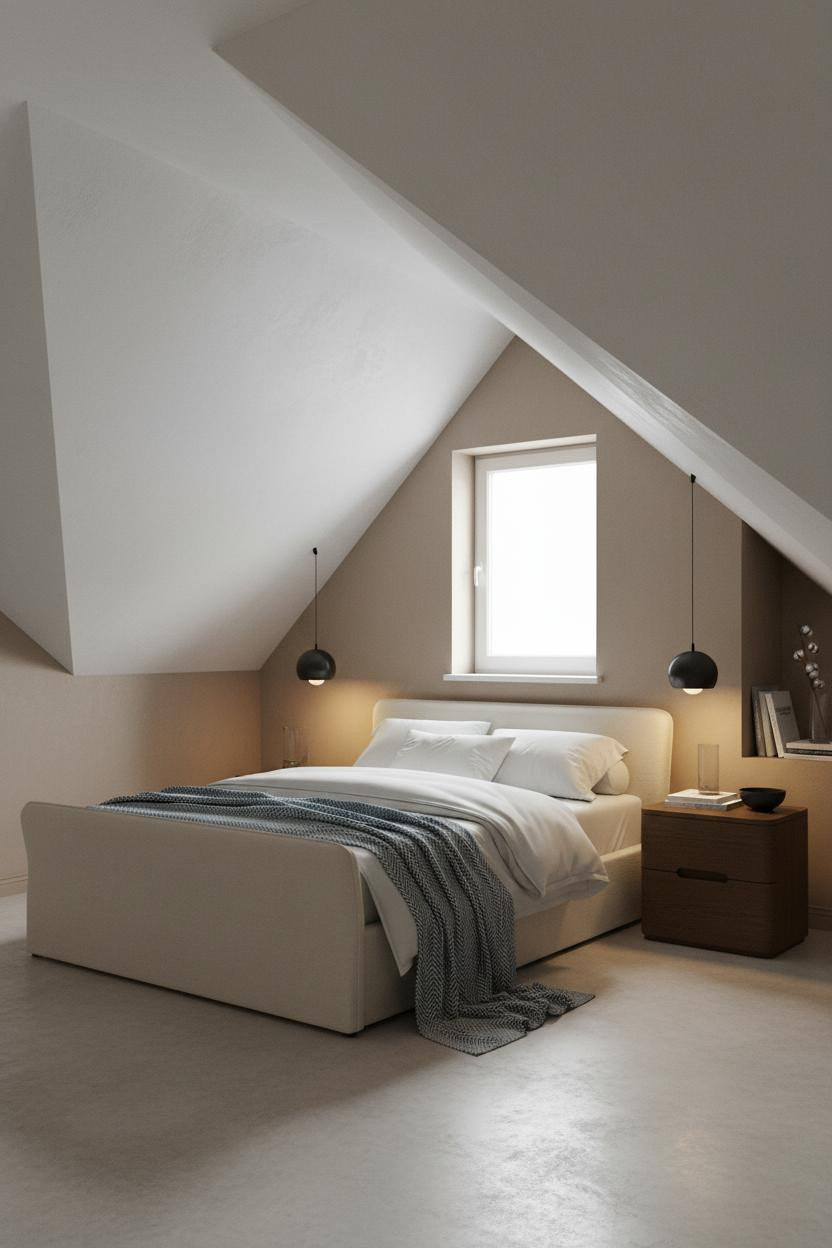

Nothing fancy. That’s the point.
Why it feels expensive: Smooth mushroom-toned plaster on angled walls converging into a clean V at the ridge turns the roofline geometry into the room’s only decoration. No added texture needed. A matte black ceramic pendant hanging low from the ridge pulls the eye straight to the pitch.
Avoid this mistake: Don’t fight the converging ceiling planes with tall furniture. Low-profile pieces at eave height keep the proportions grounded and the room feeling polished rather than squeezed.
Whitewashed Timber Trusses That Give a Low Attic Real Presence
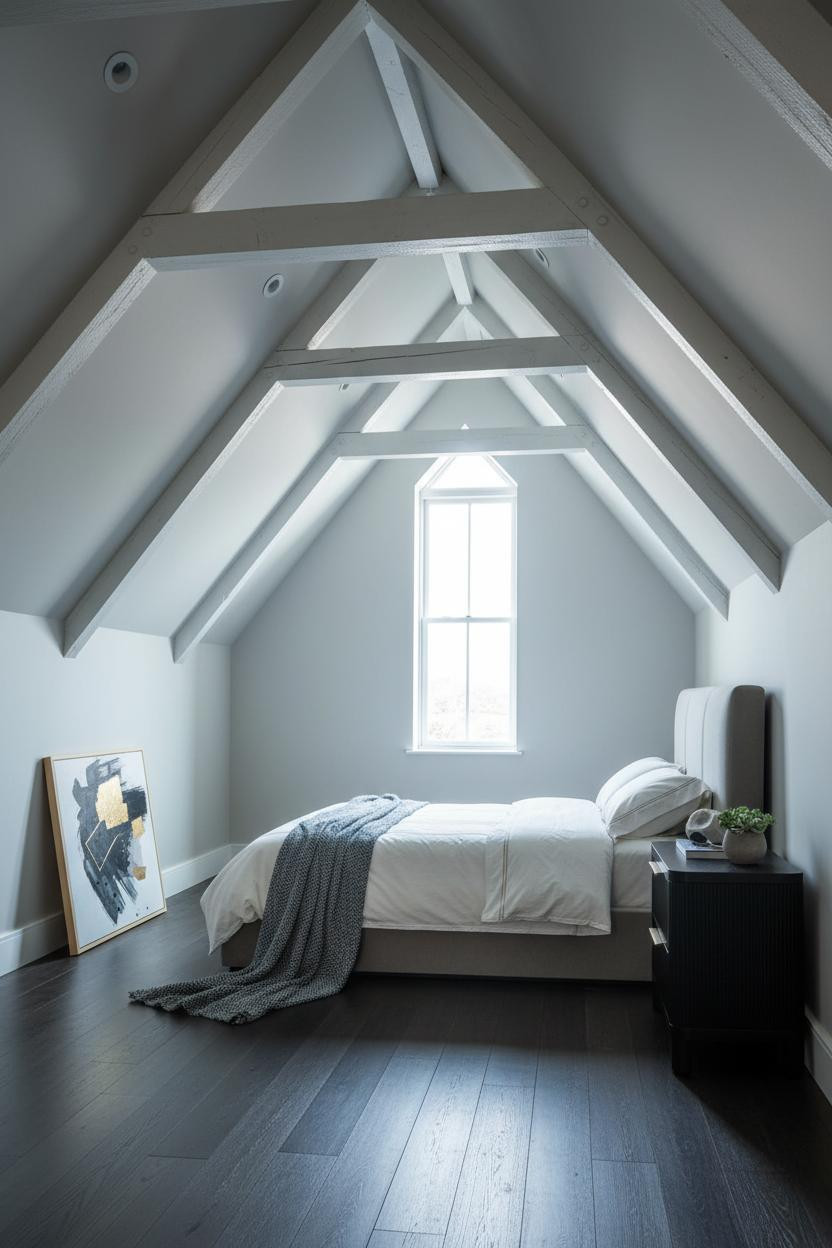

I almost scrolled past this one. Glad I didn’t.
The structural trusses running perpendicular to the roofline are thick, painted white, and honestly the strongest thing in the room. What makes this work is that the whitewashed timber bounces the dormer light upward, making the pitch feel taller while keeping the warmth of raw grain.
Pro move: Dove-grey plaster walls and dark narrow-plank flooring give the pale trusses maximum contrast. Skip ceiling paint in a bright white here. Soft grey reads calmer under a pitched roofline.
Tongue-and-Groove Ceiling That Wraps the Whole Attic in Warmth
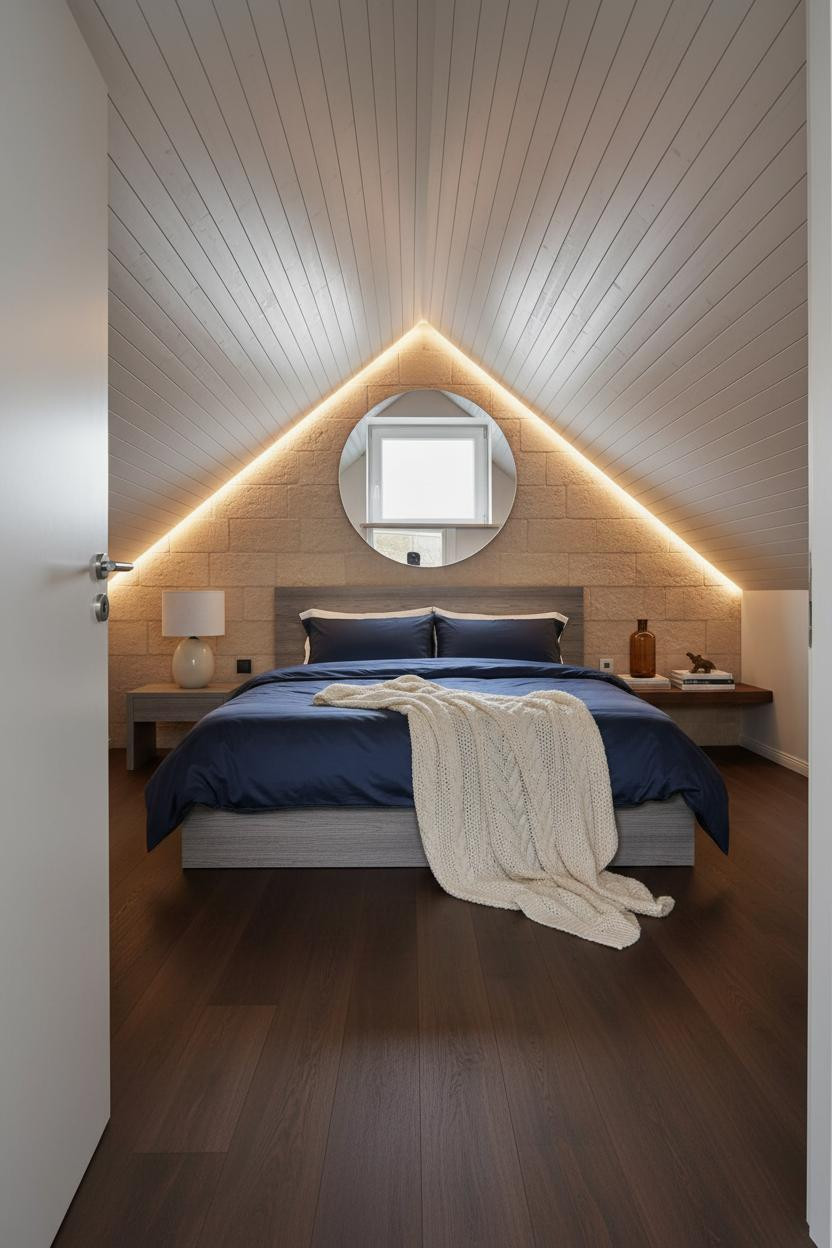


The room feels like a geometric cocoon. Warm, unhurried, somehow larger than it is.
What creates the mood: Whitewashed tongue-and-groove planks running perpendicular to the roofline across the entire angled ceiling cast fine parallel shadows that trace the pitch, turning low clearance into a design decision rather than a compromise. A warm cove LED glowing between planks at the ridge adds a layer of depth flat plaster can’t replicate.
Where to start: Stone-toned walls and dark walnut flooring anchor the pale ceiling so the plank texture reads clearly. Add a large round mirror and a navy duvet to keep it from going too rustic.
Golden Afternoon Light Through a West-Facing Gable Window
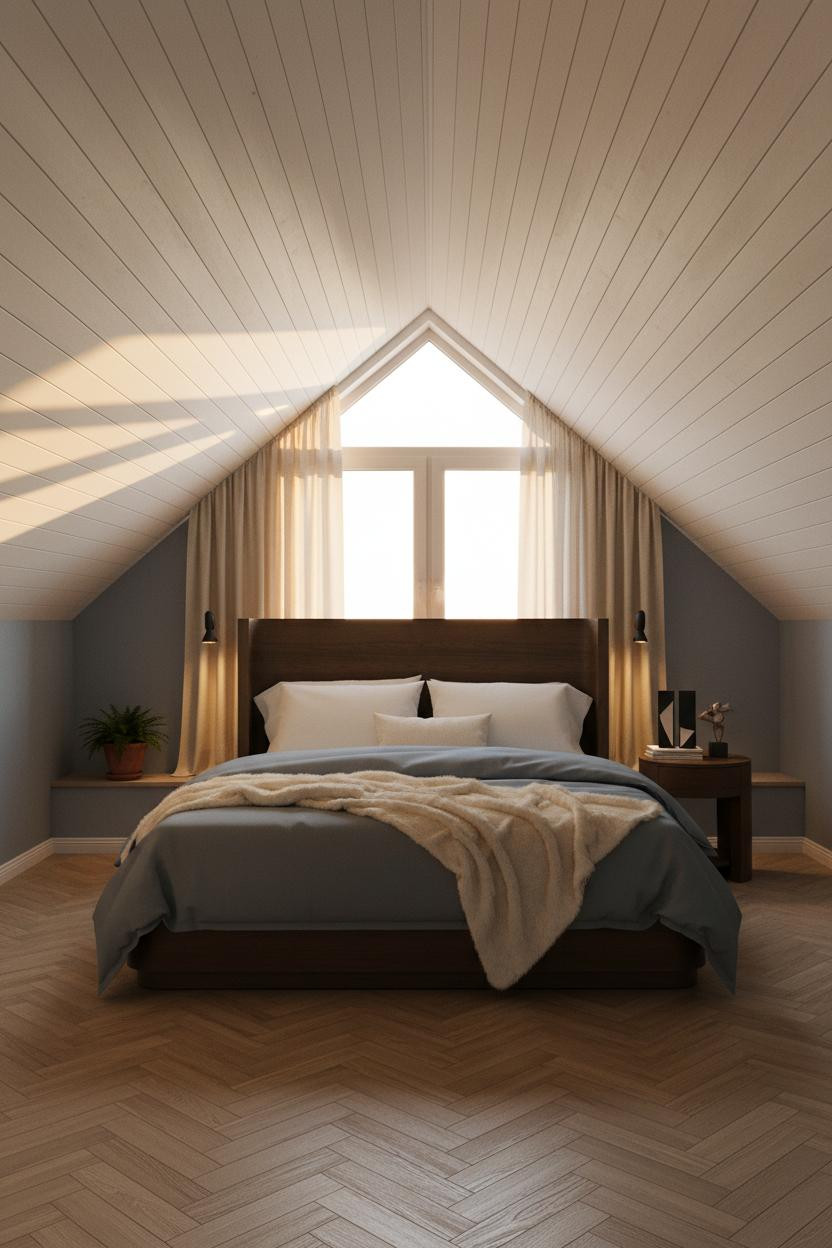
This is what a west-facing dormer does to a sloped attic ceiling in the late afternoon. I’d rearrange my whole schedule to be in this room by four o’clock.
Why the palette works: Dusty blue-grey plaster against whitewashed shiplap on the ceiling catches the golden window light differently on each surface, which creates warmth in a way that feels collected rather than decorated.
What not to do: Don’t add a rug here. Bare honey herringbone parquet reflects the afternoon light upward and makes the low ceiling feel much less pressing. A rug kills that effect immediately.
Honey Beams and Warm Greige in a Japandi Attic Master Suite
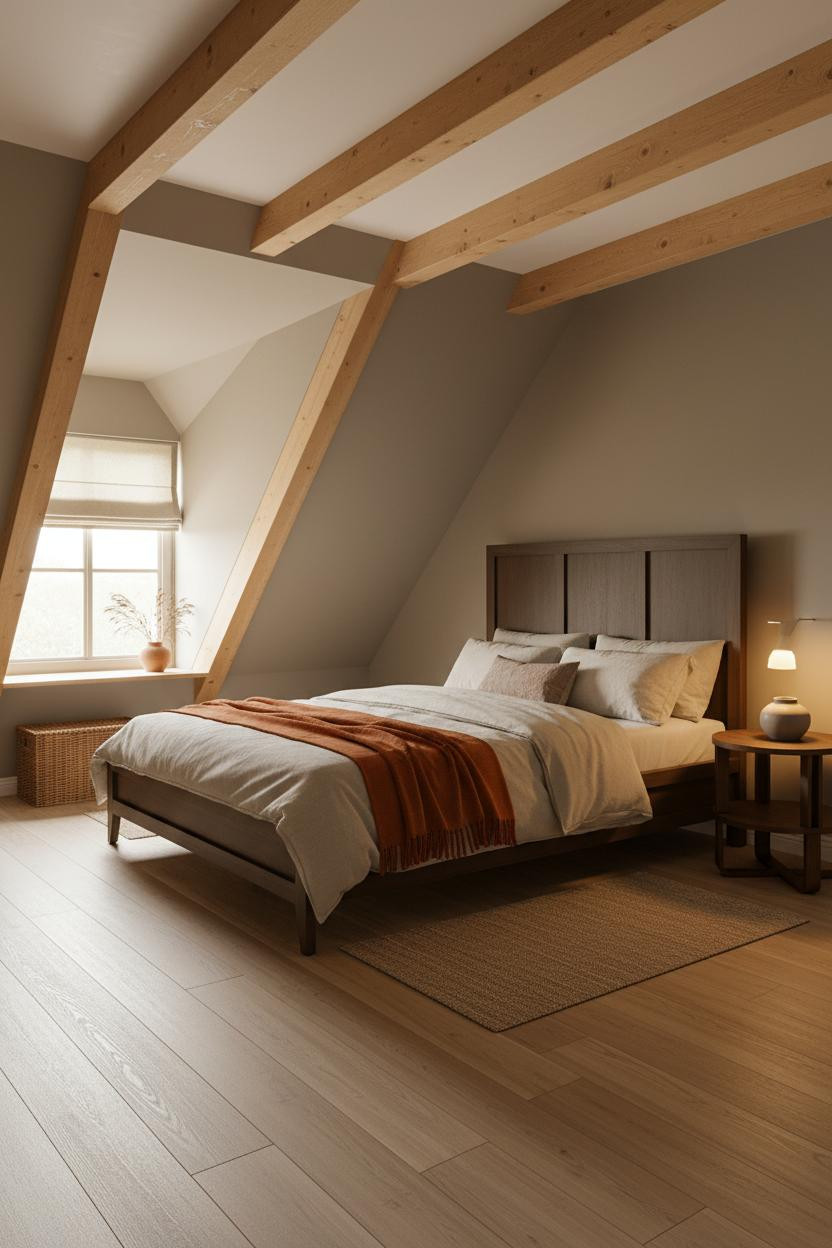


Hushed and grounded. The room feels lived-in and intimate before you’ve moved a single thing into it.
Why it feels balanced: Full-width honey-toned exposed beams running side to side across the sloped ceiling draw the eye inward along the pitch, anchoring the Japandi palette without competing with the warm greige plaster walls. The raw grain catches early morning dormer light in a way that feels organic rather than styled.
Worth copying: Bleached oak wide-plank flooring with a natural jute runner at the foot of the bed adds just enough texture to keep things interesting, while still feeling quiet. A burnt orange mohair throw is the one warm note the palette needs.

Our #1 Pick
Saatva Classic Mattress
America’s best-selling online luxury innerspring. 365-night trial, lifetime warranty, free white glove delivery.
Shop Saatva Classic
The Foundation Of Every Beautiful Bedroom
All of this works better when the bed itself is right. And in an attic master suite (where every piece earns its place), the mattress matters more than most people admit.
The Saatva Classic holds up to that scrutiny. Dual-coil support means the structure stays consistent whether you’re sleeping solo or not, and the Euro pillow top has enough give to feel genuinely restful without going soft over time. The breathable organic cotton cover doesn’t trap heat, which matters in an attic where temperatures can run warmer in summer.
Walls get repainted. Bedding gets swapped. The mattress is the one thing you won’t want to revisit in three years. Start with something that lasts.

The rooms people save are the ones where nothing looks accidental. Pick one material, commit to the geometry, and let the slope do the work. Good design ages well because it’s made well.