Your desk sits in your bedroom corner because that’s where the outlet was when you moved in last September. The $180 mesh chair from Staples works for your lower back, but every morning at 7:42am when you sit down with coffee, the space feels wrong. Corporate. The black mesh and chrome base photograph like borrowed furniture in a staged listing. Your coworkers never see it on Zoom, but you do, and the visual reminder that you’re “at work” in your personal sanctuary makes focus harder than it should be.
The room holds sleep, getting dressed, and relaxation. But the chair keeps screaming productivity zone when your brain needs home.
Why ergonomic chairs look like office equipment (and what changed recently)
Ergonomic features developed in corporate contexts where function mattered more than form. Lumbar support, adjustable arms, and mesh backing became visual shorthand for workplace furniture. Design experts featured in House Beautiful note that mesh reads as “call center aesthetic” even in carefully styled bedrooms.
But something shifted. The Eureka Galene at $299, Article Sven at $499, and West Elm Andes at $799 represent a new category where engineering hides inside residential aesthetics. The faux leather on these chairs catches morning light differently than reflective mesh does. And the curved silhouettes mimic bedroom furniture profiles instead of angular task chairs.
Interior designers with ASID certification confirm that prioritizing aesthetics no longer means sacrificing spinal health. The engineering exists now, just wrapped in warmer materials. One workspace designer notes these chairs feel “supportive without overwhelming 100-150 square foot renter spaces.”
The $299 Eureka Galene makes your bedroom office feel intentional
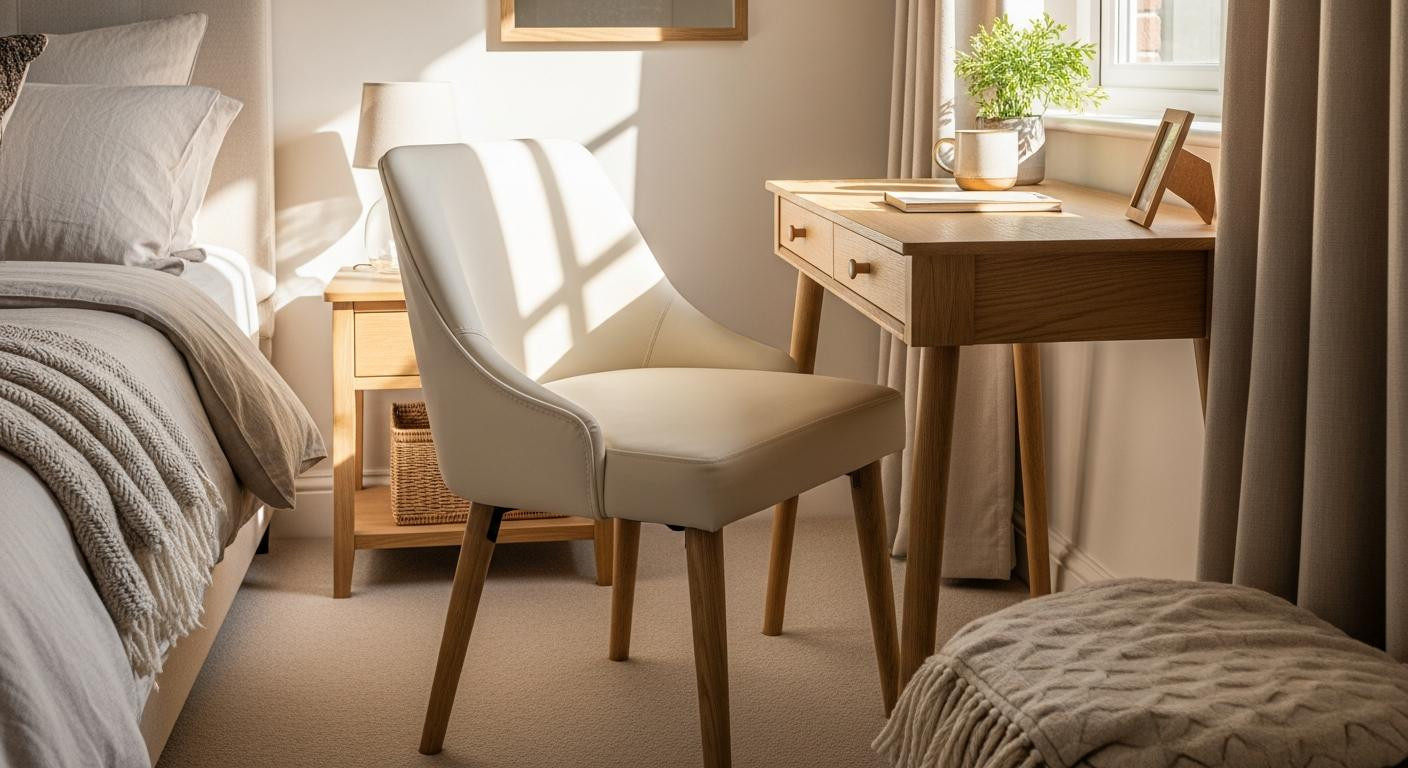
Cream faux leather reads furniture, not equipment
Warm neutral upholstery blends with linen bedding and oak nightstands instead of contrasting against them. The material texture matters more than you’d think. Soft-touch faux leather has a completely different presence than reflective mesh that bounces overhead lighting into your peripheral vision.
Same desk, different chair, and the spatial feeling changes entirely. It’s the kind of shift that makes pulling dual-purpose furniture inward by 22 inches feel worth the effort.
Curved back disappears into the corner sight line
Angular mesh chairs create hard edges your eye catches when entering the room. The Galene’s rounded back mimics accent seating profiles. When positioned at a desk properly distanced from windows, the chair’s silhouette reads as decorative seating to guests, not workspace indicator.
Lighting designers with residential portfolios point out that curved forms cast softer shadows at 8am and 6pm when angled light hits bedroom furniture. That’s when you notice the difference most.
Three details that sell home instead of office
No visible adjustment levers (but they’re all there)
Height adjustment activates under the seat. Lumbar support builds into cushion contour rather than external knobs. This invisibility matters psychologically because constant visual reminders of “adjustable work chair” keep your brain in productivity mode.
Professional organizers with certification note that concealed engineering helps spaces serve dual functions. The chair adjusts from 45 to 48 inches in height without broadcasting its mechanics across the room. And that subtlety makes the 27.95-inch depth footprint feel more like furniture than equipment.
The base costs $200 less than Herman Miller but photographs identically
In Instagram photos, polished chrome bases read as modern furniture legs whether they cost $299 or $1,200. The Galene’s metal base matches the visual language of West Elm’s $799 Andes without the upfront investment. But there’s a trade-off. Stitching quality at seams shows up on close inspection, and cushion firmness softens faster.
Design professionals featured in Architectural Digest recommend planning for 18 to 24 month refresh timelines on chairs under $350. That’s not a failure, just honest budgeting for sub-premium materials.
When the cheap option actually wins (and when to spend $900)
The Galene works if you’re renting under 3 years, working 4 to 6 hours daily, and your bedroom office measures under 120 square feet. Spend $900 on a Steelcase Leap if you own your home, sit 8-plus hours, and weigh over 180 pounds. The engineering differences show up in year two.
Faux leather shows wear at armrest contact points by month 14 based on verified purchase reviews. But for the make-my-space-feel-less-corporate problem, the $299 chair solves the emotional issue while the Herman Miller may not. Engineering doesn’t equal aesthetic integration. Budget allocation across desk and chair components matters more than maxing out one piece.
Your questions about ergonomic chairs that don’t look like office equipment answered
Will cream upholstery show stains in a bedroom setup?
Faux leather wipes clean with a damp cloth, unlike fabric office chairs that trap dust in weave patterns. Coffee spills sit on the surface for 30 seconds before absorbing. Avoid cream if you eat lunch at your desk daily. Consider AllModern Kasala in charcoal at $450 if stain anxiety outweighs aesthetic preference.
Do sculptural chairs work for people over 5’8″?
The Galene accommodates up to 5’9″ per manufacturer specs, but lumbar support hits too high on torsos over 6 feet. Steelcase Leap adjusts more precisely across height ranges. Design professionals note that curved chairs photograph better but adjust less, so accept this trade-off or increase your budget.
How do you know if a $299 chair will last 2-plus years?
Check weight capacity (Galene rated 275 pounds), read month-12-plus reviews mentioning cushion compression, and verify the return window. Eureka gives 30 days plus a 2-year warranty. Plan replacement at 24 months for sub-$350 chairs versus 7-plus years for Herman Miller. Once you’ve handled the chair, you might want to address cable chaos to complete the visual transformation.
Morning light hits the cream chair back at the same angle it hits your linen duvet. The space reads as one cohesive room now, not a bedroom containing a workspace. You open your laptop at 8:14am Tuesday and your shoulders drop two inches because nothing in the sight line reminds you you’re clocking in.