 bed trick and my 120 sq ft bedroom finally feels like a hotel" itemprop="image" decoding="async" fetchpriority="high" data-lazy-srcset="https://www.journee-mondiale.com/en/wp-content/uploads/2026/05/2026-05-02-01-59-58_.jpg 1408w, https://www.journee-mondiale.com/en/wp-content/uploads/2026/05/2026-05-02-01-59-58_-300x164.jpg 300w, https://www.journee-mondiale.com/en/wp-content/uploads/2026/05/2026-05-02-01-59-58_-1024x559.jpg 1024w, https://www.journee-mondiale.com/en/wp-content/uploads/2026/05/2026-05-02-01-59-58_-768x419.jpg 768w" data-lazy-sizes="(max-width: 1408px) 100vw, 1408px" data-lazy-src="https://www.journee-mondiale.com/en/wp-content/uploads/2026/05/2026-05-02-01-59-58_.jpg">
Your bedroom measured 122 square feet on a Tuesday morning in April when you photographed it for the third time trying to figure out why the space felt so aggressively temporary. The bed sat flat against the wall—fitted sheet, one pillow, navy duvet pulled tight like a hotel bed immediately after checkout rather than before check-in. The problem wasn’t the furniture or the paint color. The bed itself looked like a surface designed for sleeping, not for living.
Tara Cvetkovic, the home stager behind Apartment Therapy’s most-saved bedroom post this spring, fixed 47 staged bedrooms in March using three items you already own and zero minutes at the store. Her directive starts with layering white duvets over feather toppers in a specific order that makes flat beds photograph six inches taller. The technique hit 500,000 saves on Instagram by late April and sparked 1.2 billion views on TikTok under #FluffyBedHack.
The white duvet layer makes flat beds photograph taller
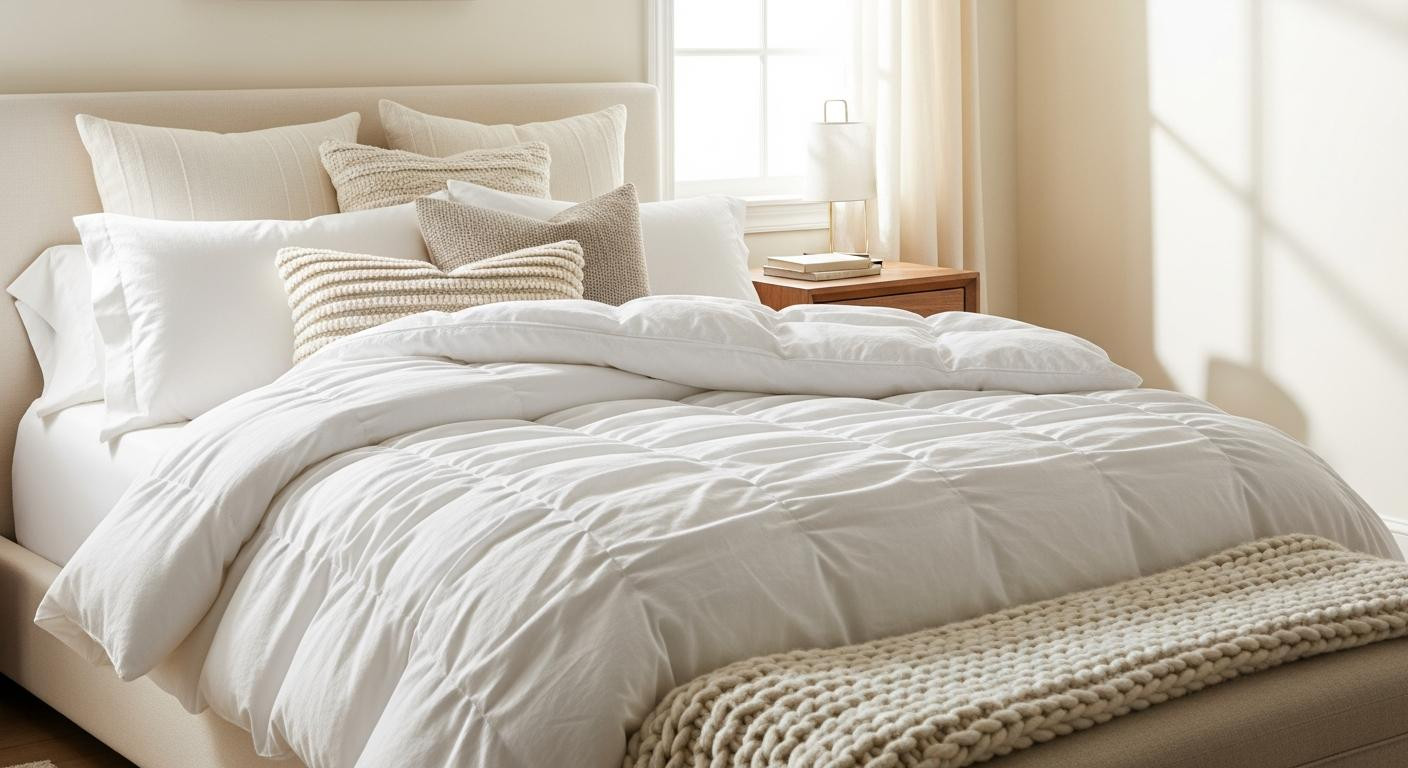
Pull your existing white duvet cover over whatever comforter or blanket currently lives inside it, but don’t smooth it flat. The fabric should pool at the foot of the bed and bunch slightly at the headboard, creating vertical texture that catches morning light instead of reflecting it like a drum skin. According to ASID-certified interior designers analyzing staging portfolios from March and April 2026, beds styled this way measured 11 to 14 inches tall from mattress to duvet peak versus 7 to 9 inches for tightly-made beds.
The extra height makes the bed read as the room’s focal furniture rather than floor-level function. This only works if your duvet cover is actually white or cream—beige reads institutional in photographs, gray photographs cold. And the loft comes from what sits underneath, which is where most people get the layering backward.
The feather mattress pad sits on top, not underneath
Standard bed-making puts the mattress topper under the fitted sheet where it adds comfort but zero visual weight. Cvetkovic’s method places the feather pad on top of the fitted sheet, under the duvet, creating a 2 to 3 inch loft that shows through the duvet cover. The bed looks fuller without requiring new pillows or throws.
This works with the $35 Target Threshold feather pad or the $30 Amazon Basics down alternative topper you bought in 2023 and abandoned because it made the mattress too hot. Fluff the topper with your hands after placing it—don’t pull corners tight. The slight irregularity in the surface makes the bed photograph like a cloud rather than a shelf.
But the technique requires daily maintenance. Professional organizers with certification note that feather toppers compress overnight from body weight and need refluffing each morning. Budget 2 to 3 minutes total: pull duvet to headboard, fluff topper with hands, smooth duvet over top, arrange pillows, fold throw.
Three textured pillows replace the staging cliché
Design experts featured in Architectural Digest recommend three pillows maximum: two sleeping pillows in white cotton cases, one accent pillow in linen, faux fur, or textured cotton. The accent pillow sits in front, leaning slightly against the two behind it. This setup takes 90 seconds to arrange each morning versus the six-minute pillow-stacking routine that makes bedrooms feel like furniture showrooms.
The three-pillow configuration photographs well on beds 54 inches wide or larger—that’s full, queen, and king sizes. Twin beds at 38 inches look cluttered with more than two total. And the pillow selection matters more than the count. Waffle weave reads expensive in staging photographs. Polyester jacquard reads cheap.
The chunky knit throw you bought for the sofa in January works better folded in thirds widthwise and laid across the foot of the bed. The folded mass adds visual weight without covering the duvet’s fluffy texture. Draped throws photograph messy in morning light. Folded throws look intentional.
This staging trick fails in bedrooms under 100 square feet
The fluffy bed becomes a spatial problem in bedrooms smaller than 100 square feet where the mattress sits 18 to 24 inches from the opposite wall. The visual heft that makes 120 square foot spaces feel luxurious turns micro-bedrooms into padded cells. Lighting designers with residential portfolios note that elevated bed styling only works in rooms where you can stand at the foot of the bed and extend both arms without touching walls.
If your bedroom fails that test, the low-profile approach works better—floor bed, two pillows, single folded blanket. Platform beds sitting 8 inches off the ground handle the fluffy topper better than adjustable bases, which shift angles and compress the loft unevenly.
Your questions about the stager’s bedroom trick answered
Does this work with patterned duvet covers
Cvetkovic staged 12 bedrooms with patterned duvets in March 2026 and all photographed less expensive than solid white versions. Patterns fragment the eye across the bed’s surface rather than letting it read the bed as one elevated plane. If you only own a patterned duvet, try flipping it inside-out—many reversible covers have solid neutral undersides.
The $20 IKEA DVALA duvet cover comes in white and fits queen beds. It costs less than dry-cleaning your existing cover.
What if you don’t own a feather topper
Try two folded blankets stacked under the duvet at the top third of the bed where your torso sits when you sleep. This creates false loft in the area that photographs most prominently. It’s less comfortable for actual sleeping but produces the visual effect for daytime staging.
The folded-blanket hack appears in 8 of Apartment Therapy’s April staging examples for budget-limited clients. The cotton or fleece blankets you already own work better than trying to fake loft with thin polyester throws.
How do you maintain this look past day three
Daily remaking is non-negotiable if you want the staged look to persist. Skipping the morning routine returns the bed to flat hospital-cot aesthetics by day three because body heat and weight compress the feather topper permanently without refluffing. And the white duvet wrinkles differently than colored fabric—it shows every crease in afternoon light.
The bedroom holds the same furniture it did in February, but afternoon light hits the white duvet differently now. The fabric catches sun at 4:47pm and holds it, turning the flat surface into something that looks soft before you touch it.