Dubrovnik’s Old Town walls queue two hours deep at 10am. Cruise ships disgorge 8,000 passengers daily into streets that once held 5,000 residents. Game of Thrones tours cost $50 and deliver selfie spots where King’s Landing stood. The medieval city became a theme park.
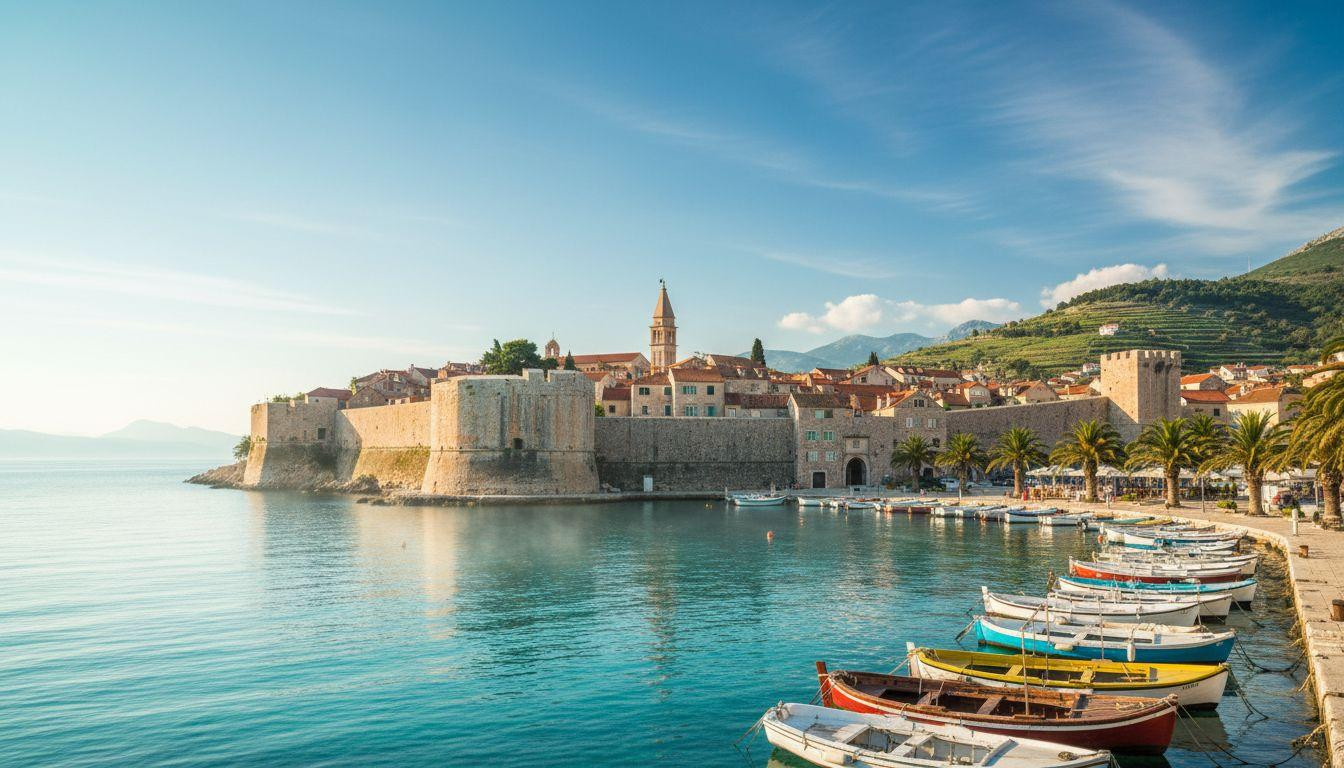
Three hours by ferry, Korčula keeps the same Venetian fortifications but skipped the crowds. Population 3,000. Annual visitors around 100,000 versus Dubrovnik’s 1.5 million. Hotel rooms run $150-250 per night instead of $250-400. The walls stay empty at dawn.
Why Dubrovnik lost its soul to selfie sticks
Pre-2010, Dubrovnik drew half a million visitors yearly. Then HBO filmed six seasons of fantasy drama inside the limestone walls. By 2025, arrivals tripled. Cruise terminals expanded to handle mega-ships. Residents fled to suburbs as rents doubled.
The Old Town hemorrhaged 70% of its population since the 1990s. Bakeries became souvenir shops. Family restaurants switched to prix-fixe menus at $60 per person. Wall walks that once cost $5 now charge $35 and require advance booking in summer.
Local tourism boards confirm the shift prioritized volume over preservation. King’s Landing walking tours dominate the economy. Authentic Dalmatian culture retreated to the hills.
Korčula kept the architecture but added vineyards
The same Venetian blueprint without the tour buses
Korčula’s fortifications date to the 13th through 16th centuries, same era as Dubrovnik’s famous walls. Shared architects from the Republic of Ragusa designed both. Gothic-Renaissance facades dominate 58% of buildings. The compact peninsula spans less than half a square mile, walkable in 30 minutes.
Fishbone street layout channels sea breezes through narrow alleys. Golden limestone glows at sunrise. Red-tiled roofs cascade toward turquoise water. Palm trees line the harbor where fishing boats still outnumber yachts. UNESCO placed the town on its Tentative World Heritage list in 2007 for late medieval planning excellence.
Indigenous grapes instead of fantasy memorabilia
Korčula produces over one million bottles annually of Pošip and Grk white wines. Pošip delivers crisp minerality from limestone soils. Grk grows nowhere else on earth, protected by family vineyards in Lumbarda village. Tasting rooms charge $15-25 for flights, not $50 for themed cocktails.
Winery tours through terraced hillsides cost $40-60 and include lunch with local cheesemakers. Bottles sell for $10-20 at family estates versus $30 in Dubrovnik’s tourist bars. May vineyard blooms turn the island gold before summer heat arrives.
What you actually experience in Korčula
Medieval streets at 6am with zero queues
The town walls open at sunrise for free. Mist lifts off the Adriatic around 7am. Church bells echo through empty stone passages. Bakeries sell burek pastries for $3. Coffee costs $2 at cafes where locals read newspapers.
Marco Polo’s disputed birthplace sits on a quiet corner, marked by a simple plaque. No admission fee, no gift shop. Pebble beaches like Bilin Žal and Pupnatska Luka lie 10-20 minutes on foot. Water clarity reaches 100 feet. Swimming starts in late May when temperatures hit 68°F.
Lamb peka and family-run taverns
Traditional konobas serve pasticada beef stew for $20 and fresh grilled fish for $25-35. Lamb peka slow-cooks under a metal bell for three hours, ordered a day ahead. Korčula pršut smoked ham appears on every menu. Meals cost 30% less than Dubrovnik equivalents.
The Moreska sword dance performs weekly in summer, a UNESCO intangible heritage tradition dating to the 15th century. Tickets run $15. No King’s Landing reenactments, just clashing blades and folk music.
The island chose quality over cruise ships
Recent visitor surveys show Korčula’s tourism grew 5-6% annually through 2025, focused on Americans seeking authenticity. Local tourism officials reject the “mini-Dubrovnik” label. Infrastructure improvements favor bike paths and wine routes over mega-hotels. The island protects its quiet.
Residents still outnumber tourists in May. Markets sell produce to locals, not trinkets to day-trippers. The pace stays unhurried. For travelers seeking Mediterranean alternatives to overcrowded classics, Korčula delivers the Croatia that existed before the cameras arrived.
Your questions about Korčula answered
How do you reach Korčula from Dubrovnik?
Jadrolinija ferries depart Dubrovnik port three times daily, taking 2.5-3 hours for $25-40 one-way. Faster catamarans run twice daily at $30-50, arriving in two hours. Dubrovnik Airport sits 12 miles from the ferry terminal, a $30 taxi ride. Book tickets online in advance for May shoulder season. Seas stay calm with 18-24°C temperatures and minimal rain.
When should wine lovers visit?
May through June offers blooming vineyards, mild weather, and 60% fewer crowds than July-August peaks. Harvest season runs September-October for crush tours. Water temperatures reach swimmable 68°F by late May. Hotels discount 20-30% off summer rates. Most wineries operate year-round but May provides the best balance of weather, availability, and scenery.
Is Korčula really cheaper than Dubrovnik?
Official tourism data confirms 20-40% savings across categories. Old Town hotels average $150-250 per night versus Dubrovnik’s $250-400. Restaurant meals cost $25-40 instead of $40-60. Local wine bottles sell for $10-20 at family estates versus $20-30 in Dubrovnik bars. Beach access stays free on public pebble coves. Total daily budget runs $100-150 per person compared to $150-250 in Dubrovnik.
Morning fog lifts around 8am in May. For ten minutes the whole island turns gold. Fishing boats return to harbor. Locals walk to work past tourists still sleeping. The walls stand quiet, just limestone and sea.