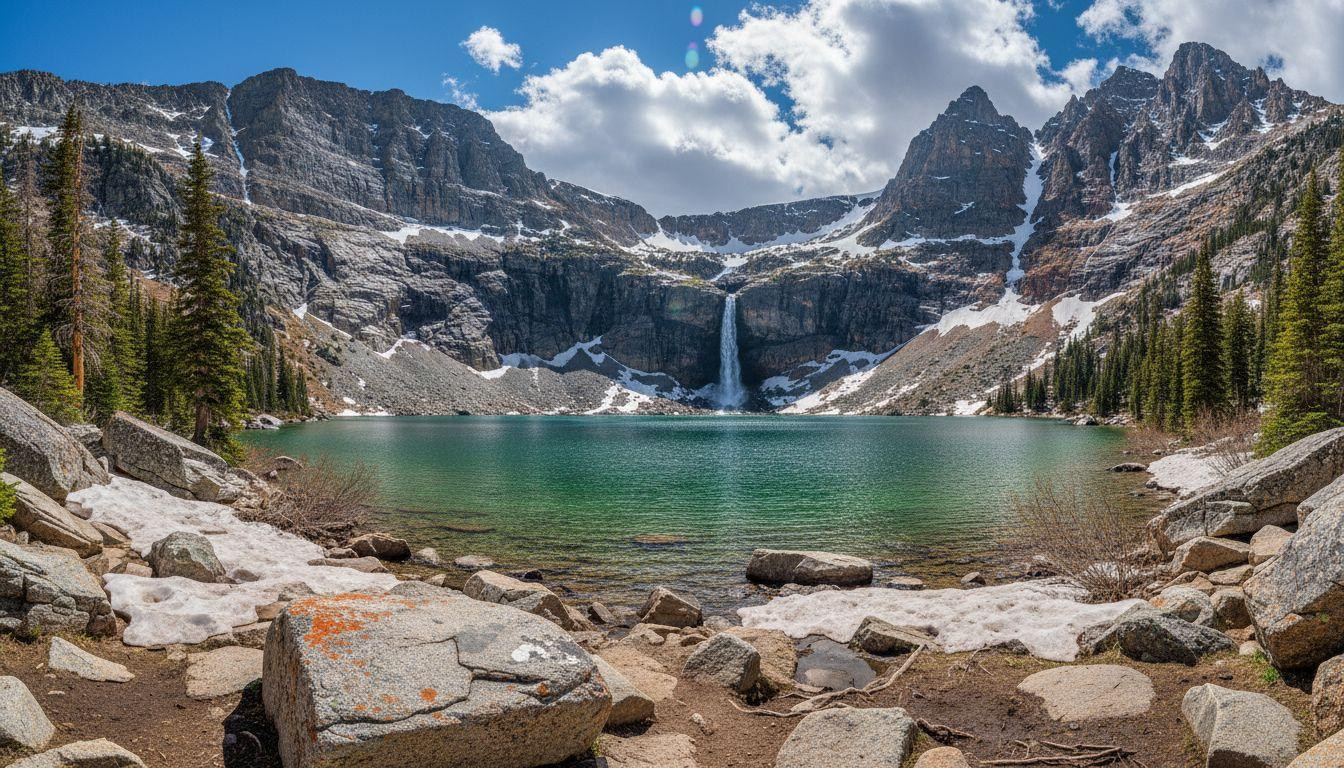
Most hikers stop at Dream Lake. The real show starts beyond. Bear Lake trailhead sits at 9,475 feet, launching a 3.6-mile round trip that climbs 771 feet through five distinct alpine zones. Each lake reveals something the previous one didn’t: pond lilies at Nymph, deep blue at Dream, emerald glacial water at the final basin under Tyndall Glacier’s thin waterfall.
Late April means variable snow, turquoise melt, and parking spaces still available after 7am. The summer shuttle doesn’t run yet. Drive Bear Lake Road’s 9 miles from Estes Park directly to the trailhead.
Bear Lake: where morning glass reflects before the shuttles arrive
The parking lot fills before 7am on weekends. Arrive earlier in April and you’ll find space. The lake sits calm at 9,475 feet, Hallett Peak rising behind it in perfect mirror reflection when wind holds off.
Most visitors walk the half-mile loop around Bear Lake and turn back. The trail to Emerald continues northwest through aspen groves. Restrooms and trail signs mark the junction. The grade starts easy.
The parking reality
Timed entry reservations run May through October, 5am to 6pm. April escapes that system. But weekends still draw crowds. Weekday mornings offer the most solitude before the 9am rush builds.
Nymph Lake: pond lilies float in a forest bowl
Half a mile in, elevation gains 262 feet to reach Nymph Lake. The intimate alpine tarn sits surrounded by pines. Water lilies ring the edges, though late April keeps them mostly dormant. Some ice still clings to shaded corners.
The trail steepens beyond this point. Rockier terrain begins. Most families with young children turn back here, making the path quieter toward Dream and Emerald.
What makes it different
Nymph stays shallow and warmer than the higher lakes. By summer, lily pads bloom across the surface. Beaver activity marks the shoreline. The surrounding forest creates shelter from wind that higher elevations lack.
Dream Lake: deep blue under Hallett Peak’s jagged spires
One mile from the trailhead, Dream Lake appears. This is where most hikers stop. The water runs deeper blue than Emerald’s green, fed by the same glacier system but holding different mineral content. Hallett Peak rises directly above, its jagged spires creating the classic Rocky Mountain backdrop.
Trout move through clear water visible from shore. Fishermen favor this spot. The trail junction here offers a choice: turn back satisfied, or continue northwest another mile through Tyndall Gorge to Emerald.
The decision point
Dream Lake draws the crowds because it delivers dramatic views for moderate effort. The final push to Emerald adds steeper climbing through pine forest. Temperature drops. The constant rush of Tyndall Creek accompanies the ascent. For those seeking solitude and the glacier view, the extra mile pays off.
Tyndall Gorge: where glacial melt roars between peaks
The trail climbs through dense pine forest between Dream and Emerald. Tyndall Creek flows constantly beside the path, fed by snowmelt from the glacier above. The sound grows louder as elevation increases. Air cools noticeably.
Elk frequent this section. Marmots sun on rocks when weather warms. The steepest switchbacks appear here, gaining the final elevation to Emerald’s basin at 10,111 feet.
Wildlife zone
Early morning or late afternoon brings the best wildlife encounters. Elk move through the gorge feeding. Birds increase in activity. The forest thickens enough to provide cover, making this section feel wilder than the exposed lake basins.
Emerald Lake: turquoise glacial basin under Tyndall’s thin waterfall
The trail opens into an amphitheater. Flattop Mountain rises on the left, Hallett Peak on the right. Emerald Lake spreads across the basin floor, its distinctive green color created by glacial flour suspended in the water. Tyndall Glacier clings to the upper slopes, feeding a thin waterfall visible from the shore.
Lunch spots scatter across rocks near the water. Wind picks up here, exposed to weather from multiple directions. The temperature runs 15 to 20 degrees cooler than the trailhead. Late April means snow patches still cover shaded areas. Some years, the lake itself holds partial ice.
The reward
Mountaineers continue beyond Emerald toward the glacier, adding another mile and 1,800 feet of elevation gain. That route requires snow climbing skills. For most hikers, Emerald marks the turnaround point. The view justifies the climb: three lakes passed, one glacier visible, five distinct ecosystems experienced in under 4 miles total distance.
Planning your April journey to Emerald Lake
Late April brings variable conditions. Snow packs the trail above Dream Lake most years. Microspikes help on icy sections. Temperatures at the trailhead hover around 50°F, dropping to the 30s at Emerald. Wind chill makes it feel colder.
Bring more water than seems necessary. Starting elevation at 9,475 feet means altitude affects hydration faster. Two liters per person minimum. Snacks with salt help maintain electrolyte balance. The climb feels harder than the numbers suggest because of thin air.
Timing and crowds
April sees moderate crowds compared to July’s peak season chaos. Most visitors arrive between 9am and 2pm. Early morning before 8am offers the quietest experience. The trail gets busier as the day progresses. Weekdays beat weekends for solitude.
Extensions
Experienced hikers can continue to Tyndall Glacier from Emerald Lake. The route requires mountaineering skills and most of a day. Pool of Jade offers another option for those seeking additional alpine tarns beyond the standard route.
Your questions about Emerald Lake answered
Is Emerald Lake harder than Dream Lake?
Emerald adds 1.3 miles and 440 feet of elevation gain beyond Dream. The trail gets steeper and rockier through Tyndall Gorge. Most fit hikers complete the full route in 3 to 4 hours round trip. Dream Lake takes 2 to 3 hours total. The difficulty jumps from easy-moderate to moderate.
Can you swim in Emerald Lake?
The water stays extremely cold year-round, fed directly by glacier melt. Swimming is technically possible but unsafe due to temperature. Most visitors wade briefly at the shore. The cold shocks even in July. April water temperatures make any immersion dangerous.
How does this compare to other Colorado alpine lakes?
Emerald’s 3.6-mile round trip with 771 feet of gain ranks as moderate for Colorado standards. Hanging Lake near Glenwood Springs requires permits and sees heavier crowds. Ice Lakes Basin near Silverton climbs higher and farther. Emerald’s advantage: three distinct lakes on a single moderate trail, accessible from a major national park.
Morning light hits Emerald Lake around 8am in late April. The emerald color intensifies as sun angles change. Most hikers arrive by then, breaking the silence. Visit earlier and you’ll have the glacier view to yourself.