“`html
Cinque Terre’s Via dell’Amore trail remains closed for repairs while 2.5 million visitors squeeze into five villages each year, paying $175 per night for basic rooms and navigating crowds that peak at 5,000 daily in summer. Ninety minutes inland, Castelmezzano sits at 2,500 feet in Basilicata’s Lucanian Dolomites, where 800 residents live among golden sandstone houses carved directly into limestone cliffs. Rooms cost $65 per night. The village sees fewer than 100,000 annual visitors.
The difference isn’t subtle. It’s the gap between Italy’s coastal tourism machine and a medieval refuge the crowds haven’t discovered yet.
Why Cinque Terre stopped working
The Monterosso to Vernazza trail now requires reservations and fees during peak season. Gift shops outnumber fishing boats in harbors that once defined Ligurian culture. A plate of trofie al pesto costs $28 in Vernazza’s main square, served to tourists who arrived on cruise ships docked in La Spezia.
The authenticity dissolved somewhere between the Instagram fame and the infrastructure struggling to support it. Train platforms overflow from 10am to 5pm May through September. The villages became beautiful backdrops for selfies rather than living communities.
April 2026 brings slightly smaller crowds after Easter on April 20, but the core problem remains. The place works better as a postcard than a destination.
What Castelmezzano offers instead
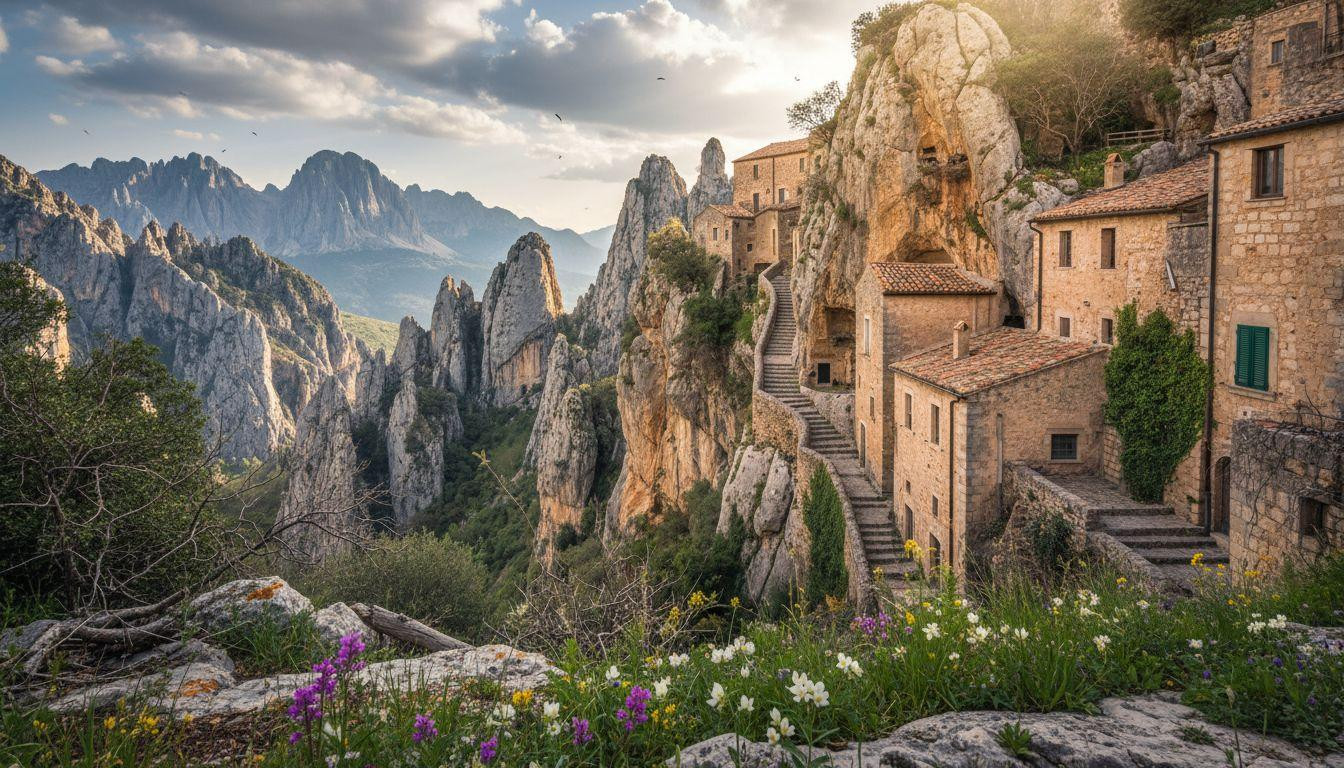
The approach via SS407 climbs through oak forests before the Lucanian Dolomites appear. Jagged limestone spires rise to 3,000 feet, their faces streaked with iron oxide. The village occupies a natural amphitheater at 2,500 feet, houses built into rock alcoves using the same golden sandstone as the cliffs.
From certain angles the settlement disappears entirely, stone buildings blending into stone peaks. Medieval builders carved directly into the mountain, creating a defensive position that modern tourism hasn’t yet overwhelmed.
The cliff integration
Norman’s Steps, a 54-step staircase cut into a rock monolith, leads to ruins of a 10th-century Lombard watchtower. No handrails. The stone shows chisel marks from medieval masons who shaped defensive positions into the mountain itself.
Houses follow the same principle. Walls rise from natural rock shelves, roofs use concentric sandstone slabs that shed rain like the cliffs do. Walking the narrow streets means passing under stone arches that might be doorways or might be gaps between boulders. The architecture doesn’t sit on the landscape. It grows from it.
The cost comparison
Agriturismo rooms in Castelmezzano run $55 to $90 per night in spring 2026. Family-run hotels charge $110 to $165. A three-course meal at local trattorias costs $17, including house wine from Aglianico grapes grown on surrounding slopes.
Cinque Terre’s equivalent: $175 to $330 for rooms, $30 for comparable meals. The math matters when you’re staying three nights instead of doing a day trip from Florence.
What you actually do here
The Volo dell’Angelo zipline connects Castelmezzano to Pietrapertosa across a mile-long gap between peaks. Riders reach 75 mph at a 50-degree incline, suspended 1,300 feet above the Basento River valley. The ride costs $33. It operates April through October, weather permitting.
The Seven Stones Trail covers 5.5 miles between the two villages, gaining and losing 900 feet through oak and beech forest. The path follows medieval trade routes, passing limestone formations named for their shapes: the Eagle, the Anvil, the Owl. Hiking it takes 2.5 to 3 hours. No fees, no reservations required.
The food angle
Basilicata cuisine centers on ingredients Cinque Terre stopped using when tourism took over. Cutturieddru, lamb stuffed with pecorino and wild herbs, slow-roasted in wood ovens. Peperoni cruschi, Senise peppers fried until crispy, served as garnish or snack. Lucanica sausage flavored with fennel and hot pepper.
The bakery near the church makes bread the same way it did when it opened in 1953. A loaf costs $2.20. The owner’s family has run it for three generations, supplying the village and the handful of restaurants that don’t bother with English menus.
The practical elements
No train reaches Castelmezzano. The nearest station sits in Potenza, 52 miles west. Most visitors drive from Bari Airport, a 93-mile trip taking 2.5 hours via SS96 and SS407. The roads wind through the Apennines with minimal traffic.
That isolation preserves what Cinque Terre lost. The village needs visitors but hasn’t rebuilt itself around them. Shops close for lunch. Restaurants run out of specials when ingredients are gone. The rhythm stays local.
Why April and May matter
Spring temperatures in the Lucanian Dolomites range from 59°F to 68°F. Wildflowers cover the slopes, wild orchids bloom in the oak groves. Morning mist fills the valleys until 9am, then burns off to reveal the full scope of the peaks.
Summer brings heat that makes the zipline uncomfortable and the trails dusty. September offers similar conditions to spring but with harvest activity in the vineyards. April and May provide the clearest weather and the emptiest trails, before Italian school holidays begin in June.
The village stays quiet enough that conversations echo off the cliffs. You hear church bells from Pietrapertosa 5.5 miles away when the wind shifts.
Your questions about Castelmezzano answered
How do you get there without a car?
Bus service from Potenza runs twice daily, taking 90 minutes and costing $4.40 each way. The schedule limits flexibility but works for visitors staying multiple nights. Some agriturismos offer pickup from Potenza station for $33. Renting a car in Bari costs $38 to $55 per day, providing freedom to explore surrounding villages like Pietrapertosa and Albano di Lucania.
What makes it different from Tuscany’s hill towns?
Tuscan villages sit on hills. Castelmezzano embeds into cliffs at 2,500 feet, surrounded by peaks reaching 3,000 feet. The Lucanian Dolomites create vertical drama Tuscany can’t match. The region also sees far fewer international visitors, keeping prices 30% to 40% below Tuscan equivalents and preserving working agricultural communities rather than vacation rental economies.
Is it worth the extra effort compared to Cinque Terre?
Cinque Terre offers coastal beauty and train convenience. Castelmezzano offers mountain drama and medieval authenticity without the crowds. The choice depends on whether you want efficient tourism or immersive quiet. For travelers seeking Italy beyond the standard circuit, the 2.5-hour drive from Bari delivers an experience coastal Liguria stopped providing years ago.
The last light hits the western cliffs around 7pm in late April, turning the sandstone amber while the valley below fills with shadow. Swifts circle the peaks. Smoke rises from chimneys where families cook dinner using recipes unchanged since the Lombards built their watchtower. The village empties of day visitors, leaving the stone streets to the 800 people who call this home.
“`