
The best modern boho bedroom ideas don’t look assembled. They look accumulated, like the room grew around someone’s actual life.
These fifteen rooms get that right. Earthy walls, raw textures, warm light. Nothing too precious, nothing too matchy.
The Herringbone Wall That Makes Everything Else Look Intentional


I keep coming back to this one. The wall treatment alone does half the work.
Why it looks custom: A herringbone wood accent wall in honey-sand creates dimensional relief that flat paint simply can’t. Each alternating plank catches light differently, which makes the surface feel alive instead of static.
The part to get right: Pair it with oatmeal linen bedding and a burnt orange throw. The warm tones connect to the wood grain without repeating it exactly.
Slatted Wood That Turns a Bedroom Into a Retreat
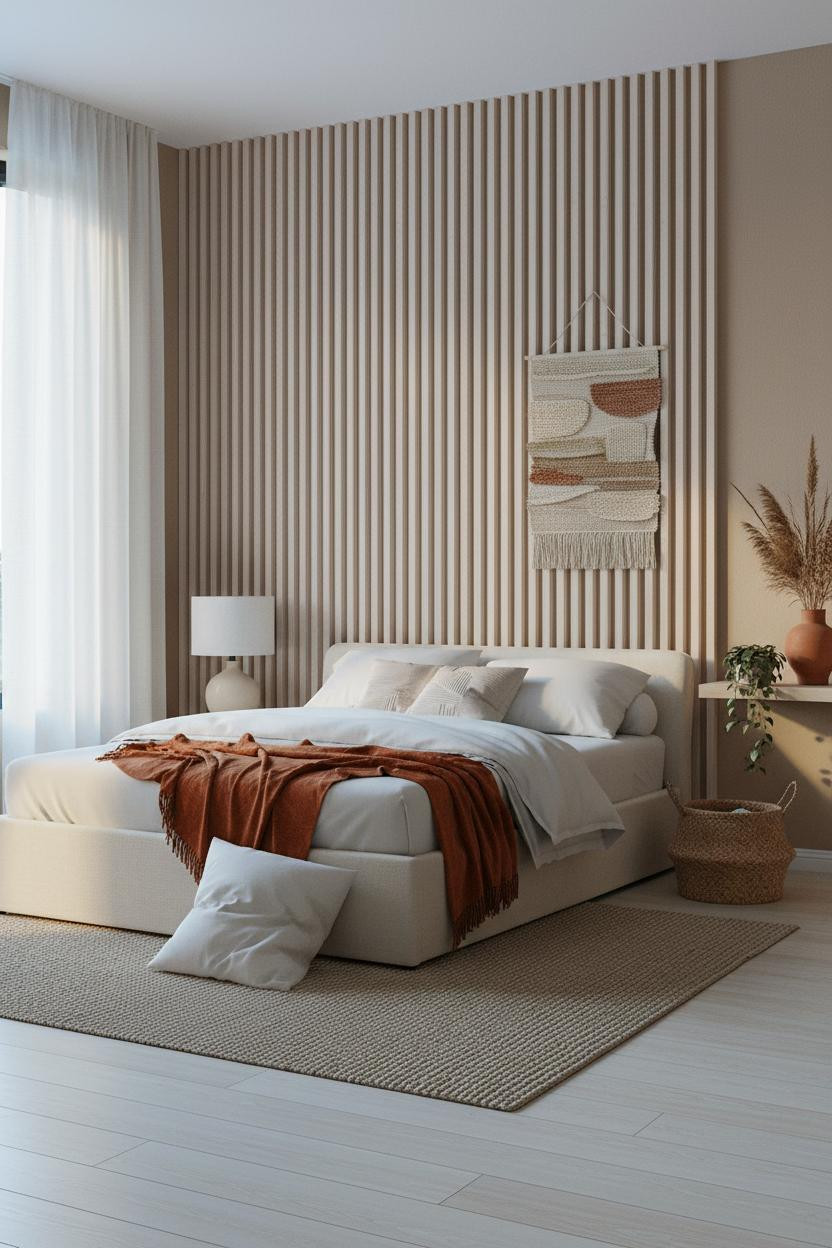
Bold choice. But the rooms that commit to floor-to-ceiling vertical pale ash slats never look unfinished.
Each narrow slat casts a thin shadow stripe across the next, and that rhythmic pattern gives the room genuine architectural texture without any built-ins required.
Steal this move: Add a woven wall hanging on the opposite side to keep the organic material story going. The contrast between woven and slatted is what makes it feel collected rather than themed.
Why an Ochre Wall Changes the Whole Mood
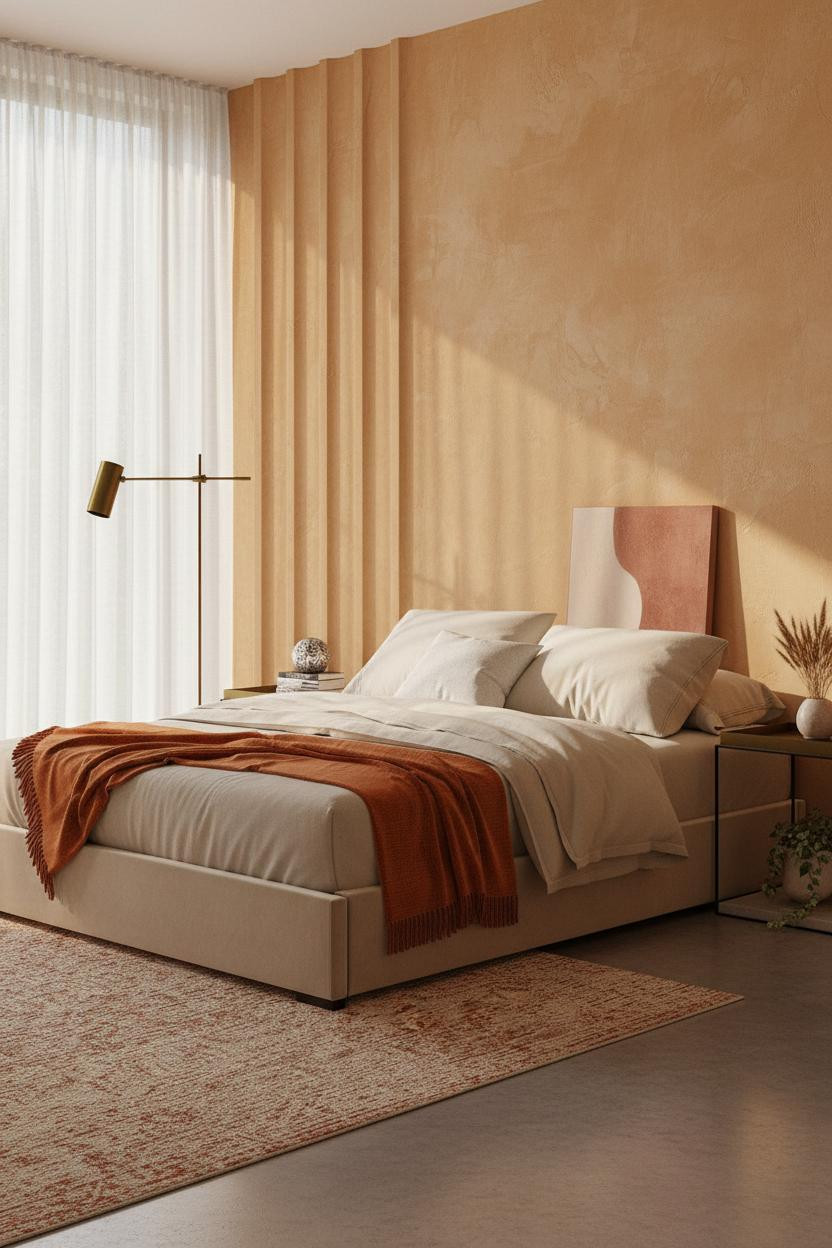

This is the kind of room that makes you slow down the moment you walk in. Honestly, it surprised me.
The hand-plastered ochre wall does something that paint alone doesn’t. Subtle vertical ribbing catches raking light in shallow relief, which gives the surface genuine warmth rather than just color.
The easy win: Lean an abstract canvas in rust and sand against the wall instead of hanging it. It feels less formal, while still giving the room a clear focal point.
Camel Wainscoting That Grounds Without Heaviness
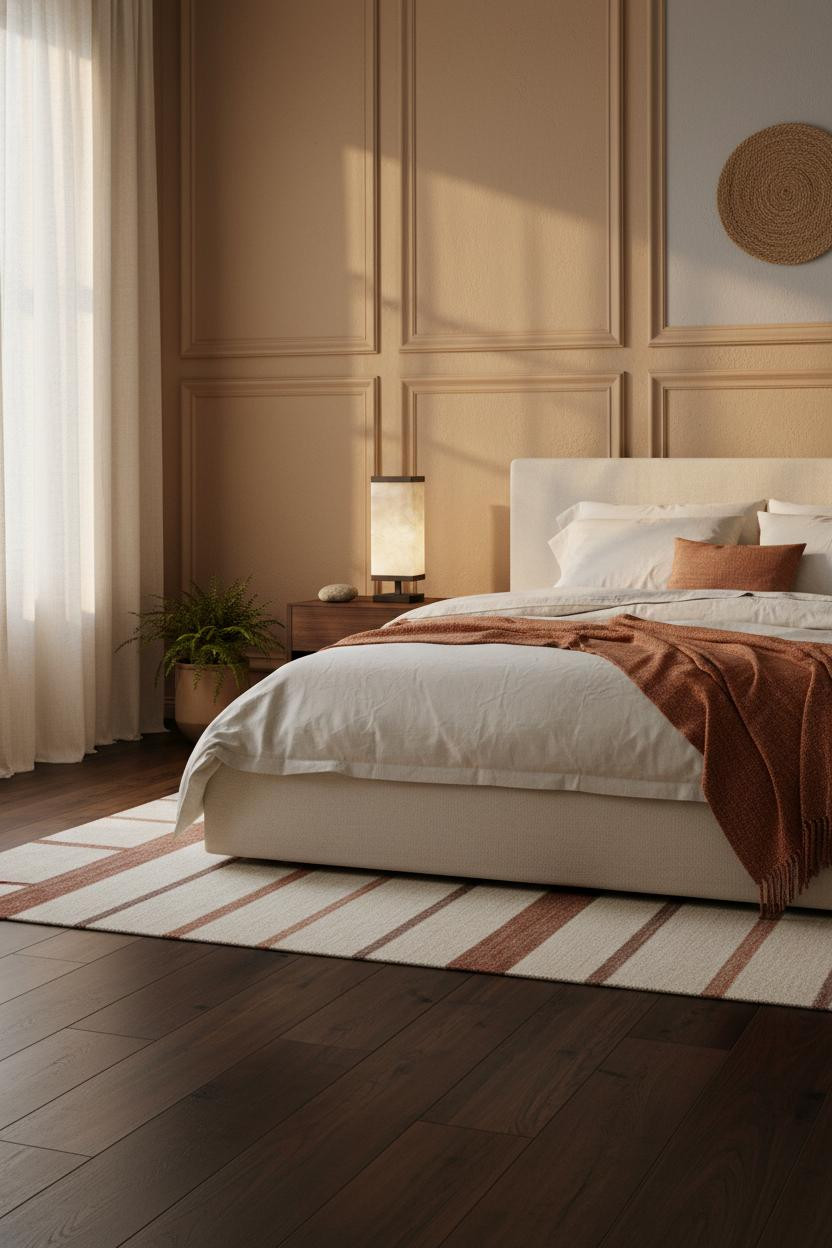
Two-tone walls work best when the split feels purposeful. This one does.
What makes it work: Warm camel plaster wainscoting below a dove grey upper wall creates the kind of visual layering that feels architectural, not decorative. The panel seams catch raking light and do the texture work for you.
Keep the bedding in ivory and cream. A burnt orange throw connects back to the camel without repeating it, which helps balance the cooler upper wall.
Whitewashed Brick That Earns Its Place
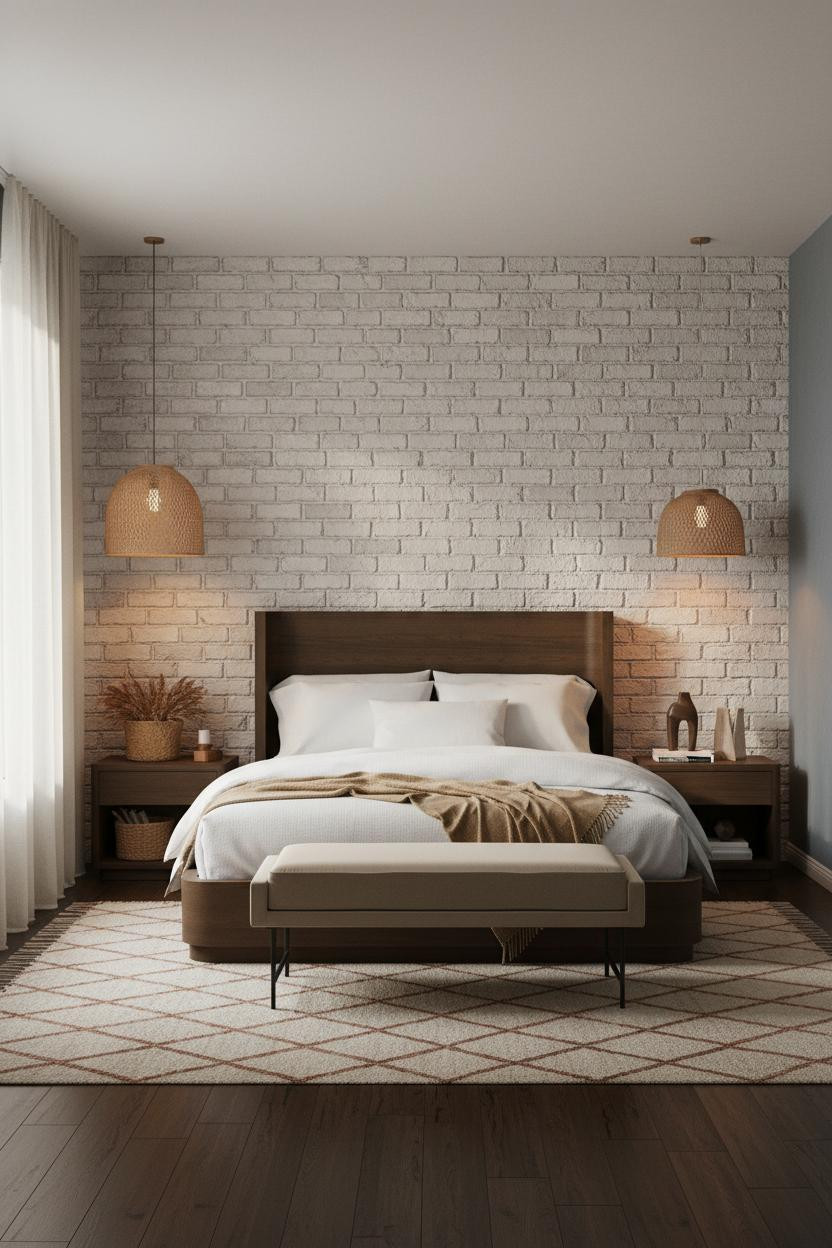
Not every brick wall deserves to stay. But whitewashed oyster brick with visible mortar joints is a different case entirely.
Why the materials matter: The raw mortar texture catches light at every hour differently, which means the room feels slightly different morning versus evening. Dusty blue-grey plaster on the flanking walls keeps it from tipping into rustic territory.
Don’t ruin it with: Matching everything. The camel throw draped off the foot, the woven jute basket, the sculptural rattan pendant. All different materials. That contrast is the whole point.
I’d Paint My Walls Sage Tomorrow If I Could
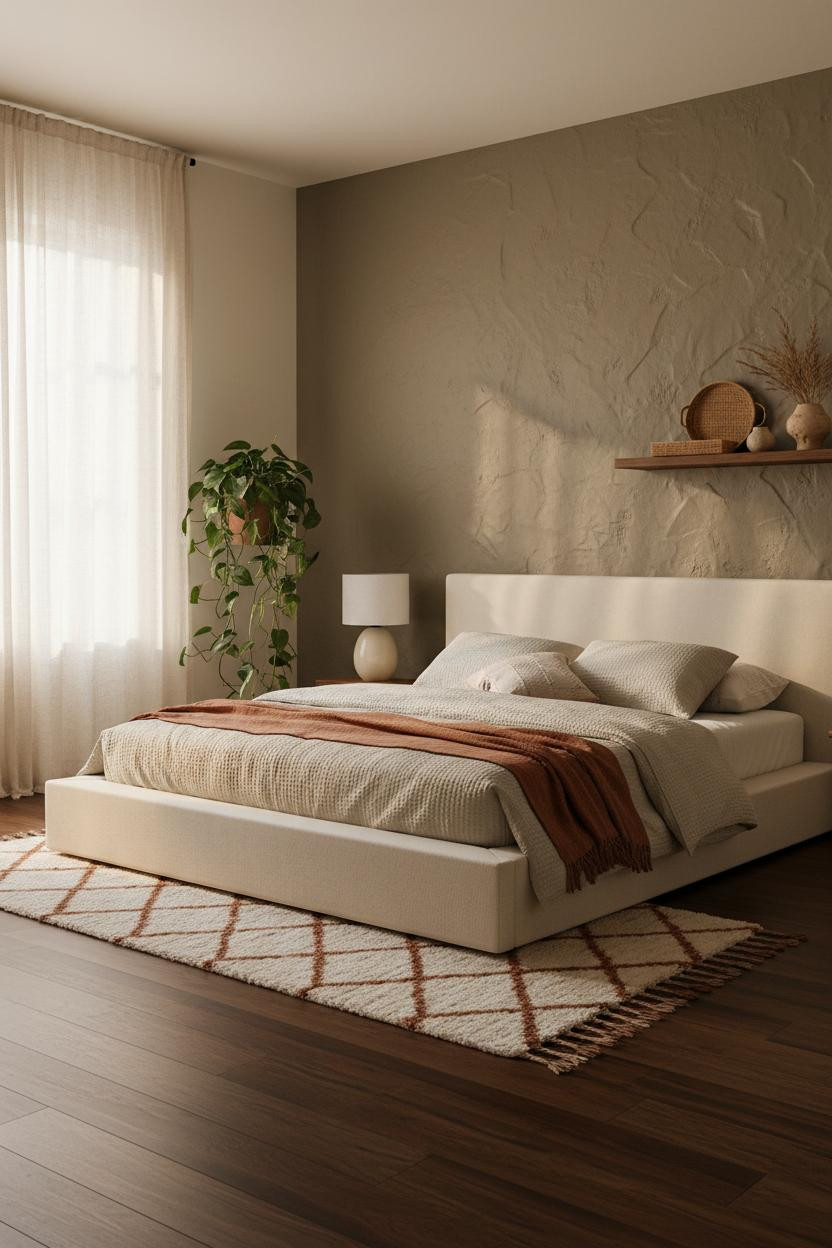
Deep warm sage clay plaster. Cream walls on either side. The room feels grounded and alive at the same time, which is sort of a hard combination to pull off.
What gives it depth: Hand-troweled texture catches morning light in soft pools of shadow across every groove, so the color reads as dimensional rather than flat. A large trailing plant in the corner adds organic movement without adding clutter.
Rust linen throw draped loosely off the mattress edge. That single detail keeps the earthy palette feeling lived-in rather than staged.
The Denim Blue Room That Shouldn’t Work But Does
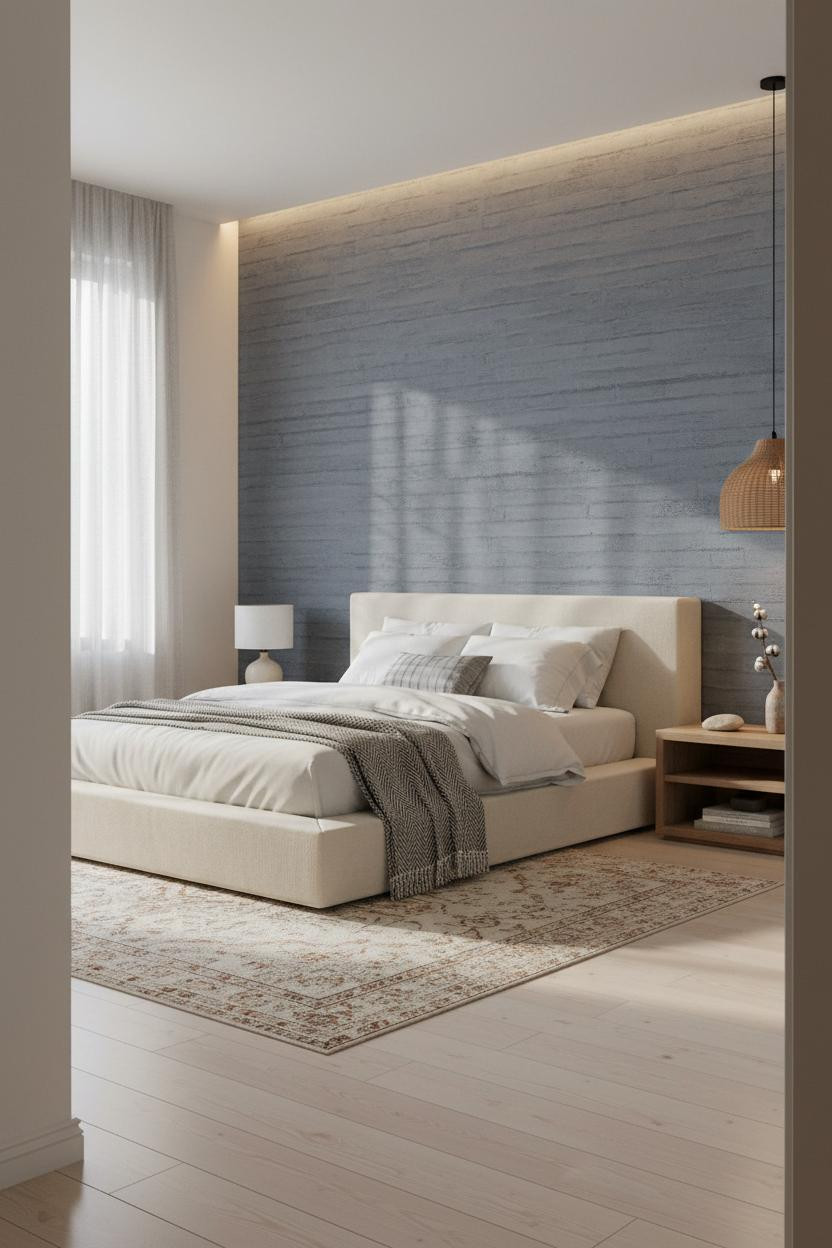
Faded denim blue clay plaster with horizontal ribbing. Cool and earthy at the same time. It shouldn’t feel as calm as it does, but somehow it does.
What creates the mood: The shallow ribbing on the matte clay surface catches diffused light and creates fine horizontal shadow lines, which gives the wall depth that solid color never would.
The smarter choice: Stone-washed grey herringbone throw, not navy or teal. Staying warm-neutral in the textiles keeps the cool wall from reading as cold.
A Rattan Divider Used as Architecture
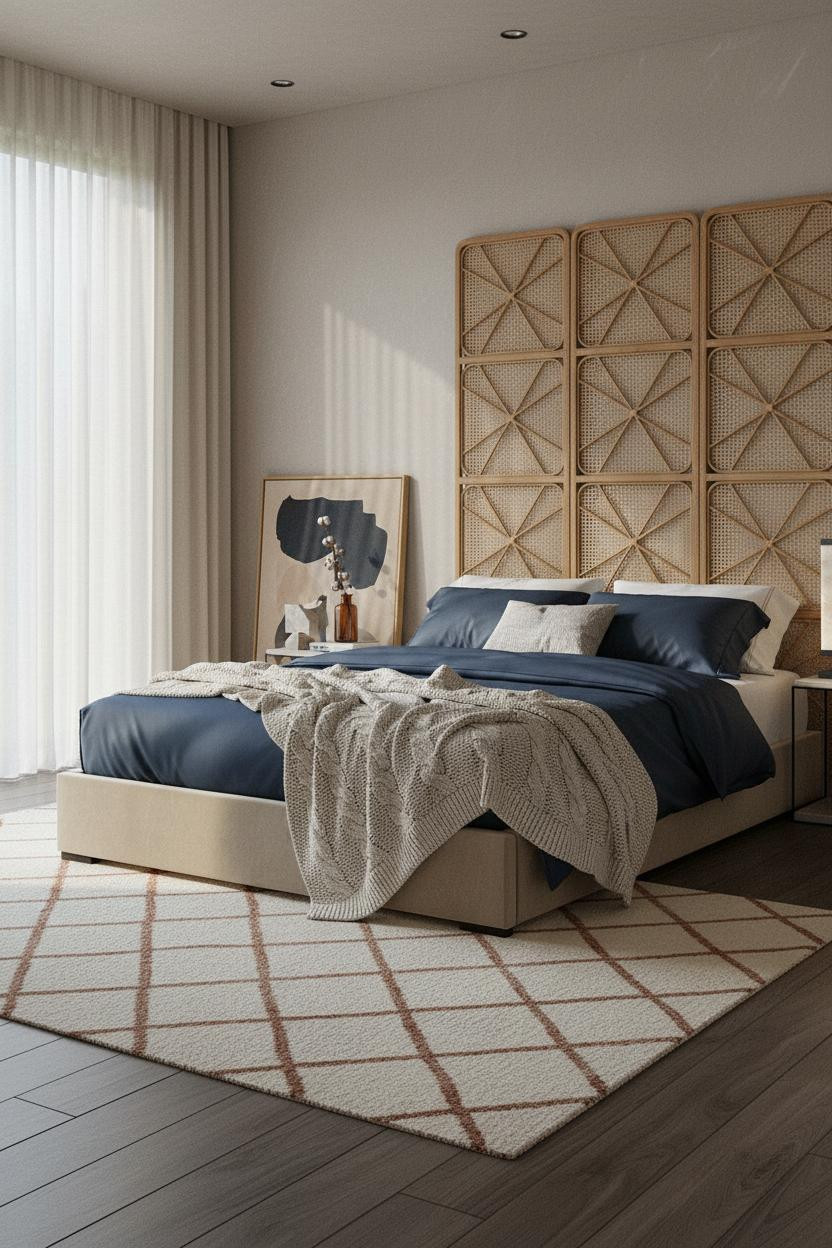
Having a floor-to-ceiling woven rattan divider behind the bed changes how you actually use and feel the room. It’s not decor. It’s structure.
Why it holds together: The geometric lattice casts soft shadow columns across the stone grey plaster, creating an organic rhythm that gives the headboard zone real presence in a way a painted wall can’t replicate.
What not to do: Don’t center it perfectly. Offset it slightly. The asymmetry is what makes it feel found rather than installed.
When the Window Wall Does All the Work
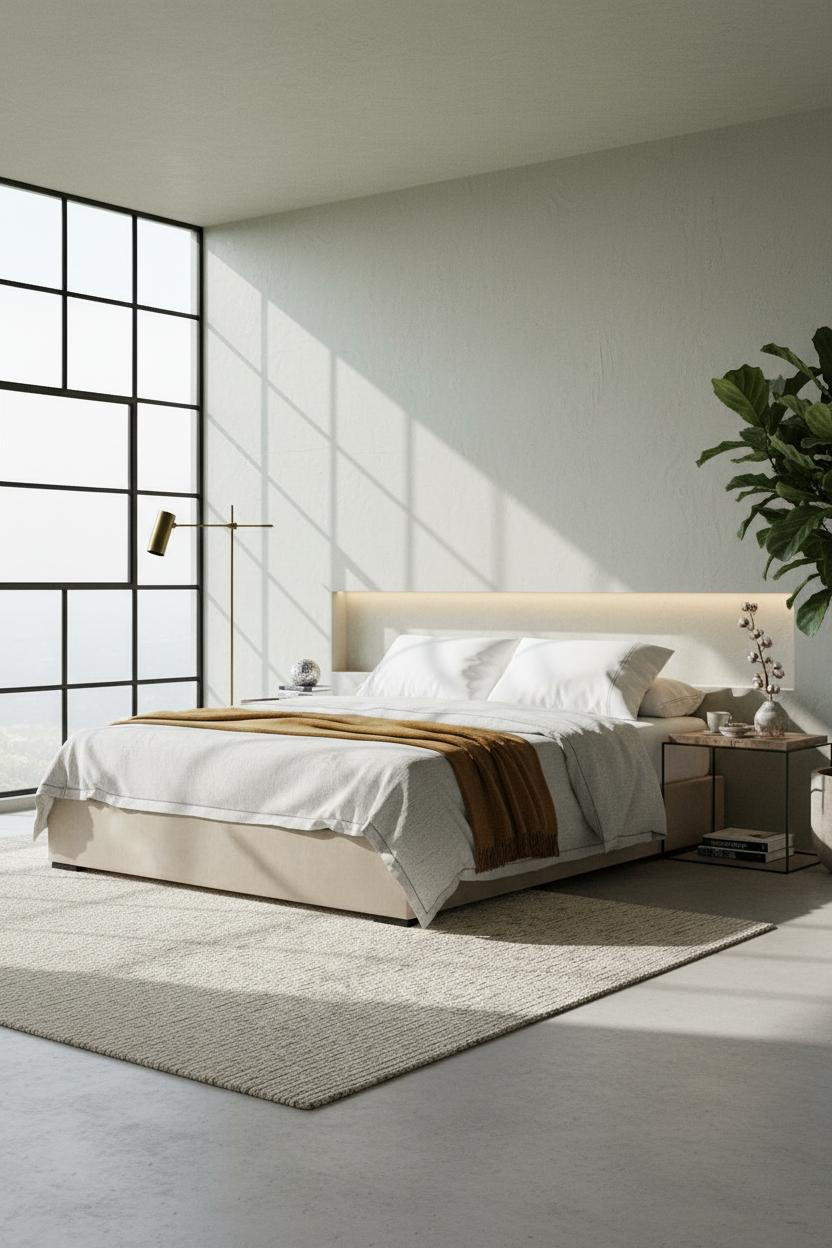
Nothing fancy. That’s the point.
A Crittall-style steel window wall throws cool geometric light patterns across a polished concrete floor, and the pale moss plaster walls absorb that light in a way that feels completely unhurried. The room feels calm and cohesive because the architecture is doing the heavy lifting, not the furniture.
Works best if: You keep the bedding muted. Stone-washed grey linen with a mustard wool blanket. The geometry already gives you contrast. The textiles just need to stay warm.
Dusty Rose Arched Alcove, Softer Than It Sounds
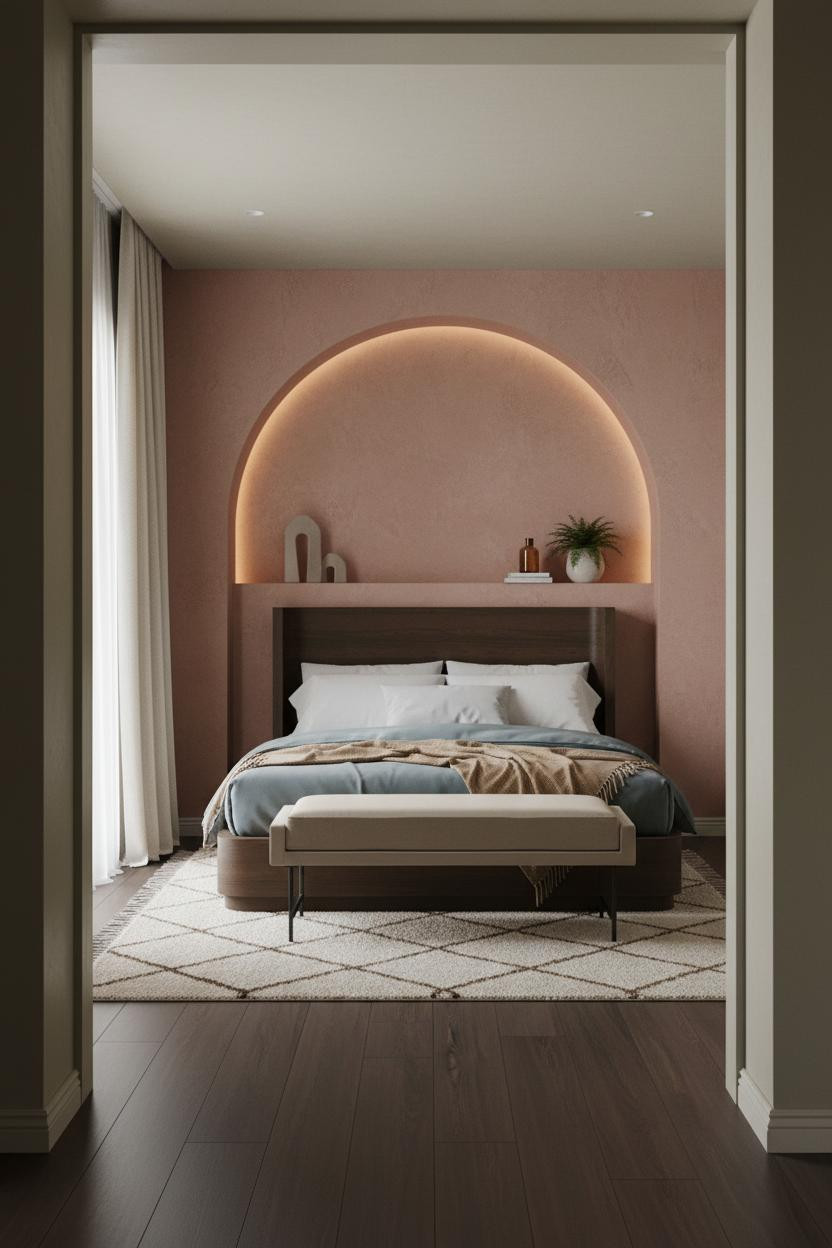
Fair warning. An arched niche alcove is a commitment. But a hand-troweled dusty rose plaster arch framing the bed is the kind of commitment that ages beautifully.
Deep shadow pools inside the curve where diffused light can’t reach, which gives the alcove genuine depth. The remaining khaki walls keep it grounded rather than romantic.
Where people go wrong: Too much pink in the textiles. Slate bedding with a camel throw is the move. Let the wall carry the color, nothing else needs to.
Exposed Timber Beams Give a Room Its Backbone
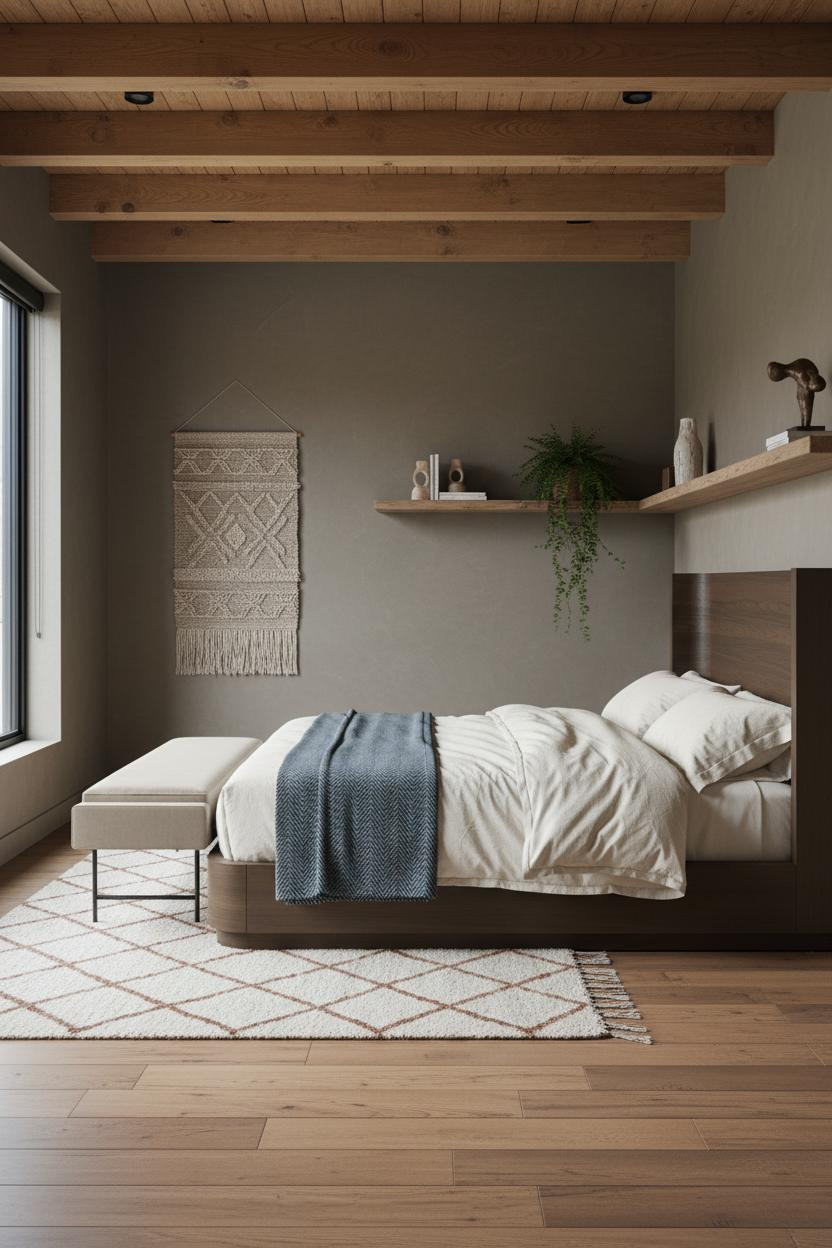
I always underestimated ceiling detail until I saw it done like this. Raw honey-patina timber beams stretch horizontally above the room and give it a structural weight that walls alone can’t provide.
The real strength: Diffused grey light catches the exposed grain in gentle relief, which keeps the ceiling reading as textural without making the room feel lower. Deep warm greige-sand plaster walls underneath absorb the contrast quietly.
Pro move: A Moroccan diamond-patterned rug in cream and soft rust. It echoes the reclaimed wood patina underfoot in a way that feels earned.
Board-and-Batten in Olive Plaster
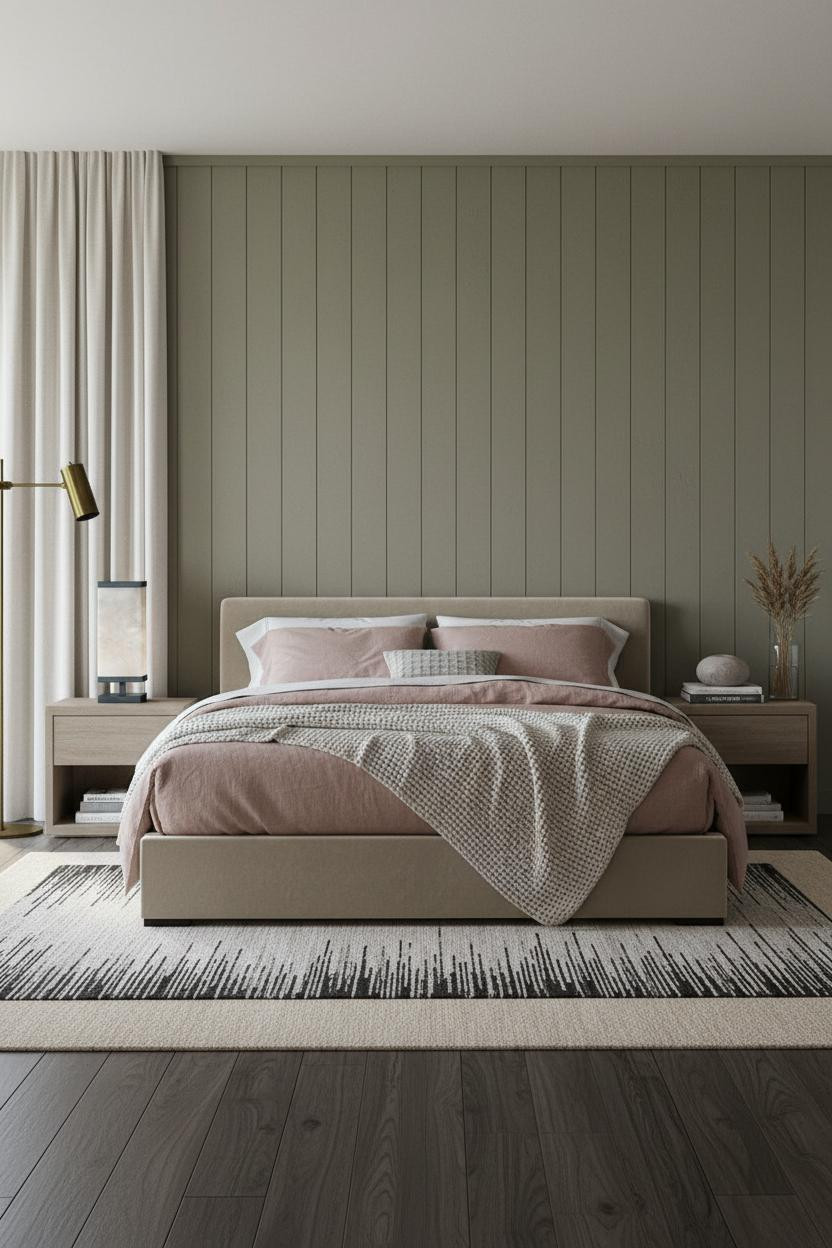
In a room with strong natural light, the smarter choice is olive plaster over any neutral green paint. The board-and-batten structure catches raking light across each batten ridge and creates actual shadow, not just color.
What carries the look: Dusty pink linen bedding (not blush, not rose) against an olive wall creates a tension that’s surprisingly pleasing. One tone is cool-warm. The other is earthy. They balance each other without matching.
The Floating Oak Shelf That Pulls Everything Together
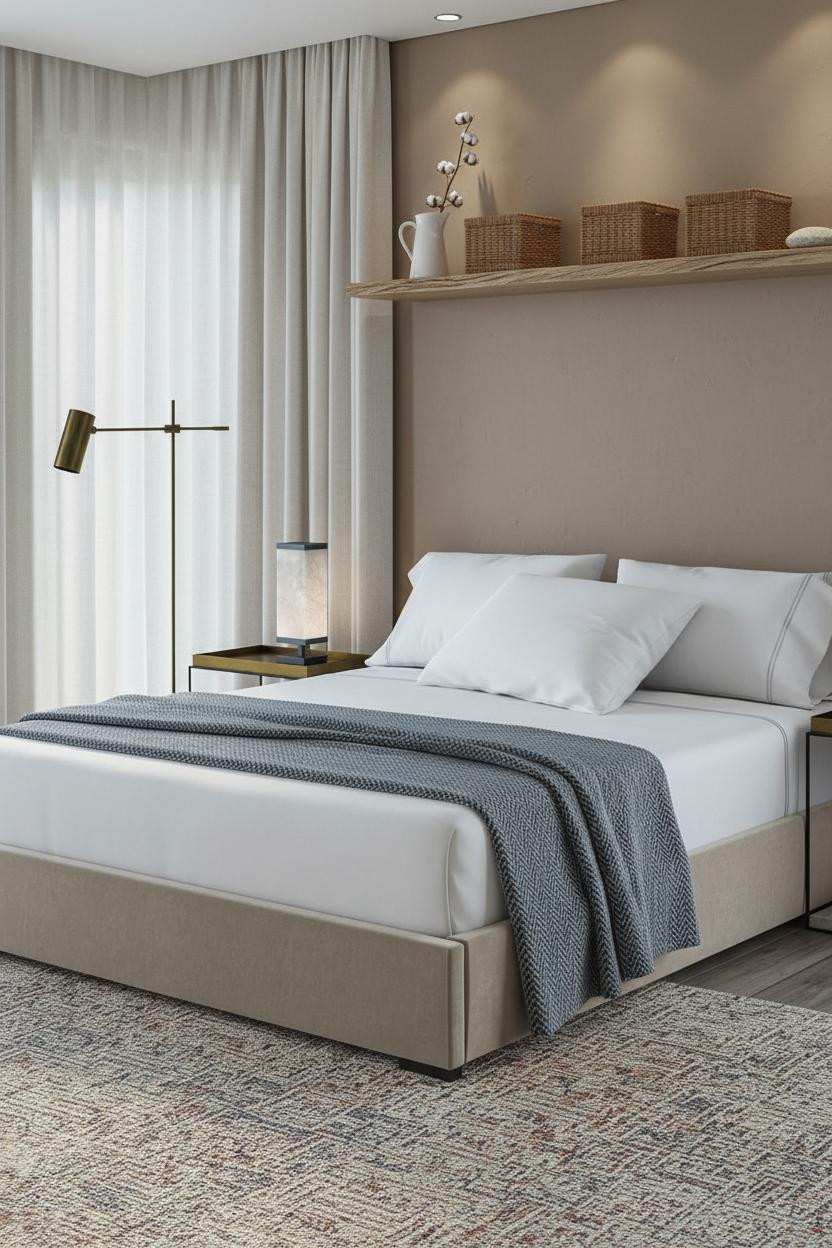
A seven-foot raw-edge oak shelf spanning the upper wall replaces the headboard entirely, which is a move I hadn’t considered before seeing this room. And now I can’t unsee it.
The visible grain catches diffused daylight, and three woven wicker baskets sitting flush underneath add texture in a way that feels practical, not staged. Mushroom walls underneath keep the whole thing warm rather than coastal.
Try this: Steel blue herringbone throw trailing off the foot of the bed. It pulls in cool contrast while still feeling like it belongs in an earthy palette.
Clay Plaster Ribbing Paired With a Round Rattan Mirror
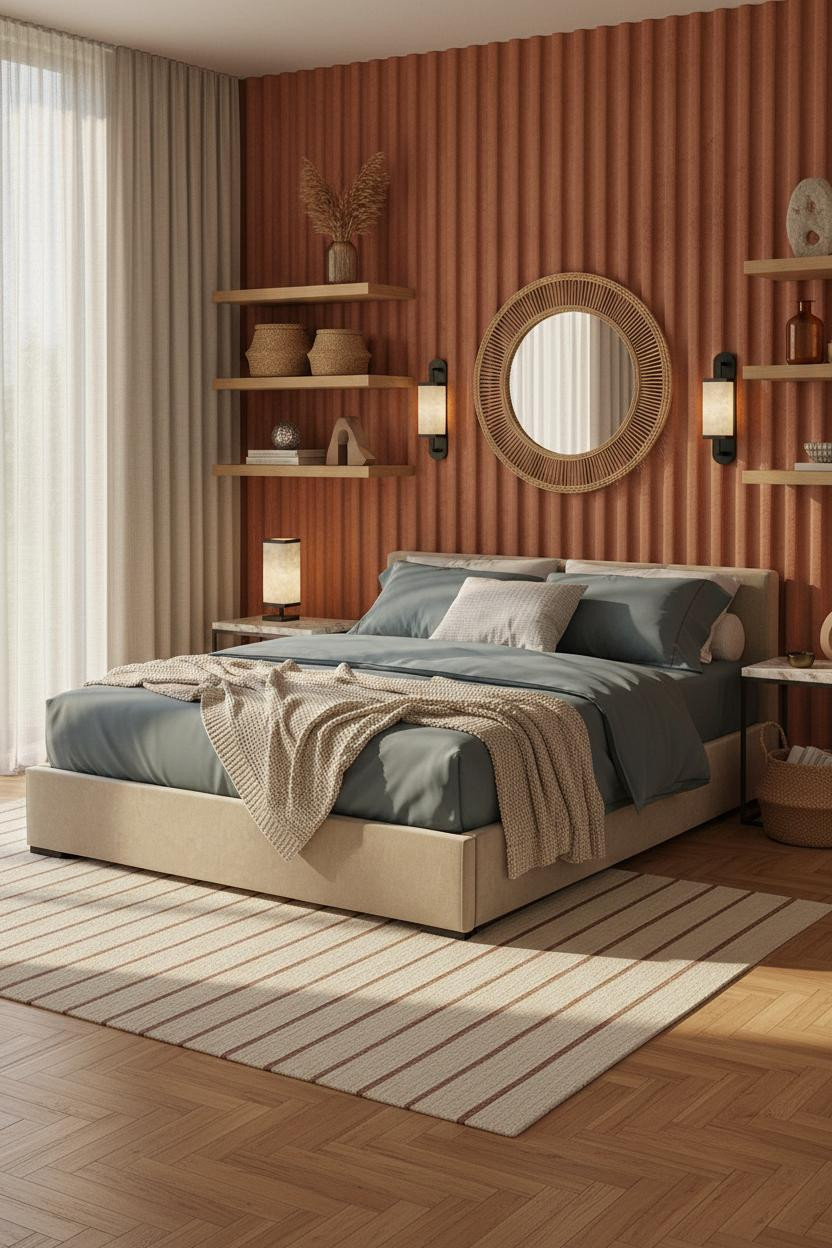
This room is doing a lot quietly. Terracotta plaster walls. Vertically ribbed clay plaster behind the bed catching amber afternoon light in its grooves. Herringbone parquet in aged honey underfoot. And somehow it doesn’t feel busy.
Why it feels intentional: The oversized round rattan mirror adds a curve that softens all the linear texture, which keeps the room from reading as too architectural. One organic shape is enough.
What to copy first: Natural oak floating shelves with woven baskets and dried wheat stems. Just enough texture to keep things interesting, nothing too precious.
Cream Shiplap With Sage Walls Is the Japandi Sweet Spot
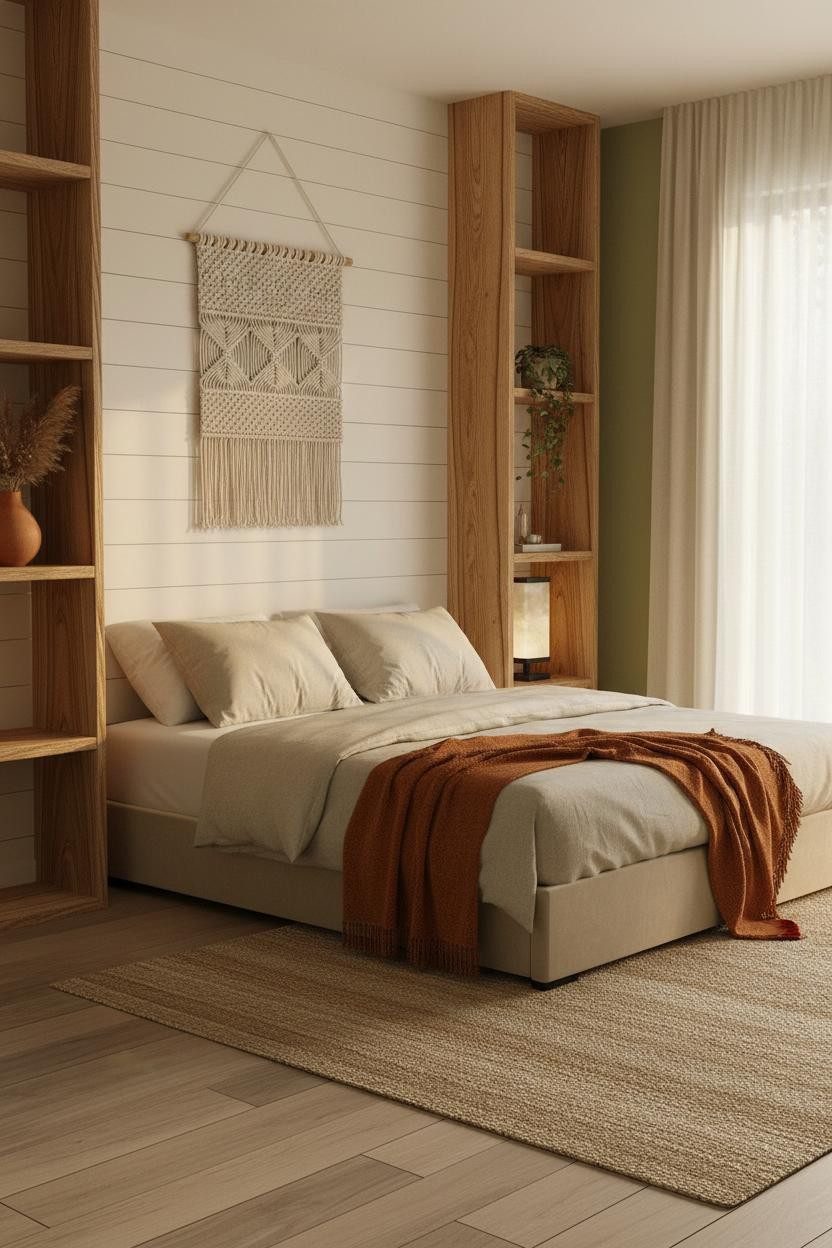
Cream shiplap against warm sage green walls. I almost dismissed this as too expected. But the natural live-edge timber shelving flanking the shiplap changes everything. That raw grain detail is what pushes it from basic to actually considered.
Morning light through gauze linen curtains lands across the shiplap boards at an angle that makes each horizontal plank visible. The room feels lived-in and intimate as a result, not like a showroom.
The finishing layer: Macrame wall hanging above the bed in natural cotton and a terracotta vase with dried pampas grass on the shelf. Both are expected in a boho room. But here they feel like they belong specifically to this one.

Our #1 Pick
Saatva Classic Mattress
America’s best-selling online luxury innerspring. 365-night trial, lifetime warranty, free white glove delivery.
Shop Saatva Classic
The Foundation Of Every Beautiful Bedroom
Walls get repainted. Throws get swapped out. The mattress stays. And honestly, that’s the piece that determines how the whole room actually feels to live in, not just look at.
The Saatva Classic is what goes under all of this. Dual-coil support that holds its shape, a breathable organic cotton cover that doesn’t trap heat, and a Euro pillow top that’s soft without losing structure. It’s the kind of mattress that makes you understand why the rest of the room matters.

Good design ages well because it’s made well. Start with the bed. The rest figures itself out.