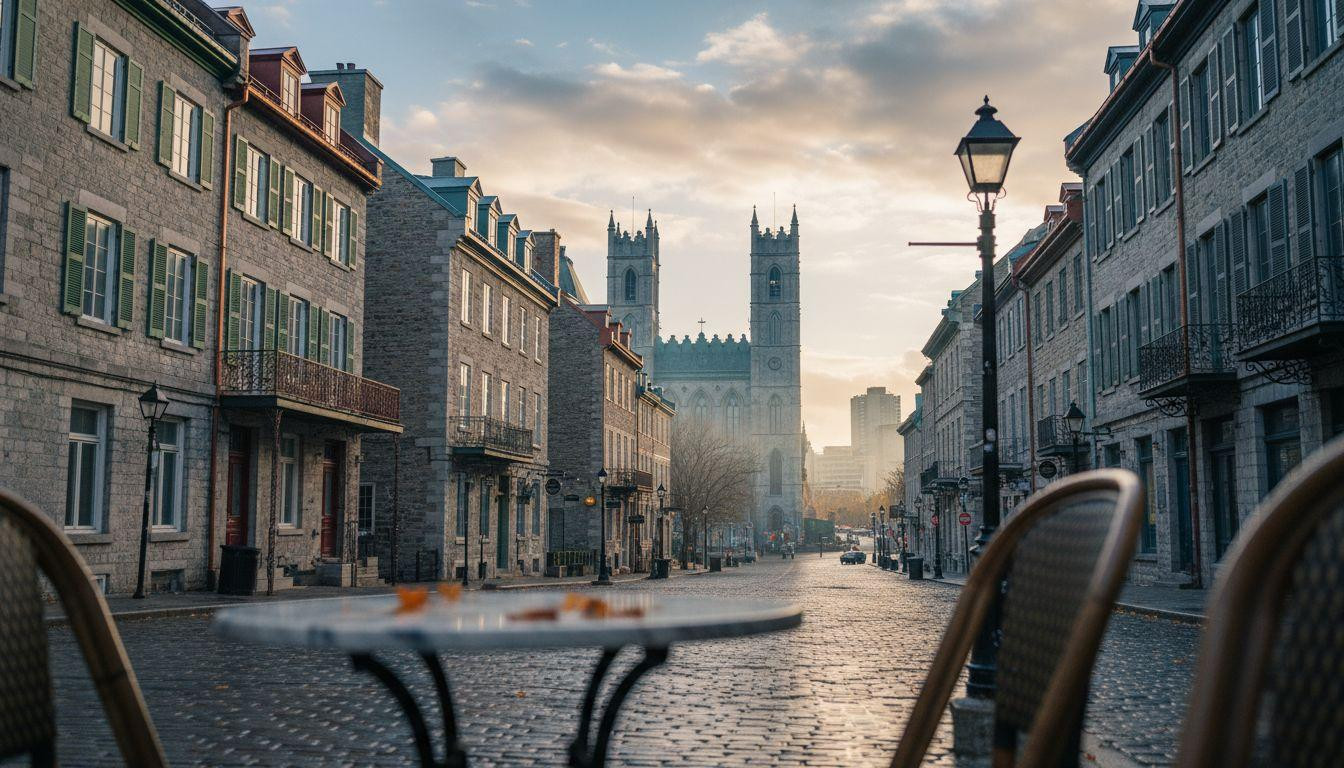
Montreal’s cobblestone streets empty before 7am. The smell of fresh bagels drifts from wood-fired ovens while Winnipeg’s river confluence sits wrapped in mist, quiet except for waterfowl. Both cities charge half what Toronto demands for hotels. Both fill summer calendars with festivals that cost nothing to attend. The difference is scale, not quality.
A family of four can visit either city for $250 daily, including mid-range hotels, transit, one attraction, and meals from local markets. That budget covers three days in Vancouver or one night in Banff. The trade-off: fewer international tourists, more authentic neighborhood life, and festivals where locals outnumber visitors.
Old Montreal delivers European charm without the flight
Place Jacques-Cartier sits empty at dawn. Cobblestones catch morning light the way they did in 1804. Notre-Dame Basilica opens at 8am for $20 per adult. Tour buses arrive two hours later. The gap between those moments defines the experience.
Walking these streets feels like stepping into Quebec’s French colonial past. Buildings from the 1700s line narrow lanes. Cafés serve croissants for $4. The waterfront path stretches 2 miles along the Saint Lawrence River, free and uncrowded before 9am.
Mount Royal Park sits 764 feet above the city
The main trail from Beaver Lake to the summit covers 1.2 miles with minimal elevation gain. Families with strollers manage it in 45 minutes. The lookout offers panoramic views across downtown and the river. Parking costs $5 per hour. Metro access from Plateau Mont-Royal hotels runs $3 per person daily.
Sunday afternoons from May through September bring tam-tam drum circles. Hundreds gather with instruments. The sound carries across the park. It costs nothing to join or listen.
Jean-Talon Market operates since 1933
Two hundred vendors fill stalls with produce, cheese, and prepared foods. Strawberries arrive in June. Corn peaks in August. Apples dominate September. The market opens at 7am Tuesday through Sunday. Arrive by 8am to avoid noon crowds.
A family meal costs $50 here. Crepes run $12 each. Poutine vendors charge $10 per serving. Fresh bagels sell for $8 per dozen. Compare that to Provigo supermarket prices 20% lower but with half the flavor.
Winnipeg’s Forks marks 6,000 years of gathering
The Red and Assiniboine Rivers meet in the city center. Indigenous peoples traded here for millennia. Today the site holds markets, parks, and performance spaces. Dawn mist lifts around 7am. Bird calls echo across the water. Pedestrian traffic stays under 50 people until mid-morning.
The Forks Market houses 50 food vendors. Operating hours run 10am to 6pm daily. Family meals cost $50 for four people. Poutine and sandwiches average $12 per person. Summer brings a free splash pad. Winter transforms the riverbank into skating paths. The contrast shows Winnipeg’s seasonal extremes.
Assiniboine Park Zoo opened in 1904
Journey to Churchill features polar bears visible through underwater tunnels. Morning visits offer the best viewing as bears swim close to the glass. Family admission runs approximately $90 for two adults and two children. The zoo includes tigers, penguins, and multiple ecosystems across 80 acres.
Picnic areas dot the grounds. Families typically spend 3 to 4 hours exploring. The park itself spans 1,100 acres with gardens, trails, and open spaces. Entry to park grounds costs nothing.
Exchange District preserves 150 heritage buildings
Terra cotta facades and red brick warehouses date from the early 1900s. Union Bank Tower at 679 Main Street shows detailed architectural work. Streets run narrow compared to modern downtown grids. The texture feels historic, not renovated.
A self-guided walking loop covers 1.2 miles in 90 minutes. Start at Old Market Square where free summer concerts happen weekly. Guided tours cost $20 per person. Walking costs nothing and offers better control over pace.
Festivals define both cities from May through September
Montreal’s International Jazz Festival runs late June through early July. Twenty outdoor stages offer free performances. Ticketed indoor venues host headliners. Afternoon shows suit families better than evening crowds of 50,000 people. The festival transformed Place des Arts into Canada’s cultural epicenter.
Winnipeg’s Folklorama spans two weeks each August. Forty cultural pavilions operate across neighborhoods. Individual entry costs $8. Family passports run $40 total. Ukrainian, Filipino, and Caribbean pavilions feature kid-friendly activities. Evening hours bring traditional music, food vendors, and craft demonstrations. The smell of different cuisines mixes with crowd noise. Pavilion density creates sensory overload in the best way.
Saint Boniface preserves French Canada west of Quebec
This Winnipeg neighborhood sits across the Red River from downtown. The cathedral’s ruins stand open to visitors at no charge. Riel House operates 10am to 5pm with $8 admission and 30-minute tours. A 1.8-mile walking path follows the Seine River through parks.
French bistros serve mains for $25 per person. The atmosphere runs quieter than downtown Winnipeg. Street signs appear in French. The contrast with prairie surroundings feels deliberate, preserved rather than manufactured.
Your questions about Montreal and Winnipeg answered
When should families visit to maximize festival access?
Late June through early August covers Montreal’s Jazz Festival and Winnipeg’s Folklorama. Hotel rates in both cities run $100 to $150 nightly during this peak period. Book 3 months ahead for Montreal, 6 weeks for Winnipeg. September offers 30% lower accommodation costs with autumn colors but fewer major events.
How do costs compare to Toronto or Vancouver?
Mid-range Montreal hotels average $120 per night versus $250 in Toronto. Winnipeg runs $100 versus Vancouver’s $280. Restaurant meals cost 40% less in both cities. A family spending $400 daily in coastal cities manages on $250 in Montreal or Winnipeg. The savings come from lower tourism pressure, not reduced quality. Similar to Granville’s affordable museums, these cities offer authentic experiences without premium pricing.
Which city suits families seeking outdoor activities?
Montreal provides Mount Royal Park’s trails and the Saint Lawrence waterfront. Winnipeg offers Assiniboine Park’s 1,100 acres and river paths at The Forks. Both cities maintain extensive green spaces within urban cores. Winnipeg’s parks feel more spacious. Montreal’s integrate into denser neighborhoods. The choice depends on preference for European-style compact exploration versus prairie openness. For those considering similar affordable destinations, both Canadian cities deliver comparable value.
The ferry from Old Montreal to Saint Helen’s Island leaves every 30 minutes in summer. Most families catch the 4pm departure after market visits and park time. I missed it once, watching street musicians in Place Jacques-Cartier. The next boat came. The music stayed in my head longer than any schedule.