
Think your attic is too awkward to pull off a real bedroom? The best loft conversion bedroom designs prove otherwise. A sloped roof isn’t a limitation. It’s actually the most interesting thing in the room.
These 14 rooms show exactly how to work with the geometry, not against it. Low beds, honest timber, dormer light. Here’s what actually works.
Silver Birch Rafters That Do All the Work
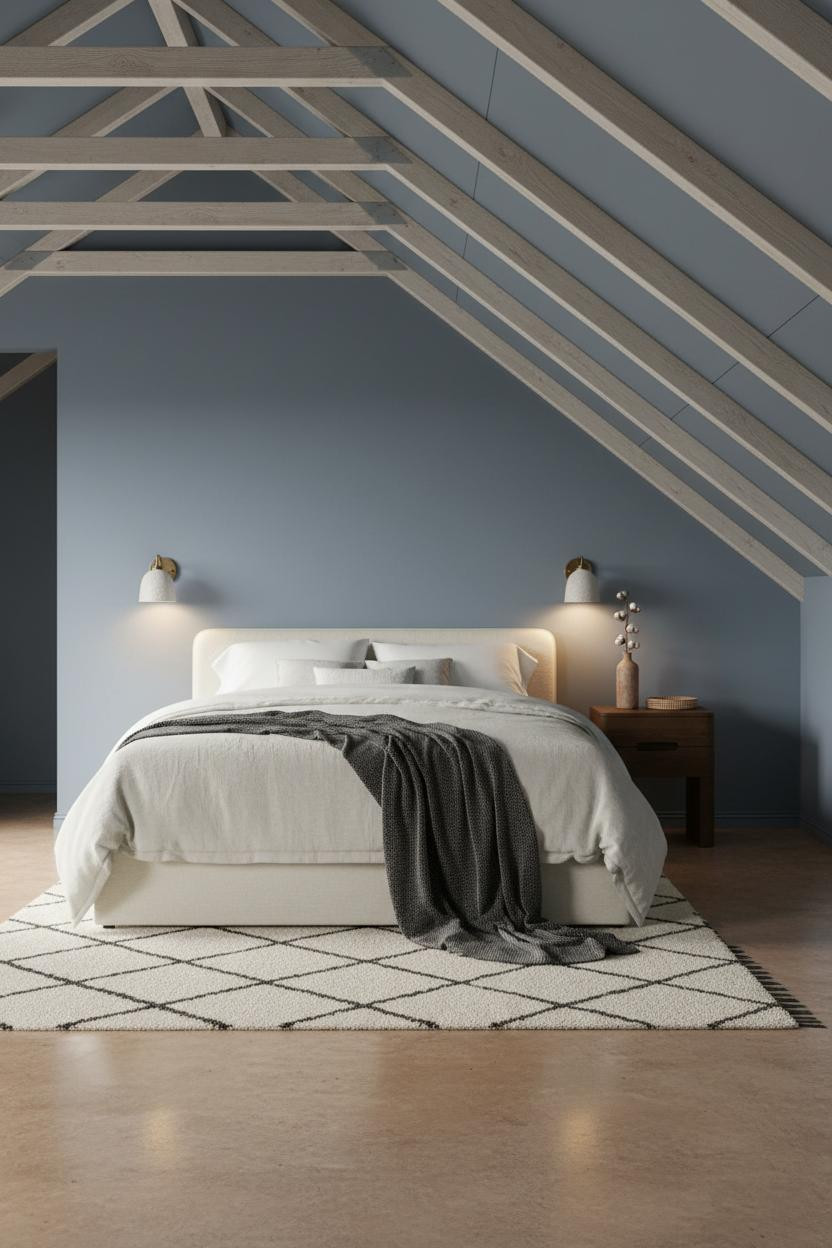

I keep coming back to this one. Something about the rafters makes the whole compressed ceiling feel intentional rather than tight.
Why it holds together: Raw silver birch collar ties running the full diagonal pitch give the room architectural structure that no paint color could replicate. The pale grain against angled plaster keeps it from feeling heavy.
Steal this move: Leave structural timber unpainted. Whitewash it if you want it lighter, but don’t bury it in ceiling paint.
A Platform Bed That Makes the Slope Feel Intentional
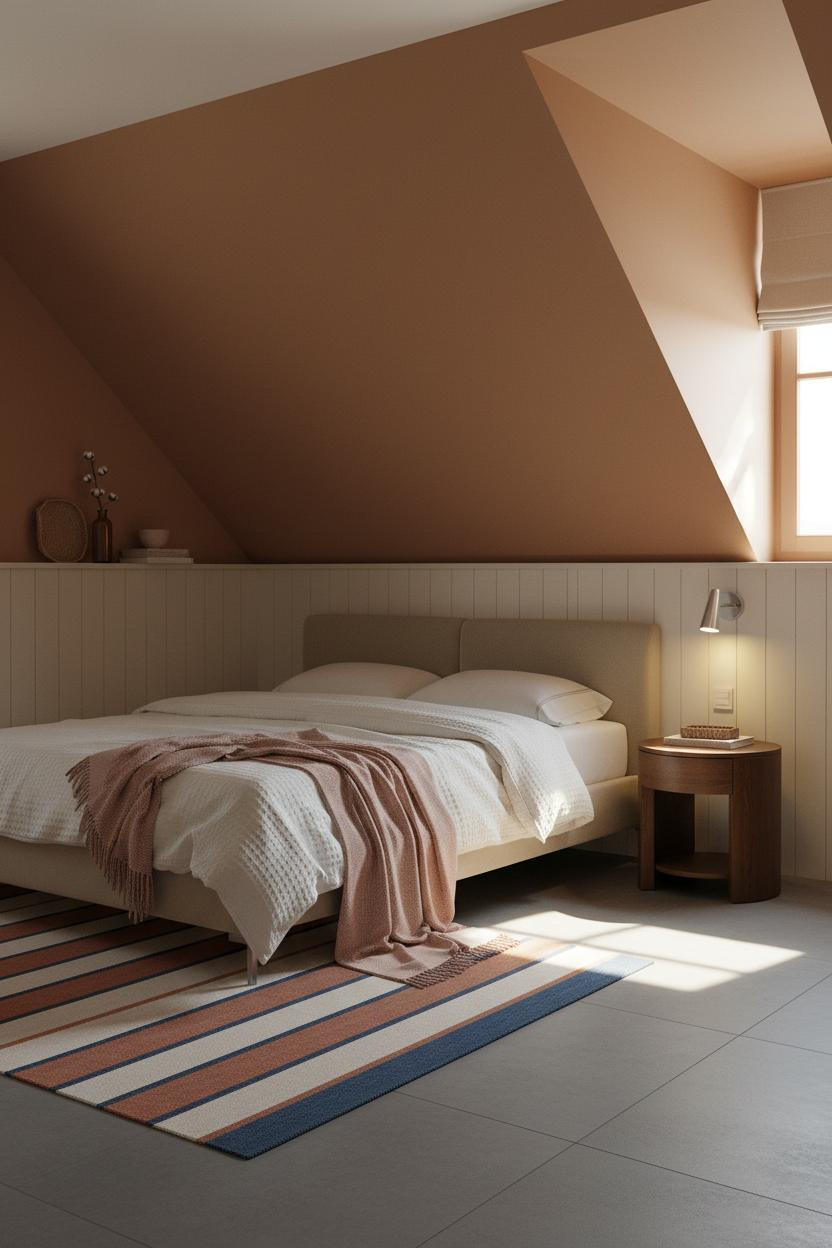

In a space this constrained, every piece of furniture has to earn its height. A platform bed solves that immediately.
What makes this work: The board-and-batten knee walls in pale cream catch raking dormer light, throwing fine shadow lines up the sloped ceiling and making the geometry feel deliberate. Warm rust plaster above ties it together without competing.
The smarter choice: Skip tall headboards under a dormer. Low and wide works better, while still feeling substantial.
Douglas Fir Rafters on Caramel Plaster
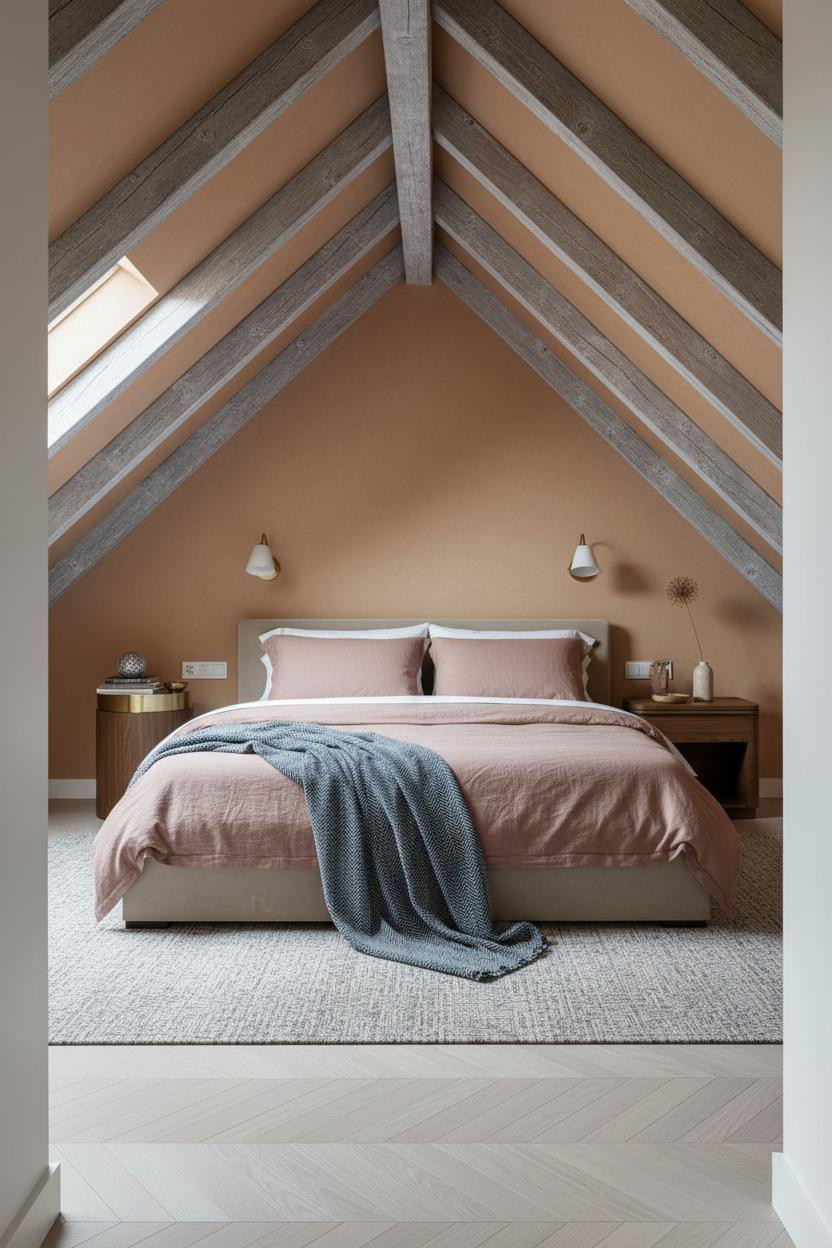


Nothing fancy. That’s the whole point.
Raw silver-grey Douglas fir rafters left bare against caramel-toned plaster create the kind of honest contrast that feels collected rather than decorated. The pale weathered grain against warm walls keeps the room from feeling like a show home.
What to borrow: Pull a bleached parquet floor into a warm-walled attic and the two tones balance each other without either one taking over.
Clay-Rose Plaster With Concrete Underfoot
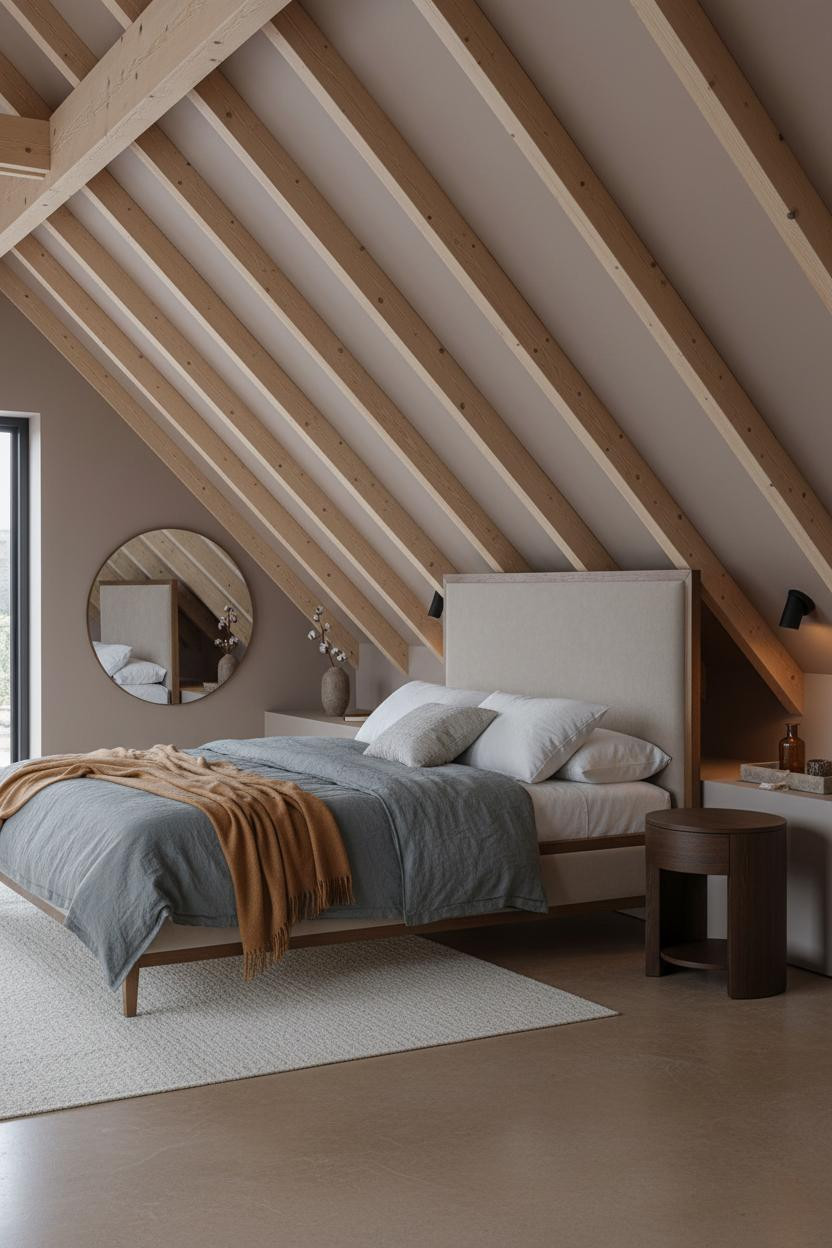

This combination shouldn’t feel warm. But it does, and I think the clay-rose plaster is the reason.
Design logic: Polished concrete at floor level cools the palette just enough so the warm plaster walls don’t tip into heavy. The buff tone in the concrete picks up the pink in the plaster, in a way that feels almost accidental.
Pro move: A natural linen runner over concrete anchors the bed zone while still letting the floor material breathe around it.
Dark Reclaimed Timber on a Mushroom Wall
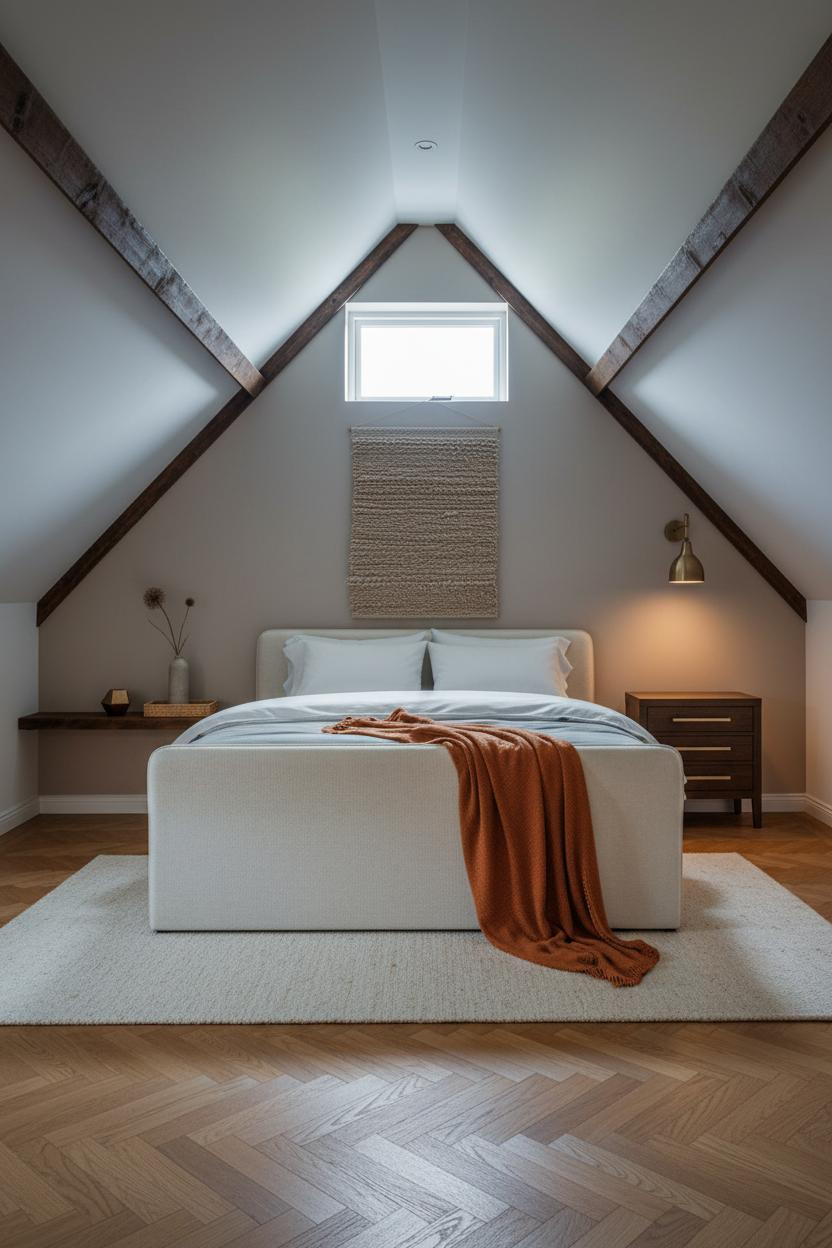

Fair warning. Dark timber on a sloped ceiling sounds like a lot. It really isn’t, if the walls stay quiet.
What makes it land is contrast. Dark-stained reclaimed collar ties throw crisp linear shadows down the plaster slope, but the mushroom-toned walls absorb the drama so the room stays calm underneath all that structure.
The finishing layer: A chunky cream wool rug grounds the bed zone and keeps the dark timber from reading too raw.
Walnut Tongue-and-Groove on a Terracotta Wall
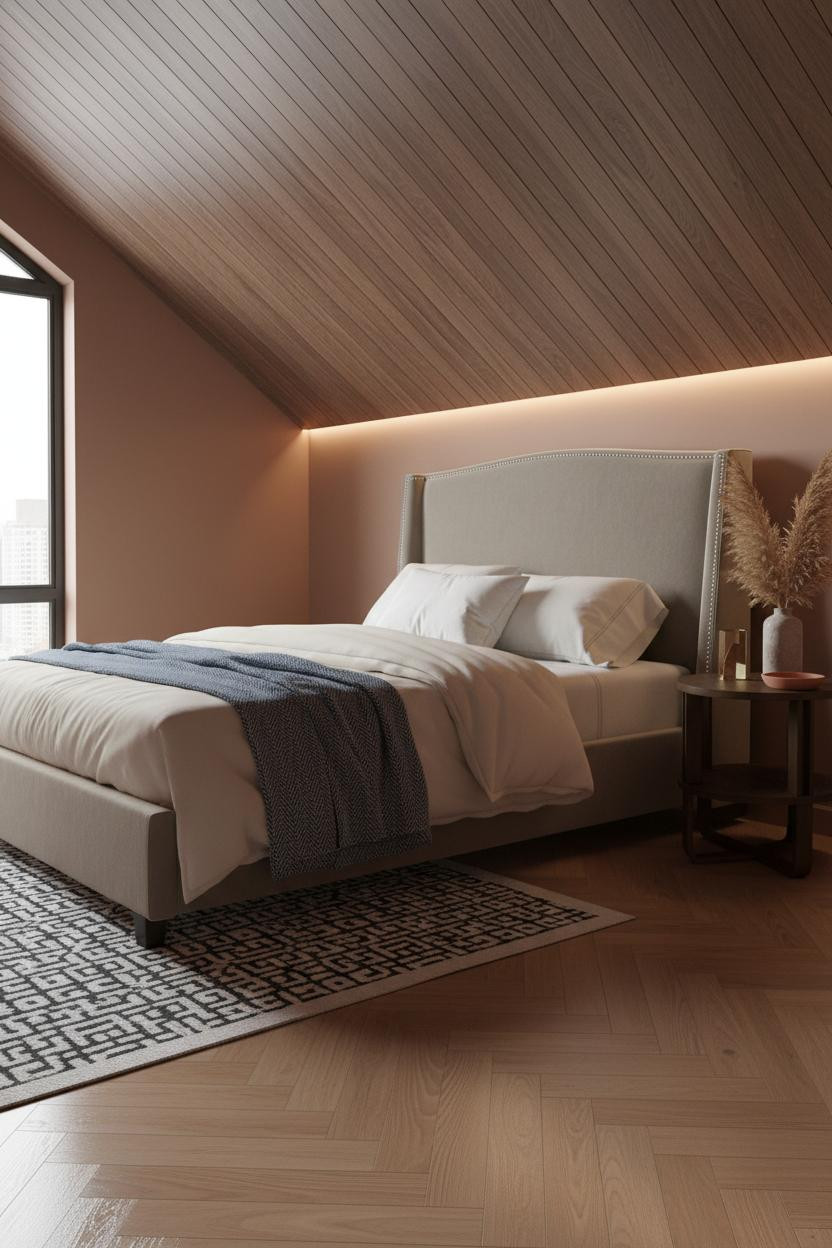


This one is divisive. But I think it’s one of the strongest combos in a sloped ceiling bedroom.
Why it feels expensive: Walnut tongue-and-groove planks running ridge to knee wall absorb the overcast dormer light along every edge, creating fine shadow rhythms that make the ceiling feel architectural rather than awkward. Muted terracotta keeps the warmth honest.
Avoid this mistake: Don’t pair dark ceiling cladding with dark walls. One or the other, or the room closes in completely.
Whitewashed Purlins for the Nordic Minimalist
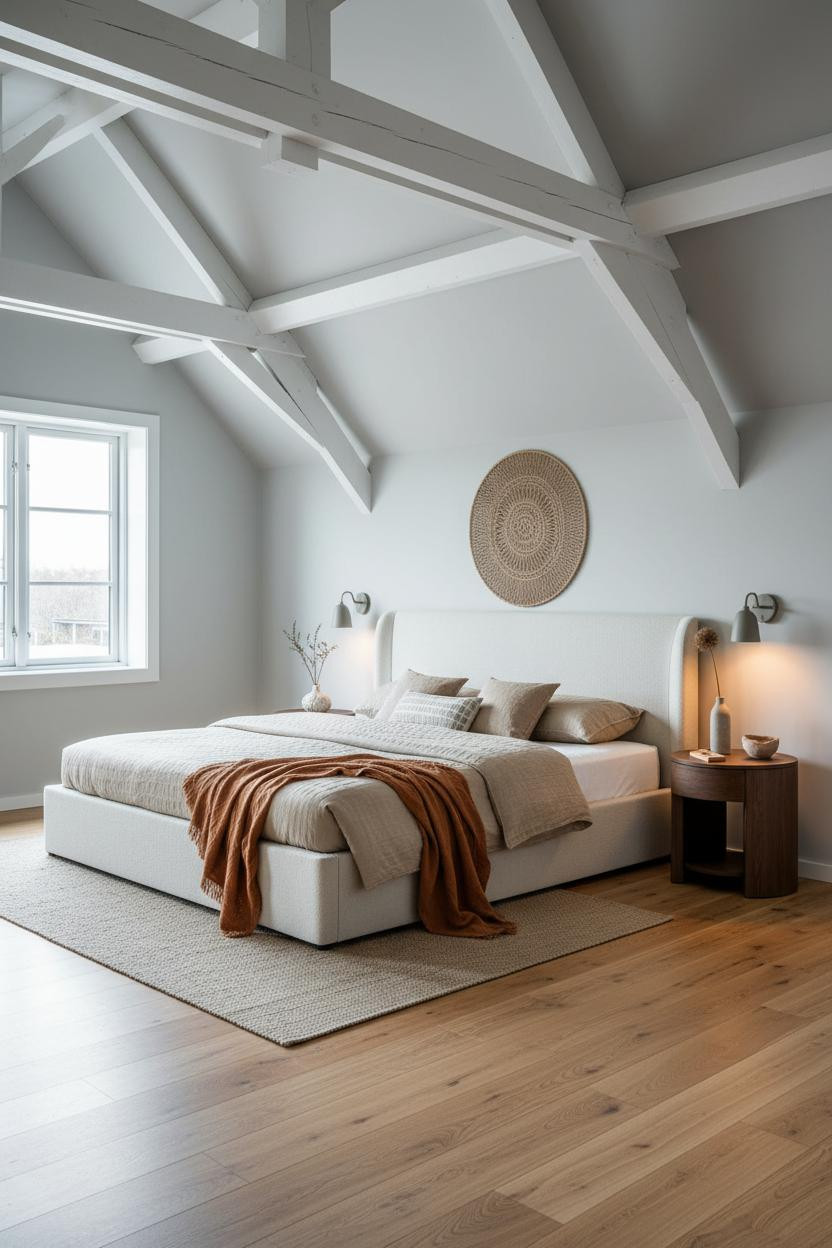

The room feels calm and cohesive in a way that takes real restraint to pull off.
What gives it presence: Exposed whitewashed collar ties in clean structural intervals cast faint geometric shadow lines down dove grey plaster. Honest architectural bones, not decoration. And the honey wide-plank oak floor warms the whole thing from below without competing with the ceiling.
Worth copying: A flat-weave jute runner over warm oak keeps the Nordic palette grounded without adding visual weight at floor level.
Cedar Ceiling Planks in a Coastal Attic
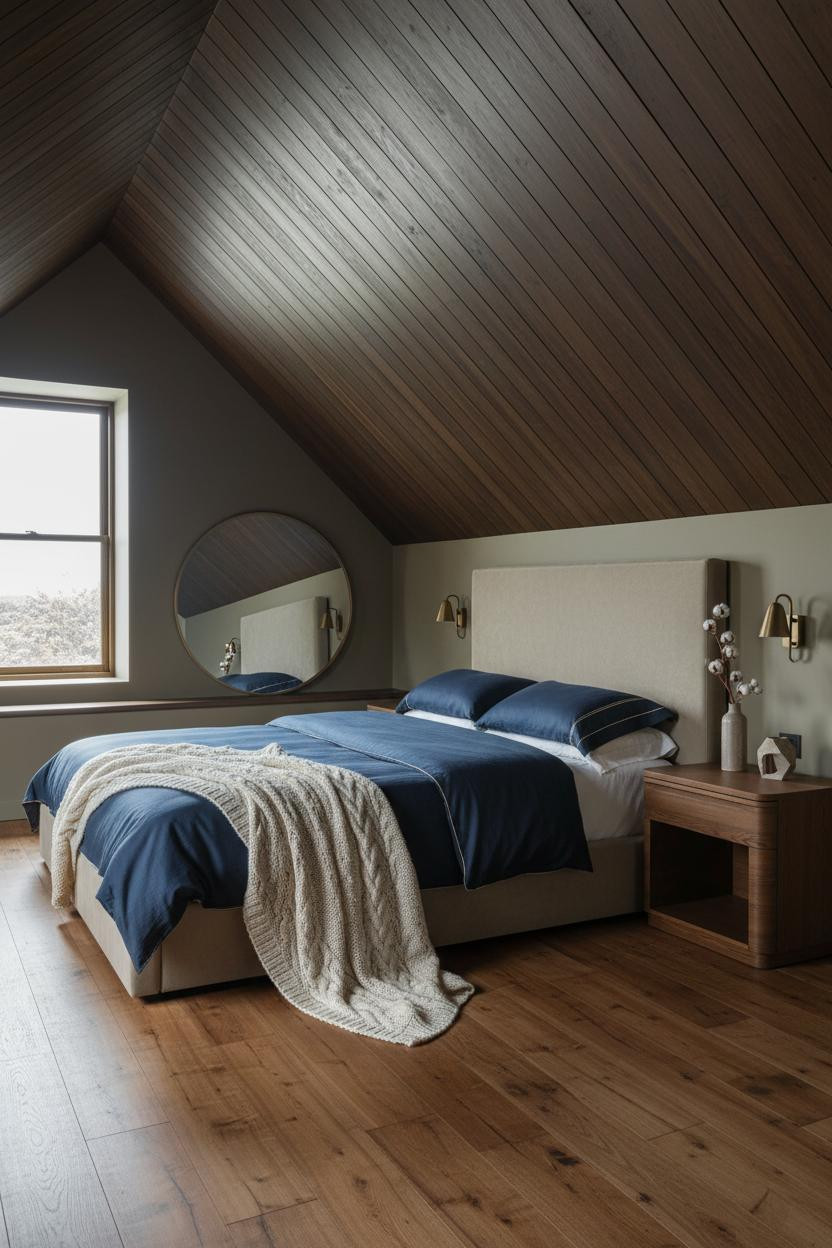

I almost scrolled past this. Glad I didn’t.
The real strength: Dark-stained cedar tongue-and-groove lining the full sloped ceiling plane creates dense rhythmic texture that pulls the eye along the diagonal, giving the attic geometry actual material weight. Muted olive walls below stop it from feeling like a cabin.
Skip a rug here. Reclaimed wood plank flooring deserves to be seen, especially when the ceiling is this textured.
Board-and-Batten Dado With an Abstract Canvas
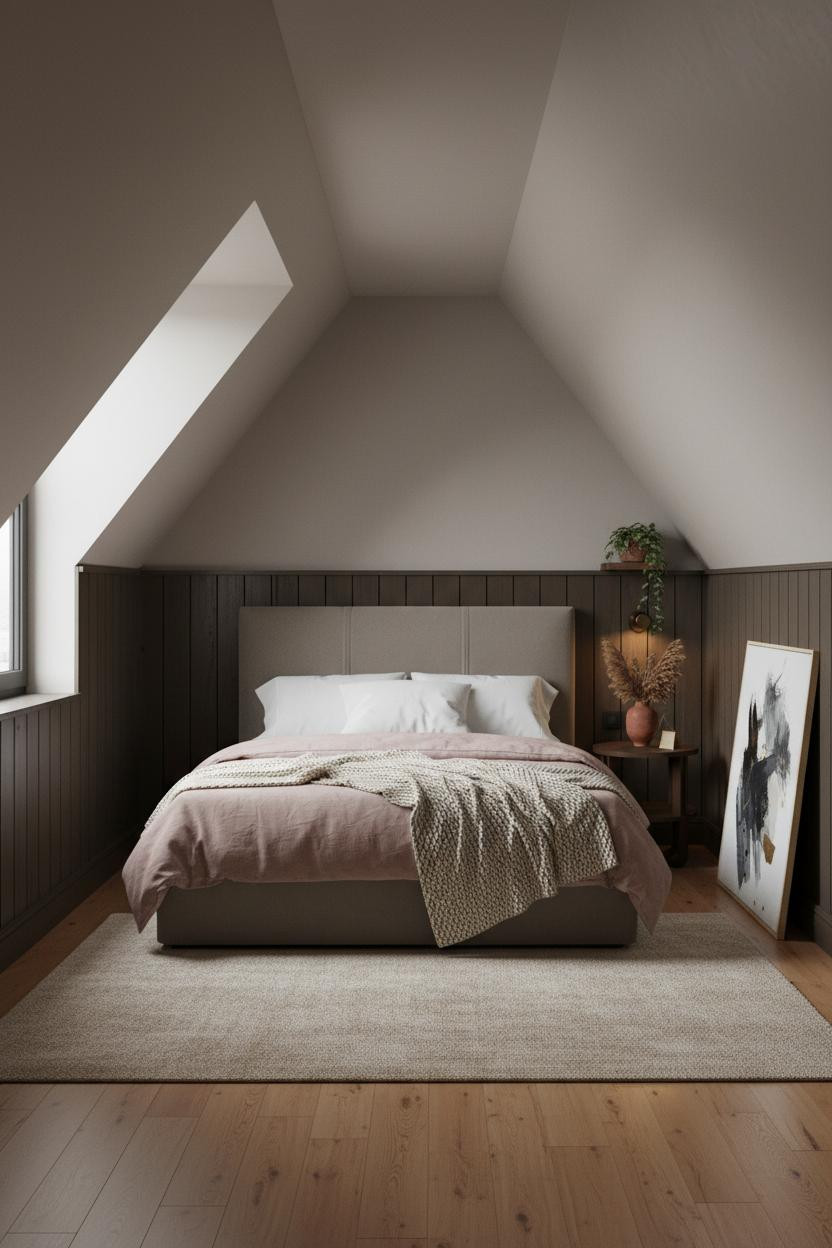

This is the kind of loft conversion layout that makes low eaves feel like a feature rather than a compromise.
Why it looks custom: Dark oak board-and-batten cladding on the lower knee walls draws the eye upward to bare stone taupe plaster above, where the roofline converges. The vertical rhythm of the timber dado makes the room feel taller, not shorter.
One smart swap: Lean a large abstract canvas against the timber dado instead of hanging it. It fills the eave zone without requiring a nail at an awkward angle.
Japandi Attic With an Oversized Woven Hanging
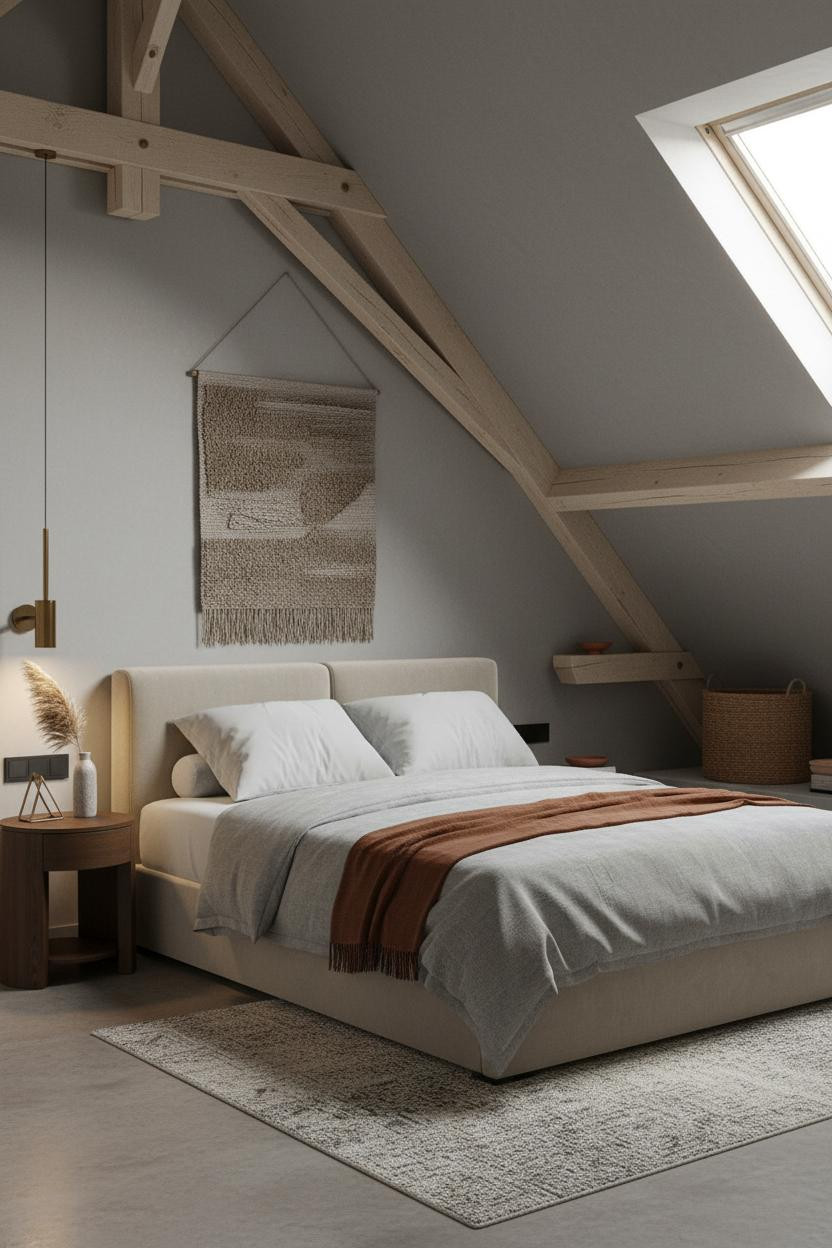
Honestly, Japandi works almost too well in an attic. The restraint suits the compressed geometry.
What creates the mood: Pale honey exposed wooden collar ties span the diagonal pitch, their raw grain catching dormer light and casting subtle structural lines down warm greige plaster. The oversized woven wall hanging fills the headboard zone in a way that feels soft, not busy.
The key piece: A flat-weave kilim runner over polished concrete anchors the bed zone, in a way that feels grounded while the upper half of the room does all the decorative work.
Painted Grey-Blue Purlins on Dark Plank Floors
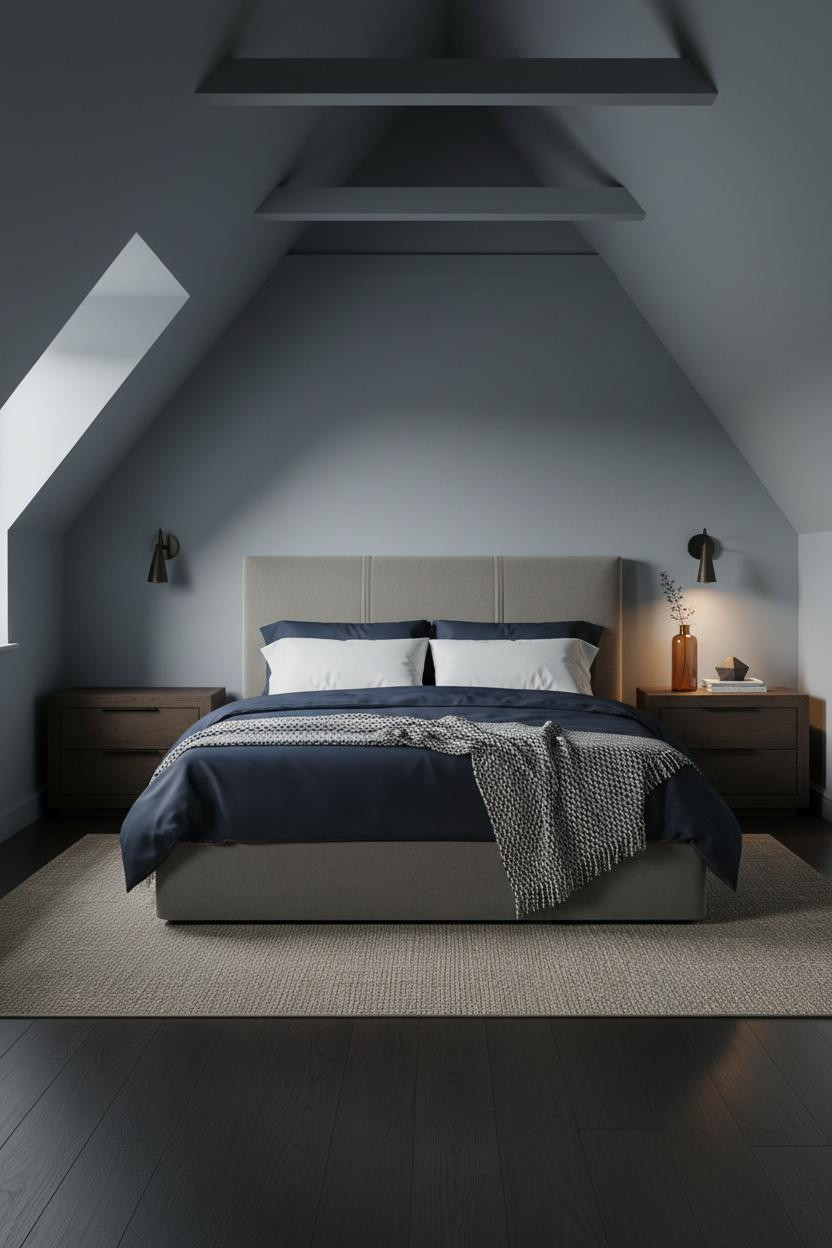
This room feels geometric and honest in equal measure. No fuss, no decoration for decoration’s sake.
Why it lands: Painting the collar ties and purlins dusty blue-grey instead of leaving them raw keeps the structural rhythm present while still feeling modern. The dark narrow-plank floor below creates a shadow at the base that makes the room feel grounded.
Where people go wrong: Matching the beam paint exactly to the walls. Just off is better. The contrast is what makes the structure readable.
Charcoal Plaster and a Hidden LED Cove
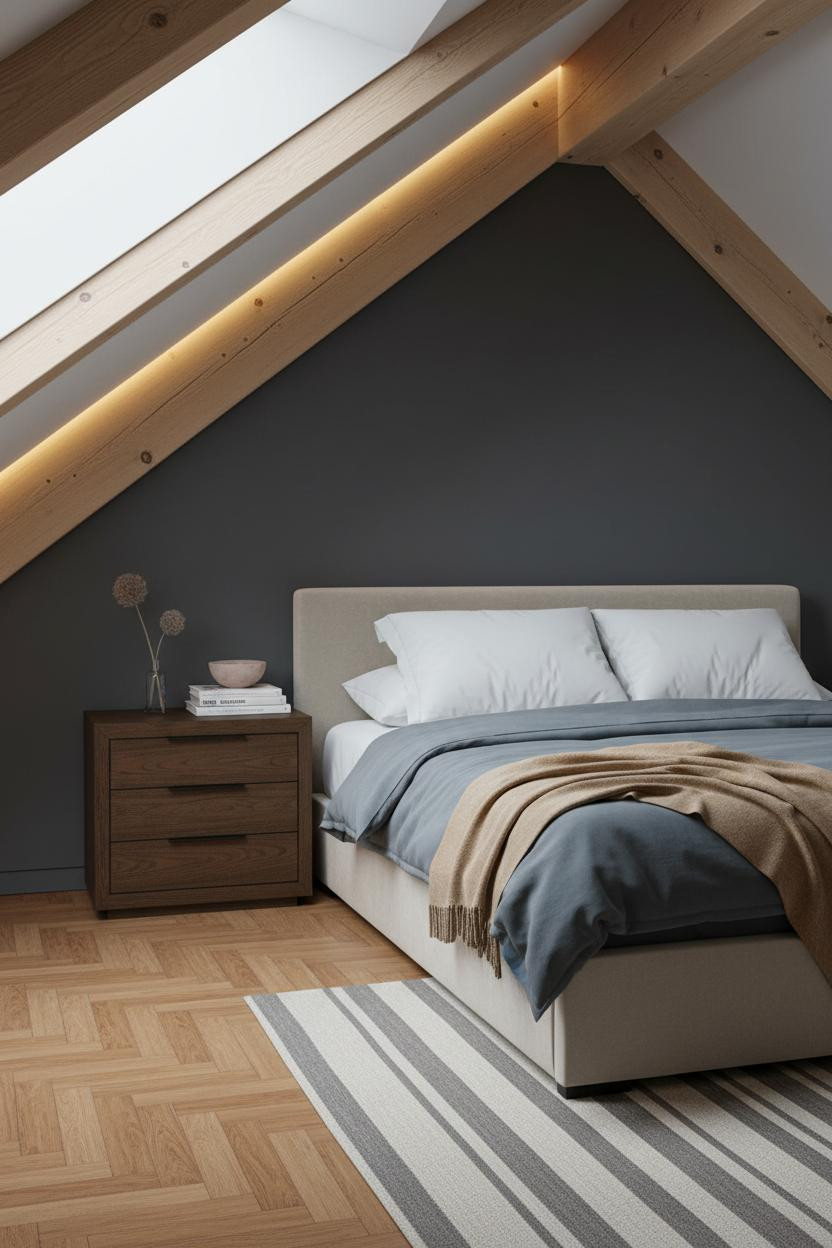
Bold choice. Charcoal plaster in a compressed attic sounds like a mistake.
But the cove LED strip changes the math entirely. Warm light grazing the raw pine purlins from above lifts the ridge beam visually, so the charcoal walls feel dramatic rather than oppressive. It’s a small electrical decision with a large spatial payoff.
The easy win: A striped linen rug over herringbone parquet breaks the floor into two zones, which helps the room read larger even with dark walls surrounding it.
Honey Timber and Sage Green in the Afternoon Light
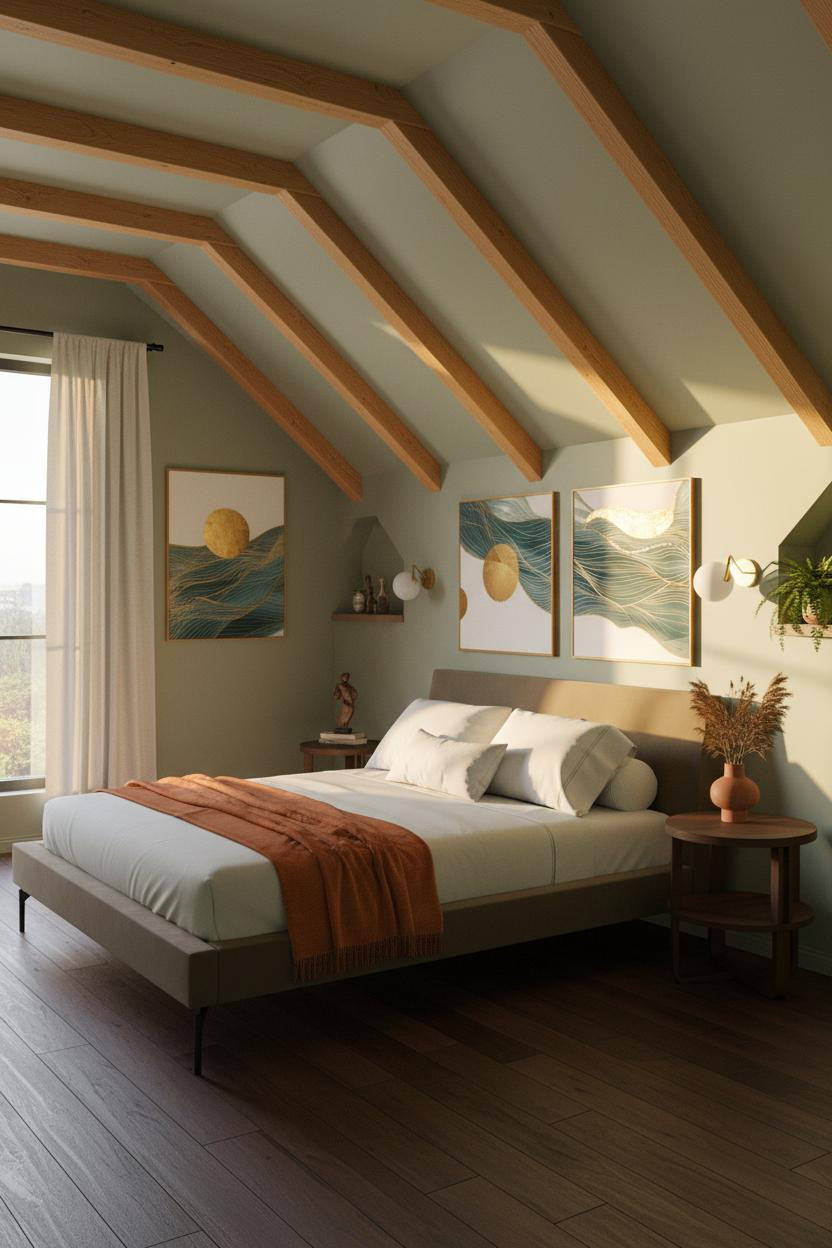

This is the version I’d actually live in. Warm without trying. Calm without being sterile.
Why the palette works: Golden afternoon light catches the honey-toned exposed rafters at raking angle, throwing diagonal amber shadows across soft sage plaster. The combination feels lived-in and intimate rather than staged, especially against dark walnut floors below.
Try this: Floor-to-ceiling cream linen curtains pooled at the sill beside a dormer make low attic windows feel deliberately generous. Not an afterthought.
Whitewashed Trusses in a Bright Scandi Attic
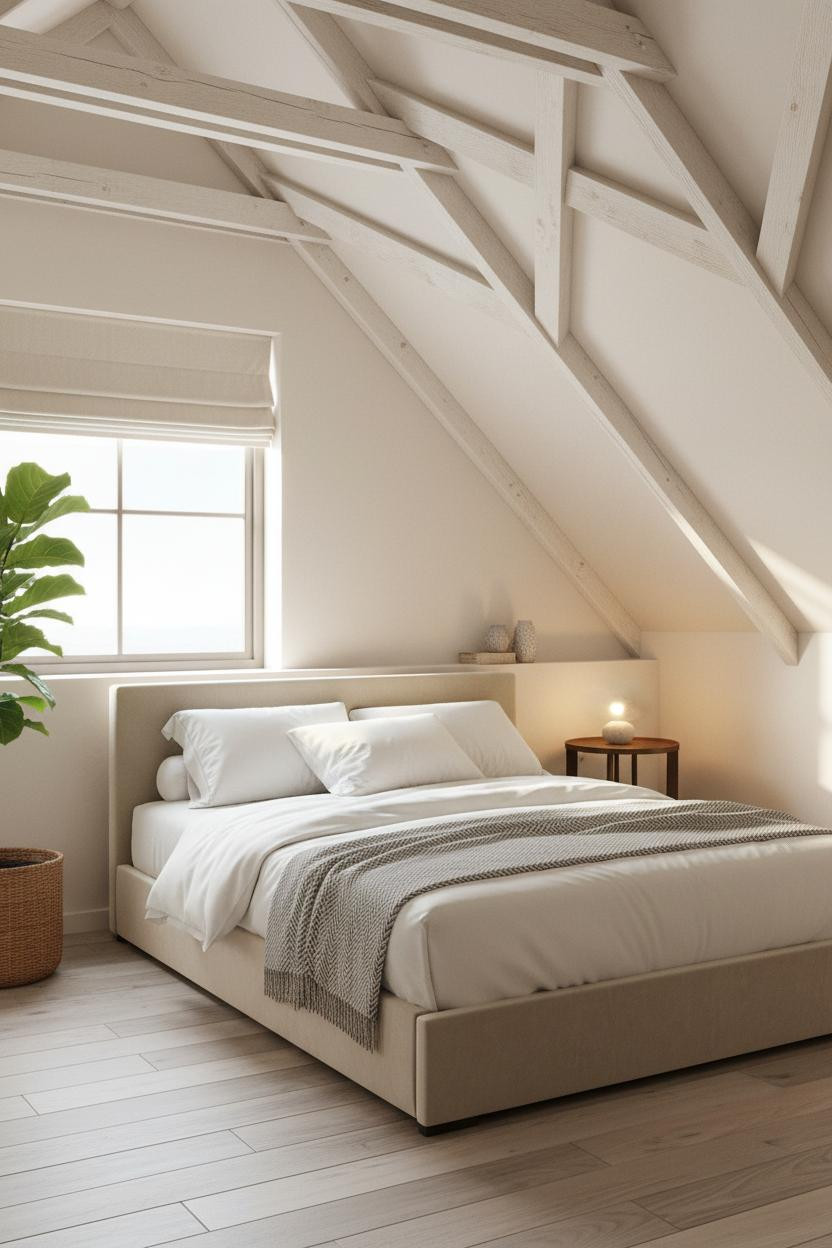
And then there’s the other approach entirely. Maximum light. Minimum interference.
What softens the room: Whitewashed exposed roof trusses spanning the full angled ceiling keep the structural bones present while letting early morning dormer light flood the plaster uninterrupted. The bleached oak floor below reflects it back upward, so the room feels twice as bright as it is.
A cream linen roman shade mounted high on the dormer frame (not at sill level) keeps the light soft without sacrificing any of the headroom.

Our #1 Pick
Saatva Classic Mattress
America’s best-selling online luxury innerspring. 365-night trial, lifetime warranty, free white glove delivery.
Shop Saatva Classic
Why Luxury Bedrooms Always Feel Better
All fourteen of these rooms get the atmosphere right above the mattress line. But the bed itself is where it actually matters. And a compressed attic ceiling makes you more aware of that, not less.
The Saatva Classic is the one I’d put under any of these rooflines. Dual-coil support means the mattress holds its shape and moves with you, not against you. The Euro pillow top is soft without losing structure, and the breathable organic cotton cover doesn’t trap heat the way synthetic covers do on warmer summer nights under a low roof.
Walls get repainted. Timber gets restained. The mattress stays. Start with the right one.

The rooms people save on Pinterest aren’t the most expensive ones. They’re the ones where every decision, from the exposed timber overhead down to the mattress underneath, was made with actual intention. Good design ages well because it’s made well.