
The first thing you notice in the best Mediterranean bedroom ideas is what’s missing. No fuss. No overwrought color. Just warm plaster, honest materials, and light that feels like it traveled a long way to get there.
These 13 rooms prove you don’t need a villa to pull it off.
Textured Plaster That Earns Its Keep
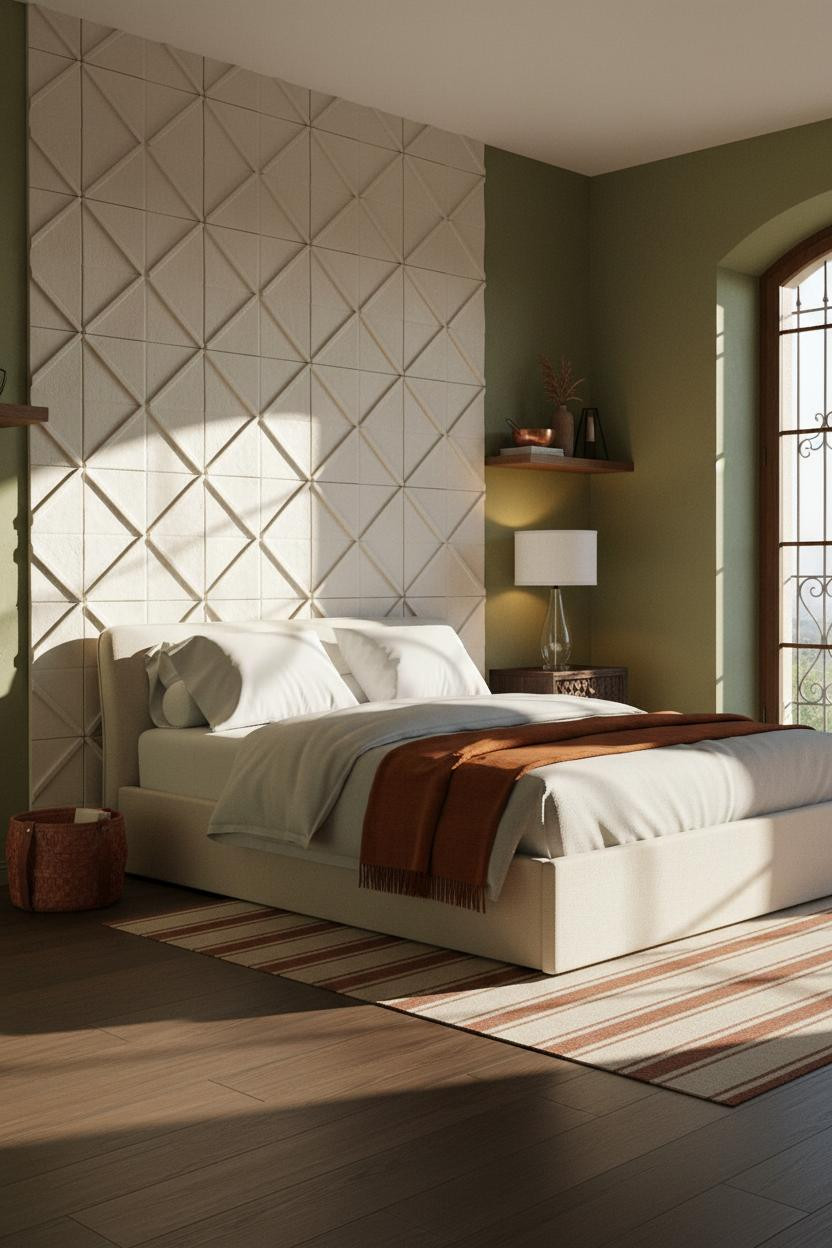


I keep coming back to this one. The proportions feel ancient without being heavy.
Why it works: Hand-pressed geometric relief tiles in raw ivory clay catch raking sidelight differently at every hour, so the wall does the decorating for you.
Steal this move: Flank with forest-green lime-washed stucco on either side and the relief panel reads warmer, not busier.
What a Carved Plaster Frieze Actually Does to a Room
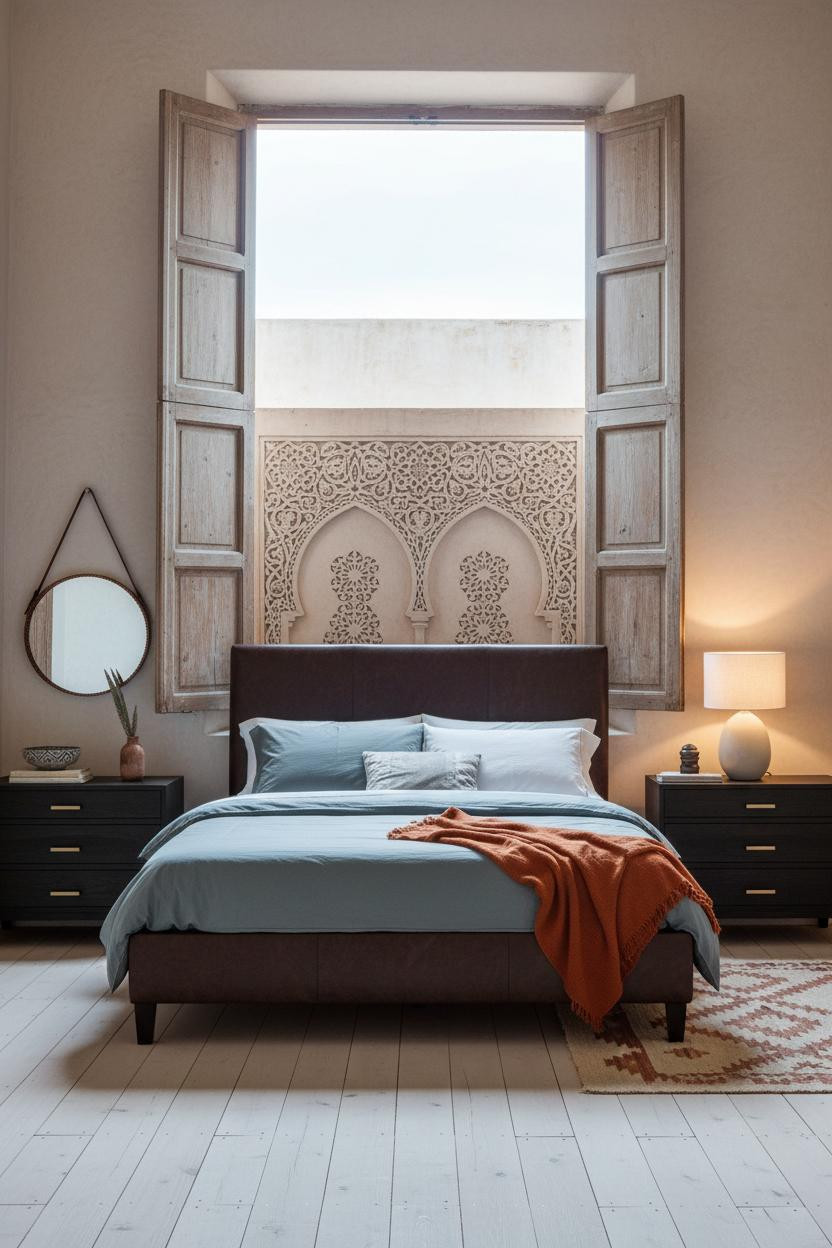


Bold choice. Not subtle. But the rooms that commit to it never look generic.
A deep hand-carved gesso frieze running at headboard height brings the kind of shadow and relief that wallpaper simply can’t fake. What makes it work is the buff-white plaster behind it: warm enough to feel Moroccan, neutral enough to let the carving breathe.
The smarter choice: Pair with a flat-weave rust and ivory kilim on pale birch floors. Pattern below, architecture above. Never compete with both at once.
Why the Arch Is the Whole Room
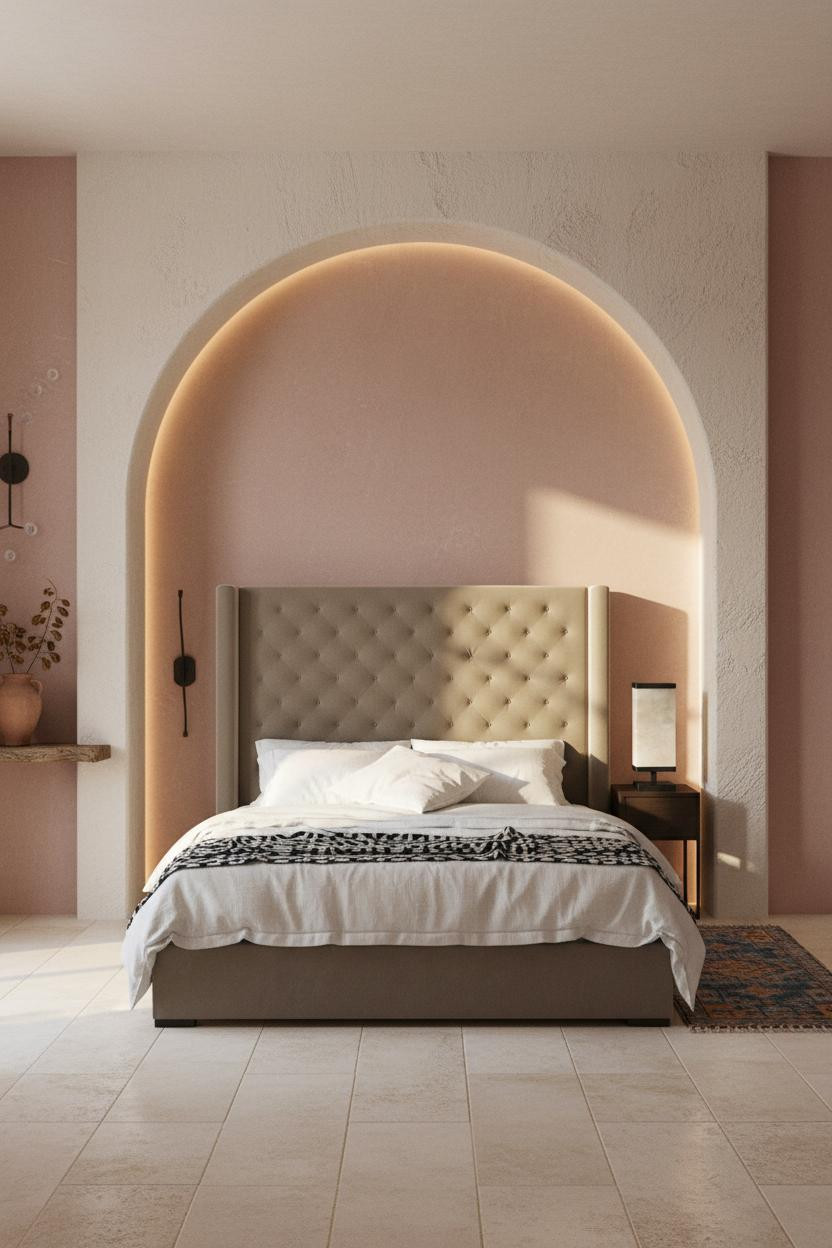

A full-width curved plaster arch over the bed is the kind of thing I’d normally talk myself out of. But this one changes the room’s entire scale.
Why it feels expensive: Thick lime plaster on the arch soffit reveals every trowel ridge in raking light, which gives the curve an organic depth that a painted arch just doesn’t have.
Pro move: Run hidden cove lighting along the inner arch curve. The warm wash keeps dusty rose-blush walls from reading cold at night.
The Greek Island Move That Works Anywhere
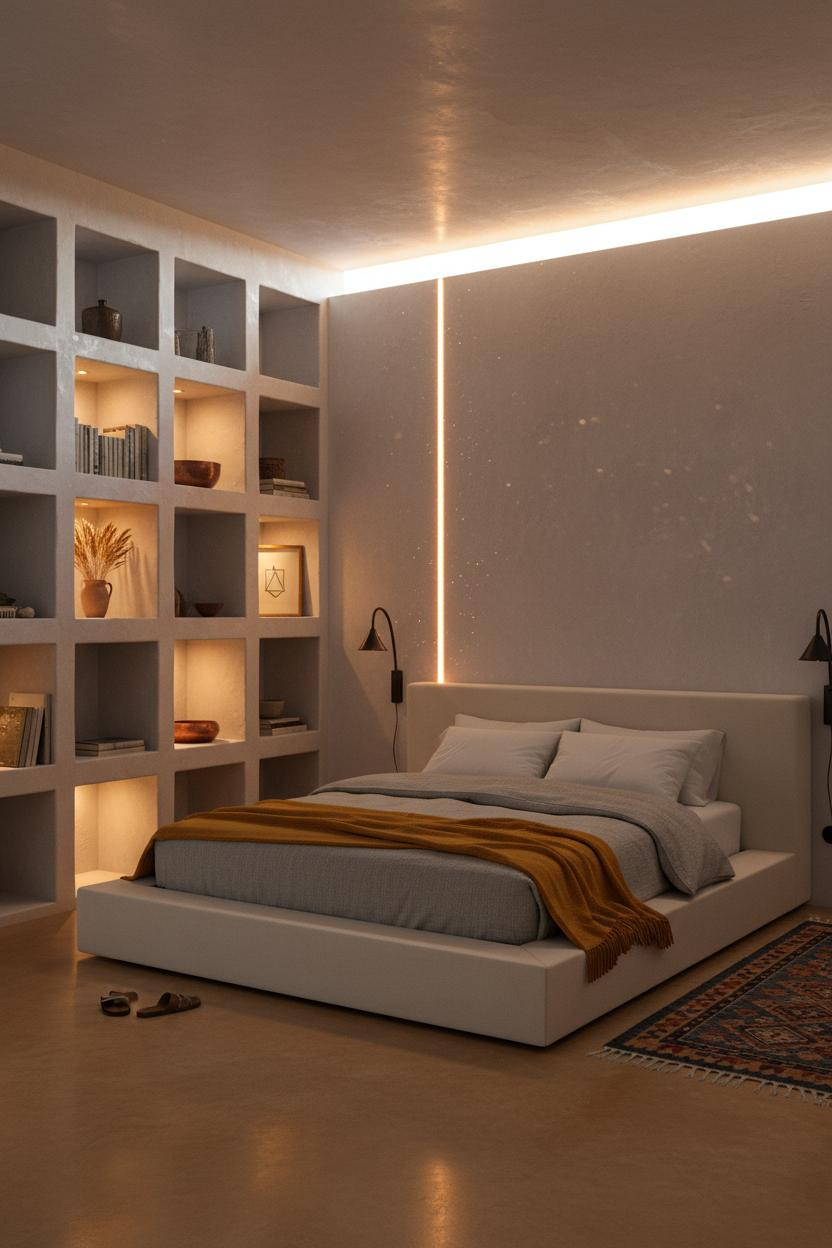
Nothing fancy. That’s the point.
What gives it depth: A built-in bookshelf wall of rough whitewashed masonry with open niches creates a push-pull of warm shadow and raking light that a flat wall can’t replicate. The room feels lived-in and intimate without a single piece of art.
Worth copying: Warm honey-toned concrete floors with a saffron wool blanket at the footboard. Keep bedding monochrome so the niche objects do the talking.
I Wouldn’t Have Picked This Palette. I Was Wrong.
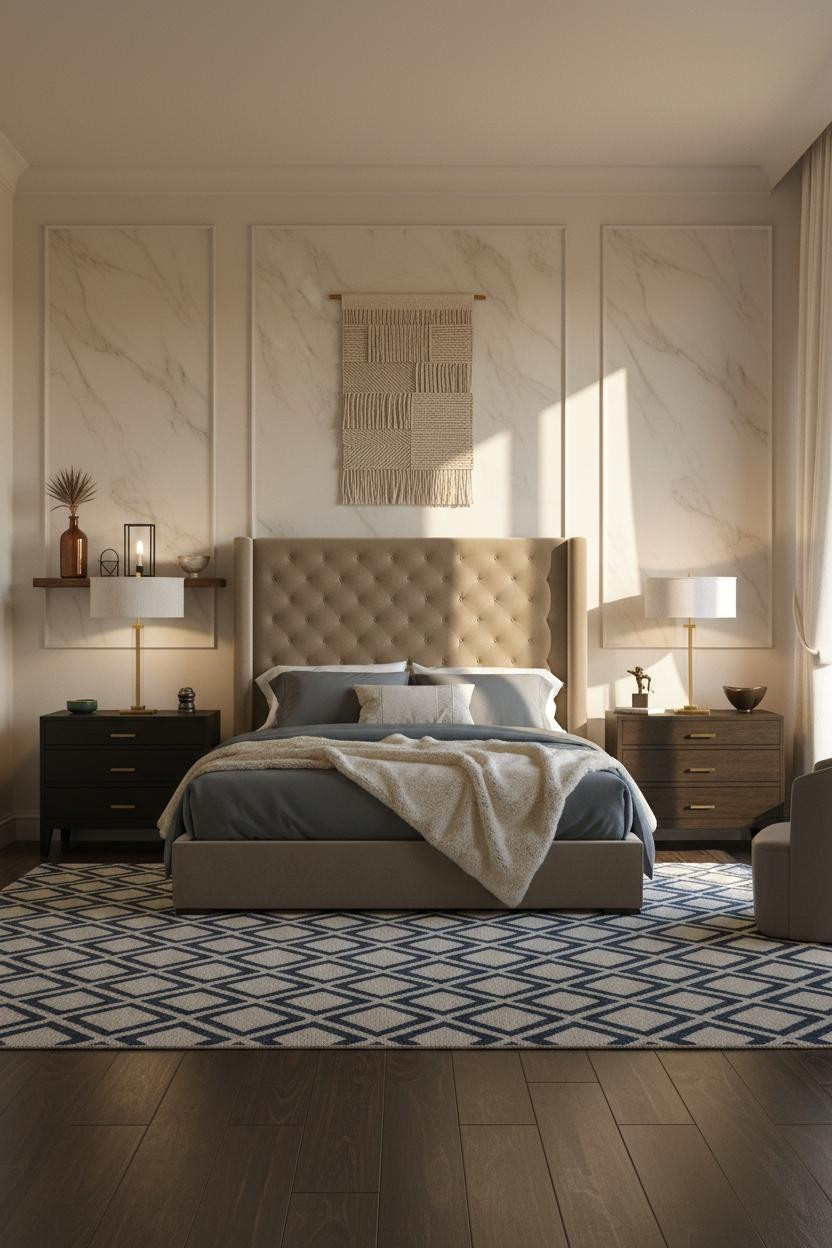
Deep indigo on the floor against marble-effect plaster walls sounds like it shouldn’t hold together. Somehow, it does.
Why the palette works: The board-and-batten marble-effect plaster panels shift from cream to warm gold depending on the angle of light, so the indigo Moroccan rug below reads grounded rather than jarring. The contrast is deliberate. It’s scale, not color, doing the heavy lifting.
A geometric woven wall hanging above the bed in undyed wool ties both tones together. One neutral anchor at the top, one dark one below. Cream walls in between keep it breathing.
When a Window Is the Real Design Feature
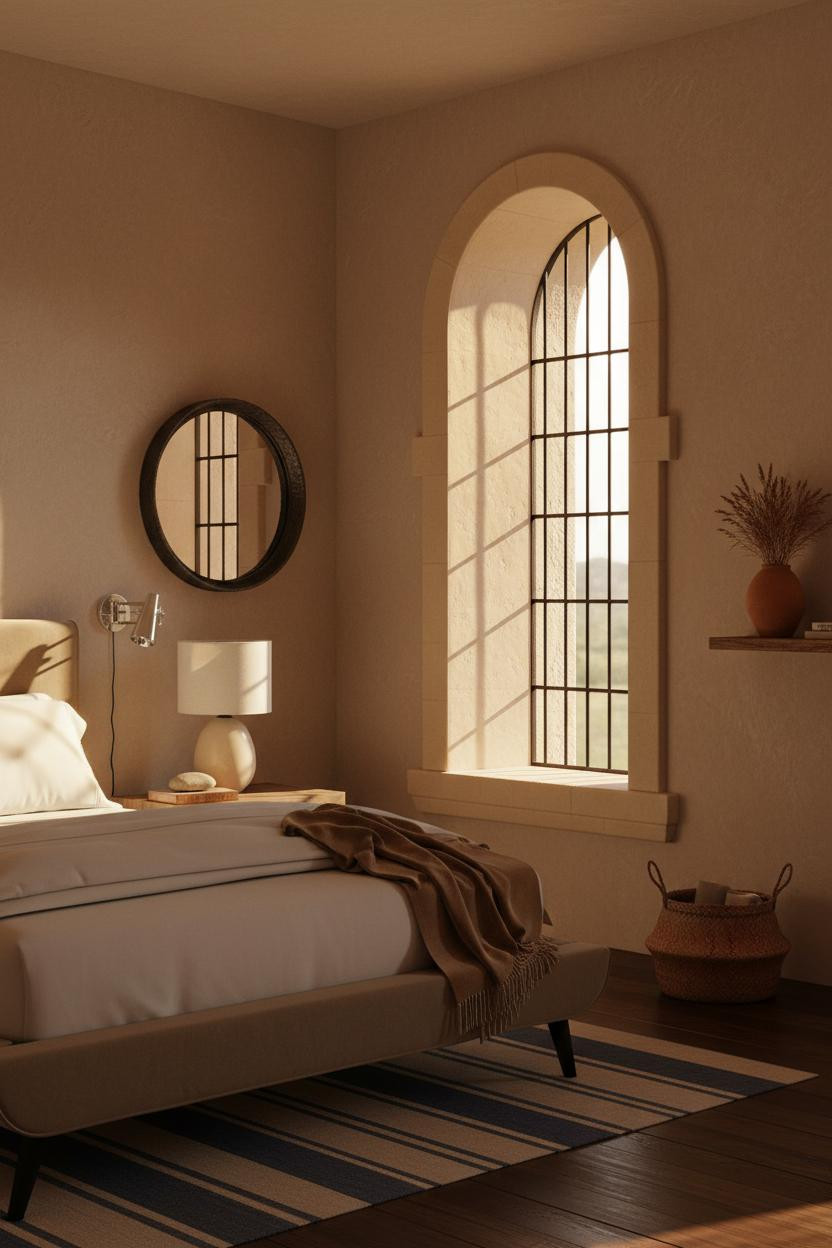

Having a deep-set arched window with a wrought-iron grille changes how you actually use the room. The shadow geometry it casts across the floor does more than any rug could.
What creates the mood: The thick limestone surround hand-plastered in warm cream gives the window reveal a sense of mass that modern construction rarely has. It makes the light feel earned.
The easy win: Lean a large round hammered-iron mirror against the far wall. It bounces that geometric window light back across reclaimed tobacco-stained planks, which helps balance the room without adding another fixture. (Admittedly, most people hang it instead. Don’t.)
The Azulejo Trick Designers Have Used for Centuries
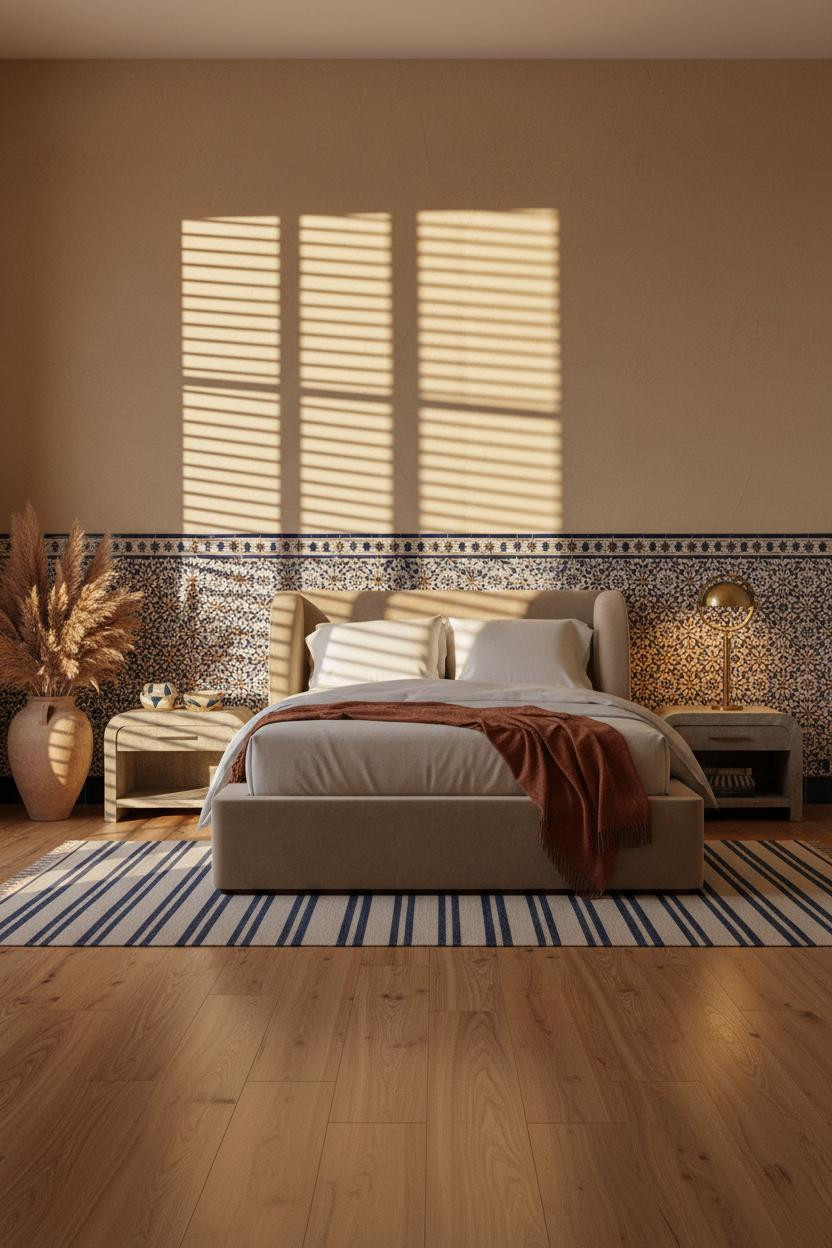

Fair warning. Once you see hand-painted azulejo tile used at dado height in a bedroom, plain walls start to feel like a missed opportunity.
Why it holds together: Each slightly irregular glazed tile edge catches light unevenly, throwing tiny cobalt reflections onto the sand-cream stucco above. The result is a room that feels warm and animated without a single pendant light doing the work. And the geometry grounds the space even on flat, overcast days.
Avoid this mistake: Don’t run the frieze on one wall only. All four walls at dado height, or it just looks like you ran out of tile.
Zellige Wainscoting Is Not What I Expected
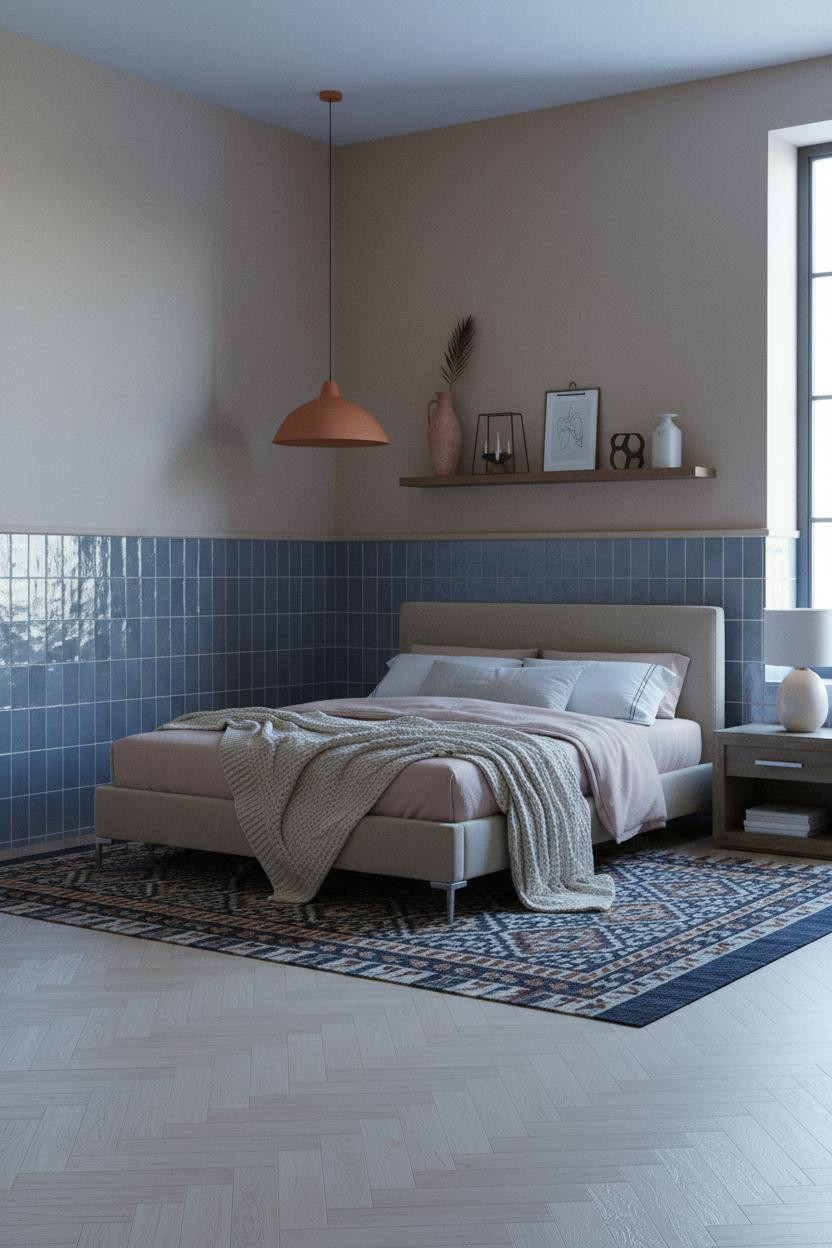

I assumed zellige tile wainscoting in a bedroom would feel cold. But the hand-cut facets catch raking morning light in a way that actually warms the lower half of the room.
What makes this one different: The dusty indigo and cream tones in the ceramic surface pull the cool north-facing daylight into something almost amber, while still keeping the muted clay walls above them from reading flat.
One smart swap: Dusty pink linen bedding rather than white. White sheeting kills the warmth the zellige works hard to build.
How Raw Limestone Changes a Room’s Emotional Weight
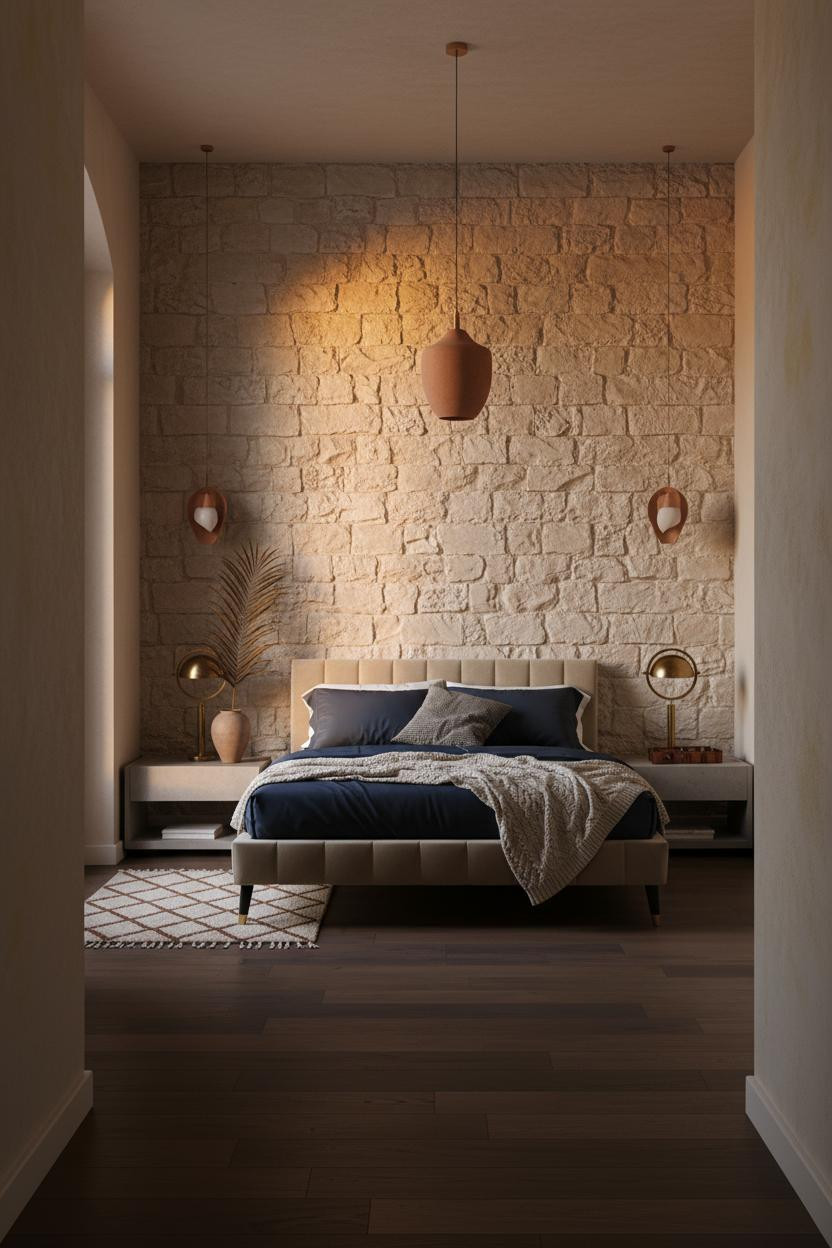

A full-height wall of rough-cut pale limestone blocks sounds like it belongs in a cellar. But paired with amber evening light and dark walnut plank flooring, the room feels ancient and calm at once.
Design logic: Deep shadow pooling into the mortar joints at dusk makes the wall look massive in a way that flat plaster simply can’t fake. That’s scale, not just texture.
What not to do: Don’t hang anything on the stone. Let the wall be the thing. A woven leather tray and a single dried palm frond on the nightstand are enough.
The Tuscan Barrel Vault That Pays for Itself
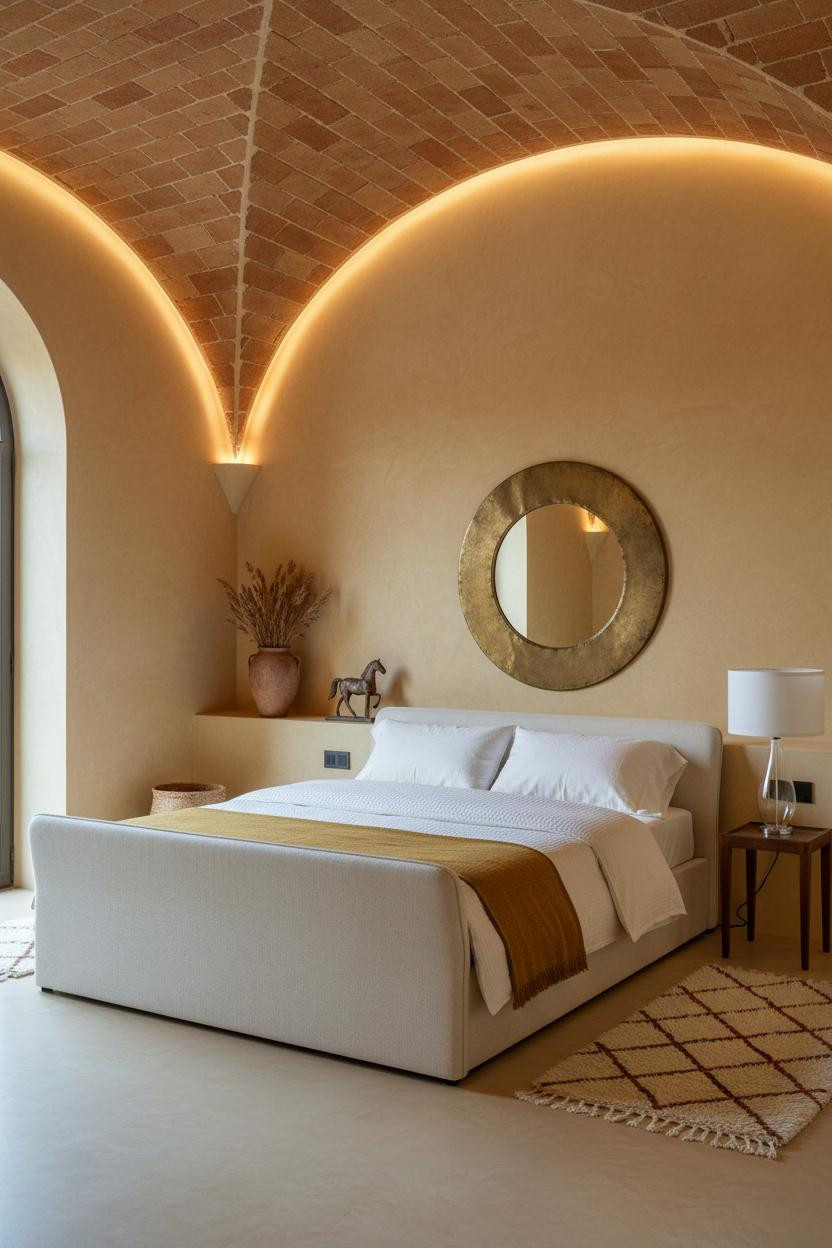
This is divisive. A barrel-vault ceiling is a big architectural commitment. But the rooms that have one don’t need much else.
Where the luxury comes from: Exposed terracotta clay barrel tiles running the length of the arch anchor the whole composition with a fired warmth that painted plaster can’t replicate. The hand-troweled cream vault above them catches last light in long, soft rakes. Together they make ochre walls feel purposeful rather than loud.
The finishing layer: An oversized round hammered-brass mirror above a low plaster ledge. Keep everything else in mustard and ivory or the ceiling loses the room.
A Hacienda Alcove That Actually Works in a Modern Home
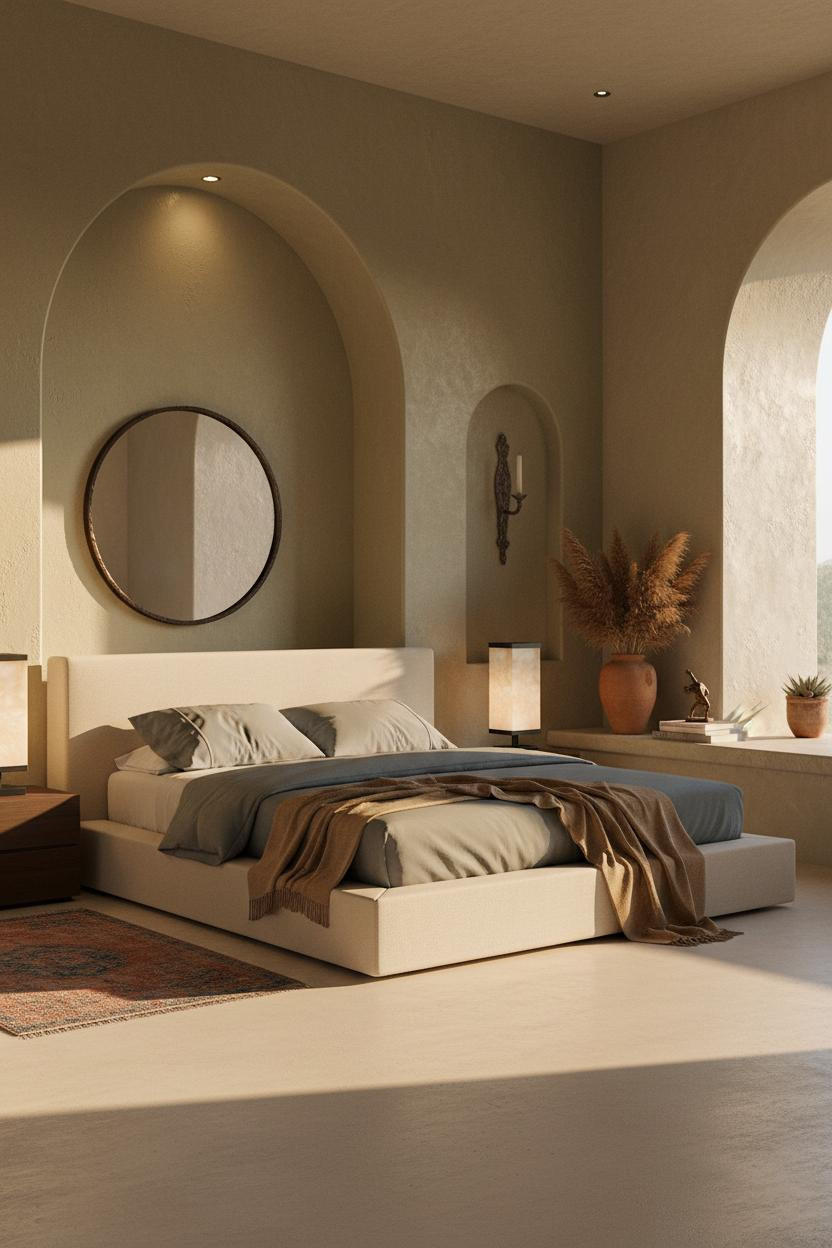
A deep-set arched alcove plastered in sage-olive stucco shouldn’t feel contemporary. But pair it with polished concrete floors and a hammered iron mirror, and it sits somewhere between old-world hacienda and something you’d find in a design hotel in Oaxaca.
Why it feels intentional: The curved throat of the alcove catches sidelight that reveals every trowel mark, making the sage plaster look like it was built into the house rather than applied. That’s the distinction between authentic and decorative.
Try this: Mount a weathered iron candle sconce inside the arch. It aged the room by about fifty years, in a good way.
Crittall Windows and Dove Grey Stucco. A Coastal Pairing.
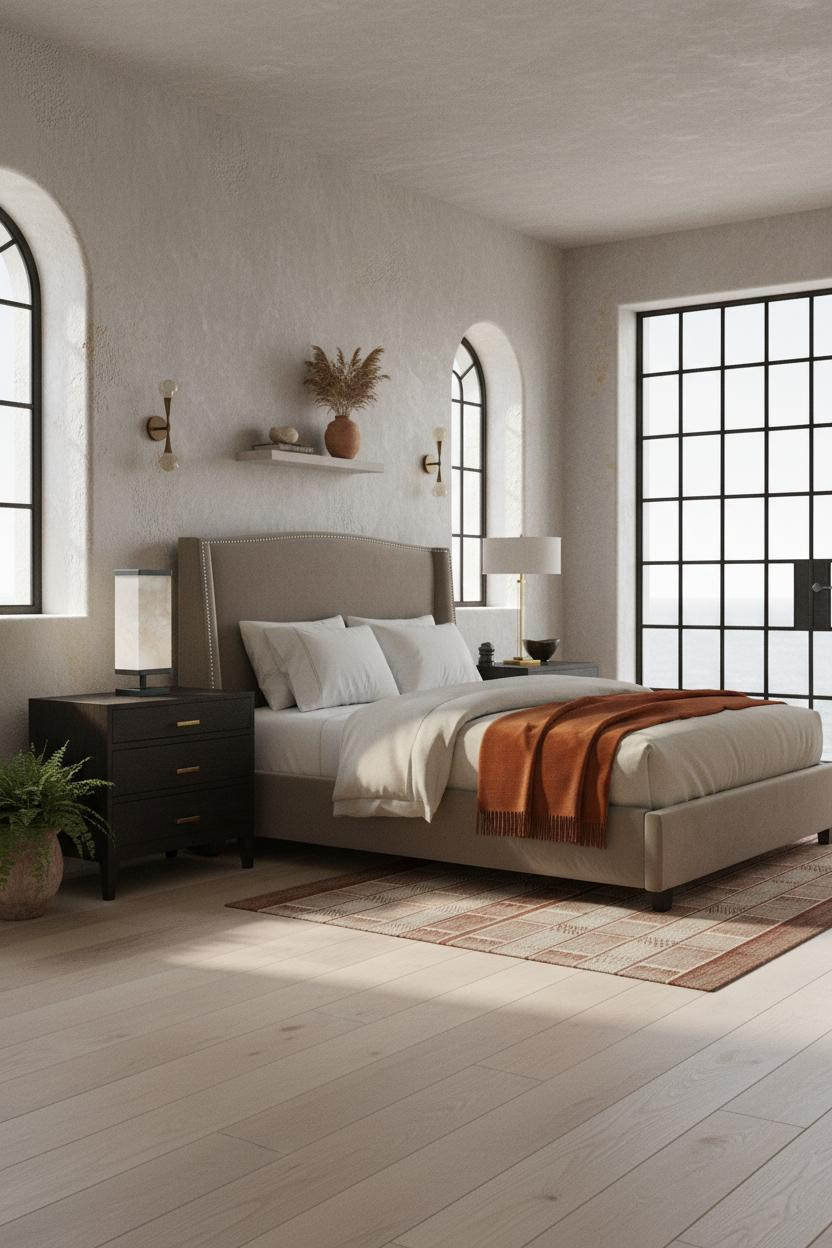

The black iron-frame Crittall windows against dove grey stucco is honestly one of the most underused combinations in Mediterranean interior design. It’s graphic without being aggressive.
What carries the look: The rough-troweled stucco surround with its faint ochre wash picks up warmth from bleached oak planks below, which keeps the black frames from reading as cold or industrial. The room feels collected rather than decorated.
The detail to keep: A burnt orange mohair throw at the footboard. With this much grey and black, you need one warm fiber pulling the eye down.
Exposed Beams and Terracotta Floors. The Spanish Villa Standard.
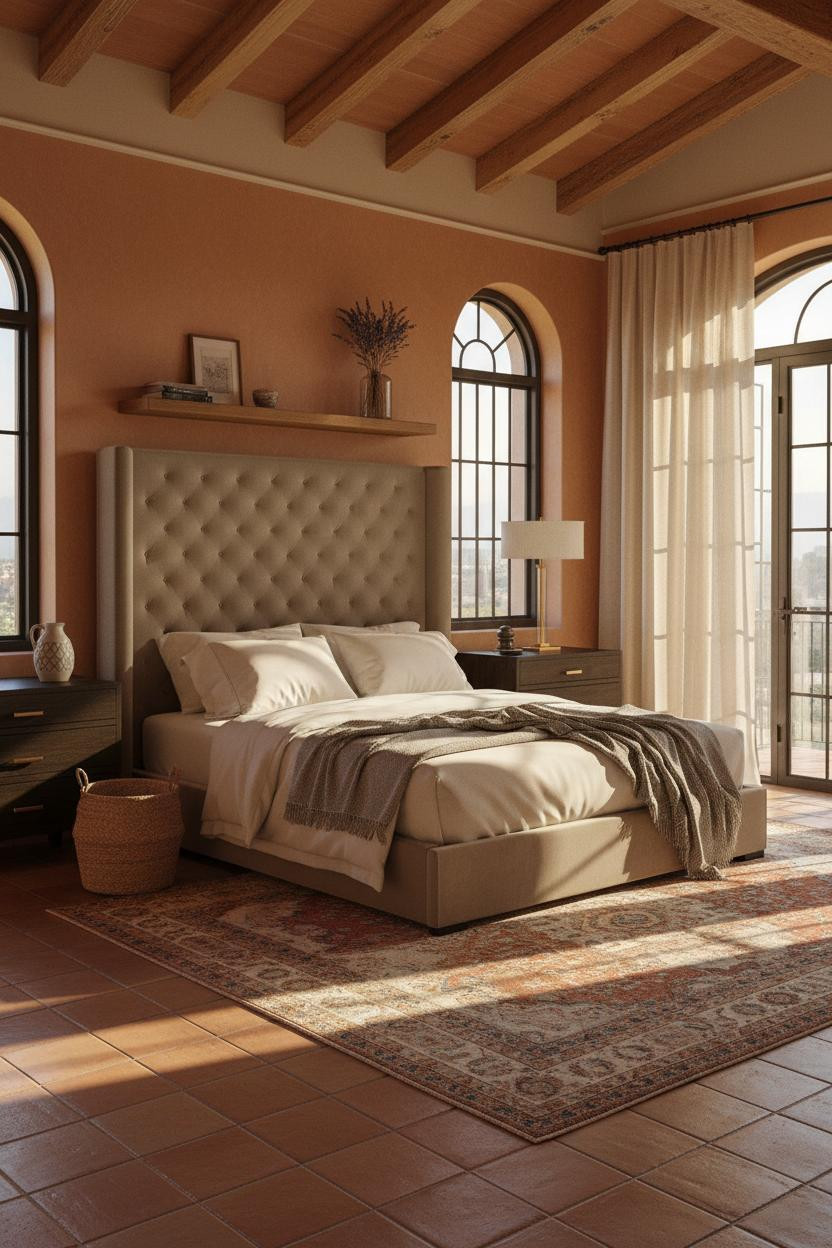
This is the room most people picture when they say Spanish Mediterranean bedroom. And it earns that status.
Why the materials matter: Honey-brown hand-hewn timber beams with visible knots catch morning light in a way that machine-cut wood never does. Pair them with terracotta clay tile floors showing natural color variation and the warmth comes from the building itself, not from anything decorative.
Where to start: Floor-to-ceiling linen curtains in natural cream on a wrought iron rod. They frame the arched windows while still feeling warm and unhurried, in a way that feels genuinely old-world rather than costume.

Our #1 Pick
Saatva Classic Mattress
America’s best-selling online luxury innerspring. 365-night trial, lifetime warranty, free white glove delivery.
Shop Saatva Classic
The Foundation Of Every Beautiful Bedroom
Walls get replastered. Rugs get swapped. But the mattress stays. And in a room this considered, what you sleep on matters as much as what surrounds you.
The Saatva Classic fits the way these rooms feel: substantial, honest, not trying too hard. Dual-coil support that holds without feeling rigid, a breathable organic cotton cover that doesn’t trap heat on warm nights, and a Euro pillow top that feels genuinely soft without losing structure years in.
It’s the kind of thing you stop noticing because it just works.

The rooms people photograph at golden hour and save forever are the ones where every material was chosen rather than defaulted to. Start with the plaster. Start with the floor. And start with the bed. The rest figures itself out.