# 8 Komodo experiences where April 2026 caps 1,000 visitors daily and dragons outnumber tourists
Komodo National Park enforces a 1,000-visitor daily cap starting April 2026. The SiOra digital system requires passport registration weeks ahead. What was once open access to 5,700 Komodo dragons across three major islands now operates like a timed museum entry. Padar Island limits sunrise treks to 60 people. Pink Beach snorkeling slots fill by mid-morning. The cap transforms Indonesia’s most famous wildlife park into a controlled encounter with prehistoric predators and Coral Triangle reefs.
April 10, 2026 marks early dry season. Water visibility reaches 15-25 meters. Manta rays gather at cleaning stations. The transition from wet to dry brings calmer seas and golden light across volcanic hills. This is when the new quota system begins full enforcement after a three-month trial period.
Rinca Island trekking under timed ranger sessions
Rinca holds 2,875 Komodo dragons in denser concentration than Komodo Island. Medium treks yield 5-10 dragon sightings in two hours. Rangers lead groups through savannah where dragons rest in shade during midday heat. The terrain stays flatter than Komodo’s steep volcanic paths. Temperatures hit 104°F by noon.
Pre-cap April peaks brought 38,794 monthly visitors. Now SiOra slots divide access into morning and afternoon sessions. Book three weeks ahead through the app. The digital permit system replaced walk-up entry entirely. A guide on Rinca for 30 years says the quiet between groups feels like the 1990s again.
What the medium trek delivers
The two-hour route covers three miles of dry grassland. Water buffalo graze near dragon nesting sites. Wild boar tracks cross dusty trails. Dragons appear motionless until a guide points out breathing patterns. Their forked tongues flick every few seconds. The largest males reach 10 feet and 150 pounds.
Photography works best in early morning when dragons emerge from burrows. Side lighting at 7am creates texture on scaled skin. Afternoon heat drives them into forest shade where shots become difficult. Rangers maintain 10-foot minimum distance. No feeding occurs. Silence is mandatory during close encounters.
Rinca versus Komodo Island logistics
Rinca sits 25 miles from Labuan Bajo. Ferries take 90 minutes. Komodo Island requires three hours and 37 miles. Day tours favor Rinca for time efficiency. The island infrastructure includes a small visitor center and shaded rest areas. Park entry costs $15 per person as of April 2026. Guide fees add $20-30 depending on trek length.
Komodo Island offers longer wilderness immersion. Its 2,918 dragons spread across larger territory. Treks extend to three hours through steeper volcanic slopes. Deer and wild boar populations exceed Rinca’s. The landscape feels more remote. Both islands now operate under the same 1,000-daily cap split across all park activities.
Padar Island sunrise quota protects three-beach panorama
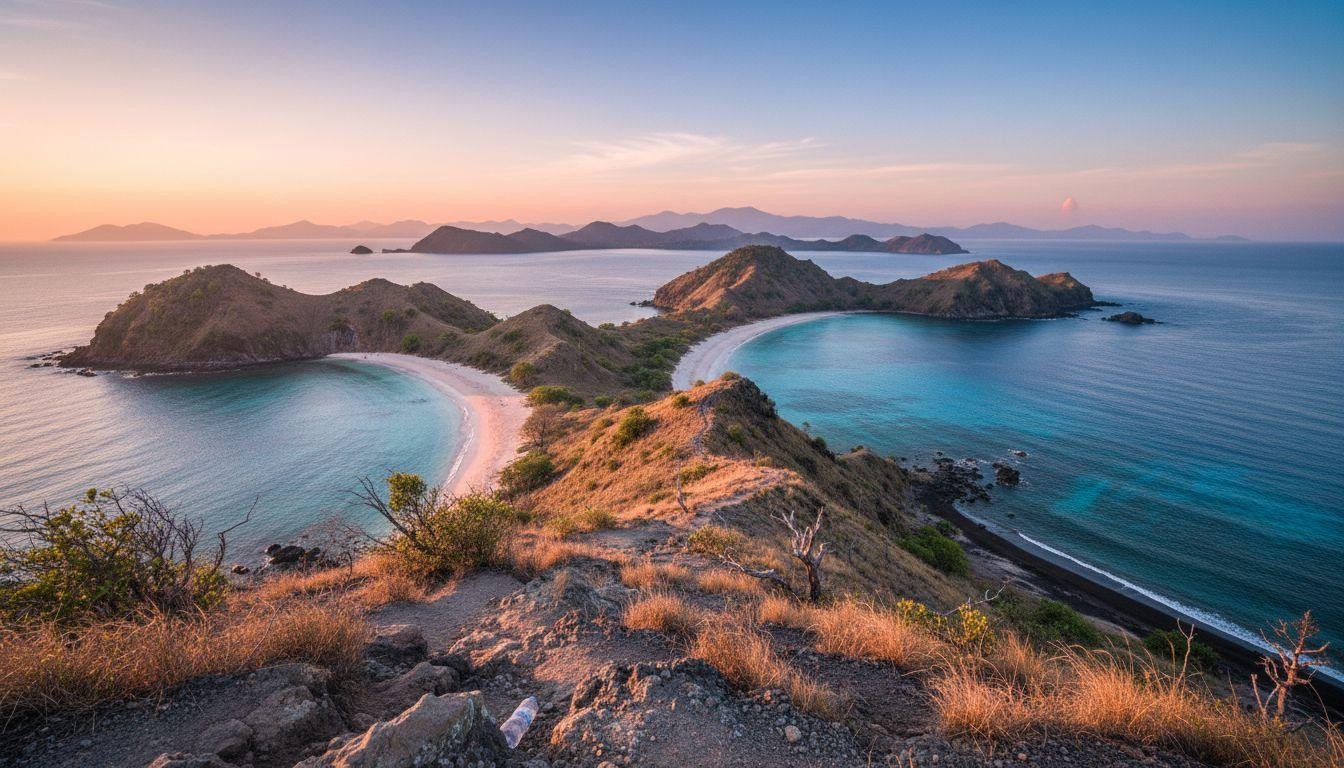
Padar allows 60 visitors daily. Session 1 starts at 5am for sunrise. The 90-minute trek gains 820 feet to a ridgeline viewpoint. Three beach coves appear below in pink, white, and black sand. Coral fragments mixed with volcanic minerals create the pink hue. The viewpoint became Instagram-famous in 2019. Erosion from foot traffic prompted the strict quota.
Timed entry prevents bottlenecks at the summit. Groups stagger departures by 15 minutes. Sunrise occurs around 6:15am in April. Golden light illuminates the coves for 20 minutes before harsh overhead sun takes over. Most visitors descend by 7:30am. The island has no facilities beyond a basic dock.
Advance booking through SiOra is mandatory. Slots open 30 days ahead and fill within hours for April-November dry season. Padar combines with Koh Rong’s marine experiences in multi-day Southeast Asia itineraries focused on controlled-access natural sites.
Pink Beach snorkeling in shallow turtle zones
Pink Beach sits on Komodo Island’s northeast coast. The sand’s rose tint comes from red coral fragments ground by wave action over centuries. Snorkeling begins 30 feet offshore in 10-15 foot depths. Sea turtles graze on seagrass beds visible from the surface. Visibility averages 20 meters in April.
The reef hosts 260 coral species. Parrotfish and triggerfish dominate shallow zones. Currents stay mild compared to deeper dive sites. One to two hours covers the main snorkel area. Gear rental costs $10-15 in Labuan Bajo. Boats anchor offshore. Wade through shallow water to reach coral gardens.
Turtle encounter frequency and timing
Green sea turtles appear most mornings between 8-10am. They surface every few minutes to breathe. Hawksbill turtles feed on sponges attached to coral. Both species tolerate snorkelers at 10-foot distance. Flash photography is prohibited. The turtles move slowly. Patient observation yields better sightings than chasing.
April water temperature reaches 81°F. No wetsuit needed for comfort. Sunscreen must be reef-safe (mineral-based zinc oxide). Chemical sunscreens damage coral polyps. Park rangers check bottles at entry points. Fines for banned products start at $50.
How the daily cap affects Pink Beach access
The 1,000-visitor limit includes all marine activities. Pink Beach competes with Manta Point and Batu Bolong for quota slots. Day tours bundle multiple stops. Liveaboard diving trips access Pink Beach during off-peak afternoon hours when day-trippers leave. The cap reduced pre-2026 reef damage from 432,217 annual visitors. Coral recovery monitoring shows 15% improvement in damaged zones since trial enforcement began in January 2026.
Comparing Komodo’s marine protection to Ha Long Bay’s limestone ecosystem management reveals similar quota-based approaches to overtourism in UNESCO marine sites across Asia.
Manta Point drift snorkeling at cleaning stations
Manta rays gather year-round at Manta Point’s cleaning stations. The rays measure 13-23 feet wingspan. They hover motionless while cleaner fish remove parasites. April through June brings strongest currents and highest manta counts. Snorkeling works better than diving here. Surface observation captures full wingspan views.
The cleaning stations sit in 16-50 feet of water. Moderate current strength requires good swimming ability. Guides brief snorkelers on drift techniques. Let the current carry you past the mantas. Don’t chase or touch. The rays circle back repeatedly. Sessions last 45-60 minutes.
Visibility reaches 80 feet on calm days. Mantas appear as dark silhouettes against blue water. Their white belly markings create individual identification patterns. Scientists catalog over 1,000 individual mantas in Komodo waters. The daily cap limits groups to 10-12 snorkelers per guide. Pre-cap crowds of 40+ people disrupted manta behavior.
Batu Bolong wall diving in the Coral Triangle
Batu Bolong delivers Komodo’s most biodiverse diving. The site sits within the Coral Triangle containing 76% of global coral species. Vertical walls drop from 10 to 100 feet. Over 1,000 fish species inhabit the reef. Coral coverage reaches 70-90% on healthy sections.
Strong currents demand advanced diving certification. Drift diving techniques required. April through November offers best conditions. Current strength varies by tide. Morning dives at slack tide provide easier entry for intermediate divers. Afternoon currents accelerate to moderate-strong levels.
Macro photography excels here. Nudibranchs, pygmy seahorses, and ghost pipefish hide in coral branches. Wide-angle shots capture schooling jacks and trevally. Sharks occasionally patrol the wall’s deeper sections. The reef’s health reflects strict enforcement of the 2026 anchoring ban. In 2025, authorities detected 109 unauthorized boats damaging coral with illegal anchors.
Liveaboard diving trips cost $500-2,000 for three to four days depending on vessel quality. Budget boats offer basic cabins and simple meals. Luxury vessels include nitrox, photography workshops, and private guides. Day diving from Labuan Bajo runs $80-150 per person including two dives, equipment, and lunch. The cap prioritizes pre-booked liveaboards over walk-up day trips.
Advanced divers comparing Komodo to Amorgos diving in Greece’s Big Blue waters find similar dramatic wall topography but far higher species diversity in Indonesia’s Coral Triangle location.
Gili Lawa viewpoint hike for sunset island silhouettes
Gili Lawa’s hilltop viewpoint requires a one-hour moderate hike gaining 980 feet. The summit delivers 360-degree views of scattered islands. Sunset around 6pm in April creates layered silhouettes. Orange light reflects off calm water between islands. The hike combines with snorkeling at Gili Lawa Laut’s nearby reef.
Camping permits cost $10-20 processed through SiOra. Limited overnight slots available. Bring your own tent and supplies. No facilities exist on the island. Fresh water must be carried from Labuan Bajo. The camping experience offers star visibility impossible in light-polluted areas. Milky Way photography works best during new moon phases.
Gili Lawa Laut snorkeling features calm conditions and 65-foot visibility in April. The reef sits in 10-20 feet of water. Soft corals dominate. Anthias and damselfish create color clouds above coral heads. The site serves as a calm-water alternative when Manta Point currents run too strong for beginners.
Labuan Bajo gateway logistics under the cap system
Labuan Bajo sits on Flores Island. Komodo Airport handles daily flights from Bali (90 minutes, $80-150 one-way). Airport transfers take 15 minutes and cost $5 by taxi. The town transformed from fishing village to eco-tourism hub. Accommodations range from $20 guesthouses to $150 mid-range hotels.
Ferry schedules to park islands operate on fixed morning departures. Rinca trips leave at 6am and 8am. Padar requires 5am departure for sunrise quota slots. Komodo Island boats depart 6:30am for three-hour crossings. Day tour packages cost $150-300 per group including boat, guide, park entry, and lunch. Private charters run $400-600 daily.
The SiOra booking system requires passport information 14-30 days ahead. Payment processes through the app. Confirmation emails include QR codes scanned at park entry points. No walk-up entry exists anymore. The digital system replaced cash payments and reduced corruption. Park revenue increased 23% in the first quarter of 2026 compared to 2025 despite lower visitor numbers.
Sunset viewing from Labuan Bajo harbor occurs around 6pm April through November. The waterfront promenade fills with seafood restaurants. Grilled snapper costs $10-20. Local warungs serve nasi goreng for $3-5. Fresh fish markets operate 4-7am daily. The town’s transformation mirrors Ogimi’s shift from agricultural village to longevity tourism hub in how controlled development preserves local character while accommodating visitors.
Your questions about Komodo National Park answered
When does the 1,000-daily cap create the least crowding
April and November mark shoulder months with 40% fewer visitors than peak July-August. The cap distributes evenly but demand drops in transition periods between wet and dry seasons. Book Padar sunrise slots for late April when school holidays end. Weekday departures from Labuan Bajo show 30% more availability than weekend trips. Liveaboard vessels access sites during day-tripper off-hours.
How do Komodo dragons compare to Galápagos wildlife encounters
Komodo’s 5,700 dragons concentrate in smaller territory than Galápagos tortoises spread across multiple islands. Dragon encounters happen within two hours versus all-day Galápagos excursions. Komodo combines terrestrial and marine experiences in single trips. Galápagos offers more endemic species diversity but costs 3x more for similar duration visits. Both require advance permits under strict quotas.
What makes Komodo’s Coral Triangle location significant for diving
The Coral Triangle contains 76% of global coral species and 6 of 7 marine turtle species. Komodo’s position in this region delivers 1,000+ fish species versus 400-600 in Caribbean reefs. Strong currents from the Indonesian Throughflow bring nutrient-rich water supporting massive biodiversity. The convergence of Pacific and Indian Ocean currents creates unique conditions found nowhere else globally.
Morning light at 6:15am turns Padar’s three beaches into distinct color bands. Pink sand glows coral-rose. White sand reflects pure sunlight. Black volcanic sand absorbs heat already. The moment lasts 15 minutes before the sun climbs too high. Sixty people stand silent on the ridgeline. Dragons rest in burrows three miles away on Rinca. The mantas circle their cleaning stations in 50 feet of crystalline water. The cap makes it feel like discovery again.