Carcassonne pulls 3.5 million visitors a year. The ramparts overflow by 10am. Hotels charge $250 a night in July. Parking costs $15 and fills before breakfast.
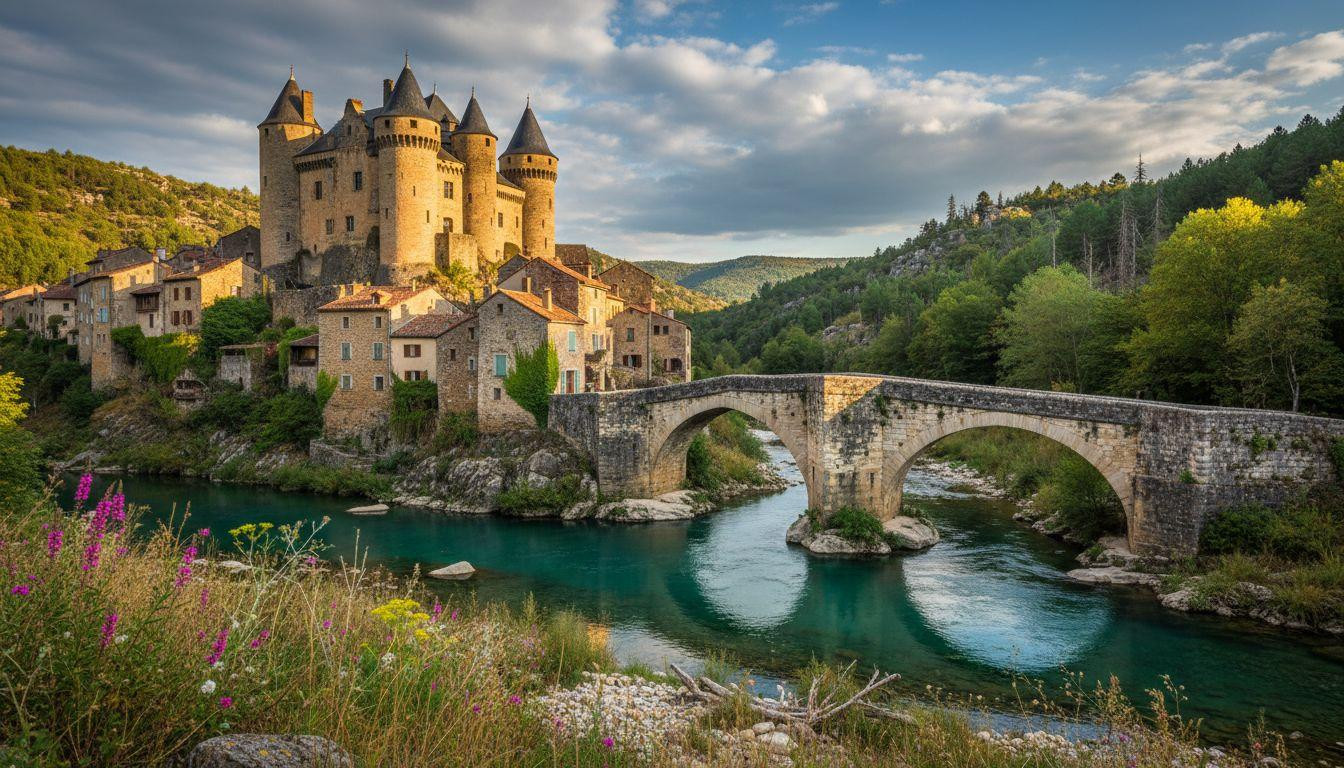
Fifty miles south, Brousse-le-Château sits at the confluence of two rivers with 157 residents and zero tour buses. The 9th-century château costs $6 to enter. Stone houses descend to a Gothic bridge over turquoise water. No one waits in line.
Why Carcassonne disappoints
The fortress city draws crowds that turn medieval streets into theme parks. Shuttle reservations book weeks ahead. Restaurants serve microwaved cassoulet for $35. The magic dies under selfie sticks and souvenir shops.
Rocamadour fares no better. Two million tourists climb the same cliffside stairs each year. Hotels demand $200 minimum in peak season. The sanctuary elevator costs $10 and runs on a timer. Authenticity gets lost in the commerce.
Both sites offer grandeur. Neither offers quiet. The crowds erase the very atmosphere travelers seek. Medieval France becomes a performance, not a place.
Meet Brousse-le-Château
The village occupies a rocky spur where the Tarn and Alrance rivers meet. Golden stone houses with red tile roofs climb toward the château. Cobblestone alleys barely fit two people side by side. Flowers spill from window boxes onto ancient walls.
Les Plus Beaux Villages de France recognized it in 1997. The designation protects architecture dating to the 13th century. Five defensive towers still guard the château. A fortified church from the 1400s anchors the village center. The Gothic bridge arches over the Alrance in three perfect spans.
The landscape advantage
Steep forested slopes frame both rivers. The confluence creates swimming holes locals use in summer. Hiking trails follow the Tarn for 6 miles through the Parc Naturel Régional des Grands Causses. Altitude ranges from 720 feet at the water to 2,180 feet on surrounding ridges.
Morning fog lifts around 8am from April through October. The light turns the stone houses amber. By noon the rivers reflect cloudless sky. No buildings block the view. No crowds fill the frame.
The price comparison
Lodging runs $90-130 per night at the Logis Hôtel le Relais du Château. Gîtes for two to four people cost $50-80. Camping 24 miles away at Les Genêts charges even less. All rates drop 40% outside July and August.
The château entry fee of $6 includes gardens, exhibitions, and the medieval weapons display. The church and bridge cost nothing. Market tastings run $5-10 for cheese, honey, and wine. A full day here costs $50-100 per person excluding lodging.
Carcassonne hotels start at $200 in summer. Rocamadour charges similar rates. Both cities add parking fees, elevator costs, and inflated restaurant prices. Brousse saves travelers 30-50% on every expense.
What you actually do here
The château opens with seasonal hours. Five towers and a sentry walk offer views over both valleys. Medieval games run on select weekends. Exhibitions rotate through paintings, historical tools, and regional artifacts. The structure served as a presbytery after 1839, blending sacred and defensive history.
The Pont Vieux photograph opportunity appears every 50 feet. Sunrise from the Church of St. Cyrice captures the Tarn in morning mist. The bridge arches frame the château at dusk. Cobblestones challenge uneven footsteps but reward careful walking.
Activities beyond the village
Hiking trails leave from the bridge. The Tarn-Alrance confluence loop takes 2 hours through riverside forest. Fishing for trout requires a permit from the village shop. Cycling routes connect to Millau 37 miles north via scenic D54 and D143 roads.
Pottery workshops at Potterie Terre en Feu demonstrate stoneware firing techniques. The name translates to Earth on Fire. Pieces range from utilitarian bowls to decorative tiles. Visitors can watch but must reserve for hands-on sessions.
Food and local products
Tuesday markets run from early July through August. Producers sell tomme fraîche cheese from summer milk, local honey, and Aveyron lamb. Aligot appears on restaurant menus as creamy mashed potatoes blended with cheese. Three-course meals cost $20-35 at village tables.
The general store stocks bread, wine, and basics. Picnic supplies from the market work well for riverside lunches. No chain restaurants exist. The pace favors slow meals over quick service.
The quiet that remains
Walking these streets at dawn, the only sound comes from the rivers. Sheep bells echo from distant hillsides. Woodsmoke drifts from valley farms. The village feels lost in time because it never tried to be found.
Carcassonne performs its medieval past. Brousse simply continues it. The difference shows in empty cobblestones, in locals who greet strangers, in prices that reflect actual value. This is not a stage set. It is a working village that happens to be beautiful.
For travelers seeking authentic French medieval experience, the comparison ends quickly. One place sells the idea. The other lives it. The choice becomes obvious after the first quiet morning.
Your questions about Brousse-le-Château answered
When should I visit to avoid any crowds?
April through May and September through October offer the best combination of mild weather and minimal visitors. Temperatures range from 59-68°F in spring and fall. The Tuesday market only runs July-August, so off-season means even fewer people. November through March sees some businesses close, but the village remains accessible.
How do I get there without a car?
Train service reaches Rodez or Millau from Toulouse in 2-3 hours for $20-40. From either station, taxi or bus service to Brousse costs $50-80 but runs infrequently. Renting a car in Rodez or Millau provides the most flexibility. The drive takes 45-60 minutes on winding D54 and D143 roads through the Parc Naturel Régional des Grands Causses.
How does this compare to other medieval villages in France?
Brousse receives a fraction of the visitors that flood Carcassonne, Rocamadour, or Dordogne valley towns. The 157 residents maintain authentic daily life rather than performing for tourists. Prices run 30-50% lower than famous alternatives. The riverside setting and château combination create visual interest without the commercialization. Similar Portuguese villages offer comparable quiet, while Croatian islands provide seaside medieval alternatives. For travelers prioritizing authenticity over amenities, Brousse delivers medieval France without the crowds.
The afternoon light catches the château towers around 4pm. Shadows stretch across the Alrance. The bridge arches hold their reflection in still water. This is the image that stays after leaving.