Orient Bay charges $40 for a beach chair. Two thousand visitors arrive daily in peak season. Jet skis start at 9am and don’t stop until sunset. This is what happens when a Caribbean beach becomes famous.
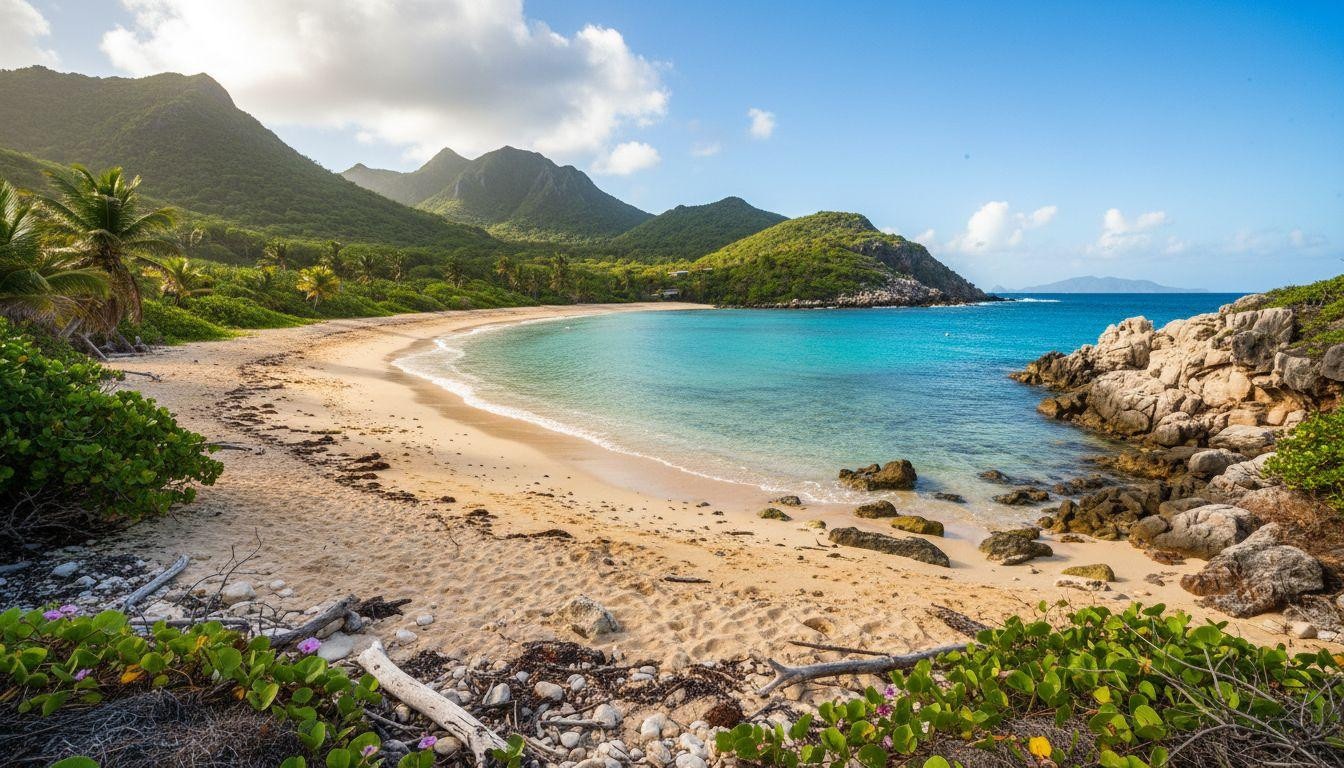
Twelve miles north, a 60-minute hike from Anse Marcel marina delivers what Orient Bay lost decades ago. Petites Cayes sits empty. The turquoise water stays quiet. No vendors. No noise. Just golden sand and green mountains framing a cove that fewer than 50 people visit daily.
Why Orient Bay stopped being what the photos promise
Orient Bay stretches two miles along St. Martin’s French side. Beach clubs line the sand. Entry fees run $30-50 for umbrella and chair. Hotels charge $250-400 per night in high season. Parking costs $6.
The island’s tourism surged 21.5% year-over-year in August 2024. Orient Bay absorbed most of that growth. Cruise ships dock in Philipsburg. Tour buses arrive by 10am. The beach fills fast.
Water sports operators set up every 20 meters. Jet skis. Parasailing. Banana boats. The noise carries across the bay. Restaurants blast music. By noon, finding space on the sand requires patience or premium pricing at the clubs.
The hike that filters everyone who just wants a beach chair
Petites Cayes sits in the Red Rock natural reserve on St. Martin’s northern coast. The trailhead starts at Anse Marcel marina. Free parking. No entry fee. The path climbs through coastal vegetation for 60-75 minutes.
What the trail demands and delivers
The hike covers 2.8 miles round-trip with moderate elevation gain. Rocky sections require attention. Bring water. The trail passes through protected dry forest. Iguanas cross the path at dawn. Bird calls replace jet ski noise.
The summit opens to views across the bay toward Anguilla, 6 miles offshore. Then the descent reveals the cove. Turquoise water. Golden sand. Green peaks rising behind. No buildings. No crowds.
The bay that stayed pristine because access stayed hard
Petites Cayes measures roughly 650 feet across. The water stays calm December through April. Visibility for snorkeling reaches 50-60 feet on clear days. Reef fish gather near the rocks on the eastern edge.
Fewer than 50 people make the hike daily, even in peak season. Most arrive between 8am-10am. By afternoon, the beach empties. The bay faces north. Sunset light hits the mountains behind, turning them gold while the water darkens to deep blue.
What the numbers reveal about the difference
Orient Bay hotels run $250-400 per night February through April. Anse Marcel properties near the Petites Cayes trailhead cost $150-250 for comparable rooms. The hike itself costs nothing. Orient Bay parking and beach club entry total $46 minimum per person.
The activities that work without the crowds
Swimming conditions stay excellent December through April. Water temperature holds at 79°F. Waves stay low. Snorkeling gear from Grand Case shops costs $15-20 to rent. Bring your own and save.
The trail allows picnics. No food vendors operate at the cove. Pack lunch. Water refills aren’t available on the trail. Carry 2 liters per person. The return hike takes 75-90 minutes uphill.
The food and supplies that matter
Grand Case sits 10 minutes from Anse Marcel by car. Grocery stores stock picnic supplies. Fresh bread costs $3. Local fish markets sell grilled catch for $12-15. Restaurants in Anse Marcel charge $20-40 per meal.
Post-hike, the marina area offers casual dining. No reservations needed. The village bakery opens at 6am. Coffee and pastries run $8 total. Most hikers fuel up before the trail, eat at the beach, then return for dinner.
The moment that explains why locals protect this place
Morning light hits Petites Cayes differently than Orient Bay. The cove faces north. Shadows from the mountains keep the sand cool until 9am. The water glows turquoise in early sun, then shifts to deeper blue as clouds pass.
Orient Bay built its reputation on convenience and activity. Petites Cayes kept its character by staying difficult to reach. The hour-long hike filters everyone who just wants a beach chair delivered to the sand. What remains feels like what Caribbean beaches offered before the crowds arrived.
Your questions about Petites Cayes answered
When should I hike to avoid the heat?
Start between 7am-8am. April temperatures reach 86°F by midday. The trail offers limited shade. Morning hikes finish before peak heat. Return by 2pm to avoid afternoon sun on the uphill climb. December through March stays cooler, with highs around 82°F.
What makes this different from other St. Martin beaches?
Access requires effort. No roads reach Petites Cayes. No development exists at the cove. The Red Rock reserve protects the area from commercial use. Orient Bay, Maho Beach, and Mullet Bay all offer parking and amenities. Petites Cayes offers quiet and the satisfaction of walking to something most tourists never find.
How does this compare to other Caribbean hike-in beaches?
Similar to Oaxaca’s hidden coves but with clearer water. Less dramatic than Dominica’s Batibou Beach but more accessible. Quieter than Thailand’s island alternatives. The combination of turquoise Caribbean water and genuine seclusion within 20 minutes of Princess Juliana Airport makes it rare.
The ferry back to Anguilla leaves Anse Marcel at 4:30pm. Most hikers make it with time to spare. The trail empties by 3pm. The bay returns to the iguanas and the birds. Orient Bay keeps its crowds and its beach clubs. Petites Cayes keeps its quiet. The hour-long hike decides which experience you earn.