Meteora draws 1.5 million visitors each year to its monasteries perched on rock pillars. Hotel rates in Kalambaka hit $220 per night in summer. Monastery entry fees total $18 for the full circuit. Tour buses clog the access roads by 9am.
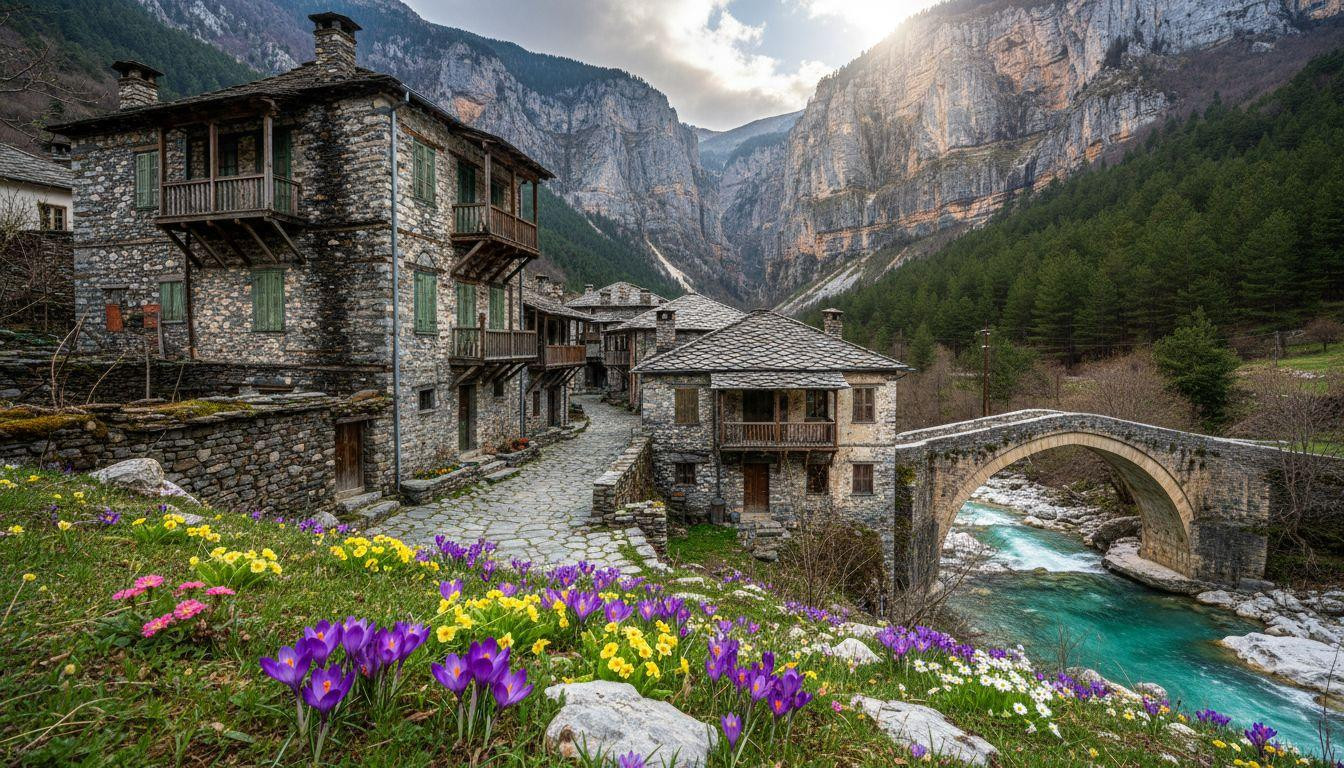
Forty miles north, Dilofo sits at 2,950 feet in the Zagori mountains with 150 residents and zero entrance fees. Gray slate mansions line cobbled alleys where cars can’t enter. Stone bridges from 1806 arch over rivers cutting through pine forests. Rooms in restored mansions cost $80-120 per night.
The same 2023 UNESCO listing that recognized Meteora decades ago just added Zagori’s 46 villages to the World Heritage list. Dilofo got the protection without the crowds.
What Meteora lost to tourism
UNESCO designated Meteora in 1988. Within a decade, visitor numbers jumped from 50,000 to over 1 million annually. Kalambaka transformed into a hotel town with chain restaurants and souvenir shops. The six monastery complex became a ticketed attraction.
Peak season parking turns chaotic. Monastery queues form before opening. The quiet monastic atmosphere that drew early visitors disappeared under the weight of organized tours and Instagram crowds.
Local population in the surrounding villages declined as tourism jobs replaced traditional agriculture. Hotel rates tripled between 2010 and 2025. What was once a remote spiritual retreat became Greece’s second-most visited site after the Acropolis.
Dilofo preserves what tour buses erase
The village sits within Vikos-Aoös National Park, 28 miles from Ioannina. Vertical gorge walls rise 3,280 feet from the valley floor. The Vikos Gorge holds the Guinness record for deepest canyon relative to its width.
Stone mansions reach three stories, built with diaspora merchant wealth during Ottoman rule. The Loumidis house stands 43 feet tall, the highest residential building in Zagori. Slate roofs and wooden balconies follow 18th-century Epirus architecture.
The bridges that connected mountain commerce
Captain Arkoudas Bridge spans the river 2 miles from Dilofo’s center. Built in 1806 with a single stone arch, it carried merchant caravans between villages. St. Minas Bridge sits deeper in the forest, moss covering its stones after 200 years.
These structures replaced wooden crossings that winter floods destroyed. Local masons developed techniques for arched construction that distributed weight across the span. Over 160 bridges still stand across Zagori, forming what locals called their highway system before roads arrived in the 1950s.
Numbers that tell the preservation story
Dilofo receives roughly 8,000-12,000 visitors annually compared to Meteora’s 1.5 million. The village maintains its car-free core. Parking stops at the entrance, forcing visitors to walk cobbled lanes on foot.
Residents still outnumber tourists 10 to 1 during shoulder season. Three stone tavernas serve traditional Epirus food. Lamb with yogurt costs $14. Handmade pies run $4-6. No chain restaurants operate within village limits.
Walking routes the merchant caravans used
The trail from Kipi village to Dilofo covers 3 miles through pine and fir forest. Elevation gain reaches 980 feet. Vikos Gorge viewpoints appear after the first mile, revealing the canyon’s full depth.
Spring 2026 brings wildflowers to the gorge between late April and mid-May. Temperatures range from 50-64°F, ideal for hiking without summer heat. The Greek monastery that hangs on Amorgos cliffs offers similar remote architecture in the Cyclades.
What you actually do here
Morning walks start at 7am when mist fills the gorge. The stone alleys echo with bird calls and distant river sounds. No vehicle noise penetrates the car-free zone.
Guided bridge tours cost $150 for a full day covering five historic crossings. Self-guided hiking requires no fees. Trail markers lead to viewpoints overlooking the canyon system. The Portuguese village of Sortelha preserves similar mountain stone architecture at 2,493 feet elevation.
Food that stayed local
Epirus mountain cuisine centers on lamb, wild herbs, and handmade dairy. Tavernas source ingredients from valley farms. Tsipouro, the local spirit, accompanies meals at $3 per glass.
Local honey comes from hives placed in gorge meadows. Wild herb gathering continues as a village tradition. The Greek island of Schoinoussa maintains similar food traditions with 229 residents fishing at dawn.
The quiet Meteora used to have
Dilofo earned UNESCO recognition in 2023 as part of the Zagori Cultural Landscape. The designation came with strict development limits. No large hotels can be built. The car-free core stays protected. Stone masonry restoration follows traditional techniques.
Meteora received no such constraints when tourism exploded. The difference shows in morning atmospheres. Dilofo wakes to pine-scented air and stone textures underfoot. Meteora wakes to tour bus engines and ticket booth lines.
Your questions about Dilofo answered
How do you reach Dilofo from major airports?
Ioannina Airport sits 25 miles south, a 45-60 minute drive on mountain roads. Athens lies 280 miles away, requiring 5-6 hours via the E90 highway. Buses from Ioannina run once daily for $6-10, taking one hour. Car rental proves essential for exploring multiple bridges and villages. The Italian village of Pietrapertosa requires similar mountain driving in Basilicata.
When does Dilofo see the fewest visitors?
April-May and September-October offer the best balance of weather and solitude. July-August brings peak hiking crowds, though numbers stay far below Meteora’s masses. Winter sees snow from December-February with temperatures dropping to 28-46°F. The village nearly empties, leaving just residents and occasional hikers.
What makes this different from other Greek mountain villages?
The 2023 UNESCO listing protects Dilofo from development that transformed other destinations. The car-free policy predates modern tourism, preserving 18th-century street patterns. Stone bridge access requires hiking, filtering out casual visitors. Meteora’s fame brought infrastructure that erased its village character. Dilofo’s remoteness became its protection.
Morning light hits the Loumidis mansion’s slate roof around 8am. For maybe ten minutes, the whole gorge turns gold. Then the mist burns off and you see the vertical walls that merchant caravans crossed for 200 years. The bridges still stand. The stones still hold.