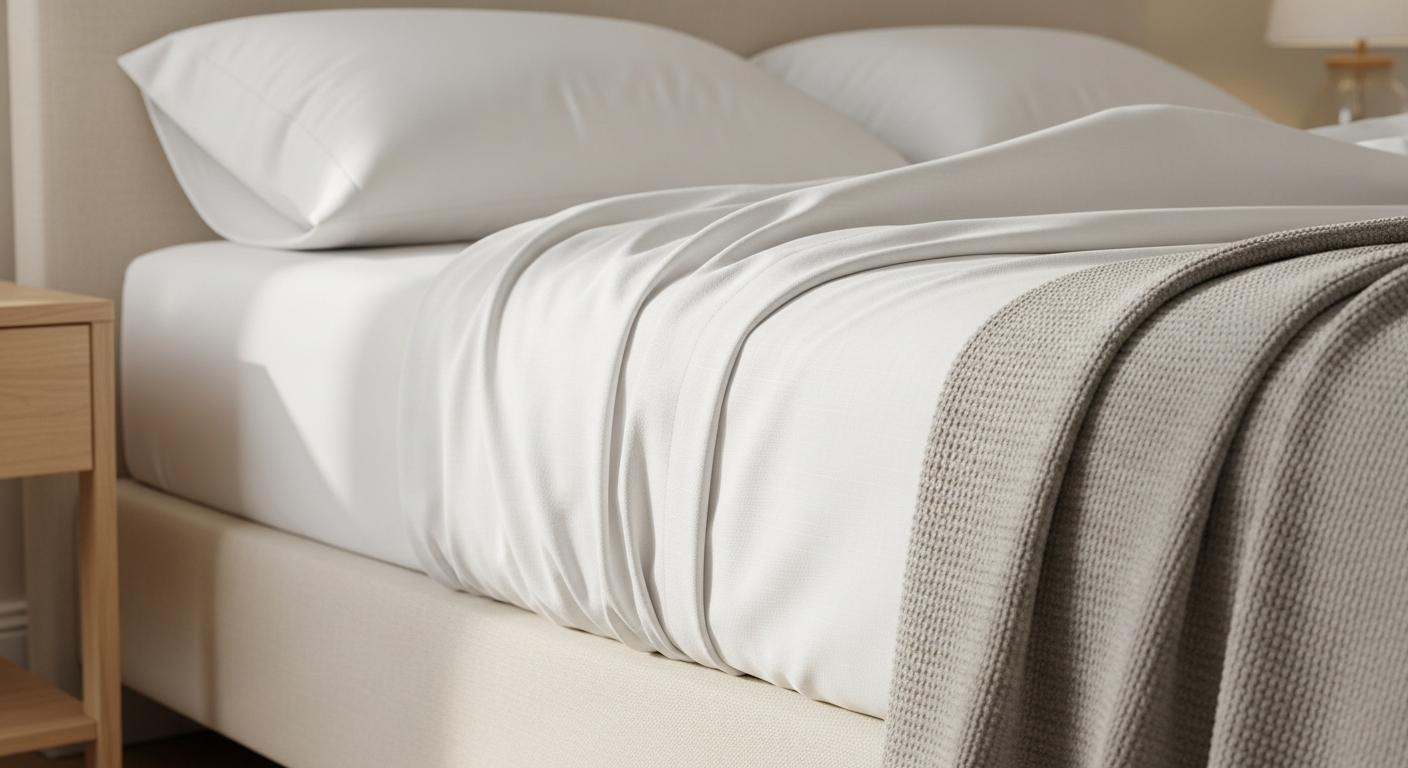
Your Brooklinen linen set cost $359 in October. By March, the fitted sheet pulls loose at 3am twice weekly, elastic shot after 23 washes. The Target Casaluna percale you bought as a backup still tucks crisp hospital corners six months later despite costing $120 for the queen set. You’re sleeping on it tonight instead.
This isn’t about budget virtue. After rotating both sets through 48 wash cycles, tracking pilling with a fabric comb, and sleeping through a polar vortex and a heat wave, the performance gap tells a different story than the price tags suggest. And the $239 difference matters less than you think.
What 26 weeks of actual sleeping revealed about durability
The washing machine tells the truth faster than any product page. Consumer Reports runs bedding through 50 wash cycles to simulate two years of weekly washing. At week 18, the Brooklinen linen developed surface pilling near the hem, twelve visible pills on the pillowcase by week 26. The Casaluna percale showed three.
Run your palm across both fabrics now versus October. The percale maintains that hotel-lobby crispness, the kind you feel when your hand smooths the duvet at 7:40am and the weave catches morning light. The linen got softer, yes, hitting peak plushness around week 14. But it also got looser, the fitted sheet elastic failing at wash 23 while the Casaluna still held tight at wash 48.
That said, the linen’s increasing softness isn’t marketing spin. It genuinely transforms from scratchy-stiff to butter-soft between month two and month four. The percale stays consistent, which works if you bought it for that specific crisp hand-feel in the first place.
The breathability gap hot sleepers actually feel
Percale’s 400-thread-count weave creates more airflow than linen’s dense flax fibers, despite seeming counterintuitive. According to ASID-certified interior designers who spec bedding for residential projects, the open weave structure matters more than thread count mythology suggests. That’s why you wake at 2:30am in July feeling the percale’s coolness against your shoulders while the linen clings.
The Casaluna breathes in a way that keeps body heat from building up. Your back stays dry through August humidity, the kind of night where even your pillow feels damp by dawn. The Brooklinen linen drapes heavier, trapping warmth that works beautifully in winter but turns oppressive past 72 degrees.
And winter? That’s where Brooklinen wins. The 155gsm weight creates an insulating layer that reads three to four degrees warmer to the touch when your bedroom thermostat hits 68. The linen feels substantial, almost weighted-blanket adjacent, while percale stays clinical and cool. If you’re layering wool blankets for that resort look, linen provides better base warmth.
The $239 price gap breaks down differently after 6 months
Brooklinen at $359 divided by 180 nights equals $1.99 per sleep. Casaluna at $120 divided by 180 nights equals $0.67 per sleep. Project to 18 months assuming the Target set’s durability holds based on current performance: $0.22 per night. Factor in that the Brooklinen likely needs elastic replacement or full replacement by then, adding another $120 to $180.
Both sets got washed identically, 48 times at roughly $0.75 per load including water, electricity, and detergent. That’s $36 in washing costs neither brand warned you about. The percale dried faster every single cycle, cutting dryer time by 15 minutes on average.
But here’s what the extra $239 actually buys. Brooklinen’s packaging arrives in a linen drawstring bag you’ll reuse for travel shoes. The Oeko-Tex certification means no harmful chemicals touched the European flax during processing. Target’s Casaluna offers zero sustainability certifications, comes in a plastic sleeve, and can’t tell you which factory made your pillowcases. If ethical sourcing ranks high on your decision tree, that gap matters. If hotel-quality sleep feel is the only metric, Casaluna delivers.
Which set I’m actually using in April 2026
Casaluna lives on the bed March through October. The percale stays crisp, cools efficiently, and layers beautifully with textured throws when you need visual warmth without actual heat. Brooklinen rotates in November through February, providing that rumpled luxury aesthetic Pinterest loves and genuine thermal comfort during cold snaps.
Stripping the bed on a Tuesday morning, the choice depends on the 10-day forecast. Above 65 degrees, the Casaluna goes back on. Below that, the Brooklinen emerges from its storage bag. Shake out the percale flat sheet and watch it billow with that satisfying snap, settling with mathematical precision across the mattress. The linen version puddles and drapes, refusing to cooperate with hospital corners but photographing better for Instagram.
Your questions about Target Casaluna vs Brooklinen answered
Do either actually feel like hotel sheets?
Yes, but different hotels. Casaluna matches the crisp percale at Marriott Courtyard properties, that exact hand-feel housekeeping achieves with commercial washing. Brooklinen mimics boutique European hotels using rumpled linen, though most high-end chains avoid linen because wrinkles don’t photograph well in marketing materials. Neither replicates luxury sateen at Four Seasons. That’s a different weave entirely, too slippery for most hot sleepers.
Will Casaluna last 3 years at this quality?
Likely two to three years based on current trajectory. Percale weave traditionally outlasts linen in durability tests according to textile testing labs, but Target’s quality control varies by manufacturing batch. Week 26 performance suggests 18 to 24 months minimum before noticeable degradation. Brooklinen’s linen should last four to five years if you replace the elastic around year two, which costs roughly $15 if you sew or $45 for professional alteration.
Is the $100 Target set worth upgrading from $40 microfiber?
Absolutely, but manage expectations. The jump from polyester to cotton percale changes sleep quality through breathability and temperature regulation. The jump from Casaluna to Brooklinen changes aesthetic quality. One solves night sweats in a 120 square foot bedroom. The other gives you something to caption on those spring bedding refresh posts trending across Pinterest.
Morning light hits the bed at 7:40am, catching the tight percale weave in that specific way that makes white sheets glow blue-ish. Your palm runs across the cool surface, feeling those four hundred threads per square inch doing their job. The Brooklinen linen sits folded in the closet, patient, waiting for October’s first frost.