
The first thing guests say about a great basement guest bedroom is that it doesn’t feel like a basement. That’s not an accident.
These 14 rooms prove it’s about material choices, smart lighting, and one or two moves that make a low ceiling feel intentional rather than limiting.
The Whitewashed Wall That Makes the Room Feel Bigger
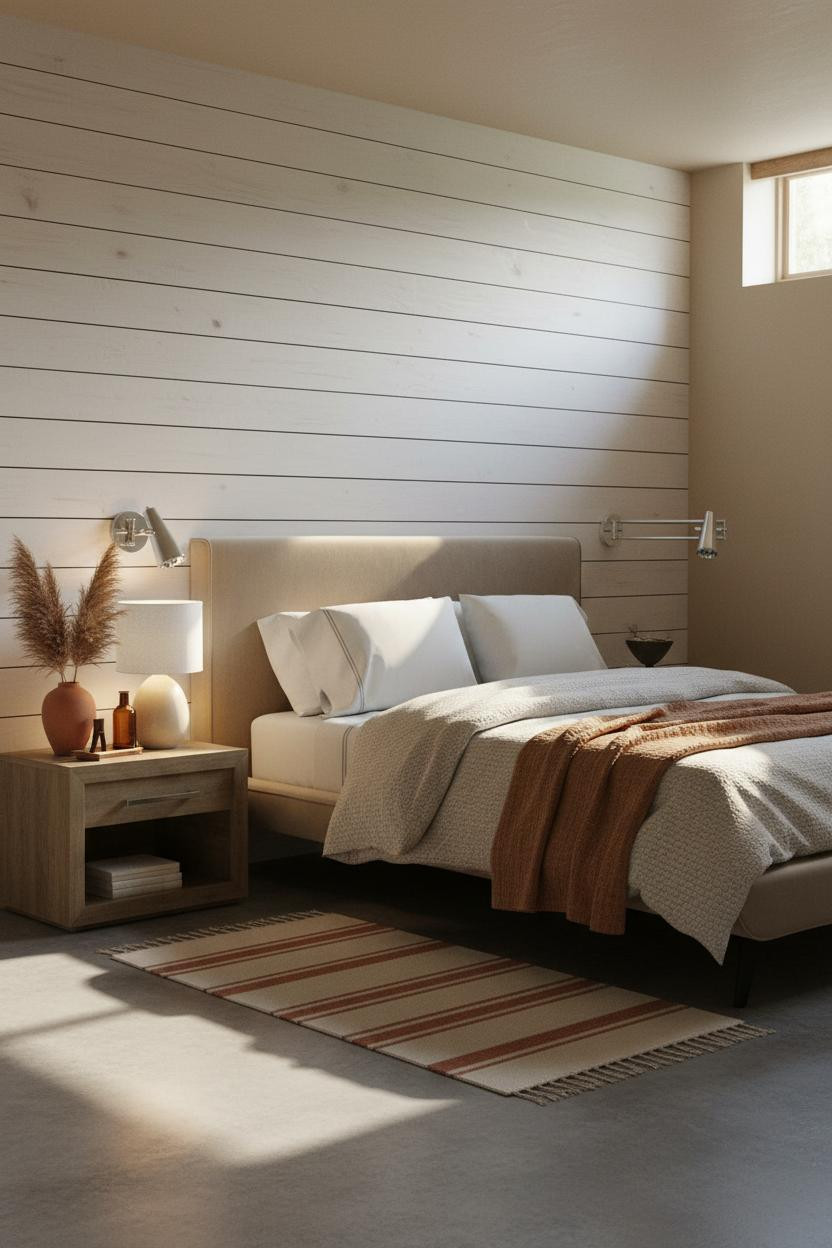


Horizontal lines are the oldest trick in a low-ceiling room. And they work every time.
Why it works: A floor-to-ceiling whitewashed pine plank wall behind the bed stretches the eye sideways, making a compact basement feel wider than its footprint.
Steal this move: Pair it with warm sand walls on the sides and a caramel linen throw. The wood pulls everything together without the room feeling too matched.
Slatted Birch That Adds Height Without a Renovation
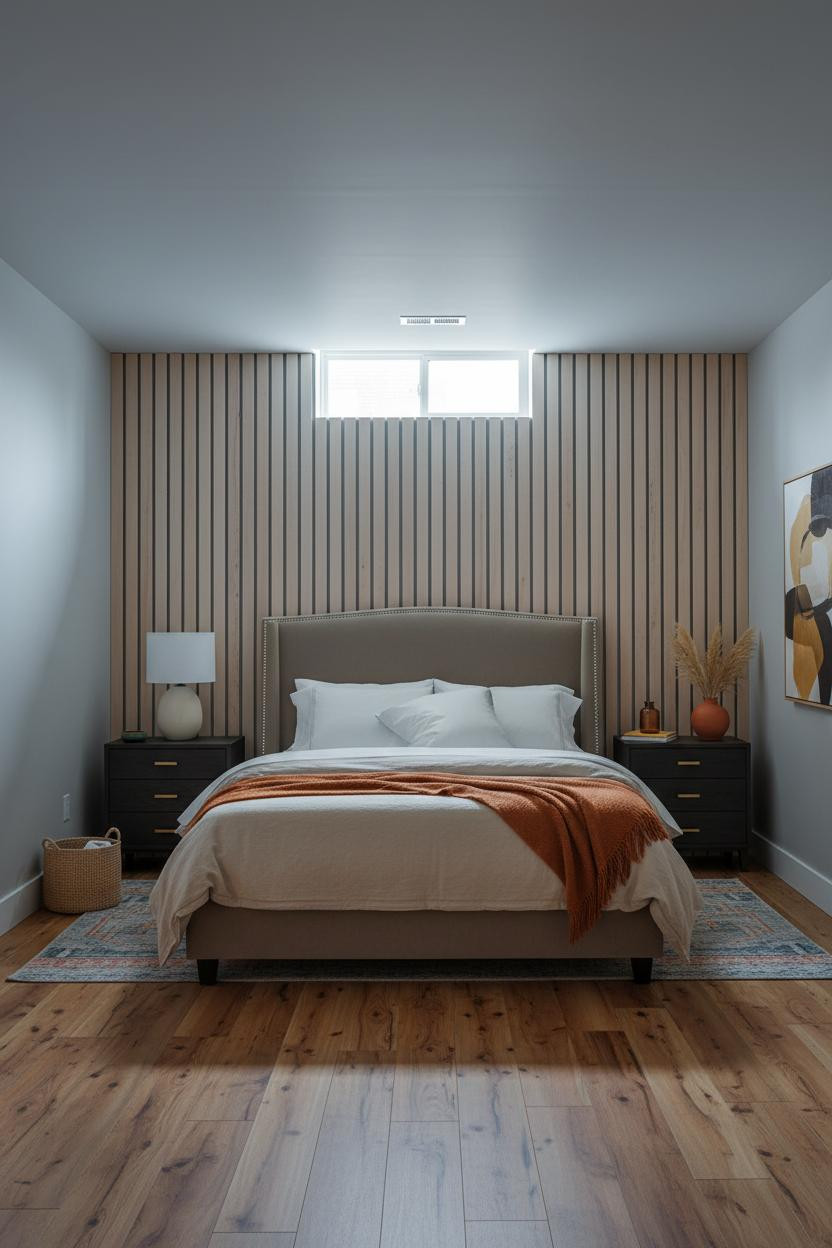

I keep coming back to this one. It shouldn’t be this effective on a budget.
But vertical slatted birch wood paneling behind the bed pulls the eye upward in a way that reads genuinely architectural. Each pale slat catches diffused light along its ridge, creating shadow rhythm that flat paint simply can’t replicate.
The easy win: Use stone grey on the flanking walls. It keeps the birch from feeling too light while the room stays calm and cohesive.
Board-and-Batten for Under a Hundred Dollars
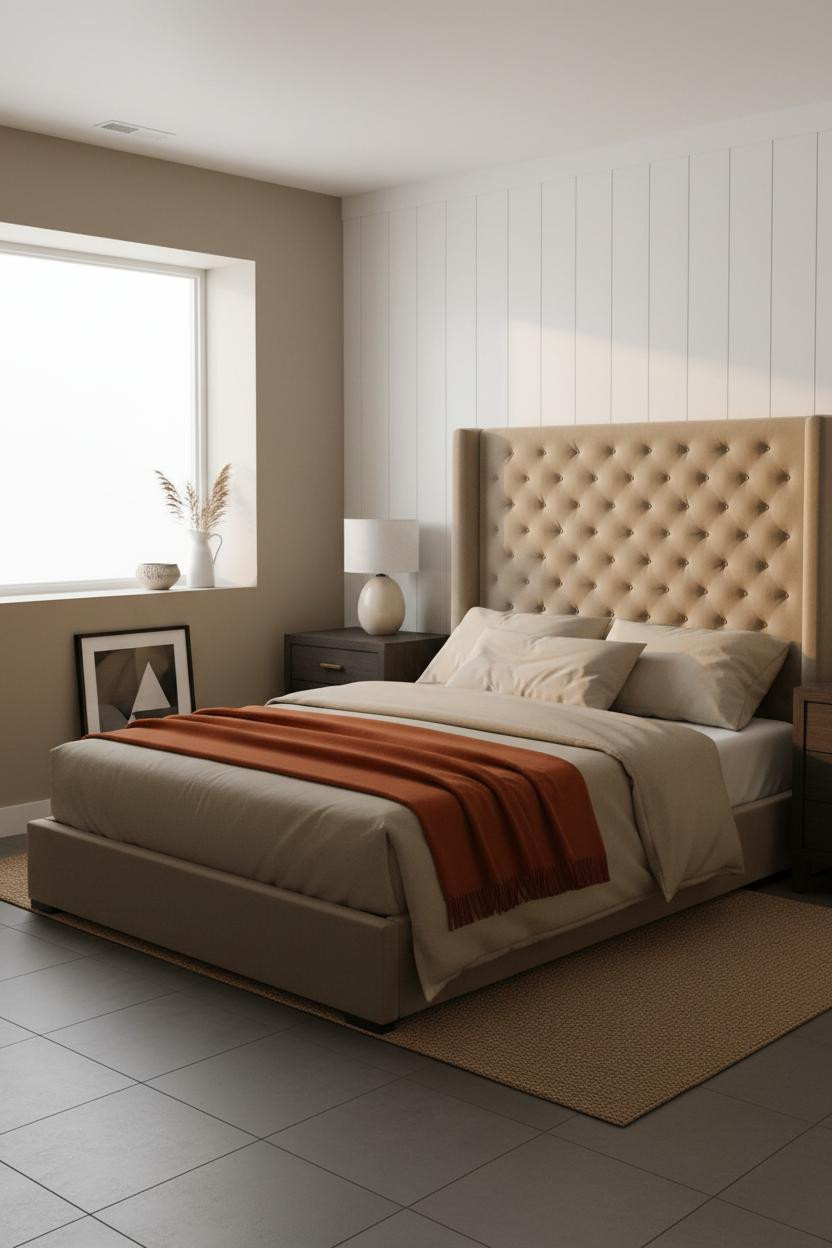

This is the most budget-friendly wall treatment that still looks like a decision, not a shortcut.
Why it looks custom: Evenly spaced battens cast fine parallel shadows across the crisp white surface, creating vertical rhythm that draws the eye up and gives the room genuine architectural weight at almost no cost.
Avoid this mistake: Don’t pair it with a busy rug. A natural jute runner and warm greige walls are all it needs.
A Birch Soffit That Lifts a Low Ceiling
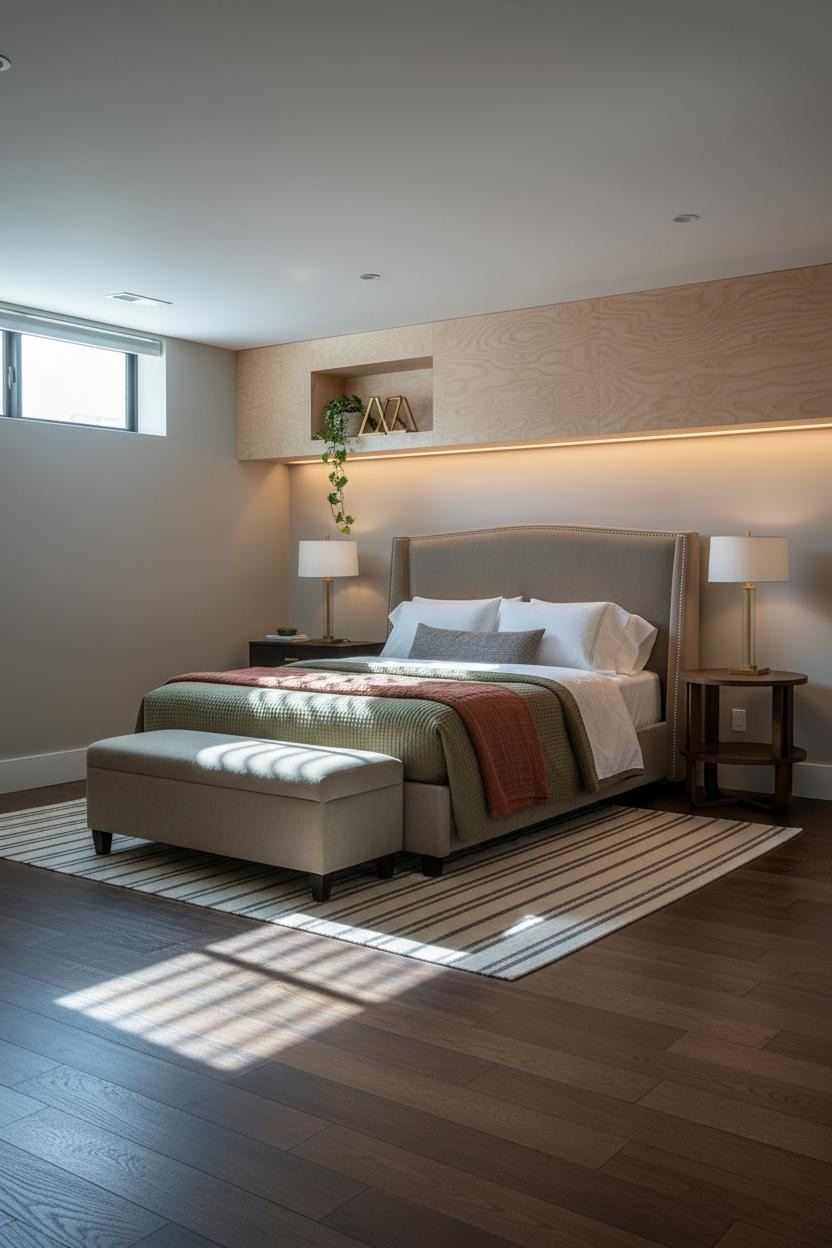

Honestly, a pale birch plywood soffit above the bed is one of the smartest moves you can make in a basement with a low ceiling.
The LED strip running along its inner edge pools downward glow across the headboard in a way that feels intentional rather than improvised. It visually separates the sleeping zone from the rest of the room, which helps the space feel planned.
The smarter choice: Pair with dark walnut flooring and mushroom walls. The contrast keeps the birch from reading too pale while the room stays warm and grounded.
The Honey Oak Alcove That Makes Guests Feel Cocooned
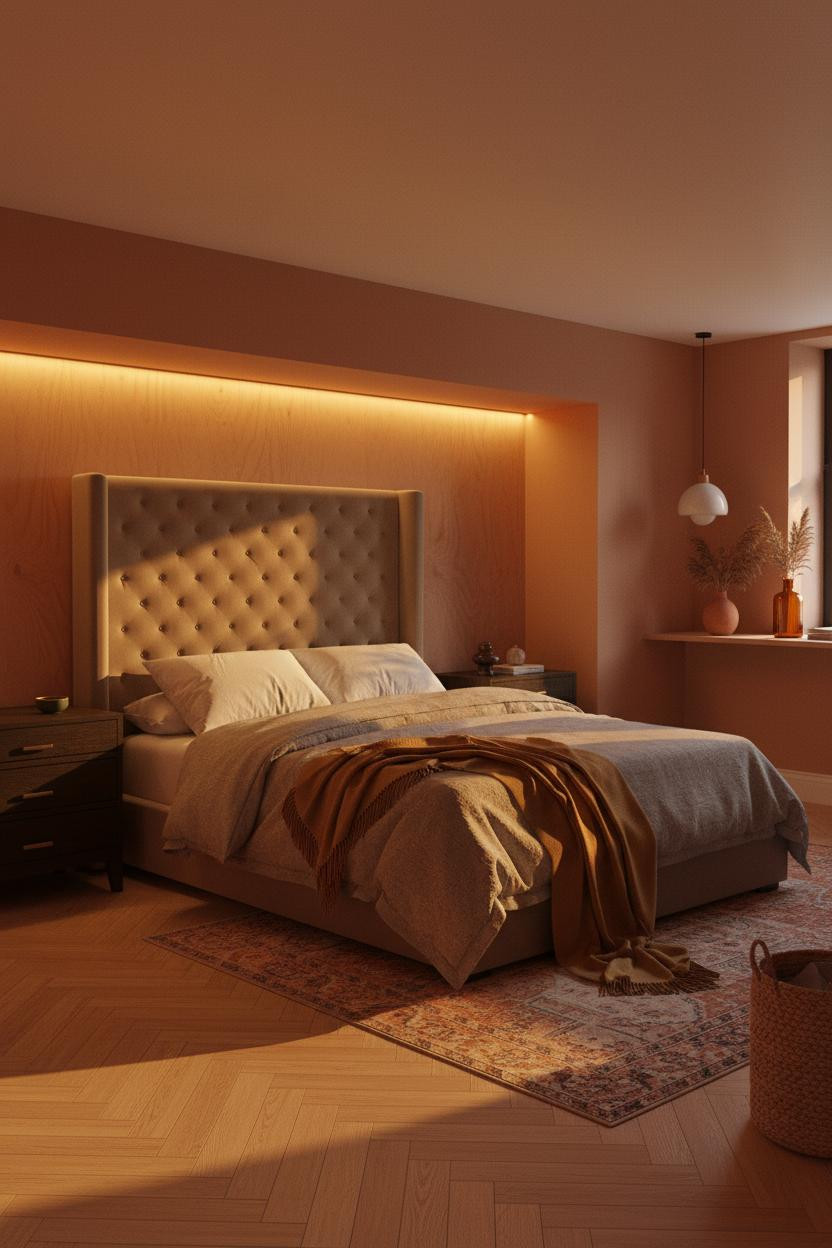

I’ve seen this done a dozen times and it still surprises me every time it works.
What creates the mood: A recessed ceiling alcove lined with honey oak plywood and a warm LED strip along its inner edge pools amber downlight across the headboard, making a low basement ceiling feel like a deliberate design detail rather than a constraint.
Layer terracotta walls with herringbone parquet and a vintage overdyed rug. The room feels warm without being heavy.
Modern Farmhouse: The Curtain Move Nobody Talks About
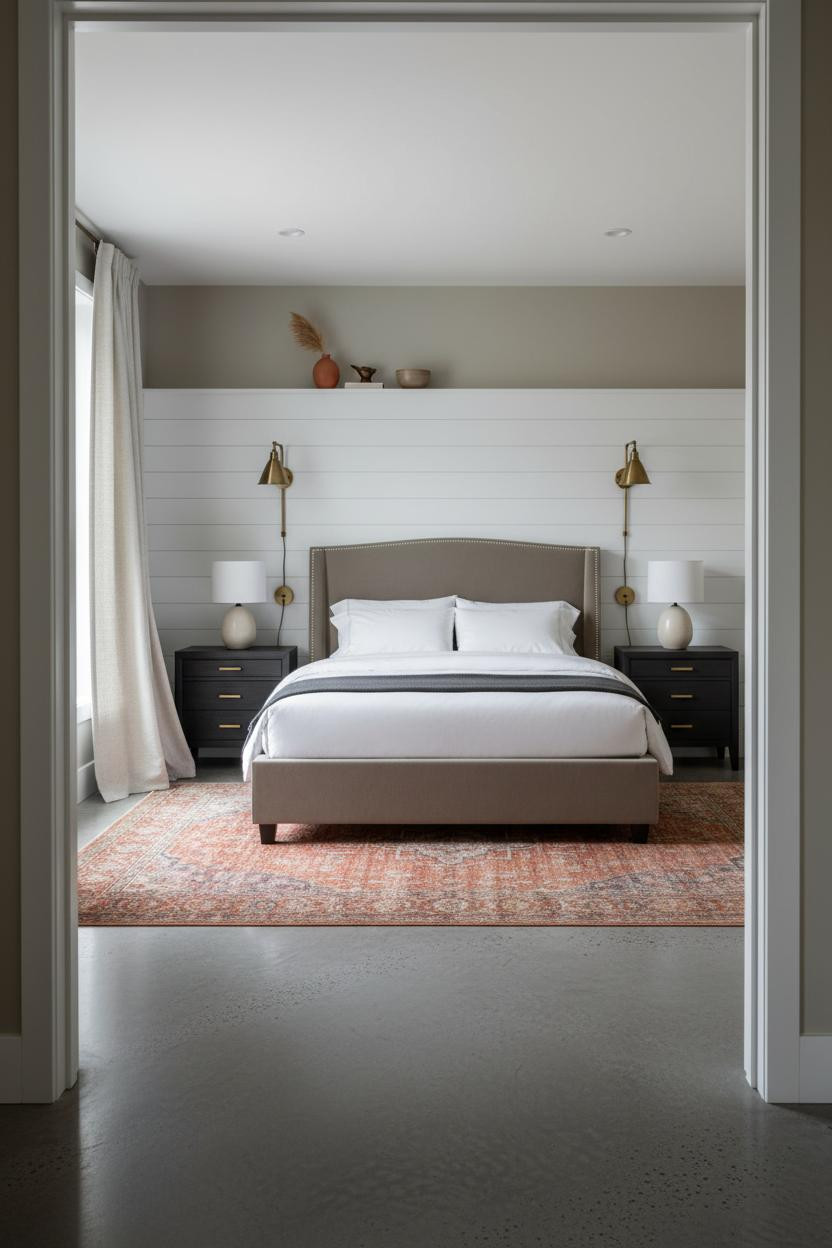
Most people hang curtains. This room uses them as architecture.
What carries the look: Floor-to-ceiling cream linen curtains around the egress window draw the eye upward and make the window feel like a real design statement, not an afterthought. Paired with a crisp white board-and-batten wall, the room feels pulled together without a single expensive piece.
Pro move: Anchor the concrete floor with a faded rust Persian rug. It adds warmth the pale curtains alone can’t deliver.
Why a Japandi Niche Works Specifically in Basements
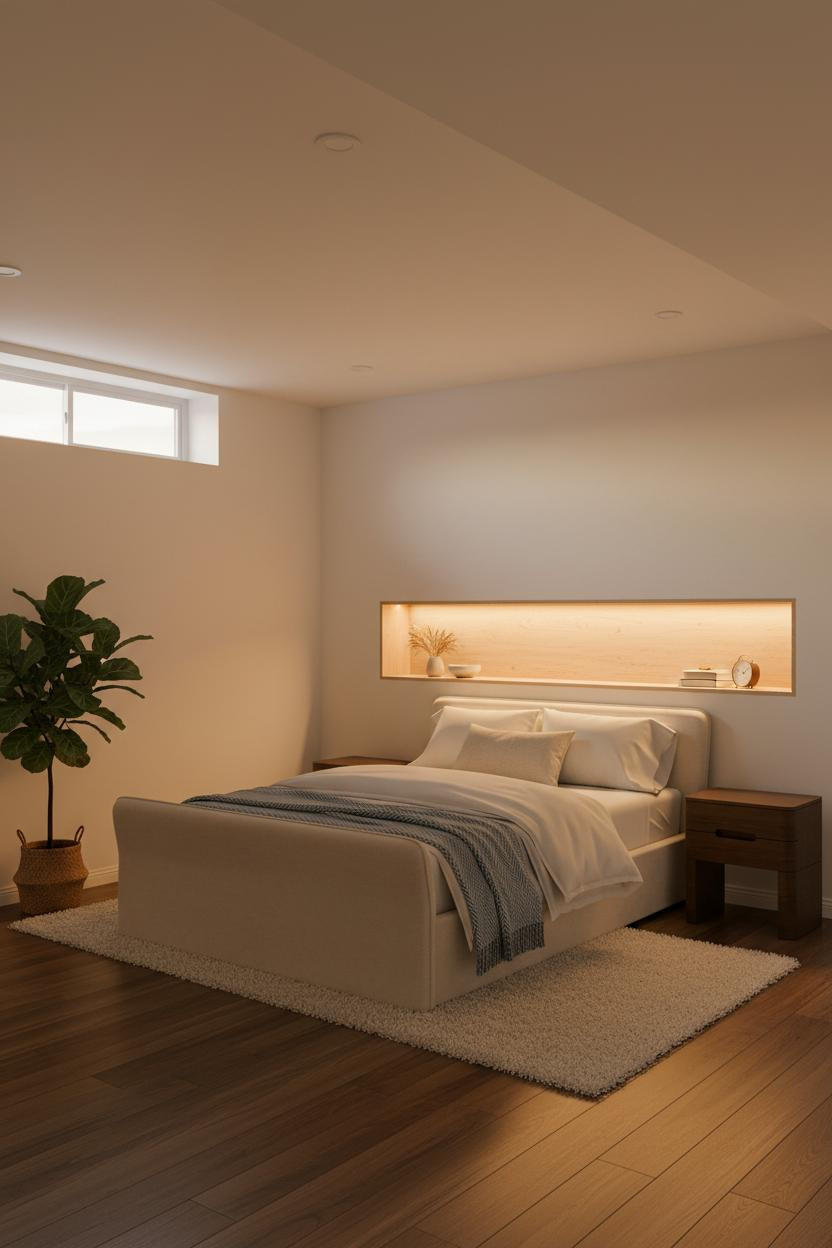

A shallow pale oak niche recessed above the bed does something counterintuitive: it adds perceived depth to a room that has almost no natural depth to offer.
The LED strip along its inner edge adds upward glow while the chunky wool cream rug grounds the sleeping zone below. The room feels hushed and considered, in a way that feels genuinely intentional rather than staged.
The Floating Shelf That Acts as an Architectural Horizon
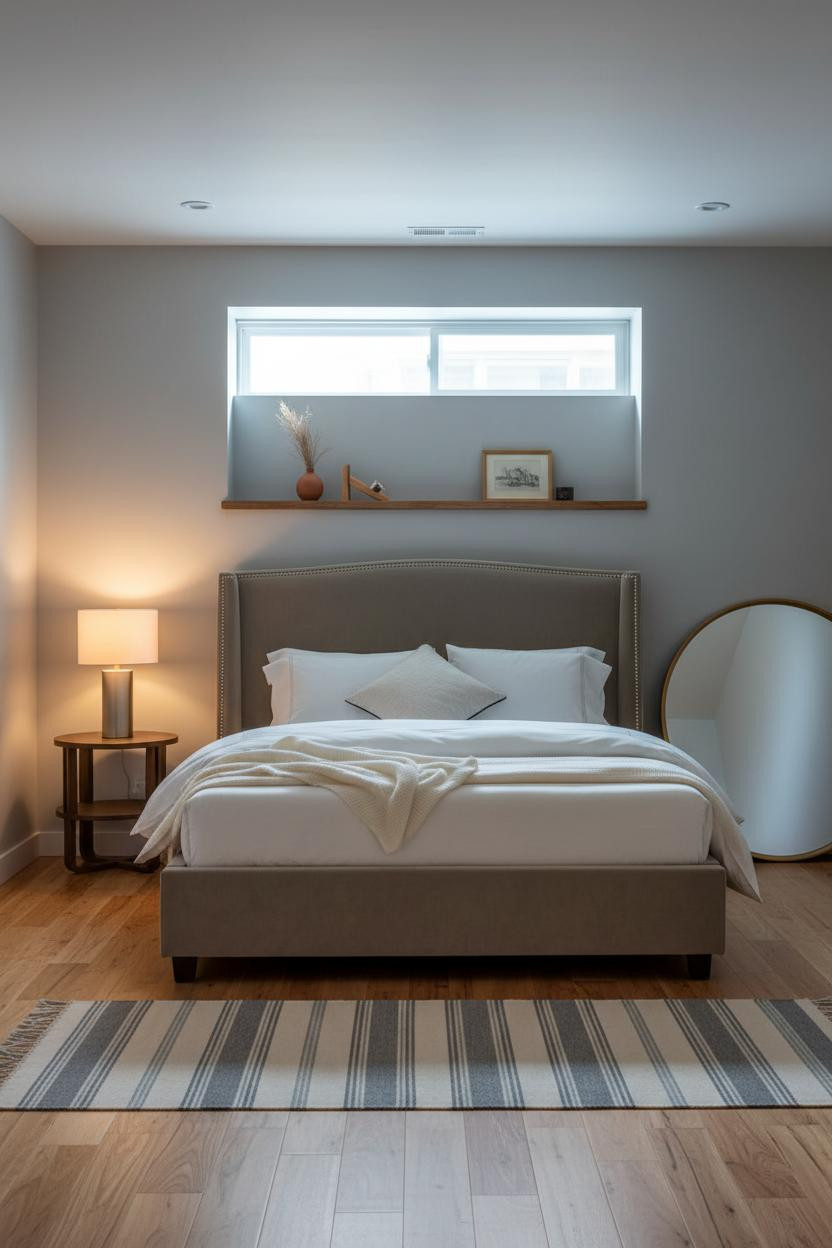
Nothing fancy. That’s the point.
Design logic: A honey-stained oak shelf spanning the full headboard width catches the cool egress window light along its beveled edge, creating a clean horizontal line that reads as architecture in a room that otherwise has none.
Worth copying: Keep the shelf sparse. A terracotta vase, a bookend pair, and one small framed sketch slightly tilted. Anything more and it starts to feel cluttered rather than collected.
Clay Walls and a Single Good Lamp
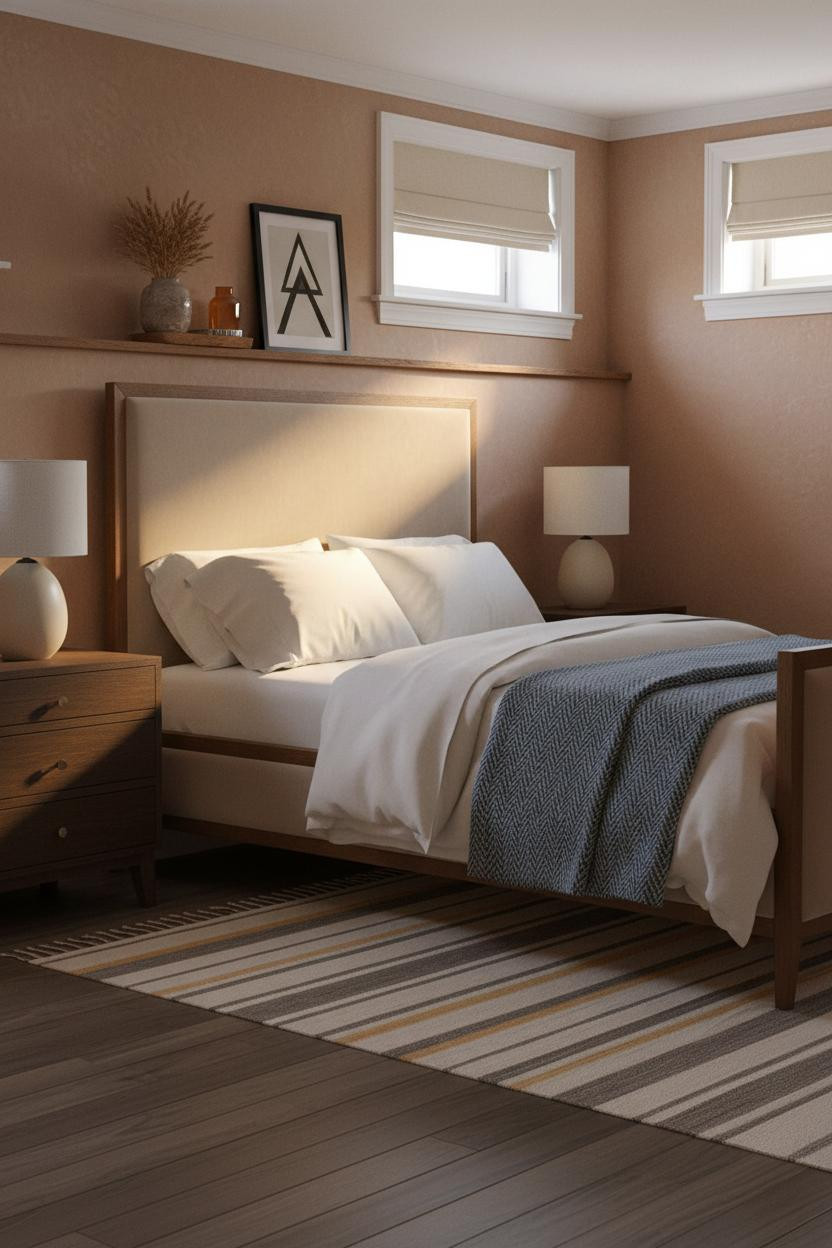

This is the one that gets labeled “cozy” but is actually just smart about light sources.
What makes this work: Warm clay walls absorb the bedside lamp’s amber glow and bounce it back softly, so a single lamp does the work of three. The room feels lived-in and intimate rather than dim and underground.
Admittedly, it only holds together if the lamp is warm. Cool overhead light would kill it completely.
Sage Walls: The Color That Forgives a Bad Layout
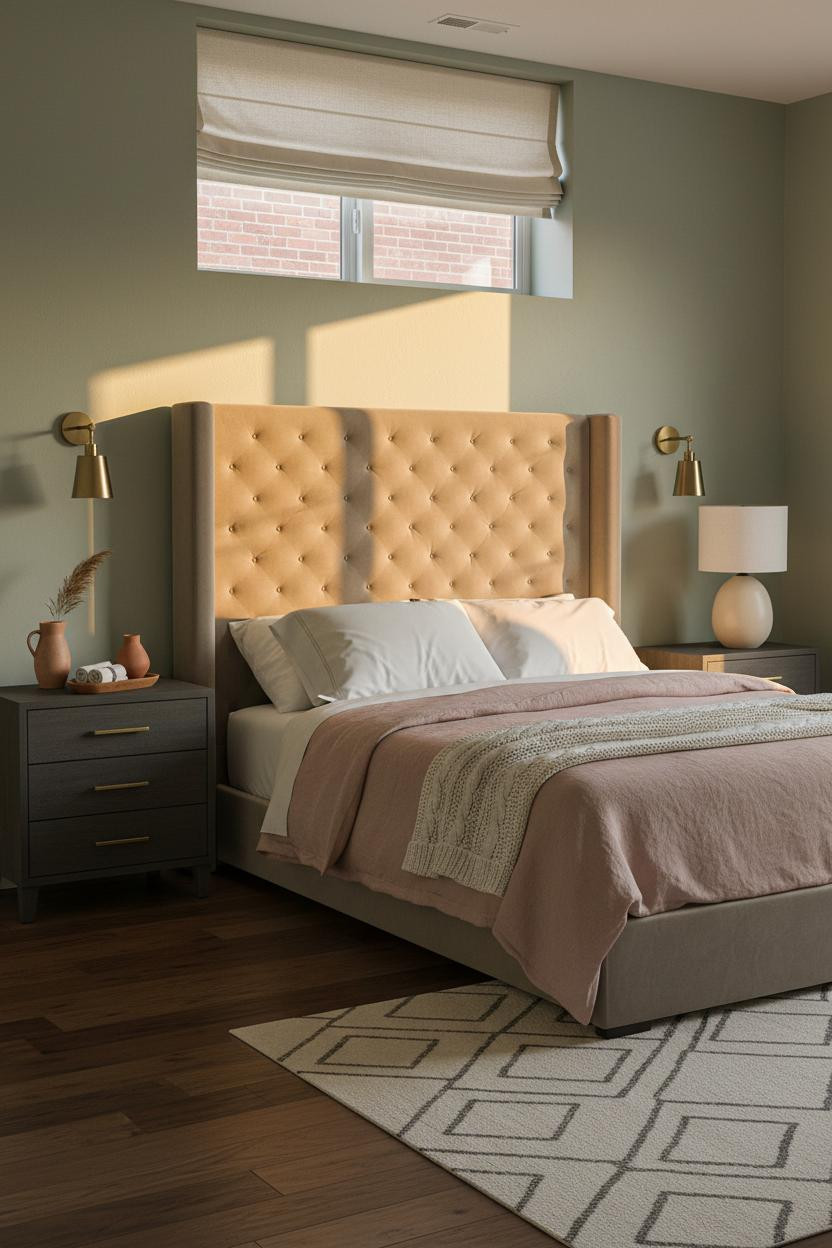
I’ve recommended sage to so many people at this point that I should probably be tired of it. But I’m not.
Why the palette works: Matte sage green walls catch afternoon light in a way that reads warmer than the color actually is, which makes a compact basement bedroom feel calm rather than cool. It’s forgiving of awkward proportions in a way ivory or grey simply isn’t.
One smart swap: Ditch the plain rug. A Moroccan diamond-patterned rug adds just enough texture while still feeling grounded.
How a Walnut Shelf Turns Pale Walls Into a Real Room
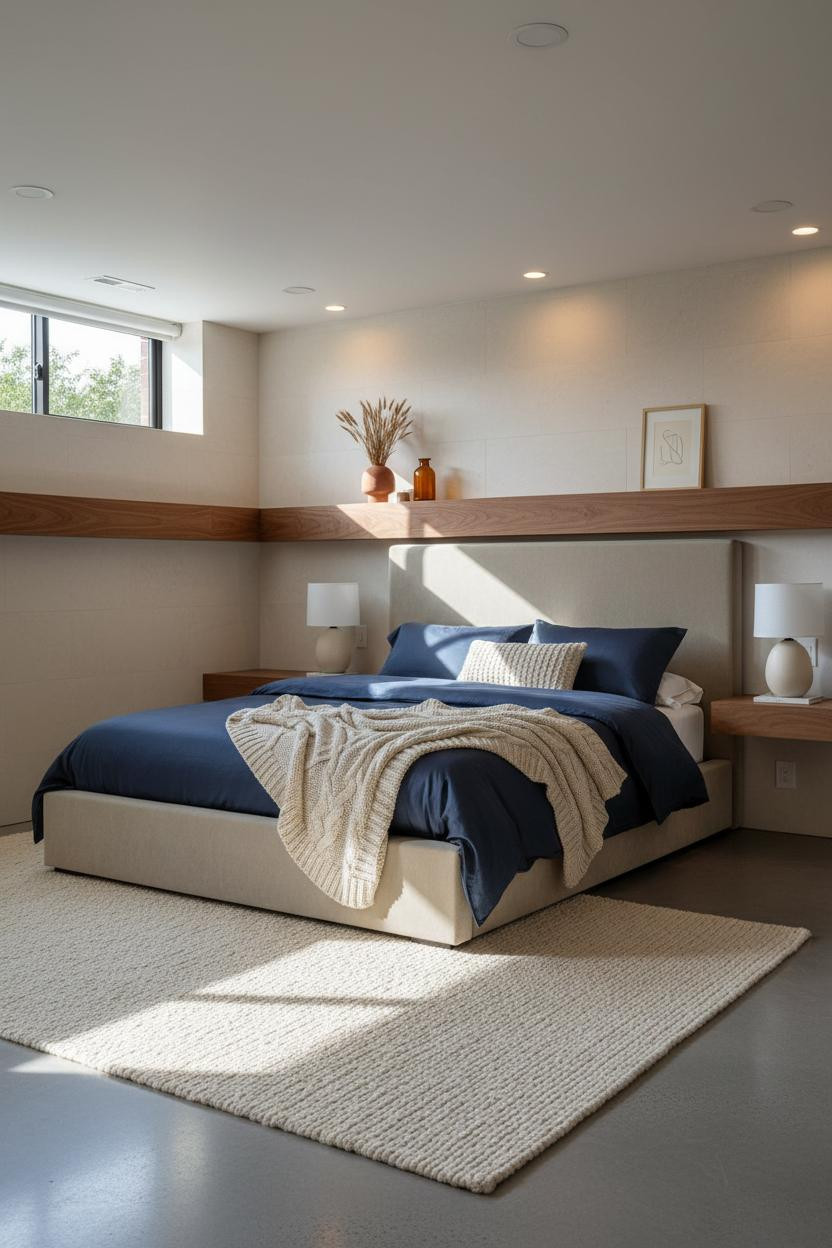

Stone walls and a polished concrete floor sound cold. They’re not, if you get the shelf right.
A full-width walnut floating shelf above the bed catches ambient light along its beveled grain and anchors the whole composition. It’s the one warm material that makes every pale surface around it look intentional rather than unfinished.
Where to start: A navy sateen duvet with a cream cable-knit throw at the foot. The contrast stops the pale walls from flattening out.
Moss Green and a Painted Beam: A Basement Bedroom Layout That Actually Breathes
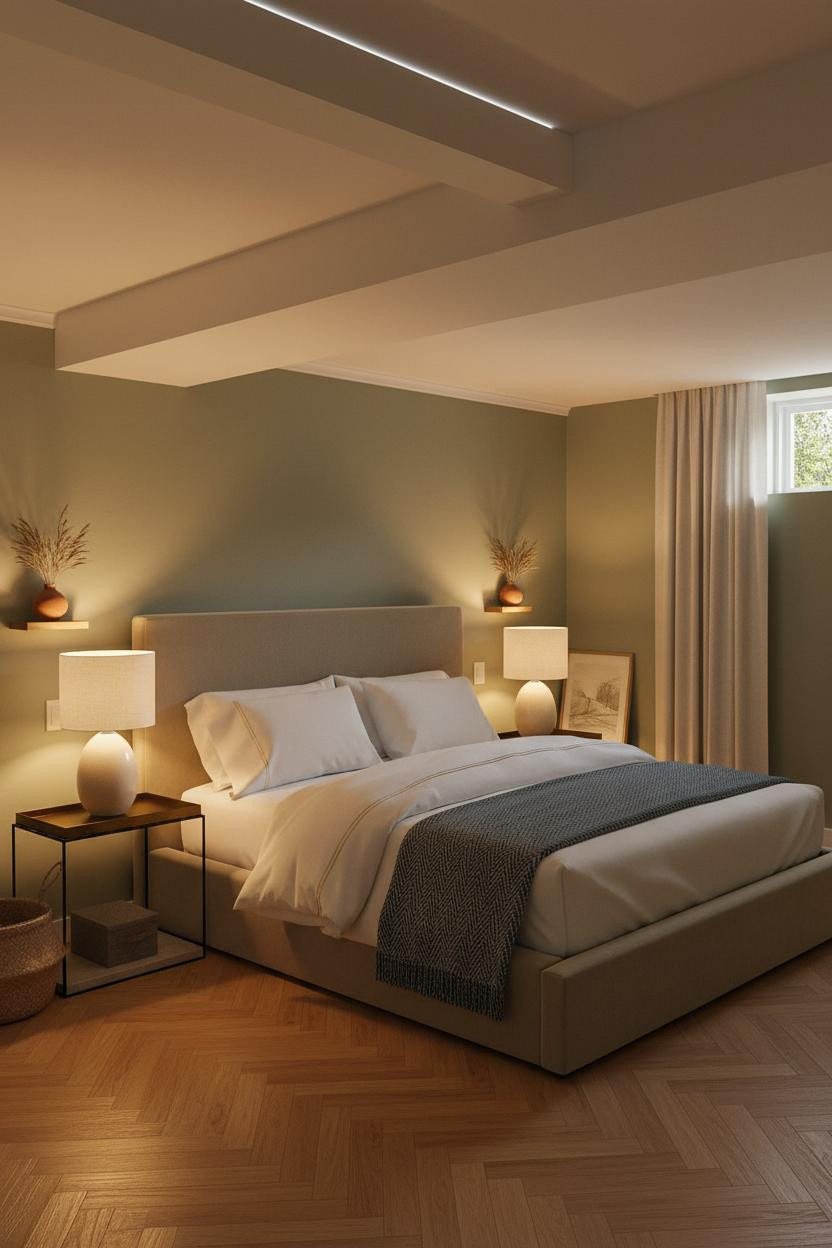
Bold choice. But moss green is divisive for a reason: it either clicks immediately or it doesn’t.
And when it clicks, it’s because of what happens with the ceiling. A white-painted perpendicular beam above the bed catches warm sconce light and casts a clean shadow line across the herringbone parquet floor below, giving the low basement layout a defined sleeping zone without any partition wall.
What not to do: Skip heavy curtains here. Floor-to-ceiling cream linen panels are all the softness this room needs.
Why Scandi Basements Feel So Much Taller Than They Are
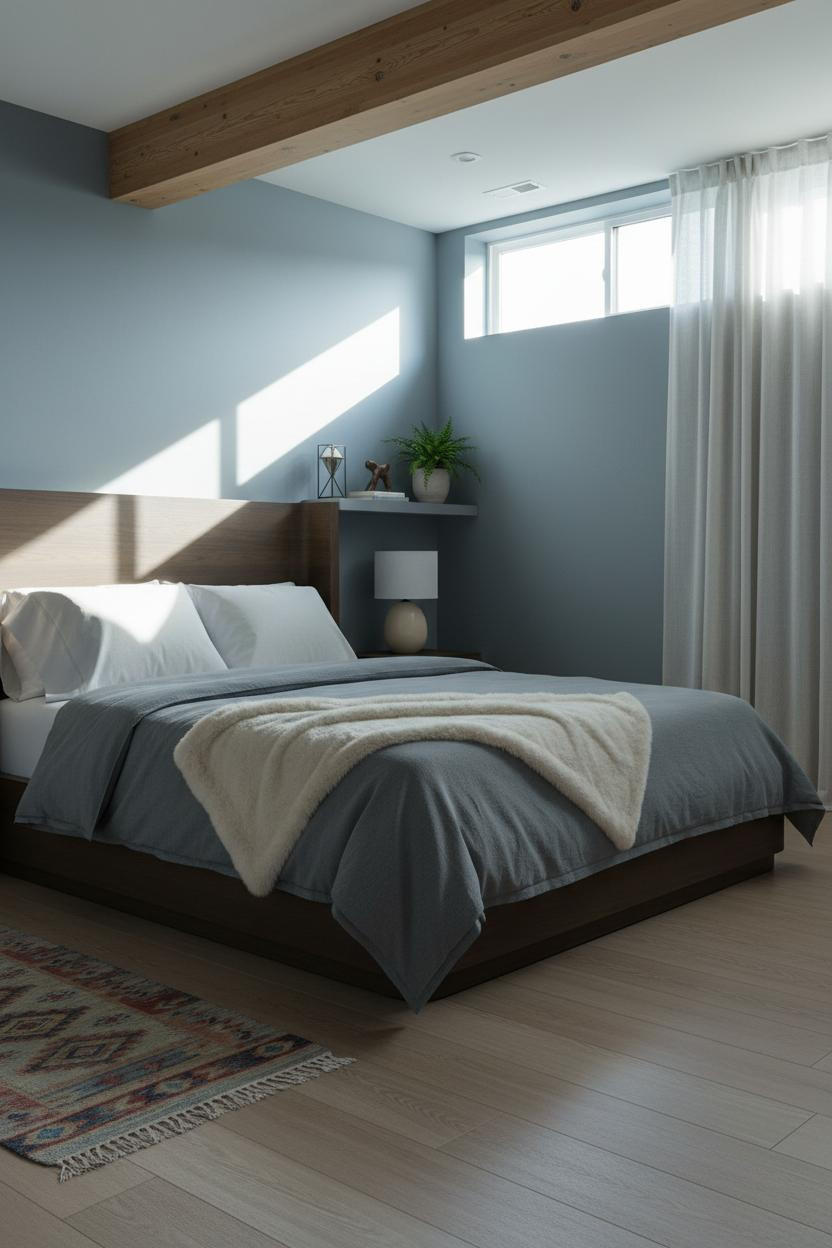

An exposed honey-toned timber beam across the full ceiling width does something horizontal surfaces almost never do: it adds perceived height instead of reducing it.
The reason is contrast. Against dusty blue-grey matte walls and bleached oak flooring, the beam creates a clear ceiling plane that the eye reads as a distinct layer. Distinct layers feel taller than flat ones. The kilim runner alongside the bed reinforces the same idea at floor level, grounding the sleeping zone clearly.
Half-Height Oak Paneling: The Basement Move With the Best Return
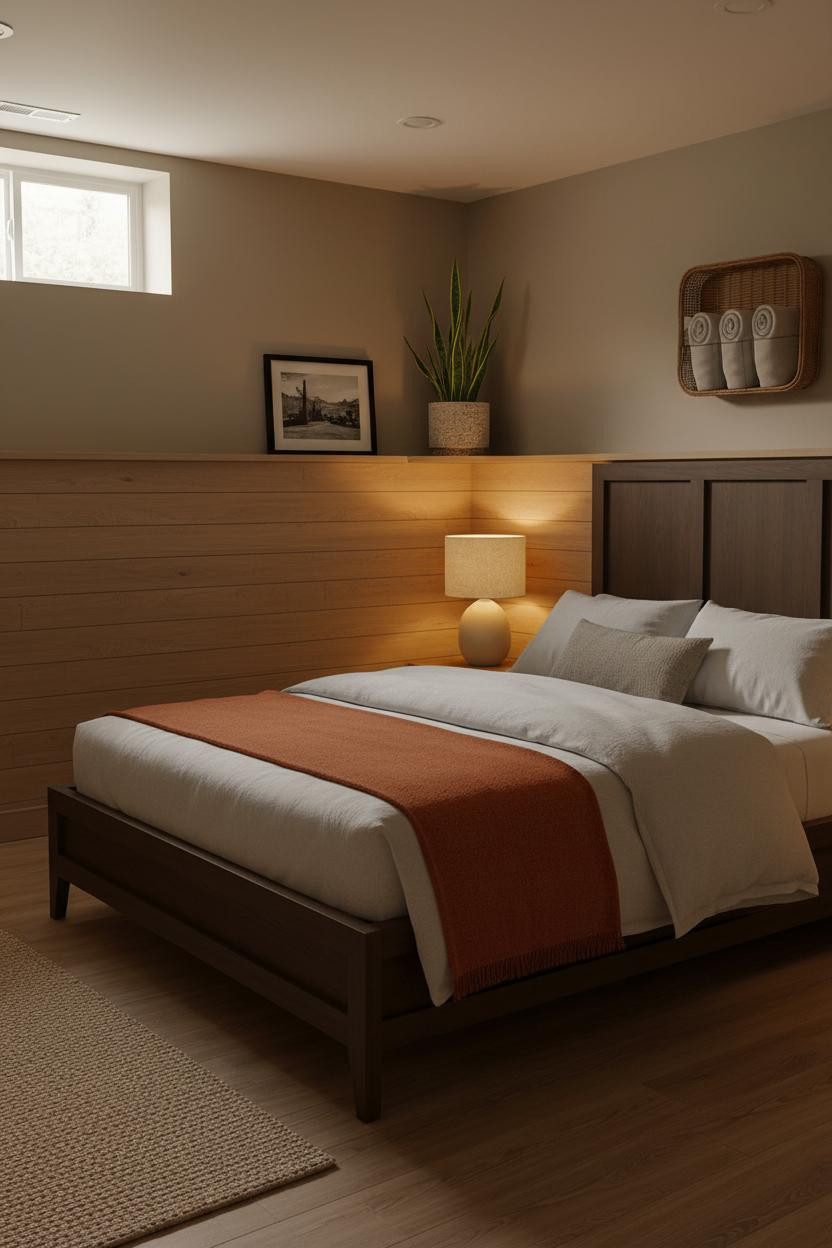

Fair warning: once you see what half-height natural oak board-and-batten paneling does to a raw basement wall, you’ll wonder why you didn’t do it sooner.
Where the luxury comes from: The horizontal batten lines catch soft raking light across each ridge, disguising unfinished concrete behind a surface that reads as genuinely residential. It’s a practical move with an outsized visual payoff.
The finishing layer: A burnt orange mohair throw at the foot and a snake plant on a corner shelf. Both add life without competing with the paneling’s warmth.

Our #1 Pick
Saatva Classic Mattress
America’s best-selling online luxury innerspring. 365-night trial, lifetime warranty, free white glove delivery.
Shop Saatva Classic
The Foundation Of Every Beautiful Bedroom
All fourteen of these rooms prove the same thing: a basement guest bedroom stops feeling like a basement the moment every material choice looks deliberate. Walls, lighting, textiles. But none of it matters much if the bed itself lets the room down.
Walls get repainted. Linen gets swapped out. The mattress stays. The Saatva Classic is built for that long game: dual-coil support that holds up over years, a breathable organic cotton cover, and a Euro pillow top that still feels right long after the room around it has been rearranged twice.
Guests notice it. They always do.

The effect is subtle, but you feel it the moment you walk in. Start with the bed. The rest figures itself out.