“`html
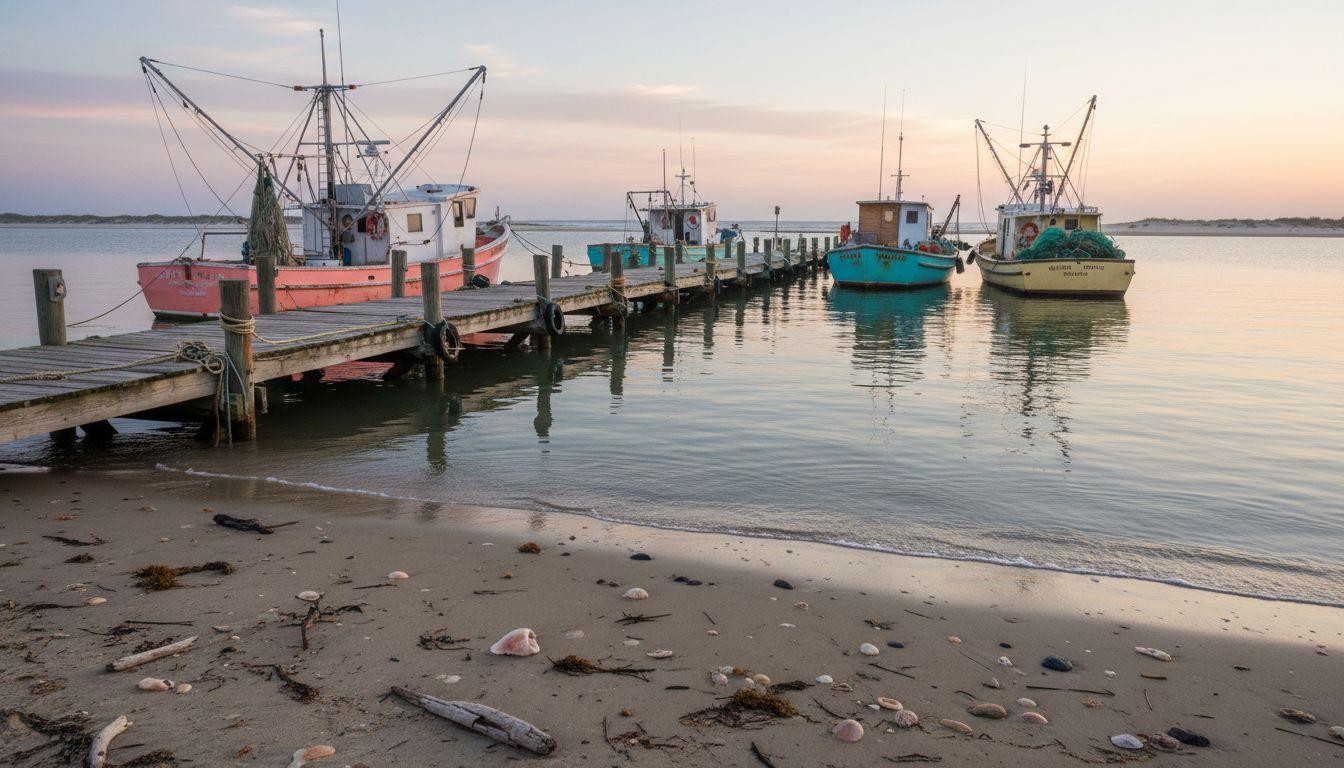
Morning fog rolls across Mustang Island at 6am, turning the Gulf of Mexico into soft gray. The free ferry from Corpus Christi crosses the ship channel in twelve minutes. Port Aransas appears through the mist: pastel shrimp boats, weathered docks, eighteen miles of empty beach. Population 3,500. No high-rises. The fishing village that Hurricane Harvey couldn’t erase.
Where the fog meets the Gulf
Port Aransas sits on a barrier island ten miles from downtown Corpus Christi. The ferry runs 24/7, no reservations, no cost. March mornings bring fog thick enough to hide the opposite shore.
Turquoise water meets golden sand along the entire eastern coast. Horace Caldwell Pier juts 1,240 feet into the Gulf, renovated in early 2026 with better fishing platforms. The wooden planks creak under your feet. Pelicans dive at sunrise.
Mustang Island State Park protects the southern beaches. New eco-trails opened this spring through coastal prairie and dunes. Beach parking costs $12 per vehicle through December 2026, rising to $20 in 2027. Free parking exists between the South Jetty and Horace Caldwell Pier.
What survived Hurricane Harvey
Fishing village resilience
Harvey hit in August 2017 with 130mph winds. The island flooded completely. Shrimp boats washed into streets. Every building took damage.
The fishing fleet rebuilt first. Boats still unload daily catch at Fisherman’s Wharf before noon. A pop-up seafood market runs March weekends now, selling gulf shrimp for $8 per pound. The docks smell like salt and diesel.
Local tourism boards confirm Port Aransas attracted 1.05 million visitors in 2022, up from 413,000 in 2018. The recovery focused on authenticity over resort development. No chain hotels appeared. Family-owned motels repaired their stilted cottages and reopened.
Empty March mornings
Late March 2026 brings highs of 72-78°F and water temperatures around 66°F. Recent visitor surveys show shoulder season occupancy at 32%, compared to 50% in July-August. Spring break peaks mid-March but tapers by month’s end.
The eighteen-mile beach stretches north with almost no one on it. You can walk for an hour and see maybe three people. Laughing gulls outnumber tourists ten to one. This Mississippi harbor offers similar fog-wrapped quiet along the Gulf Coast.
The island nobody rushes
Beach walks without crowds
San Jose Island sits across the channel, accessible only by boat. The uninhabited barrier island hosts 500 whooping cranes each winter. Charter boats run $50 per person for two-hour wildlife tours through March.
I.B. Magee Beach Park near the South Jetty reopened after Harvey repairs. The beach faces southeast, catching morning light that turns the water translucent green. Driftwood piles up after storms. Locals collect it for porch decorations.
The pier stays open until 10pm for night fishing. Black drum and redfish run strong in spring. Pole rentals cost $8. A resident who’s fished here for decades says March brings the calmest seas and best catches before summer heat arrives.
Island time culture
Port Aransas moves slowly on purpose. Drivers wave at each other on the two-lane roads. The general store sells bait and coffee from the same counter. Everyone knows the ferry schedule by heart.
Fresh gulf shrimp appears on every menu. Fried fish tacos cost $12 at harborside shacks. Oyster po’boys run $15. The restaurants near Fisherman’s Wharf serve catch from boats you can see unloading.
Fishing charters book half-day trips for four people around $400. Kayak rentals cost $35 for four hours in the calm bay waters behind the island. These Arizona spots offer similar outdoor value at comparable prices.
What makes this different
South Padre Island draws party crowds and spring breakers year-round. Hotels there start at $200 per night even off-season. Port Aransas keeps rates 20-30% lower: beachfront condos run $120-200 in late March.
Galveston sees over 5 million annual visitors. Port Aransas topped out at 1.2 million in 2025. The difference shows in empty morning beaches and available pier space. No boardwalk. No amusement park. Just eighteen miles of sand and working fishing boats.
The visual parallels Mediterranean fishing villages: pastel boats, turquoise water, white-sand beaches, unhurried pace. But you’re three hours from Houston, two from San Antonio, four from Austin. This Caribbean beach captures similar laid-back fishing village authenticity.
Your questions about Port Aransas answered
When should I visit?
March through May brings 70-80°F days with minimal rain. September through November offers the same mild weather after summer heat breaks. Avoid July-August: temperatures hit 90°F with high humidity. The Texas State Kite Festival happens in late March along the beach.
How do I get there?
Fly into Corpus Christi International Airport, ten miles away. Rental cars cost $40-60 per day. Drive TX-361 to the free ferry, which runs continuously with typical wait times under fifteen minutes on weekday mornings. The crossing takes twelve minutes. No reservations needed.
Why choose this over Galveston?
Port Aransas keeps its fishing village character. Shrimp boats still work daily. Beaches stay uncrowded even in peak season compared to Galveston’s 5 million annual visitors. Accommodation costs run 25% lower. The island survived Harvey by rebuilding authentically instead of going corporate. These Spanish villages show similar resilience after tourism pressure.
The fog lifts around 8am most March mornings. For maybe ten minutes the whole Gulf turns gold before the sun climbs higher. Pelicans dive. Shrimp boats head out. The ferry crosses back and forth. An innkeeper who’s welcomed travelers for two decades says this moment never gets old.
“`