Nerja’s Cueva de Nerja pulls 500,000 visitors annually through 90-minute summer queues for $17 cave tours. Five kilometers inland, Frigiliana’s 2,900 residents still outnumber tourists on Thursday market mornings. Same coastal light, one-sixth the crowds, and boutique hotels averaging $100-165 per night instead of Nerja’s $165-275 beachfront rates.
The difference shows in afternoon silence. Nerja’s Balcón de Europa viewpoint packs shoulder-to-shoulder from 11am onward. Frigiliana’s Castillo de Lizar ruins trail sees maybe five other hikers on a typical spring day.
Why Nerja lost its village soul
Two million annual visitors compress into Nerja’s 5-square-kilometer coastal zone. The Cueva de Nerja became Andalusia’s third-most-visited monument after the Alhambra and Mezquita. Tour buses idle outside while groups cycle through prehistoric chambers every 20 minutes.
Restaurant prices inflated 40% along the Balcón de Europa promenade between 2020 and 2025. A seafood lunch that cost $22 in 2020 runs $31 today. Hotel towers replaced traditional architecture along Playa de Burriana.
The beach town works efficiently. It just stopped feeling like Andalusia somewhere around 2015.
Meet Frigiliana’s blue-white Moorish quarter
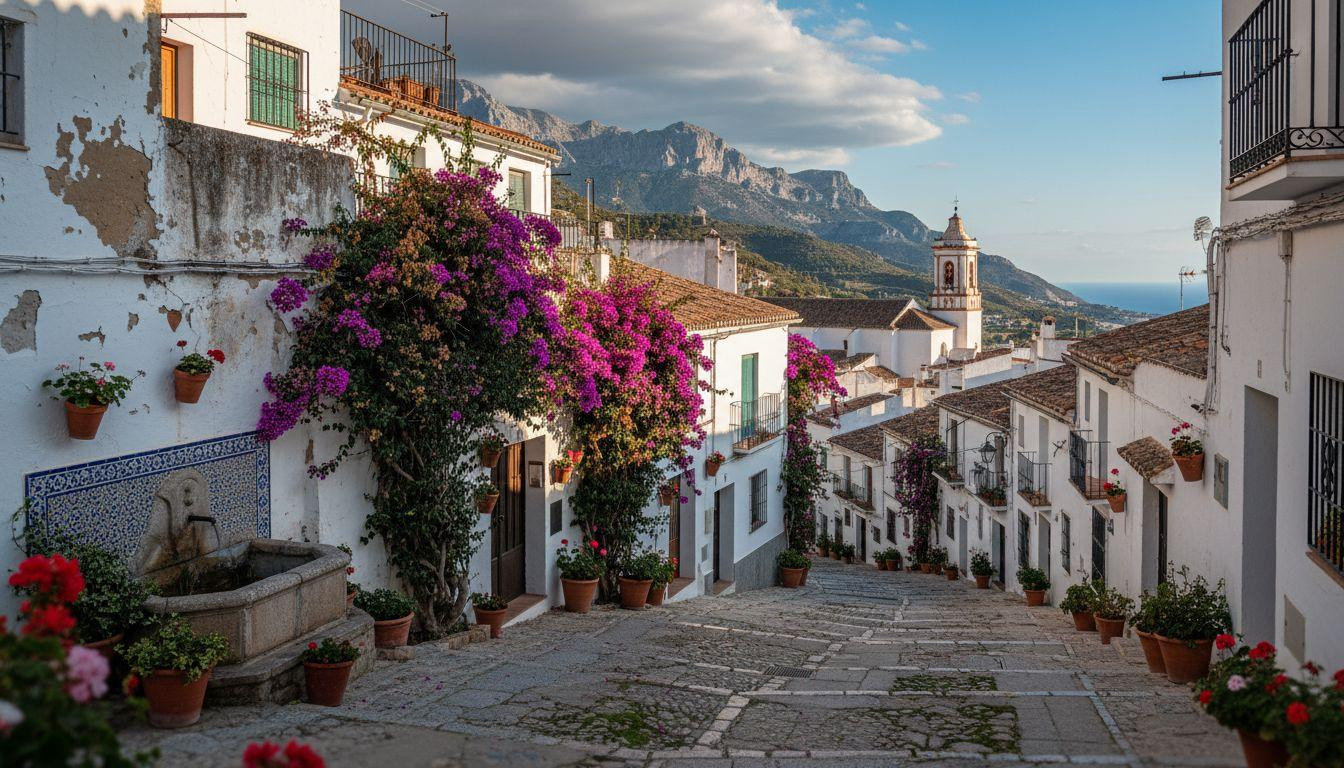
The village clings to Sierra Almijara foothills at 985 feet elevation. Mediterranean views stretch 37 miles on clear mornings. Purple bougainvillea vines cascade down whitewashed walls in the Barrio Alto, the 8th-century Moorish quarter where commercialization never arrived.
The landscape that tourism forgot
Cobblestone lanes wind past geranium pots and blue ceramic tiles in Mudejar patterns. No gift shops interrupt the rhythm. The steepest alleys dead-end at viewpoints over sugarcane terraces dropping toward the coast.
Afternoon light between 5pm and 7pm in March through May turns white facades golden against the mountain backdrop. Photographers work these hours. By 8pm the streets empty for siesta’s second act.
Price reality check
Boutique hotels like apartments with Sierra views run $100-165 per night in spring 2026. Nerja’s equivalent coastal properties charge $165-275. Daily costs excluding lodging average $50-77 in both towns, but Frigiliana skips the beachfront markup.
Rabbit in garlic sauce costs $17-27 at family restaurants. Nerja’s tourist-zone seafood runs $27-38 for comparable portions. The free castle ruins hike beats paying $17 for cave admission plus $11 for the bus from Nerja.
What daily life actually feels like
The village operates on old rhythms. Shops close 2pm to 5pm. Dinner starts at 9pm. Church bells from Santa Antonio mark hours nobody rushes to meet.
Thursday market morning
Plaza de las Tres Culturas fills with vendors selling miel de caña honey and hand-painted ceramics between 8am and 1pm. Locals outnumber tourists four to one based on overheard Andalusian Spanish versus English. Jasmine scent mixes with fresh bread from the bakery that opened in 1953.
The honey comes from 19th-century mills still pressing sugarcane. It tastes sweeter than regular cane sugar. Vendors joke it sticks you to the village.
Afternoon castle trail
The uphill walk to Castillo de Lizar ruins takes 20 minutes on steep cobblestones. Moorish revolt leader Hernando el Darra held out here in 1569 before Spanish forces ended the siege. Now it’s just stone foundations and panoramic views.
You’ll encounter two to five other hikers on average spring afternoons. Nerja’s beaches pack hundreds into the same timeframe. The contrast makes the mountain air feel thinner than it is.
Evening village pulse
Locals emerge for paseo walks after 7pm. Fountain sounds echo off narrow walls. Distant waves provide bass notes. Dinner reservations aren’t necessary because restaurants seat 30 covers per night, not 150.
The pace feels pre-digital. Conversations last. Nobody checks phones between courses. Similar to how Arkansas hill towns preserve unhurried rhythms, Frigiliana protects its tempo through geography.
Practical realities for spring 2026
Málaga Airport sits 37 miles west. ALSA buses reach Nerja in 90 minutes for $11-17, then local service covers the final 3.5 miles to Frigiliana in 15 minutes. Rental cars handle the A-7 highway route in one hour, though village parking stays tight.
March through May brings 64-68°F days before summer heat arrives. Geraniums and purple vines bloom heaviest in April. Easter week (March 29-April 5, 2026) pushes Nerja crowds higher while Frigiliana stays relatively calm.
Book boutique stays two to three weeks ahead for spring weekends. The village has limited hotel inventory by design. Most visitors base in Nerja and day-trip up, which keeps Frigiliana’s evening hours peaceful.
Avoid August’s Fiesta de la Vendimia grape harvest festival unless you want the one week annually when crowds match Nerja’s. November through February brings rain that turns cobblestones slick.
Your questions about Frigiliana answered
How does Frigiliana compare to other Andalusian white villages?
It ranks among Spain’s officially designated prettiest villages but maintains working-town authenticity that places like Ronda lost to tour buses. Population density stays low at 2,900 residents across 15 square miles. Similar to how Bargème avoids Gordes’ Provence crowds, Frigiliana’s hilltop location naturally limits development.
What’s the Moorish heritage significance?
The Barrio Alto preserves 8th-century street layouts from Nasrid dynasty rule. Sugarcane plantations funded prosperity until the 1569 Morisco Revolt. Plaza de las Tres Culturas commemorates Moorish, Jewish, and Christian coexistence before the Reconquista. Blue ceramic tiles follow traditional Mudejar geometric patterns, not modern tourist reproductions.
Can you visit both Nerja and Frigiliana in one day?
Yes, but it rushes the experience. Morning in Frigiliana’s market (8am-1pm) plus castle hike, then afternoon Nerja beaches works logistically. The 15-minute bus runs hourly. Most travelers prefer basing three nights in Frigiliana for sunrise light and evening quiet, day-tripping to Nerja’s caves when needed. Like choosing Castelsardo over Cinque Terre, staying in the quieter village delivers better value.
The choice Nerja stopped offering
Frigiliana preserves what coastal development erased. Same Andalusian light, same Sierra Almijara backdrop, same Mediterranean proximity. Just 2,900 residents instead of resort infrastructure.
The Thursday market vendors pack up by 1pm. Purple vines keep blooming whether tourists arrive or not. Castle ruins stay free because nobody built a ticket booth yet. Similar to Mississippi harbors that tourism forgot, some places survive by staying small.
The 15-minute bus from Nerja runs until 9pm. Most visitors take it back down before dinner. The ones who stay watch afternoon light turn white walls gold, then settle into restaurants where locals still outnumber menus in English.