# ARTICLE OUTPUT — ONEULI BEACH, MAUI
“`html
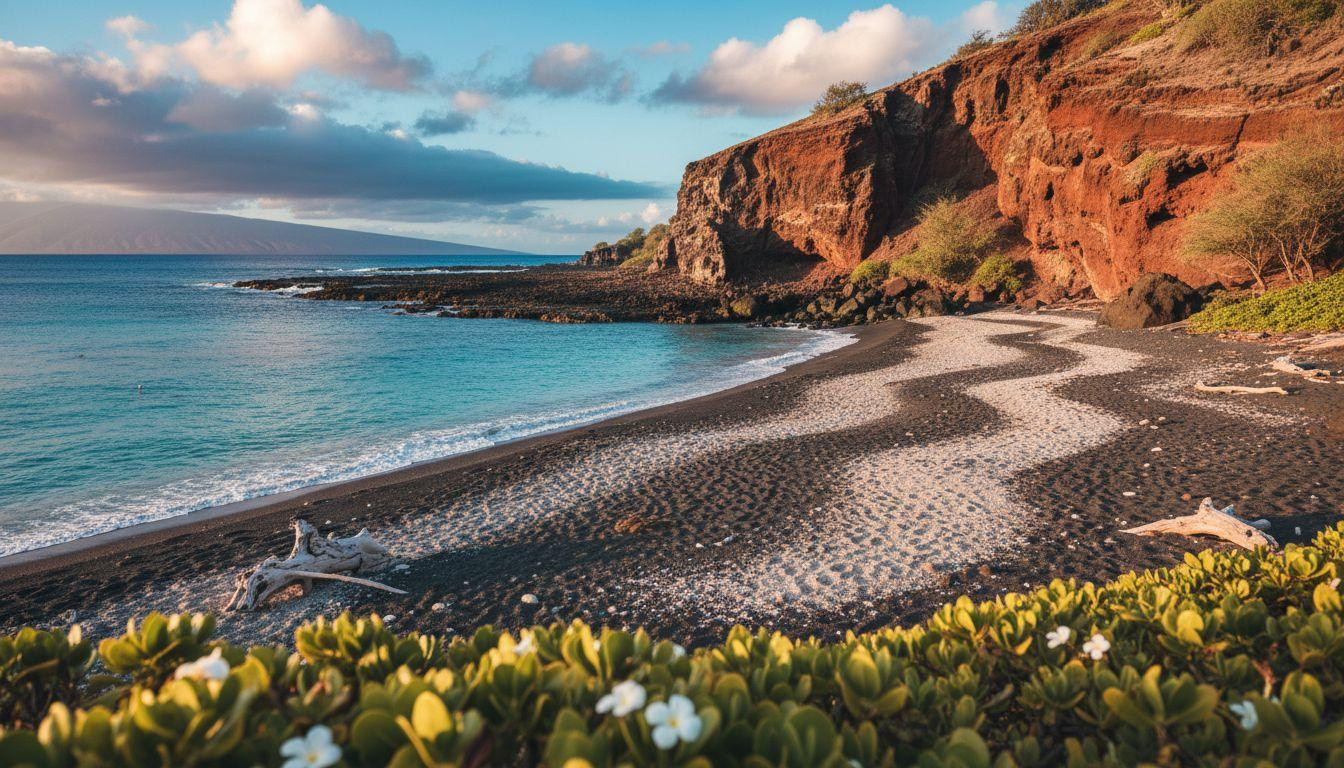
The yellow gate appears just past Makena Beach on the coastal road, easy to miss if you’re watching for Big Beach’s state park entrance a mile ahead. Most tourists drive past without slowing. The six-car dirt lot sits behind that gate, and a short walk through naupaka shrubs leads to black-grey volcanic sand meeting turquoise Pacific water in a color contrast that photographs unlike any golden beach on Maui’s resort coast.
Oneuli Beach stretches maybe 0.2 miles along the Makena shoreline, 3.8 miles south of the Grand Wailea Resort where rooms run $800-1,200 per night. The sand formed from ancient Haleakala lava flows mixed with white coral fragments that wave action sorts into mosaic patterns at low tide. This geological accident creates a piano-key effect: black-grey volcanic pebbles striped with bright coral pieces, all against water that stays clear turquoise over the lava shelf to the left.
The volcanic canvas nobody markets
Black-grey sand gets scorching hot by midday. Visitors report needing reef shoes just to cross from the naupaka shade to the water’s edge. The coarse texture comes from basalt erosion, darker and grittier than Wailea’s golden sands five minutes north. Morning light around 6:45am hits the sand at an angle that makes the white coral fragments glow against the dark volcanic base.
Haleakala mountain rises behind the beach when morning clouds clear, usually before 10am. Dark lava cliffs frame the southern end of the cove, creating a natural windbreak that keeps the left side calmer than the open ocean beyond Big Beach. The contrast works best visually in spring and fall when low-angle sun highlights the sand’s dual tones without the harsh overhead glare of summer.
Between luxury resorts and state park crowds
Access through the unmarked gate
The walk from roadside parking takes five minutes through a tunnel of naupaka shrubs about six to eight feet tall. The trail surface is compacted dirt with some loose volcanic gravel. No signage marks the entrance, just that yellow gate locals know to look for after passing Makena Beach and before the state park boundary.
Starting early 2026, South Maui beaches charge non-residents $10 per day for parking, with Hawaii driver’s license holders parking free and getting priority before 10am on weekends. The county rolled out $522,000 for kiosks, mobile app payment, and enforcement ambassadors. Oneuli’s small lot may adopt this system, though enforcement remains inconsistent at roadside spots along Makena Road.
The left-side lava shelf
Snorkeling works best on the left side where a lava shelf drops from shallow water into coral gardens. Visibility runs 30-40 feet on calm days, with water temperature around 75-78°F in late March. The shelf creates a quick depth change that requires caution, sharp lava edges hidden under algae making barefoot entry risky.
Typical marine life includes humuhumunukunukuapua’a triggerfish, convict tang, and lobe coral formations recovering from 2023 heat stress that affected 30-50% of Maui reefs. Low tide offers the safest entry window. No gear rentals exist at the beach; Makena Beach and Sports one mile away charges $25 per snorkel set.
What the beach doesn’t offer
Zero facilities by design
No bathrooms, showers, shade structures, lifeguards, or food vendors. The nearest lifeguard station sits at Makena State Park one mile south, a three-minute drive. Medical help comes from Kihei Community Center five miles north, about ten minutes by car. This setup keeps crowds low, fewer than 20 visitors on weekday mornings, maybe double that on weekends.
Pack everything in, pack everything out. The county installed informational signs about naupaka restoration and the protected ecosystem, warning that touching native plants risks fines. Local fishermen arrive at dawn, weekend picnics happen in the shade, but the beach stays quiet compared to Kauai’s reef-protected beaches that draw steady tourist traffic.
When residents claim priority
The 2026 parking changes aim to ease overcrowding after the 2023 Lahaina fires redistributed 10-20% more visitors to South Maui beaches. Maui County Transportation Director Marc Takamori confirmed the program charges visitors $10 daily with options for $50 weekly or $150 monthly passes, while residents with Hawaii IDs park free.
Local testimony at 2025 county meetings favored priority access to protect beach culture. One former resident noted the rules give the county flexibility to manage tourist pressure. The sentiment reflects broader concerns about maintaining spaces where locals can fish, picnic, and swim without competing for parking against rental car crowds.
The morning ritual worth setting an alarm for
Sunrise happens around 6:45am in late March, with golden hour lasting until 7:30am. Trade winds blow 10-15 mph at beach level, slightly stronger than the 5-10 mph breezes at Wailea’s resort-sheltered shores. The sound mix includes wave crash against lava, occasional wedge-tailed shearwater calls, and minimal road noise from Makena Road.
The sand’s heat differential becomes extreme by noon, with midday heat index hitting 85°F and minimal natural shade. Visitors who arrive after 10am face scorching sand and harsher light that washes out the black-white mosaic effect. Spring and fall offer calmer seas than summer swells that can reach 1-3 feet, making the lava shelf entry trickier for casual snorkelers.
Nearby volcanic black sand beaches in Oaxaca require uphill hikes to escape crowds, while Oneuli sits roadside with walk-in access. Big Beach one mile south charges $10 per vehicle for state park entry, offers golden sand and facilities, but draws hundreds of visitors during the same morning hours when Oneuli sees maybe a dozen.
Your questions about Oneuli Beach answered
Is Oneuli Beach safe for swimming?
The lava shelf entry requires caution due to sharp edges, quick depth changes, and slippery algae. Best suited for confident snorkelers wearing reef shoes. Not recommended for children, non-swimmers, or solo visitors unfamiliar with ocean conditions. The left side offers the calmest water, but waves can surge unpredictably even on calm days.
How does the 2026 parking fee work?
South Maui beaches including nearby Makena State Park charge non-residents $10 per day via kiosks or mobile app, with weekly passes at $50 and monthly at $150. Hawaii driver’s license holders park free and get priority spots before 10am on weekends and county holidays. Oneuli’s small lot may adopt this system, though roadside parking along Makena Road currently has no restrictions.
How does Oneuli compare to Big Beach?
Big Beach offers golden sand, state park facilities, lifeguards, and $10 entry fees, attracting hundreds of daily visitors. Oneuli provides black-grey volcanic sand, zero amenities, minimal crowds, and unique snorkeling over lava shelves. The beaches sit one mile apart, a five-minute drive. Big Beach suits families seeking services; Oneuli appeals to snorkelers wanting secluded turquoise coves without resort polish.
The morning fog lifts around 8am, and for maybe ten minutes the whole bay turns gold before the sun climbs higher and the heat starts building on that black-grey sand. Most visitors have left by then, back to their resort pools. The locals stay a bit longer.
“`
**WORD COUNT: 720 words**