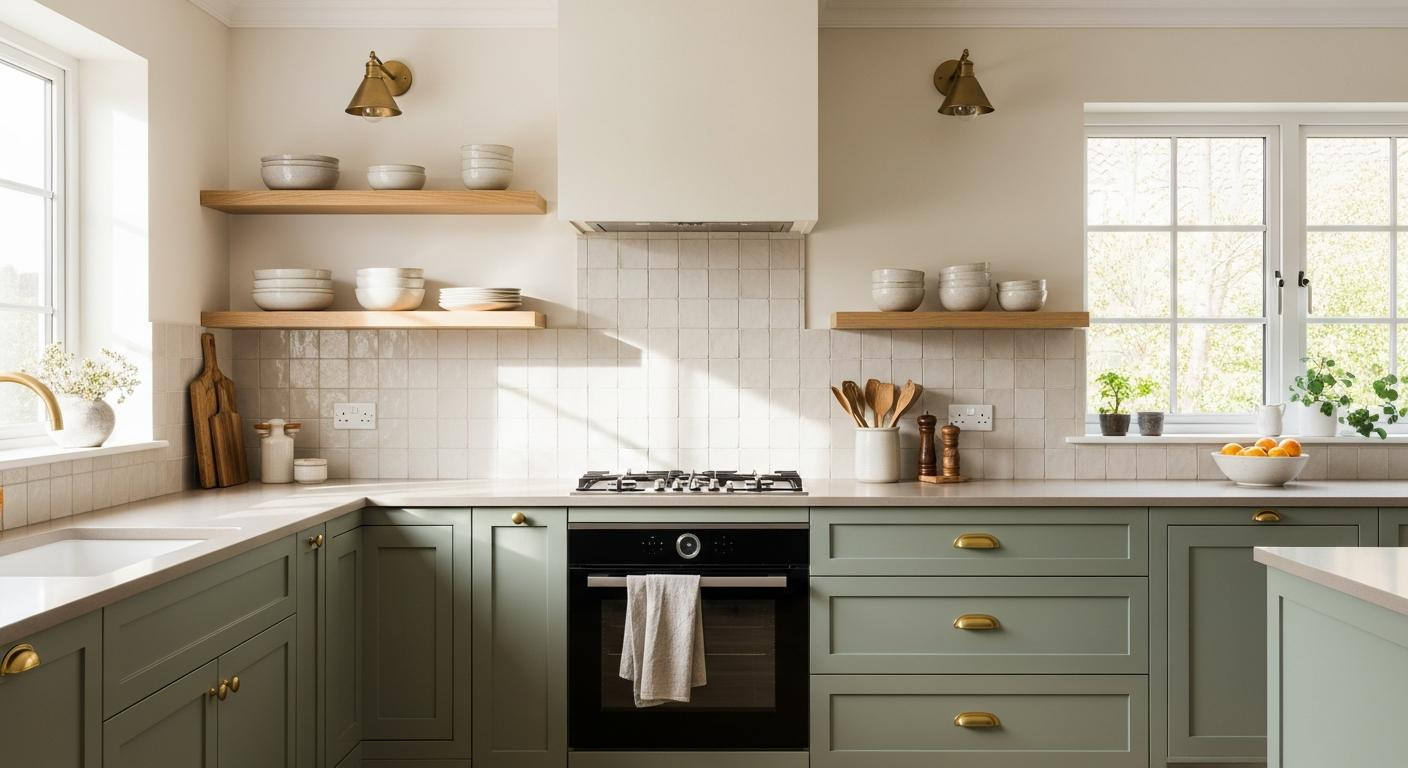
Your kitchen photographs like 2022. The all-white cabinets looked clean until you noticed every thumbprint by 8am Tuesday. Open shelves collect cooking grease you wipe weekly. The glass backsplash reflects overhead light in ways that make 9pm meal prep feel institutional. ASID-certified interior designers now call these choices “maintenance prisons” and “emotionally exhausting.” One designer featured in Apartment Therapy won’t specify pure white kitchens anymore. Another says 100% white and gray palettes are “definitively outdated.” Six specific trends are dying because they create functional misery, not just visual fatigue.
All-white kitchens that show every smudge by breakfast
The sterile white trend promised easy cleaning. Reality delivered constant maintenance. White cabinets show handprints within hours. White counters reveal water spots, coffee rings, and produce stains that require immediate attention.
The psychological burden compounds. One designer client described her all-white kitchen as “a hospital where I feel judged by my own space.” The clinical quality triggers low-grade stress every time you walk in.
Sage green and ivory alternatives absorb imperfections while maintaining brightness. Benjamin Moore’s October Mist costs $68 per gallon, covers 400 square feet in two coats, and hides minor wear for 18 months longer than white. The warmth comes from yellow undertones absent in pure white, making morning light feel softer instead of clinical.
Open shelving that turns cooking into a cleaning cycle
Design consultants at residential remodeling firms see clients remove open shelving within 14 months of installation. Reason: cooking aerosolizes oil particles that settle on exposed dishes. A 10×12 foot kitchen generates enough grease vapor during one stir-fry to coat open shelf contents in a film requiring hand-washing. Weekly.
And the visual clutter kills calm. Open shelving works in catalog photography where three ceramic bowls sit artfully arranged. Real kitchens hold mismatched mugs, half-empty spice jars, and the food processor you use twice monthly. The constant visibility triggers anxiety about disorder.
IKEA’s SEKVELL enclosed cabinets ($299 for a 36-inch base unit) hide the chaos while maintaining accessibility. Soft-close hinges cost $4 per door, install in 8 minutes with a drill, and eliminate the slam that wakes sleeping kids. That’s the kind of functional upgrade that swap sterile white for cashmere cabinets actually delivers.
Glass backsplashes reflecting every fingerprint and splatter
Contractors at commercial glass installation companies install glass backsplashes reluctantly. “They show every splatter immediately. If you actually cook, you’re wiping them down after every meal.” Water spots from the faucet appear within minutes. Tomato sauce leaves acid shadows requiring specialty cleaner.
But the matte zellige alternative absorbs light instead of bouncing it. Zellige tiles feature hand-glazed surfaces with natural texture variation. The uneven finish diffuses light rather than reflecting it sharply, hiding minor splashes in the surface undulation.
Target’s Threshold zellige-look tiles cost $12 per square foot, install identically to subway tile, and require standard thinset. A 20-square-foot backsplash runs $240 in materials, completed in 6 hours by a moderately skilled DIYer. The soft gleam feels intentional, not accidental. Wondering about the backsplash that looks like a $2,000 renovation without the price tag? This is it.
Industrial aesthetics that read cold in family kitchens
Exposed concrete, stainless steel shelves, and Edison bulbs worked in loft conversions. In suburban homes with kids, the aesthetic feels unfinished. Hard surfaces amplify noise. Metal edges show every bump.
The “raw” look translates to “incomplete” when you’re making breakfast at 7am. There’s nothing inherently wrong with industrial materials. They just don’t belong everywhere, especially not in spaces meant to feel nurturing.
Warm wood introduces acoustic absorption and visual softness. Reclaimed oak floating shelves from Wayfair ($89 for 48 inches) install with hidden brackets in 20 minutes. The grain pattern adds organic complexity that industrial materials lack, making the space feel intentionally designed instead of aspirationally unfinished. You might also want to fix your cold renovation without starting over using these exact texture combinations.
Single overhead lighting that flattens everything
Residential lighting designers with portfolio work confirm that one ceiling fixture creates harsh shadows and visual monotony. Food looks less appetizing. Counters disappear into darkness. The room feels one-dimensional because the light source is one-dimensional.
Layered lighting changes the quality of the space entirely. Under-cabinet LED strips ($35 for 10 feet at Home Depot) illuminate work surfaces. Pendant lights over the island add focused brightness. Dimmer switches ($18 each) let you adjust intensity for morning coffee versus evening wine.
The result is a room that feels lived-in, not staged. Different lighting zones create depth and flexibility that single overhead fixtures can’t match.
Cool grays that suck warmth out of the room
Flat gray cabinets and blue-gray walls dominated 2020-2023 kitchens. The palette looked sophisticated in photographs. In person, it felt like standing inside a storm cloud. Cool tones require abundant natural light to avoid reading depressing.
And most kitchens don’t have 8-foot windows on three walls. The typical 120-square-foot urban kitchen gets maybe 4 hours of direct sun. Cool grays amplify the gloom during overcast days and winter months.
Warm neutrals like taupe, cashmere, and greige contain enough yellow undertone to feel grounded. These colors work with limited natural light, creating baseline warmth that doesn’t depend on the weather. Similar shift happening with countertop trends that are officially over for exactly the same reason.
Your questions about outdated kitchen trends answered
Can I update without a full renovation?
Cabinet painting transforms white to sage for $3,000-$8,000 depending on kitchen size. The process takes 5-7 days including cure time. Backsplash replacement costs $800-$2,400 for materials and professional installation in a standard kitchen.
What if my lease prohibits changes?
Peel-and-stick matte tiles from Wayfair ($18 per square foot) remove cleanly. Temporary cabinet color comes from removable wallpaper applied to flat door fronts, though this only works on slab-style cabinets without raised panels. Check with your landlord first.
How long until these replacements look dated?
Warm neutrals and natural materials have 15-20 year relevance cycles versus the 5-7 year trend cycle of statement colors, according to historical pattern analysis from kitchen design associations. Textured finishes age better than glossy ones because they hide wear.
Your hand rests on a sage cabinet door at 8:15am Thursday. Morning light catches the matte finish without glaring. No fingerprints show. The zellige backsplash behind the stove holds yesterday’s tomato splatter invisibly in its texture. Coffee tastes different when the room doesn’t feel like it’s judging you.