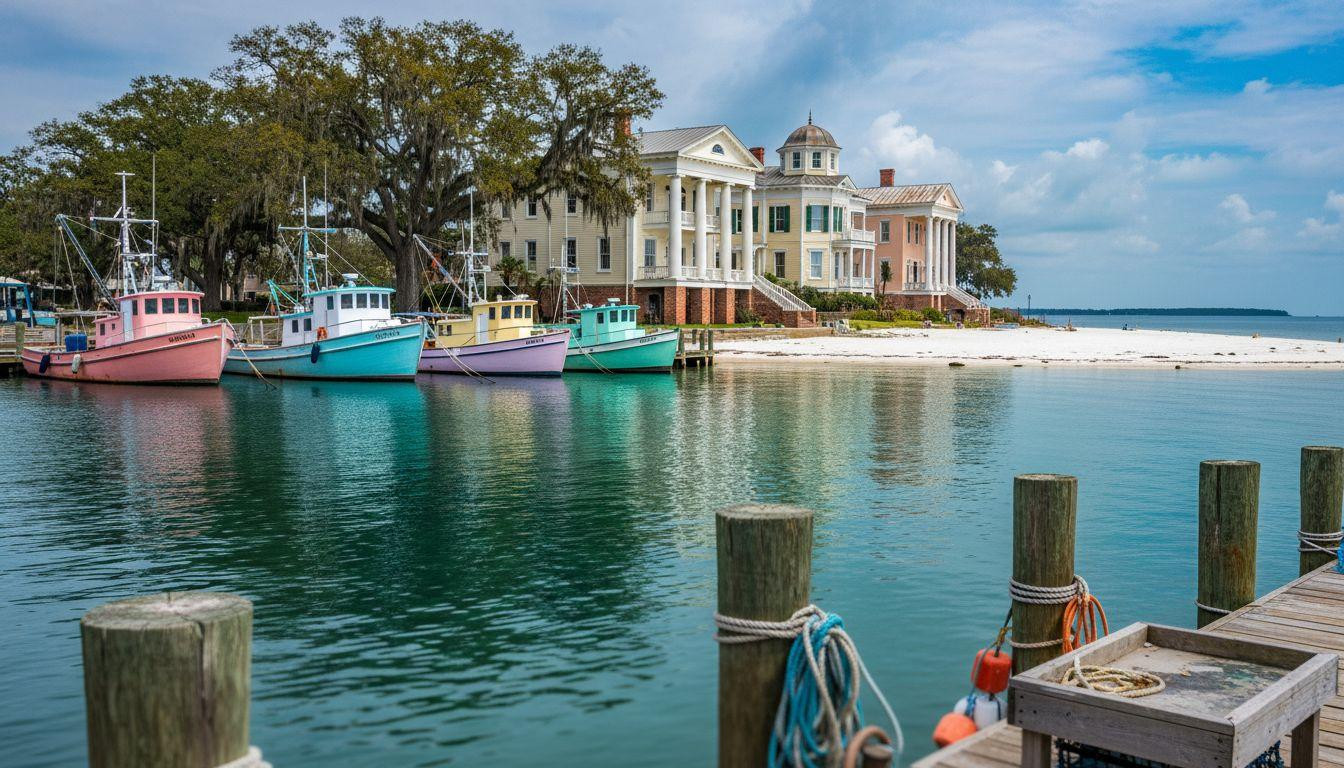
The fog rolls in around 6am. It wraps the Victorian porches along Beach Boulevard in gray gauze, mutes the pastel shrimp boats at the harbor, and turns the Mississippi Sound into a mirror. By 8am the sun burns through and the water glows turquoise. This is Pass Christian, Mississippi, where 26 miles of barrier coast keep the Gulf’s chaos out and the calm in.
Most drivers blow past on Highway 90, chasing Biloxi’s casinos 15 miles east. They miss the antebellum mansions that survived Katrina, the harbor where oyster boats still unload at dawn, and the sugar-white sand that stays empty even in July. Pass Christian sits on a peninsula into Mississippi Sound, protected by Cat Island and nine offshore reefs. The water rarely tops two feet of waves.
Where the Sound meets antebellum quiet
Pass Christian earned the nickname “Queen City” in the 1840s when New Orleans elites built summer estates here. Greek Revival columns and wraparound porches still line the beachfront, elevated on brick piers after hurricanes taught hard lessons. The National Historic District preserves mid-19th century architecture that Biloxi’s casino boom paved over.
Henderson Point juts into the Sound at the western edge of town. Locals fish from the pier at sunrise. Families wade in knee-deep water at noon. The barrier islands offshore create a natural breakwater, so the Sound stays calm while the Gulf churns 12 miles south. Water temperature hits 77°F by May and holds through October.
The harbor expanded to 20 acres in 2024, doubling its size. It now holds 250 slips, commercial docks for shrimp boats, public boat ramps, and a splash park. Fishermen sell fresh catch dockside every afternoon. The harbor meets Clean Marina standards, a rarity on the Mississippi coast.
The fog that stopped time
Morning ritual along the coast
War Memorial Park sits under live oaks draped in Spanish moss. The trees shade picnic tables and a walking trail that curves along the beach. Locals arrive before tourists wake, walking dogs or sitting on benches facing the Sound. The fog thickens in spring and fall, turning the barrier islands into ghost shapes on the horizon.
The town chartered in 1848 after Charles Asmar donated land for the downtown core. The Pass Christian Yacht Club opened in 1849, the second yacht club in the United States and the first in the South. Maritime heritage runs deeper than tourism here. Oyster reefs named “Passe aux Huitres” by French explorers in 1699 still produce harvests today.
What Hurricane Katrina couldn’t erase
Katrina’s 28-foot storm surge in 2005 destroyed 90% of structures in Pass Christian. The town rebuilt with elevation codes and reinforced pilings. Antebellum homes that survived now stand as proof of 19th-century engineering. Biloxi chose casinos and high-rises. Pass Christian chose preservation and quiet.
The community of 6,000 residents protects the low-key vibe. No boardwalks, no spring break crowds, no neon. Similar to small Southern towns that froze in time, Pass Christian keeps porch-sitting culture alive. Neighbors talk at dusk. Strangers wave from cars.
Three miles of sugar-white refuge
Where families actually swim
The beach runs three miles from Henderson Point to the harbor. The sand stays powder-soft, the water stays shallow for 50 yards out, and the waves stay under one foot most days. Mississippi Sound’s protection makes this the safest swimming on the Gulf Coast. Kids wade without fear. Parents relax without lifeguard anxiety.
Public access points dot Beach Boulevard every quarter mile. Free parking fills by 10am on weekends but empties by 4pm. No fees, no meters, no beach passes required. Beachcombers find intact shells that rough Gulf surf would shatter. Driftwood piles up after storms, bleached white by sun and salt.
Harbor life at first light
Shrimp boats return around 5am, their pastel hulls cutting through morning fog. Captains tie up at commercial docks and unload iced catch into trucks bound for seafood markets. By 6am the harbor smells like brine and diesel. By 7am it smells like coffee from Cat Island Coffeehouse two blocks inland.
Hook Gulf Coast Cuisine serves casual dining for $31-50 per person, with pasta dishes featuring lump crab and daily gumbo specials. Like other overlooked coastal towns, Pass Christian keeps prices 20-30% below national beach averages. Oysters on the half shell run $20 per dozen. Shrimp po’boys cost $12.
The quiet you forgot existed
Biloxi draws 500,000 casino visitors annually. Pass Christian draws families who want to hear waves instead of slot machines. The contrast hits hardest at sunset when Henderson Point glows orange and the only sounds are gulls and gentle surf. No jet skis, no beach bars blasting music, no crowds fighting for sand space.
The town sits 20 minutes from Gulfport-Biloxi International Airport and 70 miles from New Orleans. Access stays easy but tourism stays light. Unlike overcrowded Pacific beaches, Pass Christian offers breathing room year-round. Even July weekends leave stretches of empty sand.
Lodging runs $100-150 per night for motels and vacation rentals, $150-250 for boutique inns like Inn at Long Beach. Island View Casino Resort charges $300-plus but sits in Gulfport, not Pass Christian proper. The town keeps things simple, affordable, and unhurried.
Your questions about Pass Christian answered
When should I visit Pass Christian?
March through May and September through October offer the best balance of weather and solitude. Spring temperatures range from 55-75°F, fall from 60-80°F. Summer hits 75-90°F with humidity but brings the lowest hotel rates. Winter drops to 45-60°F, too cool for swimming but perfect for beachcombing. Fog appears most often in spring and fall mornings.
How does it compare to other Gulf Coast towns?
Pass Christian sits quieter than Biloxi, cheaper than Gulf Shores, and more authentic than resort-heavy Destin. Like Arkansas towns preserving Victorian heritage, Pass Christian chose history over development. The Mississippi Sound’s calm water beats Gulf Shores’ waves for families. The antebellum architecture beats Biloxi’s casinos for atmosphere. Access from Gulfport airport takes 20 minutes versus 45 minutes from Pensacola to Gulf Shores.
What’s the fog like year-round?
Fog forms when warm Gulf air meets cooler Sound water, most common March-May and September-November. It rolls in before dawn, peaks around 6-7am, and burns off by mid-morning. Summer fog stays rare due to consistent temperatures. Winter fog appears sporadically. Photographers catch the best light during the 30-minute window when fog lifts and sun breaks through, usually 7:30-8am in spring.
The ferry to Ship Island leaves from Gulfport, 15 miles east. Most visitors make the 10am departure after coffee at the harbor. I almost missed it once, distracted by a fisherman explaining how nine reefs keep the oysters fat and the Sound calm. The fog had just lifted. The water glowed green-blue. He said the secret is simple: barrier islands block the chaos, and Pass Christian keeps the rest.