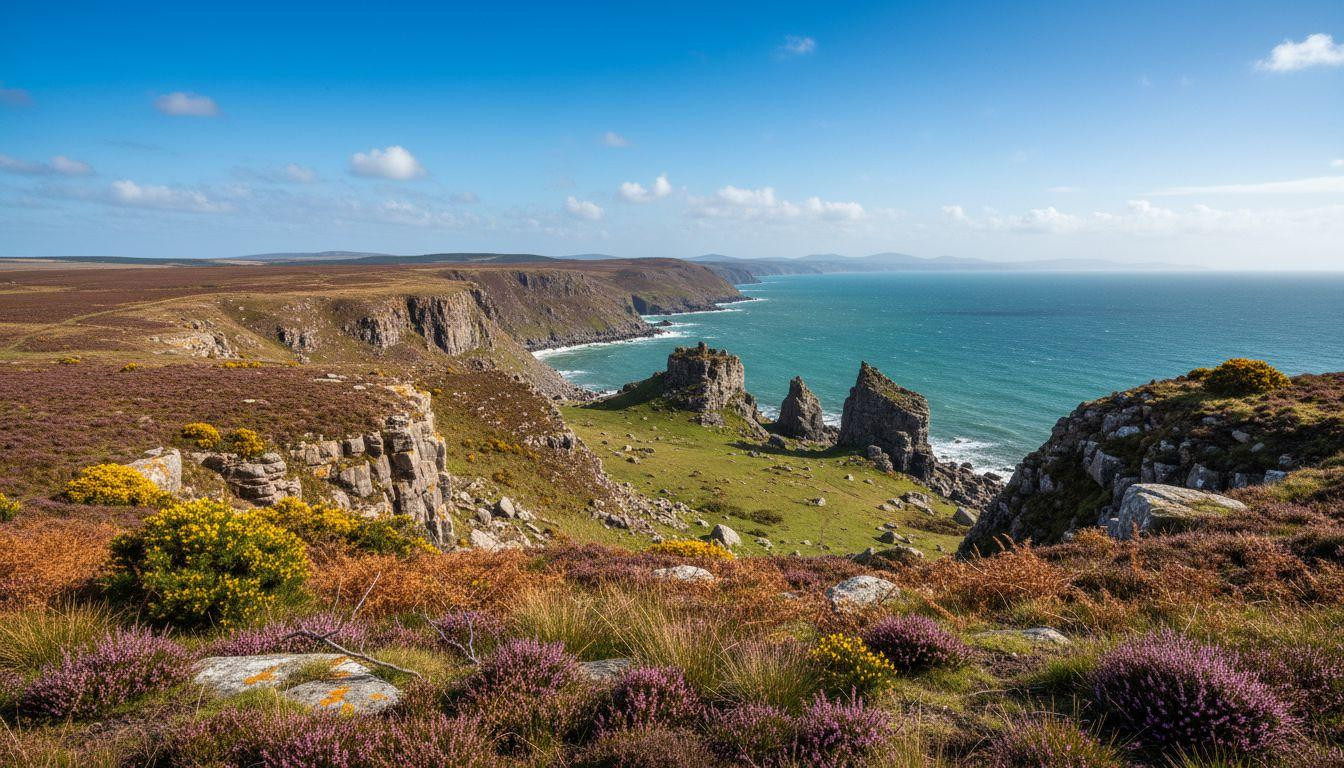
Exmoor National Park stacks 267 square miles of moorland, ancient oak forests, and 1,000-foot cliffs into southwest England’s quietest corner. While Lake District pulls 15 million visitors annually, Exmoor draws 1.5 million. Rooms average $110 per night here versus $165 up north. Late March 2026 brings snowdrops fading in Heddon Valley and bluebells starting in Horner Wood. These nine spots deliver what Britain’s busier parks promised before the crowds arrived.
Valley of Rocks: jagged peaks where wild goats ignore hikers
This dry valley sits one mile west of Lynton, formed when Ice Age meltwater carved through limestone. Feral goats descended from 6,000-year-old herds roam cliff edges, nibbling gorse and occasionally tourists’ maps. The 2-mile loop gains 800 feet, offering views across Bristol Channel to Wales on clear days.
Walk at dawn for the quietest experience. Goats appear most often on eastern slopes around 7am. The path continues four miles to Foreland Point for those wanting longer coastal exposure. Free parking in Lynton, ten-minute walk to trailhead.
Dunkery Beacon: England’s highest moor at 1,703 feet
Somerset’s tallest point rises above purple heather moors that bloom August through September. Spring brings different rewards. Bluebells carpet the oak woods below in April while the summit stays clear for 360-degree views. Wales appears 30 miles north, Dartmoor 40 miles south, Bristol Channel wraps the western horizon.
The 3.5-mile circular from Webber’s Post car park climbs 500 feet through moderate terrain. A Bronze Age cairn marks the summit. Descent through Horner Wood reveals moss-covered oaks up to 400 years old. National Trust parking costs $4. Wind persists even in spring so layers matter.
Tarr Steps: medieval clapper bridge over River Barle
This 180-foot stone slab bridge crosses the Barle in 17 spans, each stone weighing several tons. Age remains disputed but likely exceeds 1,000 years. The bridge sits in ancient Barle Valley oakwoods, designated a Scheduled Ancient Monument. Winter floods regularly submerge it and locals reassemble displaced stones each spring.
Walk the slabs carefully as they’re three feet wide with no railings. The upstream path to Withypool runs two miles through riverside meadows. River pools invite swimming though water stays around 54°F even in summer. Tarr Farm Inn nearby serves lunches from $17. Free parking sits ten minutes away on foot.
Porlock Weir: working harbor where tide pools form daily
This functional fishing harbor has operated since medieval times. Lock gates hold water at low tide while the harbor wall creates shelter for small boats. Pebble beach reveals tide pools twice daily filled with crabs, anemones, and small fish. The harbor serves as base for the coastal path to Culbone Church.
Walk the harbor wall at sunset when fishing boats return. Tide pools offer best access two hours after high tide. The three-mile hike to Culbone leads to England’s smallest church, built 1,300 years ago and seating 33. Pay-and-display parking costs $5 daily. Ship Inn does crab sandwiches for $9.
Dunster Castle: Norman fortress with 1,000-year gardens
Built in 1070, this castle remained occupied until 1976, making it England’s only fortress with continuous inhabited history. Subtropical gardens thrive in the coastal microclimate, growing palms and lemon trees alongside native species. The 13th-century gatehouse and working watermill still operate. Terraced gardens cascade down the hillside with camellias blooming March through April.
Castle tours cost $20 for adults while National Trust members enter free. The medieval village below preserves its Yarn Market and thatched cottages. Allow 2-3 hours for castle and gardens combined. Open Wednesday through Sunday March through October, daily in summer. Village parking runs $4, free after 6pm.
Snowdrop Valley: February blooms in Heddon Valley
Mass snowdrop carpets cover this woodland valley from late February through mid-March, earning its nickname. The trail follows River Heddon two miles to the coast where 600-foot cliffs drop to Heddon’s Mouth beach. Wild garlic follows in April and May. Red deer appear in early morning near the treeline.
National Trust car park costs $6. Peak blooms occur late February through mid-March, making late March the tail end of the display. Mud persists after rain so waterproof boots prove essential. Hunter’s Inn at the valley mouth serves cream tea for $9. The return climb gains 400 feet.
Foreland Point: England’s tallest sea cliff at 1,043 feet
England’s highest coastal point rises above Bristol Channel with views extending 30 miles to Wales on clear days. A lighthouse built in 1900 sits below the summit though it’s not open to visitors. The South West Coast Path runs along the cliff edge. Seals congregate on rocks below, visible with binoculars.
The six-mile loop from Lynmouth climbs 900 feet through steep terrain. This Belgian town glows golden at 7pm when 400 locals reclaim their streets, offering similar quiet escapes. Seal watching works best at low tide when rocks emerge. The path continues to Countisbury Hill where an Iron Age fort overlooks the channel.
Horner Wood: ancient oak forest with 400-year trees
This temperate rainforest microclimate supports moss-covered oaks reaching 400 years old. Lichen diversity indicates exceptionally clean air. The flat two-mile trail follows Horner Water stream through the valley floor. Wood warblers migrate here April through July, filling the canopy with song.
Free parking in Horner village provides access. The shaded path stays cool even on hot summer days. Mud persists year-round so waterproof boots remain necessary. The trail connects to Webber’s Post for those wanting to combine woodland and moorland in one hike. This Arkansas town stacks Victorian stone on hillsides where springs bubble at 62°F, sharing Exmoor’s Victorian heritage appeal.
Combe Martin: village where 1,000-foot cliffs meet working beach
England’s longest village stretches two miles along a single High Street. Great Hangman cliff rises 1,043 feet directly from the beach, making it England’s highest sea cliff. The beach remains functional with local fishermen selling fresh crab for $10-13. Pack o’ Cards Inn, a quirky 17th-century building, anchors the village center.
The Great Hangman climb covers three miles round trip with steep sections gaining 900 feet. Buy fresh crab directly from beach fishermen in the morning. Rock pools appear at low tide along the shore. Beach parking costs $5 daily. Local shops dominate, not chains, preserving authentic character.
Your questions about Exmoor answered
When should I visit Exmoor to avoid crowds?
Late March through May and September through October offer the quietest trails. July and August bring peak visitors though Exmoor still stays 85% less crowded than Lake District. Snowdrops bloom February through mid-March while bluebells peak in April. Six Bodega Bay spots where crab boats unload at 6am and fog clears by 10 shares similar coastal timing patterns.
How does Exmoor compare to Lake District?
Exmoor receives 1.5 million annual visitors versus Lake District’s 15 million. Accommodation averages $110 per night here compared to $165 up north. Exmoor emphasizes wild ponies, dramatic coastal cliffs, and ancient oak forests while Lake District focuses on lakes and literary heritage. Better than Toledo where hotels cost $180 and Daroca keeps 114 towers for $55 demonstrates similar crowd-avoidance value.
What’s the best base for exploring these nine spots?
Dulverton offers central access with B&Bs from $70-100 nightly. Lynton and Lynmouth provide coastal proximity at $110-165 per night. Porlock splits the difference geographically. Driving between destinations takes 15-45 minutes. Train from London Paddington to Taunton runs 1.5 hours for $35-70, then bus to park edges adds 45 minutes for $6.
Morning fog lifts around 8am across Dunkery Beacon, turning the Bristol Channel gold for maybe ten minutes. Wild ponies graze the summit while seals bark on rocks below Foreland Point. The quiet wraps around you like the mist. This is what England’s moors looked like before the crowds found them.