
The first time I saw a cozy attic bedroom done right, I thought the low ceiling was a feature, not a flaw. Turns out, it always was.
These ten rooms prove it. Sloped walls, tight pitches, dormer light pouring in at an angle. None of it feels like a compromise.
White Tongue-and-Groove That Makes the Pitch Feel Designed
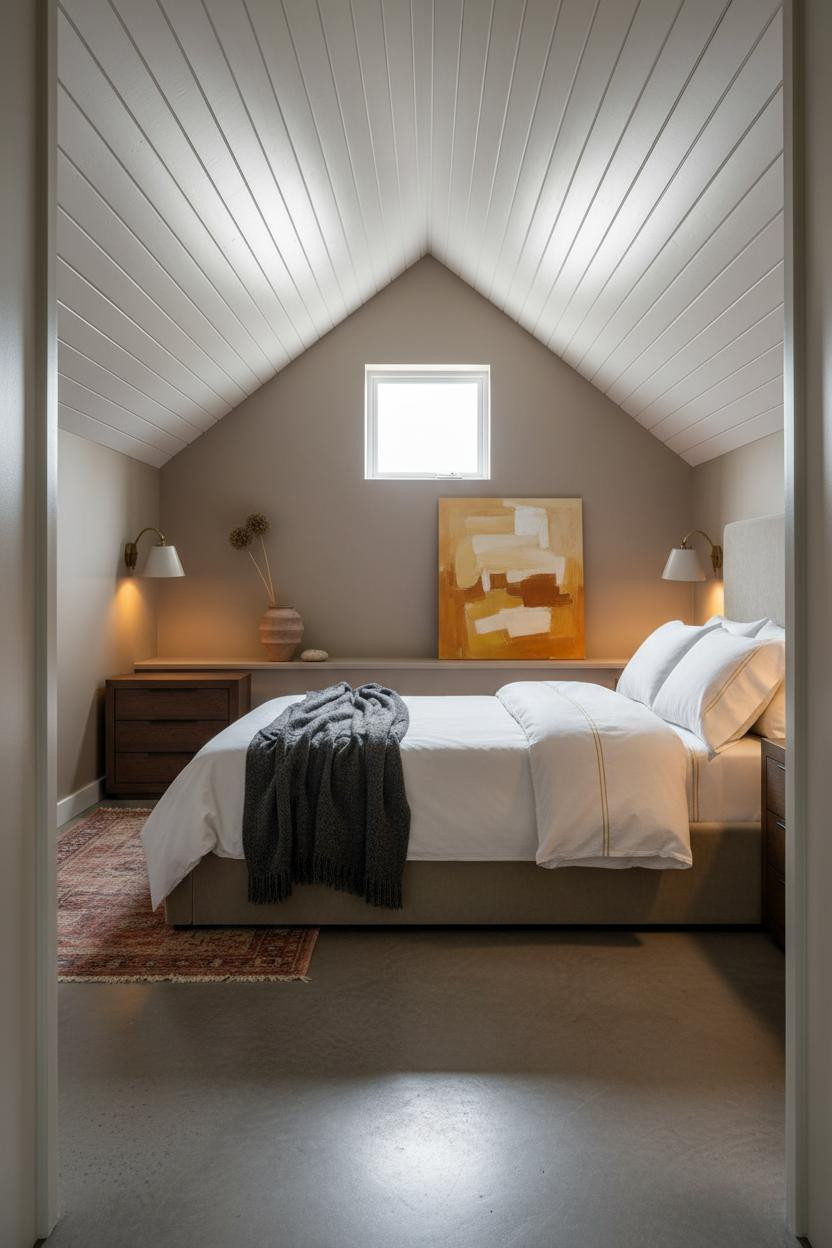


I keep coming back to this one. The ceiling treatment does something most attic rooms fumble.
Why it works: Painted tongue-and-groove boards running the full pitch turn a structural constraint into the room’s strongest graphic moment. The chevron they form at the ridge is readable the second you walk in.
Steal this move: Pair them with stone-taupe plaster walls and a polished concrete floor. The contrast keeps the white from reading too crisp.
Whitewashed Timber That Holds a Room Together
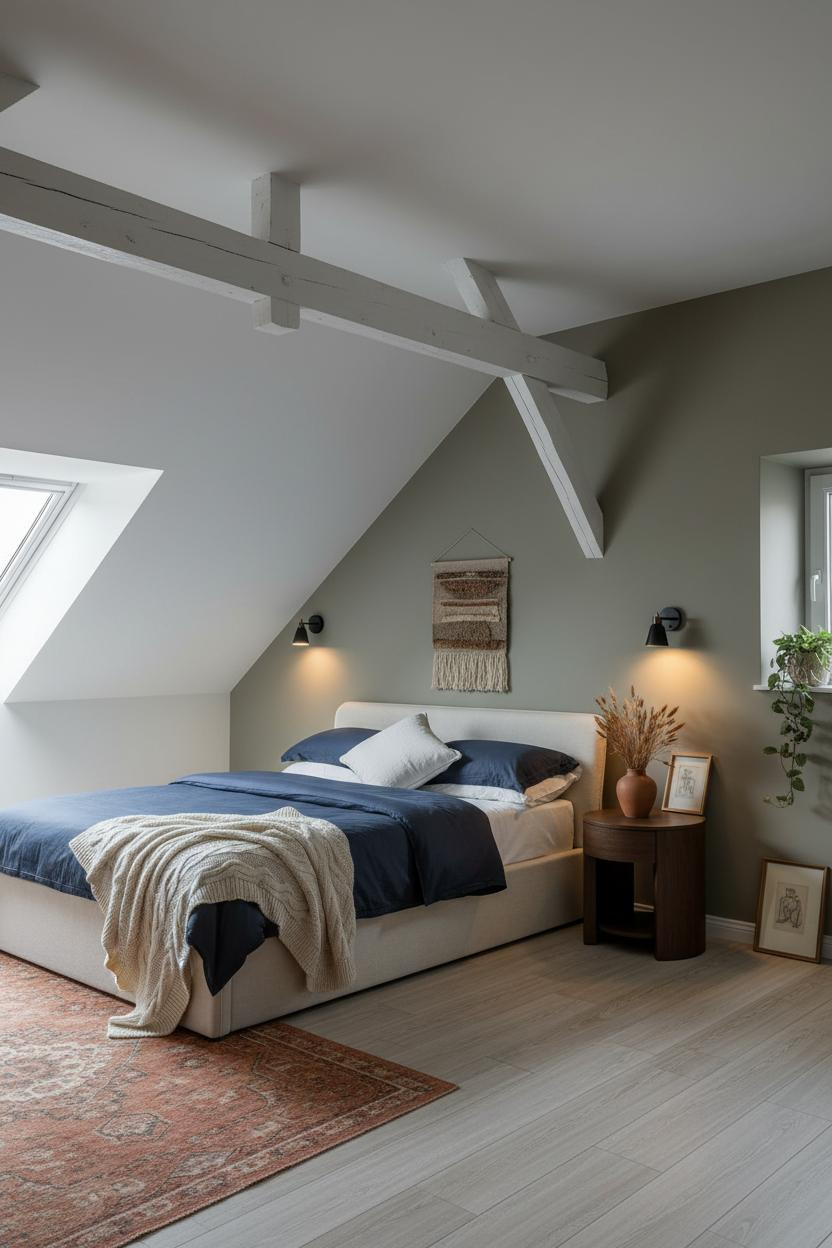


The room feels lived-in and intimate, which honestly is the whole point up here.
What gives it depth: Whitewashed collar ties angling across the peaked ceiling become the architectural spine. They add structure without making the low pitch feel more compressed.
Try this: Ground it with olive plaster walls and reclaimed chestnut flooring. The warm tones keep the washed timber from reading too cold.
Dark Ceiling Planks That Turn the Slope Into a Statement
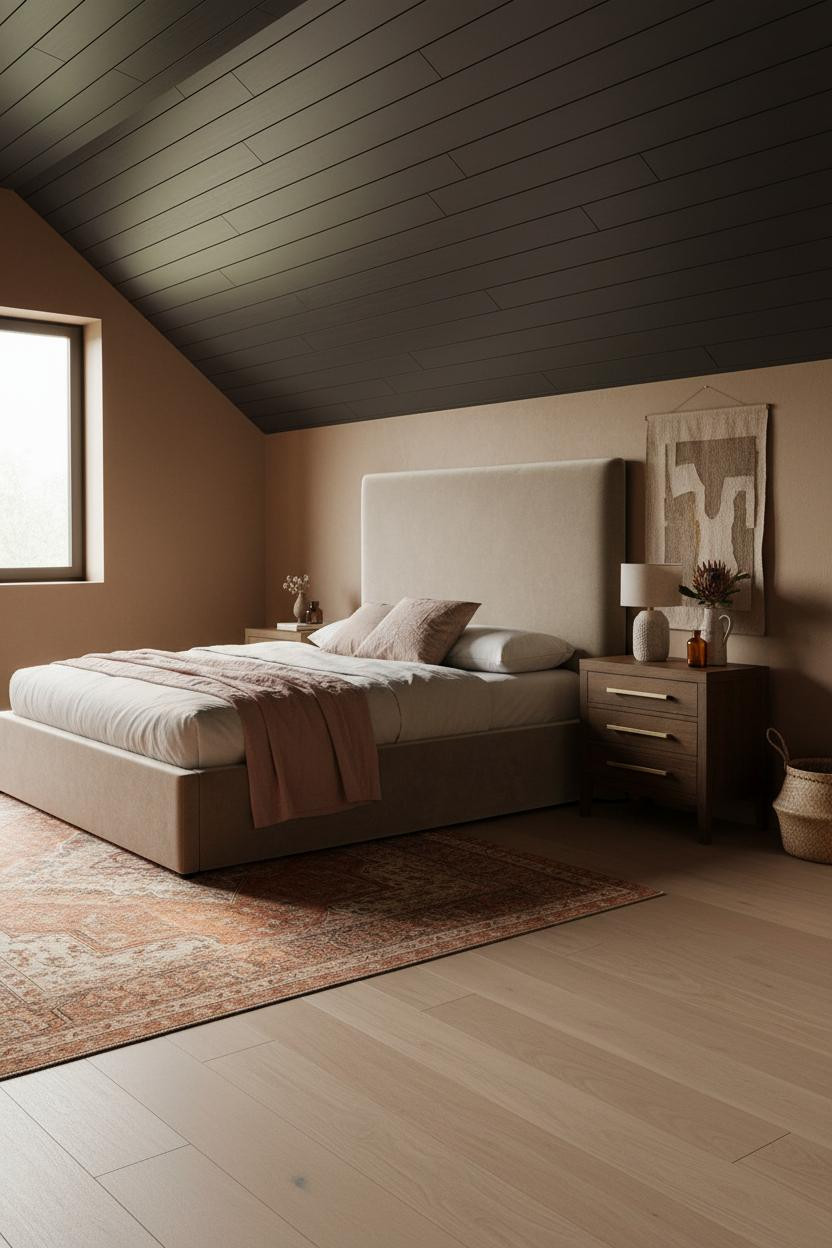


Divisive choice. But the rooms that commit to it fully never look like an afterthought.
And here’s why it pays off: dark stained ceiling planks make the dormer window glow like a lantern against the pitch. The contrast is what the whole room hangs on.
The smarter choice: Keep walls in warm mushroom plaster. Going dark on both surfaces at once kills the effect.
Honey Timber Beams Over a Clay-Terracotta Room
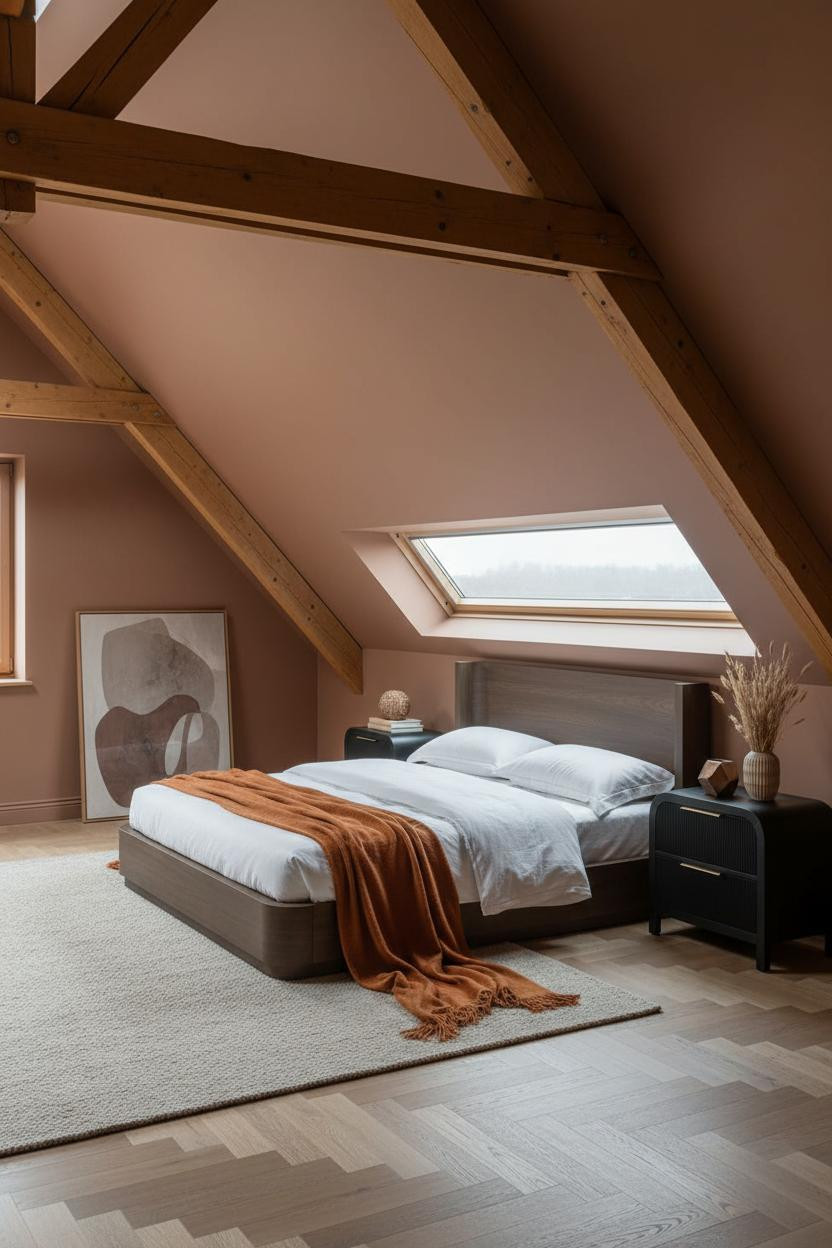


This is the kind of room that makes you want to stay in on a grey Saturday morning.
Why it holds together: The honey-toned collar ties span the full ceiling width, and the raw grain picks up every bit of diffused light. It’s the reason the clay-terracotta walls feel warm rather than heavy.
Layer in a chunky oatmeal wool rug and a burnt orange throw. One texture at a time is enough up here.
White Shiplap Geometry for a Sloped Attic Loft
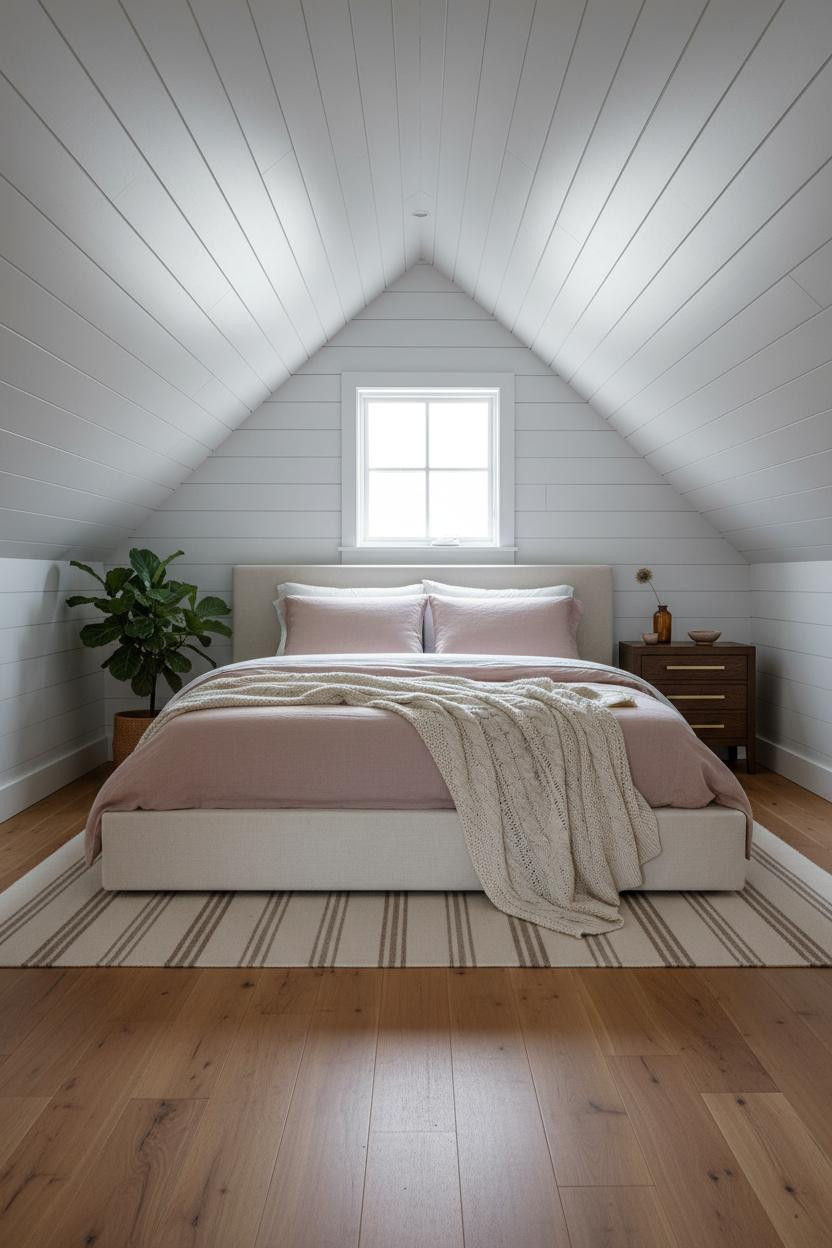

Nothing fancy. That’s the point.
What makes it work: White shiplap panels climbing both angled walls and meeting at the ridge give the pitched geometry a crisp, deliberate outline. The room feels quiet in a way that overcast light amplifies rather than flattens.
The easy win: Add a warm honey maple floor and a striped wool runner. The horizontal line at the base counters all the angles above.
Painted Collar Ties in a Coastal Attic Room
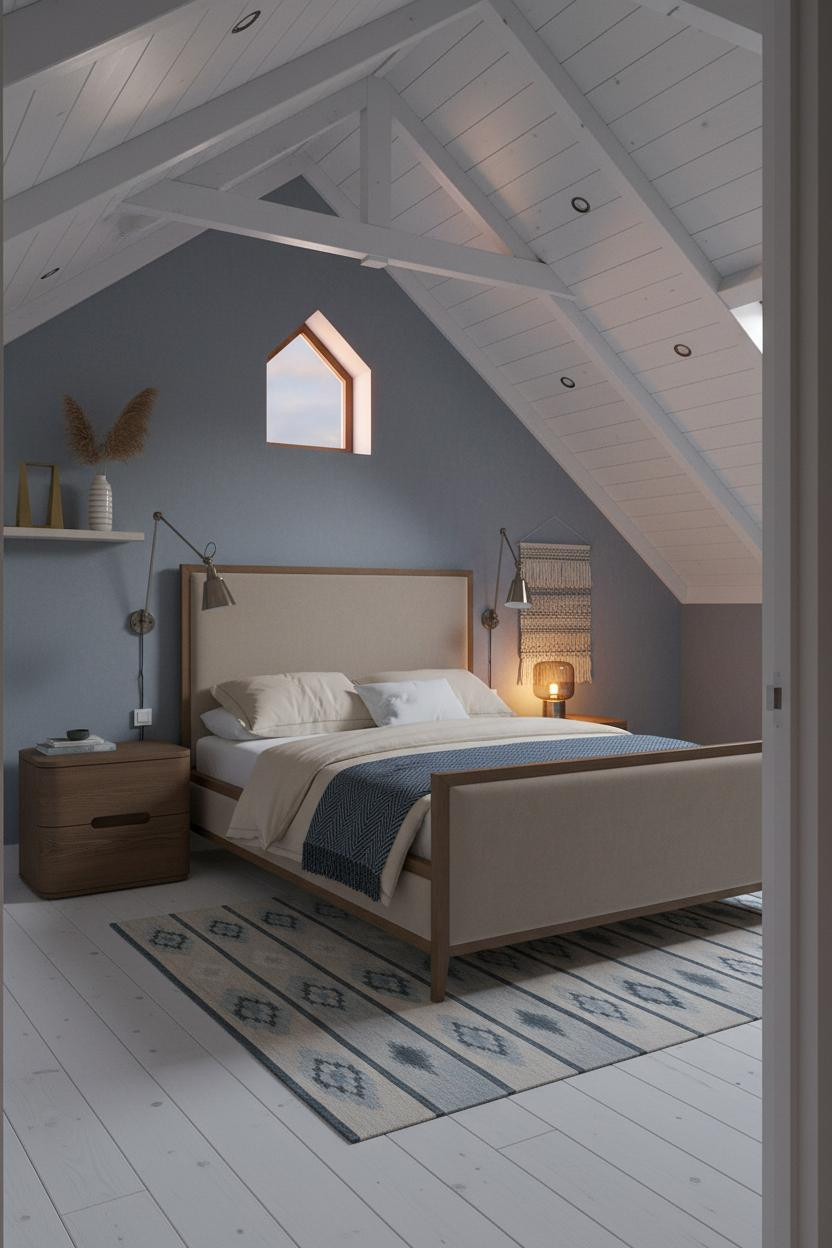


I almost scrolled past this one. Glad I didn’t.
The painted wooden collar ties repeat across the whitewashed slope like ribs, and at dusk with the amber sconce lit, the whole ceiling turns into something architectural. Stone blue-grey plaster pulls the coastal angle without tipping into beach house.
Worth copying: Wall-mounted reading sconces flanking the bed free up the nightstand and keep the sightline clean. In a small room, every surface counts.
Honey Timber Triangle in a Modern Farmhouse Attic
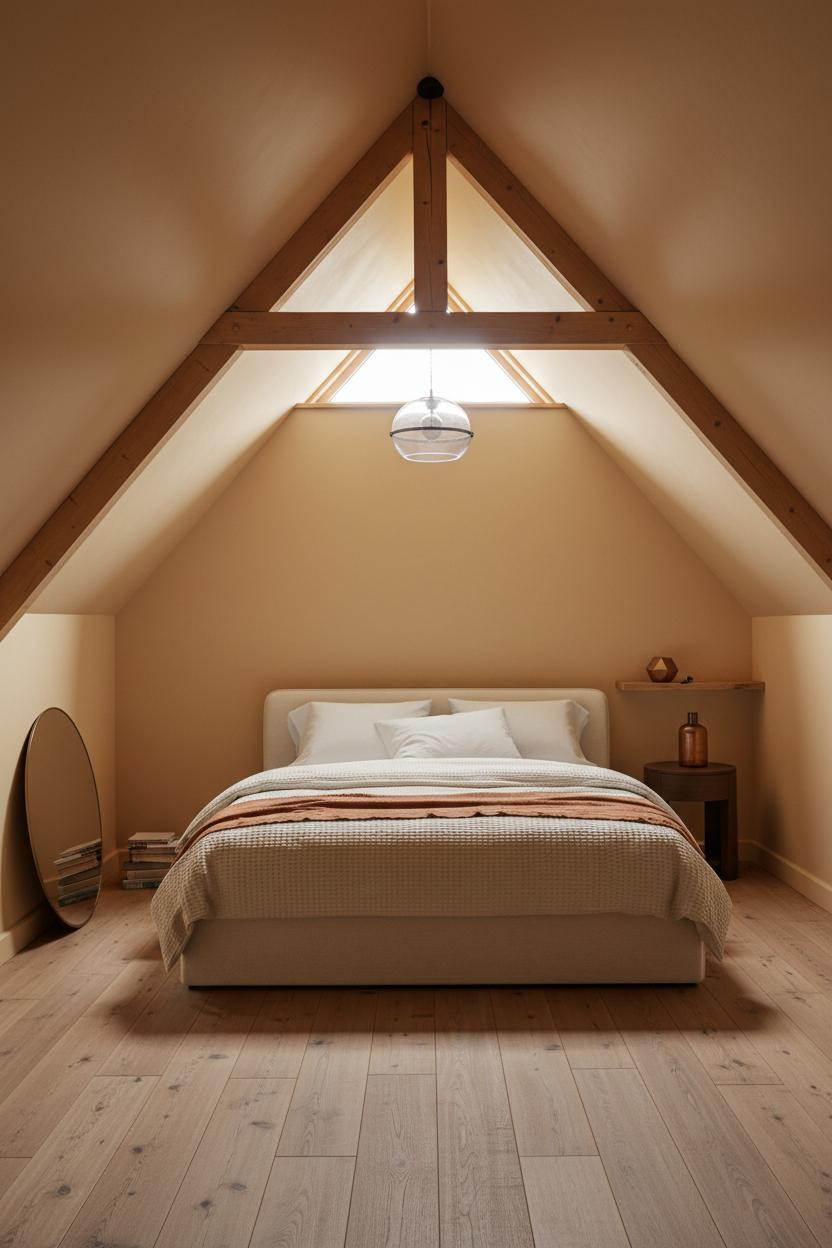
The structural crossbeams are the room. Everything else just supports them.
Design logic: A centered bed beneath the timber triangle peak turns the geometric shadow pattern into an intentional frame. The symmetry is what makes a tight attic feel considered rather than crowded.
The part to get right: Scale matters more than style here. Keep furniture low and the sightlines open to the peak. A round mirror leaning against the slope helps too.
Board-and-Batten Walls in a Dusty Rose Attic Room
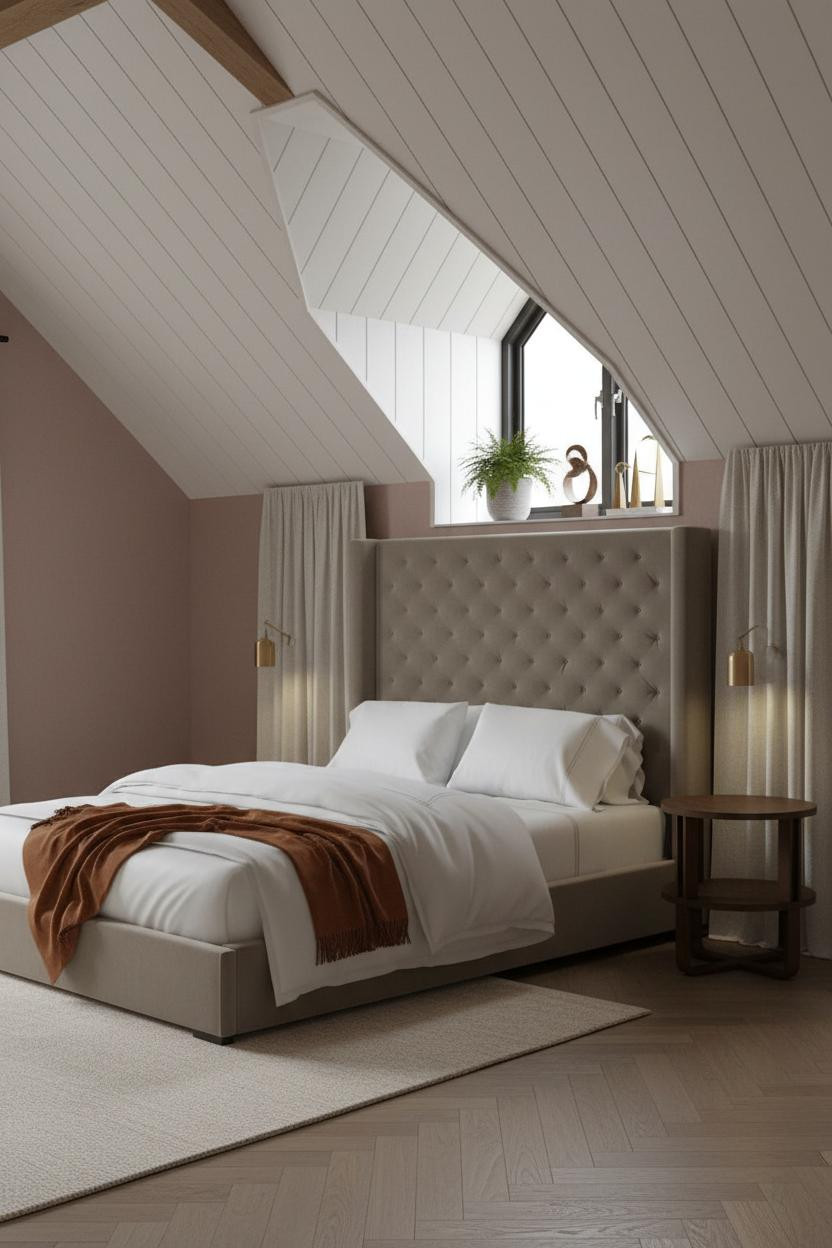


Fair warning: the color is the commitment here. But it works.
Why it looks custom: White board-and-batten panels following the full roof slope draw the eye upward while the dusty rose plaster below anchors the palette. The vertical lines and the pitched angle pull in opposite directions, which is exactly why the room doesn’t feel flat.
Don’t ruin it with a busy rug. The wall treatment is doing enough. Stick to ivory or cream underfoot and let the herringbone parquet oak show through.
Sage Walls and Whitewashed Rafters at Golden Hour
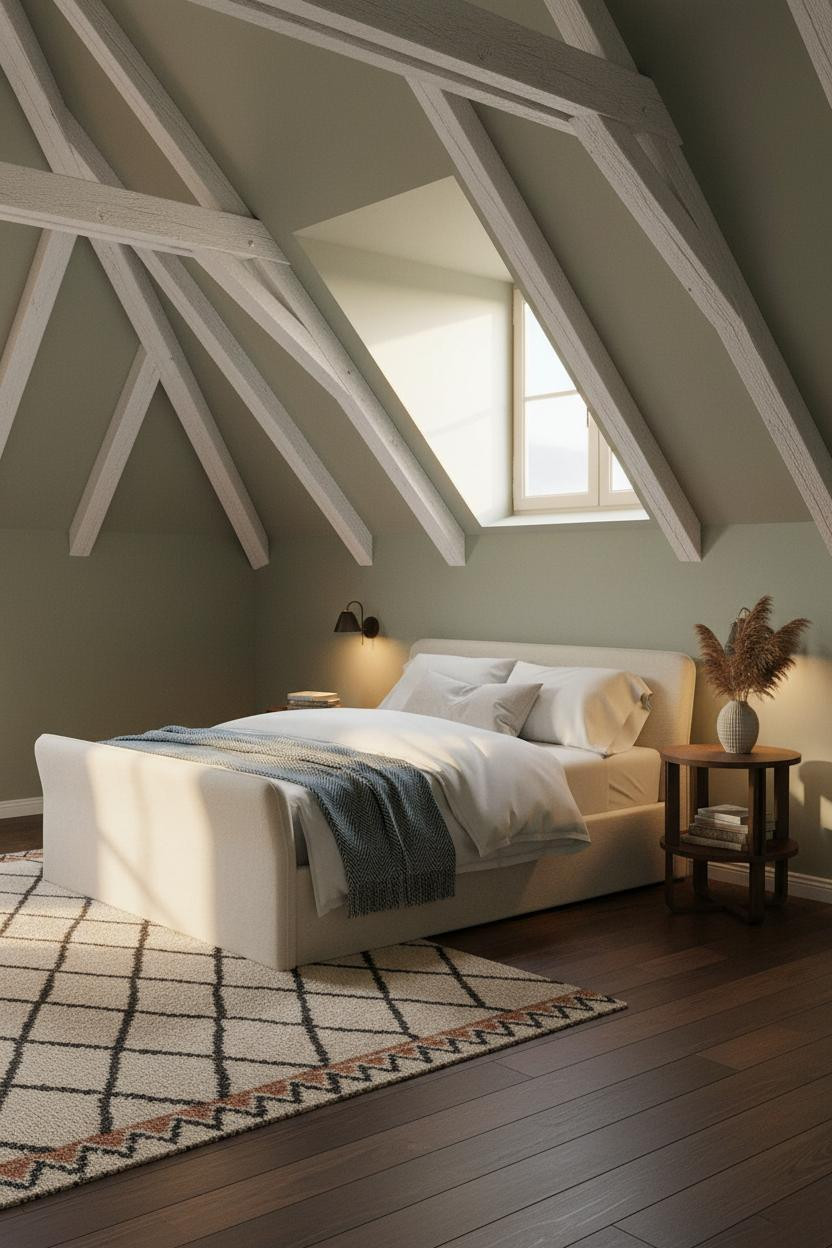
Late afternoon light does something specific in a low-ceiling attic. This room is proof.
What creates the mood: Whitewashed timber rafters overhead catch the raking amber light at an angle that flat plaster never would. The sage walls make the warm glow read even richer, while still feeling calm rather than intense.
A Moroccan diamond-pattern rug anchors the bed zone. The one piece to get right in a room this good-looking is keeping the floor layering purposeful, nothing too matchy.
Raw Timber Beam in a Japandi Attic at Dawn
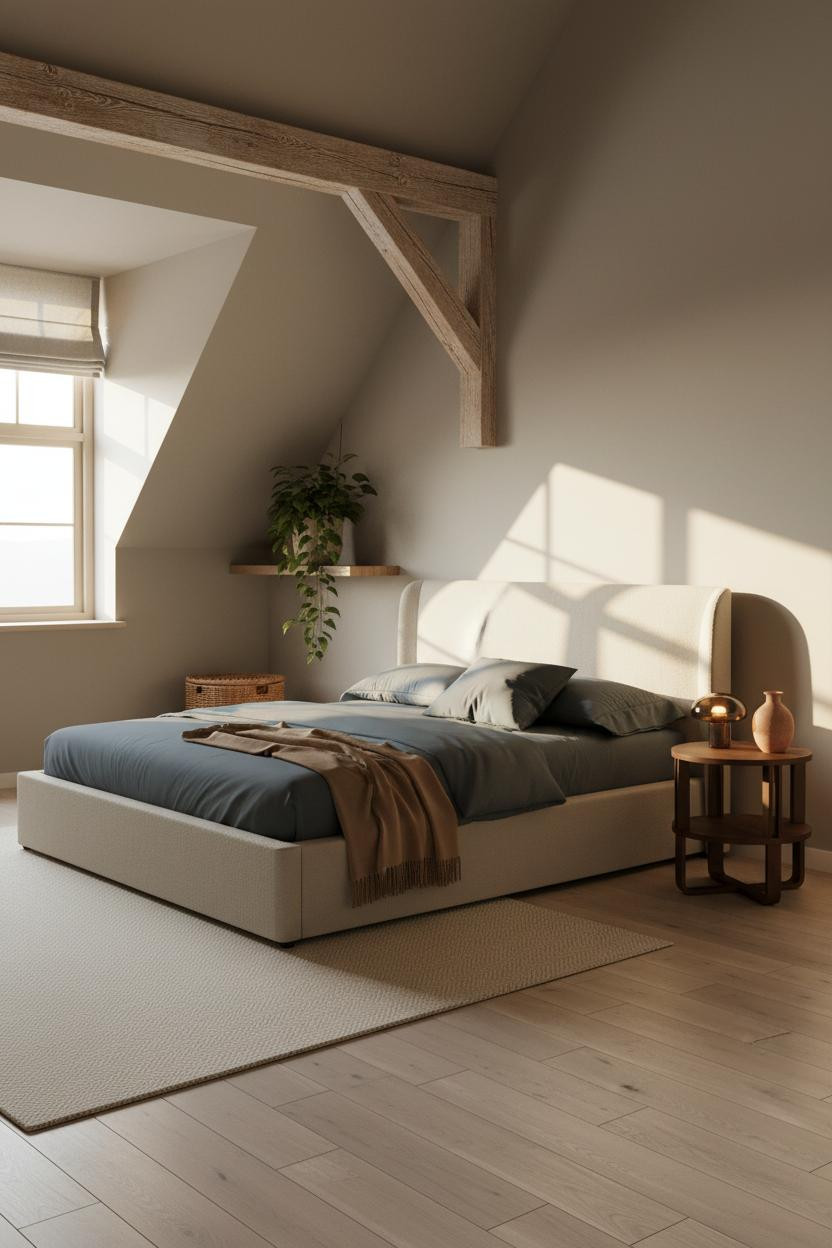

This is the quietest room in the collection. I mean that as a compliment.
Where the luxury comes from: A single raw-timber exposed beam running diagonally across the vaulted ceiling is enough. One structural element with natural patina does more than a fully paneled ceiling in a Japandi scheme, while still feeling architecturally grounded.
Pro move: A linen Roman shade at the dormer diffuses morning light without blocking it. Slate jersey bedding and a camel wool throw are all the color this room needs.

Our #1 Pick
Saatva Classic Mattress
America’s best-selling online luxury innerspring. 365-night trial, lifetime warranty, free white glove delivery.
Shop Saatva Classic
The Foundation Of Every Beautiful Bedroom
Every room in this list gets the atmosphere right. But a tucked attic bedroom under a low pitched ceiling asks something specific of the bed itself. It has to be the still point the whole room organizes around.
The Saatva Classic is what I’d put in any of them. Dual-coil support that holds its shape over years, a breathable organic cotton cover that doesn’t trap heat under a low ceiling, and a Euro pillow top that’s soft without losing structure. It’s the kind of mattress you stop noticing because it just works every night.
Walls get repainted. Throws get swapped. The mattress is the one thing that stays. Start there.

A low ceiling bedroom done well feels like the most sheltered room in the house. That’s not an accident. It’s a series of small choices that compound. Good design ages well because it’s made well.