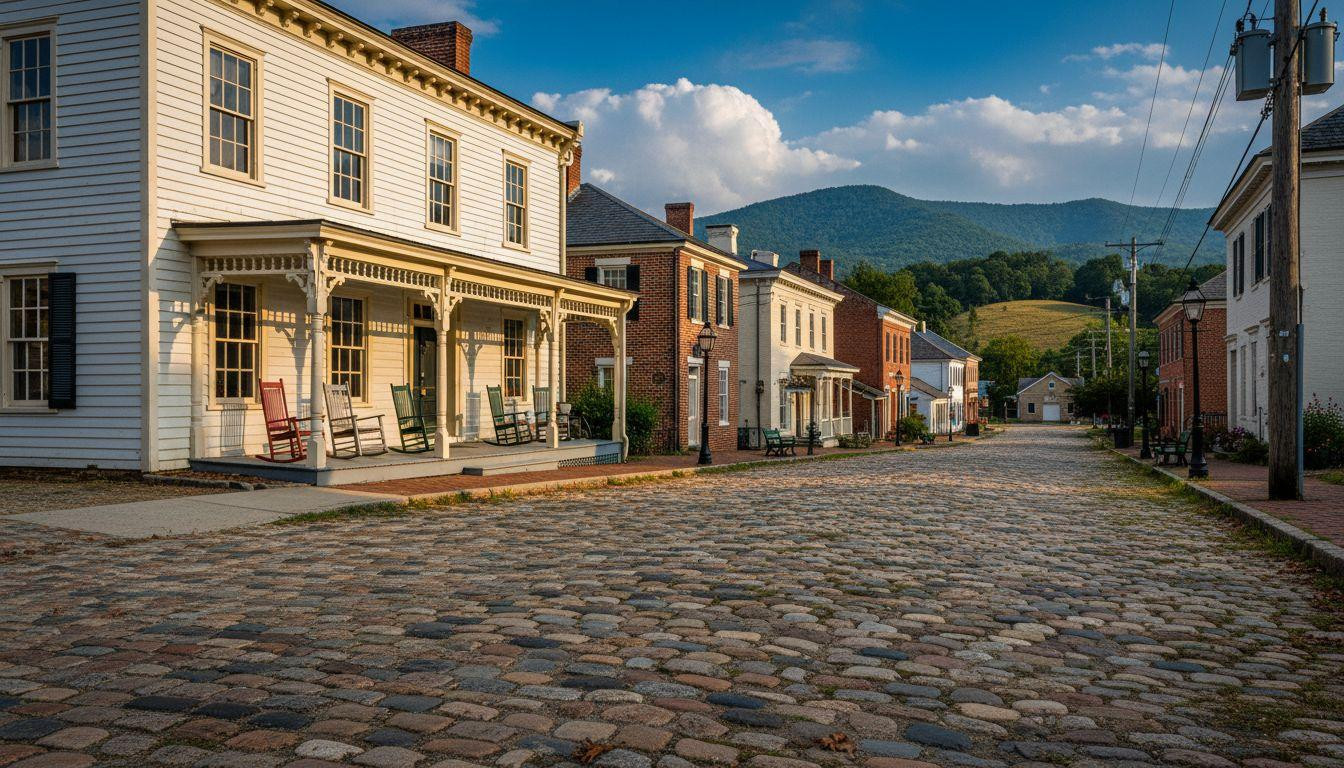
Main Street sits quiet at 7am. Fog lifts from cobblestones installed to match 1790s patterns. Chester Inn’s white clapboard catches first light, same as it did in 1797. Population 5,500. Tennessee’s oldest town, founded 1779 as capital of the short-lived State of Franklin. Twenty miles from Tri-Cities Airport. Cool mornings hover in the 30s°F through March. Zero tour buses. This is where Appalachian storytelling survived because the town refused to modernize.
The drive from Atlanta takes 4-5 hours. Charlotte sits 5-6 hours southeast. Tri-Cities Airport handles flights from major hubs at $200-300 round-trip in 2026. No train service. GPS coordinates 36.3101° N, 82.4885° W drop you at the historic district center. Park free along Main Street. Walk the entire downtown in 15 minutes.
The 1779 grid that never changed
Jonesborough’s founders modeled their town on Williamsburg’s colonial layout. Seventy-two lots, brick or stone required, no log cabins allowed. The grid stayed intact through 247 years. Chester Inn anchors the commercial center at West Main Street. Built 1797 in Federal style, expanded later with Victorian porch added around 1880. Tennessee restored it in 1989 to its 1880s facade. The structure measures 82 feet by 26 feet, flush to the sidewalk in Maryland-Virginia-Pennsylvania style.
Walk north from Chester Inn. Vernacular Federal and Victorian buildings line both sides. Warm whites and creams dominate, accented by red brick and green mountain backdrops. Cobblestone streets reflect morning light. No Civil War destruction reached here. No 20th-century sprawl followed. The 1779 street plan remains visible in every intersection.
What preservation actually looks like
The visual difference from theme parks
Chester Inn shows layers. Federal frame from 1797. Victorian porch from 1880. Italianate brackets. Post-WWI boarding house conversion. Museum opening in 2011. Each era left marks. This differs from Williamsburg’s pristine colonial reenactments where everything gets restored to one perfect moment. Jonesborough kept the patina. Buildings function as shops, not exhibits. The town works.
Golden oak foliage frames downtown in October. Spring brings green shifts across Appalachian foothills visible from every street corner. Light at 6:30pm turns limestone honey-gold for maybe 20 minutes. Photographers arrive for this. Locals ignore it. For those seeking similar Victorian preservation in mountain settings, Eureka Springs offers comparable architecture 450 miles west.
The storytelling anchor that defines everything
International Storytelling Center opened here in 1973. Chester Inn hosted the first National Storytelling Festival. October brings 10,000 attendees for the world’s largest gathering of oral tradition keepers. Not colonial reenactors. Not theme park performers. Appalachian locals sharing front-porch tales, ghost stories, regional lore passed down through generations.
The festival shaped the town’s identity. Storytelling became economic driver and cultural protector. Residents understood their value lay in authenticity, not renovation. This choice kept Jonesborough affordable when nearby Gatlinburg turned into tourist sprawl. The town traded growth for preservation. It worked.
What you actually do here
The practical experience
Tennessee Hills Distillery offers tastings at $15. Jonesborough Yarn Exchange sells handwoven quilts at prices below Gatlinburg’s tourist shops. Walk 0.2 miles from Chester Inn to the Visitors Center. Browse without crowds. Persimmon Ridge Park sits 5 miles from downtown. Wooded trails through Appalachian foothills. No entrance fees. Wetlands Water Park opens Memorial Day through Labor Day at $10 day passes.
Friday evenings May through September bring courthouse music. Locals gather on steps. Banjos, fiddles, Appalachian ballads. Free. Chocolate Festival arrives early spring. Soda Festival in June celebrates vintage fizzy drinks. Quilt Festival in July. Each event draws locals first, tourists second. Attendance stays manageable. For those comparing nearby mountain towns with similar affordability, Murphy sits 90 miles east with comparable river access.
What locals protect
Ramp festivals celebrate wild leeks each spring. Dates vary with harvest. Front porches host evening conversations. Chester Inn’s porch welcomed Andrew Jackson in 1832. Today’s residents continue the tradition. Coffee shops open at 7am, close by 5pm. Unhurried pace defines daily rhythm. The Nolichucky River bends through secluded spots locals know. They share locations if you ask. Tourism boards confirm visitor counts stay around 200,000-300,000 annually, peaking at 10,000 during October festival.
The quiet that cities forgot
Sunrise over Persimmon Ridge reveals mist-shrouded valleys. No crowds compete for views. Morning markets at the Visitors Center sell local honey, handmade crafts. Prices run 25% below national small-town averages. Lodging costs $80-200 per night compared to Williamsburg’s $200-400. Dinner averages $12-20. Appalachian trout, Southern biscuits, cornbread. Tennessee whiskey from local distilleries.
One visitor spent 3 days wandering the historic district. Porch conversations with locals sharing tales felt magical. Another returned for October festival. Unhurried storytelling under tents, mountain breezes, laughter echoing through streets. A resident who moved from Brooklyn in 2019 stays for the timeless pace. Morning coffee on Main Street. Fog lifting from hills. This defines calm awe. For travelers seeking similar small-town preservation abroad, Durbuy shares the golden-hour architecture and local rhythms.
Your questions about Jonesborough answered
When should I visit
October brings peak conditions. Temperatures hit 70°F during days. Fall colors frame downtown. National Storytelling Festival fills hotels but the town absorbs crowds without chaos. March through May offers cool 30-40s°F mornings, low visitor counts, Chocolate Festival. Avoid July-August when temperatures climb to 86°F and humidity rises. Winter months November through March see minimal tourism. Visitors Center maintains hours Sunday 12:30-5pm during off-season.
How does it compare to better-known alternatives
Williamsburg draws millions annually. Jonesborough sees 200,000-300,000. Williamsburg hotels cost $200-400. Jonesborough stays at $80-200. Williamsburg offers colonial reenactments. Jonesborough provides working-town authenticity. Harpers Ferry attracts Civil War tourists. Jonesborough preserves Appalachian storytelling heritage. The difference shows in daily rhythm. Williamsburg performs history. Jonesborough lives it. Those exploring global preservation efforts find similar anti-overtourism values here.
What makes the storytelling festival unique
Founded 1973 at Chester Inn. Guinness recognizes it as the world’s largest storytelling gathering. Not scripted performances. Appalachian oral tradition passed through generations. Ghost stories, Bigfoot lore, regional history. Locals participate alongside professional storytellers. The festival shaped town identity. Economic impact stays local. Hotels book months ahead for October weekend. Single-day and weekend passes available but exact 2026 pricing awaits festival announcements.
Evening light catches Chester Inn’s white clapboard. Shadows stretch across cobblestones. A local sits on the Victorian porch. Another story begins. This town keeps its 1779 promise. Preservation without performance. History without crowds. Tennessee’s oldest secret, 20 minutes from the airport.