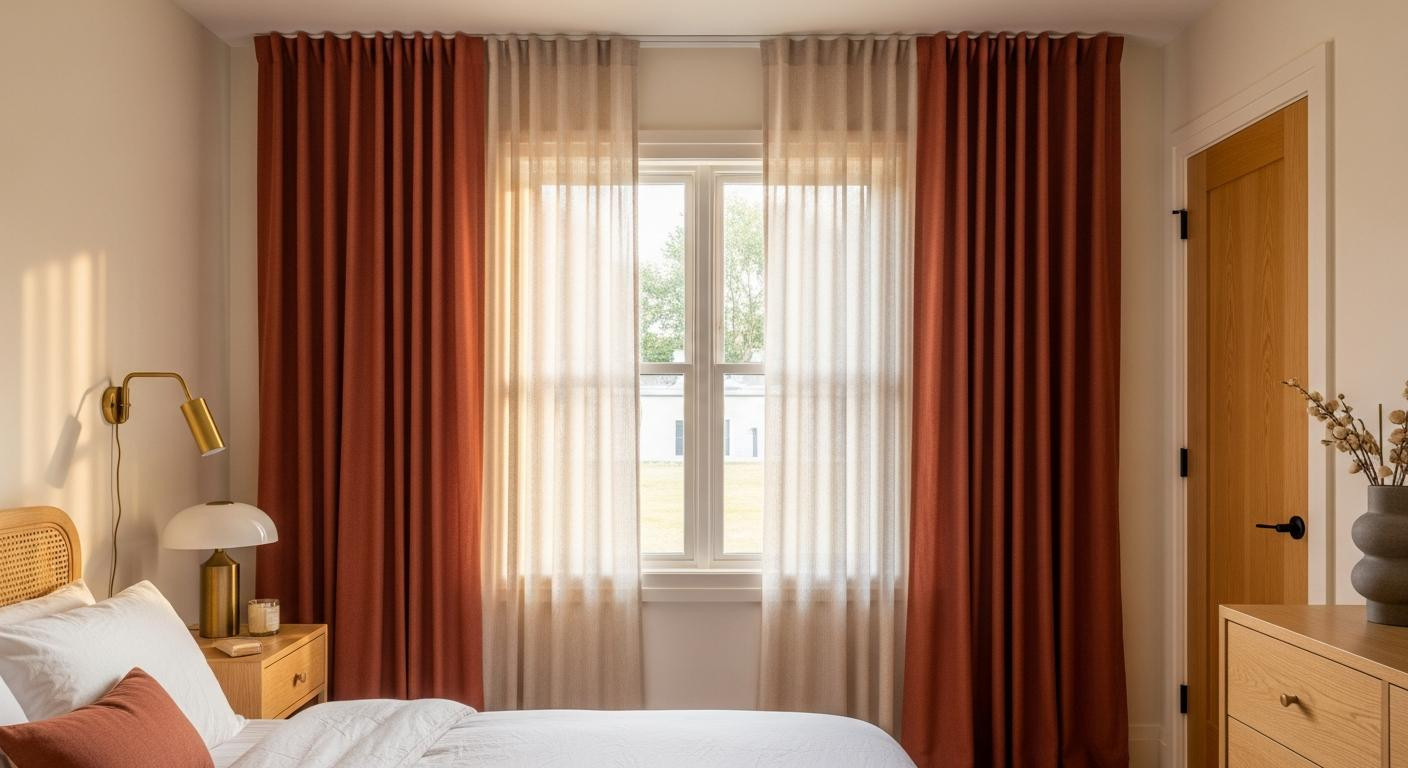
Your bedroom windows face east. At 7:22am on a Tuesday in March, morning sun slices through the gap between your white blackout panels, hard light pooling on the duvet in ways that feel clinical despite the thermostat reading 68°F. The room measures 11 feet by 12 feet but photographs smaller, the single curtain layer reading flat against the wall like wallpaper. Designer Instagram feeds glow with layered linen catching afternoon rays, spaces that somehow feel taller and warmer despite identical square footage. The gap between those rooms and yours isn’t budget or square footage. It’s understanding how fabric layers change what rooms actually feel like when you’re standing in them.
Why layered curtains make small bedrooms feel noticeably taller
When sheer panels hang over blackout drapes on a rod mounted 4 inches from the ceiling, the eye tracks unbroken fabric lines from crown molding to baseboard. Single-layer curtains create visual stops where the rod meets the wall, chopping height perception the same way horizontal stripes shorten a tall person. Interior designers featured in Homes & Gardens confirm that layering adds the illusion of 16 to 20 inches of extra height in 200 square foot bedrooms with 8-foot ceilings, but only if rods sit within 6 inches of the ceiling line.
This only works if you can drill that high. Renters with crown molding face a real problem here, admittedly harder to solve without landlord permission or tension rod workarounds that don’t hold heavy blackout fabric.
The light diffusion reality behind cozy glow claims
Slubby linen’s irregular weave catches morning light differently than smooth polyester. The texture scatters blue wavelengths while transmitting warmer amber and yellow tones, which is why those Instagram Reels show hygge glow instead of harsh glare. Window treatment specialists note that linen’s bumpy surface creates tiny prisms that diffuse light in multiple directions, softening the quality without blocking it completely. The result is a space that feels 3 to 5 degrees warmer perceptually despite identical thermostat readings.
And this matters more than you’d think. The difference between a room that feels stark versus cozy often comes down to light quality, not paint color or furniture arrangement. Smooth polyester reflects light in a single flat bounce, maintaining whatever harsh edge the sun brings through the glass.
Why doubled curtains block more glare than single layers
Layering sheer over blackout creates an air gap, typically 2 to 3 inches, that acts as a thermal and light buffer. Single blackout panels let 8 to 12% light bleed at the edges where fabric meets wall. A doubled system with overlapping panels drops this to 3 to 5%, which makes a measurable difference for Sunday morning sleep-ins when harsh rays trigger the kind of cortisol spike that ruins your whole day before breakfast.
But the gap has to exist. Sheers hung directly against blackout fabric without separation lose this buffering effect entirely, reading as one thick layer instead of two functional systems.
Terra tint curtains warm cold rooms by absorbing cool light
Warm earth tones like terra cotta, olive, and clay absorb blue-spectrum light and re-radiate it as infrared warmth perception. White curtains reflect all wavelengths equally, maintaining whatever temperature feel the room already has. In north-facing 300 square foot living rooms, swapping white for olive linen panels reduces complaints about feeling cold despite heat being on, according to interior designer forums on Houzz throughout January.
This doesn’t work in already-warm south-facing rooms. Those spaces need cooling sheers in lighter neutrals, not heat-absorbing earth tones that make the room feel stuffy by 3pm when sun hits full strength.
The texture paradox that makes rough linen feel warmer
Slubby linen’s irregular surface reads as handmade and cozy to both touch and sight, while silk’s slick perfection feels like cold luxury. It’s tactile psychology at work. Target’s $89 waffle weave curtains exploit this at budget tier, with Instagram comments showing emotional shifts toward “finally my rental feels like home” instead of temporary housing. The bumps and variations in weave density create visual warmth even before you factor in actual color temperature.
And when you run your hand across that texture, the fabric catches slightly on skin in a way that smooth polyester never does. That small friction translates to perceived warmth in ways that lab measurements don’t fully capture.
What layering won’t fix and honest trade-offs
Layering fails in rooms under 150 square feet where doubled fabric overwhelms the space, reading as textile avalanche instead of intentional design. Motorized tracks cost $250 and up for DIY installation, jumping to $800 for professional setup that prices out most renters. Coordinated patterns only work if your existing pillows or rugs share at least one accent color with the curtain fabric, otherwise rooms tip into chaotic instead of curated.
Door curtains require 10-foot ceilings minimum to avoid the fabric prison effect where tall panels make doorways feel claustrophobic. Budget reality check: a quality layered setup runs $350 to $500 for one window when you factor in rods, installation hardware, and two fabric layers that actually look expensive instead of department store clearance.
Your questions about curtain trends designers recommend for spring answered
Do layered curtains work in 200 square foot apartments?
Yes, if you mount rods within 4 inches of the ceiling and choose lightweight sheers under 6 oz per square yard. Avoid heavy velvets that shrink space visually. West Elm’s Lorna Linen at $650 and Target dupes at $120 both work at proper weight, though the Target version uses a slightly thinner weave that shows more light bleed at seams.
Can you layer curtains without motorized tracks?
Absolutely. Use double rod brackets for $25 on Amazon or tension rods for sheers behind standard blackout panels. IKEA’s Liz Roman shades at $199 layer manually over existing blinds in about 15 minutes with basic tools. The manual approach works fine if you’re home during daylight to adjust panels as sun shifts, but loses convenience for people who work long hours.
What’s the cheapest layered curtain setup that looks expensive?
Target waffle weave blackout at $89 behind IKEA sheer panels at $40, hung on a matte black rod at $35 mounted ceiling-height. Total comes to $164 for a look that mimics Restoration Hardware’s $800-plus aesthetic. The trick is mounting height and rod finish, not fabric price tag.
At 8:15am Wednesday, your bedroom glows differently. Terra cotta linen filters morning sun into amber pools on the oak floor, the sheer layer swaying slightly in AC current while blackout drapes behind absorb the harsh edge. Your hand rests on slubby fabric, cool and textured against your palm. The ceiling feels six inches higher than it did yesterday, though you know the tape measure would say otherwise.