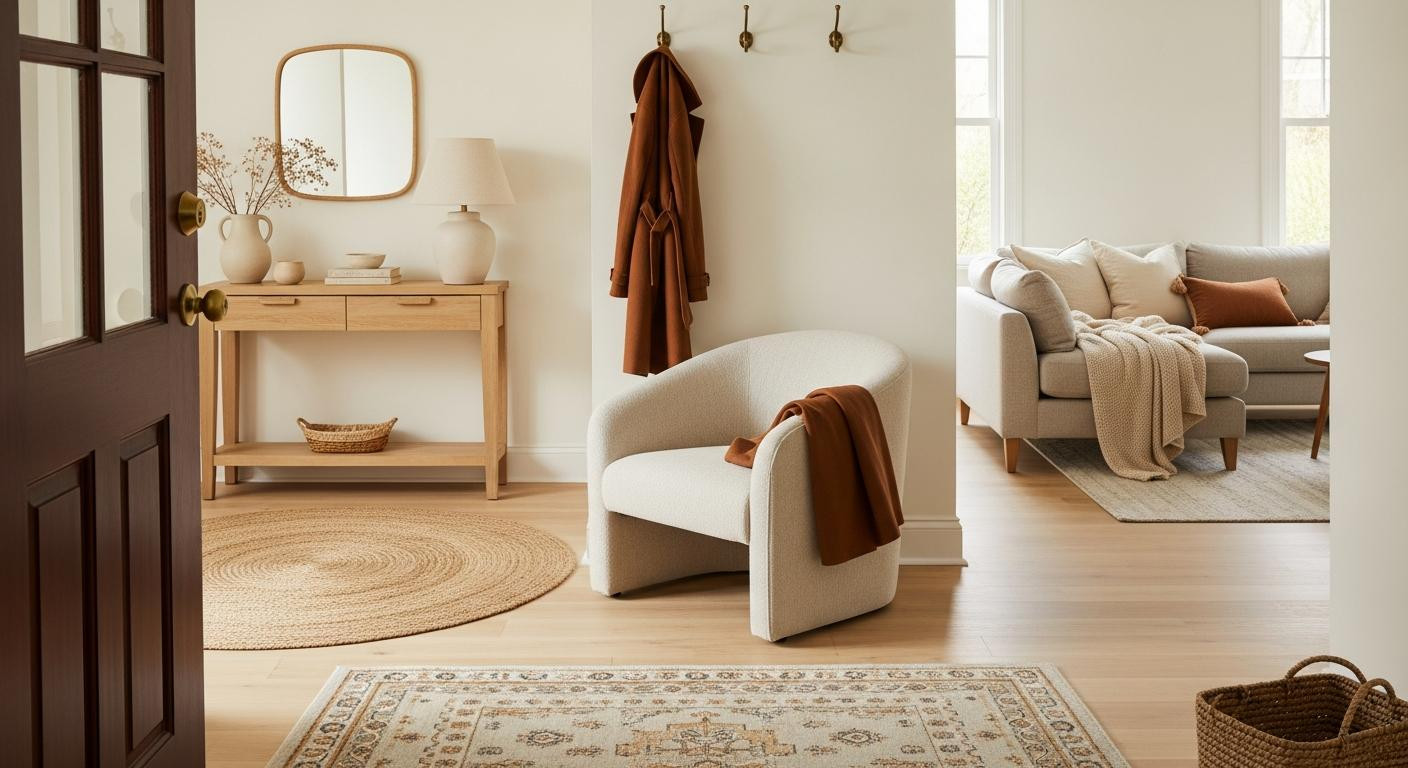
Your front door swings open at 7:47pm Tuesday and your guest sees everything: the dish towel draped over the couch arm, your laptop charging on the floor, the half-folded laundry basket you meant to move three hours ago. No foyer. No buffer. The living room starts 11 inches from the threshold.
For eighteen months you’ve blamed the 1925 cottage layout, convinced real solutions require knocking down walls or installing a $3,200 room divider. ASID-certified interior designers walked through identical setups last month and fixed the traffic flow in one afternoon without permits, construction, or furniture over $1,200.
Why direct-entry living rooms trigger clutter stress
The problem isn’t mess, it’s exposure. When your front door opens straight into the living room, every object becomes visible the second someone enters. Coats, bags, shoes, mail: they land wherever feels closest because there’s no transitional zone to absorb the chaos.
Design experts featured in Apartment Therapy say this creates “overstimulation zones” where your brain processes too many competing demands. You’re trying to relax on the sofa while visually registering the packages by the door, the charging cables snaking across the floor, the stack of magazines that needs filing. The space can’t serve two functions, public entry and private living, without intentional separation.
Most people solve this by keeping the room pristine, which makes it feel unused. The better fix addresses flow, not tidiness.
The furniture layout mistake blocking your natural path
Sectionals pushed against walls force guests to navigate around the longest part of the sofa within three feet of entering. Professional organizers with certification replaced a client’s 106-inch sectional with two separate 72-inch sofas facing each other, opening a 38-inch pathway from door to kitchen. Conversation circles give flexibility without sacrificing seating.
And the change cost zero dollars, same furniture, different configuration. But it only works if you’re willing to stop pushing furniture against walls, which feels counterintuitive in small spaces.
Pulling your sofa 14 inches from the wall carves out a defined entry zone behind the furniture. That gap becomes a landing strip for bags, keys, shoes. The back of the sofa acts as a visual divider without blocking light, creating separation you can feel the moment you step inside.
This only works if your living room measures at least 11 feet wide. Tighter spaces need different solutions involving curved chairs or backless benches that don’t demand as much floor depth.
Texture tricks that hide entry clutter in plain sight
A 5×7 foot seagrass rug placed 22 inches from the door, topped with a smaller patterned runner, signals “entry” before the larger living room rug begins. Your brain reads two distinct areas despite continuous flooring. Target’s Threshold seagrass costs $150, layer it under an $80 jute runner from Article.
The trick works because texture changes create psychological boundaries faster than furniture placement. And it’s completely reversible, making it perfect for renters who can’t install permanent dividers or rethink their entire rug sizing strategy.
Bullion fringe on lampshades, tufted throw pillows, skirted furniture: these textured details catch light and draw eyes upward instead of toward floor clutter. Lighting designers with residential portfolios call fringe “instant wow factor” that makes budget furniture feel intentional. A $30 Amazon fringed drum shade on your entry console lamp balances the visual weight of your keys sitting in a messy pile underneath.
The $500 setup that works in rentals
Design teams featured in Homes & Gardens furnished a 250-square-foot entry-living space with a curved accent chair from Wayfair ($400), a 6×9 layered rug situation ($230 total), and three brass wall hooks spray-painted to match existing hardware ($24 for Rustoleum). Total: $654.
The curved chair creates flow around the entry corner without blocking the pathway. Leopard-print cushions, what professionals call “neutral with personality,” hide the fact that the chair also holds yesterday’s coat. Rental-friendly because nothing mounts permanently.
The whole setup assembles in one Saturday afternoon. But you’ll need to measure your door swing first, anything less than 30 inches of clearance means the chair placement won’t work without constantly repositioning it.
Your questions about fixing front door living room chaos answered
Will floating furniture make my small living room feel smaller?
Only if you float pieces more than 18 inches from walls. The sweet spot is 12 to 14 inches, creating definition without sacrificing usable floor space. Measure wall-to-wall width first, rooms under 10 feet wide should skip floating entirely and use tall narrow consoles instead.
What if my living room is too narrow for conversation circles?
Swap parallel sofas for one sofa plus two accent chairs perpendicular to the entry path. The chairs act as a soft barrier while maintaining 36 inches of walking clearance. English roll arm chairs work in spaces as narrow as 9.5 feet, though you’ll feel the squeeze if you’re regularly moving furniture for vacuuming.
Can I create entry zones without buying new furniture?
Rotate what you own 90 degrees. Most direct-entry stress comes from furniture facing the door instead of parallel to it. Reorienting your existing sofa changes traffic flow without costing anything, and it’s reversible if you need to reclaim square footage later for a different layout.
Morning light hits the curved chair at 8:10am, casting shadows across layered rugs that define where “entry” ends and “living” begins. Your hand sets keys on the console behind the sofa back without thinking. The front door swings open. Nothing looks messy because everything finally has a place.